
Reviewed · ARCHAEOLOGIST-LED TOURS
Pompeii VIP 3h Tour: Skip-the-line with your Archaeologist
Pompeii is easier to understand when someone can connect its streets, houses, and public buildings into one clear story. This three-hour private tour does that with an archaeologist, from the entrance near Vesuvius to the final stop at the amphitheater.
I like the included admission and the chance to see houses opened in recent years, including the House of Golden Cupids. I also like the research angle: your guide may point out excavation finds such as a coin that changed the accepted date of the eruption and a heavy golden arm cuff. The drawback is the price, $407.83 for a private group up to one, and transportation to Pompeii is not included.
In This Review
- Key points at a glance
- Why a private archaeologist changes Pompeii
- Starting at Porta Marina with Vesuvius in view
- Basilica, forum, and the machinery of public life
- Baths, shops, and the Greater Decumanus
- The painted houses and Pompeii’s private world
- Theaters and the public side of entertainment
- The Garden of the Fugitives and the human cost
- What three hours lets you see
- Price, inclusions, and the real value
- Practical advice for a smoother visit
- Who will get the most from this Pompeii tour
- Should you book this private Pompeii walk?
- FAQ
- How long does the Pompeii tour last?
- Where does the tour meet?
- Where does the tour end?
- Is admission to Pompeii included?
- Does the tour skip the ticket line?
- Is the tour private?
- Which languages are available?
- Do I need to bring identification?
- Is transportation included?
- Can I cancel the booking?
Key points at a glance
- An archaeologist leads the visit: You get more than a route through the ruins, with attention to excavations, restorations, and changing evidence.
- The tour covers Pompeii’s major core sites: Follow the forum, temples, baths, houses, theaters, Garden of the Fugitives, and amphitheater.
- Newly opened houses add freshness: The route includes recently accessible domus and the restored House of Golden Cupids.
- The meeting point is simple: Meet at Porta Marina Superiore, directly in front of Hortus Bar.
- A private format keeps the pace personal: The tour is available in English, French, Spanish, and Italian.
- Bring your original ID or passport: Pompeii now requires full names on personal tickets for adults and children.
Why a private archaeologist changes Pompeii
Pompeii can feel like a giant jigsaw puzzle. You walk past a bakery, a temple, a painted house, or a row of stepping stones, but without context it is easy to miss what made the place work.
This tour gives you a guide whose job is to explain those connections. The route moves through political, religious, commercial, domestic, and leisure spaces, so you get a picture of daily Roman life rather than a random collection of ruins.
The archaeological focus is especially useful. Pompeii is not a finished museum display. Excavation and restoration continue, and new finds can change how experts understand the city. At the antiquarium, you may see objects from recent work, including a coin linked to a revised understanding of the eruption date and a substantial golden arm cuff.
The experience is also private. That matters in Pompeii, where narrow streets and busy public spaces can make a large group slow and hard to hear. You can ask questions and spend more time on the parts that catch your attention, though the three-hour schedule still requires a steady pace.
Guides connected with this experience include Ricardo, described as a trained archaeologist, and Federica, whose tour combines excavation science with the story of Pompeii’s final day. Your assigned guide may be different, so treat those names as examples rather than a guarantee.
More Pompeii excavation visits:
- Pompeii: Entry Ticket and Guided Tour with an Archaeologist
★ 4.8 · 19,459 reviews - Pompeii: Small Group Tour with an Archaeologist
★ 4.8 · 12,264 reviews - Pompeii: Skip-the-Line Entrance Ticket with Audio Guide
★ 4.0 · 2,509 reviews
Starting at Porta Marina with Vesuvius in view
Meet at Porta Marina Superiore, in front of Hortus Bar. This is a practical meeting point because you are already beside one of Pompeii’s historic entrances, not searching for a guide somewhere inside the enormous site.
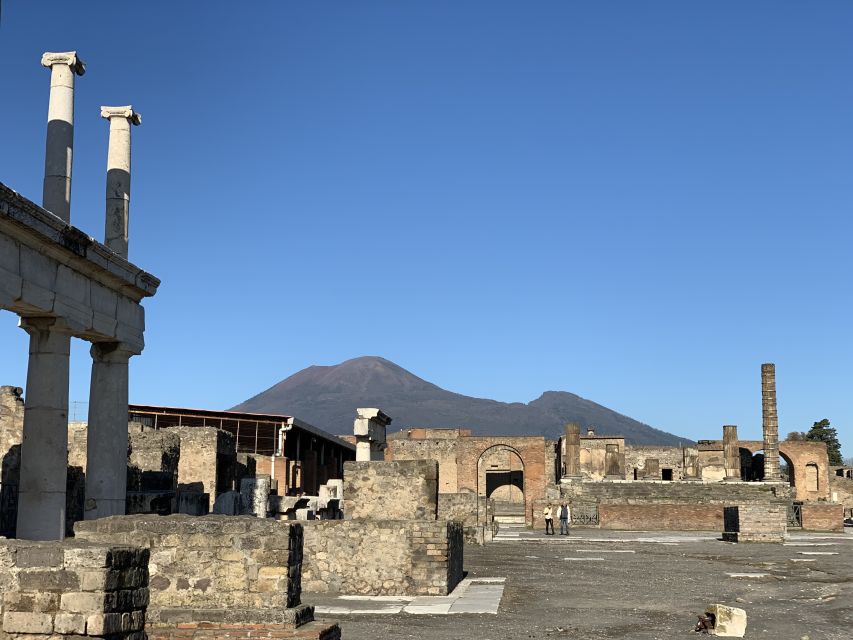
The first look toward Mount Vesuvius gives the visit its basic tension. The volcano is not an abstract force in Pompeii. It is part of the view and part of the story from the moment you enter.
You then pass through the antiquarium. This area helps bridge the gap between excavation and interpretation. Objects found during recent work give you something specific to look at before you begin the longer walk through streets and buildings.
The skip-the-ticket-line service saves time at the entrance. It does not turn Pompeii into a quick stop, however. You still need to arrive on time because the tickets are issued in each participant’s full name.
Basilica, forum, and the machinery of public life
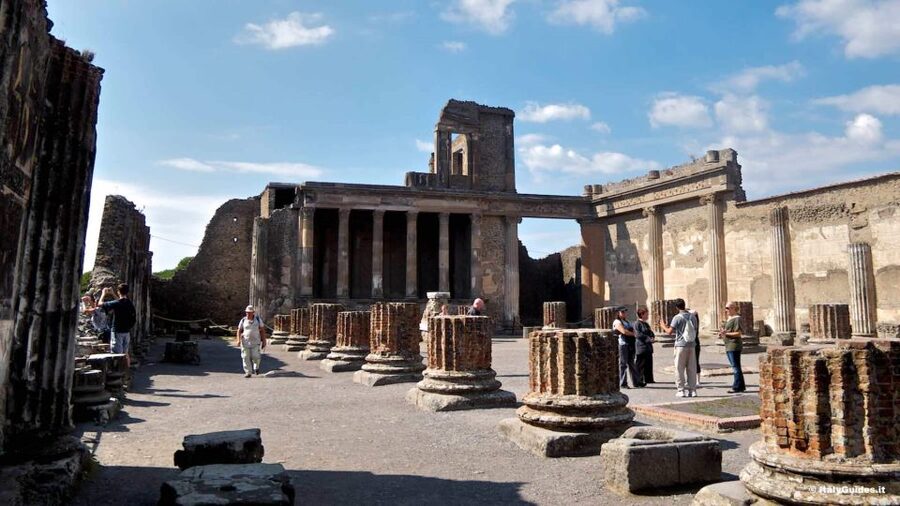
The Basilica is one of the first major buildings on the route. In Roman Pompeii, this was a center for legal and commercial business. Its size and position help you see that the city was not simply a residential settlement buried by ash. It had institutions, officials, merchants, and public routines.
From there, the tour reaches the Forum, Pompeii’s main civic square. This is one of the places where a guide adds real value. The surrounding temples, public buildings, and market spaces make more sense when you understand how the forum organized city life.
The Temple of Apollo gives the route a religious dimension. Its presence near the forum shows how closely worship and civic affairs were tied together. You will also visit the Temple of Jupiter, another major religious building facing the central public area.
The Macellum, or food market, brings the discussion back to daily needs. It was built for commerce, and its remains help you picture the practical side of Roman urban life. These stops balance the more dramatic parts of Pompeii with ordinary business and public administration.
Baths, shops, and the Greater Decumanus
The walk continues along the Greater Decumanus, one of the city’s main streets. Pompeii is best understood on foot, and this stretch lets you see how homes, shops, temples, and public buildings sat together along a working urban road.
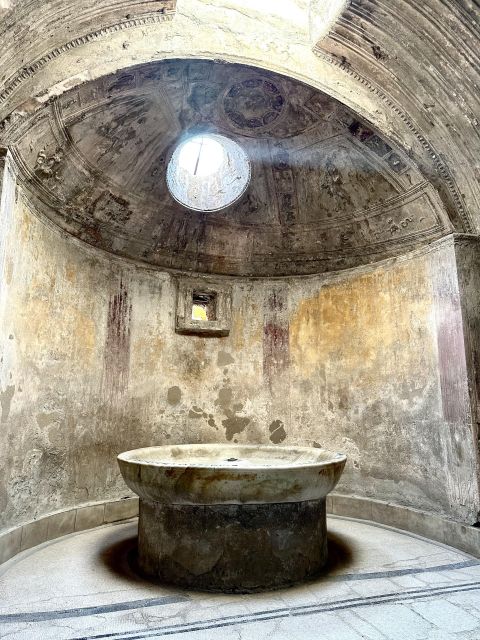
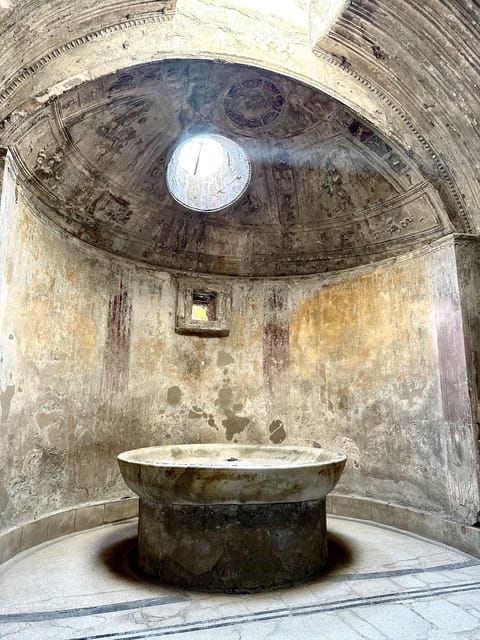
The Forum Baths offer a look at Roman bathing culture and engineering. The thermal system was not just a place to wash. Baths were part of social life, and the remains show the planning required to heat and circulate water.
The route also includes the Lupanare, one of Pompeii’s most discussed buildings. It attracts attention because of its small rooms and surviving imagery, but the visit is more useful when the site is placed within the wider street network and commercial life of the city. It is a short stop with strong interest, though some content may not suit very young children.
More tours led by an archaeologist:
- Pompeii 3hours Villa of Mysteries tour with an Archaeologist
★ 4.8 · 486 reviews - Pompeii: Tour with Archaeologist Guide & Skip-the-Line Entry
★ 4.5 · 478 reviews - Pompeii and Herculaneum: Guided Tour with an Archaeologist
★ 5.0 · 164 reviews - Pompeii: Guided Tour with Archaeologist with max. 12 People
★ 5.0 · 155 reviews
The painted houses and Pompeii’s private world
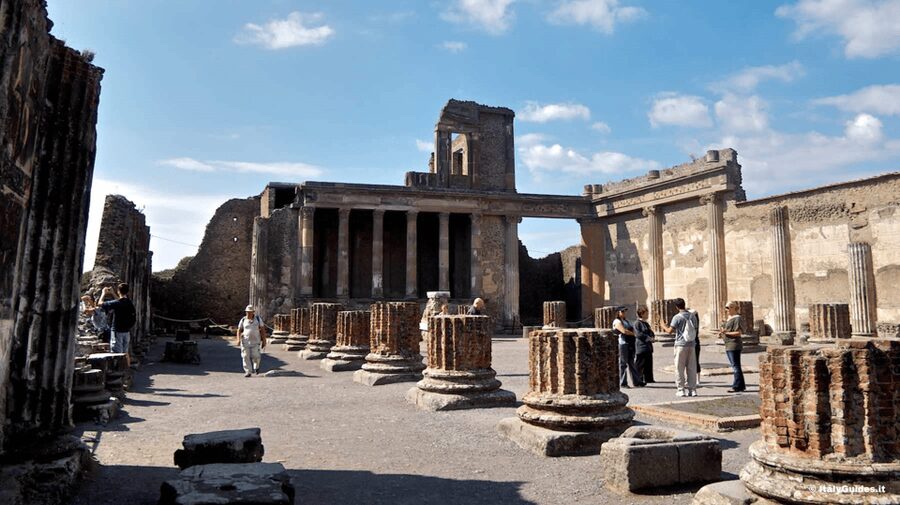
Pompeii’s houses are where the city becomes personal. Public buildings tell you how the community worked, but the domus show how prosperous families displayed status, arranged rooms, and received visitors.
The House of the Tragic Poet is included in the route. Its name comes from a famous mosaic associated with the house, and its rooms offer a window into Roman domestic decoration and storytelling.
The House of Menander is another important residence. Its scale and decoration help show the difference between ordinary urban living and the homes of wealthy families. You should listen for the guide’s explanation of how the rooms functioned, since Roman houses were organized around movement, display, and social rank in ways that may not be obvious from the surviving walls.
Recently opened houses make this route more current than a basic Pompeii highlights walk. The House of Golden Cupids is singled out for its restoration, and its name points to the decorative cupids found there. Restored spaces can look more complete than crumbling streets, but that is also why they are useful: you can better see how color, decoration, and room design once shaped the house.
Do not expect every building to be open at all times. Pompeii changes its access plans as restoration work continues. This tour includes the listed houses, but exact access can depend on the archaeological park’s current rules.
Theaters and the public side of entertainment
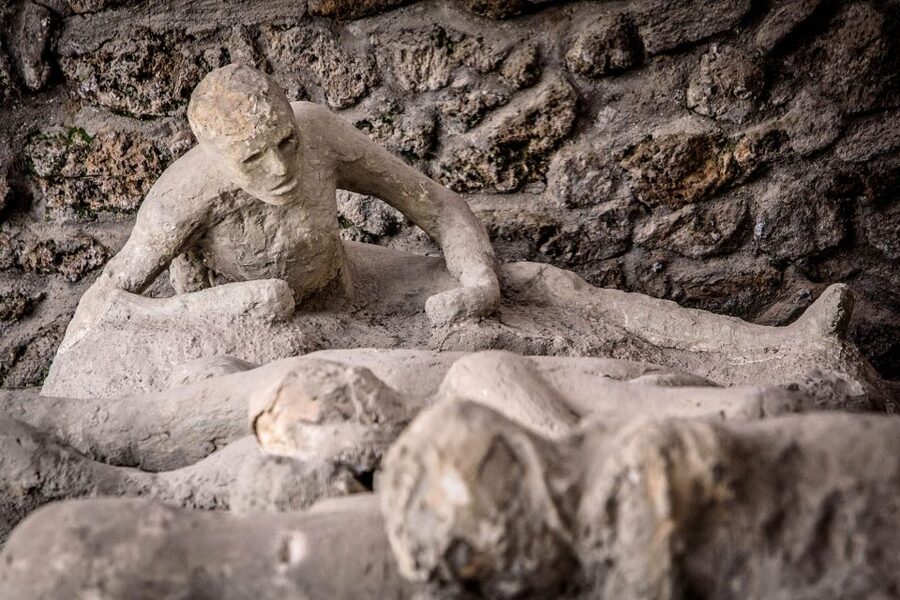
The Large Theatre shifts the focus from government and private homes to performance. Its form shows how Roman entertainment was built into city life, with architecture designed to gather a crowd and direct attention toward the stage.
The theater is also a reminder that Pompeii was not frozen as a quiet village. It was a functioning Roman city with public spectacles, social divisions, and shared spaces.
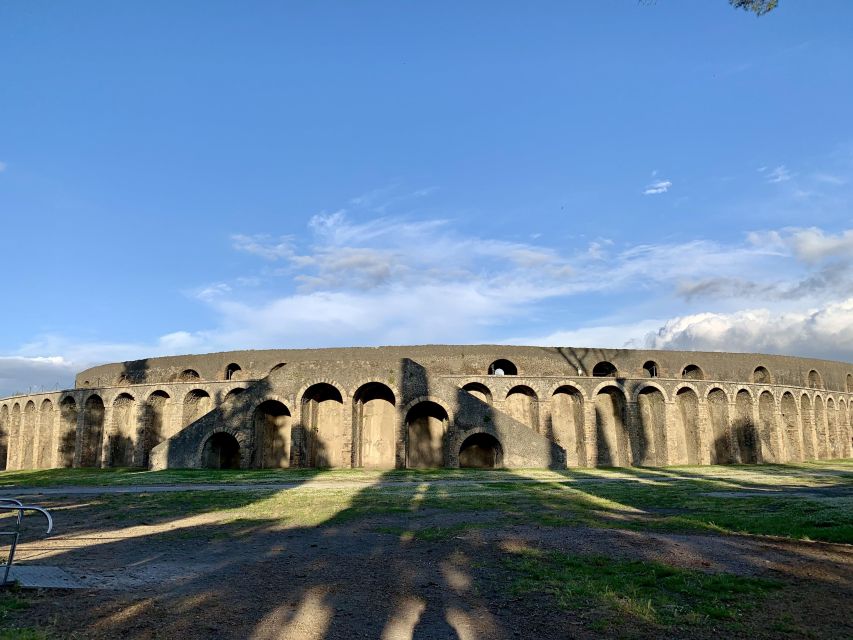
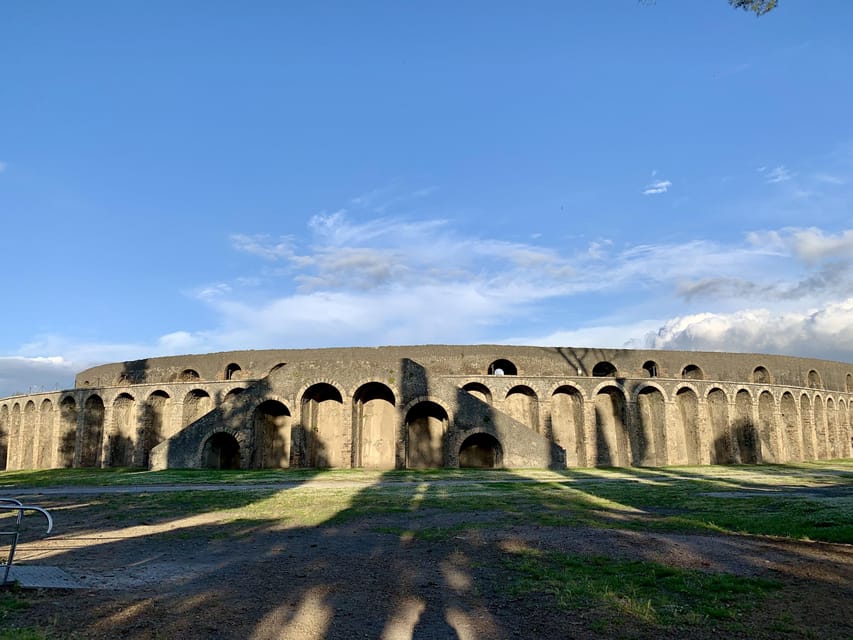
The route ends with the Amphitheater, one of Pompeii’s most recognizable structures. Its broad shape and preserved seating area make it easier to imagine large public events than many of the smaller ruins. Ending here gives the tour a strong final view, though you may have limited time to explore each theater in depth because so much ground is covered in three hours.
The Garden of the Fugitives and the human cost
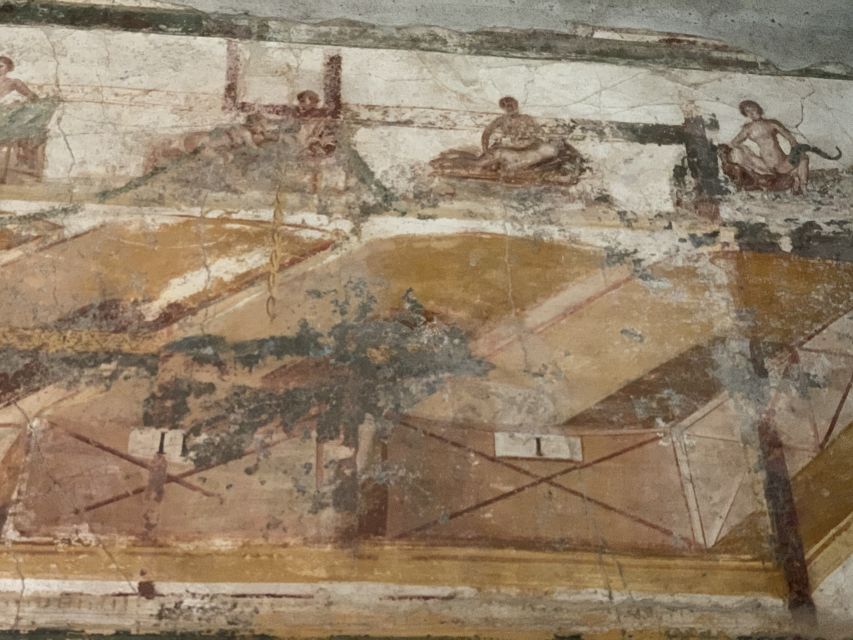
The Garden of the Fugitives is the most emotionally difficult stop. During the eruption, people attempted to escape through this area but died before reaching safety. The plaster body moulds preserve the positions and shapes of those victims.
This is not a stop to rush through. It connects the grand public buildings and decorated homes with the people who lived in them. The moulds can be upsetting, especially for children, so consider your group’s comfort before booking a route that gives this area a prominent place.
The guide’s role matters here. A careful explanation can keep the stop from becoming mere spectacle. The wider archaeological context helps you understand how the moulds were made and why they remain such powerful evidence of the disaster.
What three hours lets you see
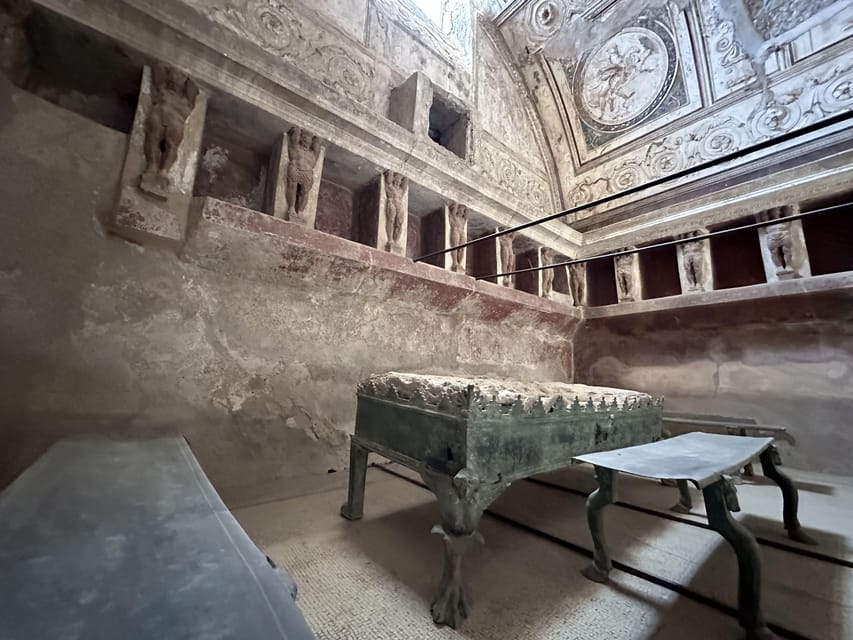
Three hours is a useful middle ground at Pompeii. A short visit can leave you with only the forum and a few famous houses. A full day can be tiring, particularly in hot weather. This route covers many of the site’s major categories without requiring an all-day commitment.
The tradeoff is pace. You visit the Basilica, Forum, Temple of Apollo, Macellum, Forum Baths, House of the Tragic Poet, Temple of Jupiter, House of Menander, Large Theatre, Garden of the Fugitives, and Amphitheater, along with the antiquarium and other route sections.
That is a lot of ground. You will get an organized overview rather than a slow study of every fresco, inscription, or side street. If you already know Pompeii well and want time for photography or close inspection, a longer independent visit after the tour may suit you better.
For a first visit, I like the structure. You see the major public center, several houses, the baths, entertainment buildings, and the most moving evidence of the eruption. The archaeologist can also help you decide which areas deserve a second look if you have extra time.
Price, inclusions, and the real value
At $407.83 for a private group up to one, this is not a budget entry ticket. The price makes most sense if you place a high value on a private specialist guide and want the visit shaped around your questions.
Admission is included, as is skip-the-ticket-line service, personal archaeological guidance, and general assistance. Those inclusions remove several costs and decisions, but the package does not include transportation, food, or drinks.
For one person, the price is difficult to justify unless the archaeologist-led format is your main reason for visiting Pompeii. The value improves when the private booking covers the permitted group size shown at checkout, so check the exact booking terms before paying. Since the listed price says up to one, do not assume that additional participants are included.
You can reserve now and pay later, and cancellation is free up to 24 hours before the activity for a full refund. Those terms help if your Campania plans are still shifting.
Practical advice for a smoother visit
Wear comfortable shoes. Pompeii involves a long walk over ancient streets and uneven surfaces, so thin sandals or stiff footwear can make three hours feel much longer.
Use sunscreen and wear comfortable clothes. Shade is not guaranteed across the route, and the open setting makes sun protection important.
Arrive at Porta Marina Superiore on time, in front of Hortus Bar. The meeting point is outside the main flow of the ruins, so give yourself enough time to find it.
Bring the original ID or passport for every participant, including children. Pompeii requires the full name and surname on each personal ticket, and the ticket rules apply to adults and kids. A mismatch or late arrival can create a serious problem.
The tour is wheelchair accessible, but Pompeii is an ancient archaeological site. Ask the provider about the current route and any access limits if mobility is a major concern.
Pets, alcohol, and drugs are not allowed. Transportation is your responsibility, since the activity begins and ends at the Pompeii meeting point.
The tour is offered in English, French, Spanish, and Italian. Check the available starting time when you book, since the three-hour schedule varies by date.
Who will get the most from this Pompeii tour
This tour suits a first-time visitor who wants the major sights arranged into a sensible story. It is also a good fit if you prefer asking questions instead of reading every sign or trying to match a paper map to the ruins.
Families may appreciate the private format, especially if children need explanations and regular changes of focus. The Lupanare and body moulds at the Garden of the Fugitives may require parental judgment.
History students, archaeology fans, and repeat visitors will value the attention to recent excavations and restorations. The antiquarium objects, including the eruption-date coin and golden arm cuff, add a research-based layer that a standard sightseeing walk may skip.
It is less suited to someone who wants a cheap entrance ticket, a slow photographic session, or the freedom to wander without a fixed route. It is also not the right choice if you need transportation from Naples, Sorrento, or elsewhere, because transfers are not included.
Should you book this private Pompeii walk?
Book it if you want Pompeii explained by an archaeologist, need a clear three-hour route, and value private attention more than the lowest price. The mix of forum, temples, baths, houses, theaters, body moulds, and amphitheater gives you a strong first look at the city.
Think twice if the $407.83 price is beyond your budget or if you plan to spend most of the day at the site. In that case, an entry ticket and self-guided visit may give you more time for less money.
For the best match, confirm the group pricing, guide language, starting time, and current access to the recently opened houses. Bring identification, arrive at Porta Marina Superiore early, and prepare for three hours of walking under the Campania sun.
FAQ
How long does the Pompeii tour last?
The tour lasts three hours. Starting times vary, so check availability for your chosen date.
Where does the tour meet?
You meet at Porta Marina Superiore, directly in front of Hortus Bar.
Where does the tour end?
The activity ends back at the meeting point at Pompeii.
Is admission to Pompeii included?
Yes. Admission tickets are included in the tour price.
Does the tour skip the ticket line?
Yes. Skip-the-ticket-line service is included.
Is the tour private?
Yes. It is a private group experience with a personal archaeologist.
Which languages are available?
The live tour guide is available in English, French, Spanish, and Italian.
Do I need to bring identification?
Yes. Pompeii requires the full name and surname of every participant on the personal ticket. Bring an original ID or passport for each adult and child.
Is transportation included?
No. Transportation to and from Pompeii is not included.
Can I cancel the booking?
You can cancel up to 24 hours in advance for a full refund. The tour also offers a reserve-now-and-pay-later option.
More 3-Hour Experiences in Pompei Campania
- Pompeii Private Tour with an Archaeologist and Skip The Line – 3 hours
★ 5.0 · 564 reviews - Pompeii 3 Hours Walking Tour Led by an Archaeologist
★ 5.0 · 126 reviews - Pompei three hours with an expert guide
★ 5.0 · 82 reviews - Complete Private Guided Three-Hour Tour on the Capri Coast
★ 5.0 · 78 reviews
More Skip the Line in Pompei Campania
- Pompeii: Skip-the-line-Ticket and Guided Tour
★ 4.6 · 1,152 reviews - Pompeii: Guided Tour with Skip-the-Line Entry
★ 4.9 · 812 reviews - Pompeii: Skip-the-Line Entry Ticket with Digital Guide App
★ 4.1 · 770 reviews - Pompeii: Skip-the-Line Entry & Audioguide
★ 3.8 · 225 reviews
Newest reviews from Pompei Campania
- From Sorrento: Pompeii & Vesuvius tour small group★ 4.8 · 4 reviews
- Pompeii Private Tour for Kids and Their Families★ 4.8 · 4 reviews
- From Naples_ Pompeii Tour_Skip the line ticket + audioguide★ 4.3 · 4 reviews
- Pompeii, skip-the-line ticket with smartphone audio guide on App★ 3.0 · 4 reviews
- Pompeii Guided Experience – Tour Service Only★ 4.6 · 4 reviews
- From Naples Port:Pompeii+Vesuvius tour★ 4.3 · 4 reviews
- 2-Hour Pompeii Child-Friendly Tour★ 5.0 · 4 reviews
- Naples: Amalfi Coast, Sorrento and Pompeii Day Trip★ 4.4 · 5 reviews
Archaeologist-Led Tours, compared.

Entry Ticket and Guided Tour with an Archaeologist
Read our review →
Pompeii Small Group Tour with an Archaeologist
Read our review →
Pompeii and Herculaneum Small Group Tour with an Archaeologist
Read our review →
Skip the Line Guided Tour of Pompeii led by an Archaeologist
Read our review →
Exclusive Tour with Archaeologist and Entry Tickets
Read our review →
Pompeii Private Tour with an Archaeologist and Skip The Line – 3 hours
Read our review →
Pompeii Skip-the-line Tour with Archaeologist Guide
Read our review →Browse the lists this tour appears in