
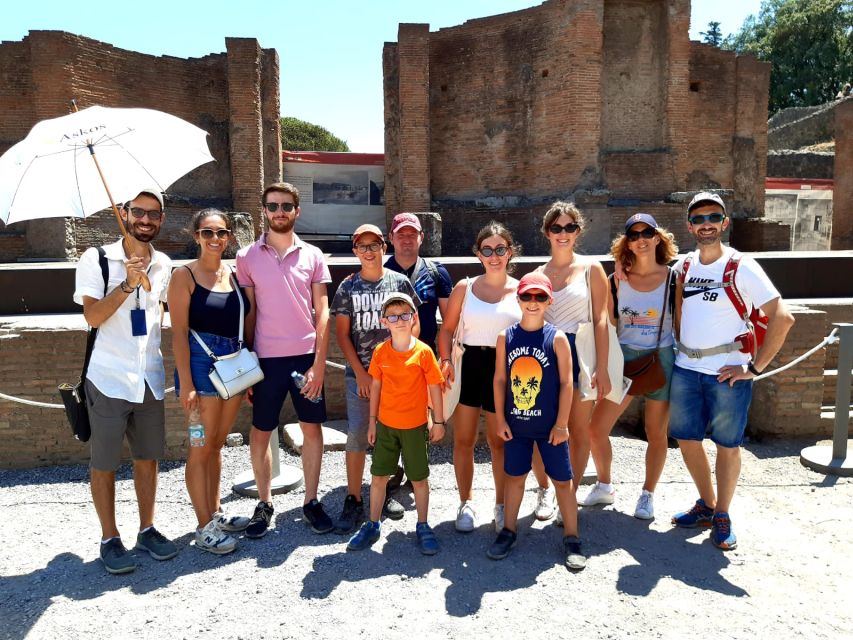
Reviewed · 2-HOUR EXPERIENCES
2-Hour Pompeii Child-Friendly Tour
Pompeii makes a better family visit when the ruins become a story instead of a long parade of broken walls. This two-hour private tour uses tablets, reconstructions, and multimedia material to show children how Roman homes, shops, baths, temples, and theaters once worked. You’ll cover the city’s main sights without asking young attention spans to carry the whole load.
I like the way the guide can adjust the pace and explanations to your family, and I like the sensible route through Pompeii’s biggest highlights. Admission is included, and the private format means you can ask questions or pause when a child needs a breather. The main drawback is the price, $212.41 per person, which is a serious outlay for two hours, especially for a larger family.
In This Review
- Key points to know before you book
- Why this Pompeii tour works well for children
- Meeting at Porta Marina Superiore
- From the city gate to the Temple of Apollo
- The forum, basilica, and public Pompeii
- House of Menander and the Roman home
- Baths, bakeries, and everyday routines
- House of the Faun and House of the Vettii
- The theaters and plaster casts
- A two-hour route with a brisk pace
- Is $212.41 per person a fair price?
- Who should choose this private Pompeii visit?
- Should you book the two-hour child-friendly tour?
- FAQ
- How long does the Pompeii child-friendly tour last?
- Where does the tour begin?
- How will I identify the guide?
- What languages are available?
- Is admission to Pompeii included?
- Does the tour include transportation?
- Can wheelchair users join the tour?
Key points to know before you book
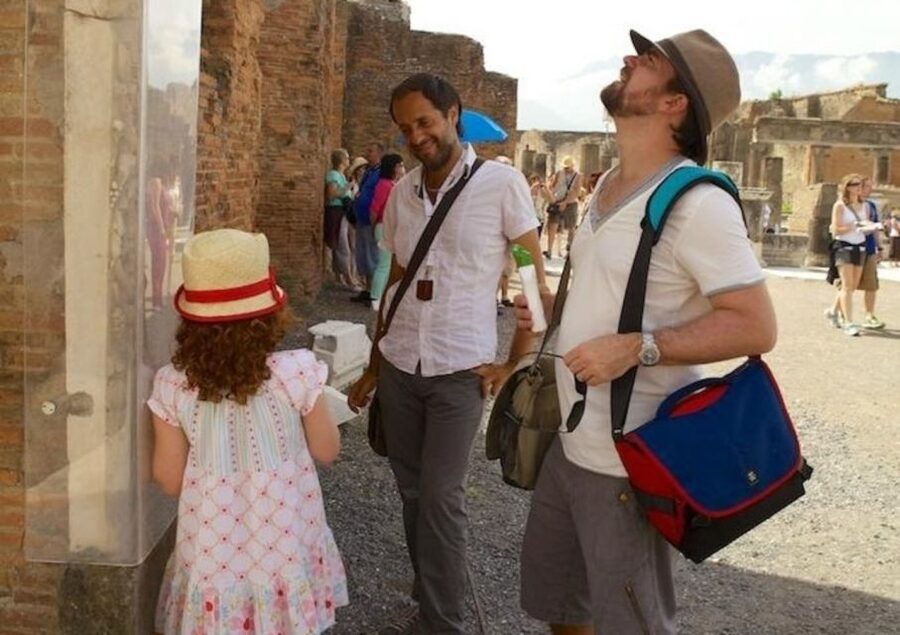
- Child-focused tools: Tablets, reconstructions, and multimedia material help explain what the ruins looked like in Roman times.
- A strong first visit: The route includes the forum, Temple of Apollo, House of Menander, House of the Faun, theaters, baths, and a thermopolium.
- Private family format: The guide focuses on your group’s needs rather than following a fixed public-tour pace.
- Two hours, no transport: You walk between the sights inside Pompeii, beginning and ending at Porta Marina Superiore.
- Admission included: The guide handles ticket purchase at the entrance, with the stated skip-the-line process taking about five to ten minutes.
- Accessibility needs checking: The activity is described as wheelchair accessible in one section, but another section says it is not suitable for wheelchair users. Confirm directly before booking.
Why this Pompeii tour works well for children
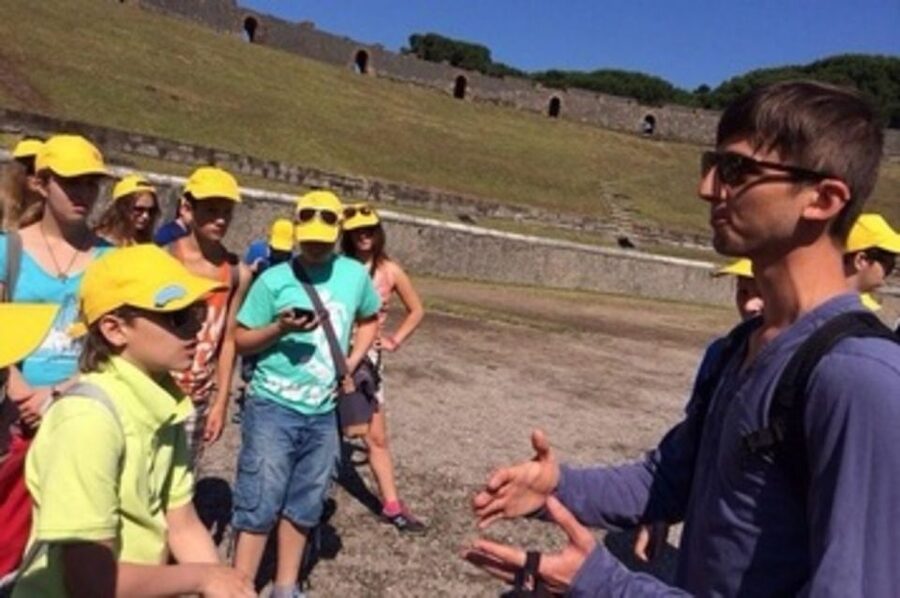
Pompeii can be thrilling for children, but it can also feel like a huge archaeological maze. A child sees stones, columns, and empty rooms. A good guide has to turn those remains into daily life: where people shopped, washed, worshipped, worked, ate, and watched performances.
That is the purpose of the tablet and visual material here. Reconstructions can show the missing roofs, painted walls, furniture, and public activity that are hard to picture from the ruins alone. Multimedia tools also give the guide a way to explain scale and function without relying on a long lecture.
The private setting matters. Your guide can focus on the family’s attention span and adjust explanations for children. If your child wants to know how a bakery worked, or why a Roman house had an open courtyard, you can stop and ask instead of waiting for a large group to move on.
The tour is in English or Italian and includes a certified guide. No individual guide name is provided, so you should not expect to request a particular person. The important point is that this is a live, private tour built around your group rather than a recorded route.
More Pompeii excavation visits:
- Pompeii: Entry Ticket and Guided Tour with an Archaeologist
★ 4.8 · 19,459 reviews - Pompeii: Small Group Tour with an Archaeologist
★ 4.8 · 12,264 reviews - Pompeii: Skip-the-Line Entrance Ticket with Audio Guide
★ 4.0 · 2,509 reviews
Meeting at Porta Marina Superiore
The meeting point is at Pompeii’s main gate called Porta Marina Superiore, on Via Villa dei Misteri, 2. Look for the entrance opposite the bar-restaurant Hortus. The guide will be holding a sign with your name.
This detail is worth taking seriously. Pompeii has more than one entrance, and arriving at the wrong gate can waste part of a two-hour visit. Give yourself enough time to find Porta Marina Superiore and identify the guide before the starting time.
The guide buys the entrance tickets for you. The stated ticket process takes about five to ten minutes, and the tour includes admission fees. On the first Sunday of each month, Pompeii admission is free, but tickets cannot be reserved ahead of time and entry is not guaranteed. If that is your planned visit, ask for current instructions before relying on this tour.
The activity ends back at the same meeting point. No transportation is included, so this is a walking visit from start to finish.
From the city gate to the Temple of Apollo
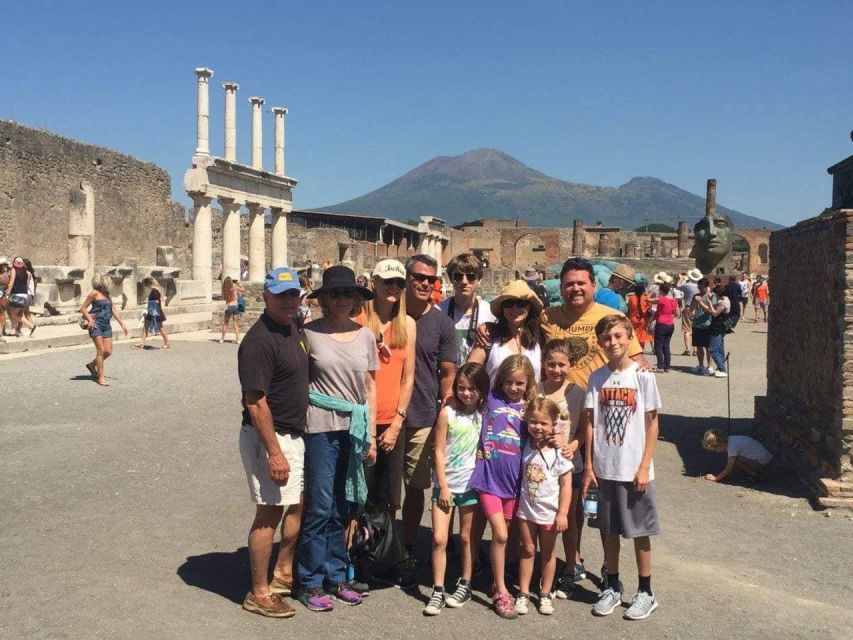
The first stop is Porta Marina, one of Pompeii’s principal entrances. This is a useful opening because it gives you the basic sense of Pompeii as a real town with controlled access, streets, public buildings, and neighborhoods.
From there, the route reaches the Temple of Apollo, with about ten minutes for a visit and guided explanation. A temple stop helps children see that Pompeii was not simply a collection of houses. Religion was part of public life, and important buildings were placed around the town’s central areas.
Ten minutes is enough for a clear introduction, but not for a long archaeological discussion. That is part of the tradeoff of this tour. You get a broad look at Pompeii, but each site receives a short visit because the route covers so much ground.
The forum, basilica, and public Pompeii
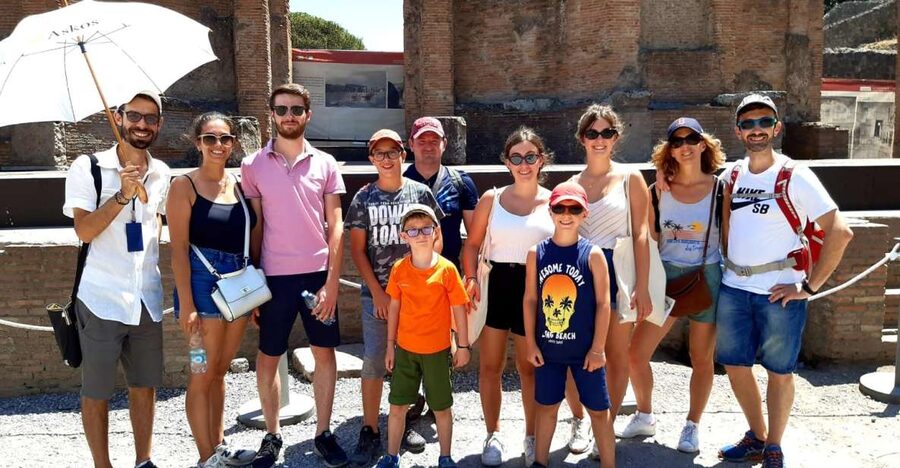
The Forum, Pompeii’s main square, receives about twenty minutes. This is one of the most useful stops for families because several parts of Roman civic life came together here. You’ll see the setting for markets, temples, and municipal buildings, giving the guide plenty of ways to explain how the town was organized.
The forum can be hard to read without help. Large open spaces and partial walls do not always tell children what happened there. Tablets and reconstructed images should help connect the surviving remains with the buildings and activities that once filled the square.
Next comes the Basilica, also scheduled for about ten minutes. In Pompeii, this was a courthouse and business center, not a Christian church. That distinction is a good chance to correct a common misunderstanding and show children how one Roman building could serve civic and legal purposes.
I like this early section of the route because it establishes Pompeii as a working town. The visit is not limited to grand houses. You see the places where public decisions, trade, worship, and legal matters took place.
More Pompei Campania tours worth comparing
- Pompeii: 2-Hour Guided Tour with an Archaeologist
★ 4.9 · 151 reviews - Pompeii: 2 Hours Skip the Line Visit with a Licensed Guide
★ 4.4 · 16 reviews - Pompeii: 2H group guided tour with a certified guide
★ 3.4 · 8 reviews - Pompeii in 2h and 30mnt: walk with local guide
★ 3.0 · 6 reviews
House of Menander and the Roman home
The House of Menander receives about twenty minutes, making it one of the longer stops. That extra time is useful. A Roman house is not just a pretty ruin. It offers a way to explain family life, rooms, decoration, status, and the layout of domestic space.
The guide can use the tablet and reconstructions to help you picture the home as it once appeared. Children often understand an ancient city more easily through a house than through a public square. Rooms have a human scale, and the guide can connect them to familiar ideas such as eating, receiving visitors, storing goods, and moving through a home.
The visit remains selective. Two hours cannot cover every room or house in Pompeii, and the exact interiors open on a given day can vary. The benefit is that you see a representative home without spending the entire tour on one building.
Baths, bakeries, and everyday routines
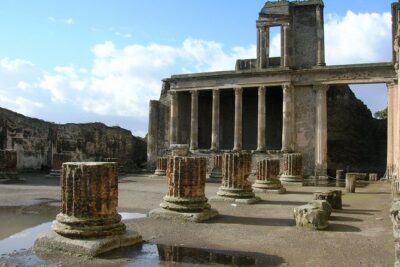
The route includes the Forum Baths, with around ten minutes for a guided visit. Baths were important social and practical spaces in Roman towns. This stop lets the guide explain how people washed, exercised, met friends, and used public facilities.
For children, the baths can be more memorable when the explanation stays concrete. The tablet material should help show how the rooms were arranged and how the heating system worked, though the supplied details do not promise a specific demonstration or reconstruction at the site.
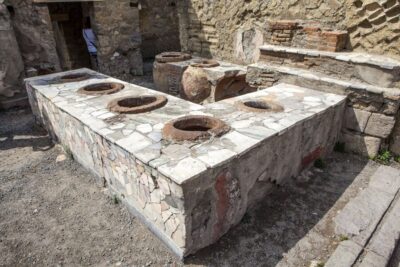
The tour also includes a bakery among Pompeii’s key sights, followed later by the Thermopolium. These stops are valuable because they bring the city down to ordinary meals and work. A bakery points to food production, while a thermopolium was a place where prepared food and drink could be bought.
The thermopolium receives about ten minutes. It is a quick stop, but it gives the guide a chance to discuss eating outside the home and the commercial life of the town. Children usually have an easier time imagining an ancient food counter than a formal civic building.
House of the Faun and House of the Vettii
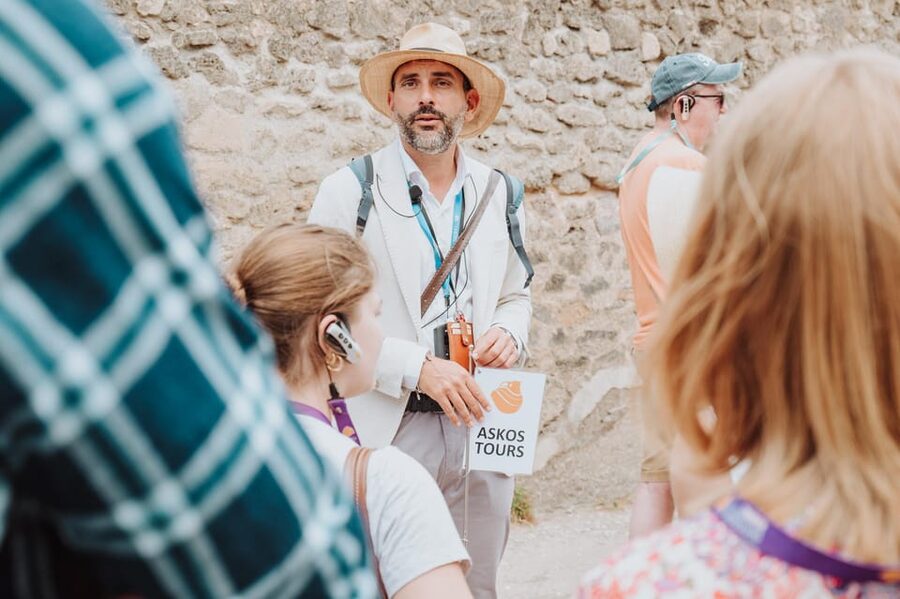
The House of the Faun is another major private residence on the route. Its name comes from the faun statue associated with the house, and the stop provides another look at wealthy Roman domestic life.
You should expect the guide to compare the larger homes with the broader picture of Pompeii. The route includes both public buildings and private houses, which helps show that ancient towns had differences in wealth, function, and social position.
The House of the Vettii also appears near the end of the visit. It is another chance to see how domestic architecture and decoration reflected the owners’ position. Ten minutes is not enough to study every room, but the guide’s visual material can make the surviving spaces easier to understand.
A useful benefit of visiting two houses is comparison. Instead of treating one home as a complete picture of Roman life, you can ask how houses differed and what that may tell you about the people who lived there.
The theaters and plaster casts
The Large Theatre receives about ten minutes. This stop shifts attention from homes and civic buildings to public entertainment. The guide can explain how theater formed part of Roman town life and use reconstructions to help children picture the building in use.
The tour also includes the theaters more broadly and the famous plaster casts. The casts can be difficult for young children because they show the final moments of people caught in the disaster. Parents may want to prepare children gently and decide how much detail is appropriate for their age.
The supplied information does not specify how long the plaster casts receive, so the guide may cover them as part of the wider route rather than as a long standalone stop. This is another reason to tell the guide at the start what your children can handle.
A two-hour route with a brisk pace
The timing adds up to a fast-moving visit. Several stops receive ten minutes, while the forum and House of Menander receive twenty each. That gives you a useful overview, but you will not have time to wander freely or examine every detail.
I see this as a strength for families who want a clear introduction. You get a route, a guide, and visual support instead of trying to make sense of a very large archaeological site alone. It is less suitable if your family wants a slow, specialist visit focused on inscriptions, architecture, or lesser-known streets.
Wear comfortable walking shoes and expect uneven ground because the tour takes place in the ruins on foot. The provider does not include transportation. The information describes the activity as wheelchair accessible, but it also says it is not suitable for wheelchair users. That contradiction needs a direct answer from the provider before you reserve.
Is $212.41 per person a fair price?
At $212.41 per person, this is not a budget Pompeii outing. The value depends heavily on your group size and how much help your family needs. A private guide, admission fees, visual material, and a child-focused approach are included, so you are paying for personal attention as well as entry to the site.
For a family that might struggle with a large group tour, the private format can justify some of the cost. You can ask questions, keep the focus on your children, and avoid spending two hours listening to explanations that do not suit their age.
For a larger family, the total price rises quickly. In that case, compare the cost with a standard group visit and decide how important the private guide and child-specific material are to you. The tour makes the most financial sense when a smooth, focused first visit matters more than seeing Pompeii at the lowest possible cost.
Free cancellation is available up to 24 hours before the activity for a full refund, and you can reserve now and pay later. Those terms give you some flexibility, but they do not change the need to check the meeting gate and accessibility details.
Who should choose this private Pompeii visit?
I would consider this tour for parents visiting Pompeii for the first time with children who need visual explanations and a clear route. It also suits families that prefer to avoid a large group and want the guide’s attention directed toward their own questions.
It is a good match if you want the main public buildings, several important houses, baths, theaters, food-related sites, and plaster casts in one short visit. The route gives you a broad picture of Roman life rather than concentrating on one type of building.
I would think twice if your children are too young for two hours of walking, if you want a slow archaeological study, or if the per-person cost feels uncomfortable. I would also confirm mobility arrangements before paying because the accessibility statements do not agree.
Should you book the two-hour child-friendly tour?
Book it if you want Pompeii explained through stories, pictures, and reconstructions instead of a self-guided walk through ruins. The private group, certified guide, included admission, and child-focused tools make the visit easier to manage for many families.
Skip it if your main goal is the lowest price or a long, detailed exploration. Two hours moves quickly, and $212.41 per person is a premium price.
For most families choosing this option, the best plan is to arrive early at Porta Marina Superiore, tell the guide your children’s ages and interests, and ask about the wheelchair contradiction before booking. If those points fit your needs, this is a practical way to see Pompeii’s essential sights without losing children to the next column or broken wall.
FAQ
How long does the Pompeii child-friendly tour last?
The tour lasts two hours. Starting times vary, so you need to check availability when booking.
Where does the tour begin?
Meet the guide at Porta Marina Superiore, Pompeii’s main gate, on Via Villa dei Misteri, 2. The meeting point is opposite the bar-restaurant Hortus.
How will I identify the guide?
The guide will meet you at the entrance holding a sign with your name on it.
What languages are available?
The live tour guide is available in English or Italian.
Is admission to Pompeii included?
Yes. Admission fees and guidance by a certified guide are included.
Does the tour include transportation?
No. This is a walking tour, and no transportation is included. The activity ends back at the meeting point.
Can wheelchair users join the tour?
The activity information describes the tour as wheelchair accessible, but it also says it is not suitable for wheelchair users. Contact the provider before booking to confirm the current route and access arrangements.
Newest reviews from Pompei Campania
- From Sorrento: Pompeii & Vesuvius tour small group★ 4.8 · 4 reviews
- Pompeii Private Tour for Kids and Their Families★ 4.8 · 4 reviews
- From Naples_ Pompeii Tour_Skip the line ticket + audioguide★ 4.3 · 4 reviews
- Pompeii, skip-the-line ticket with smartphone audio guide on App★ 3.0 · 4 reviews
- Pompeii Guided Experience – Tour Service Only★ 4.6 · 4 reviews
- From Naples Port:Pompeii+Vesuvius tour★ 4.3 · 4 reviews
- Naples: Amalfi Coast, Sorrento and Pompeii Day Trip★ 4.4 · 5 reviews
- From Positano: Pompeii & Vesuvius tour small group★ 5.0 · 5 reviews
2-Hour Experiences, compared.
Pompeii 2h Small-Group Tour with Expert Archaeologist
Read our review →
2 hours Pompeii Tour with Local Historian – Ticket Included
Read our review →
2 Hour Private Tour with an Archeologist Guide
Read our review →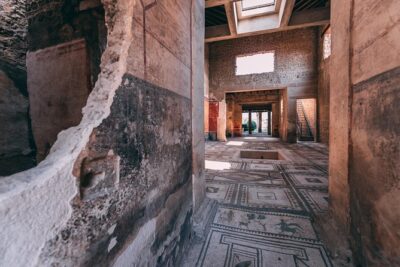
Pompeii 2-hour Private Tour with an Archaeologist-Ticket included
Read our review →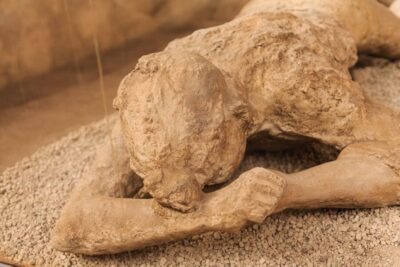

Browse the lists this tour appears in