
Reviewed · SKIP THE LINE
Pompeii: Guided Tour with Skip-the-Line Entry
Pompeii is far too large and layered to understand from a map alone. This two to three-hour walking tour gives you a clear route through the ruins, with an archaeologist guide explaining what the stones, paintings, shops, and public buildings meant to the people who lived here before Mount Vesuvius erupted in 79 AD.
I like two things right away: the separate skip-the-line entrance, which saves time at a busy archaeological site, and the choice between a small group and a private tour. Guides such as Frankie, Angelo, Anna, and Sasa are repeatedly praised for turning dry facts into stories and for steering groups away from the worst crowds.
The main trade-off is time. Pompeii is enormous, and two hours only covers the key sights. You will get a strong introduction, but you may want to stay afterward for more self-guided wandering. The site is also hot, uneven, and short on shade, so it demands sensible shoes, water, and a bit of stamina.
In This Review
- Key points at a glance
- Meeting the Guide Near the Pompeii Entrance
- Why a Guide Matters at Pompeii
- The Forum and Pompeii’s Public Core
- Homes, Frescoes, and the People Behind the Walls
- Shops, Bakeries, and Everyday Pompeii
- Baths, Theater, and Roman Leisure
- The Antiquarium and the Human Cost of the Eruption
- How the Guides Shape the Experience
- Group or Private Tour?
- Timing, Heat, and What to Carry
- Can You Stay After the Guided Walk?
- Who Will Get the Most From This Tour?
- Should You Book the Pompeii Guided Tour?
- FAQ
- How long does the Pompeii guided tour last?
- What languages are available?
- Does the tour include Pompeii entry?
- Where do I meet the guide?
- Can I choose a private tour?
- Is parking included?
Key points at a glance
- The Forum and civic center: See the heart of Roman public life, where politics, religion, and commerce met.
- Small-group or private format: Choose a more social group visit or a personalized private experience.
- Guides with strong local expertise: Guides including Frankie, Angelo, Anna, and Sasa are praised for storytelling, questions, and site navigation.
- A smart route through the ruins: Guides may adjust the order to reach important houses before the largest crowds arrive.
- Ancient daily life: Look beyond the eruption story to bakeries, homes, baths, theaters, and ordinary streets.
- Flexible booking terms: Cancellation is free up to 24 hours before the tour, and you can reserve now and pay later.
Meeting the Guide Near the Pompeii Entrance
The meeting point is Ristorante Bar Sgambati, where you should look for the Enjoy Pompeii red sign. This is a practical arrangement because you have a clear landmark near the entrance rather than searching for a guide somewhere inside the sprawling ruins.
You receive your entry ticket with the tour, then enter through a separate line. Skip-the-line access does not mean the site will be empty, especially in summer or around popular houses, but it removes one of the most annoying parts of visiting Pompeii: standing outside while your limited sightseeing time slips away.
Give yourself enough time to find the restaurant and sign. The meeting point is simple, but Pompeii’s entrance area can feel busy, particularly when trains and coach groups arrive. Check the exact start time when booking, since departures vary.
More Pompeii excavation visits:
- Pompeii: Entry Ticket and Guided Tour with an Archaeologist
★ 4.8 · 19,459 reviews - Pompeii: Small Group Tour with an Archaeologist
★ 4.8 · 12,264 reviews - Pompeii: Skip-the-Line Entrance Ticket with Audio Guide
★ 4.0 · 2,509 reviews
Why a Guide Matters at Pompeii
Pompeii can look like a maze of stone streets if you do not know what you are seeing. A guide gives each building a purpose and helps you picture the city as a working Roman community rather than a collection of broken walls.
The best explanations connect architecture with ordinary life. A bakery is not just an old commercial room. It helps you understand how food was produced and sold. A residential block reveals how space, status, and family life worked. A public bath shows that leisure and social contact were part of city life, not an afterthought.
The guides also help correct the lazy version of Pompeii’s story. The city was not simply a frozen wasteland waiting for disaster. It was a prosperous, active place with civic buildings, homes, businesses, theaters, and public services. The eruption is the reason the city survived for modern study, but it is only one part of the story.
This is where the tour earns its fee. You are not paying only for a ticket and a walk. You are paying for someone to point out details you could easily pass, explain how the pieces fit, and keep the visit moving when the site feels confusing.
The Forum and Pompeii’s Public Core
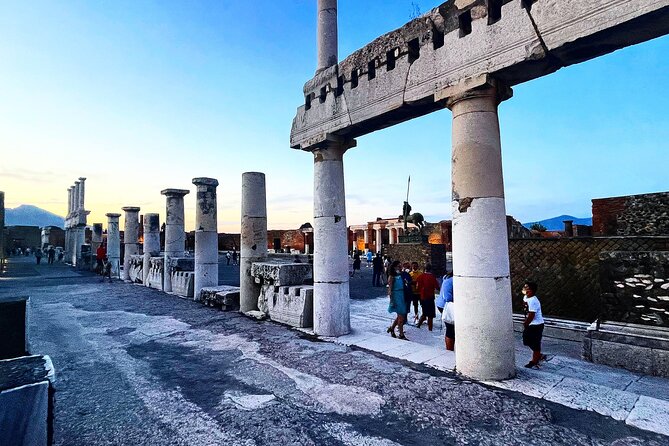
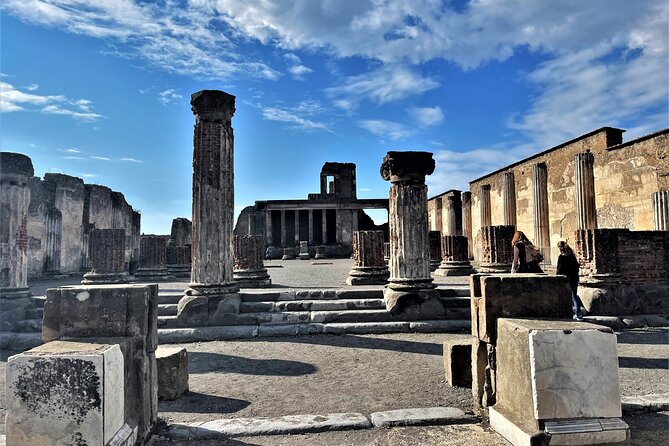
The Forum is the natural anchor of the route. This broad public space was central to civic life, and it gives you a useful sense of Pompeii’s scale and importance.
Your guide explains the buildings around it and the roles they played. The Basilica, for example, was tied to legal and commercial business. The Forum itself was not just an open plaza for photographs. It was where public life took place, with civic, religious, and economic activity concentrated around it.
This stop is especially useful early in the tour because it gives you a framework for the rest of the visit. Once you understand the public center, the smaller streets and buildings make more sense. You can see how private houses, shops, baths, and entertainment spaces related to the wider city.
The open setting also brings the practical side of Pompeii into view. There is limited shade, and the paving can be rough underfoot. Guides such as Angelo and Anna have been praised for giving explanations in shaded spots whenever possible, a small detail that matters greatly on a hot afternoon.
Homes, Frescoes, and the People Behind the Walls
Pompeii’s houses are among its most absorbing sights because they bring the city down to human scale. Instead of looking at ruins from a distance, you move through rooms where people cooked, received visitors, displayed art, and arranged their lives around courtyards and narrow streets.
The House of the Vettii is one important example included on some routes. One guide, Angelo, deliberately took the group there early, before larger crowds reached it. That kind of route planning can make a major difference. You may have more room to look closely at the decoration and listen without several groups speaking around you.
The preserved frescoes are not simply attractive wall paintings. They reveal taste, money, mythology, and the way Roman homeowners used art to shape the mood of their rooms. Your guide can help you notice why one house feels modest while another suggests wealth and social ambition.
A private tour may suit you if architecture, art, or domestic life is your main interest. You can ask more questions and request extra attention to subjects that matter to you. In a group, the pace and focus must work for everyone, though the small-group format still allows questions and interaction.
More Pompei Campania tours worth comparing
- Pompeii: Skip-the-line-Ticket and Guided Tour
★ 4.6 · 1,152 reviews - Pompeii: Skip-the-Line Entry Ticket with Digital Guide App
★ 4.1 · 770 reviews - Pompeii: Tour with Archaeologist Guide & Skip-the-Line Entry
★ 4.5 · 478 reviews - Pompeii: Skip-the-Line Entry & Audioguide
★ 3.8 · 225 reviews
Shops, Bakeries, and Everyday Pompeii
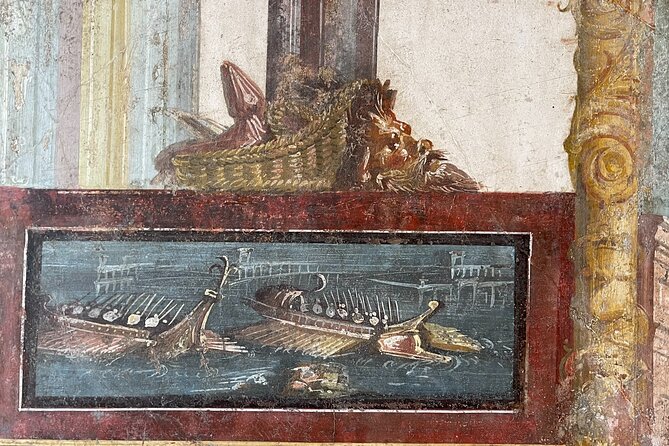
The commercial areas are a welcome change from grand civic buildings. They show how people bought food, worked, and moved through the city on an ordinary day.
The bakery is a useful stop because it makes Pompeii feel practical. You can connect the building with the daily task of feeding a city. Other commercial spaces help you picture streets filled with business rather than silent ruins.
Residential neighborhoods offer another important counterpoint. Pompeii was not made only of monuments. Most people lived, worked, shopped, and met others in ordinary spaces. The tour brings attention to typical housing blocks as well as grander homes, helping you avoid the common mistake of viewing the city only through its wealthiest residents.
I particularly value this part of the route because it gives you a more balanced picture of Roman life. The Forum and theaters are memorable, but the bakery and housing areas often make the visit feel more personal. You begin to think about routines, meals, work, and neighbors rather than only emperors and volcanoes.
Baths, Theater, and Roman Leisure
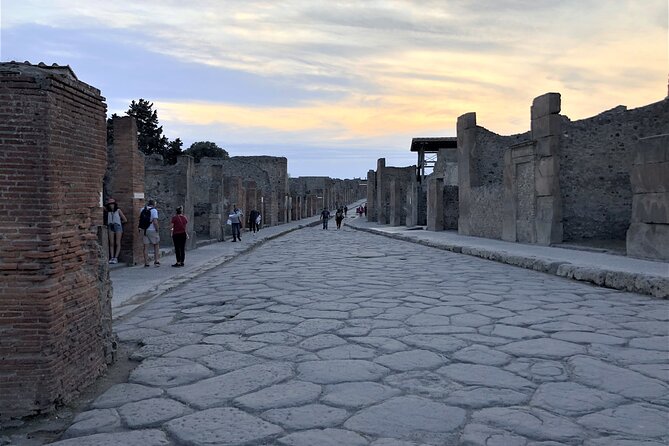
The thermal baths reveal how important public bathing was in Roman society. These were places for washing, exercise, conversation, and social contact. Your guide can explain the architecture and show how a public building served more than one purpose.
The theater adds another layer. It reminds you that entertainment was part of civic life and that Pompeii had spaces designed for shared experiences. The tour includes the main structures essential to understanding how the city functioned, rather than focusing only on the most famous photographs.
You should expect to walk steadily between these areas. Pompeii’s streets are uneven, and the route involves standing while the guide explains each stop. If you have a pre-existing medical condition, this experience may not be suitable. Even for healthy visitors, the combination of heat, stone paving, and several hours on foot can be tiring.
The Antiquarium and the Human Cost of the Eruption
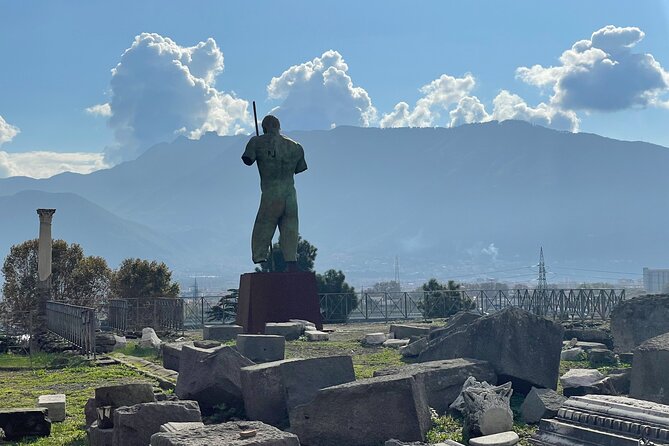
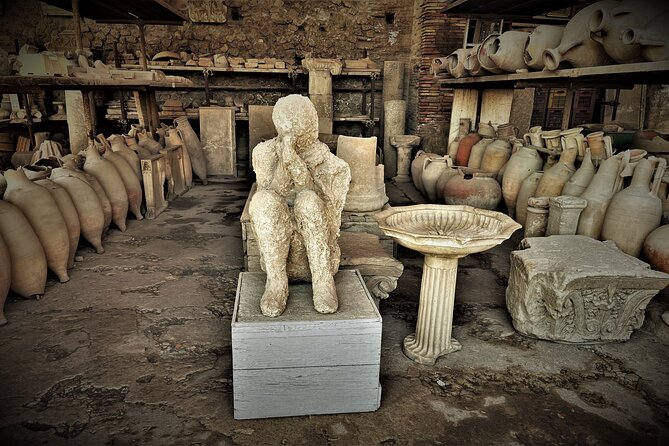
The new Antiquarium adds useful context to the outdoor ruins. It helps place objects and remains within the wider story of Pompeii and its destruction.
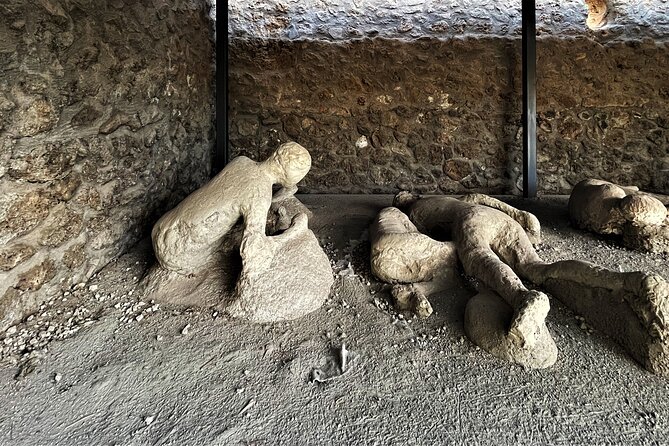
The casts of eruption victims can be emotionally difficult. They are not just dramatic images. They remind you that Pompeii was a lived-in city whose residents faced a sudden catastrophe. A good guide handles this subject with care and explains what the casts can and cannot tell us.
This is also where the visit can shift from architectural interest to human reflection. You may spend much of the tour admiring frescoes and street plans, then encounter evidence that brings the eruption back into focus. The contrast is powerful, but it is not light entertainment.
How the Guides Shape the Experience
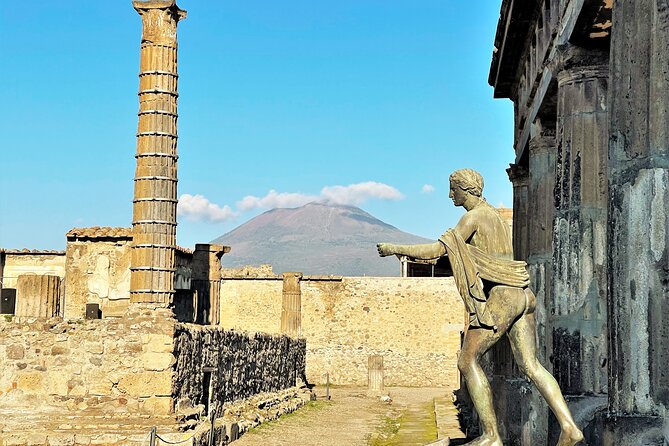
The guide makes or breaks a site as large as Pompeii. The strongest guiding style here appears to combine facts, humor, and careful pacing.
Frankie is often praised for his excellent English, warm humor, and ability to make the past feel immediate. His playful Follow Frankie call helps a group stay together, while his route choices help avoid some crowd pressure. He also gives practical directions after the tour, useful if you are continuing to the train station or another sight.
Angelo is especially valued for his archaeological background and work as a volcanologist. That combination lets him explain both the city and the forces that buried it. He is also praised for finding shade, allowing time for questions, and avoiding a rushed march from one stop to the next.
Anna brings strong art-history knowledge, and one guide named Anna was born in Pompeii, giving her a personal connection to the area. Sasa, also called Sa Sa or Salvatore in some bookings, is praised for passion, humor, and care with group safety. Alessandra has also guided private visits, responding well to questions and personal interests.
You cannot select a particular guide from the information provided, so do not book solely on the hope of getting one name. The useful point is that the operator has several guides who appear to bring different strengths: art, archaeology, volcanology, humor, and local insight.
Group or Private Tour?
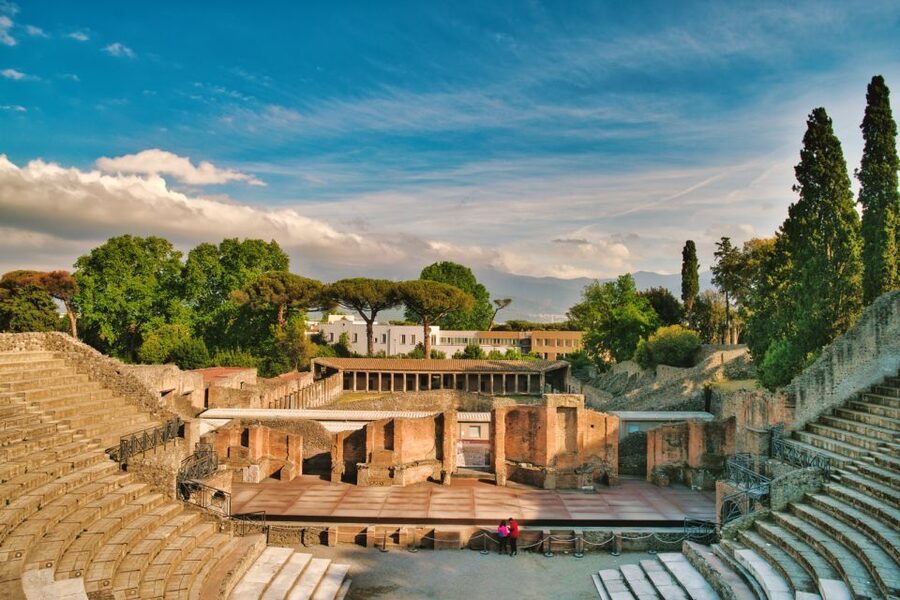
The small-group option is the sensible choice for most visitors who want context without paying for a fully private experience. Recent group sizes have been described as around 12 people, though the exact number can vary. A smaller group makes it easier to hear, ask questions, and stay near the guide.
A private tour costs more in general, though the listed price of $58 per person gives you a useful starting point for judging value. For that price, you receive entry, a guided walk, and access to a specialist who can save you time and help you see the most important areas in a very large site.
A private visit makes more sense if you have limited time, strong interests, older relatives, or children who need a different pace. It may also suit you if you want to ask many questions about art, architecture, or Vesuvius. A family with children aged 9 and 12 found the standard two-hour format manageable, though a serious presentation felt a little long for the younger visitors.
For a relaxed first visit, I would choose the small group. If Pompeii is a major reason for your trip, or if you want the route shaped around your interests, consider private.
Timing, Heat, and What to Carry
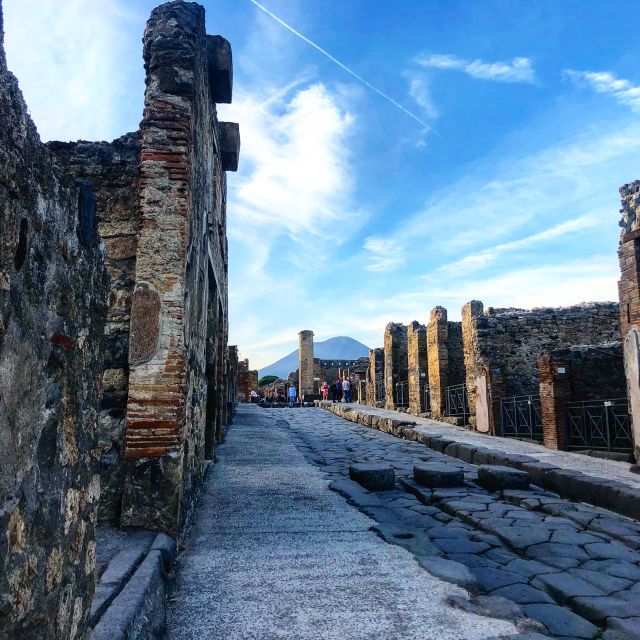
Pompeii has little shade, and summer heat can be intense. One visit took place at 35 degrees Celsius, with the guide wisely giving explanations in shaded areas. Another guide helped the group avoid long periods in direct sun.
Book an early start when possible to reduce heat and crowd pressure. An afternoon visit can still work, and local conditions may bring more breeze later in the day, but you should not count on comfortable temperatures. Wear sturdy walking shoes and bring water. The ancient paving stones create trip hazards, so watch your footing rather than walking with your eyes fixed on your phone.
The first Sunday of each month has free entrance. That can change the value calculation, since you may not need to pay for the ticket itself, but the site can also be busier. The skip-the-line benefit and guide service may still be useful, yet you should compare the expected crowd level with your priorities.
Parking is not included. If you are arriving by car, plan that part separately. The tour itself begins at the restaurant meeting point, not from a private parking area.
Can You Stay After the Guided Walk?
The stated duration is two to three hours, depending on the selected option and schedule. The guided portion is designed to show the principal areas, but Pompeii deserves longer if you have the time.
Several visits continued inside the park after the guide finished. That is one of the best ways to use this experience: let the guide give you orientation, then return to a house, street, or exhibit that caught your attention. You should confirm the practical details of remaining inside with your guide on the day, but allow extra time in your overall plan if you want to explore beyond the core route.
Do not schedule a tight connection immediately after the tour. Rail strikes have affected some plans in the area, and one booking had to be moved after a strike caused a missed start. Keep another transport option in mind if you have a fixed appointment afterward.
Who Will Get the Most From This Tour?
This tour suits you if you are visiting Pompeii for the first time, want the major sights explained, or have only a few hours. It is also a good fit if you prefer learning through stories rather than reading every sign on your own.
Families can use it successfully, but it is not presented as a child-focused tour. Younger children may find two hours of serious historical explanation tiring, especially in the heat. A private format may help if your family needs frequent pauses or a lighter pace.
Older visitors should think carefully about the walking conditions. One guide treated an 82-year-old participant with particular care, but the site remains uneven and physically demanding. If you have a medical condition, the activity may not suit you.
The tour is less ideal if you want to spend an entire day exploring every open street. In that case, use the guided visit as an introduction, then plan a longer independent visit or another Pompeii-focused activity.
Should You Book the Pompeii Guided Tour?
At $58 per person, this is good value if you want skip-the-line entry and a guide who can make sense of a huge archaeological site. You get a focused route through the Forum, Basilica, baths, theater, homes, bakery, neighborhoods, and Antiquarium, with time saved at the entrance and a chance to keep exploring afterward.
I would book it for a first Pompeii visit, especially in a small group or private format. Choose an early time in hot months, bring water and proper shoes, and leave room in your day for extra wandering.
You might skip it if you already know Pompeii well, prefer complete independence, or plan to spend several days studying the ruins at your own pace. For most first-time visitors, though, the guide is what turns a confusing collection of walls into a city you can picture.
FAQ
How long does the Pompeii guided tour last?
The tour lasts two to three hours. The exact duration depends on the selected option and schedule, so check the available start times when booking.
What languages are available?
Live guiding is available in Italian and English.
Does the tour include Pompeii entry?
Yes. The package includes a skip-the-line entry ticket and a guided walking tour of Pompeii.
Where do I meet the guide?
Meet at Ristorante Bar Sgambati and look for the Enjoy Pompeii red sign.
Can I choose a private tour?
Yes. Private and small-group options are available.
Is parking included?
No. Parking is not included in the activity price.
Newest reviews from Pompei Campania
- From Sorrento: Pompeii & Vesuvius tour small group★ 4.8 · 4 reviews
- Pompeii Private Tour for Kids and Their Families★ 4.8 · 4 reviews
- From Naples_ Pompeii Tour_Skip the line ticket + audioguide★ 4.3 · 4 reviews
- Pompeii, skip-the-line ticket with smartphone audio guide on App★ 3.0 · 4 reviews
- Pompeii Guided Experience – Tour Service Only★ 4.6 · 4 reviews
- From Naples Port:Pompeii+Vesuvius tour★ 4.3 · 4 reviews
- 2-Hour Pompeii Child-Friendly Tour★ 5.0 · 4 reviews
- Naples: Amalfi Coast, Sorrento and Pompeii Day Trip★ 4.4 · 5 reviews
Skip the Line, compared.

Skip-the-Line Entrance Ticket with Audio Guide
Read our review →


Skip-the-Line Entry Ticket with Digital Guide App
Read our review →
Pompeii Ruins Private Tour with Optional Skip-the-Line Entry
Read our review →
Skip-the-Line Pompeii Guided Tour from Sorrento
Read our review →
Skip the Line Guided Tour of Pompeii led by an Archaeologist
Read our review →
Pompeii Private Tour with an Archaeologist and Skip The Line – 3 hours
Read our review →Browse the lists this tour appears in