
Reviewed · ARCHAEOLOGIST-LED TOURS
Pompeii Skip-the-line Tour with Archaeologist Guide
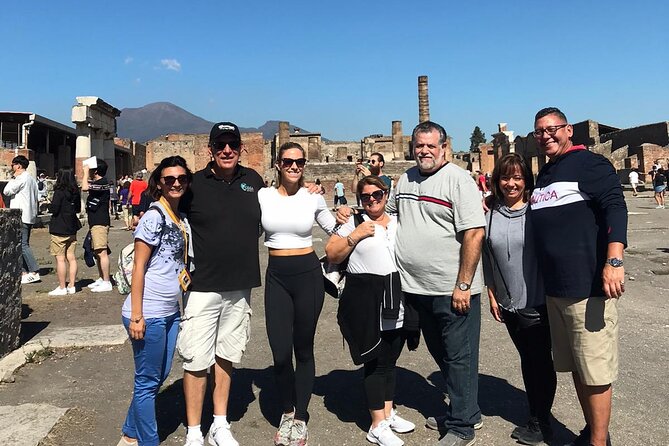
Pompeii is far easier to understand when someone can explain what you are seeing. This two-hour walk takes you from the forum to the theaters, baths, shops, gladiator barracks, and Lupanare, while an archaeologist guide connects cracked walls and worn stones to daily Roman life.
I like the small group limit of 16, which makes it easier to hear and ask questions. I also like the guides’ on-site experience. Lello, Italo, Leonardo, and Cela are repeatedly praised for clear English, humor, and an ability to point out details you would probably miss alone. The main drawback is time: two hours gives you a strong introduction, but Pompeii is huge, and you will want to keep exploring after the guide leaves.
In This Review
- Key points at a glance
- Why an archaeologist changes the Pompeii visit
- Meeting the guide near Piazza Esedra
- Walking into the ancient city
- The forum, where Pompeii did business and worshipped
- The theaters and the everyday pleasure of Pompeii
- Shops, food counters, and the signs of ordinary life
- The gladiator barracks and the House of Menander
- The Lupanare and Pompeii’s less polished stories
- What the two-hour limit really means
- Small-group value at $71.35
- Who will get the most from this visit
- My call: book it if context matters
- FAQ
- Where does the Pompeii tour begin?
- How do I reach the meeting point?
- How long does the tour last?
- Is admission to Pompeii included?
- What language is the tour offered in?
- How large is the group?
- Which Pompeii sights are included?
- What should I wear?
- Is hotel or port pickup included?
- Can I cancel for a refund?
Key points at a glance
- Archaeologist-led visit: Guides with direct archaeological experience explain details beyond the usual eruption story.
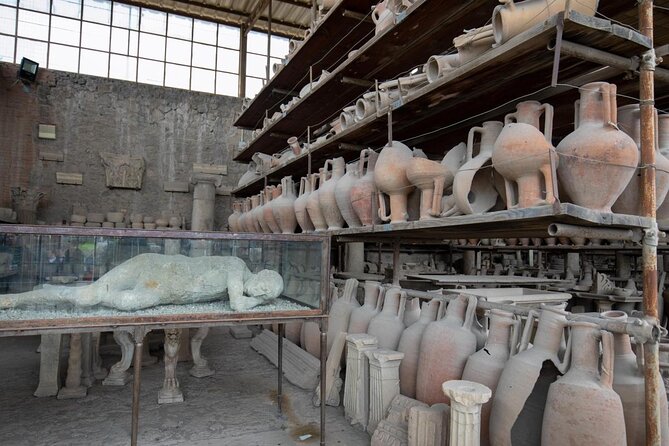
- A useful first look at Pompeii: See the forum, theaters, bathhouse, shops, gladiator barracks, House of Menander, Gymnasium, and Lupanare.
- Small groups: The maximum group size is 16, a more manageable setup than a large walking tour.
- Easy independent arrival: The Pompei Scavi station is close to the excavation entrance and can be reached from Naples or Sorrento by Circumvesuviana train.
- Admission included: Your booking covers the entrance ticket when used with the guide, not merely a reservation to enter the ruins alone.
- Prepare for rough ground: You walk on original Roman streets and lava rock, so sturdy, comfortable shoes matter.
Why an archaeologist changes the Pompeii visit
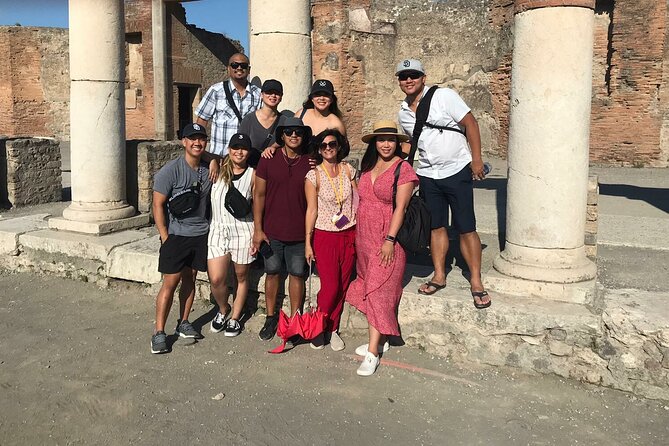
Pompeii can look like a field of attractive ruins if you walk through it without context. You see columns, painted walls, doorways, and stones, but you may not know if you are looking at a home, shop, temple, bath, or public office.
An archaeologist guide gives those remains a purpose. The grooves in the ancient cobblestones become wagon-wheel ruts. A row of rooms begins to make sense as a bathhouse. A plain counter becomes part of a food shop or bar. The forum is no longer just an open rectangle surrounded by broken buildings. It becomes the city’s civic and religious center, where priests and politicians worked.
That is the real value here. You are not simply being led from one famous ruin to another. You are being shown how Pompeii functioned before the eruption of Mount Vesuvius in AD 79.
The guides also bring useful first-hand site experience. Lello is described as having worked on the excavations for years, with some comments crediting him with nearly 30 years at Pompeii. That background helps explain why he can direct attention to small features and describe the ongoing work around the site. It also gives the tour a personal connection to modern archaeology, not just ancient dates and names.
More Pompeii excavation visits:
- Pompeii: Entry Ticket and Guided Tour with an Archaeologist
★ 4.8 · 19,459 reviews - Pompeii: Entry Ticket with Optional Audio Guide
★ 4.2 · 12,360 reviews - Pompeii: Small Group Tour with an Archaeologist
★ 4.8 · 12,264 reviews
Meeting the guide near Piazza Esedra
The meeting point is Hotel Vittoria at Piazza Esedra in Pompei, near the archaeological entrance. You make your own way there. Hotel pickup and port pickup are not included, so plan your route before leaving Naples, Sorrento, or your hotel.
The simplest public transport option is the Circumvesuviana train. From Naples or Sorrento, get off at Pompei Scavi station. The station is close to the excavation area, making this a practical choice if you are not staying in Pompeii itself.
Arrive early. The tour does not offer refunds if you are late or miss the start, and the booking confirmation is not intended for independent entry without the guide. This detail matters: you are purchasing a guided experience with admission, not a flexible open ticket that you can use at any hour.
The meeting area can be busy, so keep your phone available and save the provider’s contact information. You are asked to provide a mobile number with your country code at booking, which is useful if the guide needs to reach you.
Walking into the ancient city
Once the group enters, the tour becomes a steady walk through the excavated city. The pace is designed to cover major highlights in about two hours, with explanations along the way.
You will walk on original ancient streets, many of them made from uneven volcanic stone. The ruts left by wagons are among the most memorable details because they show how everyday traffic shaped the roads. They also make clear that Pompeii is not a polished museum. This is an archaeological site with rough footing, open spaces, and plenty of sun.
The physical setting is part of the experience, but it can also be tiring. Wear shoes with good support. In summer, bring a hat and protect yourself from the sun. The advice to wear comfortable shoes is not a formality here. You are walking on lava rock and ancient cobbles for the full visit.
The tour is offered in English. Ear pieces are provided according to the supplied tour details and are especially useful when the group is near other tour parties or standing in a wide public space.
The forum, where Pompeii did business and worshipped
The forum is one of the essential stops. In Roman cities, this was the center of public life, and Pompeii’s forum brought government, religion, and commerce together.
Your guide explains the remains of temples and civic buildings around the open square. This is where the city’s public business took place, and where religious activity and political power shared the same ground.
The forum can be hard to interpret on your own because many buildings are incomplete. A guide helps you understand the relationship between the open space and the structures around it. Instead of seeing isolated walls, you get a sense of how people moved through the city and where public authority was displayed.
Expect this stop to be more about orientation and interpretation than intact rooms. The value comes from seeing how the city was organized.
More tours led by an archaeologist:
- Pompeii Small Group Tour with an Archaeologist
★ 5.0 · 6,593 reviews - Pompeii and Herculaneum Small Group Tour with an Archaeologist
★ 5.0 · 1,350 reviews - Skip the Line Guided Tour of Pompeii led by an Archaeologist
★ 5.0 · 703 reviews - Pompeii: Exclusive Tour with Archaeologist and Entry Tickets
★ 4.9 · 634 reviews
The theaters and the everyday pleasure of Pompeii
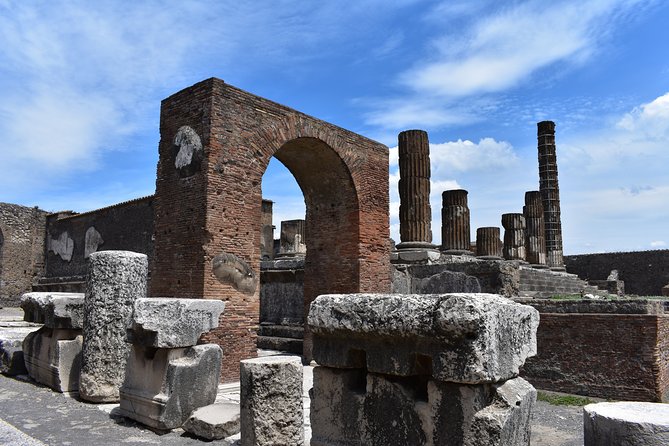
The small theaters offer a glimpse of Pompeii’s entertainment life. Tragedy and comedy were performed here, and the surviving stonework gives you a feel for the setting even when the stage decoration is gone.
The tour also visits the thermal bathhouse. Roman baths were not simply places to wash. They were part of a regular social routine involving bathing, exercise, conversation, and gossip.
That social side is important. Pompeii is often introduced through disaster, but the baths and theaters remind you that this was a functioning city filled with ordinary routines. People worked, met friends, shopped, attended performances, and spent time in public spaces long before the volcano turned the city into an archaeological record.
The two-hour format works well for these stops because you receive the main explanation without being asked to study every surviving wall. If you have a strong interest in Roman architecture or public entertainment, you will likely want extra time after the guided portion.
Shops, food counters, and the signs of ordinary life
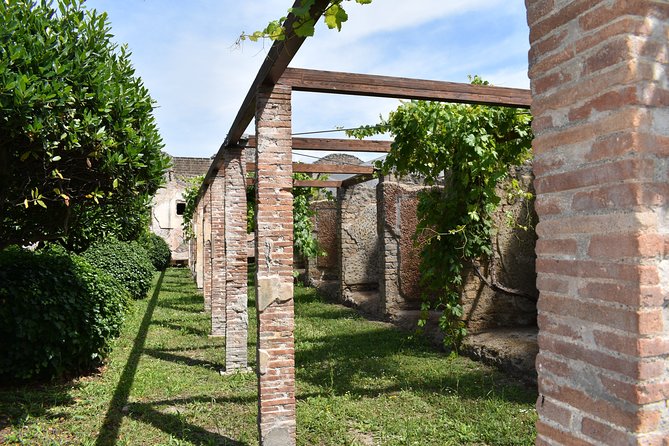
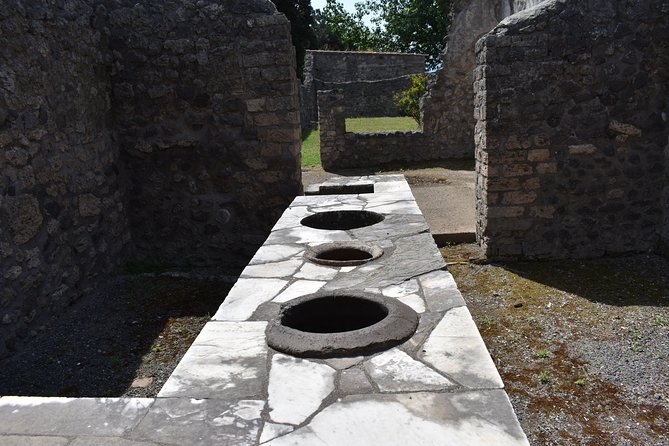
Some of Pompeii’s best details are found in its businesses. You can look into remains of restaurants, bars, and shops that once sold food and clothing.
These spaces help make the city feel practical rather than monumental. The forum and temples tell you about public power, while the shops show how people ate, traded, and earned a living.
This is where an archaeologist guide can add the most. A counter, doorway, or room may seem plain until someone explains its likely use. The guides are also good at linking past and present, showing how Roman solutions to daily problems still feel recognizable.
Families may find this part especially accessible. The tour has worked well for groups with children from about nine years old through teenagers, since the explanations include stories and concrete objects rather than only abstract history. Guides such as Lello and Cela are praised for keeping younger members involved and welcoming questions from every age.
The gladiator barracks and the House of Menander
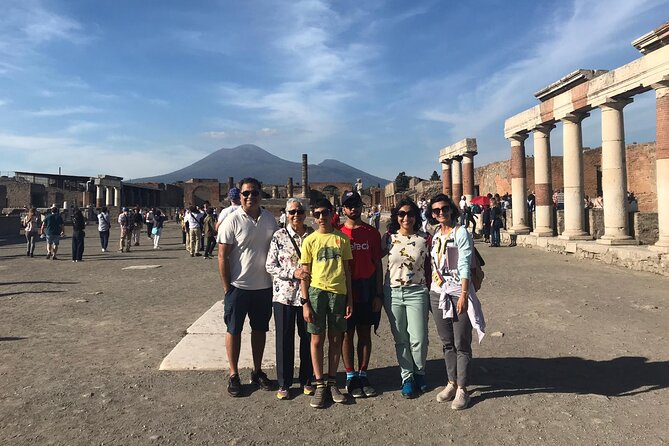
The tour includes the barracks where gladiators trained and lived. This stop adds another layer to Pompeii’s public life. Gladiatorial games were entertainment, but they also involved training, housing, organization, and the business of staging spectacles.
The House of Menander is another named highlight. As with many large Roman homes, its appeal comes from seeing how private domestic space fit into the wider city. You might notice rooms, courtyards, decoration, and the way the house reflects the lives of its occupants.
The supplied route also includes the Gymnasium and several smaller buildings. Exact access can vary with site conditions, but the stated itinerary is designed to cover a broad mix of public, private, commercial, and entertainment spaces.
Because Pompeii’s excavations are extensive, the guide’s selection matters. A good route keeps you moving while still giving enough time to understand each stop. Italo is praised for avoiding some crowds and directing the group to important sights without getting bogged down. That kind of judgment is valuable at a site where it is easy to spend too long in one area and miss another.
The Lupanare and Pompeii’s less polished stories
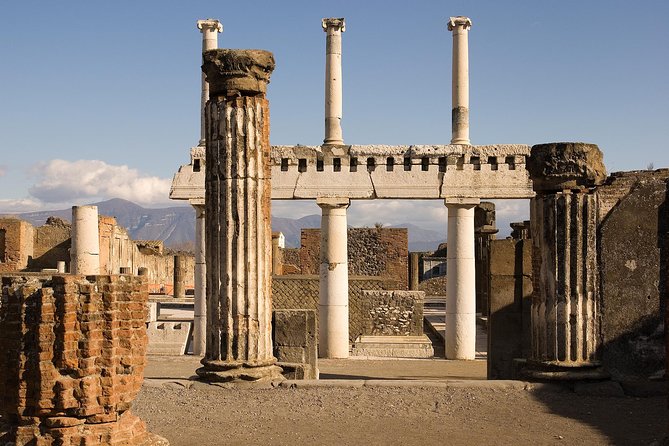
The Lupanare, or brothel, is one of Pompeii’s most popular attractions. Its surviving layout and imagery offer a direct look at a part of Roman urban life that is often softened in general museum displays.
This stop is not for everyone, especially families who prefer to avoid adult subject matter. If you are comfortable with it, the Lupanare is useful because it adds social and commercial detail to the tour. Pompeii was not only temples, theaters, and grand houses. It was also a working city with businesses and services of every kind.
The guide can provide context that keeps the stop from becoming a quick novelty. The point is not simply to see a famous room, but to understand how the site records many parts of daily life, including the less respectable ones.
What the two-hour limit really means
Two hours is enough for a well-paced introduction. You will see many headline sites and leave with a clearer idea of how Pompeii was built and used.
It is not enough to see everything. Pompeii is enormous, and some areas may be closed or outside the chosen route. Several guides point out additional places to visit once the formal tour ends, which makes this experience a good opening chapter rather than a complete day at the ruins.
If you have only half a day, this tour is a sensible way to use your time. You avoid wandering without context and get a clear framework for any remaining exploration. If you have a full day, plan to stay after the guide finishes. The site is large enough to reward another few hours, especially if you want to revisit a house, study wall paintings, or seek out areas not covered in the introduction.
The 5 p.m. departure is specifically noted as lasting two hours. That timing may suit a hotter day or an itinerary that reaches Pompeii later, but you should still confirm that the chosen start fits your transport and closing-time plans.
Small-group value at $71.35
At $71.35 per person, this is not the cheapest way to enter Pompeii. The price includes admission and a two-hour local guide, but not food or transportation to the meeting point.
I see the value mainly in the archaeologist-led interpretation and the smaller group. With a maximum of 16 people, you have a better chance of hearing the explanation and asking a question than you would in a large group of 25 or more. The guide’s ability to adjust the pace and point out details is also more useful in a small party.
The price makes the most sense if you are visiting Pompeii for the first time, have limited time, or want the ruins explained rather than simply photographed. It is less appealing if you already have strong knowledge of Pompeii and prefer to walk independently at your own pace.
Group discounts are available, which may improve the cost for families or larger parties. The tour is booked an average of 42 days ahead, so popular departure times can fill early. If a particular guide, date, or late-afternoon start matters to you, booking ahead is sensible.
The high overall rating of 4.9 from 559 ratings and the 99 percent recommendation figure fit the tour’s strongest qualities: clear explanations, engaging guides, and a route that makes a huge site manageable. Still, those numbers do not change the basic tradeoff. You are paying for expert guidance and structure, not an all-day exploration.
Who will get the most from this visit
I would choose this tour for:
- First-time visitors who want the ruins explained in plain English.
- Families with older children and teenagers.
- Anyone arriving from Naples or Sorrento by train.
- People with only half a day for Pompeii.
- Visitors who want an archaeologist rather than a general escort.
- Anyone who prefers a small group to a large procession.
You may prefer an independent visit if you want to linger for hours in one house, avoid a fixed schedule, or spend the day covering every open section. You should also think carefully about the walking surface if uneven stone is difficult for you, although the supplied information says most people can participate and service animals are allowed.
The tour requires good weather. If poor weather cancels it, you are offered another date or a full refund. The same applies if the minimum number of participants is not reached. For your own cancellation, you can receive a full refund if you cancel at least 24 hours before the local start time. Changes made within 24 hours are not accepted.
My call: book it if context matters
I would book this Pompeii tour if you want the city to make sense quickly. Lello, Italo, Leonardo, and Cela are praised for warmth, humor, strong English, and the ability to turn archaeological details into memorable stories. That matters at Pompeii, where a guide can mean the difference between seeing old walls and understanding a Roman neighborhood.
Book it with realistic expectations. Two hours will not cover the whole park, and you must arrive on time at the meeting point with good walking shoes. Treat the guided portion as your orientation, then stay on afterward if your schedule allows. For a first visit, the combination of admission, a small group, and an archaeologist’s eye makes the $71.35 cost reasonable.
FAQ
Where does the Pompeii tour begin?
The meeting point is Hotel Vittoria at Piazza Esedra, 80045 Pompei, near the Pompeii archaeological entrance.
How do I reach the meeting point?
You make your own way to the meeting point. Pompeii is easily reached from Naples or Sorrento by Circumvesuviana train, with Pompei Scavi station near the excavation entrance.
How long does the tour last?
The guided visit lasts approximately two hours. The 5 p.m. departure also lasts two hours.
Is admission to Pompeii included?
Yes, admission tickets are included. The confirmation is for the guided tour and must be used with the guide. It is not a separate ticket for independent entry.
What language is the tour offered in?
The tour is offered in English.
How large is the group?
The maximum group size is 16 participants.
Which Pompeii sights are included?
The route includes major highlights such as the forum, theaters, thermal baths, shops, gladiator barracks, House of Menander, Gymnasium, and Lupanare. The exact route can depend on site conditions.
What should I wear?
Wear comfortable, supportive shoes because you walk on original ancient streets and lava rock. A hat is recommended for summer visits.
Is hotel or port pickup included?
No. Hotel pickup, port pickup, and drop-off are not included.
Can I cancel for a refund?
You can cancel at least 24 hours before the experience start time for a full refund. Cancellations or changes made less than 24 hours before the start are not refunded or accepted. If poor weather or insufficient participation cancels the tour, you are offered another date or a full refund.
More Skip the Line in Pompeii Ruins
- Pompeii: Skip-the-Line Entrance Ticket with Audio Guide
★ 4.0 · 2,509 reviews - Sorrento: Skip-the-Line Pompeii Express Tour by Train
★ 4.8 · 2,038 reviews - Pompeii: Skip-the-line-Ticket and Guided Tour
★ 4.6 · 1,152 reviews - Pompeii: Guided Tour with Skip-the-Line Entry
★ 4.9 · 812 reviews
Newest reviews from Pompeii Ruins
- Private Tour Pompeii and Winery★ 5.0 · 4 reviews
- Visit the Pompeii ruins from Salerno with Pizza Lunch★ 5.0 · 4 reviews
- Pompeii Private Tour for Kids and Their Families★ 4.8 · 4 reviews
- From Sorrento: Pompeii & Vesuvius tour small group★ 4.8 · 4 reviews
- Pompeii Sorrento and Positano Tour★ 5.0 · 4 reviews
- From Naples_ Pompeii Tour_Skip the line ticket + audioguide★ 4.3 · 4 reviews
- Pompeii Private Half-Day Tour from: Naples,Sorrento, Amalfi Coast★ 5.0 · 4 reviews
- Pompeii, skip-the-line ticket with smartphone audio guide on App★ 3.0 · 4 reviews
Archaeologist-Led Tours, compared.

Entry Ticket and Guided Tour with an Archaeologist
Read our review →
Pompeii Small Group Tour with an Archaeologist
Read our review →
Pompeii and Herculaneum Small Group Tour with an Archaeologist
Read our review →
Skip the Line Guided Tour of Pompeii led by an Archaeologist
Read our review →
Exclusive Tour with Archaeologist and Entry Tickets
Read our review →
Pompeii Private Tour with an Archaeologist and Skip The Line – 3 hours
Read our review →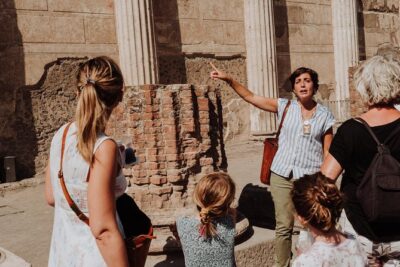
Browse the lists this tour appears in