
Reviewed · ARCHAEOLOGIST-LED TOURS
Pompeii: Small Group Tour with an Archaeologist
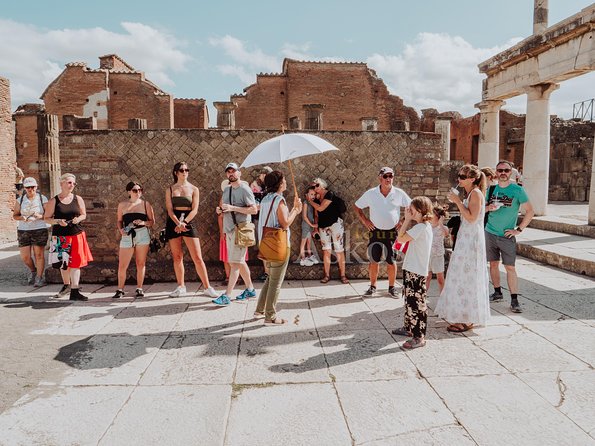
Pompeii is not a single monument. It is an entire Roman city, with streets, bakeries, bathhouses, temples, theaters, private homes, and a fast-food culture preserved under volcanic ash. This small-group tour with an archaeologist gives you a useful map of that huge site before you try to make sense of it alone.
I like the way the guide explains small clues, such as the details that distinguish a shop from a home, handprints near fountains, and cart tracks worn into the roads. I also like the freedom afterward: you can remain inside Pompeii and spend several more hours visiting places the tour could not cover.
The main drawback is time. Two hours goes quickly, and Pompeii is so large that even a well-paced tour only introduces part of it. The uneven paving, ramps, steps, and slight climbs also make this a poor choice if you have serious mobility limits.
In This Review
- Key points to know before you book
- Why a guided start helps at Pompeii
- Entering through Porta Marina Superiore
- The Forum, temples, and public Pompeii
- Houses, mosaics, and clues to private life
- Baths, bakeries, and the Lupanar
- The theaters and the best visual moments
- The three-hour tour and the Villa of the Mysteries
- What the $40 price really buys you
- Timing, crowds, and the time after the tour
- Practical comfort and access notes
- Who should choose this Pompeii tour?
- Should you book it?
- FAQ
- How long does the Pompeii tour last?
- What is included in the price?
- Can I explore Pompeii after the guided tour?
- Is a private tour available?
- Which languages are offered?
- What sights are included?
- Is the Villa of the Mysteries included in every tour?
- Is the tour suitable for wheelchair users?
- What should I bring to Pompeii?
Key points to know before you book
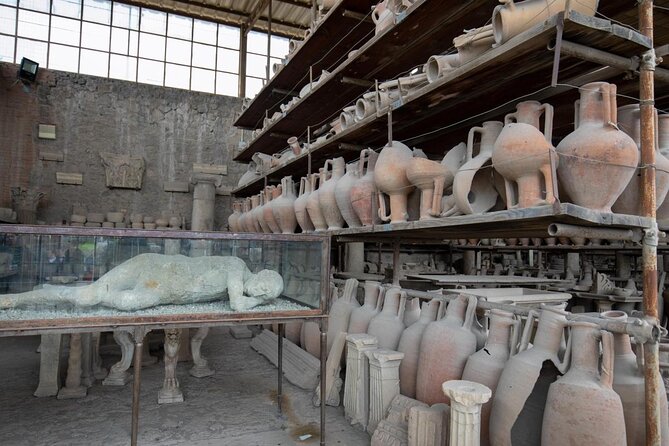
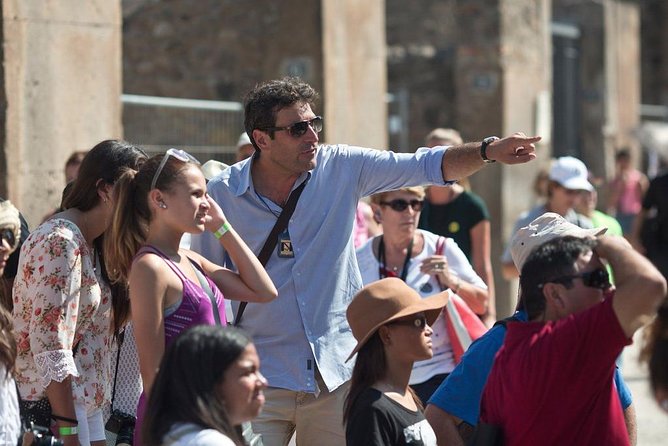
- An archaeologist leads the walk: Guides such as Roxanne, Paolo, Alessandra, Teresa, Nicoletta, Mario, and Anna are praised for turning ruins into stories about ordinary Roman life.
- The two-hour route covers the essentials: Expect Porta Marina, the Forum, temples, baths, houses, the brothel, and the Large Theatre.
- The three-hour choice adds the Villa of the Mysteries: Its famous frescoes make the extra hour worthwhile if art and Roman ritual interest you.
- You can keep exploring after the guide leaves: This is especially useful because the archaeological park is too large for a short guided visit.
- The price is modest for specialist help: At about $40 per person, the tour costs far less than a private full-day guide while giving you context you would likely miss alone.
- Plan for rough ground and sun: Large bags are not allowed, and the route is not suitable for wheelchair users or people with major walking difficulties.
Why a guided start helps at Pompeii

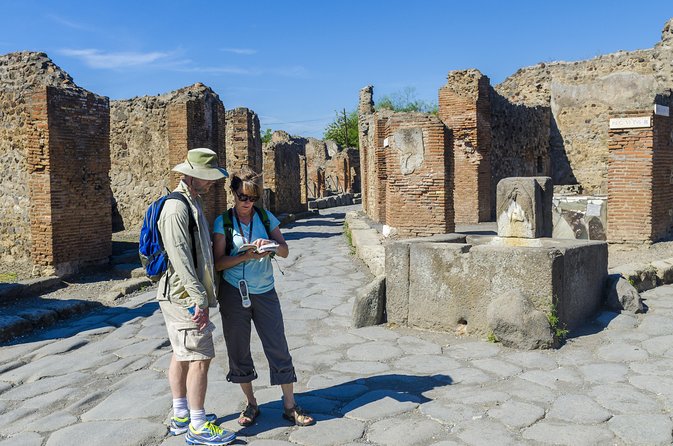
Pompeii can feel confusing at first. You enter through an ancient gate, then face a web of stone streets and half-standing buildings. Without context, it is easy to admire the walls and miss what they tell you about Roman society.
An archaeologist gives you a way to read the site. A fountain is no longer just a fountain when you notice the handprints nearby. A doorway can hint at a shop, a residence, or a public building. Raised stepping stones, worn road surfaces, wall paintings, and open courtyards begin to show how the city worked.
The guides also put the eruption of Mount Vesuvius in 79 AD into human terms. You hear about the people who lived in these houses, worked in these shops, attended performances, visited baths, and used the public Forum. That human angle is one reason this tour earns such strong praise, with an overall rating of 4.8 from more than 12,000 ratings.
The tone varies by guide, but the best guides combine facts with humor and questions. Roxanne is praised for her warmth and easy storytelling. Paolo is described as passionate about Pompeii, while Teresa has personal excavation experience to share. Nicoletta is known for adjusting the pace, avoiding crowded areas, and offering practical suggestions for the rest of the day.
More Pompeii excavation visits:
- Pompeii: Entry Ticket and Guided Tour with an Archaeologist
★ 4.8 · 19,459 reviews - Pompeii: Skip-the-Line Entrance Ticket with Audio Guide
★ 4.0 · 2,509 reviews - Naples: Pompeii and Mt. Vesuvius with Lunch and Wine Tasting
★ 4.5 · 2,454 reviews
Entering through Porta Marina Superiore
The tour begins at one of Pompeii’s ancient entrances, Porta Marina Superiore. The meeting point can change with the option you book, so check your confirmation carefully. Several listed meeting points are along Via Villa dei Misteri, Via Roma, or near Hortus Pompei.
Once inside, you start to grasp the scale of the city. This is not a compact museum where every important object sits a few steps apart. The route involves real walking over old paving stones, ramps, uneven ground, and some inclines.
A cloakroom beside the Porta Marina Superiore entrance may accept bags free of charge, but service depends on availability. Do not arrive with luggage or a large backpack, since large bags are not allowed inside. Bring your passport or identity card, though a copy is accepted.
The Forum, temples, and public Pompeii
The Forum was the center of public life, and it is the natural place to understand the city’s structure. From here, you can look toward Mount Vesuvius and picture the Forum surrounded by civic, religious, and commercial activity.
The Temple of Apollo and Temple of Jupiter show the religious side of the city. The Basilica, despite its name, was not a church. It served as a center for business and legal affairs, giving you a better sense of how Roman public life was organized.
The stops are close enough to form a clear introduction, but the Forum can also be exposed and sunny. A morning departure is a sensible choice if you want to avoid the strongest heat. One guide is specifically praised for keeping the group out of direct sun when possible, and several guides adjust their route to avoid the thickest crowds.
The Forum is also where a guide earns the price of admission. A bare wall can seem dull until someone explains its function, date, or connection to daily life. You do not need to memorize every name. You need a few solid ideas that help the rest of Pompeii make sense.
Houses, mosaics, and clues to private life
The route continues into large residences such as the House of Menander, House of the Faun, House of the Vettii, and House of Mysteries on the longer option. These homes show how private Roman life could include courtyards, painted walls, reception rooms, gardens, and elaborate decoration.
The House of the Faun is a major stop for its size and decoration. The House of the Vettii is important for its frescoes and the glimpse it gives into the world of wealthy homeowners. Depending on closures and crowd levels, the exact order or access to individual buildings can change.
The appeal is not just the artwork. Your guide helps you notice how the buildings were used. You might learn to read the layout of a residence, spot signs of commercial activity, or understand why a room was placed around a central courtyard.
Some houses may have restricted access during your visit. Pompeii regularly manages crowds and carries out preservation work, so do not judge the tour by one temporarily closed room. The route can shift, but the main aim remains the same: show you public buildings, homes, work spaces, and art in one connected walk.
More tours led by an archaeologist:
- Pompeii 3hours Villa of Mysteries tour with an Archaeologist
★ 4.8 · 486 reviews - Pompeii: Tour with Archaeologist Guide & Skip-the-Line Entry
★ 4.5 · 478 reviews - Pompeii and Herculaneum: Guided Tour with an Archaeologist
★ 5.0 · 164 reviews - Pompeii: Guided Tour with Archaeologist with max. 12 People
★ 5.0 · 155 reviews
Baths, bakeries, and the Lupanar
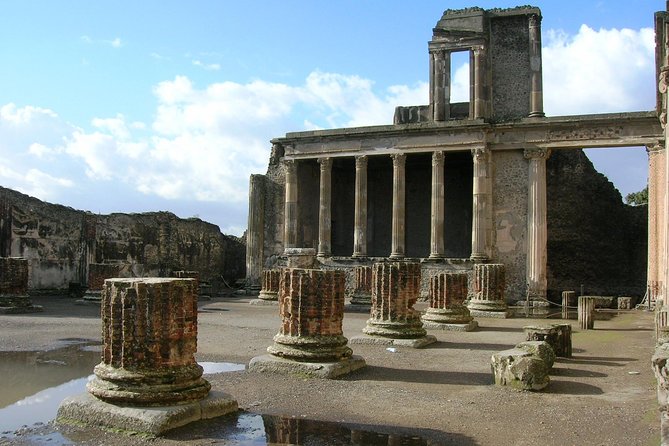
The Forum Baths provide a glimpse of Roman bathing culture. Baths were more than places to wash. They were social spaces and part of the rhythm of city life, though the guide will determine how much detail fits into the time available.
The bakery helps bring workaday Pompeii into view. Instead of focusing only on grand villas, the tour includes places connected to food production and ordinary business. That balance matters. Pompeii is most interesting when you see both the grand houses and the practical machinery of daily life.
The Lupanar, traditionally identified as a brothel, is one of the site’s most talked-about stops. You can see its small stone beds and preserved erotic frescoes. The name and function are explained with historical context rather than cheap jokes, though this section does include adult themes and graffiti.
If you are bringing children, use your judgment. One family found that a ten-year-old largely missed the adult meaning, but the subject matter is still present. Children must be accompanied by an adult, and parents may prefer to give them a brief explanation before the visit.
The theaters and the best visual moments
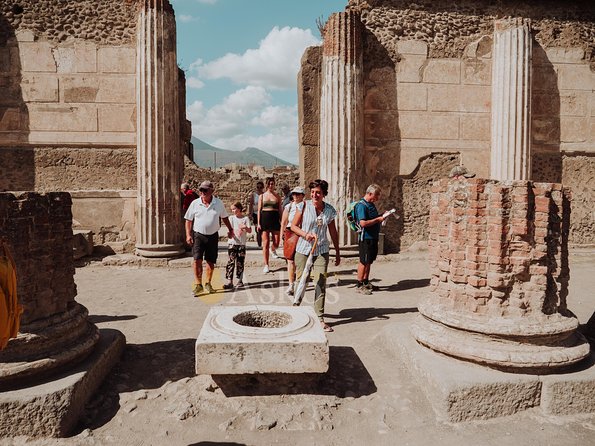
The Large Theatre is one of the tour’s strongest visual stops. Walking into the performance space gives you a clear sense of scale, and it is easier to imagine public entertainment here than in many fragmentary ruins.
The Great Theatre is also a useful reminder that Pompeii was not frozen as a collection of houses. It was a functioning city with public shows, civic rituals, religious buildings, commerce, and leisure. The guide can connect the theater to the wider life of the town without burying you in dates.
The route may include other theatrical areas or present the theater at a different point, depending on crowd movement and temporary closures. If you love architecture or performance history, you may wish you had more time with the guide. Several strong guide experiences end with the same practical result: you want another few hours to keep walking.
The three-hour tour and the Villa of the Mysteries

The three-hour option adds the Villa of the Mysteries, located beyond the central part of the city. Its painted walls are among Pompeii’s most memorable works, and the extra hour gives the guide time to explain the famous fresco cycle in more detail.
This is the better pick if you care about Roman painting, symbolism, and private villas. One guide, Mario, is praised for explaining the frescoes with particular enthusiasm and care. The walk to the villa also adds distance, so the longer route is not simply an extra lecture in the same small area.
The three-hour version does not mean you will see every important building. Pompeii is much too large for that. It means you get a fuller introduction and one especially rewarding artistic stop.
If your schedule is tight, the two-hour tour still works well. It covers the central sights and leaves you free to choose what comes next. If you have most of a day, the extra hour at the Villa of the Mysteries is a sound use of your time.
What the $40 price really buys you
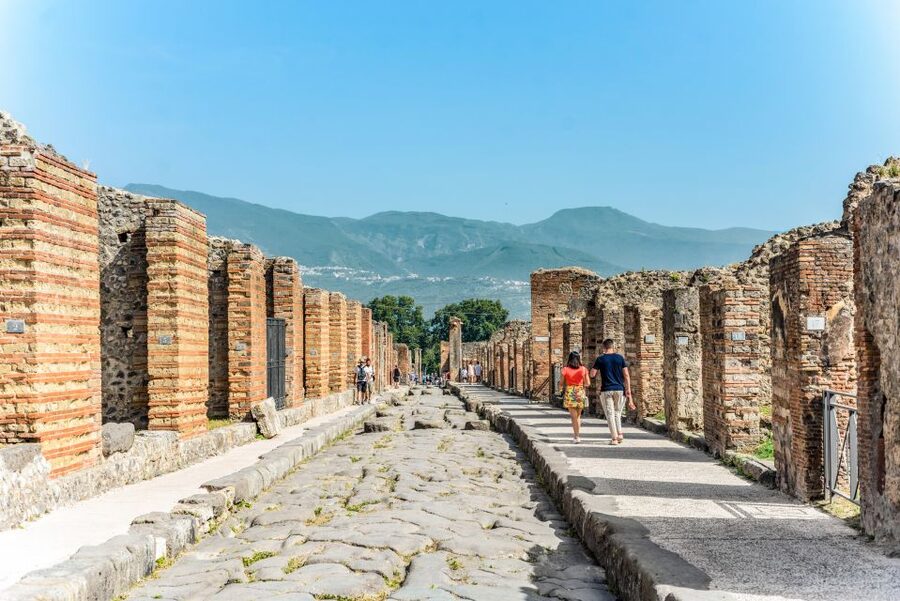
At about $40 per person, the value comes from the archaeologist’s interpretation, not just the entry ticket. Pompeii’s streets and buildings are open to explore, but a guide can show you details that are easy to pass without noticing.
The price includes a Pompei Express entry ticket and a two- or three-hour guided visit. Headsets are supplied for groups of 16 or more. Food, drinks, transport, and personal purchases are not included.
A private option is available if you want the guide’s attention focused on your own group. A shared small group is the better value for most people, especially if you are happy to ask questions in front of others. The private option may be worth considering for families, mixed-age groups, or anyone who wants to control the pace.
Language choices include English, Italian, French, Spanish, German, and Portuguese, but shared and private options do not always offer the same languages. Check the specific departure before paying.
Timing, crowds, and the time after the tour
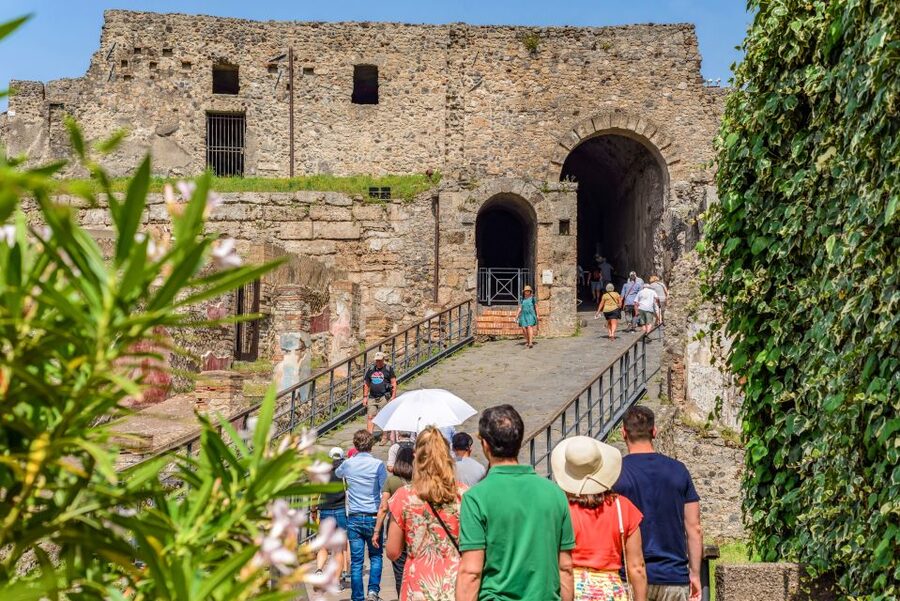
The tour lasts two or three hours, but you should think of that as your introduction, not your full Pompeii visit. You are allowed to stay inside the archaeological park after the guided portion and continue on your own.
This flexibility is a major advantage. One family stayed for about three additional hours after receiving suggestions from the guide. Another useful lesson is to book an earlier start if you want a long afternoon inside the park. A two o’clock tour may finish with only about an hour before closing, and some areas may close before the official park closing time.
The park is large enough that walking from one side to the other can take roughly half an hour. Do not fill your post-tour plan with too many far-flung buildings. Ask the guide which nearby areas remain open and match your choices to your energy level.
The listed drop-off points are Villa dei Misteri, the Archaeological Park of Pompeii, and Via Roma 101. There is no transportation included, so you arrange your own way to and from the meeting point.
Practical comfort and access notes
Wear firm, comfortable shoes. The ancient streets are uneven, and you will encounter steps, ramps, slight climbs, and declines. Rest and dining areas may require additional steps.
The tour is not recommended for wheelchair users or people with mobility impairments. Mobility scooters are not allowed. Dogs over 10 kilograms cannot enter the site, and smoking is prohibited.
Bring water and protect yourself from the sun, since the route includes open areas. Food and drinks are not included, so plan a break before or after the tour rather than expecting the guide to provide one.
A small mix-up at check-in can cause trouble if the staff do not mark your arrival. Make sure your name is checked off when you arrive, then confirm where your guide is waiting. The meeting locations are generally designed to be findable, but the entrance area can be busy.
Free cancellation is available up to 24 hours before the start, and you can reserve now and pay later. Those terms help if your Campania schedule depends on trains or changing weather, though you still need to arrive on time.
Who should choose this Pompeii tour?
I would choose this tour for a first visit, especially if Pompeii is competing with Naples, Sorrento, or the Amalfi Coast for your limited time. The archaeologist gives you a framework, and the open-ended finish lets you follow your own interests afterward.
It also suits families with older children and teenagers. The theaters, graffiti, shops, and stories about daily life give younger visitors more to look at than a list of emperors and dates. The Lupanar does include adult material, so parents should decide how to handle that stop.
Art lovers should favor the three-hour option with the Villa of the Mysteries. Independent-minded visitors should favor the two-hour version if they want a brisk introduction and several hours alone inside the park.
I would skip it if you cannot manage uneven surfaces or if you want a quiet, slow study of every house. A private tour may help with pacing, but it cannot remove the ancient steps and rough ground. Also think carefully about the start time: a late departure leaves less room for independent exploration.
Should you book it?
Yes, if you want Pompeii to feel like a city rather than a field of ruins. The archaeologist-led explanation is the real strength, especially when the guide points out small evidence of work, worship, business, and home life.
Choose two hours for the essential route and three hours for the Villa of the Mysteries. Arrive early, travel light, wear good shoes, and keep the rest of your day open. At $40, this is a practical way to get your bearings fast, then continue at your own pace.
FAQ
How long does the Pompeii tour last?
You can choose a two-hour guided tour or a three-hour option that includes the Villa of the Mysteries.
What is included in the price?
The price includes the Pompei Express entry ticket, the guided tour by an archaeologist, and headsets for groups of 16 or more. Food, drinks, transportation, and personal expenses are not included.
Can I explore Pompeii after the guided tour?
Yes. You can remain inside the archaeological site after the tour and continue exploring independently.
Is a private tour available?
Yes. You can choose a private group option, although language availability may differ from the shared tour.
Which languages are offered?
Guided tours may be available in English, Italian, French, Spanish, German, and Portuguese. The available languages depend on the specific shared or private option.
What sights are included?
The route may include Porta Marina, the Temple of Apollo, the Forum, the Temple of Jupiter, the Basilica, the House of Menander, the Forum Baths, the Lupanar, the House of the Faun, the Large Theatre, and the House of the Vettii. The precise route can change because of crowds or temporary closures.
Is the Villa of the Mysteries included in every tour?
No. It is included with the three-hour tour option.
Is the tour suitable for wheelchair users?
No. The tour is not suitable for wheelchair users or people with mobility impairments because of uneven surfaces, steps, ramps, and inclines.
What should I bring to Pompeii?
Bring your passport or identity card, with a copy accepted. Wear comfortable shoes and travel without large bags or luggage. A cloakroom near Porta Marina Superiore may be available, subject to space.
Newest reviews from Pompei Campania
- From Sorrento: Pompeii & Vesuvius tour small group★ 4.8 · 4 reviews
- Pompeii Private Tour for Kids and Their Families★ 4.8 · 4 reviews
- From Naples_ Pompeii Tour_Skip the line ticket + audioguide★ 4.3 · 4 reviews
- Pompeii, skip-the-line ticket with smartphone audio guide on App★ 3.0 · 4 reviews
- Pompeii Guided Experience – Tour Service Only★ 4.6 · 4 reviews
- From Naples Port:Pompeii+Vesuvius tour★ 4.3 · 4 reviews
- 2-Hour Pompeii Child-Friendly Tour★ 5.0 · 4 reviews
- Naples: Amalfi Coast, Sorrento and Pompeii Day Trip★ 4.4 · 5 reviews
Archaeologist-Led Tours, compared.

Entry Ticket and Guided Tour with an Archaeologist
Read our review →
Pompeii Small Group Tour with an Archaeologist
Read our review →
Pompeii and Herculaneum Small Group Tour with an Archaeologist
Read our review →
Skip the Line Guided Tour of Pompeii led by an Archaeologist
Read our review →
Exclusive Tour with Archaeologist and Entry Tickets
Read our review →
Pompeii Private Tour with an Archaeologist and Skip The Line – 3 hours
Read our review →
Pompeii Skip-the-line Tour with Archaeologist Guide
Read our review →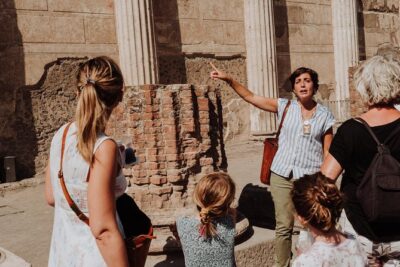
Browse the lists this tour appears in