
Reviewed · ARCHAEOLOGIST-LED TOURS
Pompeii: Guided Tour with Archaeologist with max. 12 People
Pompeii makes the most sense when someone can explain the broken walls, faded paintings, and wheel-worn streets as parts of a living Roman town. This small-group tour puts an archaeologist beside you, and guide Benedetto brings the ancient city down to the level of ordinary homes, bakeries, shops, baths, and street life.
I like the maximum of 12 people, which makes it easy to hear, ask questions, and stay together. I also like the express entry and the free time after the two-hour walk, since Pompeii is far too large to finish with any short guided visit. The main consideration is simple: two hours covers the major sights, not the whole archaeological park, and the uneven ground makes this a poor choice for wheelchair users or anyone with serious mobility limits.
In This Review
- Key points to know before booking
- Why an archaeologist changes Pompeii
- Meeting at Ristorante Suisse and entering through Porta Marina
- The theaters area gives you a strong opening
- House of Menander and Pompeii’s decorated homes
- Roman streets, shops, bakeries, and snack bars
- Terme Stabiane and the public side of Roman life
- The lupanare, approached with context
- The Forum, Temple of Jupiter, and civic Pompeii
- The plaster casts and the human cost of AD 79
- Crowd control, weather, and the value of a small group
- Two hours guided, then time to continue alone
- Is $65 per person good value?
- Who should book this Pompeii tour?
- FAQ
- How long does the Pompeii tour last?
- How much does the tour cost?
- What language is the tour conducted in?
- How many people can join the group?
- Who is the guide?
- Where is the meeting point?
- Which Pompeii entrance does the tour use?
- Is entry to Pompeii included?
- Do I need to bring identification?
- Are headsets provided?
- Is the tour suitable for wheelchair users?
- What should I bring?
- Can I cancel the booking?
- Should you book it?
Key points to know before booking
- A working archaeologist leads the walk: Benedetto’s professional archaeological background gives the tour more depth than a basic sightseeing circuit.
- The route covers Pompeii’s essential sights: You see the theaters area, decorated houses, public baths, lupanare, Forum, Temple of Jupiter, Macellum, and Basilica.
- Small groups make a real difference: With no more than 12 people, questions are easier and the guide can adjust the pace.
- You enter through Porta Marina Inferiore: The meeting point is Ristorante Suisse, where the guide waits with a sign bearing your name.
- You can stay inside after the tour: Free time lets you revisit a favorite area or seek out ongoing archaeological work.
- Bring your original passport or ID: Pompeii tickets are named, and the site requires the original identity document.
Why an archaeologist changes Pompeii
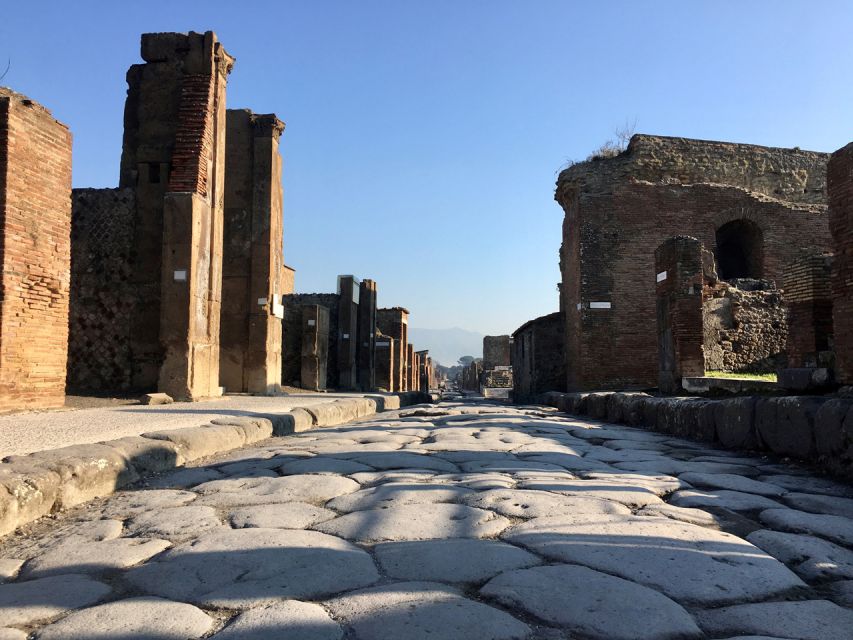
Pompeii can feel confusing at first. You walk past a wall with a painted figure, turn onto an ancient road, and see a line of doorways with little explanation. The site has signs, but they cannot explain every room, social custom, building phase, or practical detail.
Benedetto’s role is valuable because he explains how the pieces fit together. He has worked on Pompeii’s excavations and is described as an archaeologist connected with university work. That background helps him explain not only what a building was called, but how archaeologists read its remains and what is still uncertain.
The strongest part of this approach is its attention to daily life. You hear about where people ate, shopped, washed, worshipped, and socialized. The eruption of AD 79 remains central, but the city is not treated only as a disaster site. You get a picture of Pompeii before the ash fell, which makes the final scenes more affecting.
Benedetto’s style also suits a mixed group. He has been praised for explaining difficult material clearly, answering questions, using humor, and adjusting his pace for children and adults. Families with children as young as seven, eight, and nine have found the visit engaging, while adults with some background in Roman history have still found room to learn.
More Pompeii excavation visits:
- Pompeii: Entry Ticket and Guided Tour with an Archaeologist
★ 4.8 · 19,459 reviews - Pompeii: Small Group Tour with an Archaeologist
★ 4.8 · 12,264 reviews - Pompeii: Skip-the-Line Entrance Ticket with Audio Guide
★ 4.0 · 2,509 reviews
Meeting at Ristorante Suisse and entering through Porta Marina
Your guide waits at Ristorante Suisse with a sign showing your name. This is an important detail because Pompeii has several entrances and the archaeological area is large. Confirm the meeting instructions before you arrive, especially if you are coming by train or car.
The tour begins at Porta Marina Inferiore, one of the historic entry points to the site. You receive an express entry ticket, so you avoid the ordinary ticket line. That does not mean you can ignore the identification rules: Pompeii tickets are named, and each person must carry an original passport or ID card.
Allow time to find the meeting point without rushing. The tour itself lasts two hours, and a late arrival can cut into the part you paid to see. Comfortable shoes are essential. Bring water and a hat, since much of Pompeii is open to the sun and the ancient paving can be uneven.
The theaters area gives you a strong opening
The first section takes you through the area of Pompeii’s theaters. This is a useful beginning because it introduces the city as a place of entertainment and public life, not simply a collection of abandoned houses.
Your guide helps you read the scale and layout of the buildings, then links them to the wider city. Theaters are easier to appreciate when you understand who used them and how public gatherings fit into Roman society. In a large group, this first stop could become a quick history lecture. In a group of 12 or fewer, you can ask for clarification and keep the discussion connected to what is in front of you.
The route then moves into residential areas. This transition matters: Pompeii’s public monuments attract attention, but its houses reveal how people actually lived.
House of Menander and Pompeii’s decorated homes
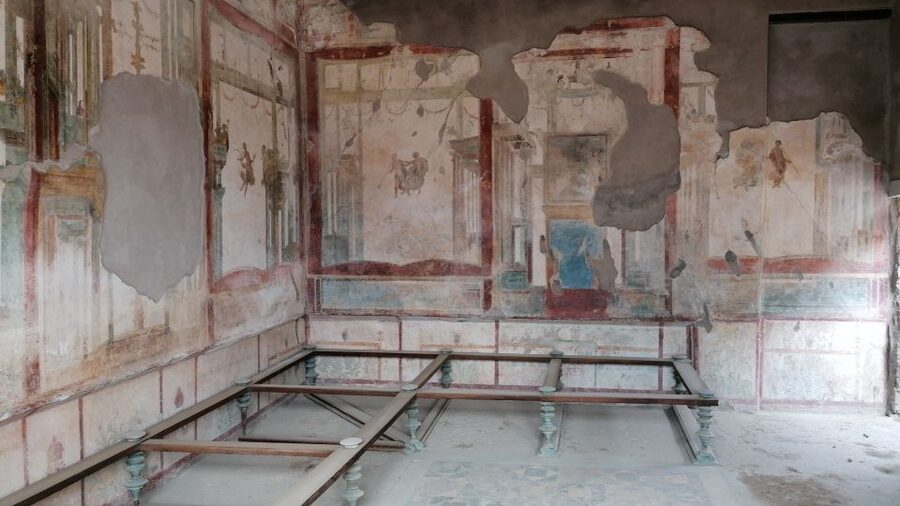
The House of Menander is one of the named stops, along with other ancient residences containing mosaics, frescoes, marble details, and painted decoration. These houses offer some of the most visually rewarding moments of the tour.
Do not expect every room to look complete. Pompeii is a ruin, and some walls are bare or partially collapsed. That is exactly where the guide earns the fee. Benedetto explains how the remaining decorations, floor plans, courtyards, and thresholds help reconstruct the home’s use and status.
The decorated interiors also show that Roman domestic life was not plain or colorless. Mosaics and frescoes provided status, religious imagery, decoration, and conversation pieces. You learn to look for details rather than simply moving from one famous room to the next.
This is one of the best sections for photography, but keep your attention on the explanation first. You get free time after the tour, so you can return to a room for more pictures if it remains open.
More tours led by an archaeologist:
- Pompeii 3hours Villa of Mysteries tour with an Archaeologist
★ 4.8 · 486 reviews - Pompeii: Tour with Archaeologist Guide & Skip-the-Line Entry
★ 4.5 · 478 reviews - Pompeii and Herculaneum: Guided Tour with an Archaeologist
★ 5.0 · 164 reviews - Pompeii: 2-Hour Guided Tour with an Archaeologist
★ 4.9 · 151 reviews
Roman streets, shops, bakeries, and snack bars
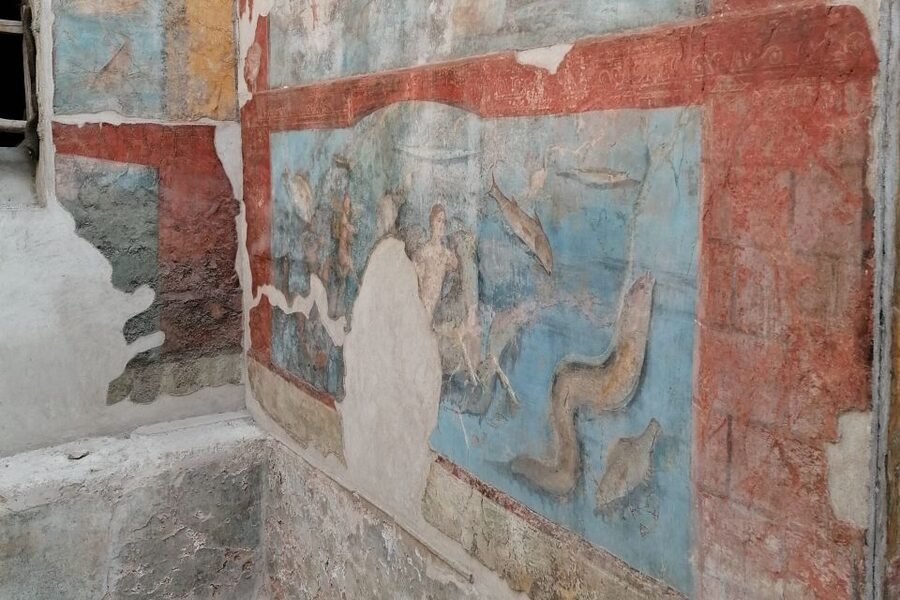
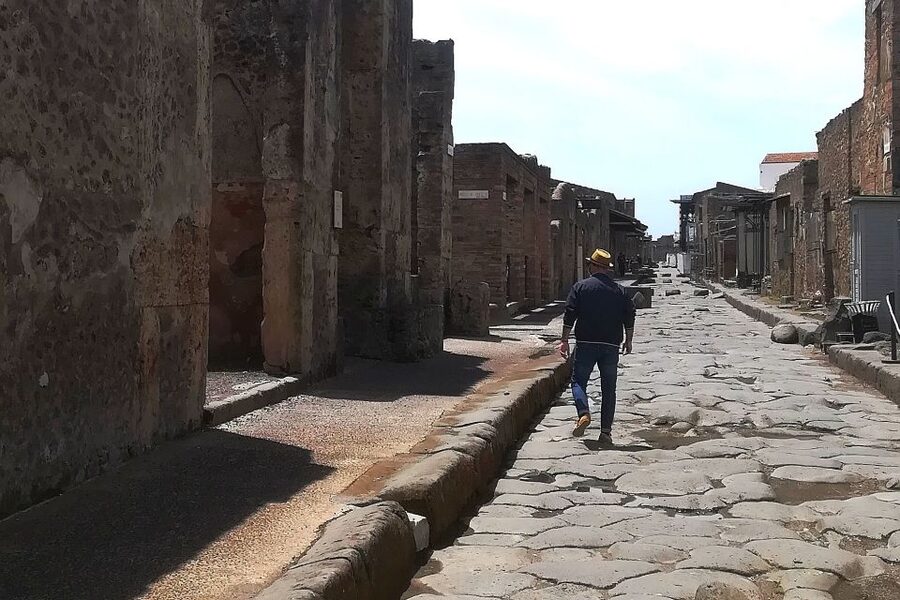
The walk along an original Roman road is one of the most practical parts of the experience. Ancient Pompeii becomes easier to picture when you stand on the same kind of paving used by residents and see the shopfronts opening onto the street.
The route passes shops, Roman bakeries, and old snack bars. These ordinary businesses help correct the idea that Pompeii was only a city of grand villas and temples. People bought food, worked, met friends, and moved through the town much as people do in any active urban center.
The streets also show why a guide helps with orientation. Pompeii covers a large area, and the ruins can begin to blur together if you do not know what you are seeing. Benedetto’s explanations give each block a purpose and help you notice how commercial spaces connect with homes and public buildings.
The pace is designed for looking and asking questions, rather than racing through every possible corner. You will not see all of Pompeii in two hours. That is not a flaw if you treat this as a well-chosen introduction and use the extra time afterward to continue alone.
Terme Stabiane and the public side of Roman life
The Terme Stabiane, or Stabian Baths, show a different side of the city. Public baths were places for washing, exercise, conversation, and social contact. They also reveal the engineering behind Roman comfort, including the systems that heated rooms and supplied water.
The value of this stop is that it moves the story beyond private houses. You see how public facilities shaped the rhythm of the town and how Roman citizens spent time outside their homes.
The baths may be less immediately dramatic than the frescoes or plaster casts, but do not skip the explanation. Their importance is social as much as architectural. A short visit with a guide can make the spaces easier to understand than a longer unguided walk.
The lupanare, approached with context
The lupanare, Pompeii’s brothel, is one of the most famous stops. Its small rooms and surviving paintings attract plenty of attention, but the site is more useful when treated as part of the town’s commercial and social life rather than as a sensational curiosity.
The space can become crowded. One advantage of a small group is that Benedetto can manage the visit more efficiently and avoid wasting time in long waits where possible. The route may change slightly depending on crowd levels and access, so you should expect the guide to make practical adjustments.
This is also a stop where a professional guide can add needed context. Pompeii’s sexual imagery is famous, but the wider story concerns commerce, class, gender, and the daily functions of a Roman city. The explanation helps keep the visit informative rather than gawking.
The Forum, Temple of Jupiter, and civic Pompeii
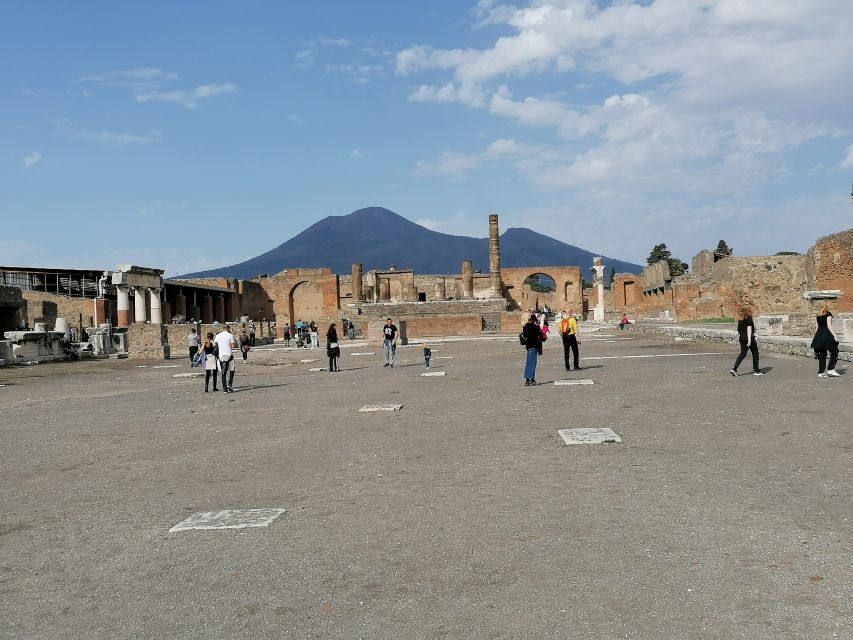
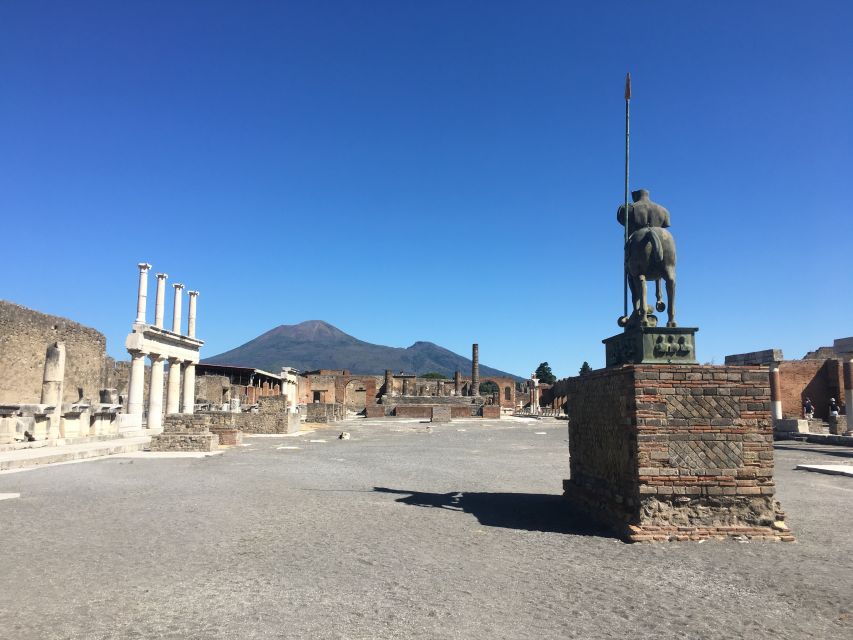
The final stretch reaches the Foro Civile di Pompei, or Forum. This was the civic heart of the city, surrounded by major public buildings and religious spaces. After seeing homes and shops, the Forum shows how Pompeii presented itself as an organized public community.
The Temple of Jupiter anchors this section. Its remains are impressive, but the guide’s explanation of the surrounding buildings gives the temple its proper setting. You begin to see the Forum as a working center of government, religion, business, and public display.
The Basilica is another key stop. Despite its name, it was not a Christian church in this Roman setting. It served civic and legal functions, and its remains help explain how public business took place.
The Macellum, the city’s market building, brings the tour back to everyday commerce. After seeing bakeries and snack bars along the streets, you now encounter a more formal market setting. This sequence is well chosen because it connects the private, commercial, religious, and legal parts of Pompeian life.
The plaster casts and the human cost of AD 79
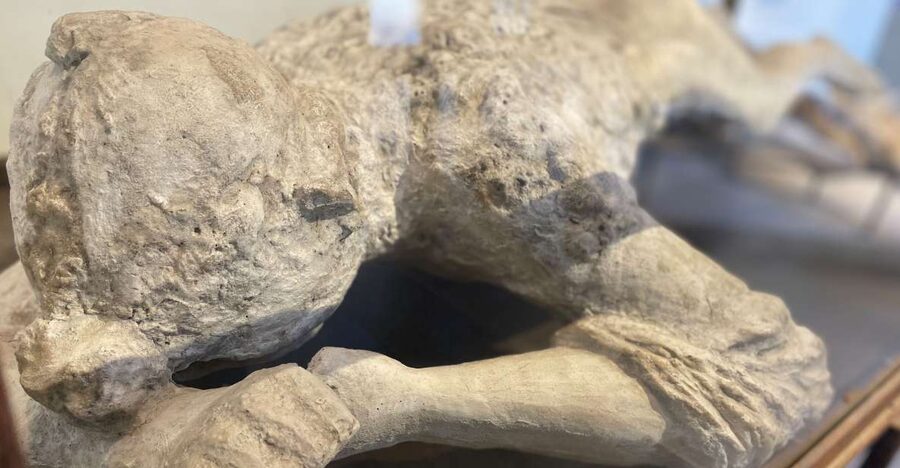
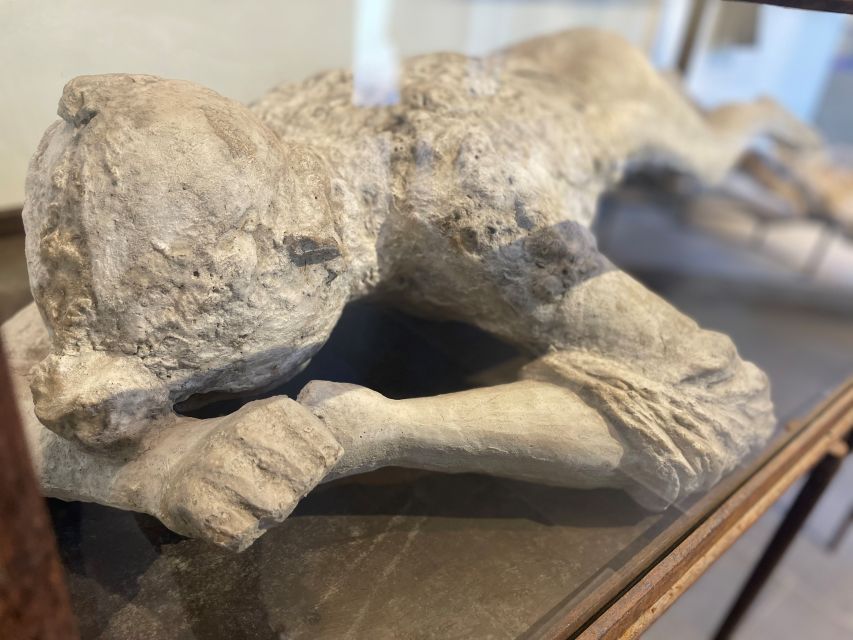
The plaster casts of eruption victims are the most emotionally difficult part of the visit. They are often the images people remember, but they should not be treated as simple spectacle.
The casts were made from cavities left in the hardened ash where bodies decomposed. They preserve positions and details from the final moments of people caught by the eruption. Seeing them after learning about Pompeii as a functioning town gives the disaster a human scale.
A good guide needs to handle this section with care. Benedetto’s approach, as described by the experience details, combines the tragedy with the wider story of the city and its inhabitants. You can ask questions, pause, and take in the setting rather than being hurried from one famous image to another.
Crowd control, weather, and the value of a small group
Pompeii is popular, and some areas can become crowded. The guide’s local familiarity is especially useful here. Benedetto has adjusted routes to avoid long queues and busy spots when possible, helping the group see more without turning the tour into a sprint.
A group of up to 12 is small enough for a personal feel but not necessarily intimate. If all 12 places are filled, you may still be walking with a compact group rather than having a private visit. Headsets are supplied for groups of more than eight, which helps you hear the explanation in a noisy area.
Summer heat is another real factor. Much of the archaeological site is exposed, and there is limited shade in some sections. The guide has been attentive about stopping in shaded places, but you still need water, a hat, and light clothing. Comfortable shoes matter more than stylish ones here.
The ground can be rough, and the activity is not suitable for wheelchair users or people with mobility impairments. If you have limited stamina but can walk independently, ask about the route and pace before booking.
Two hours guided, then time to continue alone
Two hours is a sensible length for a first look at Pompeii. It gives you a clear route through the city’s major themes without asking you to spend half a day listening to continuous commentary.
Still, Pompeii is too large for a complete visit in this time. You should plan to remain inside afterward if your schedule allows. Use the free time to revisit the House of Menander, take photographs, look for areas not included in the guided route, or follow recommendations from Benedetto.
This arrangement is one of the tour’s best features. You get help with orientation and interpretation, then freedom to explore at your own pace. A fully guided longer visit may suit serious history fans, but the two-hour format works well for a first visit, families, and people combining Pompeii with other Campania sights.
Some people have extended the visit to three hours for an added fee. That option is not part of the standard $65 booking, so ask about availability and cost in advance if you want a longer private experience.
Is $65 per person good value?
At $65 per person, this is not the cheapest way to enter Pompeii. You are paying for more than admission: an archaeologist guide, express entry, a small group, and a focused explanation of the site.
I consider it good value if Pompeii is a major reason for your trip or if you do not feel confident making sense of a huge archaeological park alone. The guide can save time, explain places that otherwise look like bare ruins, and point out details you might walk past.
The value is lower if you want to wander independently in silence or already have strong knowledge of Pompeii. In that case, the included free time may be the main benefit, while the guided portion could feel too structured.
The small group is the key difference from a large coach-style tour. You can ask questions without shouting, the guide can respond to children, and the group can usually stay together more easily. For many people, that is worth paying extra for.
Who should book this Pompeii tour?
I would choose this tour if you want context, clear storytelling, and the major sights in a manageable two-hour route. It is particularly well suited to first-time visitors, families, and anyone interested in archaeology rather than only taking photographs.
Benedetto’s friendly presentation also helps. He has been praised for keeping children engaged, explaining material in clear English, and mixing historical detail with humor. He also gives practical suggestions for spending the rest of your day in Pompeii and the surrounding area.
You should think twice if you use a wheelchair or have a mobility impairment. The ancient roads and uneven ruins are not suitable for this activity. You should also allow extra time for the meeting point and carry your original passport or ID card, since the ticket is issued in each participant’s name.
FAQ
How long does the Pompeii tour last?
The guided tour lasts two hours. You also receive free time to continue exploring the archaeological site afterward.
How much does the tour cost?
The listed price is $65 per person.
What language is the tour conducted in?
The live guide is available in Italian, English, and French.
How many people can join the group?
The group can include up to 12 people. A private group option is also available.
Who is the guide?
The guide is Benedetto from Benedetto Tourist Guide. He is a professional archaeologist and leads the tour through Pompeii.
Where is the meeting point?
Meet at Ristorante Suisse. The guide waits there with a sign showing your name.
Which Pompeii entrance does the tour use?
The tour starts from Porta Marina Inferiore.
Is entry to Pompeii included?
Yes. The experience includes an express entry ticket to the Pompeii archaeological site.
Do I need to bring identification?
Yes. Bring your original passport or ID card. Pompeii tickets are named, and the full first and last names of all participants must be provided after booking.
Are headsets provided?
Headsets are provided for groups of more than eight people.
Is the tour suitable for wheelchair users?
No. The activity is not suitable for wheelchair users or people with mobility impairments.
What should I bring?
Bring comfortable shoes, a hat, water, and your original passport or ID card. Food and drinks are not included.
Can I cancel the booking?
You can cancel up to 24 hours in advance for a full refund. You can also reserve now and pay later.
Should you book it?
Book this tour if you want Pompeii to make sense, not just look impressive. The combination of archaeologist Benedetto, a group capped at 12, express entry, and free time afterward gives you structure without taking away your independence.
The tour cannot cover every street in two hours, and the heat and uneven ground demand some preparation. But for a focused introduction to the houses, baths, shops, Forum, brothel, and victims of AD 79, $65 is a fair price. I would book it early, bring your identification and water, then stay on after the guided walk to explore the parts of Pompeii that first caught your eye.
Newest reviews from Pompei Campania
- From Sorrento: Pompeii & Vesuvius tour small group★ 4.8 · 4 reviews
- Pompeii Private Tour for Kids and Their Families★ 4.8 · 4 reviews
- From Naples_ Pompeii Tour_Skip the line ticket + audioguide★ 4.3 · 4 reviews
- Pompeii, skip-the-line ticket with smartphone audio guide on App★ 3.0 · 4 reviews
- Pompeii Guided Experience – Tour Service Only★ 4.6 · 4 reviews
- From Naples Port:Pompeii+Vesuvius tour★ 4.3 · 4 reviews
- 2-Hour Pompeii Child-Friendly Tour★ 5.0 · 4 reviews
- Naples: Amalfi Coast, Sorrento and Pompeii Day Trip★ 4.4 · 5 reviews
Archaeologist-Led Tours, compared.

Entry Ticket and Guided Tour with an Archaeologist
Read our review →
Pompeii Small Group Tour with an Archaeologist
Read our review →
Pompeii and Herculaneum Small Group Tour with an Archaeologist
Read our review →
Skip the Line Guided Tour of Pompeii led by an Archaeologist
Read our review →
Exclusive Tour with Archaeologist and Entry Tickets
Read our review →
Pompeii Private Tour with an Archaeologist and Skip The Line – 3 hours
Read our review →
Pompeii Skip-the-line Tour with Archaeologist Guide
Read our review →Browse the lists this tour appears in