
Reviewed · ARCHAEOLOGIST-LED TOURS
Pompeii: 2-Hour Guided Tour with an Archaeologist
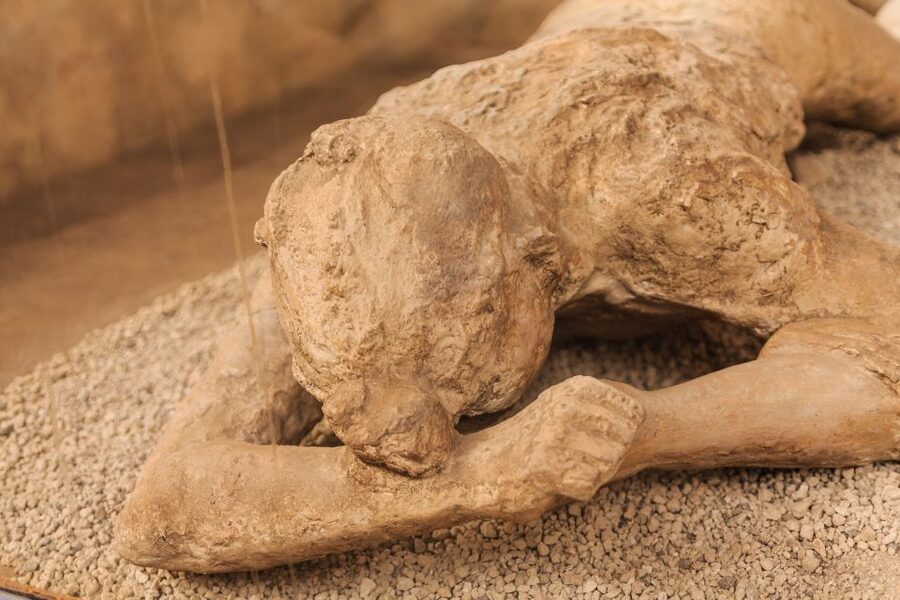
Pompeii is easier to understand when someone helps you read the stones. On this two-hour walk, an archaeologist leads you through the city’s public squares, bathhouses, homes, shops, theaters, and brothel, explaining how the eruption of Vesuvius in AD 79 froze Roman daily life in place. The plaster casts of people and animals give the visit its most affecting moment.
I like the focus on the western part of Pompeii, where the Forum, Basilica, Temple of Apollo, baths, homes, and shops are packed into a useful route. I also like the private-group format and the guides’ storytelling. Paola, Giancarlo, Enzo, Rosalina, Sergio, Ana, Felicia, Chiara, and others have been praised for making complex archaeology clear and keeping the walk lively.
The main limitation is time. Pompeii is enormous, and two hours gives you a strong introduction rather than a complete visit. The $175.74 price per person is also a serious commitment, especially for a larger group. Add the confusing information about wheelchair access, and you should confirm the practical details before paying.
In This Review
- What makes this Pompeii tour worthwhile
- Starting at Porta Marina, Pompeii’s western gate
- Temple of Apollo and the civic heart of the city
- The House of Menander and Roman domestic life
- Forum Baths, bakery remains, and everyday routines
- The Lupanar and Pompeii’s less polished side
- The Large Theatre and Amphitheater
- Plaster casts and the human cost of AD 79
- How the private format affects the experience
- Is $175.74 per person good value?
- Access, timing, and what to bring
- Who should book this Pompeii tour?
- Should you book it?
- FAQ
- How long does the Pompeii guided tour last?
- Where does the tour begin?
- Where does the tour finish?
- Is admission to Pompeii included?
- Which languages are available?
- Is this a private tour?
- What sights are included?
- What should I bring?
- Is the tour suitable for wheelchair users?
What makes this Pompeii tour worthwhile
- An archaeologist explains the ruins: You get context for ordinary features such as raised sidewalks, bakery equipment, wall paintings, bath areas, and shop counters.
- The route covers Pompeii’s essential sights: Expect the Temple of Apollo, Forum, Basilica, Forum Baths, Lupanar, House of the Faun, theaters, House of the Vettii, and Amphitheater.
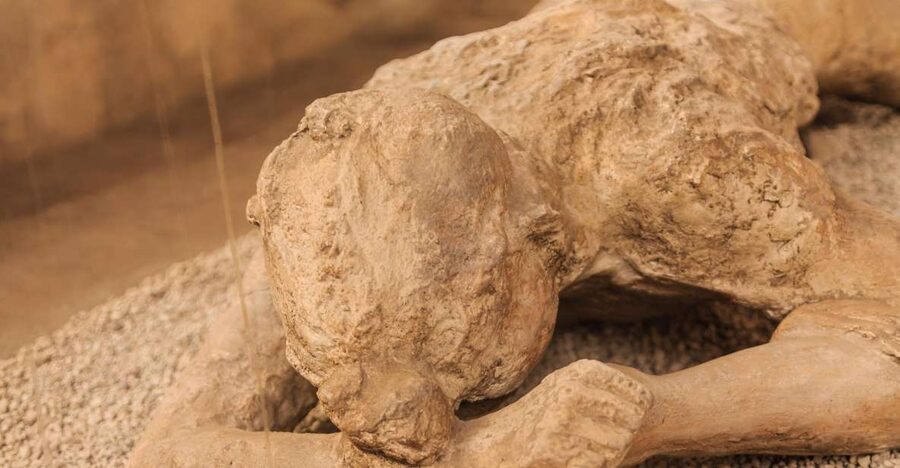
- Plaster casts bring the eruption close: Human and animal forms show the terrible final moments of the city in a way that written history cannot.
- Private groups can ask questions: The guide can adjust the pace and respond to your interests instead of delivering a fixed speech to a large crowd.
- The tour works in five languages: English, Italian, French, German, and Spanish are available.
- The meeting point matters: The walk begins near Porta Marina Superiore and ends at Pompeii Scavi, Villa dei Misteri, so arrive early and follow the meeting instructions carefully.
Starting at Porta Marina, Pompeii’s western gate
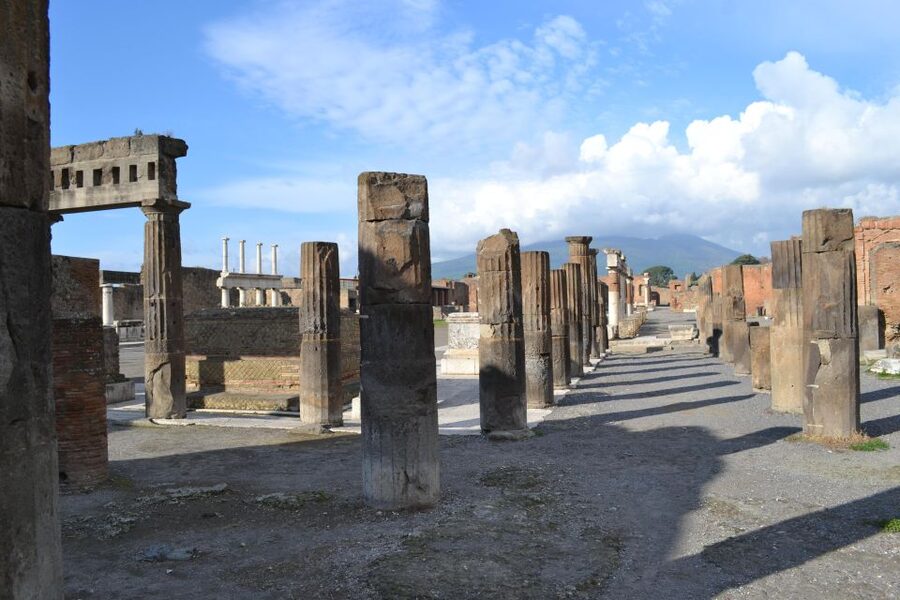
Your meeting point is by Porta Marina Superiore on Via Villa dei Misteri 2, although the exact place can vary with the option you book. This is worth taking seriously. One person found the meeting location difficult to locate with GPS, so allow extra time and keep the confirmation details close at hand.
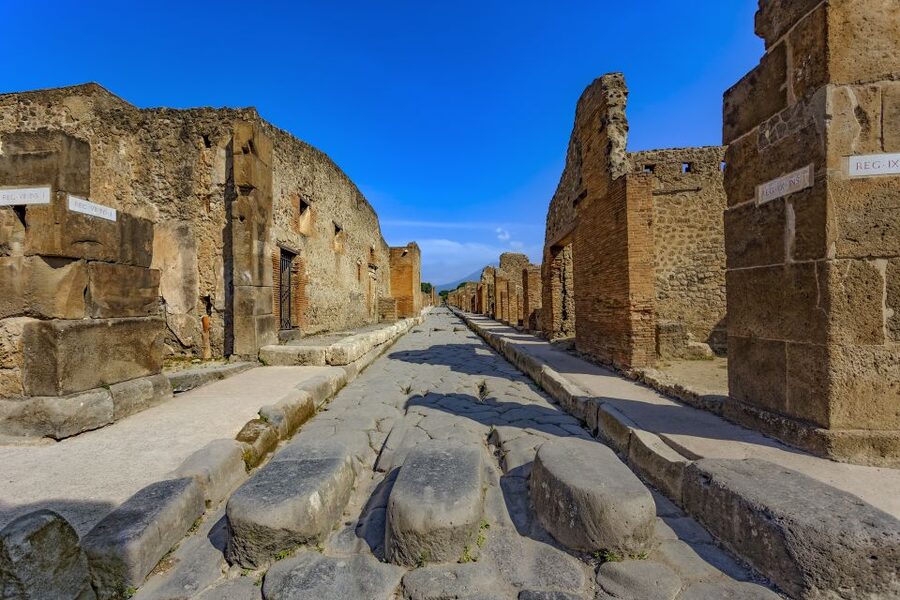
The western entrance is a sensible place to begin because it leads toward the city’s major public buildings. You will walk along ancient streets that once carried citizens, carts, shopkeepers, politicians, and worshippers. The guide’s job here is not simply to point out old walls, but to explain how the street plan worked and how the city’s public and private life fitted together.
Pompeii was covered by ash and volcanic material during the eruption of Vesuvius in AD 79. The burial protected buildings, tools, food, paintings, and street layouts from later change. Excavation began in the 18th century, and the site now gives an unusually direct view of one Roman town at a particular moment.
That context makes a guided visit especially useful. Without help, you may see columns, broken walls, and patches of faded color. With an archaeologist, those fragments become a courtroom, a religious precinct, a bakery, a wealthy house, or a public bath.
More Pompeii excavation visits:
- Pompeii: Entry Ticket and Guided Tour with an Archaeologist
★ 4.8 · 19,459 reviews - Pompeii: Small Group Tour with an Archaeologist
★ 4.8 · 12,264 reviews - Pompeii: Skip-the-Line Entrance Ticket with Audio Guide
★ 4.0 · 2,509 reviews
Temple of Apollo and the civic heart of the city
The Temple of Apollo is one of the early stops. Its columns and open precinct help establish the religious side of Pompeii before the tour moves into the civic center. Your guide can explain how temples occupied prominent positions and how religious life overlapped with public identity.
The Foro Civile di Pompei, or Forum, was the city’s main political, commercial, and social center. This broad open space is where you get the clearest sense of Pompeii as a functioning town rather than a collection of ruined houses.
The Forum can be hard to read at first because so much of the surrounding architecture is incomplete. I find it far more rewarding when a guide points out the buildings around the square and explains what each space was used for. You can begin to picture public meetings, religious ceremonies, trade, and daily movement through the center of town.
The Basilica follows naturally. In Roman Pompeii, this was a court and business building, not a Christian church. It is a useful reminder that familiar words can carry different meanings in an ancient setting.
The House of Menander and Roman domestic life
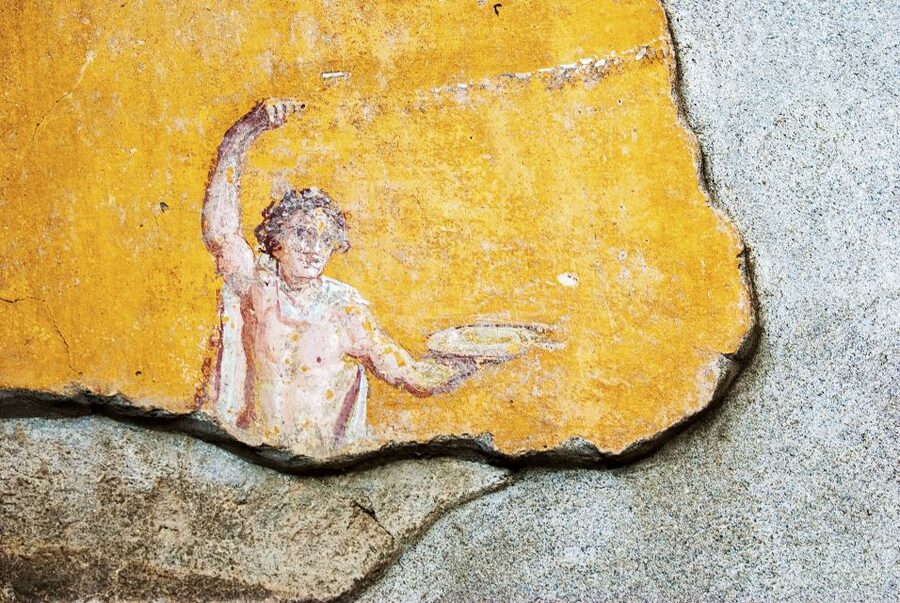
The House of Menander offers a look at the private world of a wealthy Pompeian household. Houses such as this one can reveal far more than their surviving walls suggest. The arrangement of rooms, courtyards, decoration, and household spaces tells you about status, family life, servants, guests, and Roman taste.
This is one of the places where an archaeologist guide earns the tour fee. A bare room can seem unremarkable until you understand who used it and how it connected to the rest of the home. The guide may also point out details that are easy to miss when you walk alone.
The House of the Faun is another major residence. Its name comes from a statue of a dancing faun, and its scale helps you picture the wealth of Pompeii’s upper class. The home is associated with an important mosaic depicting Alexander the Great and the Persian king Darius, although the exact rooms available to see can change as conservation work continues.
The House of the Tragic Poet is also part of the planned highlights. Its famous decorative details and theatrical connections offer another view of elite Roman culture. You will not simply be looking at an ancient floor plan. You will be comparing how Pompeii’s wealthy residents displayed learning, taste, and money inside their homes.
Forum Baths, bakery remains, and everyday routines
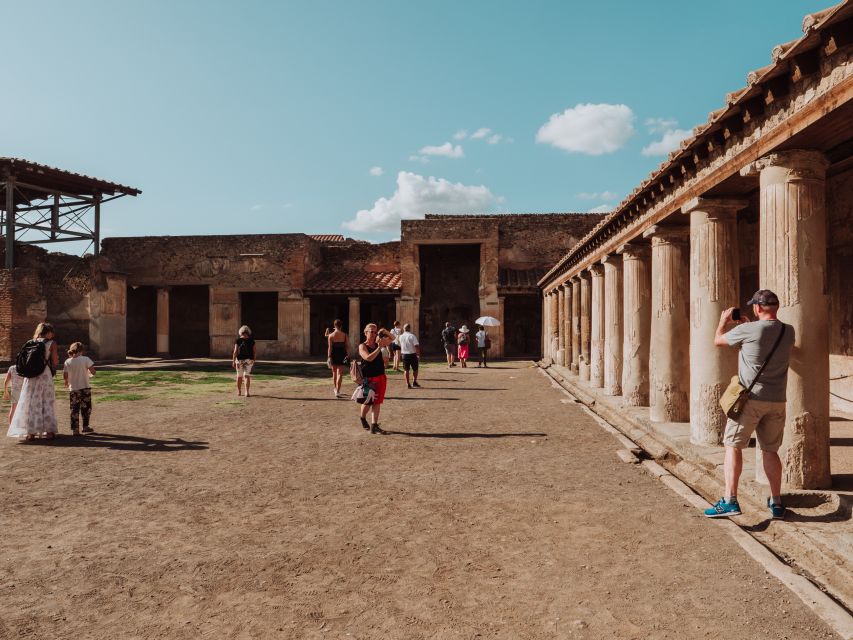
The Forum Baths show the practical side of Roman life. Public bathing was not only about washing. It was also part of the daily social routine, and the surviving rooms help explain how Romans organized hot, warm, and cool bathing spaces.
The tour also includes a bakery where you can still see equipment and remnants of food. This is one of the most useful stops for understanding ordinary life. Grand temples and wealthy homes attract attention, but a bakery tells you what people ate, how food was prepared, and how a neighborhood business operated.
The Termopolium Capuano offers another glimpse into street-level commerce. These counters served food and drink, rather like a Roman takeaway shop. The preserved serving areas make the ancient city feel practical and familiar. Pompeii was not only a place of grand civic buildings. It was also a town of quick meals, small businesses, errands, and work.
If you enjoy social history, pay close attention here. The guide’s explanation can connect a counter, oven, storage jar, or workroom to the lives of the people who used it. That is where the site feels most human.
More tours led by an archaeologist:
- Pompeii 3hours Villa of Mysteries tour with an Archaeologist
★ 4.8 · 486 reviews - Pompeii: Tour with Archaeologist Guide & Skip-the-Line Entry
★ 4.5 · 478 reviews - Pompeii and Herculaneum: Guided Tour with an Archaeologist
★ 5.0 · 164 reviews - Pompeii: Guided Tour with Archaeologist with max. 12 People
★ 5.0 · 155 reviews
The Lupanar and Pompeii’s less polished side
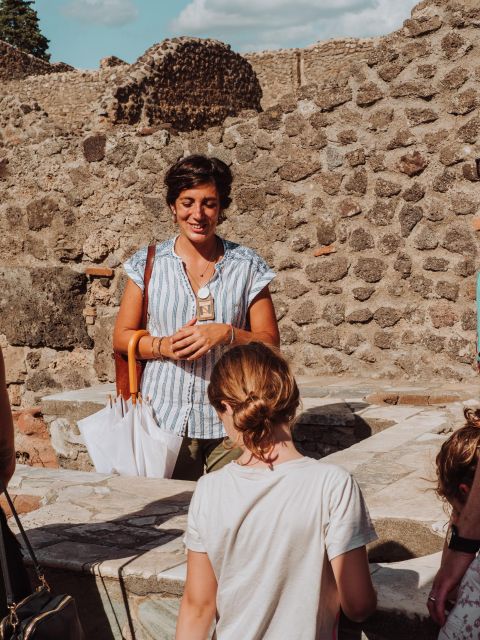
The Lupanar, Pompeii’s old brothel, is among the most visited stops. Small rooms and erotic paintings reveal an aspect of Roman commercial life that polite public monuments tend to hide.
This stop can be crowded, and access may depend on how the archaeological area is operating that day. It is also not the best place for every family or every visitor, so consider your group before booking. Your archaeologist can provide the social context that keeps the stop from becoming a cheap spectacle.
The value here is not shock. It is the chance to see how Pompeii’s public and private worlds overlapped, and how archaeologists interpret evidence about gender, commerce, class, and sexuality. A good guide will explain what is known and what remains uncertain.
The Large Theatre and Amphitheater

The Large Theatre shows Pompeii’s love of public entertainment. The shape of the seating and stage area helps you understand how performances worked and how the audience was arranged.
The Amphitheater gives a different sense of scale. Built for large public events, it reminds you that entertainment was a major part of Roman civic life. The size of the structure also helps you picture Pompeii as a busy regional town with a population large enough to support major spectacles.
Two hours is enough to introduce both sites, but not enough to linger over every architectural detail. If theater and Roman public life are your main interests, tell the guide early. In a private group, you have a better chance of shaping the conversation, although the full route still has to fit the fixed time.
Plaster casts and the human cost of AD 79
The plaster casts of humans and animals are the emotional center of the visit. Archaeologists created these casts by filling cavities left in the hardened ash after bodies decomposed. The resulting shapes preserve clothing folds, body positions, and the final moments of people caught by the eruption.
You may also see casts of animals. These details make the disaster more immediate, but the guide should keep the tone respectful. The site is both an archaeological record and a place connected to real deaths.
The casts are not simply dramatic objects. They also show how excavation methods developed and how archaeologists have tried to recover evidence without losing the human meaning of the site. One of the tour’s strengths is that it links the eruption to the later rediscovery and study of Pompeii.
How the private format affects the experience
The experience is described as a private group, and one booking included 19 people. So private does not necessarily mean a one or two-person walk. It means your party has its own guide rather than being folded into a general public group, but the actual group size can vary.
That distinction matters. A private group is useful if you are traveling with family or friends and want to ask questions freely. Several guides have been praised for keeping a group of six attentive, adjusting the pace, and making sure a person using a wheelchair remained included in the explanations.
The pace has also been praised as well managed. On a hot, busy day, a guide named Giancarlo reportedly used quieter routes when possible. You should still expect sun, uneven ancient streets, and plenty of walking. Wear comfortable shoes, bring water, and use sunglasses and a sun hat.
The tour is available in English, Italian, French, German, and Spanish. Guide quality can vary from person to person, but the strongest names associated with this experience include Paola, Giancarlo, Rosalina, Enzo, Sergio, Ana, Felicia, Chiara, Alessandro, Tonia, and Paolo. Do not assume you can select a particular guide unless the booking option says so.
Is $175.74 per person good value?
At $175.74 per person, this is not a budget way to enter Pompeii. The price includes admission and the guide, with disposable earphones used for larger groups. You are paying mainly for interpretation, organization, and the ability to ask questions.
The value is strongest if this is your only Pompeii visit, if you want the major sights in a clear order, or if the ruins feel intimidating without explanation. Several people found that a guide helped them notice facts they would have missed alone, and one person who worried that two hours would be too short felt the time was well used.
The value is weaker if you already know Roman archaeology, want to spend a full day wandering, or prefer to set your own pace. You may still want extra time after the guided walk because Pompeii covers so much ground. The tour finishes at Pompeii Scavi, Villa dei Misteri, which gives you a clear endpoint for continuing independently if opening conditions allow.
You can cancel up to 24 hours before the tour for a full refund, and the reserve-now, pay-later option keeps your plans flexible. On the first Sunday of each month, entry is free, but tickets cannot be reserved in advance and admission is not guaranteed. That makes a prepaid guided booking less straightforward on that particular day, so check the conditions carefully.
Access, timing, and what to bring
The activity information gives conflicting accessibility details. One section says the experience is wheelchair accessible, while another says it is not suitable for wheelchair users. A booking also describes a guide who included a wheelchair user and adjusted the pace, but that does not guarantee that every route or entrance will work for every chair.
If accessibility matters to you, contact the provider before booking and ask about the exact entrance, surface conditions, route, and toilet access. Do not rely on the general label alone.
The tour lasts two hours, with starting times shown according to availability. Arrive early because the meeting point can be difficult to identify, and the tour cannot wait indefinitely for late arrivals.
Bring:
- Comfortable shoes for uneven surfaces
- Water
- Sunglasses
- A sun hat
The route includes outdoor areas, so weather and heat can affect your comfort. Earphones are provided for bigger groups, which helps when the group spreads out around a large ruin.
Who should book this Pompeii tour?
I would choose this tour for a first visit, especially if you want the Forum, homes, baths, Lupanar, theaters, and plaster casts explained in one organized walk. It also suits families, multigenerational groups, and anyone who prefers conversation to reading every sign.
It is a good fit for curious visitors who want both the famous sights and the ordinary details: ovens, utensils, food, shop counters, household rooms, and bath systems. The best guides, including Paola, Rosalina, Giancarlo, and Felicia, are praised for combining facts with stories and answering questions without losing the pace.
I would hesitate if you want a slow, full-day archaeological study. Two hours passes quickly, and you will see a selection rather than every major building. The price also makes more sense for a private group sharing the guide than for a solo visitor on a tight budget.
Should you book it?
Book it if you want Pompeii to make sense, not just look impressive. An archaeologist can turn a ruined bakery into a workplace, a Forum into the center of civic life, and a plaster cast into a sober reminder of the eruption.
Skip it if you already have strong knowledge of Pompeii, want to wander without a schedule, or cannot justify the cost. For most first-time visitors, though, the focused route and strong guide-led storytelling offer a useful way to begin, with time afterward to explore at your own pace.
FAQ
How long does the Pompeii guided tour last?
The guided tour lasts two hours. Starting times depend on availability.
Where does the tour begin?
The meeting point may vary by booking option, but the stated location is near Porta Marina Superiore at Via Villa dei Misteri 2, Pompei.
Where does the tour finish?
The activity finishes back at the meeting point area, with the route listed as ending at Pompei Scavi, Villa dei Misteri.
Is admission to Pompeii included?
Yes. Pompeii entry tickets and a guide are included.
Which languages are available?
The tour can be provided in English, Italian, French, German, or Spanish.
Is this a private tour?
The activity is described as a private group experience. Group size can vary, and one booking included 19 people.
What sights are included?
The route includes Porta Marina, the Temple of Apollo, the Forum, Basilica, House of Menander, Forum Baths, Lupanar, House of the Faun, Large Theatre, House of the Vettii, and Amphitheater. It also includes plaster casts, bakery remains, and other Pompeii highlights.
What should I bring?
Bring comfortable shoes, water, sunglasses, and a sun hat.
Is the tour suitable for wheelchair users?
The supplied information is inconsistent. One section says wheelchair accessible, while another says it is not suitable for wheelchair users. Confirm the exact route and access arrangements with the provider before booking.
More 2-Hour Experiences in Pompei Campania
- Pompeii: 2 Hours Skip the Line Visit with a Licensed Guide
★ 4.4 · 16 reviews - Pompeii: 2H group guided tour with a certified guide
★ 3.4 · 8 reviews - Pompeii in 2h and 30mnt: walk with local guide
★ 3.0 · 6 reviews - Pompeii : 2h small group tour with an archeologist
★ 4.8 · 5 reviews
Newest reviews from Pompei Campania
- From Sorrento: Pompeii & Vesuvius tour small group★ 4.8 · 4 reviews
- Pompeii Private Tour for Kids and Their Families★ 4.8 · 4 reviews
- From Naples_ Pompeii Tour_Skip the line ticket + audioguide★ 4.3 · 4 reviews
- Pompeii, skip-the-line ticket with smartphone audio guide on App★ 3.0 · 4 reviews
- Pompeii Guided Experience – Tour Service Only★ 4.6 · 4 reviews
- From Naples Port:Pompeii+Vesuvius tour★ 4.3 · 4 reviews
- 2-Hour Pompeii Child-Friendly Tour★ 5.0 · 4 reviews
- Naples: Amalfi Coast, Sorrento and Pompeii Day Trip★ 4.4 · 5 reviews
Archaeologist-Led Tours, compared.

Entry Ticket and Guided Tour with an Archaeologist
Read our review →
Pompeii Small Group Tour with an Archaeologist
Read our review →
Pompeii and Herculaneum Small Group Tour with an Archaeologist
Read our review →
Skip the Line Guided Tour of Pompeii led by an Archaeologist
Read our review →
Exclusive Tour with Archaeologist and Entry Tickets
Read our review →
Pompeii Private Tour with an Archaeologist and Skip The Line – 3 hours
Read our review →
Pompeii Skip-the-line Tour with Archaeologist Guide
Read our review →Browse the lists this tour appears in