

Reviewed · ARCHAEOLOGIST-LED TOURS
Pompeii: Skip-the-Line Guided Tour with Expert Archaeologist
Pompeii makes far more sense when someone can read its clues for you. With an archaeologist as your guide, you’ll see how bakeries, baths, temples, shops, and homes fit together instead of wandering past a wall and wondering what it was.
I like the small-group format, which makes it easier to hear through the headset and ask questions. I also like that the route can include new excavation areas, so you get a glimpse of Pompeii as an active dig, not just a frozen museum. The drawback is the heat, long stretches on rough ancient streets, and very little shade.
In This Review
- Key points to know before booking
- Why an archaeologist changes Pompeii
- Meeting at the Porta Marina entrance
- Choosing between two hours and three
- Walking through the Roman city
- Bakeries, shops, and the business of daily life
- The Forum, temples, and emotional remains
- New excavations and a city still being uncovered
- The city walls and views toward Naples
- Small groups, headsets, and the guide’s pace
- Is $70 a fair price?
- Who should book this Pompeii tour?
- FAQ
- How long is the Pompeii guided tour?
- What does the tour include?
- Where does the tour meet?
- How early should I arrive?
- Is hotel pickup included?
- What should I bring?
- Is the tour suitable for wheelchairs, strollers, or people with mobility impairments?
Key points to know before booking

- The archaeologist matters: Guides such as Ilaria, Anna, Enzo, Brunella, and Paulo are praised for clear explanations, humor, and a real feel for the site.
- Choose three hours if you can: The Complete Pompeii option allows more time for streets, villas, shops, baths, the cemetery, city walls, and newly opened areas.
- The two-hour route is a highlights tour: Pompeii Express focuses on the Forum, temples, shops, and other central sights.
- You skip the main entry line: Pre-reserved tickets reduce waiting, but you still need to arrive 15 minutes early at the correct gate.
- Prepare for serious sun: Bring water, sunscreen, a hat, and comfortable closed-toe shoes. An umbrella can help in summer.
- This is not an easy-access visit: Wheelchairs, strollers, and high heels are not permitted, and you should be able to walk at a moderate pace.
Why an archaeologist changes Pompeii
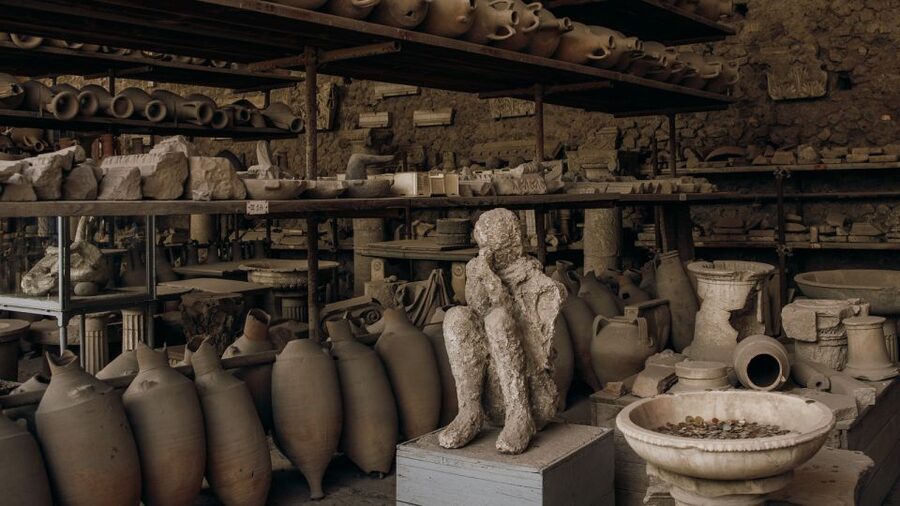
Pompeii is enormous. Its streets cover a whole ancient city, and the remains can look confusing at first. A guide gives you a key to the place: this narrow doorway led to a shop, that large building served a public purpose, and a patch of worn stone may reveal how people moved through the city.
The best guides turn dry facts into scenes from daily life. Anna is praised for clear English and lively stories. Enzo is known for explaining the city through memorable tales. Ilaria has received especially warm comments for her humor, detail, and ability to keep children interested. Brunella is also a strong choice if you want an archaeologist who explains the site in a calm, understandable way.
That matters because Pompeii is not only about the eruption of Mount Vesuvius in 79 AD. The eruption is the dramatic ending, but the tour spends much of its time showing how people lived before it. You’ll see commercial streets, religious buildings, bathing facilities, homes, bakeries, and places where the city’s social life played out.
I especially value the attention to ordinary life. Grand monuments are memorable, but a bakery with its ovens and food remains can tell you more about the daily rhythm of the city than another grand column. An ancient supermarket, shops, and street layouts help you picture people buying, selling, eating, and moving around nearly 2,000 years ago.
More Pompeii excavation visits:
- Pompeii: Entry Ticket with Optional Audio Guide
★ 4.2 · 12,360 reviews - Pompeii: Archaeological Park Tour with Ticket on request
★ 4.5 · 2,283 reviews - Pompeii Ruins Private Tour with Optional Skip-the-Line Entry
★ 4.9 · 732 reviews
Meeting at the Porta Marina entrance
The meeting point is at Via Villa dei Misteri, 1, at the entrance gate for Pompeii Archaeological Park across from the Hortus Pompei restaurant. Look for the guide holding a green Walks sign, and arrive 15 minutes before the scheduled start.
This is one place where you should pay close attention to your booking details. One past participant found the meeting instructions and end point a little unclear, so do not rely only on a map pin. Confirm that you are at the entrance across from the restaurant and that you can identify the green sign.
The tour finishes back at Via Villa dei Misteri, 1. Hotel pickup and drop-off are not included, so you need to make your own way to Pompeii and arrange transportation after the visit.
Pre-reserved tickets are included. That is useful at a major archaeological site, especially when the entrance line is long. Skip-the-line access does not make Pompeii quick, though. You still need to pass through the park entrance, and the walking time inside is substantial.
Choosing between two hours and three
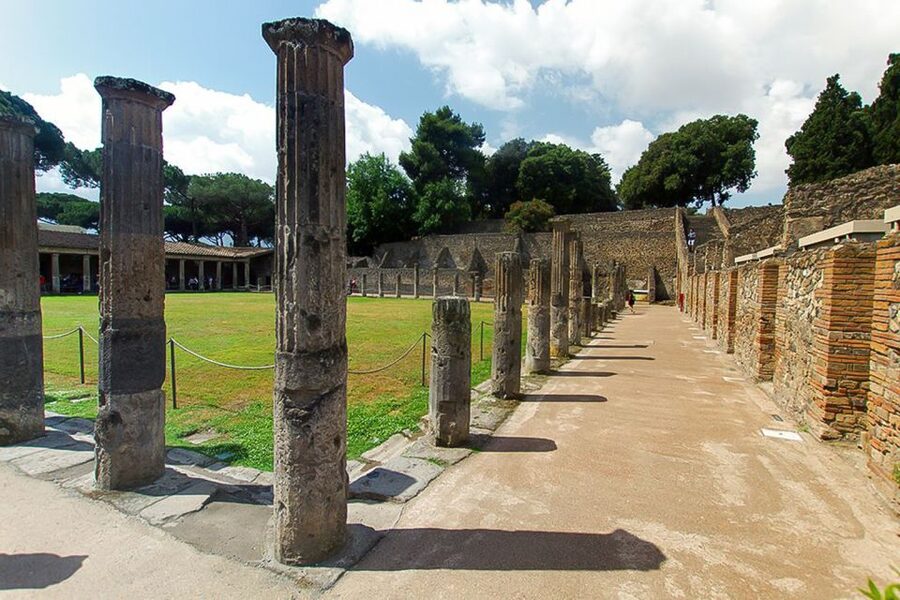
The main decision is simple: choose the three-hour Complete Pompeii option if this is your only visit, and choose the two-hour Express option if your schedule is tight or your walking stamina is limited.
The three-hour tour is designed to cover more of the site than a short highlights visit. You’ll follow preserved Roman streets and move among public buildings, private homes, shops, and work areas. The route can also include the old cemetery, a brothel when suitable for the group, and sections of the city walls with views toward Naples.
The two-hour Pompeii Express route concentrates on the core sights. Expect the Forum, temples, shops, and other major points in a shorter, more focused circuit. It is a sensible choice if you want an introduction before continuing to another Campania sight, or if three hours in the sun sounds like too much.
Keep in mind that Pompeii is too large to fully understand in one short walk. Even three hours only gives you a strong introduction. If you want to explore more on your own afterward, leave room in your day rather than scheduling a tight connection immediately after the tour.
Walking through the Roman city
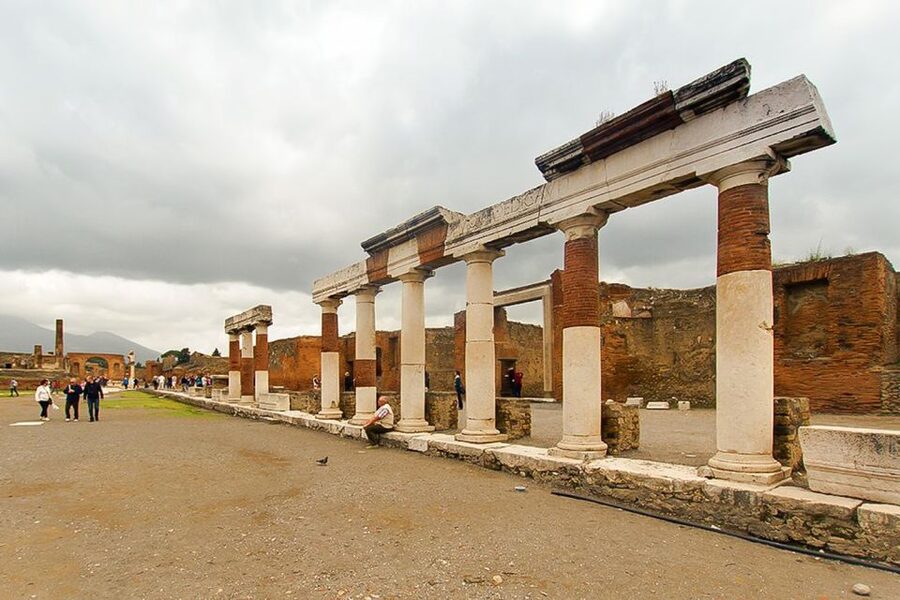
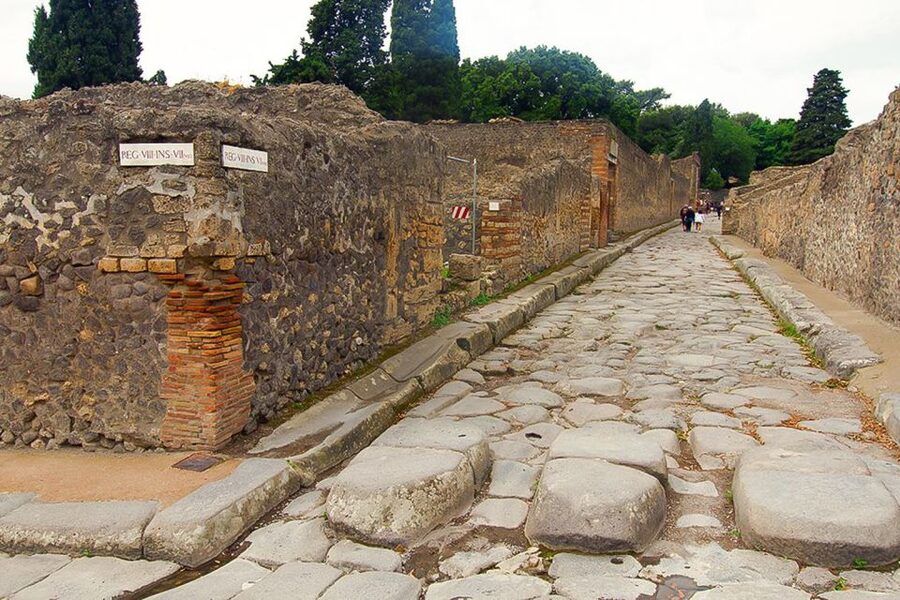
The tour begins to make sense as soon as you get onto the streets. Pompeii’s preserved road grid lets you see how the city was organized. Instead of looking at isolated ruins, you can connect the buildings to the roads, shops, public spaces, and homes around them.
Your guide will point out details you might miss alone. That can include the function of a building, the way a shop opened onto the street, or how a public facility fitted into everyday city life. Several guides are praised for showing features that a self-guided walk would likely pass by without explanation.
The Roman Forum is one of the main anchors of the visit. It was the city’s central public area, and the surrounding temples and civic buildings help explain how religion, politics, trade, and public life were connected. The Temple of Apollo gives the tour another important religious site and helps place Pompeii within the wider Roman world.
The ancient baths offer a different view. They were not simply places to wash. They were part of public life, and the remains let you consider how people spent time together in a city without modern homes and services.
More tours led by an archaeologist:
- Pompeii: Exclusive Tour with Archaeologist and Entry Tickets
★ 4.9 · 634 reviews - Pompeii: Skip-the-Line Tickets and Tour with Archaeologist
★ 4.9 · 467 reviews - Pompeii: Entry Ticket and Guided Tour with an Archaeologist
★ 4.8 · 19,459 reviews - Pompeii: Small Group Tour with an Archaeologist
★ 4.8 · 12,264 reviews
Bakeries, shops, and the business of daily life
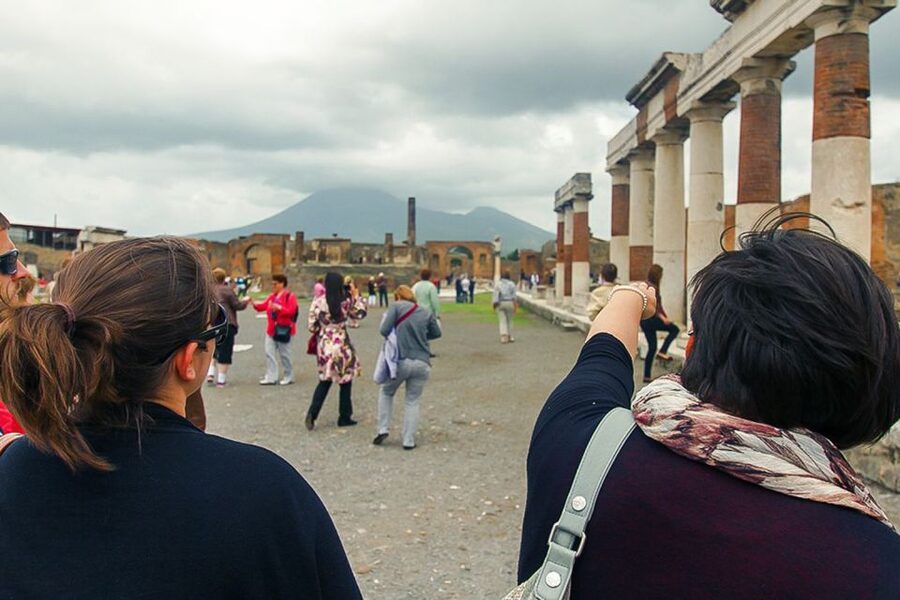
Pompeii is at its most engaging when the tour gets practical. A Roman bakery can reveal how food was made and sold, while the preserved shop fronts show how closely business was tied to the street. These are the places where the city stops feeling like a collection of ruins and starts to feel like a working town.
The tour also visits the remains of an ancient supermarket. That detail is useful because it gives you an easy comparison with modern life. You can picture residents coming into a commercial space for basic goods, rather than thinking only about emperors, armies, and wealthy villas.
Homes and villas provide another layer. Their layout, decoration, and position along the streets can help your guide explain differences between private life and public life. The point is not merely to admire old walls. It is to understand how the rooms and courtyards supported family life, work, status, and hospitality.
The guide’s explanations are particularly valuable here. Pompeii often presents you with incomplete rooms and partial walls. A trained archaeologist can explain what you are seeing without pretending every detail is certain.
The Forum, temples, and emotional remains
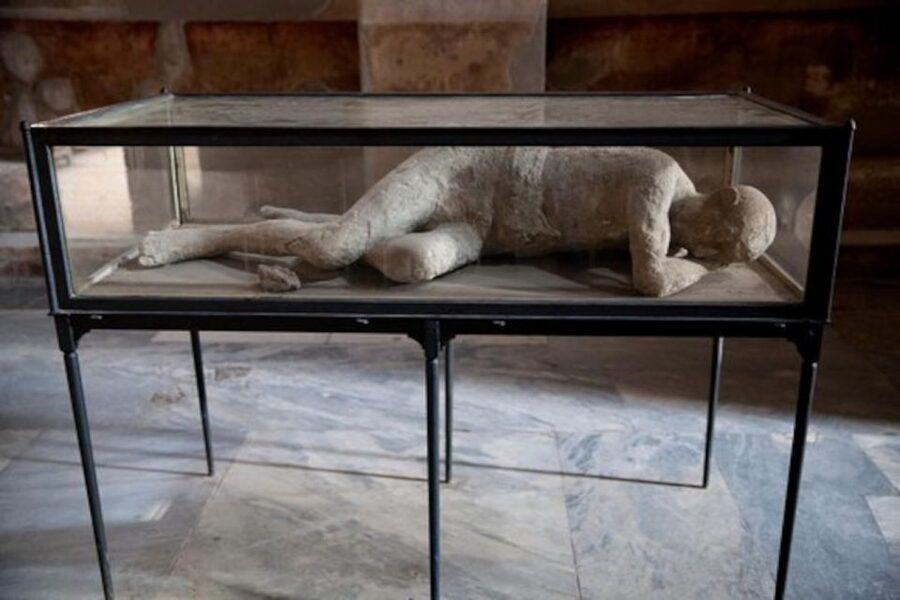
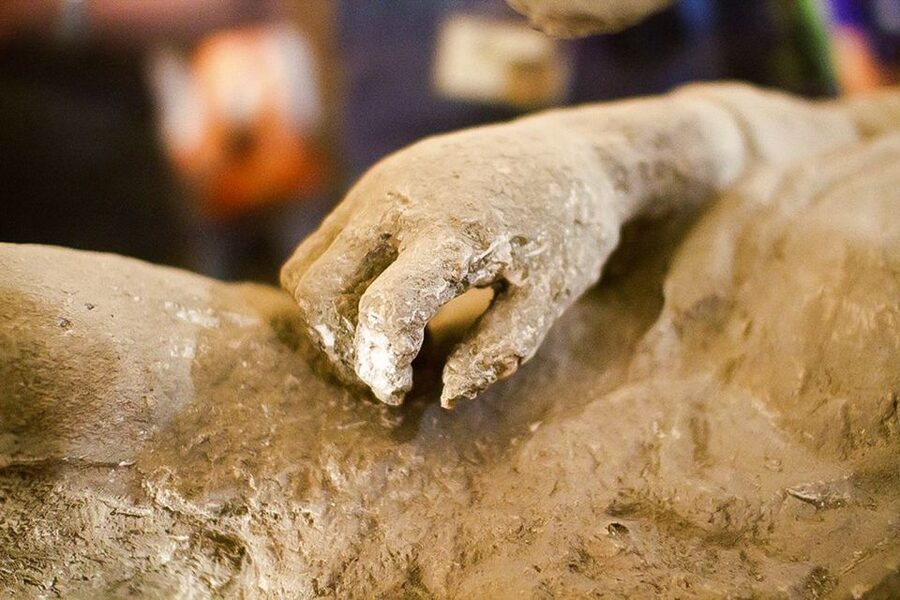
Pompeii’s most powerful moments come from the contrast between normal life and sudden death. The plaster casts of people caught in the eruption are eerie and deeply sad. They show the human cost of the disaster in a way that stones and columns cannot.
A good guide handles this part with care. The casts are not simply dramatic sights to photograph. They are reminders that Pompeii was a real city filled with families, workers, shopkeepers, and children. The tour’s broader focus on ordinary life gives these remains more meaning.
The old cemetery adds another useful piece of context. It sits outside the living city and helps explain Roman customs surrounding death and burial. Placing it alongside the Forum, shops, baths, and homes gives you a clearer sense of how Pompeii was planned.
If the group and setting are appropriate, the guide may also take you to an old brothel. This is a small but telling detail about the city’s social and commercial life. It may not be suitable for every family group, so the guide uses discretion.
New excavations and a city still being uncovered
About one-third of Pompeii remains buried. Excavation and preservation work continue, which means the site is not a finished display where every answer has already been found.
That is one of the tour’s most interesting features. The guide can adjust the route as new areas open or discoveries change what can be seen. Some visits have included newly opened excavation sections, giving you a look at current archaeological work rather than only the famous central monuments.
I like this because it keeps the experience honest. Archaeology is not just about finding spectacular objects. It also involves recording walls, protecting fragile surfaces, deciding what can safely be opened, and working out how different pieces fit together.
The changing route can also mean that no two visits are exactly alike. The precise buildings available may depend on current excavation and preservation work, so you should treat any mention of a recent area as a possibility rather than a guaranteed stop.
The city walls and views toward Naples
The route can include a walk along the old city walls. This gives you a different view of Pompeii and panoramic sights toward Naples.
After spending much of the tour among streets and buildings, the walls help you understand the city’s position and scale. They also offer a welcome change in perspective, although do not expect a shaded rest stop. In hot weather, even a scenic section adds to the physical effort.
Pompeii has very little shade across its broad archaeological grounds. July and August can be especially demanding, but sunny conditions can affect you at any time. Several past participants found the heat harder than expected, even while rating the tour highly.
Bring plenty of water, a hat, sunscreen, and light clothing. A UV umbrella can be useful, particularly if you are sensitive to strong sun. Closed-toe shoes are a good idea, since the ancient streets can be uneven. High heels are not allowed, and ordinary fashion shoes are a poor match for several hours of walking.
Small groups, headsets, and the guide’s pace
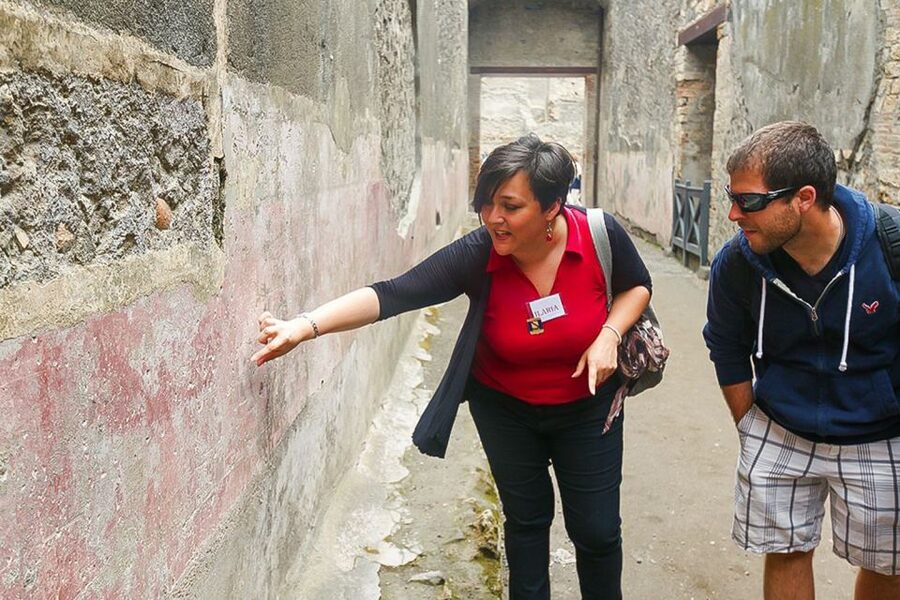
The tour is offered in a private or small-group format. A small group is important at Pompeii because the site is spread out and the guide may need to explain details in open spaces or near busy buildings.
Headsets are provided when needed. This lets you keep moving rather than pressing around the guide to hear. Clear audio was a repeated strength of the experience, especially with guides such as Anna.
The best guides also adjust their pace. One guide was praised for helping a group member with walking trouble while still keeping the rest of the visit moving. That does not turn this into an accessible tour, but it suggests that you can speak up if you need a brief pause.
You should still be realistic about the physical demands. The tour is not suitable for wheelchair users, people with mobility impairments, or strollers. You need to walk at a moderate pace without major difficulty.
Families can do well on this tour if children enjoy stories and ancient places. One guide kept an eight-year-old engaged, while another held the attention of children aged 11 and 15 for the full three hours. The subject matter includes death and an ancient brothel, so parents should decide if the content fits their children.
Is $70 a fair price?
At about $70 per person, this is not the cheapest way into Pompeii. The price includes the pre-reserved entrance ticket, an official guide, and headsets when needed. You are paying mainly for the guide’s interpretation and for a planned route through a site that can otherwise feel disorienting.
I think the price makes sense if you have limited time, care about context, or want to see more than the most obvious monuments. The archaeological training is the real value. A self-guided visit may cost less, but you could spend much of your time navigating and miss the small details that give the city meaning.
The three-hour version offers the stronger value for a first visit. You get more time with the streets, public buildings, homes, shops, and excavation work. The two-hour option is better if you want a shorter introduction, but it gives you less room for questions and side areas.
There are also practical costs to remember. Food and drinks are not included, and facilities inside the enormous park are limited. There is only one toilet area during the tour route, and the food and drink queue can be long. Use the bathroom before starting and carry water with you.
Who should book this Pompeii tour?
I would choose this tour if you want Pompeii to feel like a city rather than a pile of ruins. It suits first-time visitors, history fans, families with older children, and anyone who prefers a clear story over a loose walk with a map.
It is also a good match if you want to ask questions. The guides are not simply reciting dates. Their strongest quality is the ability to explain how people lived, answer follow-up questions, and make the archaeology understandable.
The tour is less suitable if you want to wander alone, stop for long periods, or move at a very slow pace. It is also a poor fit for anyone using a wheelchair or stroller, or for visitors unprepared for heat and uneven walking surfaces.
Book the three-hour option when Pompeii is a major part of your Campania plans. Choose Express when you need the Forum and main sights in two hours. Either way, arrive early at the correct entrance, wear sturdy shoes, and bring water. With those basics handled, the archaeologist can do what a guide should do best: help you see the human city beneath the stones.
FAQ
How long is the Pompeii guided tour?
You can choose a two-hour Pompeii Express tour or a two to three-hour experience. The Complete Pompeii option is the longer route and generally lasts about three hours.
What does the tour include?
The tour includes pre-reserved skip-the-line Pompeii tickets, an official Pompeii tour guide, and headsets when needed.
Where does the tour meet?
Meet at the entrance gate for Pompeii Archaeological Park at Via Villa dei Misteri, 1, across from the Hortus Pompei restaurant. Your guide will hold a green Walks sign.
How early should I arrive?
Arrive 15 minutes before the scheduled start time so you can find the correct entrance and identify your guide.
Is hotel pickup included?
No. Hotel pickup and drop-off are not included, so you must arrange your own transportation to and from the meeting point.
What should I bring?
Bring a passport or ID card, comfortable shoes, water, sunscreen, and sun protection. Children also need a passport or ID card. Closed-toe shoes are a sensible choice.
Is the tour suitable for wheelchairs, strollers, or people with mobility impairments?
No. The tour is not suitable for wheelchair users, strollers, or people with mobility impairments. You should be able to walk at a moderate pace without difficulty.
More Skip the Line in Pompeii Archaeological Site
- Pompeii: Skip-the-Line Tour for Kids and Families
★ 4.9 · 72 reviews - Pompeii: Skip-the-Line Ticket and Virtual Museum
★ 4.5 · 66 reviews - Pompeii: Skip-the-Line Guided Archaeological Discovery Tour
★ 4.2 · 13 reviews - Pompeii: Skip-the-Line Entrance Ticket with Audio Guide
★ 4.0 · 2,509 reviews
Newest reviews from Pompeii Archaeological Site
- From Naples: Pompeii & Sorrento Shore Excursion with Lunch★ 5.0 · 6 reviews
- Pompeii 3-Hour Walking Tour★ 5.0 · 8 reviews
- From Sorrento: Pompeii and Vesuvius Tour by Express Train★ 4.0 · 12 reviews
- Pompeii: Skip-the-Line Guided Archaeological Discovery Tour★ 4.2 · 13 reviews
- 2-Hour Private Walking Tour of Pompeii★ 4.7 · 22 reviews
- Mount Vesuvius Wine Tasting and Lunch from Pompeii★ 4.3 · 43 reviews
- Pompeii: Skip-the-Line Ticket and Virtual Museum★ 4.5 · 66 reviews
- Pompeii: Skip-the-Line Tour for Kids and Families★ 4.9 · 72 reviews
Archaeologist-Led Tours, compared.

Entry Ticket and Guided Tour with an Archaeologist
Read our review →
Pompeii Small Group Tour with an Archaeologist
Read our review →
Pompeii and Herculaneum Small Group Tour with an Archaeologist
Read our review →
Skip the Line Guided Tour of Pompeii led by an Archaeologist
Read our review →
Exclusive Tour with Archaeologist and Entry Tickets
Read our review →
Pompeii Private Tour with an Archaeologist and Skip The Line – 3 hours
Read our review →
Pompeii Skip-the-line Tour with Archaeologist Guide
Read our review →Browse the lists this tour appears in