
Reviewed · SKIP THE LINE
Pompeii: Skip-the-Line Guided Archaeological Discovery Tour
Pompeii’s great power is its ordinary detail: ruts in the streets, food counters, painted rooms, public baths, and homes left in place by Vesuvius. This two-hour archaeological tour gives you a brisk route through that vanished Roman town with an archaeologist explaining what you are seeing.
I like the express entrance because Pompeii can swallow precious sightseeing time before you even reach the ruins. I also like the focus on elite houses and everyday places such as the thermopolia, where Roman residents bought prepared food. The catch is the pace: two hours is enough for a strong first look, but not enough to study every open building.
- Forum to Amphitheater: Follow Pompeii’s political center, public baths, and enormous entertainment venue.
- Food and home life: See a Roman thermopolium, lavish villas, frescoes, and traces of daily routines.
- Archaeologist-led commentary: English and Spanish tours are monolingual, keeping the explanation focused.
- Priority entry: Skip the main ticket line, though everyone must still pass through security.
- Small-group audio support: Earphones are supplied for groups of up to five people.
- Strict meeting rules: Arrive at least 15 minutes early at the Vox Kiosk in Piazza Esedra.
In This Review
- Why a Two-Hour Pompeii Tour Can Work
- Meeting at Piazza Esedra
- Entering Pompeii Through the Express Line
- Pompeii’s Public Heart: The Forum and Baths
- The Grand Theater and Amphitheater
- Everyday Food at Vetutius Placidus
- The Lupanare and Pompeii’s Franker Side
- House of the Vettii and Lavish Roman Homes
- The Garden of the Fugitives and the Eruption’s Human Cost
- What the Archaeologist Adds
- Is $42.19 Good Value?
- Who Should Book This Pompeii Tour?
- Practical Tips for a Better Visit
- Should You Book It?
- FAQ
- How long does the Pompeii guided tour last?
- Where does the tour meet?
- How early should I arrive?
- Which languages are available?
- Does skip-the-line access remove all waiting?
- What should I bring to Pompeii?
- Is the tour suitable for wheelchair users?
Why a Two-Hour Pompeii Tour Can Work
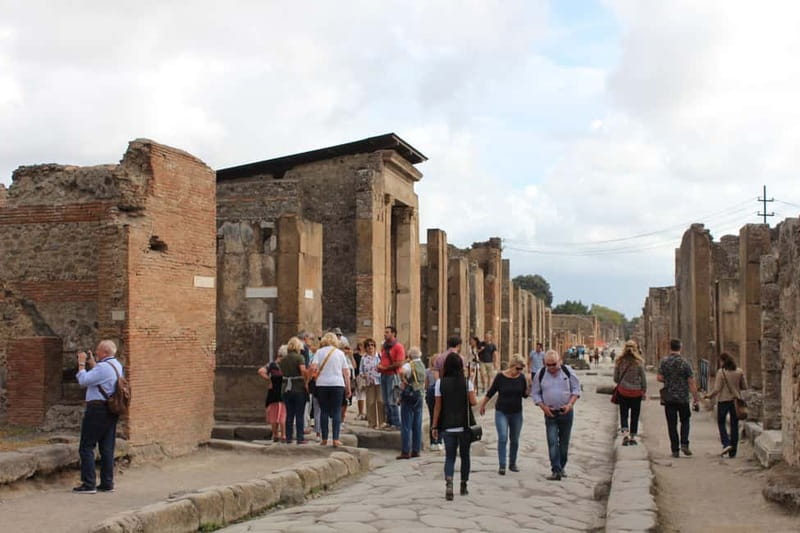
Pompeii is not a single monument. It is a full Roman town, with streets, houses, shops, public buildings, shrines, baths, theaters, and open spaces spread across a large archaeological area. Without a plan, you can spend half a day wandering and still miss the places that explain how the city functioned.
This tour gives you that plan. You move from the entrance at Piazza Esedra through a string of major sights, with the guide tying them together. The route covers public life, entertainment, commerce, private wealth, sexuality, food, and the final catastrophe.
I see the two-hour length as both a benefit and a limit. It fits neatly into a day that also includes Mount Vesuvius, Naples, or Herculaneum. It is also short enough for first-time visitors who want a clear introduction rather than an all-day archaeological march.
You should not expect a slow, scholarly examination of every fresco. The listed route includes several five- and ten-minute stops, so the guide has to keep the group moving. If you want to photograph every painted wall or read every inscription, plan independent time after the tour, if the site is open and your ticket arrangements allow it.
Meeting at Piazza Esedra
The starting point is the Towns of Italy-Vox Kiosk at Piazza Esedra, next to Coffeeshop Vittoria in Pompeii. This location matters because a large archaeological site leaves little room for fixing a late arrival. The guide cannot wait indefinitely at the gate, and latecomers cannot join or receive a refund.
Arrive at least 15 minutes before the scheduled start. I would allow extra time to locate the kiosk, especially if you are arriving by train, walking with luggage, or trying to orient yourself in the busy area around the site entrance.
Bring a passport or valid identity card. It is listed as a requirement, so do not treat it as optional. The tour ends back at the same meeting point, which makes it easier to plan your next move without arranging a separate pickup.
Hotel transportation is not included. Food and drinks are not included either, so eat beforehand or carry what the site rules permit. Large bags are not suitable here. Backpacks and oversized bags must be deposited in the cloakroom, with the stated maximum bag size of 30 by 30 by 15 centimeters.
More Pompeii excavation visits:
- Pompeii: Entry Ticket with Optional Audio Guide
★ 4.2 · 12,360 reviews - Pompeii: Archaeological Park Tour with Ticket on request
★ 4.5 · 2,283 reviews - Pompeii Ruins Private Tour with Optional Skip-the-Line Entry
★ 4.9 · 732 reviews
Entering Pompeii Through the Express Line
Skip-the-line access is one of the clearest reasons to consider this tour. You use the privileged entrance rather than waiting in the standard ticket queue, which can protect your limited time in Campania.
There is an important distinction. Skip-the-line does not mean walk straight into the ruins. A compulsory security check still applies, and that check may create a delay. You should keep your expectations sensible: priority entrance saves time, but it cannot remove site security.
Once inside, comfortable shoes become essential. Pompeii’s streets are ancient, uneven, and hard underfoot. Flip-flops are specifically discouraged, and I would also bring a hat and sunscreen. The tour runs in all weather, so a light rain layer is sensible when the forecast looks uncertain.
The park also has a dress code. Disrespectful clothing and shirtless entry are not allowed. Drones, bicycles, scooters, unauthorized electric transport, and professional optical or audio equipment are prohibited. Pets are not allowed on this activity.
Pompeii’s Public Heart: The Forum and Baths
The guided visit begins within Pompeii Archaeological Park, where the guide introduces the ancient city through its streets and major public spaces. The Forum is the key stop. This was Pompeii’s political and social center, the place where public business, civic identity, and community life came together.
The value of seeing the Forum with an archaeologist is context. Ruins can look like scattered columns when you view them alone. A guide can point out how the surrounding buildings worked as part of a civic center and help you picture Pompeii before the eruption interrupted daily life.
The Forum Baths offer a different angle. Public bathing was not merely about washing. Baths were part of Roman social life, and their remains help you see the practical systems behind the polished image of Roman civilization.
This stop is listed as a short photo and sightseeing visit, so expect an overview rather than a long technical lecture. Keep your camera ready, but listen closely while the guide explains the relationship between public buildings and the people who used them.
The Grand Theater and Amphitheater
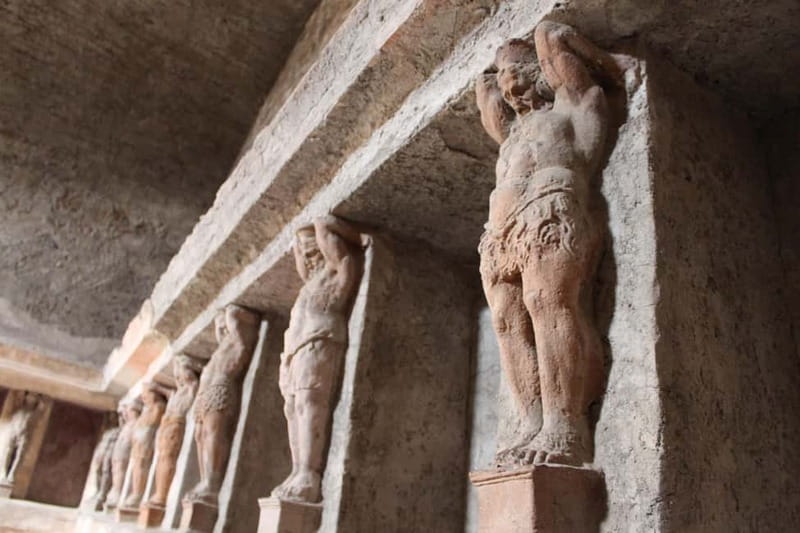
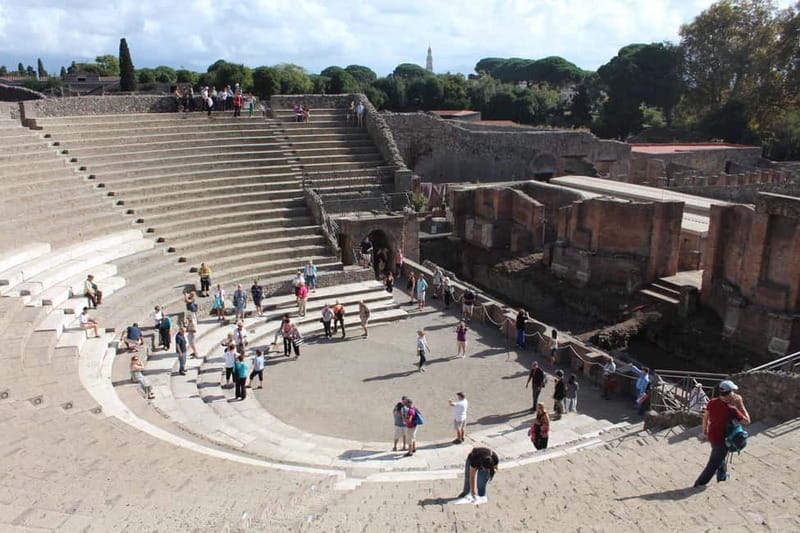
The Grand Theater, or Teatro Grande, brings entertainment into the story. Pompeii’s theaters were built for public performances, and the scale of the space shows that leisure mattered in Roman urban life. The guide helps move the theater beyond a set of stone seats and arches by explaining how it fitted into the city.
The Amphitheater of Pompeii is another brief photo stop. Its inclusion gives you a look at large-scale public spectacle and the architecture needed to manage a crowd. It also rounds out the civic picture: Pompeii was not just a place of homes and shops, but a city with shared events and public entertainment.
You may find these stops especially useful if you are seeing Pompeii for the first time. They give the site a readable structure. The drawback is that the short schedule leaves little room to linger in either venue, so photography may need to be quick.
More Pompeii Archaeological Site tours worth comparing
- Pompeii: Skip-the-Line Tickets and Tour with Archaeologist
★ 4.9 · 467 reviews - Pompeii: Skip-the-Line Guided Tour with Expert Archaeologist
★ 4.8 · 196 reviews - Pompeii: Skip-the-Line Tour for Kids and Families
★ 4.9 · 72 reviews - Pompeii: Skip-the-Line Ticket and Virtual Museum
★ 4.5 · 66 reviews
Everyday Food at Vetutius Placidus
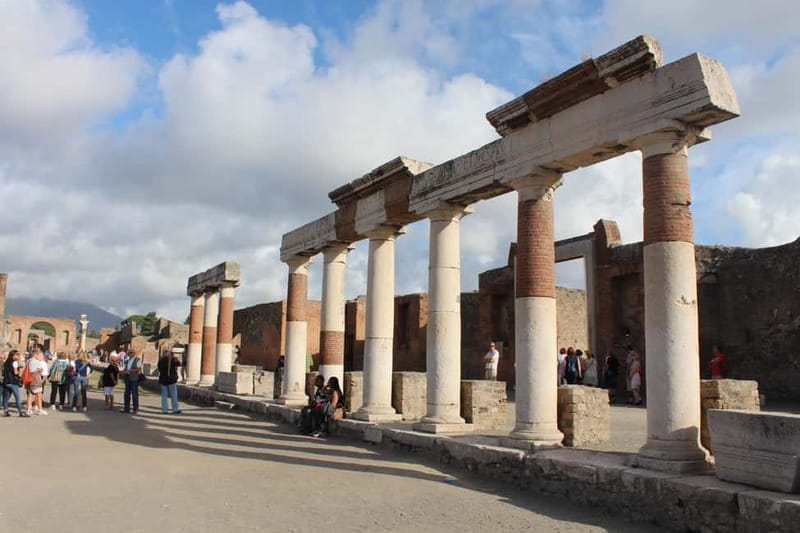
One of the most appealing stops is the House of Vetutius Placidus and its thermopolium. A thermopolium was an ancient Roman food counter, a place where prepared food and drink could be bought. It offers a direct connection to ordinary urban routines, far removed from the grand villas and official spaces.
This is the kind of detail I value on a Pompeii visit. Lavish homes tell you how the wealthy lived, but a food counter helps you imagine what people did between work, errands, public business, and social visits. The remains make Roman life feel practical rather than distant.
The visit is scheduled for about 10 minutes, including a photo stop and guide commentary. That is enough to understand why the building matters, though not enough for a slow inspection of every feature.
The Lupanare and Pompeii’s Franker Side
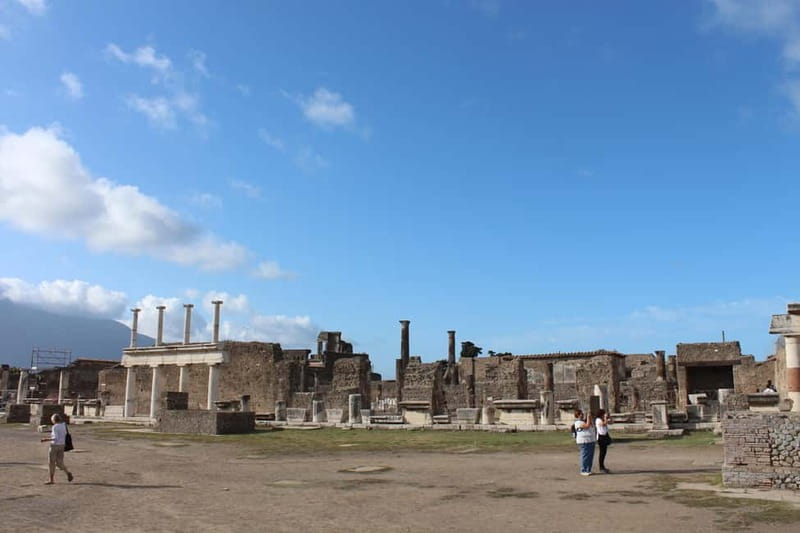
The Lupanare is one of Pompeii’s most recognizable buildings. Its connection with prostitution and erotic art gives the tour a more candid look at Roman society. The stop includes guided sightseeing and time for photographs.
This part of the route can feel more memorable than another columned courtyard because it deals with a subject that ancient communities often handled as part of ordinary urban life. The erotic art collection mentioned in the tour description adds another layer, showing how Pompeii preserved evidence of attitudes and practices that formal histories sometimes leave out.
The visit is brief, around 10 minutes. If this is a major reason for your visit, keep in mind that the guide has to share attention between the rooms, art, and the larger social context. Listen for the explanation rather than treating the site as a quick novelty.
House of the Vettii and Lavish Roman Homes
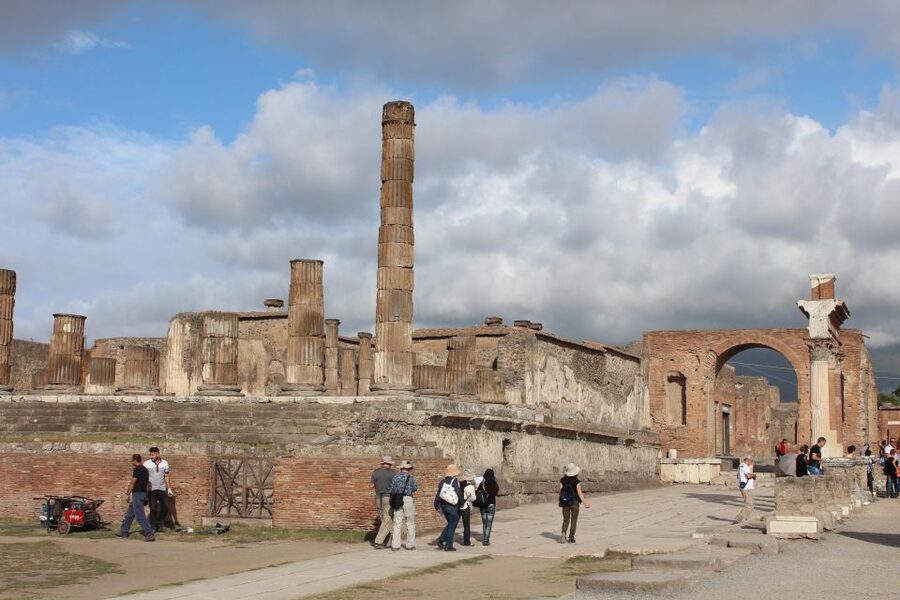
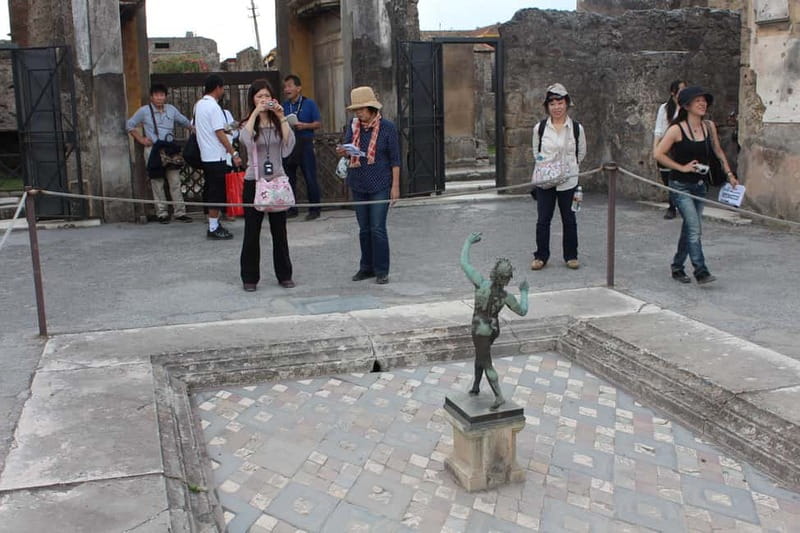
The House of the Vettii is the main private-home highlight. It offers a look at elite Roman living, with preserved frescoes and rooms designed to display wealth and taste. The tour uses this house to explain the gap between the city’s grand residences and the more modest spaces used by ordinary people.
I like this pairing of luxurious villas with food shops and public buildings. Pompeii makes more sense when you see social differences side by side. A decorated house is not just a pretty photo stop. It can show how wealthy owners used architecture and wall painting to shape the impression made on visitors.
The visit lasts about 10 minutes, so expect selected rooms and a guided overview. Open areas within Pompeii can change, and the exact view inside a building may depend on park conditions. Still, the House of the Vettii is a useful stop for anyone interested in Roman domestic design, frescoes, and status.
The Garden of the Fugitives and the Eruption’s Human Cost
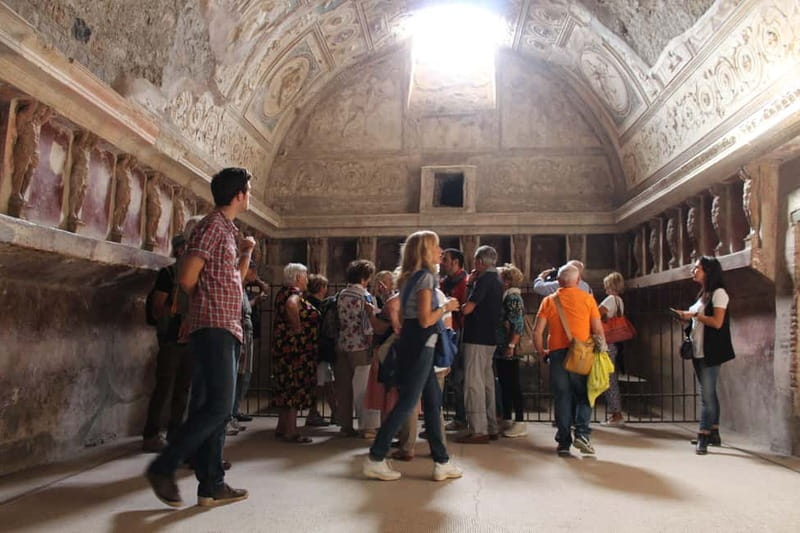
The Garden of the Fugitives is the most emotionally serious stop. It is associated with plaster casts of people caught during the eruption of Vesuvius. The casts are not simply archaeological objects. They make the disaster personal and remind you that Pompeii was a living town filled with people who had little warning of what was happening.
The tour gives you a short guided visit and photo stop here. I would approach this part with care and attention. The site can be visually powerful, but it is not a dramatic prop. The guide’s archaeological explanation helps place the casts within the wider story of the eruption and the city’s final moments.
This stop also changes the tone of the tour. The Forum, theater, food counter, and villas show how people lived. The Garden of the Fugitives shows how abruptly that life ended.
What the Archaeologist Adds
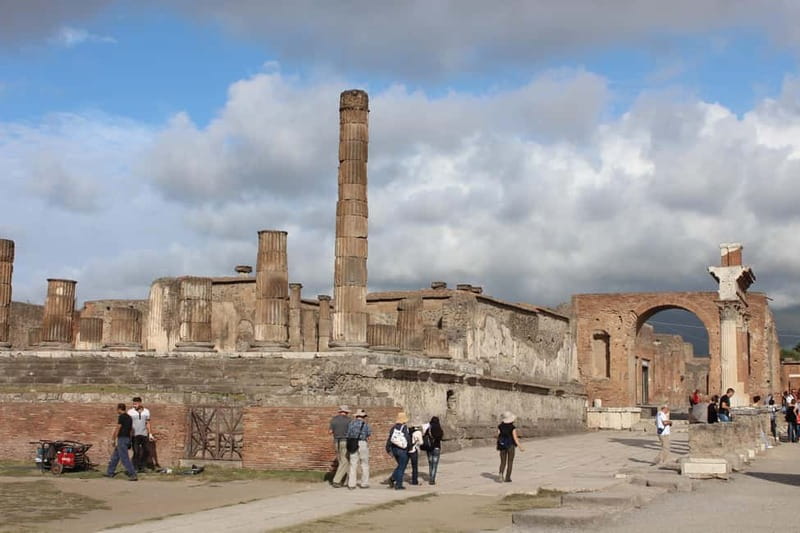
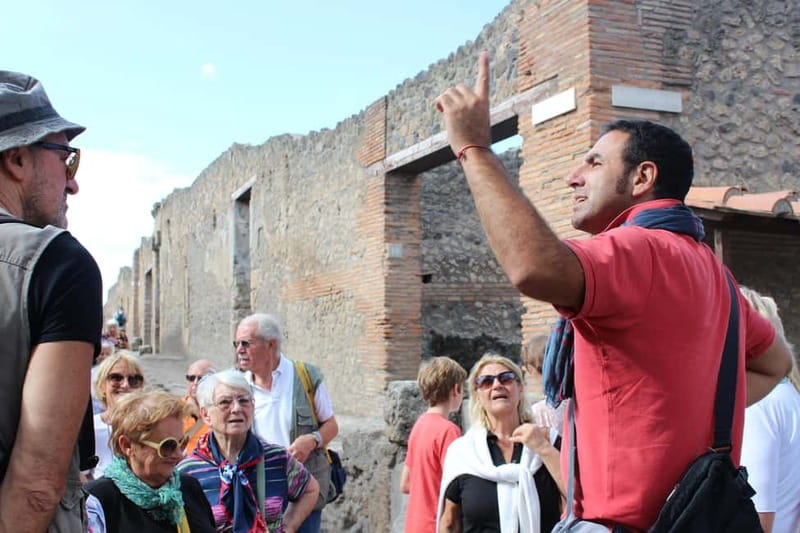
An archaeologist guide is most useful when the stones need interpretation. Pompeii has plenty of impressive remains, but the meaning of a doorway, counter, bath, or painted room is not always clear at first glance.
The tour is offered in English or Spanish, and groups are monolingual. That means you are not switching between several languages while the guide tries to cover the same facts twice. The format should make the commentary easier to follow, especially during a brisk route.
Earphones are included for groups of up to five people. This is a small but useful detail. Pompeii is open and spread out, and a guide’s voice can be difficult to catch when people are walking, stopping for pictures, or gathering around a narrow room.
No individual guide names are supplied, so you cannot choose a particular archaeologist. The real selection is the language and the tour format. If you need another language, this is not the right booking.
Is $42.19 Good Value?
At $42.19 per person, the tour is priced above a simple self-guided entry but below the cost of a long private archaeological experience. The value comes from combining the admission ticket, express entry, a planned route, and live interpretation in a compact visit.
I think the price makes sense if you have only a few hours in Pompeii or if the site feels daunting. The guide saves you from spending your first hour figuring out which streets lead to the Forum, the amphitheater, and the major houses. You also gain explanations that a ticket alone does not provide.
The value is weaker if you already know Pompeii well or want a slow, independent day. Two hours moves quickly, and the included route cannot cover every building. You may still want extra time in the park, depending on opening conditions and your schedule.
Free cancellation is available up to 24 hours before the activity for a full refund. You can also reserve now and pay later, which helps if you are arranging a wider Campania trip before every detail is fixed.
Who Should Book This Pompeii Tour?
This experience fits a first visit, especially if you want the main story without spending an entire day on site. It also suits history and photography enthusiasts who prefer a guide to point out the best-known buildings and explain why they matter.
The tour is not a good match for anyone with significant mobility limits, back problems, or heart problems. It is not suitable for wheelchair users. Pompeii requires walking on difficult surfaces, and the two-hour route may feel demanding even before the heat or rain is added.
Families with older children may appreciate the food counters, theaters, villas, and erotic art, since these subjects give the ruins variety. Very young children may find the pace and uneven streets tiring. Anyone who dislikes fixed schedules should choose a slower independent visit instead.
Practical Tips for a Better Visit
Wear firm walking shoes, not flip-flops. Bring water, sunscreen, and a hat, while keeping bags within the park’s size rules.
Arrive early at Piazza Esedra and find the Vox Kiosk next to Coffeeshop Vittoria. Late arrival means you may lose the tour and the payment.
Carry your passport or identity card. Dress respectfully, and do not bring a pet, drone, bicycle, scooter, or professional recording equipment.
Treat the two hours as an introduction. Pay attention to the guide’s explanations, then decide if you want more independent time around the ruins. The short stops are designed to show you the major themes, not every corner of Pompeii.
Should You Book It?
Book this tour if you want a clear route and expert archaeological context without waiting in the main entry line. The Forum, theater, thermopolium, villas, Lupanare, and plaster casts create a well-rounded first look at Pompeii.
Skip it if you need wheelchair access, want a leisurely all-day visit, or prefer to explore without a schedule. For most first-time visitors with only two hours, $42.19 is a fair price for saving time and gaining a useful framework for the ruins.
FAQ
How long does the Pompeii guided tour last?
The activity lasts two hours. Starting times vary, so you need to check availability when booking.
Where does the tour meet?
Meet at the Towns of Italy-Vox Kiosk in Piazza Esedra, Pompeii, next to Coffeeshop Vittoria.
How early should I arrive?
Arrive at least 15 minutes before the scheduled start. Latecomers cannot join the tour, and no refund is provided for missed entry.
Which languages are available?
The live guide is available in English or Spanish. Tours are monolingual, so the group follows one language during the visit.
Does skip-the-line access remove all waiting?
No. The tour uses an express security entrance, but a compulsory security check still applies and may cause delays.
What should I bring to Pompeii?
Bring a passport or valid identity card. Good walking shoes, a hat, and sunscreen are strongly recommended.
Is the tour suitable for wheelchair users?
No. The activity is not suitable for wheelchair users or people with mobility impairments. It is also not recommended for people with back or heart problems.
Newest reviews from Pompeii Archaeological Site
- From Naples: Pompeii & Sorrento Shore Excursion with Lunch★ 5.0 · 6 reviews
- Pompeii 3-Hour Walking Tour★ 5.0 · 8 reviews
- From Sorrento: Pompeii and Vesuvius Tour by Express Train★ 4.0 · 12 reviews
- 2-Hour Private Walking Tour of Pompeii★ 4.7 · 22 reviews
- Mount Vesuvius Wine Tasting and Lunch from Pompeii★ 4.3 · 43 reviews
- Pompeii: Skip-the-Line Ticket and Virtual Museum★ 4.5 · 66 reviews
- Pompeii: Skip-the-Line Tour for Kids and Families★ 4.9 · 72 reviews
- Pompeii: Tour for Children★ 4.7 · 106 reviews
Skip the Line, compared.

Skip-the-Line Entrance Ticket with Audio Guide
Read our review →



Skip-the-Line Entry Ticket with Digital Guide App
Read our review →
Pompeii Ruins Private Tour with Optional Skip-the-Line Entry
Read our review →
Skip-the-Line Pompeii Guided Tour from Sorrento
Read our review →
Skip the Line Guided Tour of Pompeii led by an Archaeologist
Read our review →Browse the lists this tour appears in