
Reviewed · AUDIO TOURS
Pompeii: Skip-the-Line Ticket with Audio Guide and Map
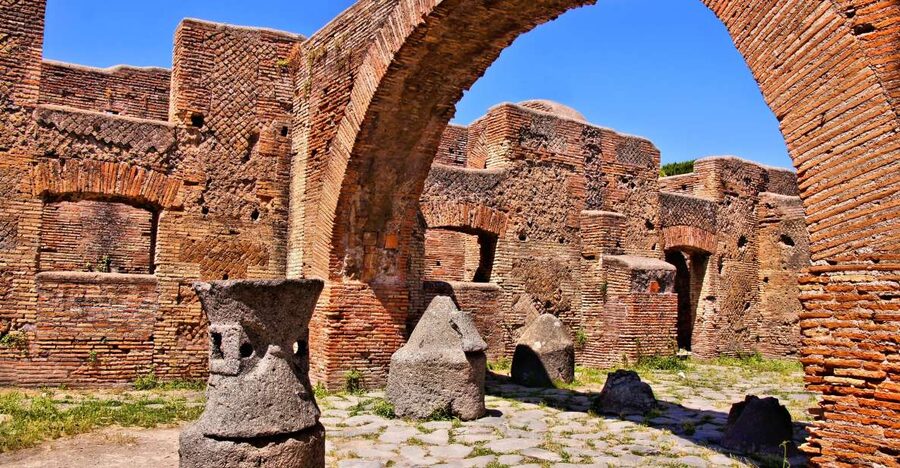
Pompeii is best understood on foot, one ancient street at a time. This self-guided visit lets you enter during a broad 9 am to 3 pm window, then set your own pace among frescoed homes, temples, baths, shops, theaters, and the famous casts of people caught by Mount Vesuvius.
I like the freedom to linger where the ruins catch your eye, and I like having both an updated map and audio commentary to help make sense of a very large site. The main caution is practical: Pompeii’s internet connection can be unreliable, and the audio guide may require either a download or pickup of a device. Bring valid ID if you rent the audio guide.
In This Review
- Key points to know
- What this Pompeii visit actually gives you
- Finding the meeting point beside Pasticceria De Vivo
- Entering Pompeii from 9 am to 3 pm
- Reading Pompeii through its streets and homes
- The amphitheater and Pompeii’s public life
- Frescoes, baths, temples, and food counters
- The eruption casts and the human cost
- How useful is the audio guide and map?
- Is the $44 price good value?
- Who will enjoy this self-guided format?
- Small planning choices that improve the visit
- Should you book this Pompeii ticket?
- FAQ
- Where is this Pompeii experience located?
- What time can I enter Pompeii?
- Is the Pompeii ticket included?
- Is an audio guide included?
- Which languages are available on the audio guide?
- What languages can the staff speak?
- Do I need identification for the audio guide?
- Can I bring large luggage into Pompeii?
- What should I wear?
- Can I cancel the booking?
Key points to know
- Enter when it suits you: Use your ticket between 9 am and 3 pm on the booked day.
- Meet beside Pasticceria De Vivo: Look for the Around Vesuvio team, usually wearing blue and yellow jackets.
- See the everyday city: Explore houses, spas, temples, shops, food counters, theaters, and brothels.
- Visit the amphitheater and eruption casts: These are among Pompeii’s most powerful and memorable sights.
- Use the map to avoid wandering without a plan: The ruins cover a large area, and the map helps you find key points.
- Plan for uneven walking: Comfortable shoes and clothes matter, while large bags and oversize luggage are not allowed.
What this Pompeii visit actually gives you
This is a flexible entry experience rather than a traditional guided tour. You meet the local team outside its office next to Pasticceria De Vivo, collect or arrange the audio guide, and enter Pompeii with your ticket and map.
The attraction is the freedom. You are not tied to a group’s walking speed or a fixed sequence of streets. You can spend more time in a painted house, move quickly through a temple area, or pause at the amphitheater without waiting for anyone else.
The ticket is valid for one day, with entry available from 9 am until 3 pm. That window is useful if Pompeii is one stop in a wider Campania day, but it is not an invitation to arrive at the last minute. Pompeii is a large archaeological site, and entering late leaves less time to see its major areas.
There is no named personal guide attached to this experience. The local team handles the meeting and ticket arrangement, while the audio guide supplies commentary in English, Italian, French, German, Hebrew, Russian, Chinese, Portuguese, and Spanish. Staff assistance is available in English, Italian, Spanish, and French.
More Pompeii excavation visits:
- Pompeii: Entry Ticket and Guided Tour with an Archaeologist
★ 4.8 · 19,459 reviews - Pompeii: Small Group Tour with an Archaeologist
★ 4.8 · 12,264 reviews - Pompeii: Skip-the-Line Entrance Ticket with Audio Guide
★ 4.0 · 2,509 reviews
Finding the meeting point beside Pasticceria De Vivo
The meeting point is outside the provider’s office, exactly next to Pasticceria De Vivo. Look for the Around Vesuvio team, usually in blue and yellow jackets.
This detail deserves attention because the entry ticket is not the only part of the plan. You need to find the office first, then deal with the audio guide before heading into the ruins. Keep the meeting location saved on your phone, and allow enough time to locate it without rushing.
A useful detail from the practical side of this experience is the audio device return. One visitor found that the drop-off point was about a 20-minute walk from the train station. That does not necessarily describe every route you will take, but it is a good reason to ask the staff where the device must be returned before you leave the office.
If you plan to arrive by train, do not assume the station, meeting point, Pompeii entrance, and audio-guide return point are all in the same spot. Confirm the arrangement at pickup. This small check can save a needless walk at the end of a hot day.
Entering Pompeii from 9 am to 3 pm
The skip-the-line feature is useful at the ticket entrance. You receive a Pompeii ticket listed at €20, so the main value of the package is the time-saving entry process plus the audio guide and map.
The broad entry period gives you room to adapt your day. A morning arrival is a smart choice if you want quieter streets and more time to look closely at the ruins. One early visit found relatively few people on site, which made it easier to study valuable ruins without being hurried.
That said, the ticket does not turn Pompeii into a short stop. You will be walking across old streets and open archaeological areas, so comfortable shoes and light clothing are essential. Large bags and oversize luggage are not allowed, and there is no reason to carry more than you need.
I would aim to arrive as early as your schedule allows. You gain more time, may find a calmer atmosphere, and avoid treating the ancient city as a quick checklist. The 3 pm cutoff is the latest entry time stated for this activity, so plan your arrival around it rather than hoping to slip in later.
Reading Pompeii through its streets and homes
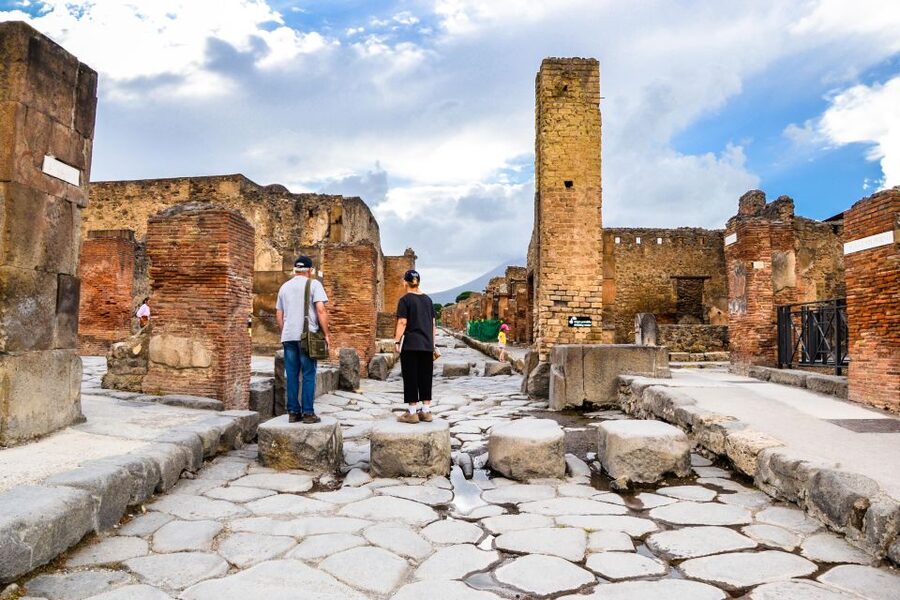
Pompeii makes its strongest impression when you notice how ordinary life fits beside grand public buildings. The route takes you through millenary streets lined with frescoed houses, shops, spas, temples, and food counters known as thermopolis.
The houses are not just empty walls. Their frescoes give you a sense of decoration, status, and domestic life in the Roman city. The audio guide can add the historical explanation that scattered stones and rooms cannot provide on their own.
The shops and thermopolis are especially valuable for anyone interested in daily life. These spaces show Pompeii as a working city, not only a collection of elite villas and monuments. You can picture residents buying food, using public facilities, visiting religious buildings, and gathering for entertainment.
The map matters here. Pompeii can feel confusing because many streets and buildings look similar at first glance. Use the map to mark the places you most want to see, then let curiosity guide the rest of your walk.
Do not expect every part of the site to feel equally polished or easy to read. Ruins require patience. The audio commentary is there to give names and context, but the quality may feel uneven. One visitor described the audio as only okay, so I would treat it as a helpful aid rather than the main reason to book.
More Pompei Campania tours worth comparing
- Pompeii: Skip-the-line-Ticket and Guided Tour
★ 4.6 · 1,152 reviews - Pompeii: Guided Tour with Skip-the-Line Entry
★ 4.9 · 812 reviews - Pompeii: Skip-the-Line Entry Ticket with Digital Guide App
★ 4.1 · 770 reviews - Pompeii: Tour with Archaeologist Guide & Skip-the-Line Entry
★ 4.5 · 478 reviews
The amphitheater and Pompeii’s public life
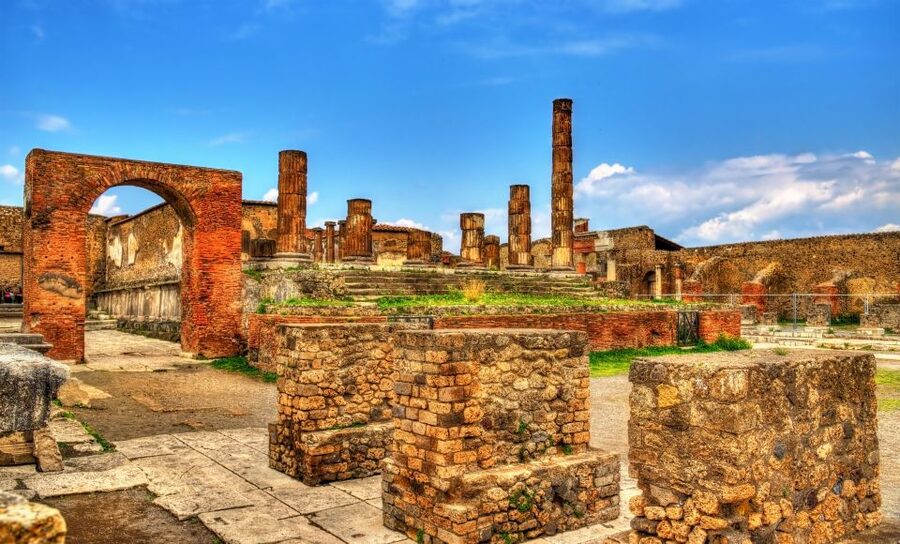
The Roman amphitheater is one of the major stops included in the visit. It gives the city a large public setting after you have spent time among smaller homes and shops.
The contrast is the point. Pompeii was not only a place of private meals and household courtyards. It had public entertainment, theaters, religious buildings, baths, and spaces built for crowds. Seeing the amphitheater alongside the city streets helps you understand the scale of Roman social life.
The theaters add another layer. They show how performance and public gatherings fitted into the city’s routine. You may find that these areas are easier to appreciate after listening to the audio guide, since the remains need explanation to become more than rows of stone.
Because this is a self-guided visit, you can choose how much attention to give each venue. If theaters are a priority, use the map before entering and plan your route. If the amphitheater is your main target, mark it early so you do not spend all your energy elsewhere.
Frescoes, baths, temples, and food counters
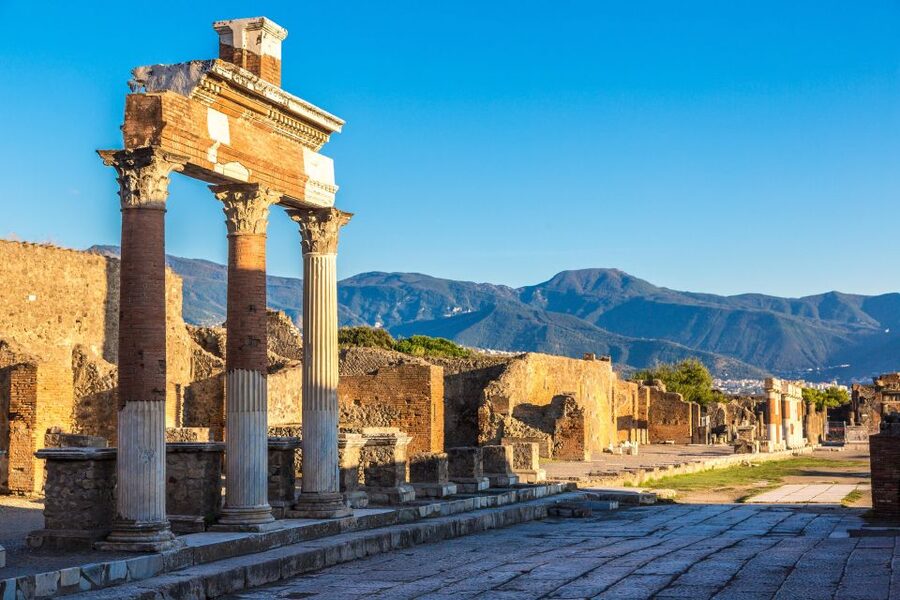
Pompeii’s appeal comes from variety. In a single visit, you can move from painted domestic rooms to public baths, then from religious buildings to working shops.
The frescoed houses reward slow looking. Color, room layout, and decoration offer clues about the people who lived there. The baths show another side of city life, with public facilities built for more than simple washing. Temples remind you that religion shaped the city’s buildings and routines.
The thermopolis are among the most engaging stops for modern visitors because they connect directly with food and commerce. They functioned as coffee-and-fast-food counters of their time. That simple comparison makes the remains easier to picture: Pompeii had places where people could buy prepared food rather than cook every meal at home.
The brothels are also included among the points you can find. Their presence is a reminder that the city contained a full range of public and private activity. The audio guide can help explain what you are seeing, though the supplied information does not identify a particular commentator or specialist guide.
The eruption casts and the human cost

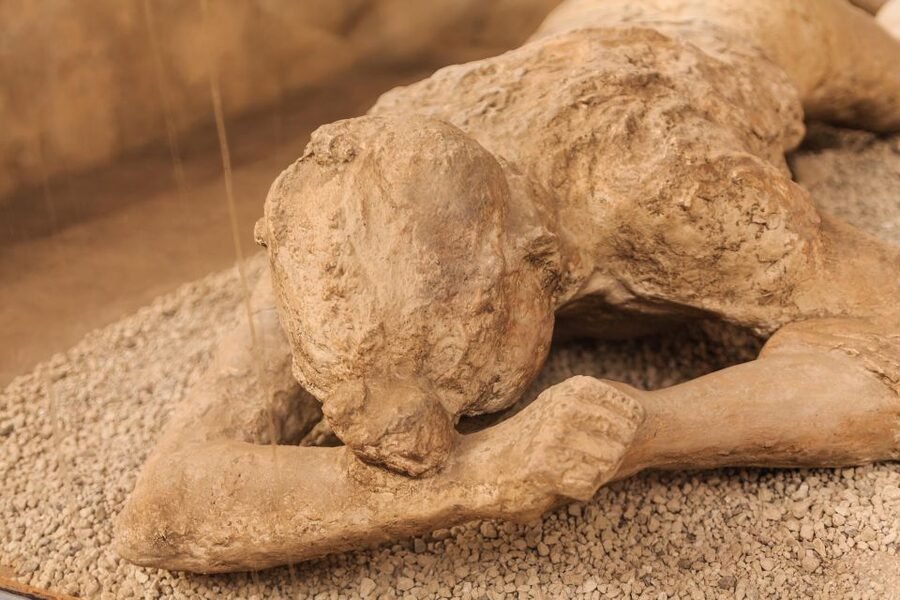
The casts of the eruption victims are among Pompeii’s most striking sights. They change the visit from an architectural study into a human story.
The ruined streets, walls, and paintings show how people lived. The casts show the sudden end of that life. You should approach this part slowly and respectfully, since the subject is difficult even when presented through archaeology.
The experience also teaches why the story of Mount Vesuvius matters. The eruption did not simply damage a few buildings. It stopped a city in the middle of daily activity and preserved details that would otherwise have disappeared.
The audio guide is useful here because the emotional force of the casts can overshadow the historical explanation. A measured account helps connect the individual remains with the wider story of Pompeii, its buildings, and the eruption.
How useful is the audio guide and map?
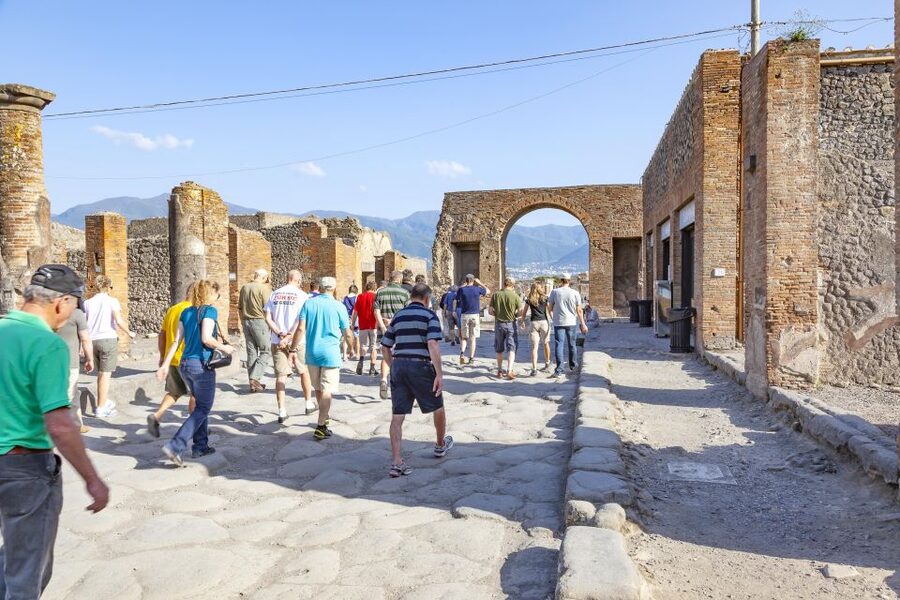
The map is the more dependable tool of the two. It helps you understand the site’s layout, locate the key buildings, and make a sensible route instead of walking at random.
The audio guide adds value when it works well. Commentary can explain a house, temple, theater, or food counter in a way that a bare ruin cannot. The language choice is generous, covering nine languages: English, Italian, French, German, Hebrew, Russian, Chinese, Portuguese, and Spanish.
There are two practical snags. First, internet service inside Pompeii can be unpredictable. If you need to download audio content, do that before entering and before relying on the site connection.
Second, renting an audio device requires a valid ID document. Bring one. Without it, the rental process may become difficult or impossible. Also ask where the device must be returned, especially if you are heading back to a train station or another part of town.
I would think of the audio guide as a bonus, not a replacement for planning. Read the map, choose your priorities, and keep moving if the commentary is slow or the connection fails.
Is the $44 price good value?
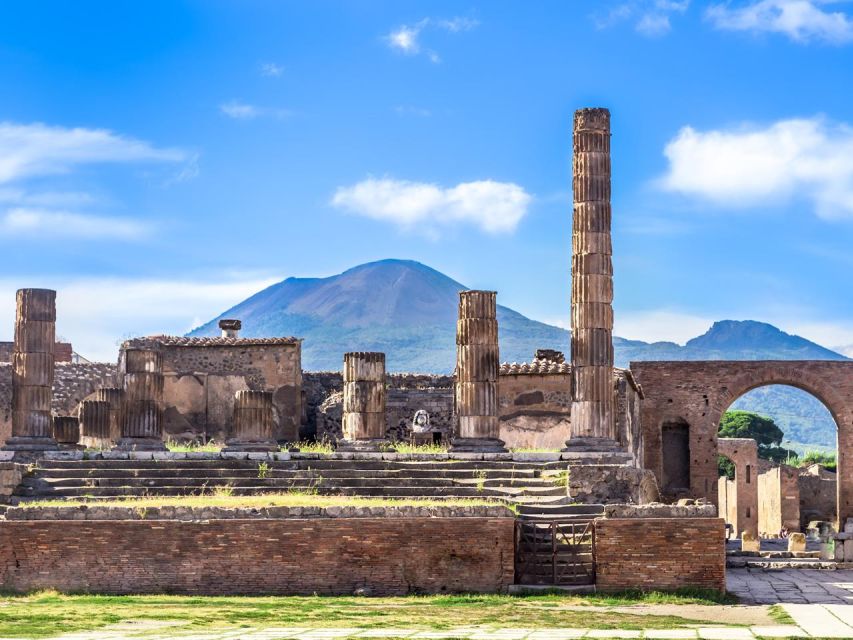
The listed price is $44 per person, while the Pompeii admission ticket is identified as €20. The difference pays for more than admission: skip-the-line handling, an audio guide, a map, and the convenience of arranging the visit through the local office.
The value depends on what you want. If you dislike ticket queues and prefer exploring alone, the package is reasonably useful. You get structure without being locked into a group. If you already know Pompeii well and only need entry, the extra cost may feel less attractive.
The package also includes free cancellation up to 24 hours before the activity and a reserve-now, pay-later option. Those terms help if your Campania plans are still shifting, though you should check the available starting times before booking.
At roughly a full-day price for a major archaeological site, this is not a budget admission ticket. It is a convenience package. I would book it for the flexible entry and audio support, not because the commentary is guaranteed to be exceptional.
Who will enjoy this self-guided format?

This visit suits independent sightseers who want to set the pace. You can focus on frescoes, public buildings, food counters, the amphitheater, or the eruption casts without following a guide’s fixed route.
It is also a good fit for people who prefer information in their own language. The audio guide covers a broad list of languages, and staff support is available in four.
Families and mixed-interest groups may appreciate the freedom, since one person can spend time at a theater while another studies a house or shop. Still, everyone in the group needs to be comfortable with a lot of walking and uneven archaeological ground.
This is not suitable for people with mobility impairments, heart problems, or altitude sickness. The activity information also asks you to bring comfortable shoes and clothes. Those are not throwaway suggestions. Pompeii is an outdoor site where your footwear and clothing will shape the day.
Small planning choices that improve the visit
Before leaving for Pompeii, save the meeting point beside Pasticceria De Vivo and bring valid ID for the audio guide. Wear comfortable shoes, carry only a small bag, and download any required audio material before you enter if possible.
Arrive in the morning if you can. An early visit may offer more breathing room around the most important ruins, and it gives you time to use the map instead of racing toward the exit.
Choose three or four priorities before you start. I would put the amphitheater, the eruption casts, a frescoed house, and the shops or thermopolis on that list. Then add temples, baths, and theaters as your time and energy allow.
Keep your expectations realistic. Pompeii is not a polished museum with every building open and every feature explained in detail. Its power comes from moving through a real ancient city and noticing how homes, business, religion, entertainment, and tragedy occupy the same streets.
Should you book this Pompeii ticket?
Book this experience if you want independent exploration with a little practical support. The skip-the-line entry, map, flexible 9 am to 3 pm arrival period, and wide audio-language choice make it easier to shape the day around your own interests.
Think twice if you only want the cheapest possible admission or if you need a fully guided explanation from a named expert. The audio commentary may be merely adequate, and internet problems can interfere with downloading or listening.
For most physically able visitors who want to see Pompeii without joining a fixed walking group, I find the format sensible. Arrive early, bring ID, confirm the audio-device return point, and treat the map as your main tool. Then give the frescoes, public buildings, food counters, amphitheater, and eruption casts the time they deserve.
FAQ
Where is this Pompeii experience located?
The experience takes place in Pompeii, in Italy’s Campania region. The meeting point is outside the provider’s office next to Pasticceria De Vivo.
What time can I enter Pompeii?
You can enter on the booked day between 9 am and 3 pm. Check availability for the specific starting times offered when booking.
Is the Pompeii ticket included?
Yes. The package includes a Pompeii skip-the-line ticket listed at €20.
Is an audio guide included?
Yes. An audio guide is included with the experience.
Which languages are available on the audio guide?
The audio guide is available in English, Italian, French, German, Hebrew, Russian, Chinese, Portuguese, and Spanish.
What languages can the staff speak?
Staff assistance is available in English, Italian, Spanish, and French.
Do I need identification for the audio guide?
Yes. You must bring a valid ID document to rent the audio guide.
Can I bring large luggage into Pompeii?
No. Oversize luggage and large bags are not allowed.
What should I wear?
Bring comfortable shoes and comfortable clothes.
Can I cancel the booking?
Yes. You can cancel up to 24 hours in advance for a full refund. A reserve-now, pay-later option is also available.
More Audio Tours in Pompei Campania
- Pompeii, skip-the-line ticket with smartphone audio guide on App
★ 3.0 · 4 reviews - Pompeii: Entry Ticket with Optional Audio Guide
★ 4.2 · 12,360 reviews - Ercolano: Herculaneum Entry Ticket with Optional Audio Guide
★ 4.1 · 581 reviews - Ercolano: Herculaneum Skip-the-Line Ticket & Audio Guide
★ 4.0 · 275 reviews
More Self-Guided Tours in Pompei Campania
- From Naples: Vesuvius & Pompeii with Transfer & Audio Guide
★ 4.0 · 58 reviews - Pompeii & Herculaneum: Skip-the-line & Digital Guide App
★ 4.0 · 35 reviews - Pompeii: Skip-the-Line Ticket with Audio Guide and Map
★ 4.0 · 14 reviews - Pompei: Audio guide of the archeological site
★ 3.4 · 13 reviews
Newest reviews from Pompei Campania
- From Sorrento: Pompeii & Vesuvius tour small group★ 4.8 · 4 reviews
- Pompeii Private Tour for Kids and Their Families★ 4.8 · 4 reviews
- From Naples_ Pompeii Tour_Skip the line ticket + audioguide★ 4.3 · 4 reviews
- Pompeii, skip-the-line ticket with smartphone audio guide on App★ 3.0 · 4 reviews
- Pompeii Guided Experience – Tour Service Only★ 4.6 · 4 reviews
- From Naples Port:Pompeii+Vesuvius tour★ 4.3 · 4 reviews
- 2-Hour Pompeii Child-Friendly Tour★ 5.0 · 4 reviews
- Naples: Amalfi Coast, Sorrento and Pompeii Day Trip★ 4.4 · 5 reviews
Audio Tours, compared.


Skip-the-Line Entrance Ticket with Audio Guide
Read our review →
Herculaneum Entry Ticket with Optional Audio Guide
Read our review →



Browse the lists this tour appears in