

Reviewed · AUDIO TOURS
Ercolano: Herculaneum Entry Ticket with Optional Audio Guide
Herculaneum gives you something Pompeii cannot: a remarkably intimate look at Roman domestic life. Roofs, wooden doors, beds, food, frescoes, and everyday objects survived beneath volcanic material after Mount Vesuvius erupted in 79 AD. You walk into homes and shops rather than simply viewing walls from a distance.
I like the site’s compact scale, which lets you see a great deal in roughly three hours without the physical and mental drain of Pompeii. I also like the chance to explore at your own pace, especially in the quieter months when the streets can feel almost contemplative. The main drawback is the audio app, which some visitors find awkward to navigate, and pre-booked entry may not always save time or money compared with buying directly on site.
In This Review
- Key points to know before you go
- Why Herculaneum feels different from Pompeii
- Entering the archaeological area in Ercolano
- Walking the cobbled streets and lower town
- Inside the Roman houses
- Shops, gymnasium, and public baths
- The shoreline boathouses and the human story
- Choosing the digital or physical audio guide
- How long to spend at Herculaneum
- Is the $21 ticket good value?
- Who will enjoy this visit most
- Should you book the Herculaneum ticket?
- FAQ
- How long is the Herculaneum ticket valid?
- What does the ticket include?
- Is a guided tour included?
- Which languages are available for the audio guide?
- What are the opening hours?
- Can I cancel the booking?
Key points to know before you go
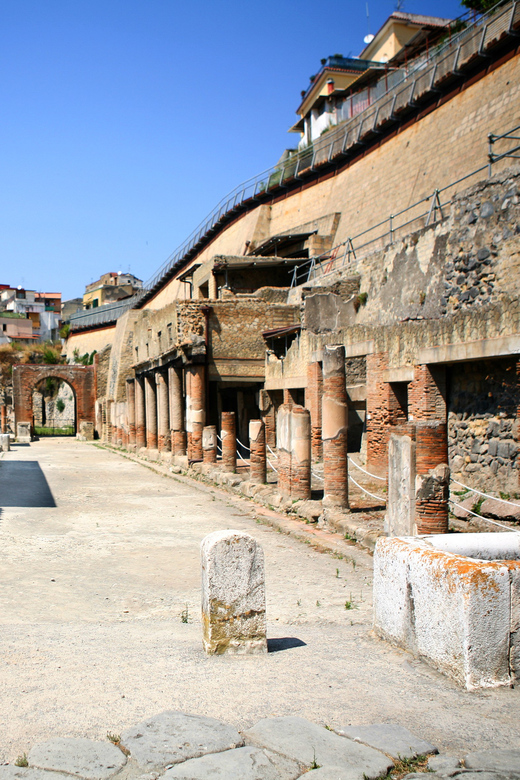
- The preserved homes are the main event: See frescoes, mosaics, beds, doors, shops, baths, and traces of daily routines.
- Three hours is a practical target: Herculaneum is smaller than Pompeii, but you can stay longer if you want to study the artifacts.
- The optional audio guide needs preparation: Download the app and its content before arrival, and bring headphones.
- The site can be quieter than Pompeii: Early starts and off-season visits make it easier to pause inside buildings.
- Wear proper shoes and bring sun protection: The cobbled streets can be uneven, and summer heat is a real factor.
- Check the price carefully: The listed price is $21 per person, but pre-booking may cost more than the site’s own admission.
Why Herculaneum feels different from Pompeii
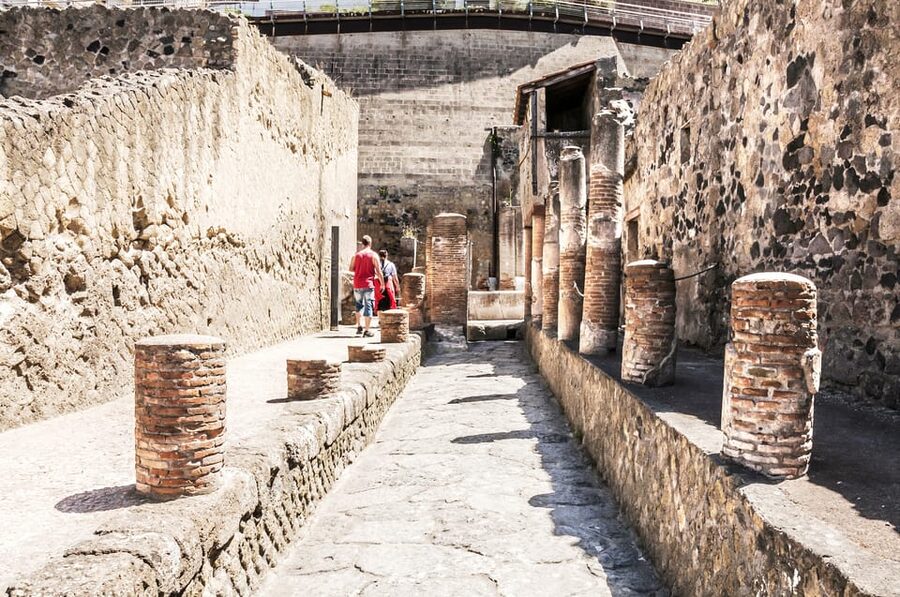
Pompeii is the famous giant, with a much larger area and more streets to cover. Herculaneum is smaller, more concentrated, and often easier to understand in one visit.
The difference comes partly from the eruption itself. Pompeii was covered mainly by falling ash and pumice, while Herculaneum was buried by hot volcanic material that helped preserve upper floors, wooden fittings, food, and other fragile objects. You can see the effect as you move from one building to the next.
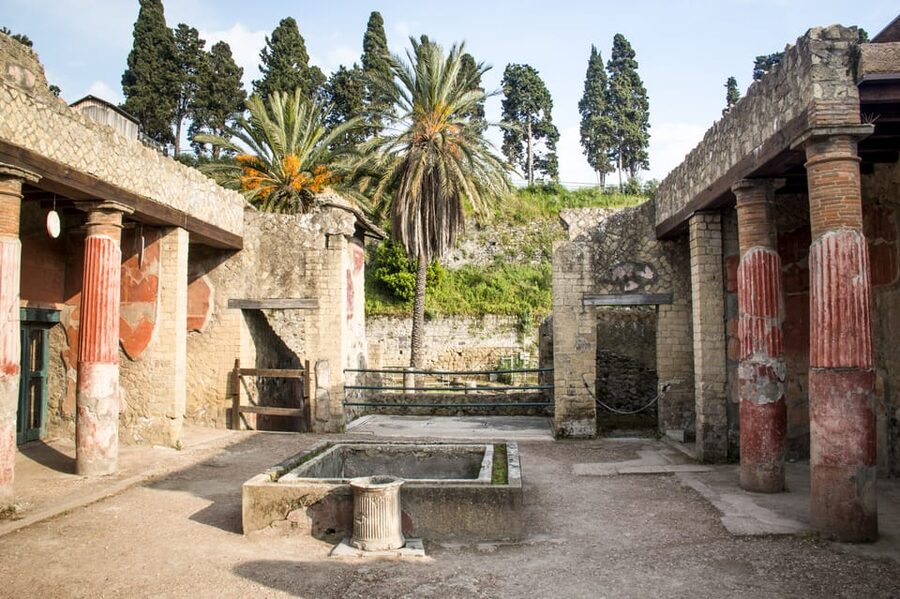
The result is not just a collection of ruins. You get a closer look at how people lived. A doorway still suggests the daily rhythm of entering a house. A shop counter hints at commerce. A public bath points to the social side of Roman life. Frescoes and mosaics show the taste of wealthy households, while more modest rooms help fill out the picture.
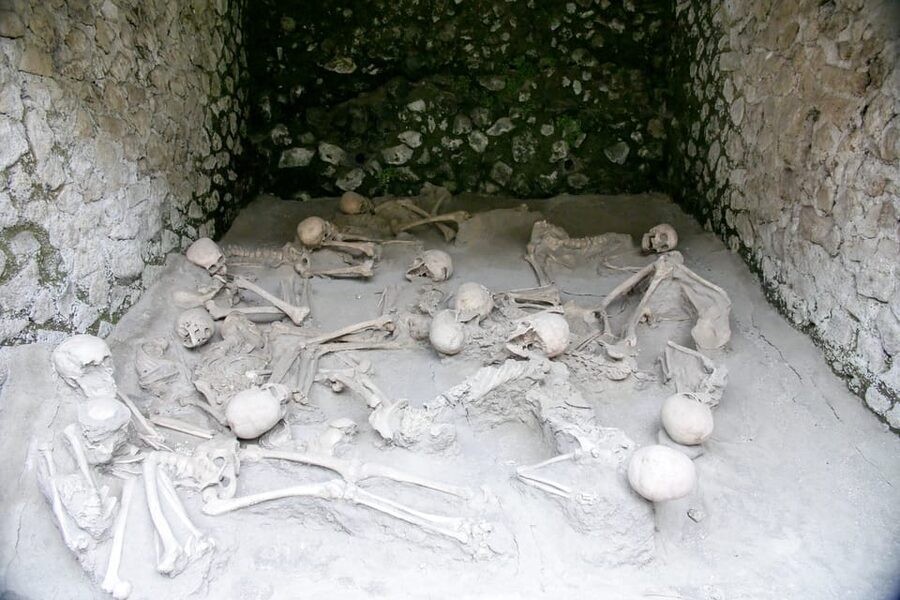
The site is also emotionally difficult in places. Near the ancient shoreline, about 300 skeletons were found in the vaulted boathouses, where people had gathered while trying to escape. The remains give the eruption a human scale that can be hard to shake. This is an archaeological site, but it is also the preserved last chapter of a real town.
More Herculaneum excavation visits:
- Herculaneum: Skip The Line Entrance ticket + Audioguide
★ 4.3 · 266 reviews - Naples: Pompeii and Herculaneum Tour with Tickets and Lunch
★ 4.4 · 136 reviews - Herculaneum Archaeological Park smart Audio Tour
★ 3.8 · 70 reviews
Entering the archaeological area in Ercolano
Your mobile voucher is redeemed at the online ticket desk at the site. The entrance process is not always as quick as a simple QR code scan. Some people have had to wait while staff process the booking, even when there is no major queue.
Allow a few extra minutes for finding the correct desk. One visitor found the redemption point confusing until realizing it was at the main site where everyone enters. A map or clear directions on your phone can help you get your bearings fast.
The attraction is in Ercolano, the modern town built near ancient Herculaneum. The ticket is valid for one day, and the experience is self-guided. There is no live guide included, so you decide the pace and route.
That freedom suits independent visitors. You can linger in a small room, backtrack to a house you missed, or move quickly through areas that interest you less. The tradeoff is that you need to organize your own visit. Signage is not always enough to explain every room or connect each building to the larger story.
Walking the cobbled streets and lower town

From the entrance, you look down toward the excavated town. The modern level and the ancient streets sit at different heights, making the scale of the excavation immediately clear.
The main walk takes you along cobbled streets through blocks of houses, shops, public buildings, and baths. Herculaneum’s compact layout makes it possible to see the major areas without a rigid schedule. You can stop often for photographs, but give yourself time to look upward and inward. Some of the best details are above eye level, in wall paintings, ceilings, and upper architectural remains.
The paving can be uneven, so comfortable shoes are more than a standard packing tip. Sandals or thin fashion shoes may make the walking less pleasant. Take care around worn surfaces and steps, particularly if you are trying to follow the audio guide while looking at the buildings.
Herculaneum is often less crowded than Pompeii, though conditions change by date and season. Summer can still be hot, and an umbrella gives you useful shade. Some buildings and covered areas offer relief, but you should not count on constant shade throughout the site.
Inside the Roman houses

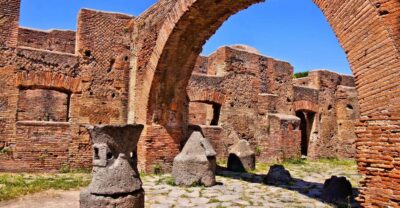
The houses are where the visit becomes personal. You can enter rooms that still contain wall decoration, floor patterns, architectural details, and objects shaped by daily use.
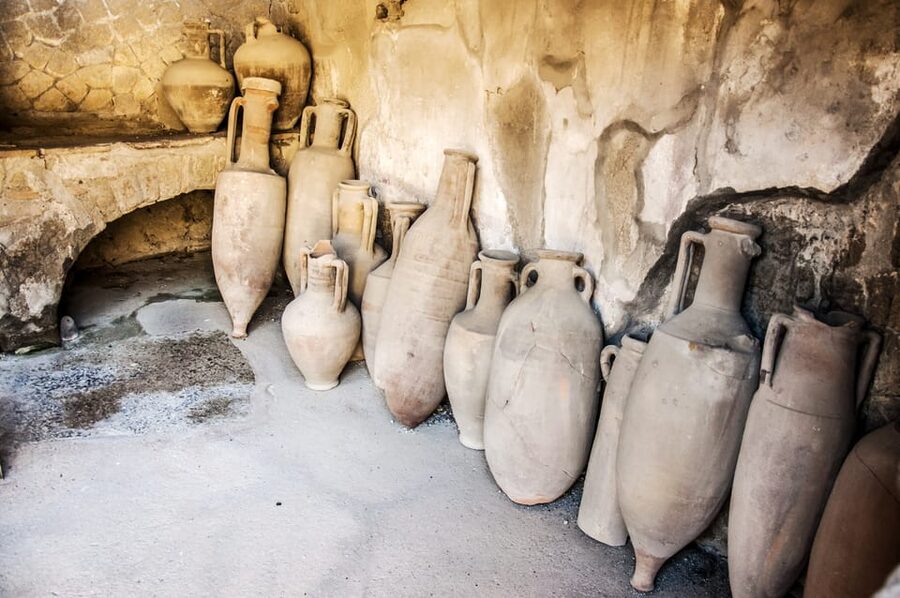
The preservation is unusually strong. Look for original-form materials such as doors, beds, food, and wooden elements. These details help you picture ordinary routines more clearly than a grand monument alone ever could.
Frescoes add color and mood to the visit. Mosaics and decorative features show how Roman households used design to express status and taste. At the same time, not every room is equally complete, and some spaces can be hard to interpret without a map or spoken explanation.
I recommend taking each house slowly at first. Notice how rooms connect, where the light comes from, and which features seem practical rather than decorative. The site rewards observation. If you simply follow the street and photograph every façade, you can miss the small clues about eating, bathing, working, and receiving visitors.
The audio guide can help here, particularly when it explains the people and social structures behind the buildings. One of the stronger aspects of the available commentary is its focus on human behavior and ancient habits, not just on dates and construction methods.
More Ercolano tours worth comparing
- Pompeii: Entry Ticket with Optional Audio Guide
★ 4.2 · 12,360 reviews - Pompeii: Skip-the-Line Entrance Ticket with Audio Guide
★ 4.0 · 2,509 reviews - Pompeii: Skip-the-Line Entry Ticket with Digital Guide App
★ 4.1 · 770 reviews - Ercolano: Herculaneum Skip-the-Line Ticket & Audio Guide
★ 4.0 · 275 reviews
Shops, gymnasium, and public baths
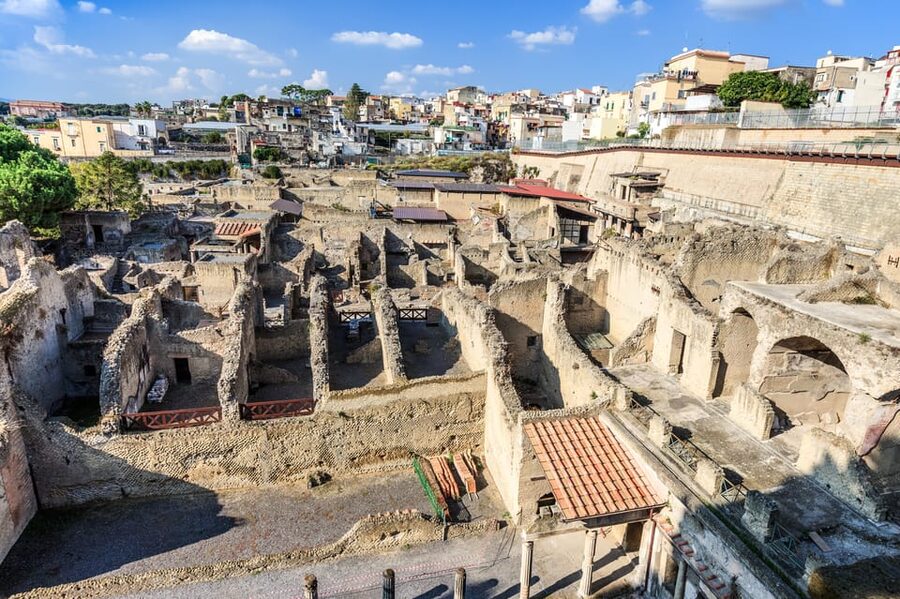
Herculaneum’s public buildings give the visit a wider frame. The shops show the commercial side of town, while the public gymnasium and swimming baths point to exercise, bathing, and social life.
These places matter because they stop Herculaneum from feeling like a row of private houses. You see how the town functioned as a community. Roman life took place in shared spaces as well as behind household doors.
The baths can be especially rewarding if you enjoy architecture. Study the relationship between rooms, decorative surfaces, and practical systems. The audio guide can add useful context, but the app does not always direct you clearly to the correct building or room.
Several visitors found it difficult to match the audio tracks with the place they were standing. The app may be informative one moment and confusing the next. Some people stopped using it after a short time, while others found it useful enough to continue.
If you choose the digital version, download the application and its audio content before arriving. Mobile coverage at the archaeological area can be weak, and the app can use a good deal of data. Bring headphones, since they make the experience easier in busy areas and keep your phone free for the site map.
The shoreline boathouses and the human story
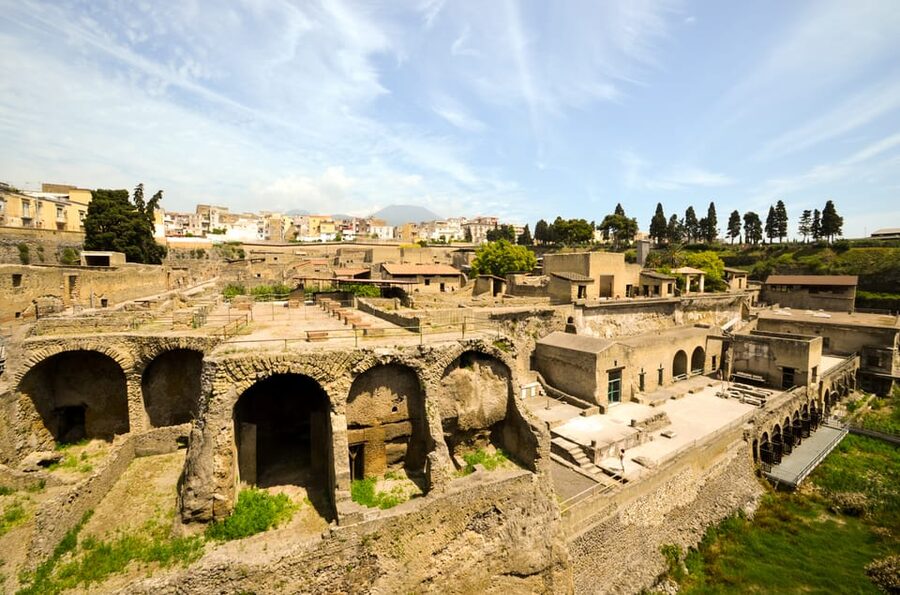
The lower area near the ancient shore is the most sobering part of the visit. The vaulted boathouses contain the remains of roughly 300 people who did not escape the eruption.
This section changes the mood. The houses and baths invite curiosity about Roman life, but the skeletons force you to confront the catastrophe. Take your time here, but be respectful. It is not simply another archaeological stop to check off.
The preservation of Herculaneum makes this human story especially powerful. Roofs and objects tell you what the town looked like. The remains tell you what happened to its people. Together, they create a fuller picture of the eruption than a scenic view of ruins can provide.
Choosing the digital or physical audio guide
You have two audio options. One uses a digital app downloaded to your smartphone. The stated digital languages are English, French, Italian, and Spanish. The optional audio guide information also lists German, along with English, French, Italian, and Spanish, so check the exact language selection attached to your chosen ticket.
The physical device is worth considering if you do not want to rely on your own phone, data connection, or battery. The smartphone option is more convenient to carry, but it requires preparation and can be difficult to follow once you are inside.
The audio is not a substitute for a live guide. It gives you background and explanations, but it may not always make clear where to stand or which room corresponds to the next track. Signage can also be sparse. If you want a carefully shaped historical story with help interpreting every building, arrange a separate guided tour instead.
For an independent visit, I would still consider the audio guide useful, especially if you download everything in advance. Keep the volume low enough to hear site instructions, and use the map alongside the commentary rather than following audio alone.
How long to spend at Herculaneum
Three hours is a sensible first-visit plan. It gives you time to walk the main streets, enter several houses, see the public buildings, and pause at the shoreline area without rushing badly.
You can finish faster if you want a quick look, but that would underuse the site. The details are the point here. Herculaneum is smaller than Pompeii, yet its preserved rooms can hold your attention longer than expected.
You could also stay much of the day if you read every panel, examine the artifacts closely, and revisit favorite buildings. There is no need to force a fast circuit simply because the site is compact.
Opening hours change by season. From March 16 through October 14, the area is open from 9:30 AM to 7:30 PM, with last admission at 6:00 PM, and everyone must leave the archaeological area by 7:00 PM. From October 15 through March 15, hours are 8:30 AM to 5:00 PM, last admission is 3:30 PM, and the area must be cleared by 4:40 PM.
Arrive early if you want cooler temperatures and a calmer visit. Off-season visits can be especially pleasant because you have more room to stop and observe. Always check the date-specific availability and hours before setting out.
Is the $21 ticket good value?
At $21 per person, the ticket can be good value for a major archaeological site, particularly if you want independence rather than a full guided excursion. You pay for entry and choose whether the audio guide adds enough value for you.
The important catch is the booking price. One person reported paying 56 euros for tickets that cost 32 euros directly, including an audio option that was not supplied. Others found the booking easy and the entry straightforward, but some still had to join the same admission line as people buying on site.
That means you should compare the online total with the official admission price before committing. Pre-booking may be worthwhile when you need flexibility, want free cancellation up to 24 hours before the visit, or prefer to reserve now and pay later. It is less attractive if the final price is much higher and you gain no shorter entry process.
The ticket is a good fit for visitors who value a self-paced day and do not need transport or a live guide. It is not a complete tour package. There is no guided tour included, and the basic café facilities are limited. Bring water and any food you need rather than expecting a full meal service on site.
Who will enjoy this visit most
I would choose this experience if you like archaeology, architecture, Roman daily life, or places that reward patient looking. It also suits anyone who found Pompeii too large or tiring and wants a more manageable ancient town.
Families with older children may appreciate the visible objects and intact rooms, though the cobbles and historical subject matter require attention. History fans may prefer a live guide, since the app can feel disorganized and information boards do not explain every feature.
Herculaneum also works well as a companion to Pompeii. The sites overlap in broad themes, but they offer different experiences. Pompeii gives you a huge urban area to explore. Herculaneum gives you a tighter, more detailed view of homes, materials, and human consequences.
Should you book the Herculaneum ticket?
Book it if you want to explore one of the best-preserved ancient towns in Italy without committing to a long guided tour. The compact layout, intact domestic details, quieter feel, and haunting shoreline remains make it one of the Campania region’s most worthwhile historical visits.
Choose the audio option only if you are prepared to download the app before arrival and bring headphones. If storytelling matters more to you than independence, look for a live guide instead.
Before paying, compare the total cost with direct admission. If the price is close to the $21 listing and the flexible cancellation terms matter, this ticket is a practical choice. If the markup is large, buying directly may be the better value.
FAQ
How long is the Herculaneum ticket valid?
The ticket is valid for one day. Check availability for the date and starting time you want.
What does the ticket include?
It includes entry to the Herculaneum archaeological site. Depending on the option selected, it also includes a digital audio guide app or a physical audio guide device.
Is a guided tour included?
No. A live guided tour is not included. The experience is self-guided, with the audio guide available as an optional addition.
Which languages are available for the audio guide?
The digital app is listed in English, French, Italian, and Spanish. The optional audio guide information also lists German, along with English, French, Italian, and Spanish.
What are the opening hours?
From March 16 to October 14, opening hours are 9:30 AM to 7:30 PM, with last admission at 6:00 PM. From October 15 to March 15, the site is open from 8:30 AM to 5:00 PM, with last admission at 3:30 PM.
Can I cancel the booking?
Yes. You can cancel up to 24 hours in advance for a full refund. A reserve now and pay later option is also available.
More Audio Tours in Ercolano
- Pompeii: Skip-the-Line Ticket with Audio Guide and Map
★ 4.0 · 117 reviews - From Naples: Vesuvius & Pompeii with Transfer & Audio Guide
★ 4.0 · 58 reviews - Pompeii: Skip-the-Line Ticket with Audio Guide and Map
★ 4.0 · 14 reviews - Sorrento and Amalfi coast self audio guide tour
★ 3.6 · 13 reviews
Newest reviews from Ercolano
- Herculaneum with an Archaelogical Guide & Ticket★ 4.8 · 11 reviews
- Vesuvius and Pompeii Transfer + Entrance for the Vesuvio★ 4.2 · 11 reviews
- Herculaneum – Small Group Tour (admission included)★ 5.0 · 14 reviews
- Herculaneum: Private Tour with Driver from Naples★ 4.6 · 15 reviews
- Herculaneum Guided Walking Tour with Entry Ticket★ 3.7 · 21 reviews
- Herculaneum: 2hour Shared Guided Tour + entry tickets★ 4.3 · 38 reviews
- From Naples_ Vesuvius transfer+ticket and digital audioguide★ 3.7 · 58 reviews
- Herculaneum: Private Walking Tour with Archeologist Guide★ 5.0 · 59 reviews
Audio Tours, compared.


Skip-the-Line Entrance Ticket with Audio Guide
Read our review →



Browse the lists this tour appears in