

Reviewed · AUDIO TOURS
Pompei: Audio guide of the archeological site
Pompeii rewards curious wandering, but its streets can feel confusing without a plan. This 50-minute audio guide gives you a route, a map, and stories about Roman homes, markets, temples, bathhouses, and the city’s sudden end beneath volcanic ash. You can listen offline and revisit the file after your visit.
I like the low $5 price and the freedom to move at your own pace. I also like the practical map, which one recent user specifically found helpful for following the path. The main concern is navigation: one unhappy customer called the experience misguided, so you should keep the map handy and not expect a live guide to redirect you.
In This Review
- Key points to know before you book
- What the Pompeii audio guide actually adds
- Starting with Pompeii’s streets and city life
- Villas, frescoes, and the private side of Pompeii
- Bathhouses, temples, and public Pompeii
- The eruption and Pompeii’s tragic fate
- How the map and offline file affect the visit
- The $5 price and what you receive
- Who should choose this audio guide
- Booking details that matter
- Should you book it?
- FAQ
- How long is the Pompeii audio guide?
- How much does the audio guide cost?
- Is the Pompeii entrance ticket included?
- Are earphones provided?
- Can I use the audio guide offline?
- How long can I access the audio file?
- What languages are available?
- Is a map included?
- Can I cancel for a refund?
Key points to know before you book

- A 50-minute route through Pompeii: The audio focuses on the city’s streets, public buildings, villas, household decoration, and tragic fate.
- A map is included: This is important in a large archaeological site where it is easy to lose your sense of direction.
- Offline listening works well for a site visit: You receive a digital audio file by link, with access even without an internet connection.
- The entrance ticket is separate: Your $5 pays for the audio experience, not admission to the archaeological site.
- Bring your own earphones: They are not included, and the guide is designed for personal listening.
- Italian and English are available: The listed host or greeter languages are Italian and English.
What the Pompeii audio guide actually adds
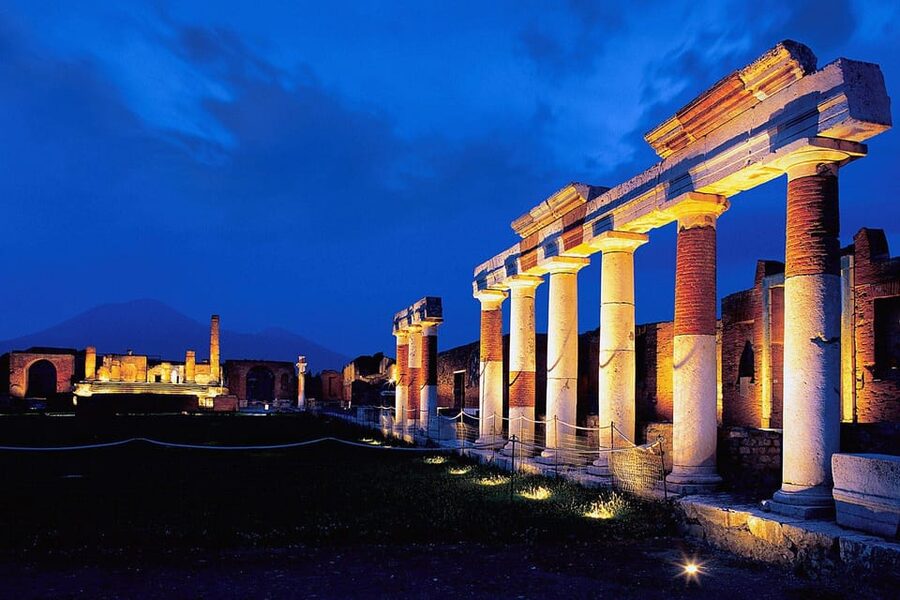
Pompeii is not a single monument with one obvious route. It is an entire ancient city, with streets, homes, religious buildings, shops, public baths, and open spaces spread across a large archaeological area. Without context, you may see a wall or painted room and move on without understanding its purpose.
This guide is meant to fill that gap. In about 50 minutes, it explains how Pompeii worked as a Roman city and brings attention to details that can be easy to miss. You’ll hear about daily life, architecture, public places, and the personal traces preserved by volcanic ash.
That format suits you if you prefer to explore independently. There is no stated requirement to stay with a group or follow a live guide from one stop to the next. You can pause the file, look around, and continue when you are ready.
The experience also includes a map, photo, and documentation. Those extras may sound modest, but the map is the most useful of them. One of the strongest comments praised having a map to follow the path. At Pompeii, that can make the difference between a focused visit and a long, uncertain walk.
More Pompeii excavation visits:
- Pompeii: Entry Ticket and Guided Tour with an Archaeologist
★ 4.8 · 19,459 reviews - Pompeii: Small Group Tour with an Archaeologist
★ 4.8 · 12,264 reviews - Pompeii: Skip-the-Line Entrance Ticket with Audio Guide
★ 4.0 · 2,509 reviews
Starting with Pompeii’s streets and city life
The guide begins with the basic question: what kind of place was Pompeii before the eruption? You are not simply looking at ruins. You are walking through the remains of a working Roman city where people lived, traded, worshipped, bathed, and gathered.
The narration explains the setting through the city’s streets and buildings. This helps you read Pompeii as a place built for ordinary routines, not just as a dramatic archaeological site. Markets and public spaces point to commerce and social life, while homes reveal how private life differed from public ceremony.
I find this kind of introduction useful because it gives each later stop a purpose. A street is no longer just a line of stones. A villa is not only a collection of rooms. A bathhouse becomes part of the city’s social system.
The audio guide is described as having clear navigation, but you should still pay attention to the map. The one negative comment about being misguided is a reminder that audio tours depend on your own ability to match the narration with the site around you.
Villas, frescoes, and the private side of Pompeii
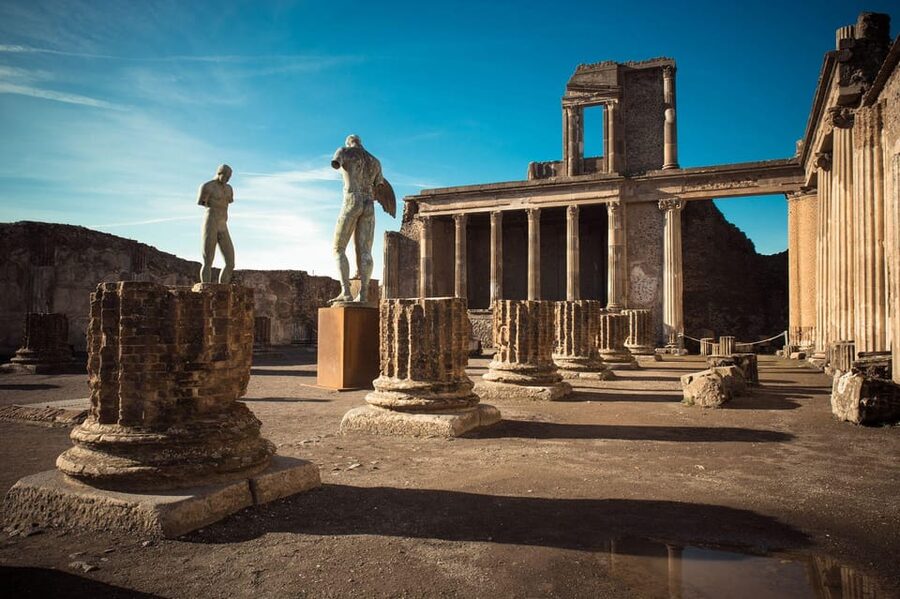
Pompeii’s grand buildings attract attention, but its household details can tell you just as much. The guide points to intimate frescoes and domestic spaces, helping you think about how Roman families used their homes and decorated their surroundings.
This is one of the better reasons to choose an audio guide instead of walking without commentary. A painted wall can be visually striking, but the story behind its setting gives it more meaning. You may find that smaller rooms and household features hold as much interest as the larger public buildings.
The guide also discusses architecture. That broad focus is helpful because Pompeii is full of changes in scale. You might move from a narrow street into a large villa, then from a private room to a temple or bathhouse. The audio explains how these spaces fit into the wider city.
Do not expect a specialist lecture on every building. The stated duration is only 50 minutes, so the guide has to select its subjects. Its value comes from giving you a useful framework rather than trying to explain every corner of Pompeii.
Bathhouses, temples, and public Pompeii
Public buildings show another side of the ancient city. Bathhouses, temples, and markets were not just architectural displays. They were places where people met, worked, worshipped, and spent time outside the home.
The narration uses these sites to explain Pompeii’s culture and daily routines. For you, that means the visit should feel less like a march past disconnected ruins. The city begins to make sense as a network of public and private spaces.
The guide’s emphasis on historical authenticity is important here. Pompeii is famous for the disaster that preserved it, but the eruption was only one moment in the city’s story. Before that tragedy, people were making purchases, visiting public buildings, managing homes, and carrying on with ordinary life.
I like that the audio does not focus only on catastrophe. The final destruction matters, of course, but understanding the city before the eruption makes the ending more powerful. You first see Pompeii as a living place, then consider what happened to it.
More Pompei Campania tours worth comparing
- Pompeii: Skip-the-Line Entry Ticket with Digital Guide App
★ 4.1 · 770 reviews - Pompeii: Skip-the-Line Ticket with Audio Guide and Map
★ 4.0 · 117 reviews - From Naples: Vesuvius & Pompeii with Transfer & Audio Guide
★ 4.0 · 58 reviews - Pompeii & Herculaneum: Skip-the-line & Digital Guide App
★ 4.0 · 35 reviews
The eruption and Pompeii’s tragic fate
The guide also explains Pompeii’s destruction beneath volcanic ash. This is the dramatic part of the visit, but it works best after you have seen the city’s ordinary buildings and considered the people who used them.
The audio promises stories about the city’s tragic fate, along with its culture and architecture. That balance matters. If the narration focused only on disaster, Pompeii could become a spectacle. Instead, the stated approach connects the eruption with the lives, homes, public buildings, and customs that came before it.
You should expect the subject to be serious. The material is aimed at people who want to understand Pompeii, not simply take a quick walk through famous ruins. Families, history fans, and first-time visitors can all use the guide, but younger children may need help staying focused through the full 50 minutes.
The audio file remains available for later listening. That gives you a chance to revisit the historical explanation after returning home, when you can connect the narration with the images from your visit.
How the map and offline file affect the visit
The practical design is simple. You receive a link to the audio file, along with a map, photo, and documentation. The file can be used offline, so you do not need to depend on a strong connection while walking through the site.
That matters because your attention should be on the ruins, not on loading an audio track. Download or prepare the file before entering, then bring earphones. The experience does not include them.
The map is especially important. Pompeii is broad enough that a route guide can prevent wasted time. It also lets you pause when something catches your eye instead of being forced to keep pace with a group.
There is one limitation: the description does not promise a live guide walking beside you. A host or greeter is listed in Italian and English, but the core product is a digital audio guide. If you need constant personal direction, ask about that distinction before booking.
The $5 price and what you receive
At $5 per person, this is a modest add-on to a Pompeii visit. The price covers the audio guide and supporting digital materials, not the archaeological site entrance. You must budget separately for admission.
The value is strongest if you already plan to enter Pompeii and want more structure than a self-guided walk with no explanation. A map, route, and historical narration can make a small payment worthwhile, especially if you do not want to pay for a full private guide.
The value is weaker if you expect a polished live tour with personal questions answered on the spot. You are paying for flexibility and recorded commentary. That keeps the cost low, but it also places more responsibility on you.
Feedback is mixed overall, with a 3.4 rating from 13 reviews. Several five-star comments describe the guide as useful or interesting, and one specifically praised the map. Another five-star note simply said all good. The one-star comment described the route as misguided, so I would treat navigation as the key risk rather than assume the guide will remove all uncertainty.
Who should choose this audio guide
I would consider this guide a good fit for you if you want:
- A low-cost way to add historical context to a Pompeii ticket
- A self-paced visit rather than a scheduled group tour
- Commentary in Italian or English
- A downloadable file that works offline
- A map to help organize your route
- A short introduction that covers city life, architecture, homes, public buildings, and the eruption
It is also useful if you like to revisit what you saw. The link provides unlimited access to the audio file, including after your trip, so you can listen again while looking through your photos.
I would hesitate if you need a guide to answer questions, adjust the route in real time, or personally escort you through the archaeological site. I would also be cautious if navigation is a major worry. Keep the map visible and treat the audio as a helpful companion, not a substitute for all orientation.
Booking details that matter
The experience is valid for two days, with starting times checked through availability. That gives you some flexibility around your Pompeii visit, though the product itself is still centered on a 50-minute audio route.
You can cancel up to 24 hours in advance for a full refund. A reserve now and pay later option is also offered, which helps if your Campania plans are still shifting.
The listed host or greeter languages are Italian and English, and the audio languages are also Italian and English. The entrance ticket is not included, and neither are earphones, so prepare both before you begin.
Should you book it?
Book this Pompeii audio guide if you want a cheap, flexible layer of explanation and are comfortable guiding yourself. The map, offline access, and focus on both everyday Roman life and the eruption make it more useful than wandering without context.
Skip it if you want a live expert at your side or if you are unwilling to manage the route yourself. At $5, the financial risk is small, but the practical test is simple: bring earphones, use the map, and allow the audio to support your visit rather than expecting it to lead every step.
FAQ
How long is the Pompeii audio guide?
The audio guide lasts 50 minutes.
How much does the audio guide cost?
The price is $5 per person.
Is the Pompeii entrance ticket included?
No. Admission to the archaeological site is not included.
Are earphones provided?
No. You need to bring your own earphones.
Can I use the audio guide offline?
Yes. You receive a link to the audio file with offline access.
How long can I access the audio file?
The file is available for unlimited access, including after your trip.
What languages are available?
The audio guide is available in Italian and English.
Is a map included?
Yes. A map is included with the digital file, photo, and documentation.
Can I cancel for a refund?
Yes. You can cancel up to 24 hours in advance for a full refund.
More Audio Tours in Pompei Campania
- Pompeii: Skip-the-Line Ticket with Audio Guide and Map
★ 4.0 · 14 reviews - Pompeii, skip-the-line ticket with smartphone audio guide on App
★ 3.0 · 4 reviews - Pompeii: Entry Ticket with Optional Audio Guide
★ 4.2 · 12,360 reviews - Ercolano: Herculaneum Entry Ticket with Optional Audio Guide
★ 4.1 · 581 reviews
Newest reviews from Pompei Campania
- From Sorrento: Pompeii & Vesuvius tour small group★ 4.8 · 4 reviews
- Pompeii Private Tour for Kids and Their Families★ 4.8 · 4 reviews
- From Naples_ Pompeii Tour_Skip the line ticket + audioguide★ 4.3 · 4 reviews
- Pompeii, skip-the-line ticket with smartphone audio guide on App★ 3.0 · 4 reviews
- Pompeii Guided Experience – Tour Service Only★ 4.6 · 4 reviews
- From Naples Port:Pompeii+Vesuvius tour★ 4.3 · 4 reviews
- 2-Hour Pompeii Child-Friendly Tour★ 5.0 · 4 reviews
- Naples: Amalfi Coast, Sorrento and Pompeii Day Trip★ 4.4 · 5 reviews
Audio Tours, compared.


Skip-the-Line Entrance Ticket with Audio Guide
Read our review →
Herculaneum Entry Ticket with Optional Audio Guide
Read our review →



Browse the lists this tour appears in