
Reviewed · ARCHAEOLOGIST-LED TOURS
Pompeii Small Group with an Archaeologist and Skip The Line
Pompeii becomes far more than a field of old stones when an archaeologist guide explains how its theaters, shops, houses, baths, and courts worked together as a living Roman town. The stories of wealthy homeowners, gladiators, prostitutes, and ordinary citizens give the ruins a human scale.
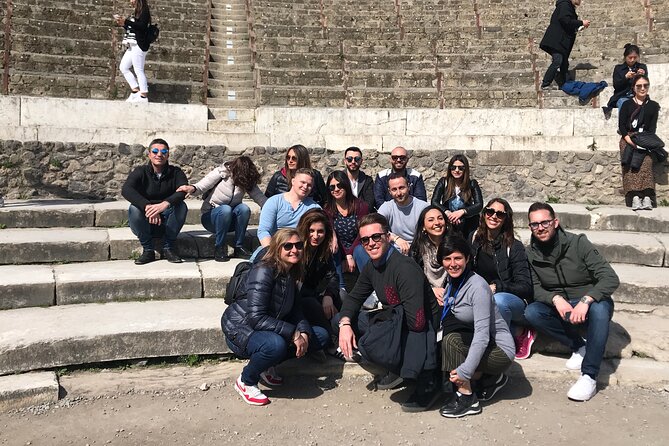
I like the small group of up to 10 because it gives you room to ask questions and hear the guide without being lost in a crowd. I also like the fast-track entry and the carefully chosen route, which covers major sights such as the Forum, Stabian Baths, Lupanar, Casa del Fauno, and the theaters in about two hours.
The main caution is price. At $217.69 per person, this is a costly short tour, and the minimum-group rule has occasionally led to a proposed private-tour surcharge or a cancellation choice. Confirm the arrangement before you go if your group is small.
In This Review
- Key points at a glance
- Why an archaeologist changes Pompeii
- Meeting at Piazza Esedra and getting inside
- The two theaters: entertainment in ancient Pompeii
- The Forum, Basilica, and Temple of Jupiter
- The Granai del Foro and the human cost of AD 79
- Stabian Baths and the color still on the walls
- Gladiator quarters and the theater district
- Lupanar, Temple of Venus, and the less polished Pompeii
- Casa del Fauno and Pompeii’s wealthy homes
- What the two-hour format really gives you
- Price, group size, and the private-tour question
- Weather, walking, and practical comfort
- Communication and guide substitutions
- Who should book this Pompeii tour?
- Should you book it?
- FAQ
- Where does the Pompeii tour start?
- Where does the tour end?
- How long does the tour last?
- Is admission to Pompeii included?
- Is the tour offered in English?
- How many people can join the group?
- Is transport included?
- Are food and drinks included?
- Can I cancel for a full refund?
- What happens if bad weather cancels the tour?
- What happens if the minimum number of participants is not reached?
Key points at a glance
- An archaeologist-led visit: Eliana Sandretti is identified as an archaeologist who has worked at Pompeii since she was 18, while Francesco, Dario, Anna, and other guides may lead scheduled departures.
- A focused two-hour route: You see the main theater, small theater, Forum, Basilica, Temple of Jupiter, gladiator quarters, Lupanar, and Casa del Fauno.
- A maximum of 10 people: The small format makes questions and conversation much easier than on a large group outing.
- Admission is included: You meet near Piazza Esedra with your entrance ticket arranged in advance.
- Strong guide communication: Guides have confirmed reservations, waited for delayed arrivals in some cases, and helped adjust timing when practical.
- A premium price: The cost makes the expert commentary and saved time important parts of the value.
Why an archaeologist changes Pompeii
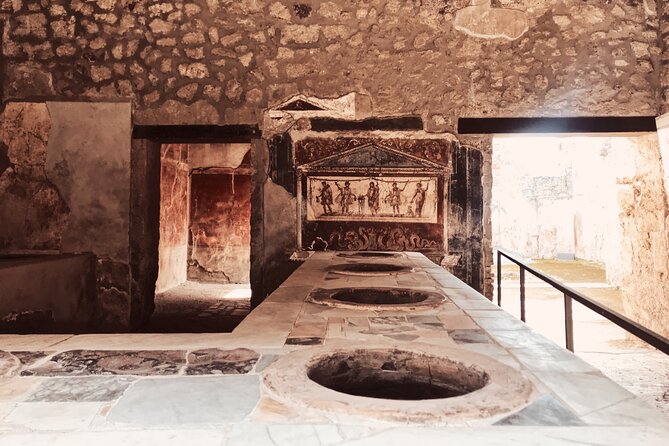
Pompeii is huge, and its best details are easy to miss. You can walk past a painted room, a stone counter, or a public building and see only an attractive ruin. A trained guide can explain what happened there, who used it, and how it fitted into Roman society.
That is the central reason I would consider this experience. The guide does not simply point out famous buildings. Eliana Sandretti is described as having worked as an archaeologist at Pompeii, with first-hand familiarity with excavations and current work at the site. That background can add useful detail about how archaeologists read a building and how new discoveries continue to shape what you see.
Guides named in the feedback include Eliana, Francesco, Francisco, Dario, and Anna. The exact guide depends on the departure, but the strongest pattern is clear: the experience relies heavily on the person leading it. Eliana is praised for explaining life in Pompeii around 70 AD, while Francesco is noted for comparing different kinds of homes and explaining the purpose of individual rooms.
You should also expect a conversational visit rather than a silent march. Questions are encouraged, and the small group makes it easier to stop briefly when something catches your eye.
More Pompeii excavation visits:
- Pompeii: Entry Ticket and Guided Tour with an Archaeologist
★ 4.8 · 19,459 reviews - Pompeii: Entry Ticket with Optional Audio Guide
★ 4.2 · 12,360 reviews - Pompeii: Small Group Tour with an Archaeologist
★ 4.8 · 12,264 reviews
Meeting at Piazza Esedra and getting inside
The meeting point is Ristorante Suisse at Piazza Esedra 10/13 in Pompei. The tour ends back at the same meeting point, and transport to or from Pompeii is not included.
Your mobile ticket is arranged as part of the booking, so the point of the fast-track service is simple: you do not spend your limited time standing in the normal ticket line. That matters at Pompeii, especially if you have only part of a day or are fitting the ruins between other plans.
The tour is offered in English. Confirmation arrives at booking, and the operator may contact you before the visit to confirm the reservation. Keep an eye on messages, since timing or guide arrangements can sometimes change.
A practical point about arrivals: one guide waited for a group delayed by traffic, but you should still plan to reach Piazza Esedra early. Pompeii is not a place where you want to begin by rushing through an unfamiliar meeting point.
The two theaters: entertainment in ancient Pompeii
The route includes Pompeii’s small theater, used for musical performances and singing. Its more intimate size helps you picture a different kind of event from the large public spectacles held elsewhere.
You then visit the Teatro Grande, the main theater, where Greek and Roman comedies and tragedies were performed. The listed visit is about 15 minutes, enough for a clear explanation and a look at the structure, but not enough for an extended architectural study.
I like having both theaters in the route because they show that Pompeii was not only a place of work, trade, and politics. Music, drama, and public gatherings were part of ordinary civic life. Your guide can also help explain the difference between the two spaces, something that is hard to grasp from a map alone.
Theaters can be busy and acoustics are not always kind to soft voices. Stay close to the guide, especially if you have difficulty hearing. One person specifically found it harder to follow when the guide was farther away or when surrounding noise rose.
The Forum, Basilica, and Temple of Jupiter
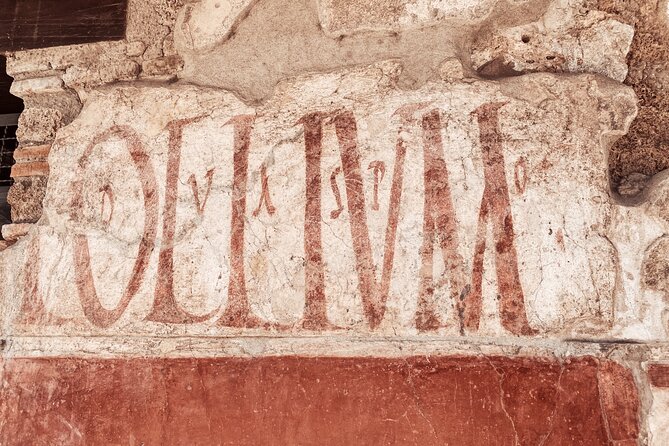
The Forum was Pompeii’s main square and the center of civic life. It is one of the essential stops, but the value comes from understanding how the buildings around it worked rather than simply taking a photograph of the open space.
The Basilica is next. This was the ancient court, where justice was administered. The building helps you see Pompeii as an organized city with legal and commercial functions, not just a collection of private homes.
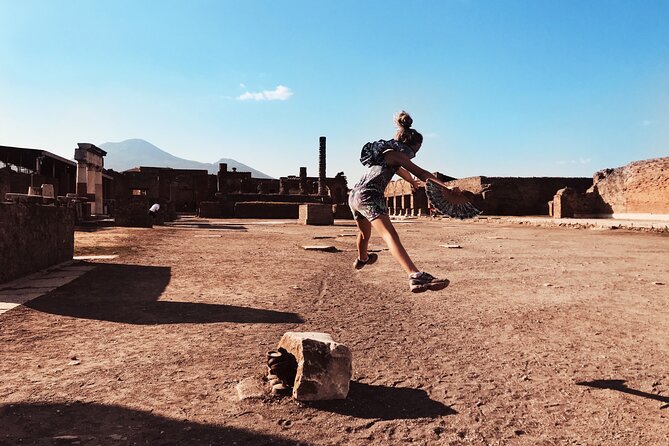
The Temple of Jupiter gives you one of the site’s most recognizable views, with Mount Vesuvius behind it. That backdrop connects the daily life of the city with the eruption that ended it in AD 79.
The Forum area can feel wide and exposed, and the tour moves through several major sights in a short time. Bring water, sunscreen, and a hat or umbrella. A particularly hot afternoon can make a two-hour walk feel much longer, while a later start may be more comfortable and less crowded. One departure began at 4 p.m. and benefited from a quieter site, though the available start times will depend on your booking.
More tours led by an archaeologist:
- Pompeii Small Group Tour with an Archaeologist
★ 5.0 · 6,593 reviews - Pompeii and Herculaneum Small Group Tour with an Archaeologist
★ 5.0 · 1,350 reviews - Skip the Line Guided Tour of Pompeii led by an Archaeologist
★ 5.0 · 703 reviews - Pompeii: Exclusive Tour with Archaeologist and Entry Tickets
★ 4.9 · 634 reviews
The Granai del Foro and the human cost of AD 79
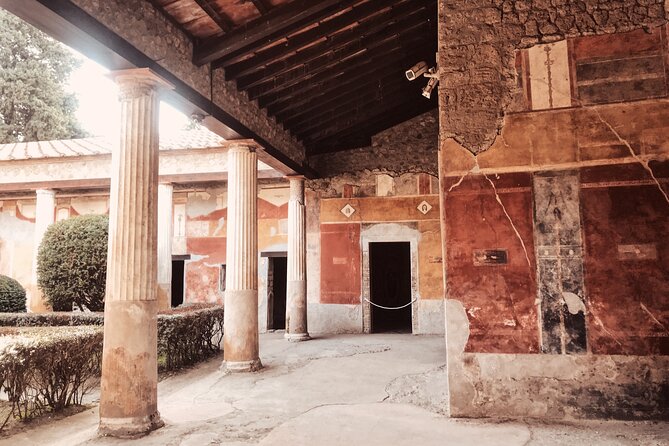
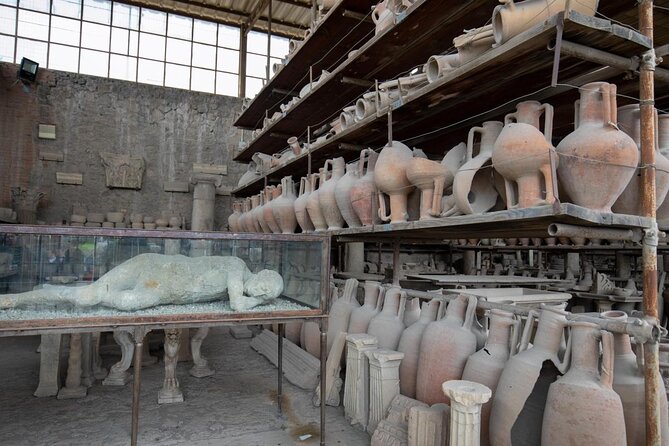
The Granai del Foro, or Forum barns, contain casts of people who died during the eruption. This is one of Pompeii’s most emotionally difficult stops.
The casts are not simply archaeological objects. They give a physical sense of the sudden disaster and remind you that the city was full of people with homes, jobs, families, and routines. The guide’s role matters here. A respectful explanation can help you understand what you are seeing without turning the moment into spectacle.
You should be prepared for the subject matter. The tour covers daily life and architecture, but it also directly addresses the deaths caused by the eruption. If you are visiting with young children, use your judgment and be ready to explain the casts in age-appropriate terms.
Stabian Baths and the color still on the walls
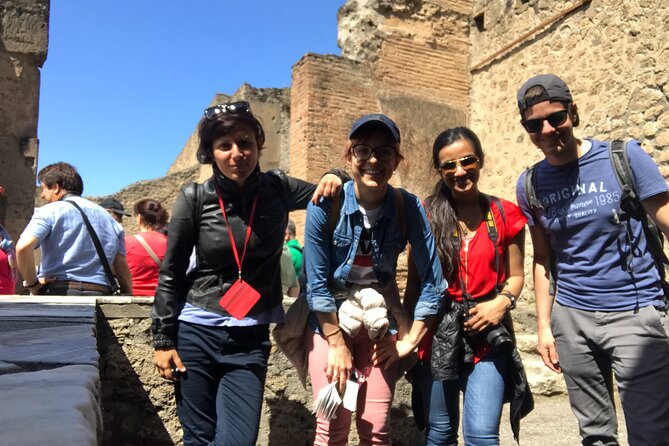
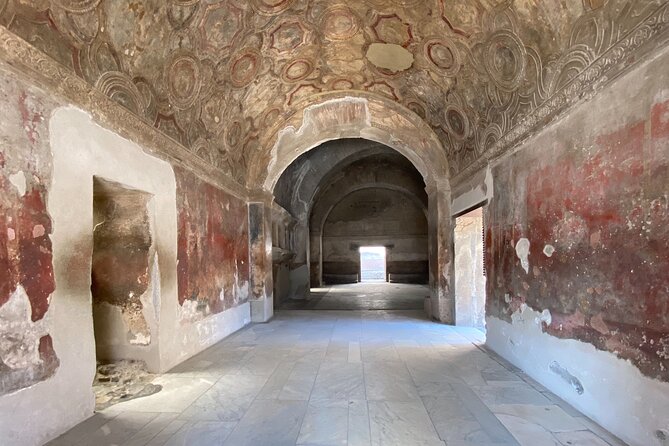
The Stabian Baths are among the most useful places for understanding Roman public life. You visit the baths to see their colorful frescoes and learn how people used a shared bathing complex.
The paintings are a reminder that Pompeii was not a gray city of bare stone. Color, decoration, and design shaped its public buildings and private homes. Your guide can point out details that might otherwise blend into the walls, especially when the site is crowded or the visit is moving at a steady pace.
The listed time here is about 15 minutes. That is enough for a guided introduction, but you should not expect to examine every painted surface at length. If you love Roman art, plan to return after the tour if your admission and available time allow. The guided route is best viewed as a strong first pass through the city.
Gladiator quarters and the theater district
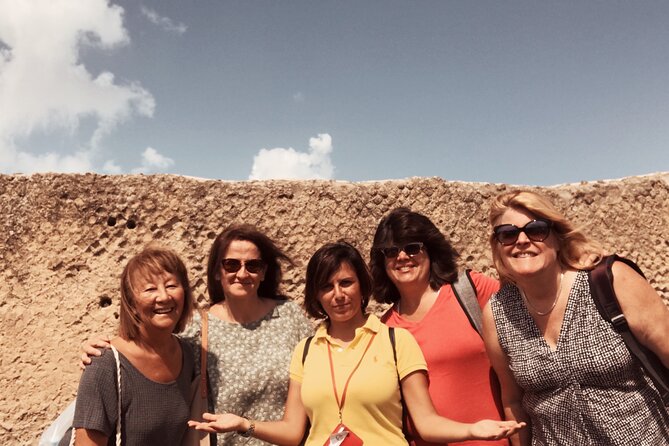
The Quadriporticus of the theatres is presented as the gladiator barracks, including their apartments and training area. This stop adds a social dimension to the theaters. Public entertainment depended on performers who lived and trained in a structured setting behind the scenes.
I find this part especially useful because it shifts the focus from grand public architecture to the people who made those events possible. Ask your guide about the layout and how the barracks related to the nearby theaters. With a group of 10 or fewer, you have a fair chance to ask without holding up a large crowd.
The stop is listed at about 15 minutes. That keeps the tour moving, but it also means you may not have time for every corner or side room. The guide is selecting the clearest examples so you can leave with an understandable picture of the complex.
Lupanar, Temple of Venus, and the less polished Pompeii
The Lupanar was Pompeii’s red-light district, and it is included because it reveals a less formal side of Roman urban life. The stop can be brief, but its subject often prompts questions about work, social class, and the way commercial sex fit into the ancient city.
The route also includes the Temple of Venus, where the city’s divinity was worshipped. Together, these stops show very different aspects of Pompeii: private and commercial life on one hand, public religion and civic identity on the other.
This variety is one of the tour’s strengths. You are not seeing only the biggest monuments. You move from entertainment to law, bathing, religion, commerce, and housing. That range helps Pompeii feel like a real town rather than an archaeological checklist.
Casa del Fauno and Pompeii’s wealthy homes
Casa del Fauno is one of Pompeii’s largest and most luxurious residences. The house is a key stop for seeing how wealthy residents used space, decoration, and formal rooms to display status.
Guides have described the difference between wealthy, middle-class, and poorer homes, as well as the purpose of various rooms and features. That comparison is worth your attention. A grand house means more when you can contrast it with the simpler homes and shops encountered along the streets.
The house is also a good place to ask about frescoes and domestic routines. Its scale can be hard to take in during a quick walk, so pay attention to the guide’s explanation of how the rooms connect. The scheduled visit is about 15 minutes, and the tour may not linger for every decorative detail.
What the two-hour format really gives you
Two hours is a useful length if you want a clear introduction without spending an entire day on the ruins. The route covers many of Pompeii’s major highlights, and the guide keeps the visit moving from one theme to the next.
The trade-off is depth. Pompeii contains far more than can fit into a two-hour walk. You will see the main public buildings, selected houses, the baths, the Lupanar, the Forum, and the theaters, but you should not expect to explore every street or open building.
I see this as a good choice for a first visit, a short stop from Naples, or anyone who prefers a structured overview. If you are an archaeology enthusiast with a full day available, you may want extra independent time afterward. One person specifically wished for more time at the site, even while finding the tour itself excellent.
The small group improves the pace. With only a few people, guides have sometimes continued beyond the scheduled two hours when time allowed. Do not count on that, but it is another reason a small departure can feel more personal than a large group.
Price, group size, and the private-tour question
At $217.69 per person, this is not a budget way to enter Pompeii. You are paying for admission, an authorized guide, an archaeologist-led approach, taxes and ticket fees, fast-track entry, and a group capped at 10 people.
The price makes the guide’s quality especially important. A generic walk through the ruins would not justify the cost as easily. The strongest value comes when you want interpretation, questions answered, and help making sense of the city in a limited time.
There is one point to clarify before booking. The experience requires a minimum number of participants. When a group does not fill, the operator may offer a private tour at an additional charge, an alternative arrangement, or cancellation with a refund. Some small groups accepted an extra fee and found the private format worthwhile, especially with a two-year-old and stroller. Another group declined because the added cost was too high.
If you are booking for two people, ask how the minimum-group rule will be handled. That single detail can change the final price and your decision.
Weather, walking, and practical comfort
Pompeii is an outdoor archaeological park, and the experience requires good weather. If poor weather cancels the tour, you are offered another date or a full refund.
Wear shoes suited to uneven ancient streets. The information provided does not specify a dress code or special equipment, but the walk includes several parts of a large ruin site. Water, sunscreen, and head protection are sensible, particularly in hot weather.
The tour is near public transportation, and most people can take part. Service animals are allowed. Food, drinks, and transport are not included, so arrange those separately.
The experience ends at the original meeting point, which makes it easier to plan what comes next. One guide also helped arrange a ride to a nearby vineyard after the visit, but you should treat that as individual assistance rather than a standard tour inclusion.
Communication and guide substitutions
Communication is one of the more useful practical features here. Guides have sent confirmation messages the day before, explained changes, and helped groups adjust when trains or traffic caused problems.
Guide substitutions can happen. In one case, Dario took over after a train issue and delivered the visit successfully. In another, Francesco led the tour instead of Eliana and spent extra time explaining homes, shops, and Roman life.
This flexibility is helpful, but it also means you should not book solely because you expect one named guide. Eliana Sandretti is the provider and a possible guide, but the actual person leading your tour may be someone else. The important question is whether you value an archaeologist-led or expert-guided visit, rather than a specific face.
Who should book this Pompeii tour?
I would choose it if you have only a few hours, want the major sights explained in English, or find archaeological sites frustrating without context. Families can benefit from the short route and the chance to ask questions, and one guide adapted well to a group with a young child.
It also suits visitors who want a smaller, calmer group. A maximum of 10 is not the same as a private visit, but it is small enough for useful conversation. Solo visitors and couples may especially appreciate not being folded into a large crowd.
I would hesitate if you want a low-cost entry, plan to spend the whole day exploring independently, or cannot accept the possibility of a private-tour surcharge if the minimum group is not reached. In that case, check the final terms carefully before paying.
Free cancellation is available up to 24 hours before the start time for a full refund. Changes or cancellations within 24 hours are not accepted for a refund, except when the operator cancels because of weather or an unmet minimum.
Should you book it?
Yes, if your priority is to understand Pompeii rather than simply walk through it. The route is short but well chosen, the group is limited to 10, and an archaeologist such as Eliana Sandretti can explain the city’s buildings and people with more precision than a basic orientation tour.
The cost is the sticking point. I would book only after confirming the start time, the likely group arrangement, and how a minimum-group issue could affect the price. For a first visit with limited time, the expert guidance and saved entrance time can make the premium worthwhile. For a full-day archaeology visit, use the tour as your introduction, then keep exploring on your own.
FAQ
Where does the Pompeii tour start?
The meeting point is Ristorante Suisse at Piazza Esedra 10/13, 80045 Pompei, Italy.
Where does the tour end?
The experience ends back at the meeting point.
How long does the tour last?
The tour lasts approximately two hours.
Is admission to Pompeii included?
Yes. Entrance tickets, ticket-purchase fees, and taxes are included.
Is the tour offered in English?
Yes, the tour is offered in English.
How many people can join the group?
The group has a maximum of 10 participants.
Is transport included?
No. Transport to and from Pompeii is not included.
Are food and drinks included?
No. Food and drinks are not included.
Can I cancel for a full refund?
Yes, you can cancel at least 24 hours before the local start time for a full refund. Cancellations made less than 24 hours before the start time are not refunded.
What happens if bad weather cancels the tour?
You will be offered another date or experience, or a full refund.
What happens if the minimum number of participants is not reached?
You may be offered a different date or experience, or a full refund. The operator may also offer a private-tour arrangement, which can involve an extra charge.
More Skip the Line in Pompeii Ruins
- Pompeii: Skip-the-Line Entrance Ticket with Audio Guide
★ 4.0 · 2,509 reviews - Sorrento: Skip-the-Line Pompeii Express Tour by Train
★ 4.8 · 2,038 reviews - Pompeii: Skip-the-line-Ticket and Guided Tour
★ 4.6 · 1,152 reviews - Pompeii: Guided Tour with Skip-the-Line Entry
★ 4.9 · 812 reviews
Newest reviews from Pompeii Ruins
- Private Tour Pompeii and Winery★ 5.0 · 4 reviews
- Visit the Pompeii ruins from Salerno with Pizza Lunch★ 5.0 · 4 reviews
- Pompeii Private Tour for Kids and Their Families★ 4.8 · 4 reviews
- From Sorrento: Pompeii & Vesuvius tour small group★ 4.8 · 4 reviews
- Pompeii Sorrento and Positano Tour★ 5.0 · 4 reviews
- From Naples_ Pompeii Tour_Skip the line ticket + audioguide★ 4.3 · 4 reviews
- Pompeii Private Half-Day Tour from: Naples,Sorrento, Amalfi Coast★ 5.0 · 4 reviews
- Pompeii, skip-the-line ticket with smartphone audio guide on App★ 3.0 · 4 reviews
Archaeologist-Led Tours, compared.

Entry Ticket and Guided Tour with an Archaeologist
Read our review →
Pompeii Small Group Tour with an Archaeologist
Read our review →
Pompeii and Herculaneum Small Group Tour with an Archaeologist
Read our review →
Skip the Line Guided Tour of Pompeii led by an Archaeologist
Read our review →
Exclusive Tour with Archaeologist and Entry Tickets
Read our review →
Pompeii Private Tour with an Archaeologist and Skip The Line – 3 hours
Read our review →
Pompeii Skip-the-line Tour with Archaeologist Guide
Read our review →Browse the lists this tour appears in