

Reviewed · SKIP THE LINE
Pompeii: Skip-the-Line Ticket and Guidebook with Itineraries
Pompeii gives you one of Italy’s most powerful ancient sites in a single walk. Behind the walls, you can follow millenary streets past painted houses, public baths, temples, shops, theaters, fast-food counters, and the casts of people caught by the eruption of Mount Vesuvius. The scale is impressive, but the details are what make the place unforgettable.
I like the freedom here. You receive a skip-the-line ticket, an updated map, and a guidebook with routes for two, four, or six hours, so you can match the visit to your day. I also like that the book is yours to keep, and that the route includes major sights such as the amphitheater and Thermopolia, the ancient Roman food counters.
The main point to understand is that the guide is a book, not a person. If you expect a live historian walking beside you, this is the wrong format. You must also collect or confirm the paper ticket at the office on Via Roma 123 before entering at Piazza Anfiteatro, so read the meeting instructions closely.
In This Review
- Key points to know before you go
- Why Pompeii works well without a live guide
- Meeting the staff and entering at Piazza Anfiteatro
- The two-hour route: a focused first look
- The four-hour route: the best balance for most people
- The six-hour route: time for detail and detours
- What makes the amphitheater and Thermopolia special
- The guidebook and map: useful tool or thin substitute?
- Who should book this Pompeii visit?
- Final verdict: a flexible Pompeii day with one important catch
- FAQ
- Where do I meet the staff?
- Which entrance do I use for Pompeii?
- Is a live tour guide included?
- How long can I spend at Pompeii?
- What languages are available?
- What should I bring?
- Is the youth price available to everyone aged 18 to 24?
- Are food, drinks, or transportation included?
- Can I cancel the booking?
Key points to know before you go
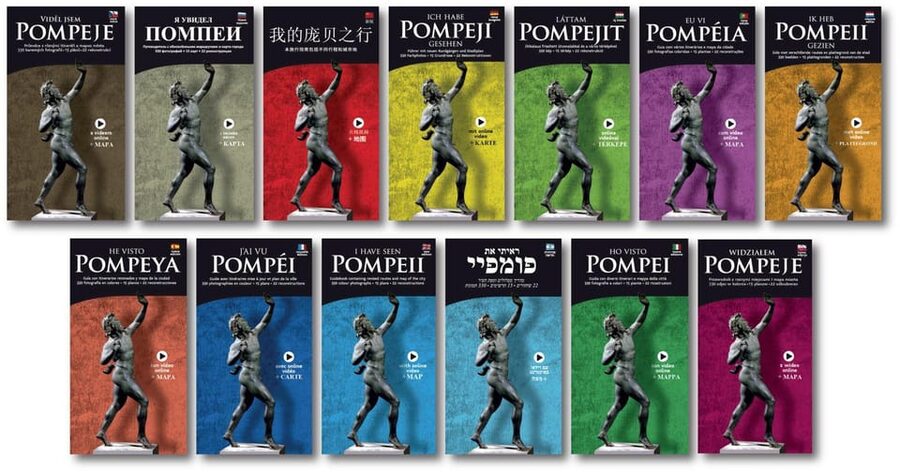
- Enter at Piazza Anfiteatro: Meet the staff at the information point at Via Roma 123 in Pompeii, usually identified by blue and yellow jackets.
- Choose your own pace: The map and guidebook offer two, four, and six-hour itineraries instead of forcing you into one fixed route.
- See ordinary Roman life: Thermopolia, shops, baths, temples, houses, brothels, and theaters help you picture daily life beyond the famous eruption.
- The amphitheater is a major stop: Pompeii’s well-preserved arena gives the visit a strong sense of scale.
- Bring identification: A passport or ID card is required, and the reduced youth price from ages 18 to 24 applies only to EU citizens.
- Plan for walking: Comfortable shoes are essential. Food, drinks, and transportation are not included.
Why Pompeii works well without a live guide
Pompeii is not a compact museum with a neat line of rooms. It is a large archaeological city, and the experience depends on how you move through it. You walk along ancient streets, turn into houses, cross public spaces, and stop often to study small remains that are easy to miss without some direction.
That makes the supplied guidebook useful. It gives you background on the city and eruption, then pairs the information with a map and suggested routes. You can pick a short visit if Pompeii is one stop on a busy Campania day, or take six hours if you want to inspect the site at a slower pace.
I like this self-guided setup for independent visitors who enjoy pausing when something catches their eye. You are not tied to a group’s speed, and you do not have to listen to a long explanation at every stop. If you want to spend extra time with a frescoed house, a bakery-style food counter, or the theater area, you can do so.
The tradeoff is simple: you must supply your own curiosity and discipline. A live guide can explain why a particular building matters while you are standing in it. Here, the book provides the framework, but you need to read it and use the map as you go.
The guidebook is described as being available in 12 languages, while the activity information also refers to 13 languages. If language choice matters to you, confirm the available version when booking or at collection. Staff support is listed in English, Italian, Spanish, and French.
More Pompeii excavation visits:
- Pompeii: Entry Ticket and Guided Tour with an Archaeologist
★ 4.8 · 19,459 reviews - Pompeii: Small Group Tour with an Archaeologist
★ 4.8 · 12,264 reviews - Pompeii: Skip-the-Line Entrance Ticket with Audio Guide
★ 4.0 · 2,509 reviews
Meeting the staff and entering at Piazza Anfiteatro
The practical part deserves attention because the meeting point and entry point are not presented as the same place. You meet the staff at the information point at Via Roma 123, Pompei, outside the provider’s office. The entrance for the archaeological park reservation is Piazza Anfiteatro.
Look for the team, usually wearing blue and yellow jackets, and show your voucher. The staff provide or confirm the materials needed for entry, including the ticket, map, and guidebook. Do not assume that showing a phone voucher at the archaeological gate alone will finish the process.
This detail matters because a smooth visit begins before you reach the ruins. One person had already passed security and had to leave to sort out the ticket paperwork. Allow time to find the office first, collect the paper ticket if required, and then go to the correct entrance.
The booking allows entry between 9 AM and 5 PM on the selected day, subject to the available starting time shown when you reserve. Since Pompeii covers a lot of ground, an early arrival gives you more room for a four or six-hour route. A later arrival may suit you if you want a shorter visit, but you will have less flexibility.
There is no transportation included. You make your own way to the meeting point in Pompeii, and food and drinks are also excluded. Bring your passport or ID card, especially if your booking uses a discounted age or citizenship category.
The two-hour route: a focused first look
The two-hour itinerary is best for a first taste or a tightly scheduled day. You will not see every corner of Pompeii, and that is the point. A short route helps you focus on the major sights instead of spending your whole visit crossing the site without a plan.
Use the map to keep your movement efficient. The guidebook can point you toward a mix of public buildings, homes, and eruption-related displays, giving you more than a quick walk past the best-known ruins. The amphitheater should be high on your list because it gives you an immediate sense of Pompeii as a working Roman city.
You can also expect to see some of the famous casts of eruption victims. These are among the most difficult sights at Pompeii. They do not simply tell you that Vesuvius erupted. They give the disaster a human scale, making the final moments of the city feel painfully close.
A two-hour visit suits you if you have limited time, dislike long museum-style outings, or are pairing Pompeii with other Campania stops. It is less suitable if you want to read every explanation, examine many painted rooms, and explore both theaters and the baths at an easy pace.
The four-hour route: the best balance for most people
For many visitors, four hours is the practical middle ground. It gives you enough time to see the famous sights while still leaving room for detours. Pompeii rewards patience, since the most interesting detail may be in a small house or shop rather than at the largest building.
A four-hour route can include the frescoed houses, where surviving wall paintings offer a glimpse of decoration, taste, and status in Roman domestic life. The condition of each building varies, but the pleasure comes from seeing rooms in their original setting rather than viewing a detached painting in a gallery.
Public baths and temples shift the focus from private homes to community life. The baths show how much social activity centered on shared facilities, while temples help you picture the religious side of the city. The guidebook gives these places context, which is important because bare walls and broken columns can otherwise blur together.
Make time for the shops and Thermopolia. These ancient food counters are a useful reminder that Pompeii was not only a city of grand villas. People bought meals, worked in trades, ran businesses, attended performances, and moved through the streets as part of ordinary daily life.
The four-hour option also gives you a better chance to reach the theaters. Theaters reveal another side of Roman entertainment, while the amphitheater shows the scale of public spectacles. You may not have time to linger at every building, but the overall picture feels more complete than it does on a rushed visit.
More Pompei Campania tours worth comparing
- Pompeii: Skip-the-line-Ticket and Guided Tour
★ 4.6 · 1,152 reviews - Pompeii: Guided Tour with Skip-the-Line Entry
★ 4.9 · 812 reviews - Pompeii: Skip-the-Line Entry Ticket with Digital Guide App
★ 4.1 · 770 reviews - Pompeii: Tour with Archaeologist Guide & Skip-the-Line Entry
★ 4.5 · 478 reviews
The six-hour route: time for detail and detours
Choose six hours if Pompeii is one of the main reasons for your day in the area. This route leaves room to read the guidebook, compare different kinds of buildings, and pause when a detail deserves more than a quick glance.
A long visit is not only about counting more ruins. It lets you notice the change between private and public spaces. One moment you are in a painted house; the next, you are looking at a temple, bath, shop, or theater. That variety helps you understand Pompeii as a functioning city rather than a collection of isolated monuments.
The casts of victims may require a quiet pause. They are difficult to look at, but they are central to understanding the eruption. The guidebook can provide the historical setting, while the physical remains show how suddenly life ended.
The longer route also makes the site’s size more apparent. You will walk a great deal on old streets and uneven surfaces, so comfortable shoes are not a minor suggestion. Plan your energy carefully. A six-hour visit can be rewarding, but it can also become tiring if you try to rush from one marked point to the next.
This option suits history fans, photographers, and anyone who wants a fuller day at Pompeii. It may be too much if you have small children who tire quickly, a packed schedule, or little interest in reading along the way. The route is flexible, so you can always shorten your visit, but the higher time allowance is most useful when you actually want to explore.
What makes the amphitheater and Thermopolia special
The amphitheater is one of the clearest ways to grasp Pompeii’s size and public life. It is not merely another ruin on the map. Its form helps you picture crowds gathering for large spectacles, and its survival gives the site a strong visual anchor.
The Thermopolia offer a different kind of connection. These were ancient Roman food counters, described as the fast-food spots of their time. Their presence brings Pompeii down from the level of emperors and temples to meals, work, trade, and quick stops during the day.
The shops are equally valuable for that reason. You can look beyond the grand houses and see evidence of a city where people bought goods and earned a living. The spas, temples, theaters, brothels, and homes together create a broader picture of urban life.
The guidebook’s map helps you connect these categories. Without a route, it is easy to visit a few famous buildings and miss the relationship between them. With the suggested itineraries, you have a basic plan while keeping the right to stop, skip, or turn around.
The guidebook and map: useful tool or thin substitute?
The guidebook is the heart of this experience. It explains Pompeii’s past, the eruption of Mount Vesuvius, and the locations you pass along the route. The map points out major places and organizes them into two, four, or six-hour itineraries.
I like the fact that the book remains yours as a souvenir. It gives you something to keep after the visit, rather than relying only on information heard once through headphones or from a guide at the front of a group.
Still, do not buy this expecting personal interpretation. The phrase guide can easily create confusion, but the supplied guide is a printed book. No human guide walks with you, answers questions, or adjusts the explanation to your interests.
That difference affects the value of the $41 price. You are paying for the archaeological entry, skip-the-line access, a map, and a guidebook, not a private tour. If the regular ticket line is long on your date, saving time may make the price worthwhile. If the entrance is quiet and you prefer to buy a ticket directly, the package may feel less attractive.
The book is provided for every two people, so a pair gets one shared copy rather than one book per person. That is fine if you plan to walk together, but less convenient if you want to split up. The guidebook and map are most useful when the people sharing them remain on the same route.
Who should book this Pompeii visit?
I would choose this for you if you want independence, a clear route, and enough historical help to avoid wandering without context. It works particularly well for couples, friends, and solo visitors who prefer reading at their own speed instead of joining a fixed group.
It is also a good fit if you have a firm schedule. The two-hour route keeps the visit manageable, while the four and six-hour options let you expand the experience if your day allows. You can enter during the stated 9 AM to 5 PM window on the valid date, rather than being locked into a long guided departure.
I would think twice if you specifically want a live historian. The guidebook cannot respond to questions, point out a detail in real time, or explain the difference between similar buildings as you stand beside them. I would also reconsider if you dislike walking or reading in the heat, since Pompeii requires time on foot and the ticket does not include transportation or refreshments.
The age discount needs care. The reduced youth rate for ages 18 to 24 applies only to EU citizens. If that does not describe you, use the appropriate adult price rather than assuming the youth category will apply.
Free cancellation up to 24 hours before the visit adds useful flexibility, and the reserve-now, pay-later option can help if your Campania plans are still shifting. These terms do not change what happens inside the site, but they make the booking less risky.
Final verdict: a flexible Pompeii day with one important catch
I recommend this experience if your priority is skip-the-line access plus self-guided freedom. Pompeii is too large for a casual glance, and the map with timed itineraries gives your visit shape without taking control away from you.
The four-hour route is likely the strongest choice for most people. Two hours can cover the main points but leaves little room for thought, while six hours demands real stamina and a strong interest in ancient sites. Choose six hours when Pompeii is a central part of your day, not a quick stop.
Book it when you understand the arrangement: collect or confirm your ticket at Via Roma 123, enter through Piazza Anfiteatro, and use a printed guidebook rather than expecting a live guide. If you want a personal expert, choose another format. If you want to walk through Pompeii at your own speed with a practical map and a souvenir book, this offers a sensible way to do it.
FAQ
Where do I meet the staff?
Meet the staff at the information point outside the office at Via Roma 123, Pompei. The team is usually wearing blue and yellow jackets.
Which entrance do I use for Pompeii?
The entrance connected with this reservation is Piazza Anfiteatro. Meet the staff at Via Roma 123 first, then proceed to the archaeological park entrance.
Is a live tour guide included?
No. The included guide is a printed guidebook with a map and suggested itineraries. A human guide is not included.
How long can I spend at Pompeii?
The ticket is valid for one day, with entry available from 9 AM to 5 PM. The guidebook includes suggested two, four, and six-hour routes.
What languages are available?
The listed staff languages are English, Italian, Spanish, and French. The guidebook is listed as available in 12 languages, while another activity detail refers to 13 languages, so confirm the exact language options when booking.
What should I bring?
Bring a passport or ID card. You should also wear comfortable shoes and comfortable clothing suitable for walking around the ruins.
Is the youth price available to everyone aged 18 to 24?
No. The reduced youth price for people aged 18 to 24 is only for EU citizens.
Are food, drinks, or transportation included?
No. Food, beverages, and transportation are not included in the price.
Can I cancel the booking?
Yes. You can cancel up to 24 hours in advance for a full refund. A reserve-now, pay-later option is also available.
Newest reviews from Pompei Campania
- From Sorrento: Pompeii & Vesuvius tour small group★ 4.8 · 4 reviews
- Pompeii Private Tour for Kids and Their Families★ 4.8 · 4 reviews
- From Naples_ Pompeii Tour_Skip the line ticket + audioguide★ 4.3 · 4 reviews
- Pompeii, skip-the-line ticket with smartphone audio guide on App★ 3.0 · 4 reviews
- Pompeii Guided Experience – Tour Service Only★ 4.6 · 4 reviews
- From Naples Port:Pompeii+Vesuvius tour★ 4.3 · 4 reviews
- 2-Hour Pompeii Child-Friendly Tour★ 5.0 · 4 reviews
- Naples: Amalfi Coast, Sorrento and Pompeii Day Trip★ 4.4 · 5 reviews
Skip the Line, compared.

Skip-the-Line Entrance Ticket with Audio Guide
Read our review →



Skip-the-Line Entry Ticket with Digital Guide App
Read our review →
Pompeii Ruins Private Tour with Optional Skip-the-Line Entry
Read our review →
Skip-the-Line Pompeii Guided Tour from Sorrento
Read our review →
Skip the Line Guided Tour of Pompeii led by an Archaeologist
Read our review →Browse the lists this tour appears in