
Reviewed · SKIP THE LINE
Pompeii: Guided Tour & Skip the Line Ticket
Pompeii is more than a collection of old stones. Its streets, homes, baths, and public spaces let you see ordinary Roman life with unusual clarity, all beneath the shadow of the eruption that buried the city in 79 AD. I like that this tour takes you straight into the site with skip-the-line entry, then gives the ruins a human shape through stories about food, religion, family life, and public business.
I also like the small-group approach and the care taken with meeting guests. Guides such as Giulia, Gennaro, and Sasà have been praised for answering questions, helping people find the meeting point, and adjusting when guests arrive a little late. The main drawback is time: two hours gives you a strong introduction, but Pompeii is large, and you will not see every corner.
In This Review
- Key points to know before booking
- Why Pompeii works best with a guide
- Meeting at Ristorante Bar Sgambati
- Entering Pompeii through the separate entrance
- The Forum and Pompeii’s public life
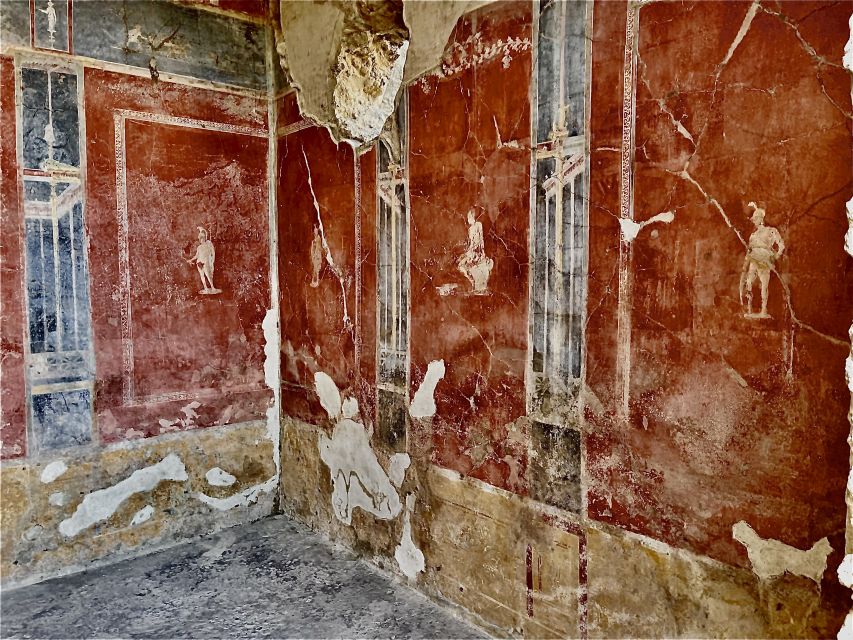
- Roman homes: the House of the Tragic Poet
- The House of the Golden Cupids
- The Stabian Baths and everyday routines
- The eruption of Vesuvius in 79 AD
- The guide makes the difference
- Is $60 a fair price?
- Who should book this Pompeii tour?
- Final decision: book it for a focused first visit
- FAQ
- Where does the Pompeii tour begin?
- How long does the tour last?
- What does the price include?
- Is skip-the-line entry included?
- Which languages are available?
- Is this a small-group tour?
- What should I bring?
- Can I cancel the booking?
Key points to know before booking
- The Forum anchors the visit: You begin with Pompeii’s main public square and learn how the city worked.
- Roman homes add personal detail: The House of the Tragic Poet and House of the Golden Cupids show how private life looked behind the street walls.
- Skip-the-line entry saves useful time: You enter through a separate entrance rather than waiting in the standard queue.
- Guides make the ruins easier to read: Giulia, Gennaro, and Sasà have led engaging tours in English or Italian.
- The meeting point is easy to reach from the train: Start at Ristorante Bar Sgambati, a practical spot near the archaeological site.
- Plan for uneven walking: Comfortable shoes and weather-ready clothing matter more here than stylish outfits.
Why Pompeii works best with a guide
Pompeii can look confusing at first. You walk along broad stone roads, pass doorways and courtyards, and see wall paintings without always knowing what mattered to the people who lived there. A guide gives those remains a purpose.
This tour focuses on the way Romans used their city. You learn about the Forum as a place for public life, the bath complex as a center of washing and social contact, and private houses as spaces where wealth, religion, and family identity appeared together. That context is the difference between simply walking through ruins and understanding what you are seeing.
The eruption of Mt. Vesuvius is part of the story, but it should not swallow the whole visit. The tour also looks at the people who lived in Pompeii before the disaster. That balance helps you picture a working Roman city instead of treating the site only as a tragedy.
I especially value the chance to ask questions. One of the strongest features of this experience is the personal attention available in a small group. Giulia, for example, has been able to discuss mythology, religious beliefs, daily life, and the eruption in detail. That is useful when your questions move beyond the standard facts.
More Pompeii excavation visits:
- Pompeii: Entry Ticket and Guided Tour with an Archaeologist
★ 4.8 · 19,459 reviews - Pompeii: Small Group Tour with an Archaeologist
★ 4.8 · 12,264 reviews - Pompeii: Skip-the-Line Entrance Ticket with Audio Guide
★ 4.0 · 2,509 reviews
Meeting at Ristorante Bar Sgambati
The tour begins at Ristorante Bar Sgambati. This is important because Pompeii has several entrances and the surrounding area can feel busy and unclear if you are arriving by train. The meeting point gives you a fixed place to aim for before entering the archaeological site.
A guide may contact you personally before the meeting time. Sasà did this for one family, making the rendezvous simple, and the company has also contacted people who were running late or having trouble finding the start. Still, you should allow enough time to get there. A two-hour tour has a fixed rhythm, and you do not want to spend the first part trying to catch up.
The meeting point is described as easy to find from the train. Parking is not included, so arriving by rail is likely the simpler choice if that fits your plans. Food and drinks are also not included, so handle those before or after the tour rather than expecting a refreshment stop during the visit.
Entering Pompeii through the separate entrance
The skip-the-line ticket is one of the clearest practical benefits. Pompeii attracts many visitors, and waiting outside can cost precious time, particularly when you have a train, lunch reservation, or another visit planned. This ticket uses a separate entrance, allowing you to get inside without standing in the regular line.
Skip-the-line does not mean you can ignore the meeting time. You still need to arrive at Ristorante Bar Sgambati and join the guide before entering. The advantage comes after that: the guide handles the entry process while you get on with the actual visit.
The tour lasts about two hours. The site visit is also described as taking around two hours and fifteen minutes, so allow a little extra time around the formal tour duration. That small cushion is wise for meeting, entry, and the final walk out.
The Forum and Pompeii’s public life
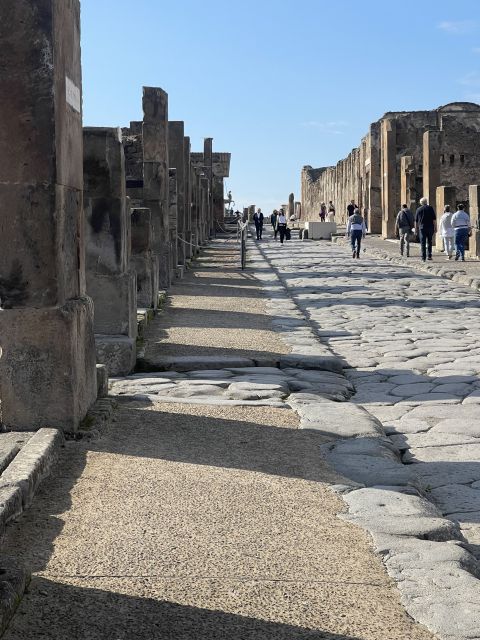
The Forum is the natural center of the tour. This large public space was where Pompeii’s civic, religious, and commercial life came together. It is the place to listen closely, because the guide can explain how the buildings around the square related to one another and why this was more than an open area between ruins.
The Forum also gives you a useful mental map. Once you understand this central space, the rest of the city becomes easier to place. Streets lead toward homes, shops, baths, and other public buildings, and you begin to see Pompeii as a community rather than a scattered archaeological site.
Expect to walk and stop often. The focus is on seeing key areas and understanding them, not racing from one photo opportunity to the next. The tour includes time for questions, and guides have been praised for explaining the site in a friendly, clear way.
More Pompei Campania tours worth comparing
- Pompeii: Skip-the-line-Ticket and Guided Tour
★ 4.6 · 1,152 reviews - Pompeii: Guided Tour with Skip-the-Line Entry
★ 4.9 · 812 reviews - Pompeii: Skip-the-Line Entry Ticket with Digital Guide App
★ 4.1 · 770 reviews - Pompeii: Tour with Archaeologist Guide & Skip-the-Line Entry
★ 4.5 · 478 reviews
Roman homes: the House of the Tragic Poet
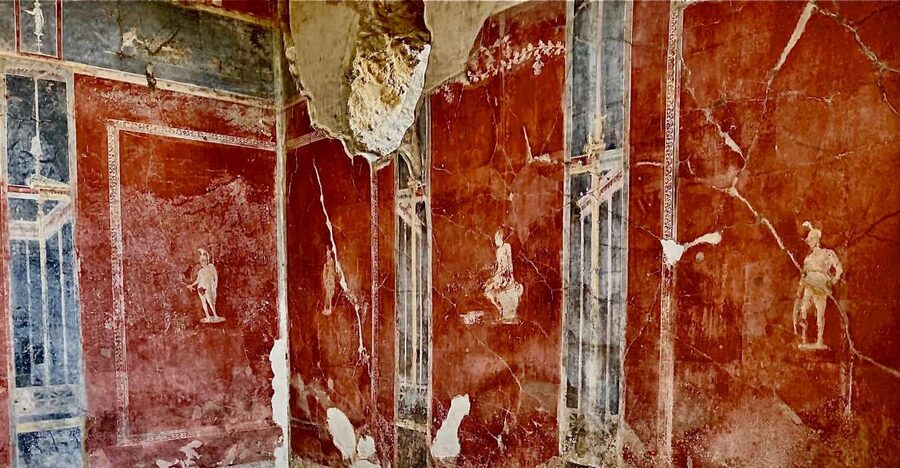
The House of the Tragic Poet offers a look at domestic Pompeii. A Roman home was not simply a private retreat. Its layout, decoration, and reception areas could tell visitors about the owner’s taste, beliefs, and social standing.
The name itself gives the house a memorable hook, but the value lies in how it helps you imagine daily life. You may notice how rooms were arranged around central areas and how decoration shaped the experience of moving through the home. Your guide can point out details that are easy to miss when you walk through alone.
This is also a good stop for families. A house is easier for children to picture than a column or foundation, and the stories of the people who used it can make the ancient world feel less remote. A previous family with children aged 10 and 12 found the visit especially engaging, helped by the guide’s ability to keep the explanations warm and accessible.
The House of the Golden Cupids
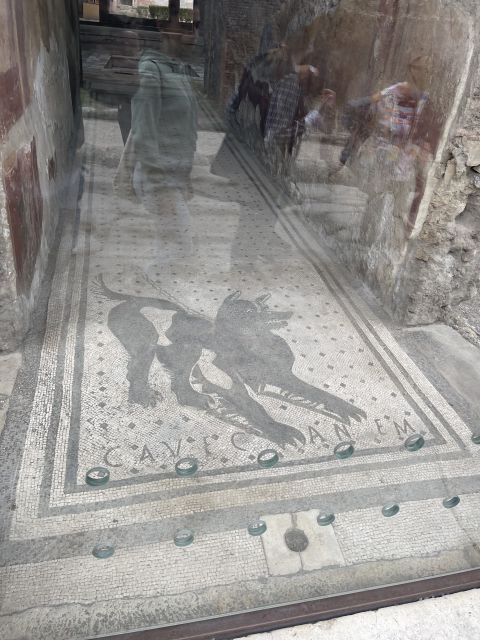
The House of the Golden Cupids adds another view of private wealth and decoration. Its name gives you a detail to remember, while the house itself helps show how Roman interiors could express status and personal taste.
I like having more than one house on the route. Seeing a single residence can leave you with a vague idea of Roman domestic life. Comparing two homes gives you a better sense of how the city’s residents lived, displayed art, received visitors, and organized their spaces.
Because the tour is only two hours, the guide will choose the most useful details rather than explain every room at length. That is a fair trade if you are visiting Pompeii for the first time. If you already have a strong interest in Roman architecture or archaeology, you may want more time after the tour to explore independently.
The Stabian Baths and everyday routines
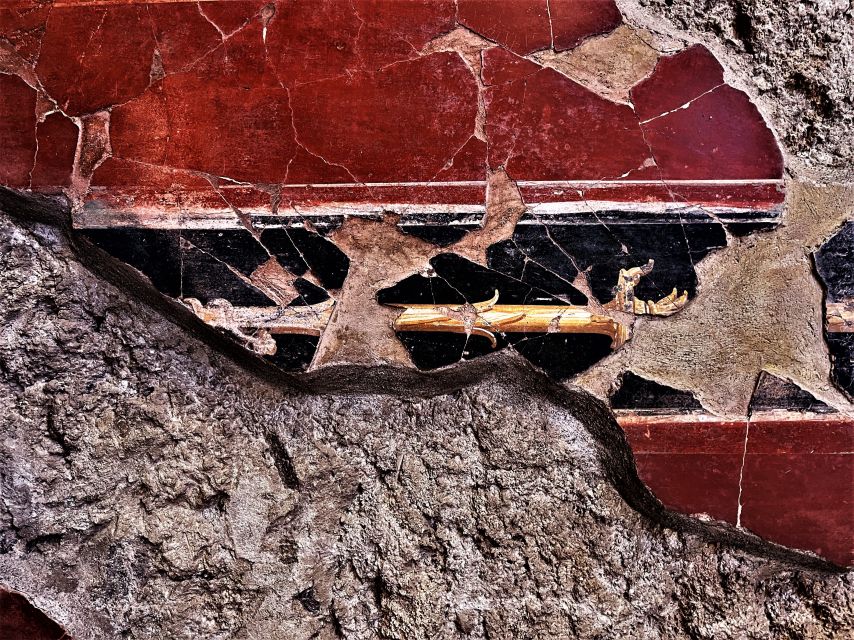
The Stabian Baths show another side of Roman life. Baths were not just places to wash. They were part of the city’s social routine, and they help explain how public buildings shaped the day.
This stop is valuable because it moves the tour away from grand civic spaces and wealthy homes. You get a closer look at ordinary habits and shared facilities. The guide can help you understand the structure and purpose of the bath complex, rather than leaving you to guess what each room once did.
The baths also remind you that Pompeii was a functioning city before it became an archaeological site. People went to work, met friends, practiced religion, handled business, and cared for their households. The eruption froze that setting, but the tour keeps the emphasis on life before the disaster.
The eruption of Vesuvius in 79 AD
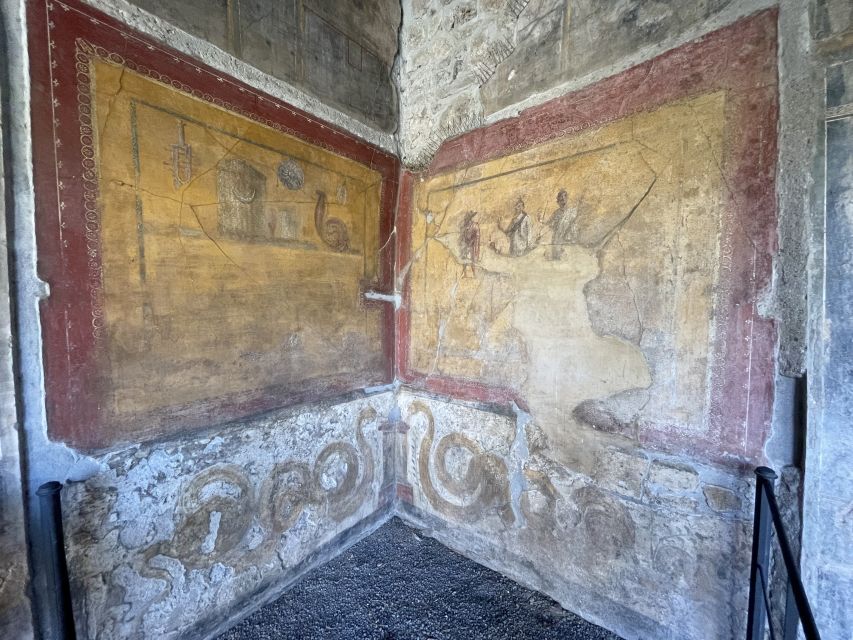
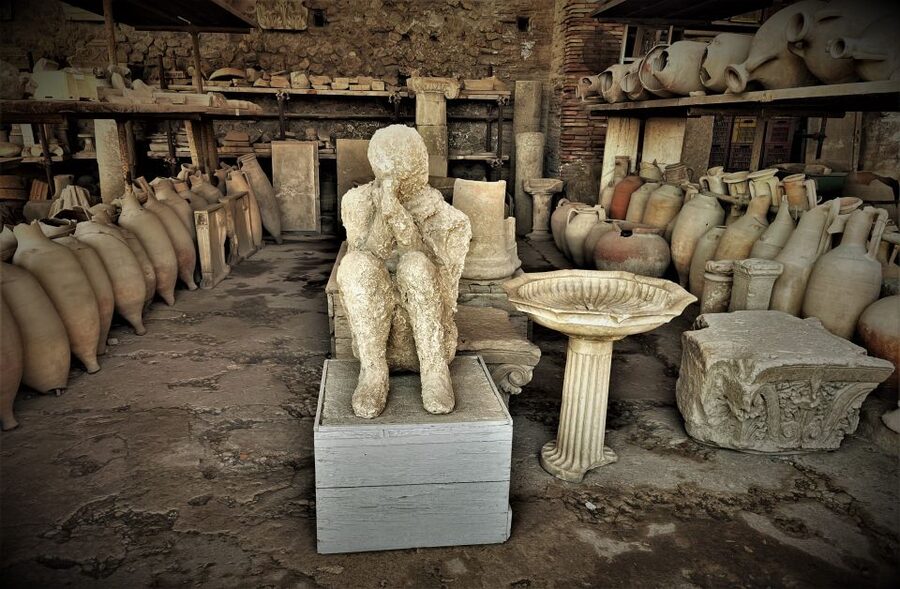
The eruption is the event that preserved Pompeii and made the site so powerful. Volcanic ash covered streets, homes, and public buildings, leaving an unusually detailed record of Roman urban life. Your guide explains how the disaster affected the city and why so much of Pompeii remained visible for later study.
The strongest version of this story connects the eruption to the places you are standing in. It is one thing to hear that ash buried a city. It is another to hear that while standing in a Roman home, walking across the Forum, or looking at a bath complex that was used before the eruption.
This part of the visit can be sobering. Pompeii is not only a scenic stop for photographs, and a good guide will treat the disaster with care. At the same time, the experience does not rely only on sadness. The buildings, roads, beliefs, and routines make up the larger story.
The guide makes the difference
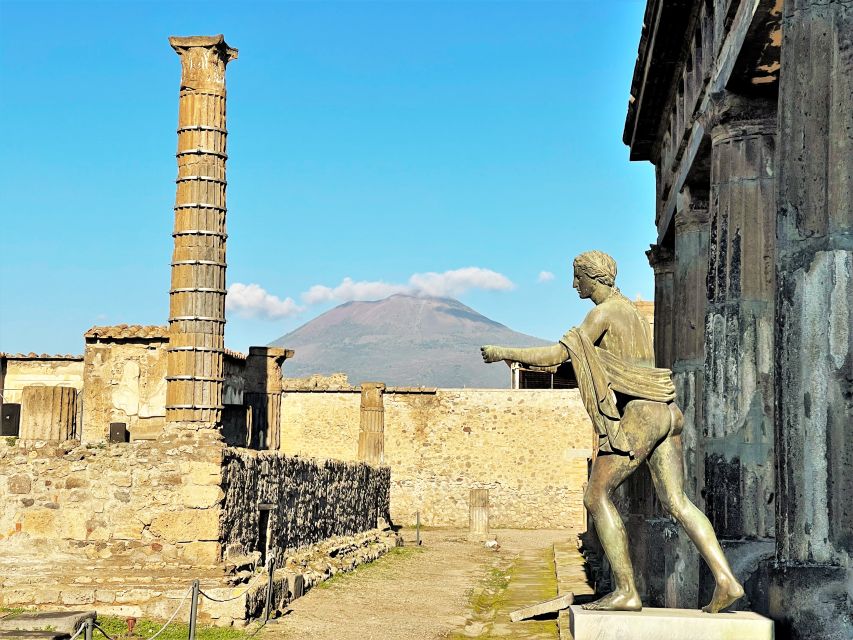
The guide is the main reason to choose this experience instead of entering Pompeii alone. Giulia has led tours in English and has been praised for answering questions about history, mythology, religion, and daily life. She also helped guests with photographs and pointed out good spots for pictures after explaining the site.
Gennaro has guided in Italian, using humor and clear explanations to bring the ruins to life. Sasà has also been praised for his preparation and friendly manner, including his ability to keep children interested. These examples suggest a tour style that is personal rather than scripted, though the exact guide depends on the date and language selected.
English and Italian are the available tour languages. A small group is available, which matters at Pompeii because crowded paths and open spaces can make a large group hard to hear. Smaller groups also make it easier to ask about a particular house, symbol, or building.
The tour has occasionally become a private experience when no one else booked the same time slot. You should not assume that will happen, but it is a pleasant possibility. At minimum, the format aims to keep the group manageable and the conversation open.
Is $60 a fair price?
At $60 per person, this is not the cheapest way to enter Pompeii. The price includes the entry ticket and a two-hour guided visit, but not parking, food, or drinks. The value depends on how much structure and explanation you want.
I think the price makes the most sense for a first visit, a short stay in the area, or anyone who does not want to spend time working out Pompeii’s layout alone. Skip-the-line access can protect your schedule, while the guide turns major stops into a connected story.
You may find better value by visiting independently if you already know the site well, want several hours for slow exploration, or prefer reading at your own pace. In that case, the two-hour route could feel too limited. For many first-time visitors, though, the combination of entry and guidance is easier than arranging both separately.
The free cancellation window also reduces some booking risk. You can cancel up to 24 hours before the tour for a full refund, and a reserve-now, pay-later option is available. Check the starting time carefully before booking, since the experience has set departure times.
Who should book this Pompeii tour?
This tour suits you if you want a clear introduction without spending an entire day at the archaeological site. It is also a good match for families, couples, and first-time visitors who prefer asking questions instead of reading every sign on their own.
It works well for people arriving by train, since the meeting point is easy to find from the station. The small-group format is helpful if you want a quieter experience and direct contact with the guide.
You should think twice if you use a wheelchair, have a pre-existing medical condition, or experience motion sickness, since the activity is not considered suitable for those guests. Comfortable shoes are essential. Choose clothing for the weather, and bring a passport or identity card. A copy is accepted.
Final decision: book it for a focused first visit
I would choose this tour if Pompeii is new to you and you want the Forum, houses, baths, and eruption story explained in one well-paced visit. The strongest reasons are the separate entrance, the small-group setting, and the personal style shown by guides such as Giulia, Gennaro, and Sasà.
I would skip it if you want to wander for half a day or already have detailed knowledge of Pompeii. At $60, you are paying for convenience and interpretation as much as admission. For a short, organized introduction with a friendly guide, that is a reasonable trade.
FAQ
Where does the Pompeii tour begin?
The meeting point is Ristorante Bar Sgambati.
How long does the tour last?
The guided tour lasts two hours. The site visit is described as taking about two hours and fifteen minutes, so allow a little additional time around the scheduled tour.
What does the price include?
The $60 price includes the skip-the-line entry ticket and the two-hour guided tour.
Is skip-the-line entry included?
Yes. You enter through a separate entrance with the skip-the-line ticket.
Which languages are available?
The live guide is available in English or Italian.
Is this a small-group tour?
A small-group option is available. On some dates, the group may be very small, and one booking resulted in a private tour.
What should I bring?
Bring comfortable shoes, comfortable clothing, weather-appropriate clothing, and a passport or identity card. A copy of the identification document is accepted.
Can I cancel the booking?
Yes. You can cancel up to 24 hours in advance for a full refund. A reserve-now, pay-later option is also available.
Newest reviews from Pompei Campania
- From Sorrento: Pompeii & Vesuvius tour small group★ 4.8 · 4 reviews
- Pompeii Private Tour for Kids and Their Families★ 4.8 · 4 reviews
- From Naples_ Pompeii Tour_Skip the line ticket + audioguide★ 4.3 · 4 reviews
- Pompeii, skip-the-line ticket with smartphone audio guide on App★ 3.0 · 4 reviews
- Pompeii Guided Experience – Tour Service Only★ 4.6 · 4 reviews
- From Naples Port:Pompeii+Vesuvius tour★ 4.3 · 4 reviews
- 2-Hour Pompeii Child-Friendly Tour★ 5.0 · 4 reviews
- Naples: Amalfi Coast, Sorrento and Pompeii Day Trip★ 4.4 · 5 reviews
Skip the Line, compared.

Skip-the-Line Entrance Ticket with Audio Guide
Read our review →



Skip-the-Line Entry Ticket with Digital Guide App
Read our review →
Pompeii Ruins Private Tour with Optional Skip-the-Line Entry
Read our review →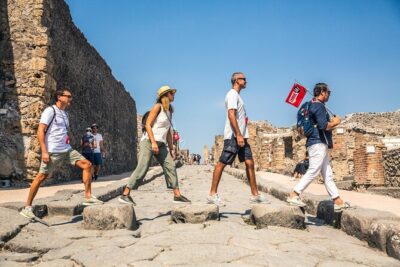
Skip-the-Line Pompeii Guided Tour from Sorrento
Read our review →
Skip the Line Guided Tour of Pompeii led by an Archaeologist
Read our review →Browse the lists this tour appears in