
Reviewed · SKIP THE LINE
Pompeii: Guided Tour and Skip-the-Line Ticket
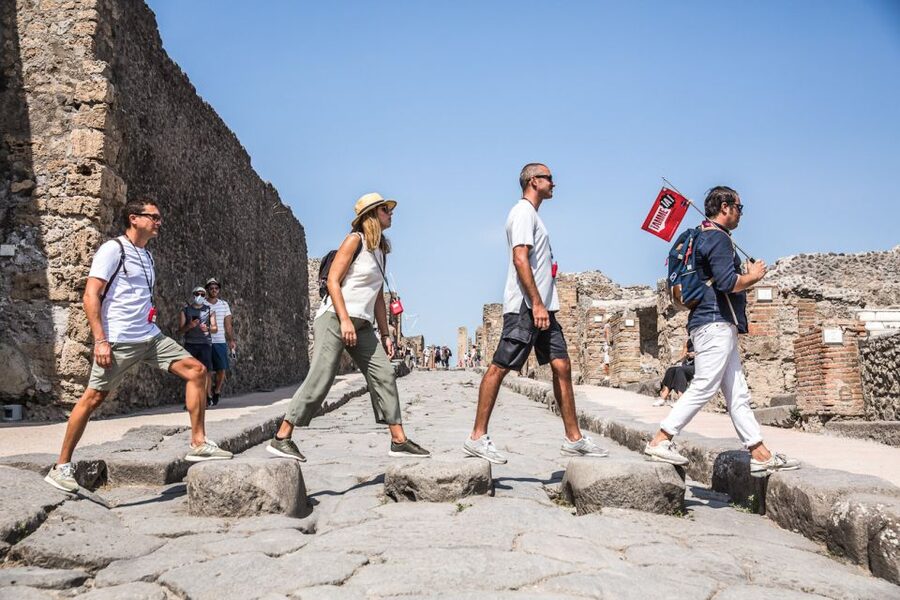
Pompeii is much more than a field of old stones. It is a Roman town you can walk through street by street, with bakeries, bars, bathhouses, theaters, villas, and wheel-rutted roads still in place. I like that this tour gives you a licensed local guide to explain what you are seeing, and that priority entry can save precious time at a large archaeological site.
I also like the compact two to two-and-a-half-hour route. Guides such as Anna Rita, Melania, Lucia, and Natalia have been singled out for clear explanations and smart shortcuts. The main consideration is that Pompeii is enormous, so this tour gives you a strong introduction rather than a complete visit. Expect heat, uneven ground, and some crowded stops, especially at the Lupanare.
In This Review
- Key points before you book
- Why a guide matters at Pompeii
- Starting at Porta Marina
- The Forum and Basilica
- Via dell’Abbondanza and the Theater District
- The Forum Baths and Roman routines
- Thermopolium and Pistrinum
- The House of the Faun and the Alexander Mosaic
- Macellum, the Lupanare, and the human cost
- Two hours is an introduction, not the whole site
- Price, group size, and practical value
- Heat, access, and meeting details
- Who should book this Pompeii tour?
- Should you book it?
- FAQ
- How long does the Pompeii guided tour last?
- What languages are available?
- Is priority entry included?
- Where does the tour meet?
- Is transportation included?
- Are audio headsets provided?
- Is the tour suitable for wheelchair users?
- What should I bring?
Key points before you book
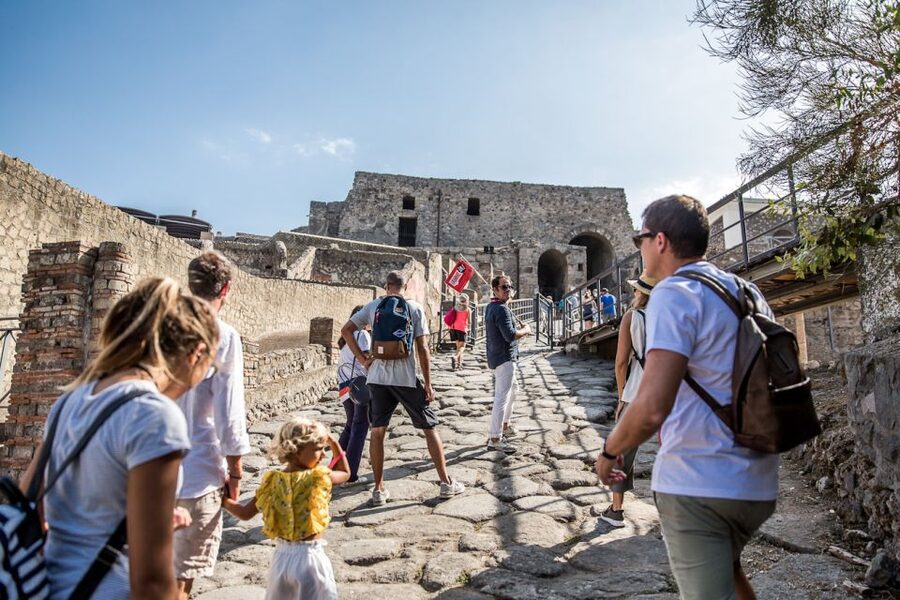
- See daily Roman life, not just monuments: The route includes a bakery, food shop, bath complex, market, villas, theaters, and streets.
- Priority entry saves time: You meet your guide at the archaeological site entrance instead of spending part of your visit waiting for a standard ticket.
- The House of the Faun is a major highlight: Its grand rooms and famous Alexander Mosaic offer a look at Pompeii’s wealthiest residents.
- A small group can change the experience: Private and small-group options make it easier to ask questions and keep up.
- The two-hour route is well focused: You cover important highlights, but you will need extra time if you want to explore Pompeii at your own pace.
- Plan for sun and rough footing: Comfortable shoes and sunscreen are essential, and the tour is not suitable for wheelchair users.
Why a guide matters at Pompeii
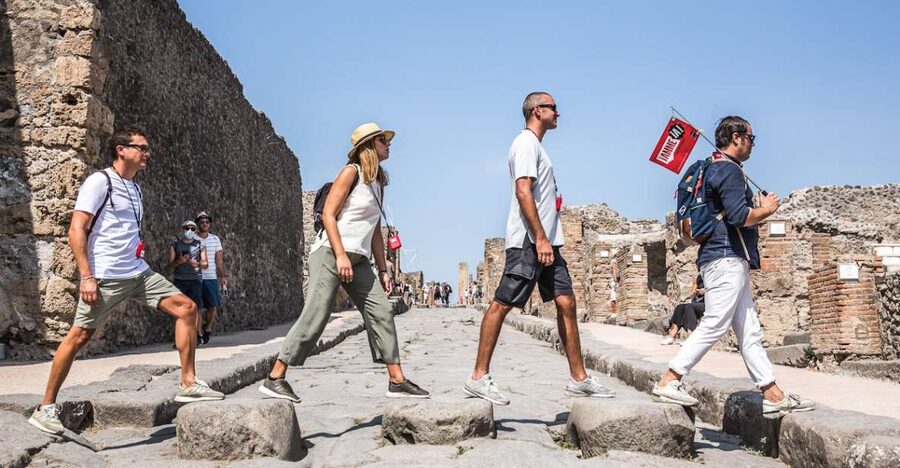
Pompeii can look simple at first glance: stone walls, open courtyards, broken columns, and long streets. The details are easy to miss without help. A guide can point out shop counters, drainage channels, painted decoration, road grooves, household shrines, and the difference between a public building and a private home.
That context changes the visit. A bakery is no longer just a room with a heavy stone mill. A thermopolium becomes an ancient place where people bought hot food. A bath complex reveals how much Roman social life revolved around daily washing, exercise, conversation, and rest.
The guides on this experience are licensed locals, and the strongest part of the tour is the live explanation as you walk. Anna Rita is particularly effective at adding detail while keeping the group moving. Melania has also been praised for making the site accessible to families, while Lucia has been noted for adapting the pace and content to a small group.
For groups of eight or more, audio headsets are provided. That matters in Pompeii because streets are wide in some places, crowds gather around popular buildings, and the guide may need to speak over the sound of other groups. In a small group, you may hear the guide clearly without equipment, but headsets are useful when the site is busy.
More Pompeii excavation visits:
- Pompeii: Entry Ticket and Guided Tour with an Archaeologist
★ 4.8 · 19,459 reviews - Pompeii: Small Group Tour with an Archaeologist
★ 4.8 · 12,264 reviews - Pompeii: Skip-the-Line Entrance Ticket with Audio Guide
★ 4.0 · 2,509 reviews
Starting at Porta Marina
The tour begins at or near Porta Marina, one of Pompeii’s original entrances. Depending on the option you book, the starting point may be listed around Pompei Parking Zeus or Parking Zeus, so check your confirmation carefully and allow time to find the exact meeting place.
Porta Marina is a sensible place to begin because it immediately shows you how Pompeii connected to the outside world. From here, the guide leads you into the city and starts explaining its layout, public spaces, and sudden end after the eruption of Mount Vesuvius in 79 AD.
The first few minutes also help you get oriented. Pompeii is large enough to make the map feel confusing, especially if you plan to continue exploring after the guided portion. One guide even helped a guest understand the exits, nearby train stations, and the best way to continue alone after the tour.
The Forum and Basilica
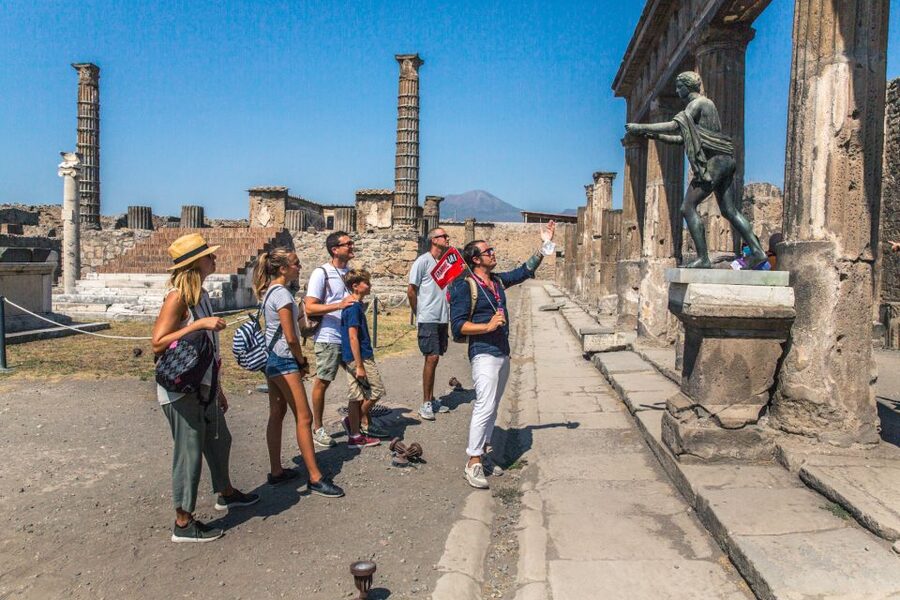
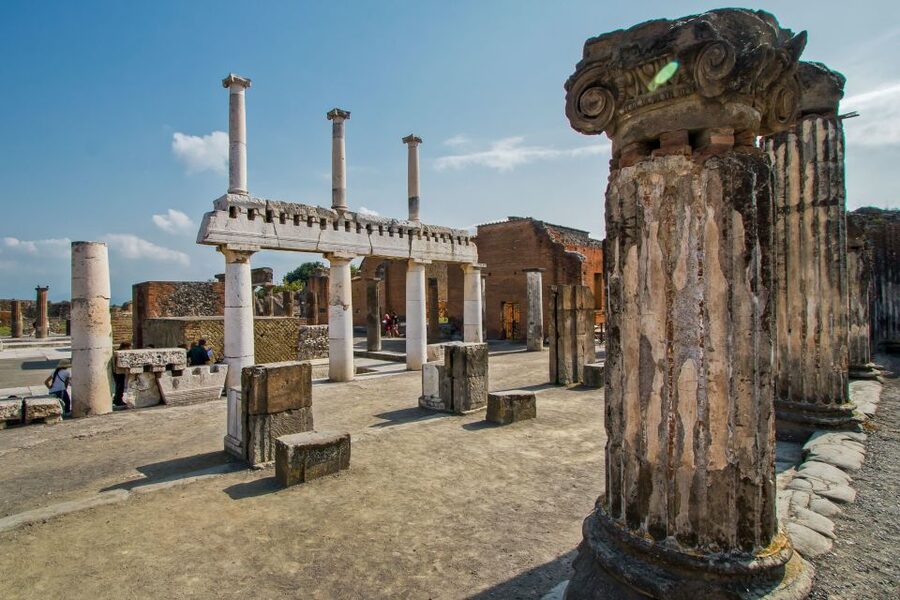
The Civil Forum was Pompeii’s main public square. This was the place for government, religion, commerce, announcements, and public business. You will see the remains of temples and civic buildings arranged around the open square, with Mount Vesuvius visible beyond the ruins.
The Forum works best with a guide because the surviving columns and foundations do not always make the original purpose of each building obvious. Your guide can explain how the square functioned and help you picture it as a working center rather than an empty plaza.
Nearby, the Basilica once handled legal disputes and business dealings. It was not a church in the modern sense. In Roman Pompeii, this was a major public building where commercial and legal life took place.
This opening section is informative rather than intimate. You are looking at civic architecture on a grand scale, so it may not feel as immediately personal as the homes and shops later in the tour. Still, it gives you the framework for understanding how the city was organized.
Via dell’Abbondanza and the Theater District
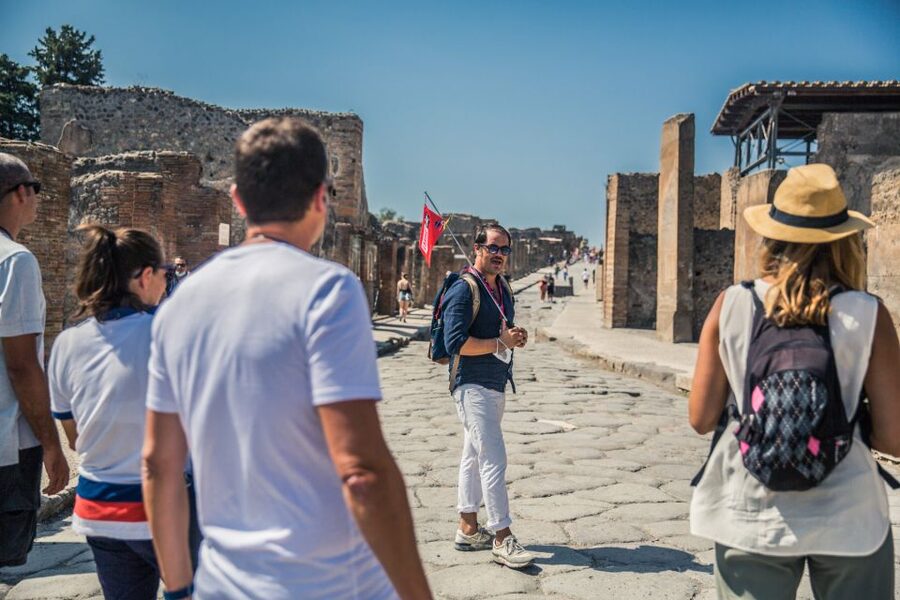
Via dell’Abbondanza was one of Pompeii’s main streets. Walking along it brings you closer to ordinary city life, with homes, shops, doorways, and deep grooves carved by ancient carts.
The road surface is uneven, and you will need to watch your footing while listening. That is one reason comfortable shoes matter. Pompeii is not a polished museum floor. You are walking across original streets and exposed archaeological ground.
The Theater District shifts the mood from business to entertainment. The Large Theater was an open-air venue for plays, music, and public gatherings. Your guide can help explain how the seating was arranged and what the building tells you about Roman leisure.
Theater visits are also useful for families. Children may connect more readily with a performance space than with a forum or a temple, and the scale of the venue makes the ancient city feel active. The route does not linger everywhere, so you may want to take a few photographs quickly and stay close to the guide.
More Pompei Campania tours worth comparing
- Pompeii: Skip-the-line-Ticket and Guided Tour
★ 4.6 · 1,152 reviews - Pompeii: Guided Tour with Skip-the-Line Entry
★ 4.9 · 812 reviews - Pompeii: Skip-the-Line Entry Ticket with Digital Guide App
★ 4.1 · 770 reviews - Pompeii: Tour with Archaeologist Guide & Skip-the-Line Entry
★ 4.5 · 478 reviews
The Forum Baths and Roman routines
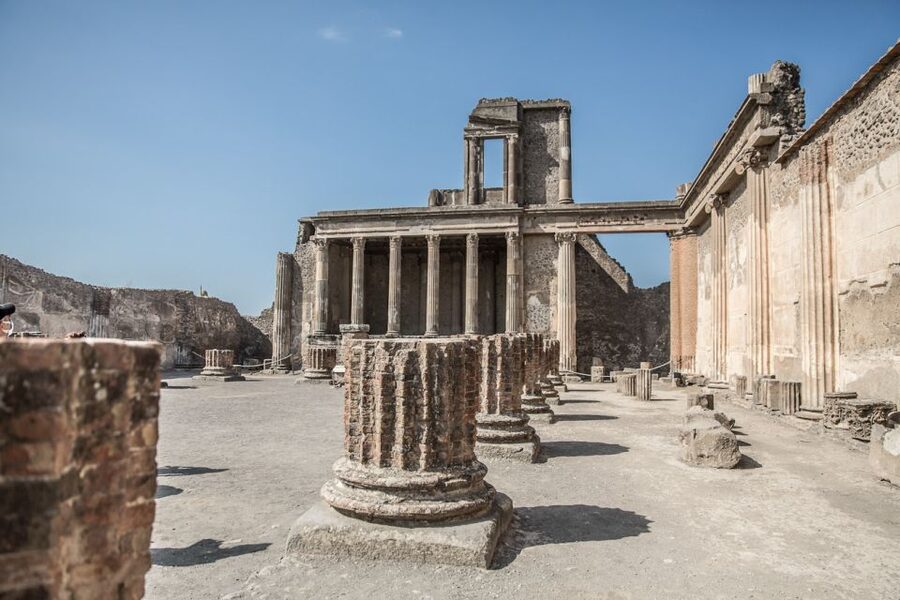
The Forum Baths offer a smaller, more personal look at Pompeii. Public baths were not simply places to wash. They were part of the rhythm of Roman life, giving people a place to clean up, relax, and spend time with others.
The surviving rooms help you understand how the complex worked. Look for the preserved structure, decoration, and arrangement of the bathing areas as your guide explains the sequence of use and the technology behind Roman bathing.
This stop is a good counterpoint to the Forum. Instead of focusing on public power, it shows everyday routines. You can begin to imagine the city through repeated habits: buying food, visiting the baths, attending a performance, conducting business, and returning home.
Thermopolium and Pistrinum
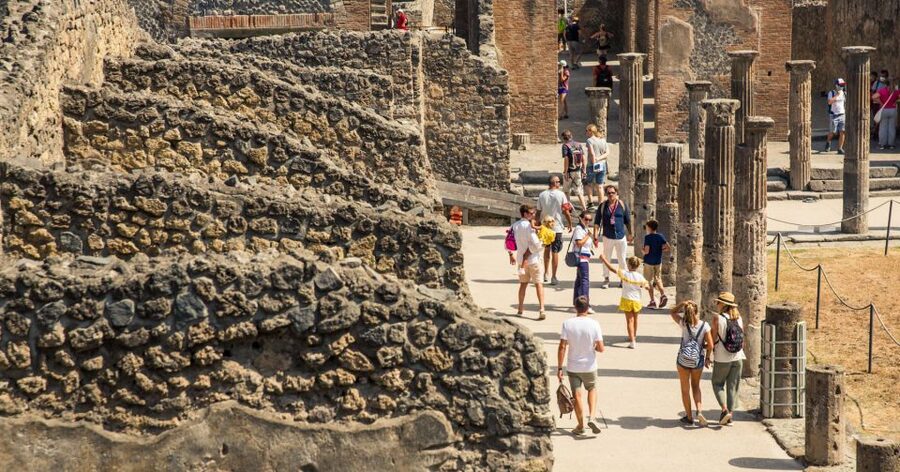
One of Pompeii’s most engaging details is its street food culture. A thermopolium was a shop where hot food and drinks were served, often from large counters built into the room. The stop makes the ancient city feel surprisingly familiar. People needed quick meals then, just as they do now.
The route information lists the thermopolium stop twice, but the important point is the chance to see this type of food outlet as part of Pompeii’s commercial life. Your guide supplies the meaning behind the counter, containers, and layout.
The pistrinum, or bakery, adds another layer. Millstones and ovens show how grain was processed and bread was produced. This is one of the most useful sections for understanding work in the city, because you can see the machinery rather than only the finished buildings.
These places are usually more memorable than another fragment of a temple. They answer basic questions about how people ate and worked. They also make the tour feel grounded in real life, not only grand monuments.
The House of the Faun and the Alexander Mosaic
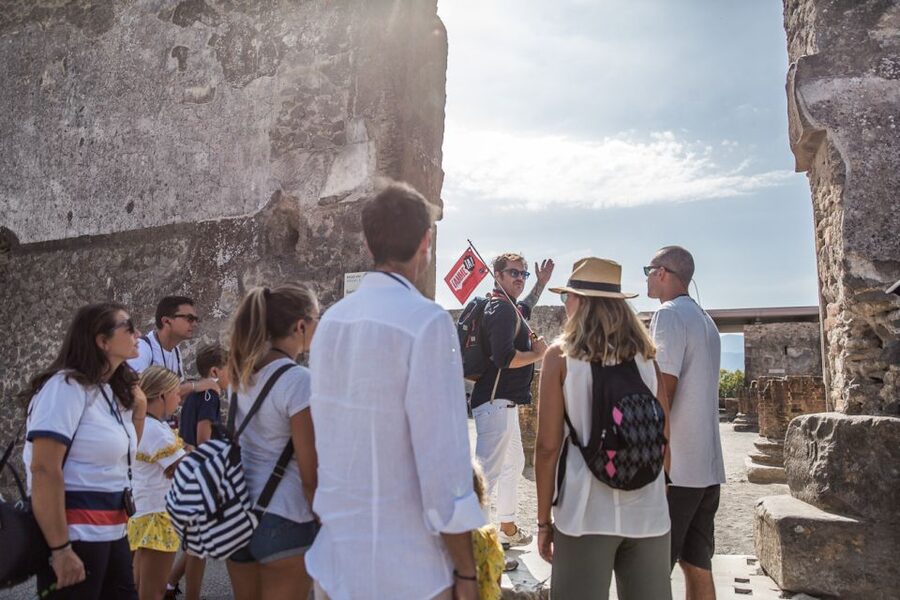
The House of the Faun is one of Pompeii’s great private residences. Its size and decoration reveal the wealth of the Roman elite, and the home gives you a chance to compare private luxury with the more modest shops and streets seen earlier.
The famous Alexander Mosaic is the major draw. Its battle scene shows the level of artistic skill and storytelling available in an elite Roman house. The mosaic is not just decoration. It signals status, taste, education, and money.
The house is also a useful reminder that Pompeii was not socially uniform. Alongside small businesses, workrooms, and compact homes, the city had grand residences with courtyards, mosaics, and carefully planned rooms.
The route includes a visit inside the House of the Faun, but time is limited. If you are fascinated by Roman domestic architecture, plan to return after the guided tour if the site schedule and access allow it. The tour gives you the essential interpretation, while a longer independent visit lets you inspect details at a slower pace.
Macellum, the Lupanare, and the human cost
The Macellum was Pompeii’s food market. This brings the route back to ordinary trade, with a focus on the buying and selling of food in the city. After seeing civic buildings, private villas, bakeries, and food shops, the market helps complete the picture of how Pompeii functioned day by day.
The Lupanare, or ancient brothel, is another famous stop. It is known for its small stone rooms and vivid erotic frescoes. The tour may pass by rather than spend much time inside, since this building can draw long queues.
That is a practical point worth knowing. One guide chose to avoid the line at the brothel so the group could use its time elsewhere. If seeing the Lupanare is a priority for you, ask about the plan at the start of the tour. A short tour must make choices, and waiting at one popular building can reduce the time available for the Forum, baths, villas, or other homes.
The final emotional stop is the plaster casts of victims. These casts preserve the shapes left by people caught in the eruption. They are not simply archaeological objects. They bring the catastrophe back to individual men, women, and children.
This part can be difficult, particularly for children. Your guide will provide historical context, but the casts are powerful without much explanation. Give yourself a moment and do not treat this section as just another photo stop.
Two hours is an introduction, not the whole site
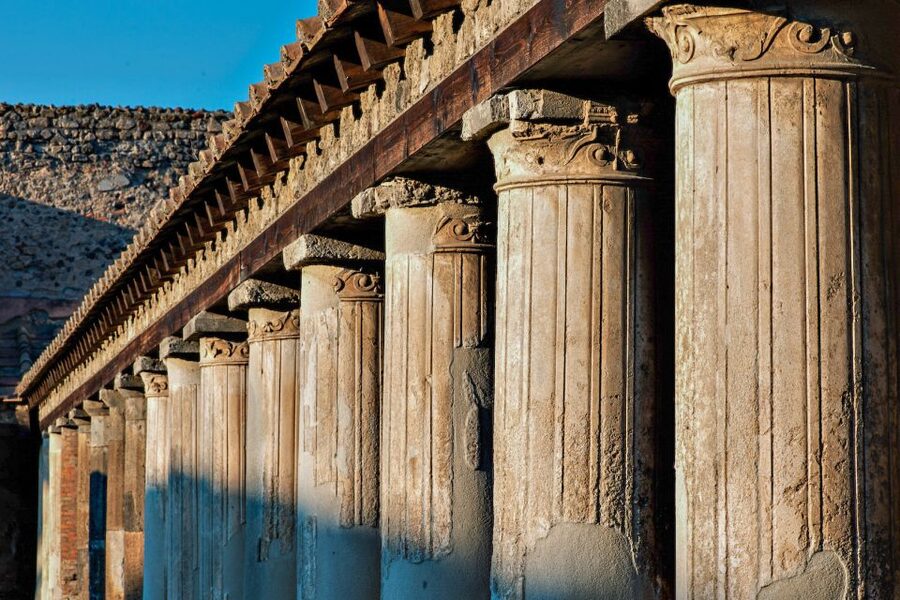
The advertised duration is two to two-and-a-half hours. That is enough to see major landmarks and understand Pompeii’s basic story, but it is not enough to cover the entire archaeological site.
The route is best for you if you want a clear framework before exploring alone. It takes you from the city gate to the Forum, major public buildings, theaters, baths, shops, a bakery, a grand villa, a market, and the casts. You finish with a good sense of how public and private life fit together.
If you have only a short window in Campania, the focused timing is a strength. One family found two hours to be the right amount, and several small groups appreciated seeing key places without getting bogged down in long explanations.
If you have an afternoon available, I would use the guided tour as your orientation and stay longer afterward. Pompeii is easy to underestimate. You might want extra time for additional houses, streets, wall paintings, gardens, or areas not included in the main route.
Price, group size, and practical value
At $43 per person, this tour is priced above a basic entry ticket, but you are paying for the guide and the convenience of priority access. The value is strongest if you would otherwise spend time trying to understand the site on your own or waiting at the entrance.
A guide also helps you avoid wandering without a plan. Pompeii’s size can make independent visits rewarding but inefficient. A good guide uses the limited tour time to connect the Forum, streets, businesses, homes, and public entertainment.
Private and small-group options are available. I would choose a smaller group if the price difference fits your budget, especially if you want to ask questions or need a pace suited to children. A private group can also make it easier to adjust the route, although no tour can guarantee access to every building on a particular day.
For groups of eight or more, headsets help keep the commentary audible. Groups may also be divided into smaller parties under site rules, with each section led by its own licensed guide. The tour may run in English, Spanish, French, or German, and it can be conducted in more than one language depending on the booking.
Transportation to and from Pompeii is not included in the activity details provided here. Although some promotional wording refers to transfers and hydrofoil tickets, you should not assume those are part of this $43 tour. Check the option you select and arrange your own transport unless your confirmation clearly says otherwise.
Heat, access, and meeting details
Pompeii is exposed, and some areas offer little shade. Bring sunscreen, water, and comfortable shoes. An umbrella can also help with shade, particularly in hot weather, though you should use it carefully around other people.
The ground is uneven, and the site is not suitable for wheelchair users. Unaccompanied minors are not allowed. Families can still find the tour rewarding, but young children need to manage a long outdoor walk over rough surfaces.
The meeting point can vary by option. Parking Zeus is listed among the possible starting and finishing locations, while the guide meets you at the archaeological site entrance for the tour itself. Look for clear instructions in your booking details, and allow extra time because one past group found signs for different tour parties less clear than ideal.
Priority access is also not guaranteed in the same way on the first Sunday of each month. On that day, entry depends on the crowds at the Pompeii ruins ticket office. If you are visiting then, keep your expectations flexible.
Free cancellation is available up to 24 hours before the start time, and you can reserve now and pay later. Those terms are useful if your Campania plans are still moving.
Who should book this Pompeii tour?
I would book it if you want Pompeii to make sense rather than simply look impressive. The guide-led format is especially useful for a first visit, families, couples who prefer a planned route, and anyone with only a few hours.
It is also a good choice if you want to see the everyday side of the city. The bakery, thermopolium, baths, and market are as important to the experience as the temples and villas.
I would hesitate if you want a slow, all-day archaeological study or need guaranteed step-free access. You may also prefer an independent visit if the Lupanare, specific houses, or lesser-known streets matter more to you than a balanced overview.
Should you book it?
Book this tour if you want a well-organized introduction with expert interpretation and priority entry. The strongest guides add far more than a list of dates, and the route gives you a useful mix of public monuments, private homes, workplaces, and human stories.
Just treat the two hours as a starting point. Wear sturdy shoes, protect yourself from the sun, confirm the meeting point, and plan extra time if you want to explore beyond the highlights. For most first-time visitors, that combination offers good value at $43 and makes Pompeii easier to read, remember, and appreciate.
FAQ
How long does the Pompeii guided tour last?
The tour lasts approximately two to two-and-a-half hours. Starting times vary, so check availability for the date you want.
What languages are available?
Live guides are available in English, Spanish, French, and German. The tour may be conducted in multiple languages.
Is priority entry included?
Yes. Priority access to the Pompeii Archaeological Site is included, allowing you to skip the standard ticket line. On the first Sunday of each month, priority entry may depend on crowd levels at the Pompeii ruins ticket office.
Where does the tour meet?
The guide meets you at the entrance to the archaeological site, but the exact meeting point may vary by booking option. Pompei Parking Zeus and Parking Zeus are listed as possible starting locations.
Is transportation included?
Transportation to and from Pompeii is not included in the activity details. Check your selected option carefully if you need transfers or hydrofoil tickets.
Are audio headsets provided?
Audio headsets are provided for groups of eight or more. They help you hear the guide clearly when the site is crowded or the group is spread out.
Is the tour suitable for wheelchair users?
No. The experience is not suitable for wheelchair users because Pompeii has uneven archaeological ground and difficult access.
What should I bring?
Bring comfortable shoes and sunscreen. The site is large, exposed, and uneven, so you should also be prepared for a substantial amount of outdoor walking.
Newest reviews from Pompei Campania
- From Sorrento: Pompeii & Vesuvius tour small group★ 4.8 · 4 reviews
- Pompeii Private Tour for Kids and Their Families★ 4.8 · 4 reviews
- From Naples_ Pompeii Tour_Skip the line ticket + audioguide★ 4.3 · 4 reviews
- Pompeii, skip-the-line ticket with smartphone audio guide on App★ 3.0 · 4 reviews
- Pompeii Guided Experience – Tour Service Only★ 4.6 · 4 reviews
- From Naples Port:Pompeii+Vesuvius tour★ 4.3 · 4 reviews
- 2-Hour Pompeii Child-Friendly Tour★ 5.0 · 4 reviews
- Naples: Amalfi Coast, Sorrento and Pompeii Day Trip★ 4.4 · 5 reviews
Skip the Line, compared.

Skip-the-Line Entrance Ticket with Audio Guide
Read our review →



Skip-the-Line Entry Ticket with Digital Guide App
Read our review →
Pompeii Ruins Private Tour with Optional Skip-the-Line Entry
Read our review →
Skip-the-Line Pompeii Guided Tour from Sorrento
Read our review →
Skip the Line Guided Tour of Pompeii led by an Archaeologist
Read our review →Browse the lists this tour appears in