
Reviewed · TICKETS
From Herculaneum to Pompeii: Audioguides + Entrance Tickets
Herculaneum and Pompeii tell two different stories of the eruption of Mount Vesuvius, and this self-guided experience lets you see both in one long archaeological day. You begin at Herculaneum, then make your own way to Pompeii by Circumvesuviana train.
I like the two-site value here: your admission tickets, maps, and audio devices are included, so you can focus on the ruins instead of buying separate entries. I also like the freedom to set your own pace, especially at Herculaneum, where smaller streets and remarkably preserved houses reward slow looking.
The main catch is that this is not a guided tour, and the Pompeii audio desk can be hard to find. The commentary is useful and detailed, but some architecture terms are not explained, and a few directions refer to barriers or landmarks that may have changed during conservation work.
In This Review
- Key points to know before booking
- Why pair Herculaneum and Pompeii?
- Starting at Herculaneum
- Taking the Circumvesuviana to Pompeii
- Exploring Pompeii with an audio guide
- What the self-guided format really means
- Included tickets and the real value at $66.84
- Timing, comfort, and access
- The small problems that can affect your day
- Who should book this experience?
- Should you book both parks with an audioguide?
- FAQ
- What does this experience include?
- Is a live guide included?
- In which languages is the audioguide available?
- Are earphones provided?
- How do I travel from Herculaneum to Pompeii?
- Is the Villa dei Misteri area included?
- Where does the experience start?
- How long does the experience last?
Key points to know before booking
- Two archaeological parks in one day: Start at Herculaneum and continue to Pompeii for a fuller picture of the eruption.
- Independent sightseeing: You explore without a live guide, using an audio device, map, and marked site features.
- Simple rail connection: From Herculaneum, take the Circumvesuviana line toward Sorrento to reach Pompeii.
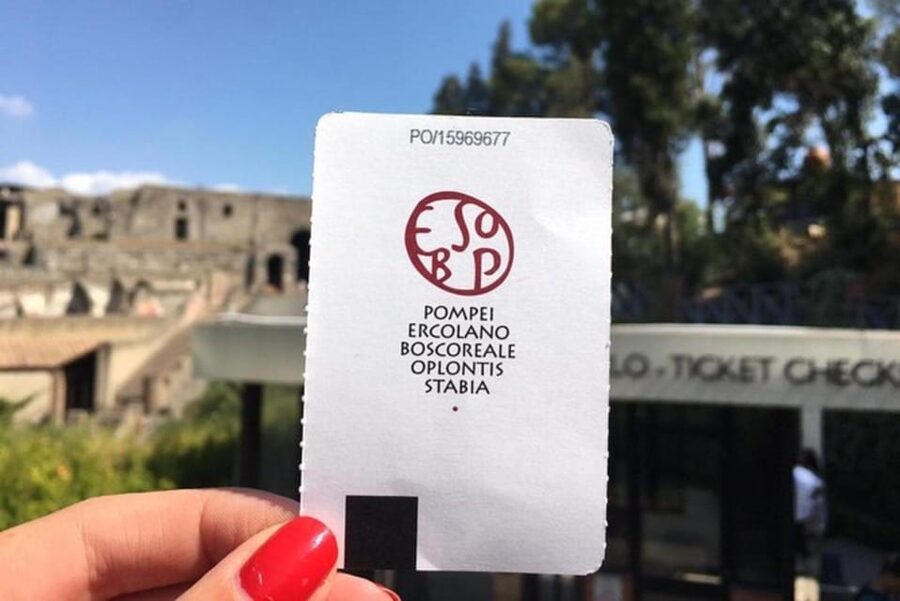
- Tickets are included: Use a separate entrance for the included admission rather than joining the regular ticket line.
- Bring your own earphones: The audio device is included, but earphones are not.
- Allow a full seven hours: This is a substantial day on your feet, with transport between the two sites.
Why pair Herculaneum and Pompeii?
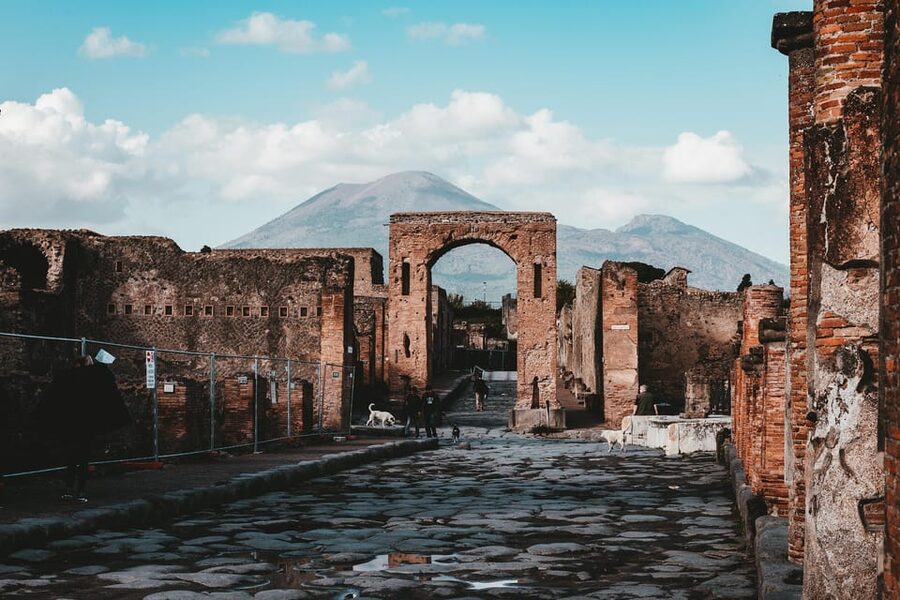
If you have only seen photographs of Pompeii, Herculaneum gives you a useful second view of the same disaster. The two towns were buried by the eruption of Mount Vesuvius, but they feel different in scale and atmosphere.
Pompeii is the larger site, with broad streets, public buildings, shops, houses, and a much greater area to cover. It can feel like an entire Roman town opened up under the sun. Herculaneum is smaller and more compact, making it easier to connect individual buildings with daily life.
That contrast is the strongest reason to book both. Herculaneum helps you understand the details of Roman homes and neighborhood life. Pompeii gives you the wider urban picture. Seeing them together also keeps either site from carrying the whole weight of the day.
This format suits you if you enjoy reading signs, following a map, and choosing your own stops. It is less suitable if you want a guide to explain every building, answer questions, and keep you moving as part of a group.
More Pompeii excavation visits:
- Pompeii: Entry Ticket and Guided Tour with an Archaeologist
★ 4.8 · 19,459 reviews - Pompeii: Small Group Tour with an Archaeologist
★ 4.8 · 12,264 reviews - Pompeii: Skip-the-Line Entrance Ticket with Audio Guide
★ 4.0 · 2,509 reviews
Starting at Herculaneum
Your first task is finding the entrance and looking for the Audioguide Desk. This meeting point is clearly specified, and the process is designed to get you inside without waiting in the standard ticket queue.
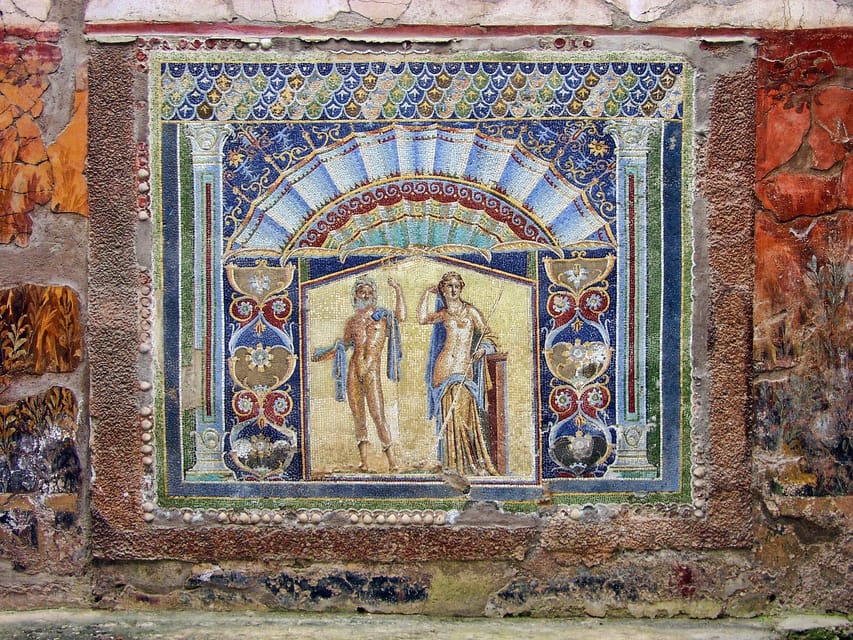
Herculaneum is a good place to begin because it is the smaller of the two parks. You can get oriented without facing the size of Pompeii right away. Use the map before setting off, then listen to the audio commentary as you move between the main remains.
The audio guide covers the important points and gives you a basic route through the site. It is available in English, Italian, French, Spanish, and German. The commentary is described as complete and interesting, but you should expect a formal explanation rather than a lively conversation with a local guide.
A practical warning: some of the terms may be aimed at people who already know Roman architecture. Words such as atrium can appear without a simple explanation. If you are not familiar with ancient house design, keep the map in hand and judge each room by its shape and position as well as by the recording.
Herculaneum rewards careful attention. Look for the way homes, streets, and public spaces fit together. The site is not simply a collection of broken walls. The preserved remains help you picture how people used the buildings, but the audio guide works best when you pause and look around instead of rushing from one numbered point to the next.
Taking the Circumvesuviana to Pompeii
After Herculaneum, you travel independently to Pompeii. The route is straightforward: use the Circumvesuviana railway line in the direction of Sorrento.
This transfer is not a guided part of the experience, and transportation is not listed as an included service. You need to manage the move yourself, so leave enough time to find the station, board the correct train, and continue to the Pompeii entrance. The seven-hour duration includes the overall experience, but the exact amount of time at each park can vary with your pace and the train connection.
The rail link is one of the practical strengths of this plan. You do not need to return to Naples or arrange a private transfer between the sites. Still, this is a day that rewards preparation. Check the starting time when you book, and avoid treating the schedule as if a guide will be waiting to gather you up.
The change of pace can be helpful. Herculaneum is more compact and detail-focused. Pompeii is larger, so arriving with some idea of what you want to see makes the second half more manageable.
Exploring Pompeii with an audio guide
At Pompeii, you use your included entry ticket and collect the second audio guide. The main logistical weakness is that the location of this second audio desk is not as obvious as the first one.
Pompeii is a large archaeological park, so do not assume you will spot the desk immediately after entering. Ask for directions at the entrance if necessary, and allow time to locate it before starting your visit. Losing time here matters because Pompeii can easily absorb the rest of your day.
The audio guide gives you commentary for the site highlights, while the map helps you understand where you are. Since you are visiting without a live guide, you control the order and length of your stops. You can spend extra time in an area that interests you or move on when a building does not hold your attention.
The recordings use site landmarks to guide you, but conservation work can change the appearance of those landmarks. A direction that once referred to a barrier or other feature may no longer match what you see. Use the map and the building numbers as a backup rather than relying on every spoken instruction literally.
Pompeii is where comfortable shoes become essential. The archaeological streets are not presented as a polished modern museum floor, and you will spend hours walking outdoors. Bring water and sun protection as sensible day-trip habits, though the official requirements specifically emphasize comfortable shoes and an identity document.
You can also expect a lot of visual information. The audio guide helps give order to the visit, but you will get more from it if you stop the recording when you want to study a room or street. This is not a race to hear every track. It is a chance to combine spoken context with what remains in front of you.
More Herculaneum excavation visits:
- Pompeii: Small-Group Tour of Pompeii and Herculaneum
★ 4.8 · 867 reviews - Pompeii and Herculaneum: Guided Tour with an Archaeologist
★ 5.0 · 164 reviews - From Naples: Pompeii and Herculaneum VIP Tour with Lunch
★ 4.4 · 129 reviews - Pompeii & Herculaneum: Skip-the-line & Digital Guide App
★ 4.0 · 35 reviews
What the self-guided format really means
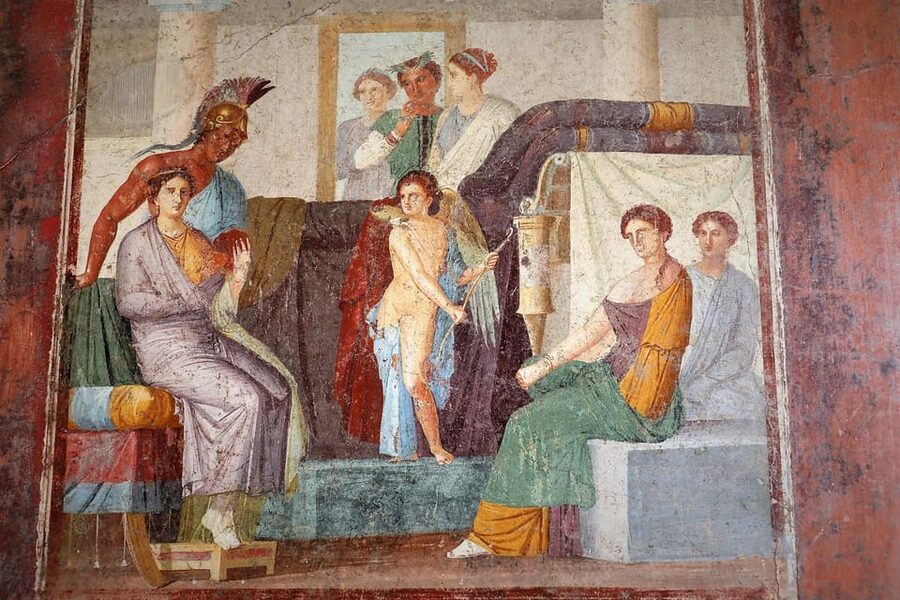
The phrase audioguide can sound close to a guided tour, but the two formats are quite different. Here, you receive a device and commentary, not a person who leads you through both parks.
That distinction is important for families, independent sightseers, and anyone who dislikes fixed group pacing. You can pause, skip, backtrack, or spend time taking in a building without holding up other people. You also avoid following a flag or trying to hear a guide in a noisy open-air setting.
The tradeoff is the lack of personal explanation. If you have a question about a room, inscription, or construction technique, there is no guide included to answer it. The recordings also assume some familiarity with ancient architecture, so you may need to fill in basic terms yourself.
I would choose this setup if you want structure without surrendering control. I would choose a live tour instead if interpretation is the main reason you are visiting.
Included tickets and the real value at $66.84
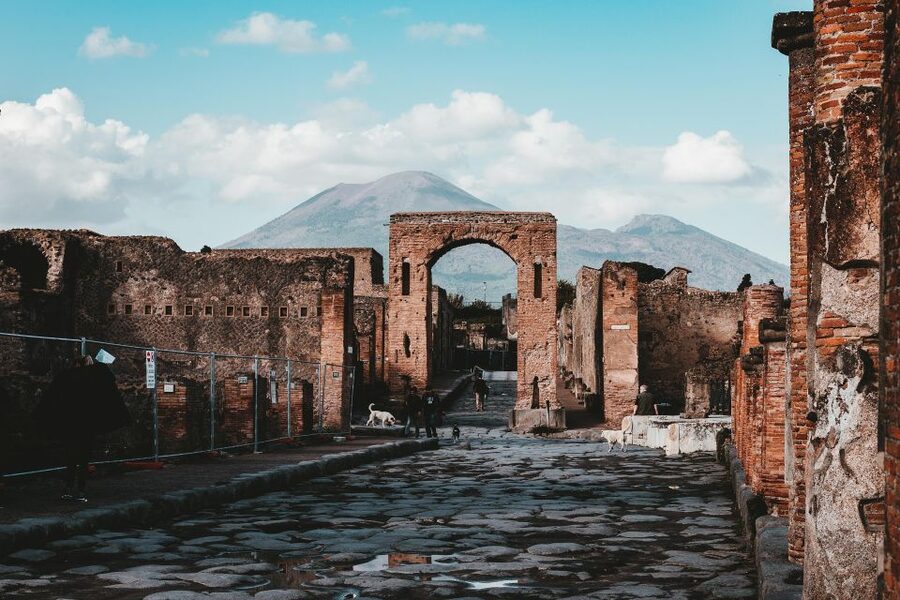
At $66.84 per person, the experience needs to save you more than the cost of two admissions. Its value comes from combining both archaeological parks with audio equipment and maps in one booking.
The included entrance tickets are useful because you do not have to arrange each site separately. A separate entrance for the included ticket is also meant to reduce time at the ticket line. That does not eliminate every delay, especially when you still need to collect the audio device, but it makes the arrival process simpler.
The audio guide adds structure without the expense of a private guide. You also receive commentary in English, Italian, French, Spanish, or German, which makes the package practical for several language groups.
The price is harder to justify if you plan to spend only a short time at one site or if you already have your own detailed guidebook and do not value recorded commentary. It makes more sense when you are committed to seeing both parks on the same day and want the admission arrangements handled together.
The cost also does not include earphones, so bring your own compatible pair. You should not expect a guided tour, a transfer between sites, or access to the Villa dei Misteri area at Pompeii.
Timing, comfort, and access
The stated duration is seven hours, with starting times available according to the date you select. That is long enough for a serious look at both parks, but the day will still feel full because you must also move between them independently.
Wear comfortable shoes from the start. Herculaneum and Pompeii are archaeological sites rather than easy indoor attractions, and the amount of walking can make a bigger difference than the distance between the two parks.
Bring your passport or ID card. It is listed as a required item, so do not leave it at your accommodation.
The activity is wheelchair accessible. Since the experience covers two separate archaeological parks and includes an independent train transfer, you should still consider how your own mobility needs fit with the full day, but the activity itself is identified as accessible.
Free cancellation is available up to 24 hours before the start for a full refund. You can also reserve now and pay later, which helps if your Campania schedule is still shifting.
The small problems that can affect your day
The biggest issue is not the history or the ticket arrangement. It is wayfinding.
At Herculaneum, the audio desk is clearly indicated. At Pompeii, finding the second desk may take extra effort because the site is so large and the pickup location is less obvious. Ask as soon as you enter rather than wandering around and hoping to find it.
The audio commentary has another small limitation. It is detailed, but technical words may be used without an explanation for someone unfamiliar with Roman architecture. If the recording mentions a building feature you do not recognize, look at the map and the structure itself, then continue. You do not need to understand every term to enjoy the site.
Finally, directions can age as conservation work changes the park. A barrier or other landmark mentioned in the commentary might not be where the recording says it is. Treat the spoken route as a guide, not a guarantee, and stay alert to the current signs.
These are manageable flaws, but they matter because this is an independent visit. A live guide would correct confusion immediately. Here, you need to solve small problems yourself.
Who should book this experience?
I would recommend it to an organized independent visitor who wants both archaeological parks in one day. It is especially useful if you prefer an audio guide to reading a guidebook and want entrance tickets arranged ahead of time.
It also suits people traveling in different language groups, since the audio commentary is offered in five languages. The self-guided format gives you space to move at your own speed, which is helpful if one person wants to linger over architecture while another prefers a quicker route.
Families may appreciate the freedom, though seven hours and extensive walking can be demanding. The same is true for anyone with limited energy, even with wheelchair accessibility stated. Consider how much time you want to spend outdoors before committing to both sites.
I would hesitate to book it if you want a historian beside you, a planned transfer, or detailed help with every building. I would also hesitate if Pompeii is your only priority and you do not want to divide your day between two parks.
Should you book both parks with an audioguide?
Book this experience if you want a practical way to see Herculaneum and Pompeii together, value independent exploring, and are willing to manage the train transfer and a little wayfinding. The included tickets, maps, and multilingual audio devices make the $66.84 price reasonable for a full archaeological day.
Skip it if you need a live guide or a completely managed itinerary. Bring earphones, your ID, and good shoes, then ask immediately where to collect the Pompeii audio guide. With those small preparations, you can focus on the real reward: seeing two ancient towns that reveal different sides of life before the eruption.
FAQ
What does this experience include?
It includes entrance tickets to Herculaneum and Pompeii, an audioguide device, and a map.
Is a live guide included?
No. This is an independent visit with recorded audio commentary. A guided tour is not included.
In which languages is the audioguide available?
The audioguide is available in English, Italian, French, Spanish, and German.
Are earphones provided?
No. Earphones are not included, so you should bring your own.
How do I travel from Herculaneum to Pompeii?
You can take the Circumvesuviana train from Herculaneum to Pompeii, using the line in the direction of Sorrento.
Is the Villa dei Misteri area included?
No. Access to the Villa dei Misteri area is not included.
Where does the experience start?
You should go to the archaeological site entrance and look for the Audioguide Desk.
How long does the experience last?
The stated duration is seven hours. Starting times depend on availability for the date you select.
Newest reviews from Pompei Campania
- From Sorrento: Pompeii & Vesuvius tour small group★ 4.8 · 4 reviews
- Pompeii Private Tour for Kids and Their Families★ 4.8 · 4 reviews
- From Naples_ Pompeii Tour_Skip the line ticket + audioguide★ 4.3 · 4 reviews
- Pompeii, skip-the-line ticket with smartphone audio guide on App★ 3.0 · 4 reviews
- Pompeii Guided Experience – Tour Service Only★ 4.6 · 4 reviews
- From Naples Port:Pompeii+Vesuvius tour★ 4.3 · 4 reviews
- 2-Hour Pompeii Child-Friendly Tour★ 5.0 · 4 reviews
- Naples: Amalfi Coast, Sorrento and Pompeii Day Trip★ 4.4 · 5 reviews
Tickets, compared.

Entry Ticket and Guided Tour with an Archaeologist
Read our review →

Skip-the-Line Entrance Ticket with Audio Guide
Read our review →
Archaeological Park Tour with Ticket on request
Read our review →


Skip-the-Line Entry Ticket with Digital Guide App
Read our review →
Pompeii Ticket + Tour with Optional Tasting Experience at Pompeii
Read our review →Browse the lists this tour appears in