
Reviewed · ARCHAEOLOGIST-LED TOURS
Pompeii with an archaeologist, small group!!!
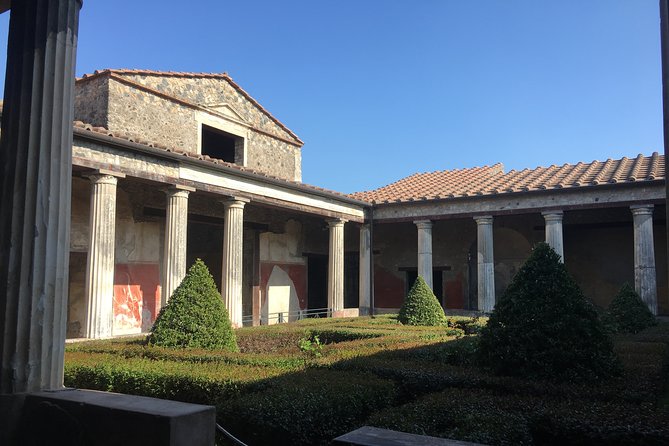
Pompeii is most powerful when you stop seeing it as a field of ruins and start reading it as a Roman town. This two-hour walk brings you through homes, shops, baths, theater spaces, and the lupanary, with an archaeologist explaining how ordinary people lived before Vesuvius buried the city in 79 AD.
I like the 12-person limit, which should make it easier to hear and ask questions. I also like the afternoon timing, since it is designed to reduce heat and crowds while giving photographers softer light. The tradeoff is simple: two hours can introduce Pompeii well, but it cannot cover every corner of a 66-hectare site.
In This Review
- Key points at a glance
- Why the afternoon changes your Pompeii visit
- Meeting at Piazza Esedra in Pompei
- Entering a Roman city buried in 79 AD
- Roman houses and painted decoration
- Shops, baths, and the practical side of Roman life
- Theater and lupanary
- Plaster casts and the human cost of the eruption
- What the archaeologist adds in two hours
- Is $66.09 a fair price?
- Who will enjoy this Pompeii tour most?
- Practical details before you book
- Should you book it?
- FAQ
- How much does the Pompeii archaeologist tour cost?
- How long does the experience last?
- What language is the tour offered in?
- How many people can join the group?
- Where does the tour start and finish?
- Is lunch included?
- Can I cancel for a full refund?
Key points at a glance
- Afternoon Pompeii visit: The timing is planned to reduce exposure to the strongest heat and busiest periods.
- Archaeologist-led tour: Expect interpretation focused on Roman buildings, daily habits, and the meaning of the ruins.
- Small group of 12 or fewer: A more manageable size for listening, questions, and keeping together.
- Major Pompeii sights: The route includes houses, decorations, shops, thermal baths, the theater, lupanary, and plaster casts.
- Two-hour format: A useful introduction, though not a complete tour of the enormous archaeological area.
- Pompeii Express ticket included: Your admission is part of the $66.09 per-person price.
Why the afternoon changes your Pompeii visit
Pompeii is an open-air archaeological site, so the time of day matters. The afternoon schedule is designed to avoid the worst heat and the thickest crowds, while late-day light can bring out the texture of walls, columns, painted decoration, and streets.
That does not mean the site will be cool or quiet. Pompeii covers about 66 hectares, much of it exposed to the sun, and conditions can change. Still, an afternoon start is a sensible choice if you prefer a less punishing visit than a midday walk.
The light also matters if you enjoy photography. The ruins are not only about grand monuments. Small details can make the strongest images: a worn threshold, a painted wall, a shop counter, or the sharp outline of a doorway. The final part of the day can give these features more shape than flat overhead sun.
You should still wear practical shoes and bring water. Those are general site precautions rather than special requirements for this tour, but they matter in a large ancient city where the route involves extended walking.
More Pompeii excavation visits:
- Pompeii: Entry Ticket and Guided Tour with an Archaeologist
★ 4.8 · 19,459 reviews - Pompeii: Entry Ticket with Optional Audio Guide
★ 4.2 · 12,360 reviews - Pompeii: Small Group Tour with an Archaeologist
★ 4.8 · 12,264 reviews
Meeting at Piazza Esedra in Pompei
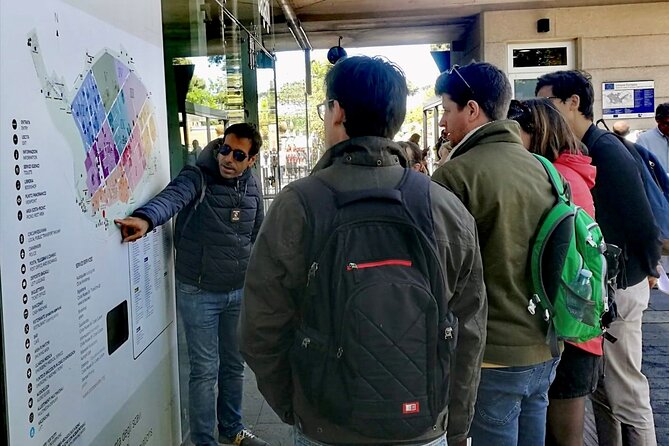
The meeting point is Ristorante Suisse at Piazza Esedra, 10/13, in Pompei. The activity begins and ends at this same meeting point, which keeps the arrangement straightforward.
The details describe the location as near public transportation. That is useful if you are reaching Pompeii without a car, though you should allow time to find the restaurant and identify the tour staff before the scheduled start.
A meeting point at a restaurant can be easier to recognize than an indistinct street corner, but do not treat it as a place to linger over lunch during the tour. Lunch is not included, and the experience lasts about two hours. Plan your meal before or after the visit rather than expecting a food stop as part of the route.
The mobile ticket is another small convenience. Keep it ready on your phone, along with your booking confirmation. Since confirmation is issued within 48 hours and depends on availability, check that your reservation has been confirmed before setting out.
Entering a Roman city buried in 79 AD
The first useful shift in perspective is scale. Pompeii was not simply a villa or a collection of isolated temples. It was a Roman city with homes, businesses, public bathing facilities, entertainment spaces, and the practical signs of everyday life.
An archaeologist can help connect those pieces. Without guidance, it is easy to look at a wall and see only stone. With explanation, the same wall may suggest how a house was arranged, how decoration signaled status, or how a shop fitted into the daily rhythm of the street.
The tour is built around the city as a place where people lived. That focus is valuable because Pompeii can otherwise become a parade of famous names and dramatic images. The eruption is central, but the visit is also about cooking, shopping, washing, socializing, worship, and entertainment.
You will not simply be pointed toward the largest monument and sent onward. The listed route includes a mixture of private, commercial, and public spaces. That variety should help you understand how the different parts of Roman life worked together.
Roman houses and painted decoration
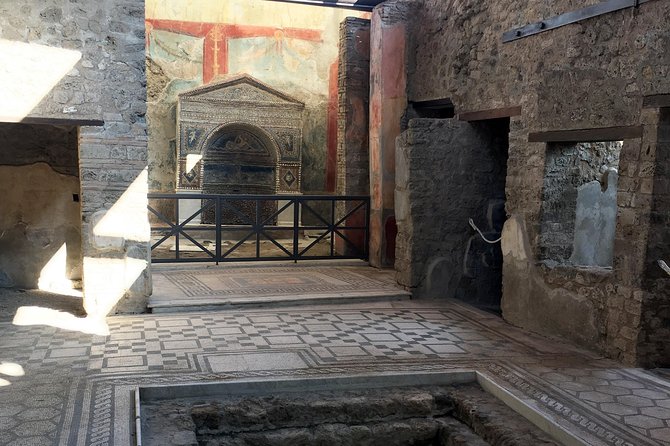
The typical house is one of the main reasons to take this tour with an archaeologist. Pompeian homes can look confusing at first, especially when rooms open onto one another and only fragments of decoration remain.
Your guide can explain what you are seeing and why the layout matters. The focus includes house decoration, so you should expect attention to painted surfaces and other visual details rather than a quick look at bare walls.
The appeal is not just artistic. A home can reveal how Romans organized private space, received people, displayed wealth, and separated household areas. Even when a building is incomplete, its plan and decoration can offer clues about the people who used it.
A two-hour visit will not allow an equally detailed study of every house. The value lies in learning how to read the houses you do see. Once you understand the pattern, you may notice similar ideas elsewhere in Pompeii, even beyond the guided route.
More tours led by an archaeologist:
- Pompeii Small Group Tour with an Archaeologist
★ 5.0 · 6,593 reviews - Pompeii and Herculaneum Small Group Tour with an Archaeologist
★ 5.0 · 1,350 reviews - Skip the Line Guided Tour of Pompeii led by an Archaeologist
★ 5.0 · 703 reviews - Pompeii: Exclusive Tour with Archaeologist and Entry Tickets
★ 4.9 · 634 reviews
Shops, baths, and the practical side of Roman life
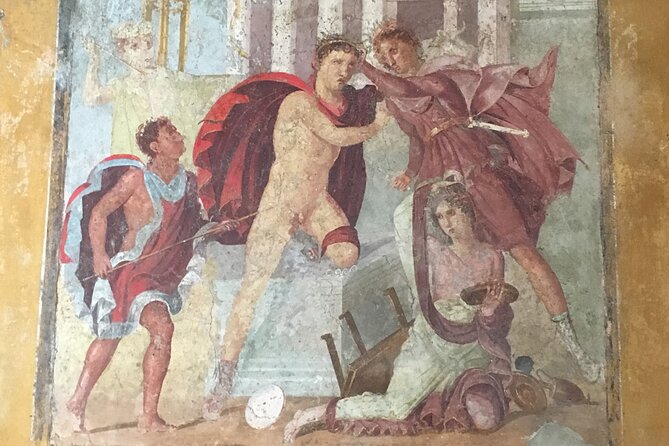
The shops and thermal baths are especially useful for visitors who want more than a list of rulers and dates. These places bring the ancient city down to street level.
A shop suggests movement, trade, and the practical business of feeding and supplying a city. The baths point to a daily custom that combined washing, exercise, conversation, and public life. The guide’s task is to explain these spaces as functioning parts of the town, not just old structures.
This is one of the tour’s strongest features. Pompeii is famous because disaster preserved so much, but its real interest comes from the ordinary details that survived. Shops and baths can make the city feel more understandable than a grand monument alone.
The exact order of the stops can vary, and the supplied details do not promise a fixed room-by-room route. Think of the itinerary as a visit to the main types of Pompeian buildings rather than a guarantee that every named structure will receive equal time.
Theater and lupanary
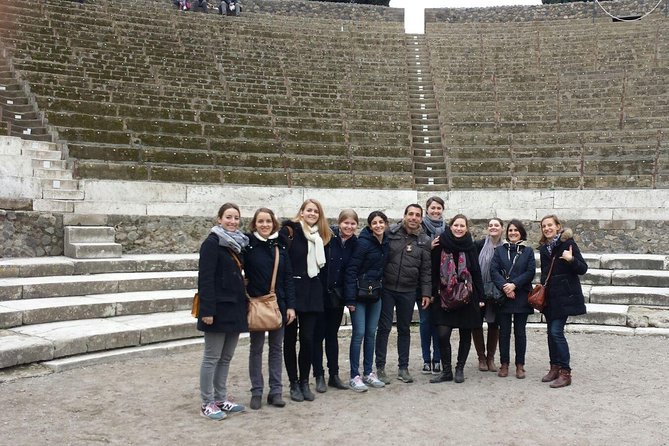
The theater adds a public entertainment setting to the visit. It helps show that Roman life included organized performances and shared civic spaces, not only household routines and commercial activity.
The lupanary, traditionally identified as a brothel, offers a less polished but important part of the city’s social history. Its inclusion makes the tour more candid about the range of businesses and habits present in Pompeii.
Some families may want to prepare younger children for this stop. The tour is recommended for families, but the lupanary is an adult subject and may prompt questions. That is not a reason to skip it, though it is worth knowing in advance so you can decide how to discuss it.
Here again, an archaeologist adds value. A label or sign can name a building, but a guide can place it within the wider life of the city. You get a clearer sense of how public entertainment, commerce, private homes, and social customs occupied the same urban space.
Plaster casts and the human cost of the eruption
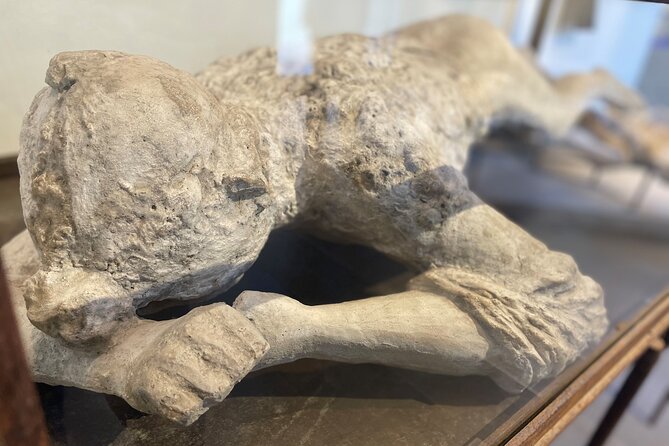
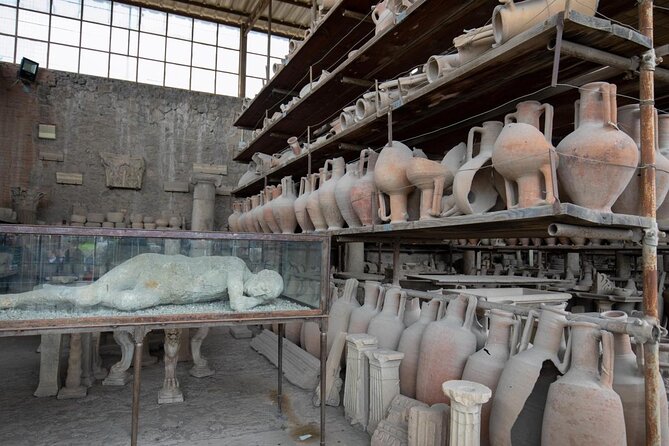
The moving molds, more commonly understood as plaster casts of victims, are among Pompeii’s most affecting features. They make the eruption personal in a way that walls and streets cannot.
This part of the visit can be emotionally difficult. The casts are not simply dramatic objects for photographs. They represent people caught in a sudden disaster, and the guide’s explanation can help you understand both their archaeological importance and their human weight.
The experience includes these casts among the important sights, but the available details do not specify how many you will see or where each one is located. Conditions at an archaeological site can also affect which areas are open.
For photography enthusiasts, these are powerful subjects, but use restraint. The afternoon light may be attractive, yet this is also a place for quiet attention. The best photograph is not always the one that brings you closest.
What the archaeologist adds in two hours
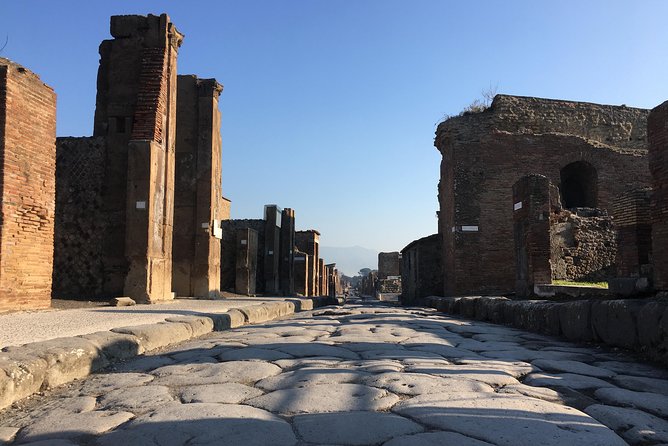
The difference between wandering and taking a guided tour is often less about the number of buildings and more about the quality of your attention. Pompeii gives you a large amount of information at once. An archaeologist can sort it into a story you can follow.
The guide’s role here covers architecture, decoration, daily life, and Roman habits. That combination is important. A purely architectural walk might explain walls and rooms but leave out how people used them. A purely historical talk might give dates without helping you read the site in front of you.
Luca is specifically identified as a guide associated with this experience. If Luca leads your group, you can expect an English-language archaeological visit, while the available feedback describes him as both competent and friendly. Guide assignments can change, so do not assume Luca will lead every departure.
The small group helps the format work. With a maximum of 12 people, you should have a better chance of staying near the guide and hearing explanations than in a large coach group. It is not a private tour, and there may still be other groups nearby, but 12 is a practical limit for narrow streets and stops around buildings.
Is $66.09 a fair price?
At $66.09 per person, this is not the cheapest way to enter Pompeii. You are paying for more than admission, though. The price includes the Pompeii Express entrance ticket, an archaeologist-led tour, and a group capped at 12 people.
That can be fair value if you want context and prefer not to plan a route through a huge site yourself. The guide may help you spend your limited time on major buildings and explain details that would be easy to miss alone.
The value is less certain if you already have strong archaeological knowledge, want to explore independently, or plan to spend most of a day at Pompeii. Two hours gives you a useful framework, but you may want additional time afterward for your own wandering. The tour ends back at the meeting point, so you can continue with your plans if local conditions and access allow, though no extra site time is promised as part of the activity.
Lunch is not included. That is easy to handle, but include the cost of a meal when comparing the full day’s budget.
Who will enjoy this Pompeii tour most?
I would choose this experience if you want a clear introduction to Pompeii without joining a large group. It fits families who appreciate explanation, people with a strong interest in archaeology, and photographers who prefer afternoon light.
It also suits anyone who feels overwhelmed by the site’s size. Two hours will not show everything, but it can give you a useful map in your head: homes for private life, shops for commerce, baths for public routine, theaters for entertainment, and the casts for the disaster’s human cost.
You may want something else if you need a full-day archaeological study, a private guide, or a tour in a language other than English. The experience is offered in English, and the information provided does not list other language options.
The pace may also feel quick if you want to linger over every painting or take many photographs. You can take pictures, but a guided group has to keep moving. Tell yourself that this is an introduction, not a complete survey of Pompeii.
Practical details before you book
The tour lasts approximately two hours and accepts no more than 12 people. That is long enough for a focused introduction, but Pompeii’s size means you should not expect to see every important building.
The mobile ticket is included with the Pompeii Express entrance. You should have your phone charged and ready, since the ticket is part of your access arrangement.
Most people can participate, and service animals are allowed. The activity is near public transportation, which makes the central meeting point easier to reach without private transport.
Free cancellation is available if you cancel at least 24 hours before the local start time. Changes or cancellations inside that window are not accepted for a refund. The experience also depends on good weather and a minimum number of participants. If poor weather or low enrollment cancels the tour, you are offered another date or experience, or a full refund.
Should you book it?
Book this Pompeii tour if you want the site’s major themes explained by an archaeologist, prefer a group of 12 or fewer, and like the idea of visiting in the afternoon. The inclusion of houses, shops, baths, theater, lupanary, and plaster casts gives you a broad introduction rather than a narrow monument tour.
At $66.09, the strongest value comes from the guide and the smaller group, not simply the entrance ticket. Choose it for structure and context. Skip it if you want a long independent visit or need more than two hours. For a first look at Pompeii, especially with children or a camera in hand, it is a sensible and focused choice.
FAQ
How much does the Pompeii archaeologist tour cost?
The price is $66.09 per person. The Pompeii Express entrance ticket and the archaeologist-led tour are included.
How long does the experience last?
The tour lasts approximately two hours.
What language is the tour offered in?
The experience is offered in English.
How many people can join the group?
The group has a maximum of 12 participants.
Where does the tour start and finish?
It starts at Ristorante Suisse, Piazza Esedra, 10/13, 80045 Pompei, Italy. The activity ends back at the same meeting point.
Is lunch included?
No. Lunch is not included in the experience.
Can I cancel for a full refund?
Yes, if you cancel at least 24 hours before the experience start time. Cancellations or changes made less than 24 hours before the start are not refunded. If poor weather or an insufficient number of participants cancels the tour, you are offered another date or experience, or a full refund.
Newest reviews from Pompeii Ruins
- Private Tour Pompeii and Winery★ 5.0 · 4 reviews
- Visit the Pompeii ruins from Salerno with Pizza Lunch★ 5.0 · 4 reviews
- Pompeii Private Tour for Kids and Their Families★ 4.8 · 4 reviews
- From Sorrento: Pompeii & Vesuvius tour small group★ 4.8 · 4 reviews
- Pompeii Sorrento and Positano Tour★ 5.0 · 4 reviews
- From Naples_ Pompeii Tour_Skip the line ticket + audioguide★ 4.3 · 4 reviews
- Pompeii Private Half-Day Tour from: Naples,Sorrento, Amalfi Coast★ 5.0 · 4 reviews
- Pompeii, skip-the-line ticket with smartphone audio guide on App★ 3.0 · 4 reviews
Archaeologist-Led Tours, compared.

Entry Ticket and Guided Tour with an Archaeologist
Read our review →
Pompeii Small Group Tour with an Archaeologist
Read our review →
Pompeii and Herculaneum Small Group Tour with an Archaeologist
Read our review →
Skip the Line Guided Tour of Pompeii led by an Archaeologist
Read our review →
Exclusive Tour with Archaeologist and Entry Tickets
Read our review →
Pompeii Private Tour with an Archaeologist and Skip The Line – 3 hours
Read our review →
Pompeii Skip-the-line Tour with Archaeologist Guide
Read our review →Browse the lists this tour appears in