
Reviewed · ARCHAEOLOGIST-LED TOURS
Pompeii, Herculaneum and Winery on Vesuvius with an Archaeologist
Pompeii and Herculaneum are not interchangeable ruins. Pompeii gives you a whole Roman city, while Herculaneum offers a smaller, more intimate look at seaside villas, wooden furniture, shops, and the shoreline where the eruption ended. Add a Vesuvius winery lunch, and this long day has a welcome change of pace.
I like the private format, which lets Fabrizio adjust the route, avoid some crowds, and match the pace to your group. I also like having an archaeologist guide who can explain small details, from Roman shops and fountains to the odd ancient wine advertisement, rather than simply pointing out famous buildings.
The main caution is stamina. This is an eight to nine-hour day with two large archaeological sites, uneven ancient paving, heat, and little time to waste. Admission and lunch are extra, so the advertised group price is not the final cost.
In This Review
- Key points to know before booking
- Why this private day trip works
- Starting at Herculaneum when the crowds are lighter
- Herculaneum’s villas, shops, and baths
- Lunch and wine at Cantina del Vesuvio
- Pompeii from Porta Marina to the Forum
- Pompeii’s houses, theatre, and fresh discoveries
- Pace, heat, and family comfort
- What the price really includes
- Who should book this experience
- FAQ
- Where does the tour pick me up?
- How long does the experience last?
- How many people can join the private tour?
- Is an archaeologist included?
- Are entrance tickets included?
- Is lunch included in the tour price?
- What food is served at the winery?
- Does the tour go to the top of Mount Vesuvius?
- Is the tour suitable for children?
- Can I cancel for a full refund?
- Should you book it?
Key points to know before booking
- Two very different Roman cities: Pompeii is broad and urban, while Herculaneum is more compact and unusually well preserved.
- An archaeologist leads the visits: Fabrizio Belleni has 27 years of guiding experience in Pompeii and explains the sites in clear English.
- The winery stop breaks up the ruins: Cantina del Vesuvio offers a vineyard walk, lunch, five wines, and views toward the Bay of Naples and Vesuvius.
- The route can change: Fabrizio may switch the order of the sites to reduce crowd exposure and can trim or expand stops to suit your group.
- Good for families: A family-friendly upgrade is available, and Fabrizio is used to keeping children involved.
- Budget for extras: Expect about €40 per adult for both archaeological sites and about €50 per person for the winery meal and tasting.
Why this private day trip works
The great strength of this experience is its combination of depth and flexibility. Pompeii and Herculaneum can be confusing without context. Streets, walls, broken columns, and half-seen rooms may look impressive, but you need someone to explain how they fit together.
Fabrizio brings an archaeology background and 27 years of experience in Pompeii. That matters here. He can connect a forum to Roman government, a bath complex to daily routine, and a painted room to the social ambitions of its owner. He also explains what you are seeing along the road, including the towns, plants, and slopes around Vesuvius.
You travel in a private, air-conditioned vehicle with water and Wi-Fi. Pickup is available anywhere in Naples or the Sorrento area. Pickup from the Amalfi Coast may be possible, but you should contact the provider before booking rather than assume it is included in the standard arrangement.
The group limit is seven people. For a family or a small group of friends, that is a useful size: large enough to share the cost, small enough to ask questions and change plans. The price is listed at $861.07 per group, not per person. Split seven ways, the transport and guiding portion becomes reasonable, but remember to add entrance fees and lunch.
More Wine Tastings in Herculaneum
- Pompeii-Herculaneum-Wine tour from Sorrento, with licensed guide included
★ 5.0 · 12 reviews - Private Pompeii and Herculaneum with Wine Tasting – Full Tickets
★ 5.0 · 8 reviews - Pompeii and Herculaneum with Wine Tour
★ 5.0 · 8 reviews
Starting at Herculaneum when the crowds are lighter
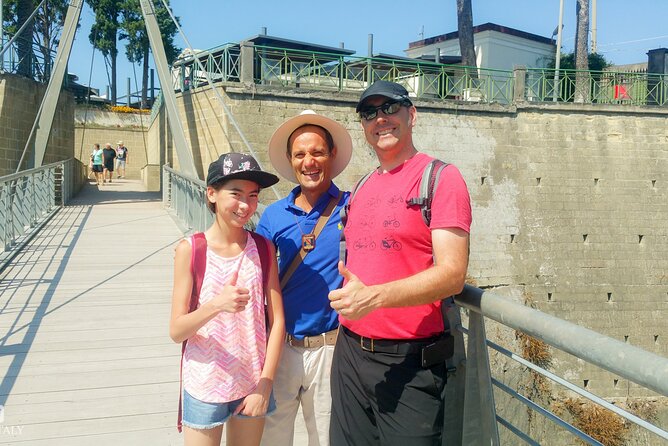
The order is flexible, and that is more than a minor convenience. Fabrizio may suggest beginning at Herculaneum, particularly when a morning visit can give you a quieter introduction to the ruins, then continuing to Pompeii after lunch.
Herculaneum is smaller than Pompeii, but it rewards careful attention. The Roman town was buried by volcanic material that preserved organic objects unusually well. You may see carbonized wood, furniture, textiles, storage containers, and other details that rarely survive at ancient sites.
The Antiquarium di Ercolano helps set the scene. Its displays include delicate objects, statues, frescoes, and the Herculaneum Treasure, along with items connected to the people caught by the eruption. It is a compact museum, but it adds human weight to the streets outside.
Near the old shoreline, the Boat Pavilion displays the carbonized keel of a boat about nine meters long. Fishing weights, nets, and rope help you picture the town’s connection to the sea. The exhibit is brief, but it is one of the most direct reminders that Herculaneum was a working seaside community, not just a collection of wealthy homes.
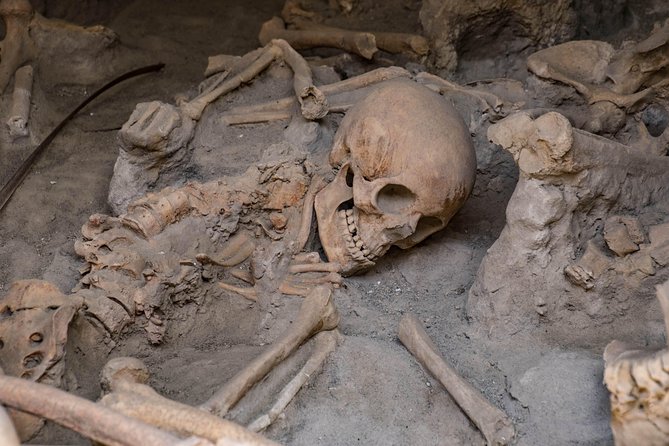
At the Ancient Beach, you walk several meters below today’s ground level on volcanic sand. The arches of the boat sheds, called fornici, are especially sobering because skeletal remains of more than 300 residents were found there. The area reopened after restoration in 2024, giving you a closer view of the shoreline and the force of the eruption.
Herculaneum’s villas, shops, and baths
The House of the Stags shows how prosperous residents enjoyed the town. Its broad garden and sea-facing terrace were designed for comfort and views across the Gulf of Naples. Two marble statues of stags attacked by hounds give the house its name and remain among the site’s best-known works.
The House of Neptune and Amphitrite is smaller in footprint but unforgettable for its glass-paste mosaic of the sea gods. Blue and gold pieces catch the eye, while the adjoining summer dining area uses shells and lava stone in its decoration.
Next door, an ancient shop gives you a practical glimpse of shopping and storage. Wooden shelves and carbonized bins survive, helping you picture a merchant handling grain, legumes, and other foodstuffs. This is the sort of stop that makes Roman life feel ordinary and close.
The Women’s Baths are another rewarding section. A black-and-white mosaic of Triton and dolphins decorates the changing room, while the warm and hot rooms show how Roman heating worked through hollow walls. Original wooden shelves and vaulted ceilings add detail that a guidebook photograph cannot fully convey.
At the Palestra, the scale changes again. The large complex includes a cross-shaped swimming pool and a fountain shaped like a five-headed hydra. It was a place for physical training and civic activity, and the open court makes it easier to grasp the size of the community.
Before leaving, look for the small Ad Cucumas wine advertisement. It is an amusing reminder that ancient shopkeepers used signs much as modern businesses do. Amid grand villas and tragic displays, this little detail brings the city back to everyday commerce.
Because Pompeii and Herculaneum overlap in some subjects, a good guide prevents repetition. Fabrizio can focus on what each site does best: Herculaneum’s preserved interiors and organic remains, Pompeii’s size, public spaces, and broader street plan.
Lunch and wine at Cantina del Vesuvio
The winery stop is placed inside Vesuvius National Park, but this is not a climb to the crater. The tour does not reach the top of Mount Vesuvius. Instead, you visit Cantina del Vesuvio, a family winery associated with the Russo family since 1930.
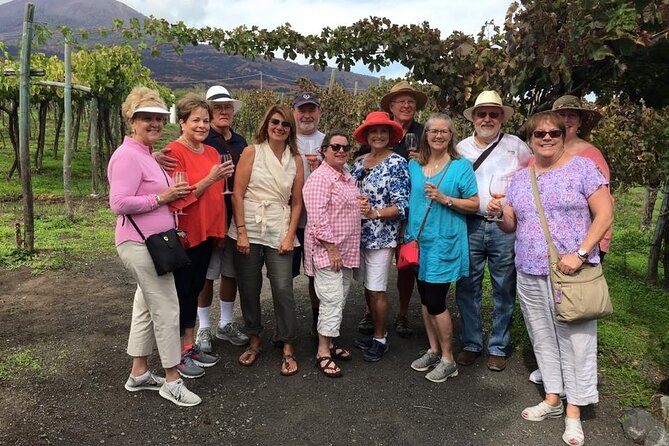
The visit begins with a guided 15-minute walk through the vineyards. You learn about the local vines and Lacryma Christi wines while looking across the Bay and toward the volcano’s crater. After several hours on ancient stone streets, the setting offers a slower hour and a half.
The meal includes bruschetta, provolone, olives, salami, capocollo, grilled vegetables, and beans. The main course is spaghetti with Vesuvius cherry tomatoes, including the local pomodorini del piennolo, followed by Neapolitan pastiera made with wheat, ricotta, eggs, and sugar.
The standard package includes five local wines and costs about €50 per person. A superior wine option is about €60. Vegetarian and gluten-free choices are available. Fabrizio handles the reservation, and you pay at the winery by card or cash.
I would treat the winery as part of the value, not an incidental stop. It adds food, scenery, and local produce to a history-heavy day. Still, expectations should be sensible: the meal is a set menu, so diners seeking a long, refined tasting may find it simple. Its appeal is the combination of generous food, wine, family-run atmosphere, and the Vesuvius setting.
You can arrange shipment of wine and olive oil home, which may be useful if you enjoy the tasting. Just remember that the wine experience is not included in the main tour price.
More Wine Tastings in Pompeii
- Naples: Pompeii and Mt. Vesuvius with Lunch and Wine Tasting
★ 4.5 · 2,454 reviews - Pompeii Tour & Lunch with Wine Tasting Experience
★ 5.0 · 383 reviews - Pompeii Vineyard Escape: Private Wine Tasting & Lunch
★ 5.0 · 329 reviews - Pompeii: Archeological Tour & Wine Tasting at Mt. Vesuvius
★ 4.6 · 142 reviews
Pompeii from Porta Marina to the Forum
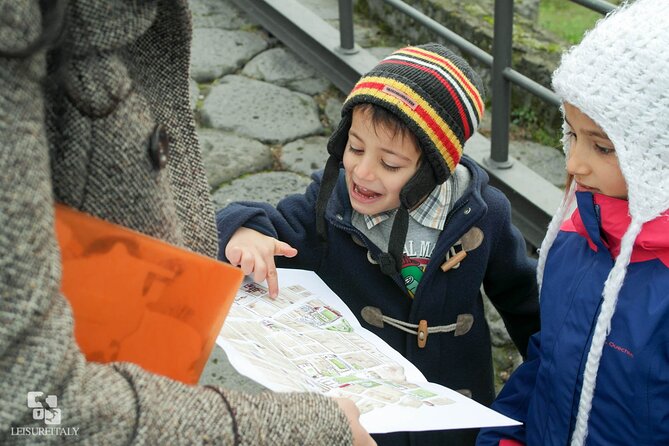
Pompeii is vast enough to overwhelm you. Entering at Piazza Porta Marina gives the day a logical beginning. The modern plaza leads toward the ancient Porta Marina, a two-arched gate built into the city wall.
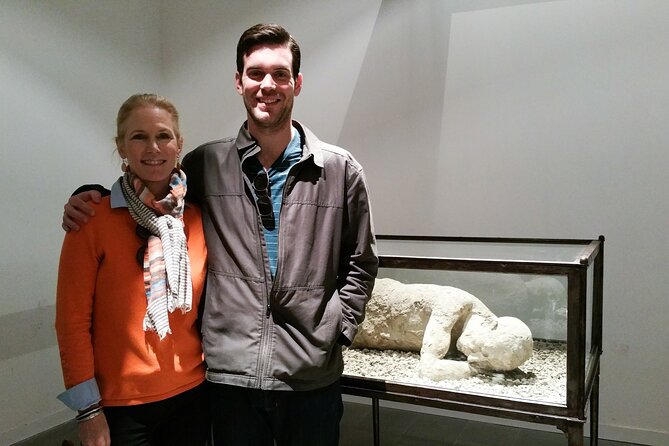
Nearby, the Antiquarium displays plaster casts and other finds. Seeing these before walking through the city can help you understand that Pompeii was not simply abandoned. The casts preserve the final positions of people and animals, including a guard dog, and add a human scale to the streets.
From here, Via Marina leads toward the Forum. The route is practical, but it also creates a strong transition from the present town into the ancient city. You move along original stone surfaces toward the civic center, with Vesuvius visible beyond the ruins.
The Temple of Apollo is one of the oldest sacred places in Pompeii. Its history reaches from Greek influence into the Roman period. Bronze replicas of Apollo and Diana help visitors identify the temple’s religious role, while an original sundial column adds a small but useful detail about timekeeping.
The Forum of Pompeii is the main civic stage. The Temple of Jupiter, Basilica, Macellum market, and official weighing table show how religion, government, law, and trade met in one broad public space. Fabrizio can help you read the Forum as a functioning city center rather than a field of disconnected stones.
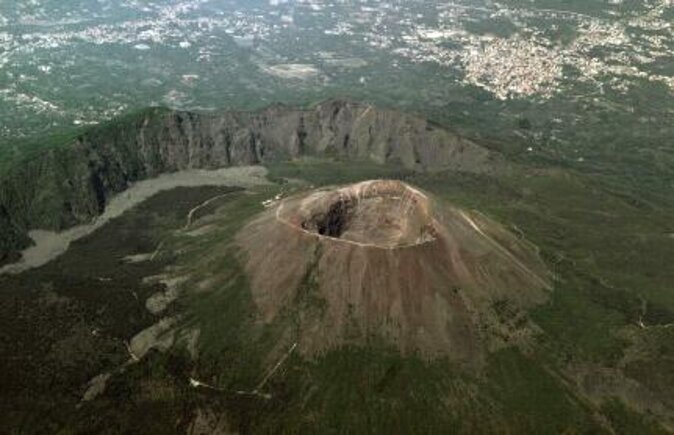
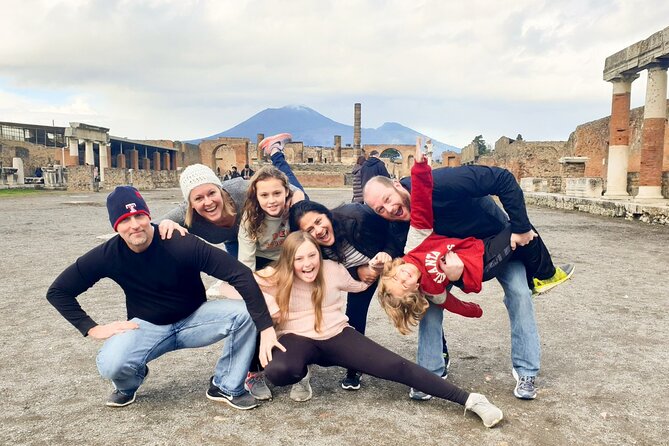
The Forum is also one of the best places for the view of Vesuvius. The mountain is not background decoration here. It is the force that explains why so much of the city survived.
Pompeii’s houses, theatre, and fresh discoveries
The House of the Vettii is a major reason to take your time in Pompeii. Once owned by two wealthy former slaves, the house shows how money could change a person’s place in Roman society.
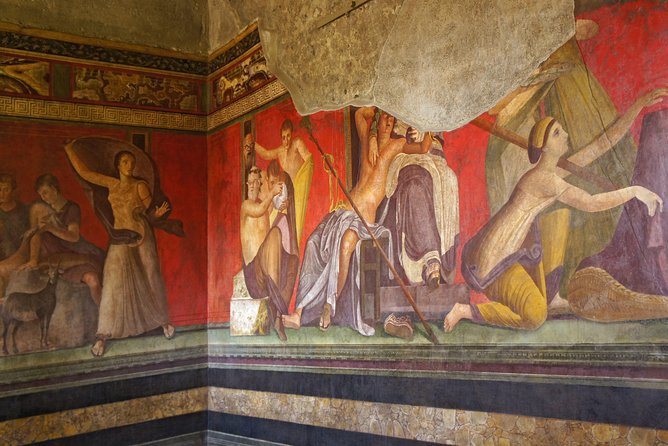
Its Fourth Style frescoes remain unusually vivid. The famous Room of the Cupids includes scenes of small figures at work, while mythological paintings fill the reception rooms. The entrance painting of Priapus is impossible to miss, and the central garden, fountain statues, and plantings help you picture a home designed to impress.
The Insula of the Chaste Lovers offers a different kind of experience. Raised walkways let you look down over a full city block, including houses and a bakery, while archaeologists continue work below. A fresco showing a couple kissing gives the house its name, and charcoal drawings of gladiators, made by children, are a charming link to the young residents of Pompeii.
Because excavation continues, access can change. The stop is especially appealing if you like seeing archaeology as active work rather than a finished display. It may also be a good choice for children, who often respond better to drawings and visible excavation than to long explanations about architecture.
The Teatro Grande dates from the second century BC and held about 5,000 people. Its horseshoe shape and tiered seating show the social order of the audience, with better seats for the elite. The theatre’s acoustics remain impressive, and its setting near the hills and Vesuvius gives it a memorable finish.
The itinerary names many stops, but the actual route is not a promise that every room will be open. Archaeological parks sometimes close areas for work or preservation. The advantage of a private guide is that Fabrizio can shift attention to other important parts of the site instead of letting a closed doorway ruin the visit.
Pace, heat, and family comfort
This is a moderate-fitness experience, not a gentle sightseeing drive. Pompeii has uneven paving, open areas, and long walking stretches. Herculaneum is smaller, but it also requires walking over ancient surfaces and through changing levels.
Summer heat can make the schedule feel full. Start with comfortable shoes, sun protection, and water, even though water is provided in the vehicle. Fabrizio has been praised for checking energy levels, finding shade when possible, and changing the pace when people tire.
Families can choose a family-friendly version designed to hold children’s attention. Fabrizio’s approach includes questions, stories about daily Roman life, and adjustments based on age and interest. That can make a major difference with children who would otherwise find two archaeological parks too abstract.
The format also works for older adults and mixed groups. The route can be shortened, priorities can be set in advance, and the guide can assist when ancient paving proves awkward. If someone in your party has serious mobility limits, discuss the details before booking, since the tour still involves substantial walking.
What the price really includes
At $861.07 for up to seven people, the price covers private transportation, an air-conditioned vehicle, water, Wi-Fi, and private guided visits at both sites. It also buys you a full day with a guide who can explain the area between stops, not just the monuments inside the parks.
The extra charges matter. Admission is about €40 per adult for both sites, while visitors under 18 enter free when they show valid identification. The winery lunch and wine experience costs about €50 per person, or €60 for the superior wine option.
For two people, the total can feel expensive. For six or seven people, the group price becomes much more attractive, especially when you value hotel pickup, private driving, and a guide who can tailor the day. You are also avoiding the work of arranging transport between Naples or Sorrento, Pompeii, Herculaneum, and the winery.
Free cancellation is available up to 24 hours before the start time. Changes or cancellations inside that window are not accepted for a refund.
Who should book this experience
I would choose this tour if you want both archaeological sites in one day and prefer explanation to self-guided wandering. It is especially suitable for families, small friend groups, and anyone staying in Naples or Sorrento without a rental car.
It is also a strong choice if you care about the difference between Pompeii and Herculaneum. The guide can prevent the two sites from blending together and can point out details you would likely walk past alone.
I would think twice if you want a slow, exhaustive study of Pompeii. The site is huge, and a day that includes Herculaneum and lunch cannot cover every street, house, and public building. You should also reconsider if a long walking day in heat sounds unpleasant.
FAQ
Where does the tour pick me up?
Pickup is available anywhere in the Naples or Sorrento area. If you are staying on the Amalfi Coast, contact the provider to discuss pickup.
How long does the experience last?
The tour lasts approximately eight to nine hours.
How many people can join the private tour?
The listed price covers one private group of up to seven people. Only your group participates.
Is an archaeologist included?
Yes. Fabrizio Belleni is an archaeology guide who has worked in Pompeii for 27 years and leads the private visits to Pompeii and Herculaneum.
Are entrance tickets included?
No. Admission is approximately €40 per adult for both sites. Entry is free for visitors under 18 who show valid identification.
Is lunch included in the tour price?
No. The winery lunch and wine experience costs about €50 per person, including lunch and five wines. A superior wine option costs about €60 per person.
What food is served at the winery?
The set menu includes appetizers such as bruschetta, provolone, olives, cured meats, grilled vegetables, and beans. The main course is spaghetti with Vesuvius cherry tomatoes, followed by Neapolitan pastiera.
Does the tour go to the top of Mount Vesuvius?
No. The tour visits a winery inside Vesuvius National Park but does not reach the summit.
Is the tour suitable for children?
Yes. A family-friendly upgrade is available, and the private format allows the guide to adjust explanations and pacing for children.
Can I cancel for a full refund?
You can cancel up to 24 hours before the experience start time for a full refund. Cancellations and changes made less than 24 hours in advance are not accepted.
Should you book it?
Book this tour if you want a well-supported day rather than a checklist of ruins. Fabrizio’s archaeology training, private vehicle, flexible order, and attention to pace give the day structure, while the winery keeps it from becoming an unbroken march through ancient stone.
The best value comes with a group of four to seven, when the private price is shared. Add the admission and lunch costs to your budget, wear good shoes, and accept that the day will be full. If that sounds right, this is a practical way to connect Pompeii’s city streets, Herculaneum’s preserved homes, and the food and wine grown on Vesuvius in one memorable outing.
More Wine Tastings in Sorrento
- Sorrento Farm and Food Experience including Olive Oil, Limoncello, Wine tasting
★ 5.0 · 2,524 reviews - Sorrento: Lemon, Olive Oil and Wine Tasting Tour with Lunch
★ 5.0 · 300 reviews - E-Bike Food and Wine Tour in the Sorrento Peninsula
★ 5.0 · 271 reviews - Genuine Home Cooking Class + Wine Tasting
★ 5.0 · 122 reviews
More Wine Tastings in Vesuvius
- Mount Vesuvius: Vineyard Tour with Wine Tasting and Lunch
★ 4.8 · 193 reviews - From Sorrento: Mount Vesuvius Tour with Lunch & Wine Tasting
★ 4.5 · 169 reviews - Amalfi Coast: Pompeii, Vesuvius, & Wine Tasting with Lunch
★ 4.8 · 114 reviews - Pompeii, Mt Vesuvius and Wine Tour
★ 5.0 · 77 reviews
Newest reviews from Sorrento
- Private Stress-Free Tour from Sorrento: Ischia Island & Tastings★ 5.0 · 4 reviews
- Tour in the ruins of Pozzuoli with an archaeolgist.★ 5.0 · 4 reviews
- Vico Equense: Authentic Cooking Class at a Local’s Home★ 5.0 · 4 reviews
- Lemon Experience with Limoncello demonstration★ 5.0 · 4 reviews
- Path of the Lemons★ 5.0 · 4 reviews
- Private Tour Pompeii and Winery★ 5.0 · 4 reviews
- Positano Private Tour By Night from Sorrento★ 5.0 · 4 reviews
- Walking Secret Food Tours Sorrento with tastings★ 4.5 · 4 reviews
Archaeologist-Led Tours, compared.

Entry Ticket and Guided Tour with an Archaeologist
Read our review →
Pompeii Small Group Tour with an Archaeologist
Read our review →
Pompeii and Herculaneum Small Group Tour with an Archaeologist
Read our review →
Skip the Line Guided Tour of Pompeii led by an Archaeologist
Read our review →
Exclusive Tour with Archaeologist and Entry Tickets
Read our review →
Pompeii Private Tour with an Archaeologist and Skip The Line – 3 hours
Read our review →