
Reviewed · 2-HOUR EXPERIENCES
Pompeii 2-Hour Private Tour
Pompeii is easiest to understand when someone helps you read the stones. In two hours, this private walking tour takes you from the Forum and Temple of Jupiter to shops, homes, baths, and plaster casts of people caught by the eruption of Vesuvius in 79 AD. Guides Stefano and Antonietta are praised for clear English, lively stories, and routes that avoid the worst crowds.
I like the small-group feel and the way guides adjust the pace for families, questions, photos, and older members of the group. I also like the useful meeting point outside Pompei Villa dei Misteri station, with your guide holding a sign with your name. The main caution is time: Pompeii is enormous, and two hours gives you a strong introduction, not a complete visit. Summer heat, uneven paving, and the site’s conflicting accessibility information also deserve attention.
In This Review
- Key points at a glance
- Why Pompeii works best with a guide
- Meeting at Villa dei Misteri station
- Inside the Forum and Temple of Jupiter
- Streets, shops, and ordinary Roman life
- Wealthy houses, frescoes, and private spaces
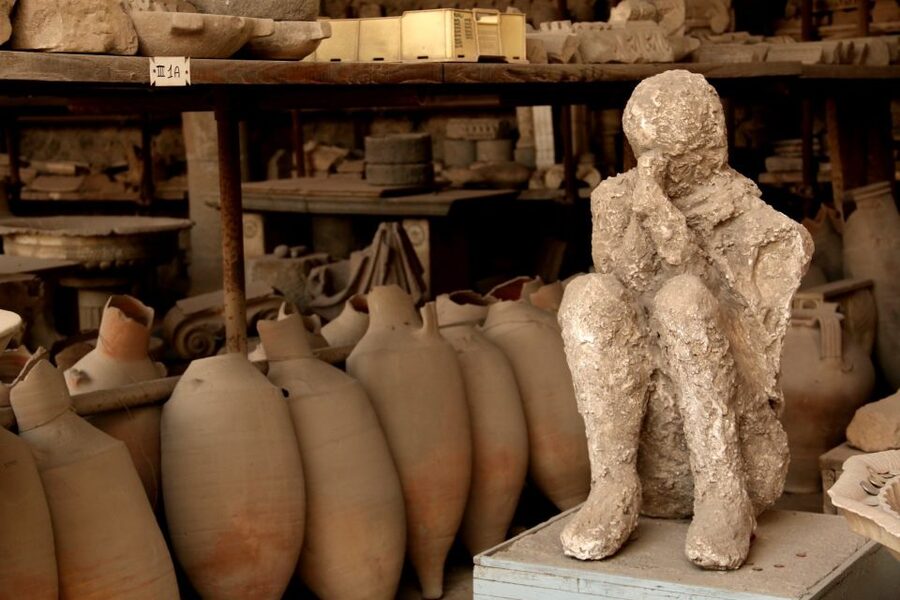
- The plaster casts and the human cost of 79 AD
- A useful two-hour route, not the whole city
- What the $181.26 price means
- Languages, mobility, and what to pack
- Who will get the most from this tour
- Should you book the Pompeii two-hour tour?
- FAQ
- Where does the Pompeii tour start?
- How long does the tour last?
- What languages are available?
- Are entry tickets included?
- Can I bring luggage into Pompeii?
- What identification should children bring?
Key points at a glance
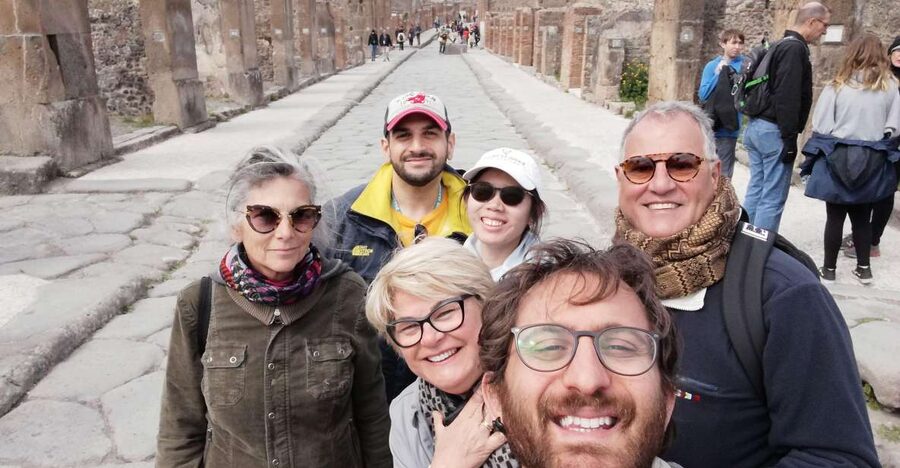
- The Forum gives you a fast sense of Pompeii: See the city’s religious, political, and social center before exploring more personal spaces.
- Stefano and Antonietta receive special praise: Both are described as friendly, clear, flexible, and good at answering questions.
- The route mixes grand villas with ordinary life: You learn about wealthy families, slaves, shopkeepers, and everyday residents living close together.
- Skip-the-line entry saves precious time: The guide meets you at the station and leads you into the archaeological site.
- Two hours works best as an orientation: You see major highlights, then can continue alone if your schedule and energy allow.
- Pack lightly and dress for the sun: Bags larger than 30 by 30 by 15 centimeters are not allowed inside.
Why Pompeii works best with a guide

Pompeii can look like a maze of stone walls if you walk through it without context. A doorway, painted wall, raised pavement, or worn shop counter may seem simple at first, but a good guide explains what it tells you about Roman society.
This tour focuses on the people who used the city, not only on emperors and grand monuments. You hear about ordinary residents, slaves, wealthy families, shopkeepers, and the practical systems that supported city life. That human scale is the reason Pompeii feels different from a conventional museum.
The guide also covers technical, artistic, and historical details. You might learn why a building was designed in a certain way, how a room was used, or what a fresco tells you about taste and status. The point is not to memorize dates. It is to connect visible ruins with daily routines.
A private group is useful here. You can ask why a house has a particular layout, stop for a photograph, or request more explanation about a room. Feedback about Stefano and Antonietta repeatedly highlights their ability to answer questions without burying the group in too much information.
More Pompeii excavation visits:
- Pompeii: Entry Ticket with Optional Audio Guide
★ 4.2 · 12,360 reviews - Pompeii: Archaeological Park Tour with Ticket on request
★ 4.5 · 2,283 reviews - Pompeii Ruins Private Tour with Optional Skip-the-Line Entry
★ 4.9 · 732 reviews
Meeting at Villa dei Misteri station
The tour starts outside the Pompei Villa dei Misteri train station at Via Villa dei Misteri 1 or 2, depending on the exact meeting-point notation used for your booking. Arrive at least 10 minutes early and look for a guide holding a sign with your name.
This is a practical meeting point because you do not need to search through the ruins for your guide. Several visitors also praised clear communication before the tour, including messages through WhatsApp and helpful directions when arrival plans became difficult.
If you are running late, contact the operator rather than assuming the guide will find you. One guide was able to help a delayed group reach the meeting point, but that kind of flexibility should not be treated as a guarantee.
The tour ends back at the same meeting point. Lunch and dinner are not included, so plan your meal separately. Water is essential, especially during warm months.
Inside the Forum and Temple of Jupiter
The Forum is the natural opening scene. This broad public area was the center of religious, political, and cultural life, so it helps you understand how Pompeii functioned before you move into private houses.
Your guide can explain the surrounding buildings and the role of the Forum in public life. The Temple of Jupiter adds a religious focus, while the open spaces show how important shared civic areas were to the town.
I like starting here because it prevents the visit from becoming a string of unrelated rooms. You first get the city’s public face, then see how that public world connected to homes, businesses, and neighborhood streets.
The drawback is that open spaces offer little shade. Your guide may keep the route moving, but you should still bring a hat, sunscreen, and water. Comfortable shoes matter too. Pompeii’s ancient paving is uneven, and this is a walking tour rather than a gentle stroll through a modern museum.
Streets, shops, and ordinary Roman life
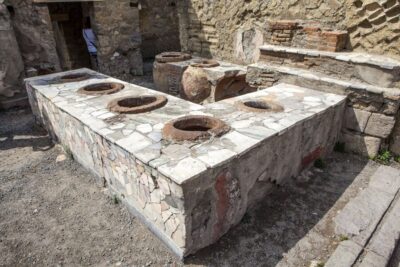
The most valuable part of the tour may be the transition from monumental spaces to everyday streets. You walk past the remains of shops, houses, and working areas, with the guide explaining how different social classes lived near one another.
That mix makes Pompeii unusually direct. A wealthy family’s home could sit close to commercial spaces and modest residences. The city gives you a chance to think about work, household routines, social rank, and the practical details of Roman life without relying only on written records.
Guides Stefano and Antonietta are praised for using stories and questions to make these details accessible. One guide reportedly encouraged the group to think through how and why things worked before explaining the answer. That approach is especially useful if you are visiting with children or if ancient history is not normally your favorite subject.
Families should find the format manageable. Guides have adjusted explanations for children, checked how much detail parents wanted about adult subjects, and allowed time for photos and restrooms. The small-group setup also makes it easier to hear than a large tour with a distant guide.
More Pompeii Archaeological Site tours worth comparing
- 2-Hour Private Walking Tour of Pompeii
★ 4.7 · 22 reviews - Pompeii 2h Small-Group Tour with Expert Archaeologist
★ 5.0 · 385 reviews - 2 hours Pompeii Tour with Local Historian – Ticket Included
★ 5.0 · 335 reviews - Capri: 2-Hour Boat Tour with Happy Hour
★ 4.8 · 286 reviews
Wealthy houses, frescoes, and private spaces
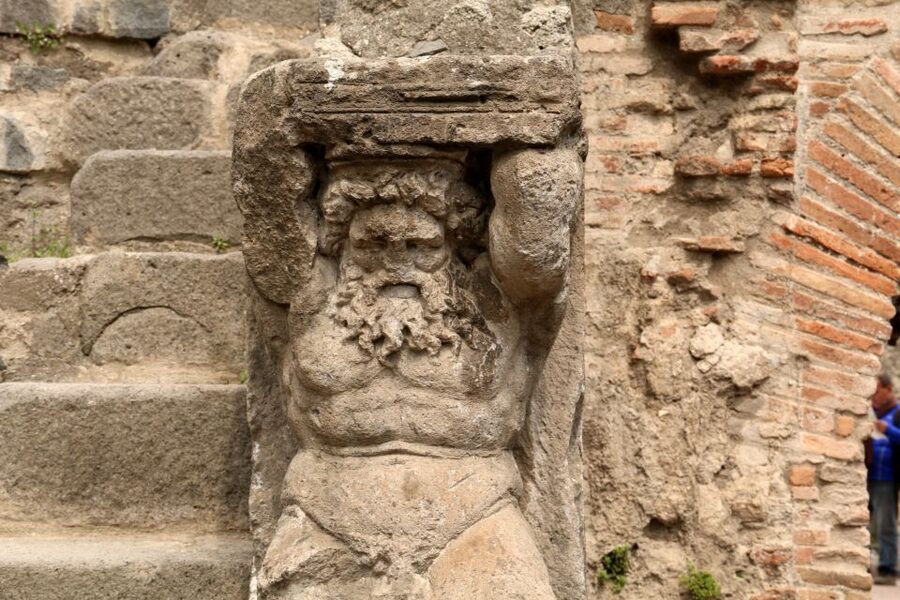
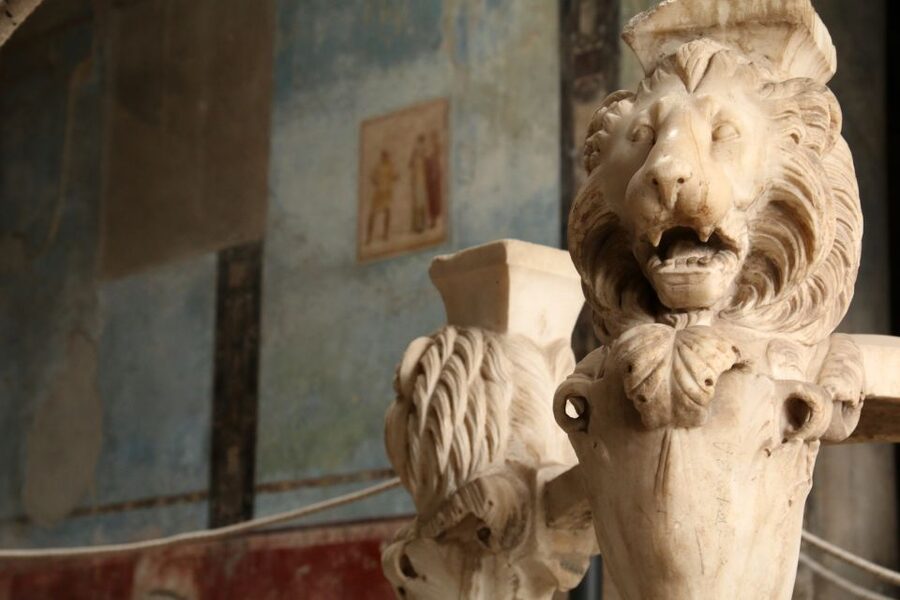
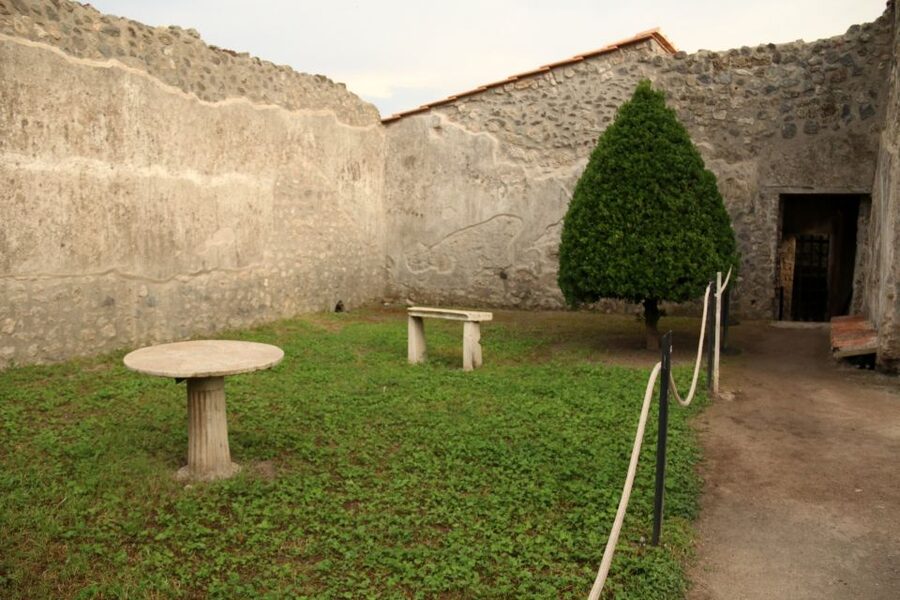
Pompeii’s grand homes show how the city’s wealthier residents presented themselves. Courtyards, decorative walls, and painted rooms reveal that a house was more than a place to sleep. It could display status, taste, family identity, and social ambition.
The tour includes some of the city’s richest houses, but the value comes from comparison. When you move from an impressive residence to a shop or a simpler home, you can see how unequal Roman society was, while also noticing how close different groups lived.
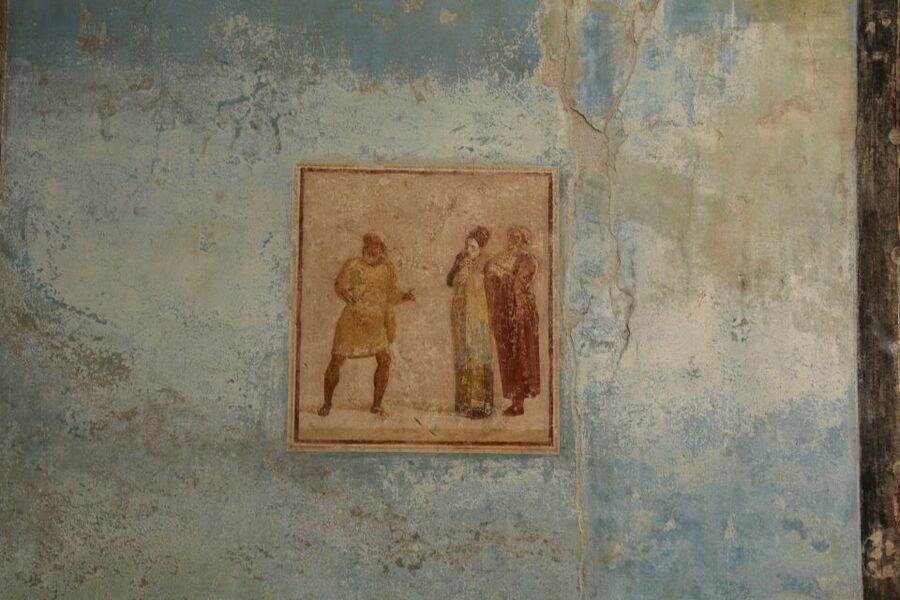
The guide can also explain artistic details in the frescoes and the purpose of individual rooms. Do not expect every house to be open on every visit. Archaeological access can change, so the exact rooms on your route may vary. The tour’s private format lets you ask to spend more time on art, architecture, or household life when the site conditions allow.
If you want to photograph everything, two hours will feel short. I would treat this portion as a focused introduction, not as time for a slow study of every wall painting.
The plaster casts and the human cost of 79 AD
The plaster casts are among Pompeii’s most emotional sights. They preserve the outlines and positions of people buried under volcanic ash, turning a distant historical event into a personal one.
Your guide provides the setting for what you are seeing and explains the eruption’s impact on the town. The subject can be upsetting, particularly for children, so parents may want to decide in advance how much detail is appropriate.
These casts are not simply dramatic objects to photograph. They remind you that Pompeii was a lived-in town. The same streets and homes that reveal meals, work, wealth, and leisure also preserve evidence of a disaster that stopped life abruptly.
The tour connects this human evidence with the rest of the site. That balance is important. Pompeii is not only a tragedy, and it is not only a collection of attractive ruins. It is a record of people going about their daily lives until the eruption changed everything.
A useful two-hour route, not the whole city
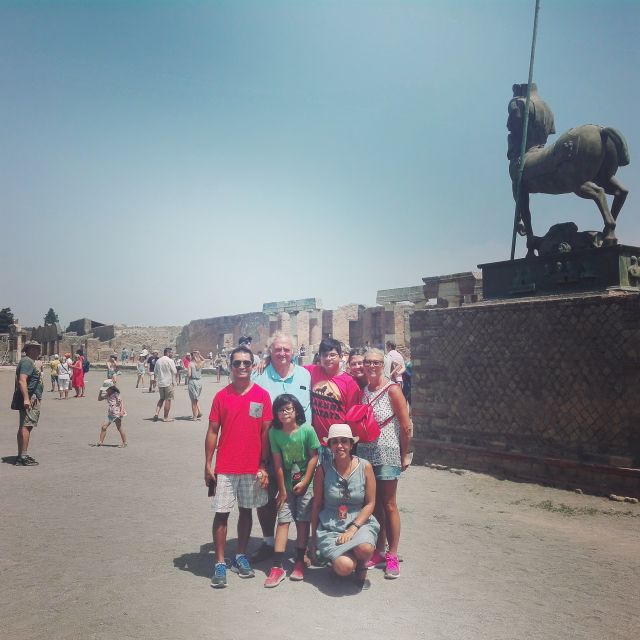
The listed itinerary gives you two hours inside the Pompeii Archaeological Site, followed by a return to the starting point. The guide chooses a practical route through major landmarks and less obvious details, with the aim of showing as much as possible without wasting time in lines.
Several comments praise guides for staying ahead of crowds. That matters at Pompeii, where narrow streets and popular rooms can become slow when several groups arrive together. A small group also helps you remain close enough to hear the explanation.
Still, keep your expectations realistic. Pompeii is extensive, and two hours cannot cover every house, street, public building, and exhibition area. One family extended its visit to roughly three hours, while another used the guided portion as an orientation before exploring alone.
That is the best way to use this experience. Let the guide explain the major structure of the city and point out key places. Afterward, continue independently if you have time and energy. One useful suggestion is to consider leaving through the large amphitheater area, depending on your entrance and the parts you want to see next.
What the $181.26 price means
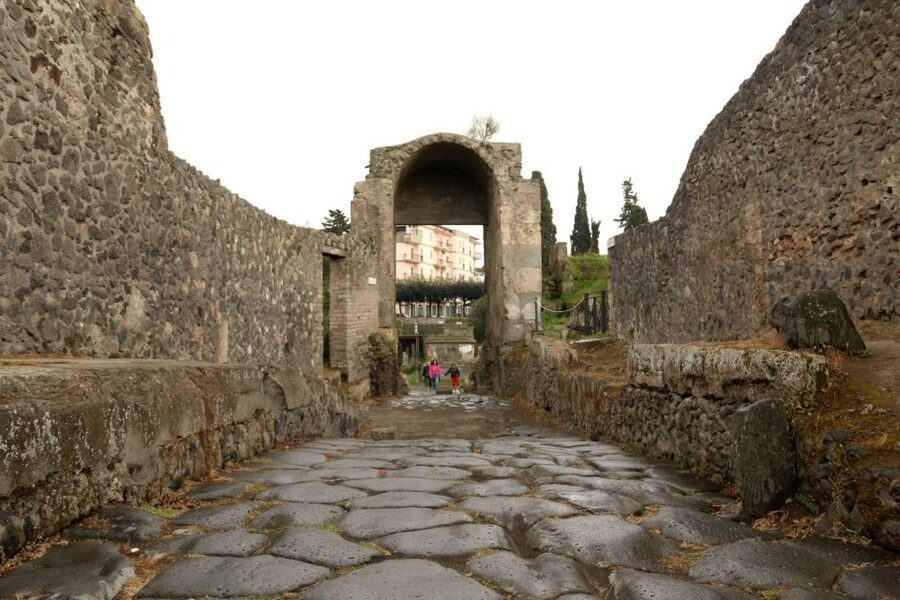
At $181.26 per person, this is not a budget sightseeing walk. The price includes entry tickets and a licensed English-speaking guide, so you are paying for both access and interpretation.
The value depends heavily on your group. For a private booking, the cost can make sense if you want control over questions, pace, and subject matter. It is also easier to justify when traveling with children, older relatives, or people who do not want a full-day archaeological visit.
The two-hour length keeps the commitment reasonable, but it also limits what you receive. If you want a long, scholarly visit or plan to see every major sector, you will need additional independent time or a longer tour.
Skip-the-line access adds practical value. Even a modest wait can consume a large part of a two-hour visit, especially when the site is busy. The guide’s ability to choose an efficient route is another benefit, though crowd levels and site closures can still affect the day.
Free cancellation up to 24 hours before the start and reserve-now, pay-later booking make it easier to fit the tour into a changing Campania itinerary.
Languages, mobility, and what to pack
The live guide may conduct the tour in English, Italian, or Spanish. English-speaking visitors should expect clear communication from the guides highlighted in the feedback, especially Stefano and Antonietta.
The information about wheelchair access needs clarification. One part of the activity details says the experience is wheelchair accessible, while another says it is not suitable for wheelchair users or people with mobility impairments. Pompeii also has uneven ancient paving and substantial walking. If this affects your plans, contact Italy Roots Travel before booking and ask exactly which route and entrance can be used.
Bring:
- A passport or ID card
- Comfortable walking shoes
- A hat
- Sunscreen
- One bottle of water per person
- An umbrella if rain is possible
Bring identification for anyone under 18. Children under 18 may receive free admission, but passports or ID cards are required to support that entry.
Large bags, backpacks, luggage, and cases over 30 by 30 by 15 centimeters are not allowed inside the archaeological areas. Free cloakrooms are available at all access points, but traveling light is simpler. Do not arrive with a suitcase and expect to carry it through the ruins.
Who will get the most from this tour
I would choose this tour if you want Pompeii to make sense quickly. It suits first-time visitors, families, couples, and anyone who prefers a focused route instead of wandering among walls without knowing what they represent.
It is particularly useful for families. The guides have been praised for keeping children involved, adapting sensitive explanations, and allowing time for questions and photos. The small-group format also feels more personal than a large headset tour.
History fans may appreciate the chance to ask detailed questions, but two hours may not satisfy someone who wants to examine every architectural feature. In that case, use the tour as your introduction, then stay longer on your own.
This is not the best match if you dislike walking, struggle with uneven surfaces, or want a relaxed meal and sightseeing combination. Lunch and dinner are separate, and the site can be hot and tiring.
Should you book the Pompeii two-hour tour?
Book it if you want a clear, human explanation of Pompeii and value a licensed guide who can adjust the route to your interests. Stefano and Antonietta are repeatedly praised for friendly communication, strong English, useful stories, family awareness, and smart crowd navigation.
The strongest reason to book is not simply skip-the-line entry. It is the chance to connect the Forum, villas, shops, streets, frescoes, and plaster casts into one understandable picture of Roman life.
Skip it if you expect to see the entire archaeological site in two hours or if the $181.26 per-person price is difficult to justify for your group. If you do book, arrive early, carry water, keep your bag small, and leave room in your schedule for extra exploring after the guided walk.
FAQ
Where does the Pompeii tour start?
Meet in front of the Pompei Villa dei Misteri train station at Via Villa dei Misteri 1, 80045 Pompeii. The guide will hold a sign with your name.
How long does the tour last?
The guided visit lasts two hours. Check availability for the starting times offered on your chosen date.
What languages are available?
Live guiding is available in English, Italian, and Spanish.
Are entry tickets included?
Yes. Entry tickets and a licensed guide are included in the activity price.
Can I bring luggage into Pompeii?
No. Bags, backpacks, luggage, and cases larger than 30 by 30 by 15 centimeters are not permitted inside the archaeological areas. Free cloakrooms are available at the site entrances.
What identification should children bring?
Anyone under 18 should bring a passport or ID card because identification is required for free admission to the excavations.
Newest reviews from Pompeii Archaeological Site
- From Naples: Pompeii & Sorrento Shore Excursion with Lunch★ 5.0 · 6 reviews
- Pompeii 3-Hour Walking Tour★ 5.0 · 8 reviews
- From Sorrento: Pompeii and Vesuvius Tour by Express Train★ 4.0 · 12 reviews
- Pompeii: Skip-the-Line Guided Archaeological Discovery Tour★ 4.2 · 13 reviews
- 2-Hour Private Walking Tour of Pompeii★ 4.7 · 22 reviews
- Mount Vesuvius Wine Tasting and Lunch from Pompeii★ 4.3 · 43 reviews
- Pompeii: Skip-the-Line Ticket and Virtual Museum★ 4.5 · 66 reviews
- Pompeii: Skip-the-Line Tour for Kids and Families★ 4.9 · 72 reviews
2-Hour Experiences, compared.
Pompeii 2h Small-Group Tour with Expert Archaeologist
Read our review →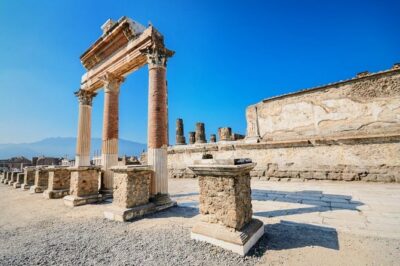
2 hours Pompeii Tour with Local Historian – Ticket Included
Read our review →
2 Hour Private Tour with an Archeologist Guide
Read our review →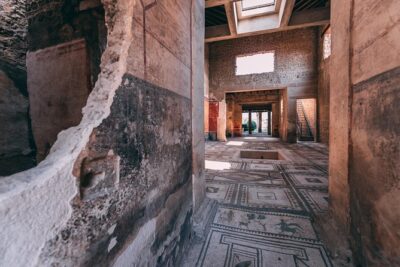
Pompeii 2-hour Private Tour with an Archaeologist-Ticket included
Read our review →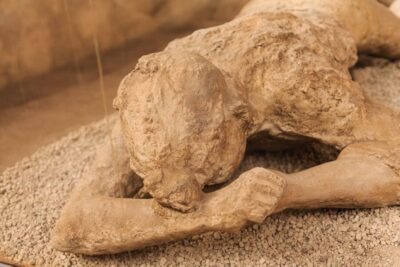

Browse the lists this tour appears in