
Reviewed · ARCHAEOLOGIST-LED TOURS
2 Hours Private Tour in Pompeii with Archaeologist
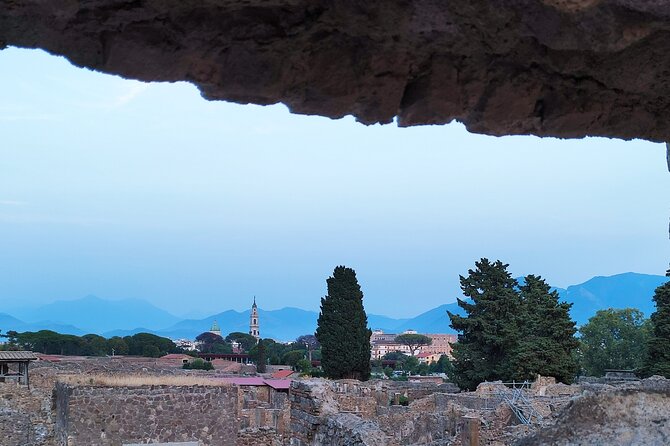
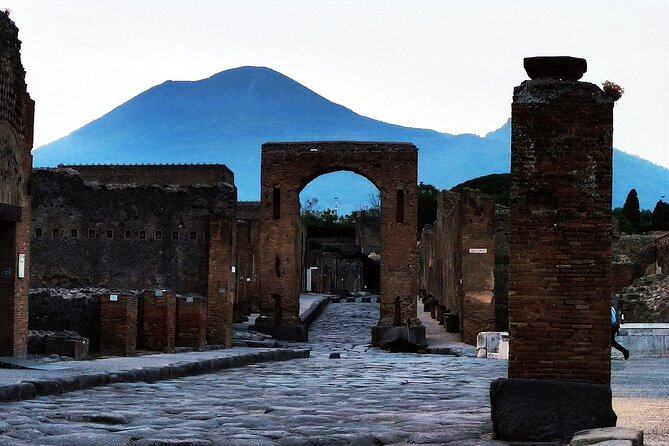
Pompeii is enormous, confusing, and far more rewarding when someone can explain what you are seeing. This private tour puts an archaeologist beside you as you move from a Roman gymnasium and amphitheater to private homes, painted walls, the casts of eruption victims, and a cemetery outside the city gates. Francesco is described as both personable and deeply informed, with experience connected to Pompeii’s excavations.
I like two things right away. First, the route includes places many visitors may miss, especially the Garden of the Fugitives and the necropolis at Porta Nocera. Second, a private guide can adjust explanations for your group, keep track of children, and answer questions instead of delivering a one-size-fits-all speech.
The main drawback is time. Two hours gives you a clear, guided introduction, but Pompeii can easily occupy a full day. You will need to accept a brisk pace and buy your archaeological park admission separately.
In This Review
- Key points to know before booking
- Why an archaeologist changes your Pompeii visit
- Palestra Grande and Pompeii’s Roman amphitheater
- Giulia Felice and the private side of Pompeii
- Octavius Quartio’s house and its outdoor dining space
- The Garden of the Fugitives and the human cost of the eruption
- Porta Nocera and the city beyond its walls
- What $267.46 means for a private group
- Who will get the most from this tour
- Practical details that affect the day
- Should you book the two-hour Pompeii archaeologist tour?
- FAQ
- How long does the Pompeii tour last?
- Is the Pompeii entrance fee included?
- How much does the private tour cost?
- Who guides the experience?
- Where does the tour start and end?
- Can I cancel the tour for a refund?
Key points to know before booking
- An archaeologist leads the visit: Expect explanations about buildings, frescoes, excavation work, and Roman daily life.
- The route reaches Pompeii’s outer cemetery: Porta Nocera adds context beyond the central streets and houses.
- The private format suits families and groups: The guide can respond to your questions and keep a group of up to 15 together.
- Admission is not included: Add the archaeological park entrance fee to the tour price.
- Two hours is a highlights visit: It is useful for first-time orientation, but not enough to see all of Pompeii.
- The listed price is per group: At $267.46 for up to 15 people, the value improves sharply with a larger party.
Why an archaeologist changes your Pompeii visit
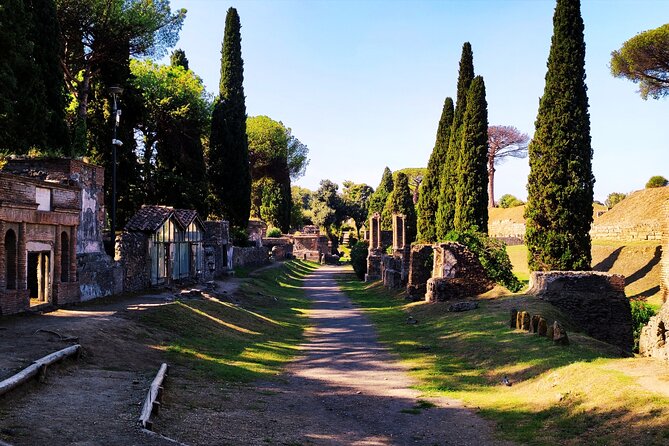
Pompeii is not a tidy museum. It is a broad ancient city with streets, homes, public buildings, gardens, walls, and open spaces spread across a large archaeological park. Without guidance, you can look at a painted room and see only decoration. With an archaeologist, you have a better chance of understanding how the space worked and what it says about Roman life.
That is the real value here. The guide is not only pointing out famous locations. Francesco explains technical and historical details, connects buildings to daily routines, and helps you read the remains as a working city. You may spend less time wondering what matters and more time noticing details that would otherwise pass unnoticed.
The private format also matters. A group of 10 or 15 can be hard to manage in a crowded archaeological site, yet Francesco has been praised for keeping large parties together and answering children’s questions. If your group has mixed interests, you can ask for clarification instead of waiting for a general tour to catch up.
The meeting point is at Via Roma 101 in Pompei, and the tour returns there. The experience lasts about two hours, with roughly 15 minutes at most stops and 30 minutes at Porta Nocera. That schedule tells you what this tour is: a focused introduction, not a slow examination of every important building.
More Pompeii excavation visits:
- Pompeii: Entry Ticket and Guided Tour with an Archaeologist
★ 4.8 · 19,459 reviews - Pompeii: Entry Ticket with Optional Audio Guide
★ 4.2 · 12,360 reviews - Pompeii: Small Group Tour with an Archaeologist
★ 4.8 · 12,264 reviews
Palestra Grande and Pompeii’s Roman amphitheater
The tour begins at the Palestra Grande, Pompeii’s largest gymnasium. The word gymnasium can mislead modern visitors. In the Roman world, such spaces were linked to exercise, training, and public life, not simply to a contemporary fitness center.
You get about 15 minutes here, enough for the archaeologist to explain the scale and purpose of the complex. This is a useful opening stop because it helps you see Pompeii as a functioning city rather than a collection of ruined houses.
Next comes the Anfiteatro Romano, one of the oldest and best-preserved Roman amphitheaters. Again, the scheduled time is about 15 minutes. I would treat this as a strong orientation stop, especially if you have never visited an ancient amphitheater before, but not as enough time for a detailed study.
The advantage of moving quickly through these first two sites is that you reach a wide range of Pompeii’s remains. The cost is that you may want more time to look around, take photographs, or ask follow-up questions. Keep a note of anything you want to revisit after the guided portion.
Giulia Felice and the private side of Pompeii
The Praedia di Giulia Felice is one of Pompeii’s largest private houses. This is where the tour shifts from public buildings to domestic life, and that change is important. Pompeii becomes easier to understand when you see how public spaces and private estates fitted together.
The stop lasts about 15 minutes. You can expect the guide to explain the scale of the property and what its layout suggests about status, comfort, and household life. Since the site contains a large number of buildings, a guide helps you focus on the parts that best show how residents used the space.
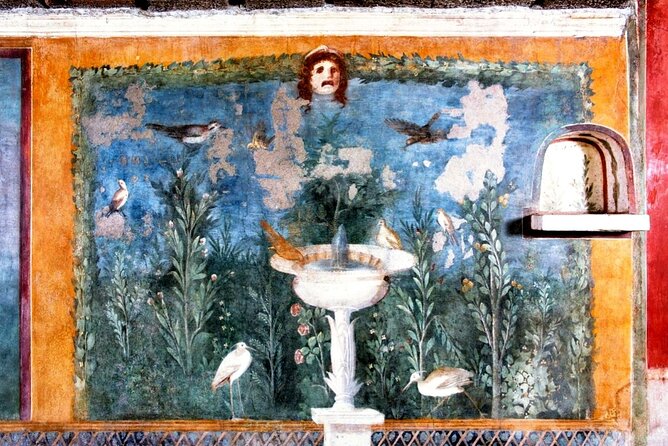
The House of Venus in the Shell follows. Its frescoes are the reason to pay attention here, particularly the painting associated with Venus. A short guided explanation can make the difference between simply seeing a wall painting and understanding how art shaped a Roman home.
I like that these houses are included alongside the amphitheater. You are not getting only the headline monuments. You are also seeing the homes and decorations that reveal taste, wealth, and everyday habits. For a first visit, that balance gives you a more complete picture of Pompeii.
Octavius Quartio’s house and its outdoor dining space

Casa di Ottavio Quartione, also called the House of Octavius Quartio, adds another view of private life. The property is known for its frescoes and its outdoor biclinium, a dining arrangement designed for reclining guests.
This is a particularly useful stop if you want to understand how Roman homes were used for more than sleeping and shelter. Decorative rooms, gardens, water features, and dining areas could be arranged to impress visitors and support social life. The archaeologist can help you connect the surviving pieces instead of treating each room as an isolated ruin.
The planned visit is about 15 minutes. That is enough for a clear explanation, but you should not expect a long period for quiet inspection. Pompeii’s frescoes can reward close attention, and you may want to return later if you are interested in Roman art or domestic architecture.
For families, this part of the route can be easier to follow than a long sequence of similar streets. The idea of an outdoor dining room gives children and adults a simple way to imagine how the house functioned.
More tours led by an archaeologist:
- Pompeii Small Group Tour with an Archaeologist
★ 5.0 · 6,593 reviews - Pompeii and Herculaneum Small Group Tour with an Archaeologist
★ 5.0 · 1,350 reviews - Skip the Line Guided Tour of Pompeii led by an Archaeologist
★ 5.0 · 703 reviews - Pompeii: Exclusive Tour with Archaeologist and Entry Tickets
★ 4.9 · 634 reviews
The Garden of the Fugitives and the human cost of the eruption
The Orto dei Fuggiaschi, or Garden of the Fugitives, is one of the most powerful stops. Archaeologists found the remains of 13 victims of the eruption here during excavations.
The site demands a different pace and tone. This is not just another Roman building. It brings the disaster into human focus and reminds you that Pompeii was a living city before it became an archaeological site. A guide can provide essential context without leaving you to work out the meaning of the remains alone.
The stop is scheduled for about 15 minutes, which may feel short given the emotional weight of the location. I would expect the guide to explain what was found and why the area matters, while leaving you a little time to take in the setting.
This is one of the strongest reasons to choose an archaeologist-led tour. The subject can be handled with care, and the explanation can connect excavation evidence with the broader story of the city. If you are visiting with young children, you may want to decide in advance how much detail is appropriate for them.
Porta Nocera and the city beyond its walls
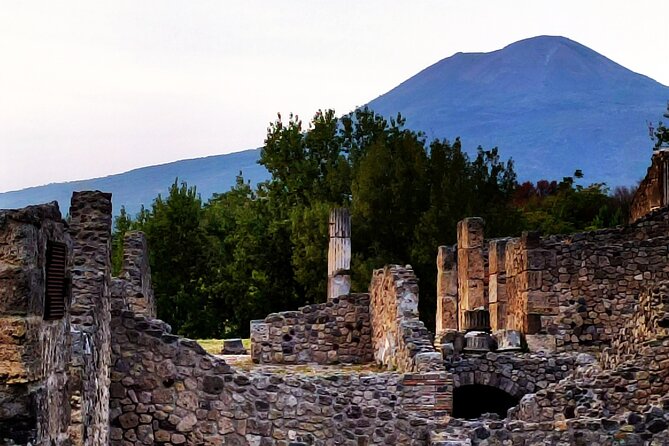
The final stop is the Necropolis of Porta Nocera, and the tour allows about 30 minutes here, twice as long as most earlier stops. That extra time makes sense. You leave the main urban area, cross the city walls, and visit one of Pompeii’s largest cemetery zones.
Many short Pompeii visits remain inside the central streets. This route gives you a wider sense of the city by showing what stood beyond the walls. The necropolis also adds an important contrast to the houses and public buildings. It shows how burial spaces were placed in relation to roads and entrances.
I especially value this stop because it expands the story beyond daily life inside Pompeii. You see the city’s edge, its movement in and out, and the way public memory continued outside the inhabited area.
The walk to the cemetery also contributes to the tour’s brisk nature. You are covering several parts of a large site in two hours, so comfortable shoes and sensible planning matter. The route is not simply a series of rooms close together.
What $267.46 means for a private group
The price is $267.46 per group, with up to 15 people included. That is a substantial amount for one or two people, but it becomes much better value as your party grows. A group of 10 would pay about $26.75 per person before admission, while a full group of 15 would pay about $17.83 per person.
The private setup is the main reason to consider the cost. You are paying for a dedicated licensed guide and specialized archaeological expertise, not just entry to the site. For a family group, a reunion, or friends traveling together, the ability to ask questions and stay together can justify the expense.
Remember that entrance to the archaeological park is not included. Food and drinks are also your responsibility. If some people in your party do not yet have admission tickets, arrange that early and confirm the process with the guide. Francesco has helped groups handle ticket lines and bag storage, but you should not assume those services are part of the formal inclusions.
Because the tour is often reserved well ahead of the visit, planning matters. It is booked, on average, 46 days in advance. That does not guarantee limited availability on your dates, but it is a useful sign that you should not leave a private Pompeii visit until the last minute.
Who will get the most from this tour
I would choose this experience if you are visiting Pompeii for the first time and want a strong framework for the site. The guide’s job is especially useful when you feel overwhelmed by the size of the ruins or are unsure which details deserve your attention.
It also fits families well. The private group format lets you ask questions at your own level, and Francesco has experience keeping a large family group together while responding to children. A party of seven to 10 can get especially good value from the fixed group price.
This is also a good match for anyone interested in archaeology rather than only famous photographs. The route includes excavation evidence, domestic buildings, frescoes, and the cemetery beyond the walls. You get a broader view of Pompeii than a simple visit to the amphitheater and a few well-known houses.
I would be more cautious if you want a full-day exploration. Two hours cannot cover every major house, public building, street, and museum area. One person described the tour as excellent but too short for everything they wanted to see, and that is the fair warning to take seriously.
If your schedule allows, use the guided visit as your introduction, then continue independently if park rules and opening hours allow. The tour ends back at the meeting point, so you will not be left at a different part of the site.
Practical details that affect the day
Your confirmation arrives when you book, and the ticket is mobile. The meeting point is Via Roma 101 in Pompei, with the activity ending at the same location.
The experience is private, and only your group participates. Up to 15 people can join, though a smaller group will usually find it easier to hear the guide and move through busy areas.
Most people can take part, and service animals are allowed. The location is near public transportation. The tour requires good weather, and if poor weather causes cancellation, you can choose another date or receive a full refund.
You can cancel for a full refund up to 24 hours before the start time. A late arrival is more serious: the guided portion may be shortened, so plan to reach Via Roma 101 early. With seven stops packed into two hours, even a small delay can mean less time at the final necropolis.
Should you book the two-hour Pompeii archaeologist tour?
Book it if you want Pompeii explained by a specialist, prefer a private group, and value unusual stops such as the Garden of the Fugitives and Porta Nocera. Francesco’s clear presentation, care with large groups, and willingness to answer questions add practical value, especially for families.
Do not book it expecting a complete Pompeii visit. The route is quick, admission costs extra, and some stops may feel brief. For a first look that brings the ruins to life and gives you a sensible map of the city, I think it is a strong choice. For serious archaeology fans with a full day, treat it as an opening tour and allow more time afterward.
FAQ
How long does the Pompeii tour last?
The tour lasts approximately two hours. The itinerary includes six stops of about 15 minutes each and 30 minutes at the Necropolis of Porta Nocera.
Is the Pompeii entrance fee included?
No. Admission to the archaeological park is not included in the tour price.
How much does the private tour cost?
The listed price is $267.46 per group, for up to 15 people. Food and drinks are not included.
Who guides the experience?
The tour is led by a licensed guide and specialized archaeological guide. Francesco is the guide named in the supplied tour information.
Where does the tour start and end?
The meeting point is Via Roma, 101, 80045 Pompei, Italy. The activity ends back at the meeting point.
Can I cancel the tour for a refund?
Yes. You can cancel at least 24 hours before the local start time for a full refund. Cancellations or changes made less than 24 hours before the start time are not refunded or accepted.
More 2-Hour Experiences in Pompeii Ruins
- Pompeii 2h Small-Group Tour with Expert Archaeologist
★ 5.0 · 385 reviews - 2 hours Pompeii Tour with Local Historian – Ticket Included
★ 5.0 · 335 reviews - Pompeii: 2 Hour Private Tour with an Archeologist Guide
★ 5.0 · 214 reviews - Pompeii 2-hour Private Tour with an Archaeologist-Ticket included
★ 5.0 · 181 reviews
Newest reviews from Pompeii Ruins
- Private Tour Pompeii and Winery★ 5.0 · 4 reviews
- Visit the Pompeii ruins from Salerno with Pizza Lunch★ 5.0 · 4 reviews
- Pompeii Private Tour for Kids and Their Families★ 4.8 · 4 reviews
- From Sorrento: Pompeii & Vesuvius tour small group★ 4.8 · 4 reviews
- Pompeii Sorrento and Positano Tour★ 5.0 · 4 reviews
- From Naples_ Pompeii Tour_Skip the line ticket + audioguide★ 4.3 · 4 reviews
- Pompeii, skip-the-line ticket with smartphone audio guide on App★ 3.0 · 4 reviews
- Pompeii Private Half-Day Tour from: Naples,Sorrento, Amalfi Coast★ 5.0 · 4 reviews
Archaeologist-Led Tours, compared.

Entry Ticket and Guided Tour with an Archaeologist
Read our review →
Pompeii Small Group Tour with an Archaeologist
Read our review →
Pompeii and Herculaneum Small Group Tour with an Archaeologist
Read our review →
Skip the Line Guided Tour of Pompeii led by an Archaeologist
Read our review →
Exclusive Tour with Archaeologist and Entry Tickets
Read our review →
Pompeii Private Tour with an Archaeologist and Skip The Line – 3 hours
Read our review →
Pompeii Skip-the-line Tour with Archaeologist Guide
Read our review →Browse the lists this tour appears in