
Reviewed · SKIP THE LINE
Skip the Line Pompeii Guided Tour from Sorrento
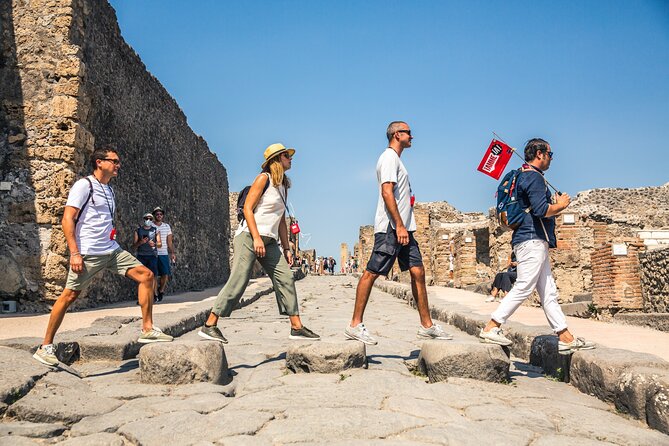
Pompeii is easiest to understand when someone helps you read it as a living city, not just a field of broken walls. I like the way this tour puts the Forum and public buildings first, then connects them to baths, theatres, markets, and everyday objects. I also like the small walking group of up to 30 people, since headsets make it easier to follow the guide in a busy archaeological park.
The main trade-off is time. You get a useful half-day visit, not a full exploration of Pompeii, and the return journey can become slow if the bus makes several Sorrento stops. Pickup details also require attention, since traffic restrictions mean you must confirm your exact meeting point and time before the day of the tour.
In This Review
- Key points before you book
- Why a guided Pompeii visit helps
- Leaving Sorrento by air-conditioned bus
- Starting at Pompeii’s Forum
- The Large Theatre and Pompeii’s public shows
- Basilica, Macellum, and the business of daily life
- Stabian Baths and Roman engineering
- Forum warehouses and objects from Pompeii
- How long the walking really feels
- Is $107.17 a fair price?
- Who should choose this half-day tour?
- Booking advice and cancellation terms
- Should you book the Pompeii tour from Sorrento?
- FAQ
- How much does the Pompeii tour from Sorrento cost?
- How long does the experience last?
- Is transportation from Sorrento included?
- What sights are included inside Pompeii?
- Is the tour offered in English?
- How large is the group?
- Is the tour suitable for people with mobility problems?
Key points before you book
- The Forum gives you the clearest introduction: You see where Pompeii handled politics, justice, trade, worship, and public life.
- Carmela is one named guide: She is described as friendly and well informed, and one tour included a look at new excavations in progress.
- Headsets are included: This matters when the site is crowded or your group spreads out.
- The walking route covers major public buildings: Expect the Large Theatre, Basilica, Macellum, Stabian Baths, and Forum warehouses.
- Transport is simple but not always quick: Air-conditioned bus service connects Sorrento with Pompeii, though traffic and extra stops can lengthen the return.
- The price is $107.17 per person: Entry, transport, commentary, a guide, and headsets are included, but food and drinks are not.
Why a guided Pompeii visit helps
Pompeii is enormous enough to overwhelm you. Even a short walk can take you past temples, shops, homes, drains, election notices, public baths, and theatres without making clear how they fit together. A guide gives those stones a job and a place in the city.
This tour focuses on the civic center and several major buildings around it. That is a sensible choice for a half-day visit from Sorrento. You get the main public story of Pompeii instead of spending your limited time wandering without a plan.
The group walking portion is capped at 30 people per guide. That is not a private tour, but it is more manageable than a huge crowd. The bus itself may carry up to 40 or 50 passengers, so the transport group can be larger than the group you walk with inside the ruins.
The included headsets are a practical detail, not decoration. Pompeii can be noisy, and the guide may be several steps ahead while explaining a mosaic, inscription, or building plan. A working headset lets you keep looking instead of crowding around the guide.
More Pompeii excavation visits:
- Pompeii: Entry Ticket and Guided Tour with an Archaeologist
★ 4.8 · 19,459 reviews - Pompeii: Entry Ticket with Optional Audio Guide
★ 4.2 · 12,360 reviews - Pompeii: Small Group Tour with an Archaeologist
★ 4.8 · 12,264 reviews
Leaving Sorrento by air-conditioned bus
The tour offers pickup in Sorrento, with the pickup window beginning roughly 30 to 45 minutes before departure. Your exact time and location are not simply assumed. You need to tell the supplier which meeting point you will use and confirm the details a few days before the tour.
This matters because Sorrento has traffic-restricted areas. A hotel entrance that looks convenient on a map may not be reachable by a coach at the scheduled time. If you arrive at the wrong place or fail to communicate with the supplier, the operator does not accept responsibility for a missed pickup.
Once aboard, live commentary is provided during the ride. One particularly useful part of the experience is that the guide can begin pointing out sights and giving context before you reach the ruins. The bus is air-conditioned, a welcome feature during warmer months, although the information supplied does not promise a specific vehicle size or travel time.
The ride is intended to bring you back to the original meeting point after the visit. Plan your afternoon with some flexibility. Traffic can change the schedule, and one account described a return that grew much longer because of multiple Sorrento stops. If you have a train, ferry, dinner booking, or airport transfer later, leave a generous buffer.
Starting at Pompeii’s Forum
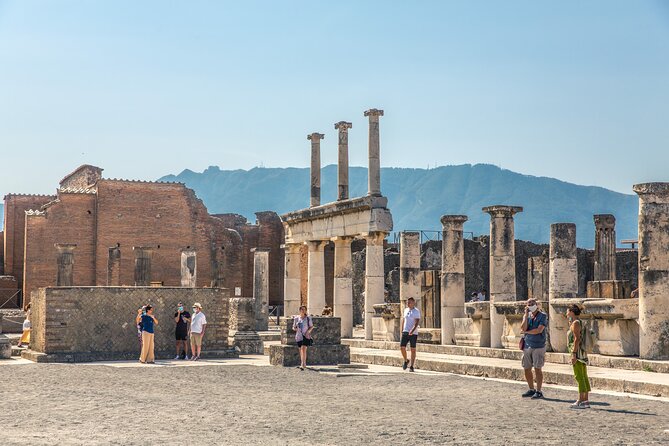
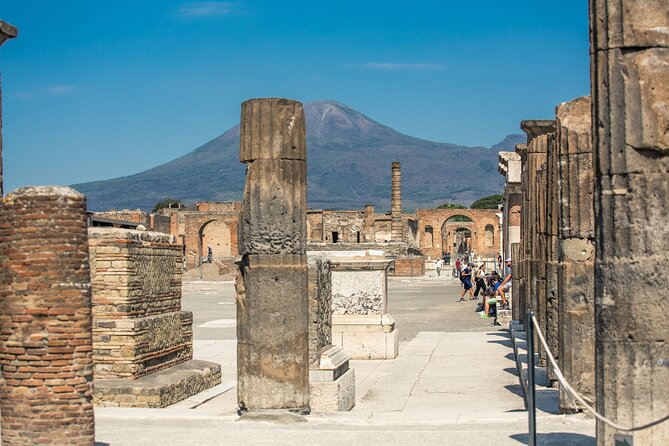
The Forum is the right place to begin because it was Pompeii’s public heart. It was surrounded by buildings tied to government, justice, trade, food, and religion, so it shows how the city worked as a whole.
Your guide points out the Basilica, Temple of Jupiter, and Macellum. These are not isolated ruins. Together, they explain how residents conducted business, handled legal matters, bought food, and practiced public worship.
The Forum is broad and exposed, with uneven ancient paving underfoot. It rewards patience, but it can also feel like a lot of open space if you do not know what you are looking at. This is where the guide’s explanation has real value. You learn to read the arrangement of buildings instead of seeing only columns and walls.
The main Forum portion is listed at about two hours, while the individual buildings are described as short stops of about 10 minutes each. In practice, the route is a guided overview. You will see the essential public buildings, but you should not expect long independent time at every site.
The Large Theatre and Pompeii’s public shows
The Large Theatre used the natural slope of the hill to support its auditorium. Ancient builders divided the seating into three areas, with corridors and separate sectors helping people reach their places.
The theatre dates from around the middle of the second century BC and was later restored in the Roman style. An inscription near the eastern access corridor refers to work completed during the Augustan age by Marcus Artorius Primus, one of the few known references connecting named architects with construction work at Pompeii.
The stop lasts about 10 minutes, so the guide will focus on the theatre’s design and later changes rather than giving you time to study every section. Still, it is a useful counterpoint to the Forum. The Forum explains civic life, while the theatre shows how entertainment and public gatherings fit into the city.
More Sorrento tours worth comparing
- Pompeii: Skip-the-Line Entrance Ticket with Audio Guide
★ 4.0 · 2,509 reviews - Sorrento: Skip-the-Line Pompeii Express Tour by Train
★ 4.8 · 2,038 reviews - Pompeii: Skip-the-line-Ticket and Guided Tour
★ 4.6 · 1,152 reviews - Pompeii: Guided Tour with Skip-the-Line Entry
★ 4.9 · 812 reviews
Basilica, Macellum, and the business of daily life
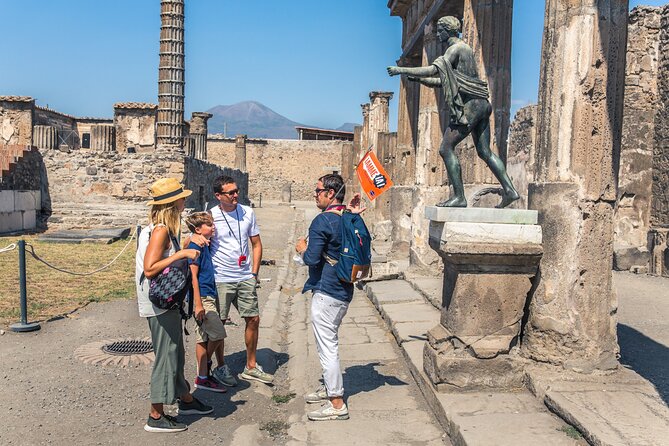
The Basilica was the most imposing building on the Forum, covering about 1,500 square metres. It served both business and justice. You enter from the Forum through five openings separated by tuff pillars, then see a three-nave interior formed by two rows of brick columns with Ionic capitals.
At the western end, a raised platform called the suggestum marks the place where judges sat during legal proceedings. That small architectural detail helps you picture the building as an active court and commercial center, not simply a roofless ruin.
The Macellum gives you a different view of public life. This food market was arranged around a tuff colonnade, with a raised worship area on the eastern side. Niches held copies of male and female marble statues, along with part of a larger statue that may have represented Emperor Titus or Vespasian.
The arrangement suggests that commerce and imperial worship shared the same public setting. On the right, a large room with a masonry counter may have been used to sell fish. The guide can connect those physical details to the practical business of feeding a city.
These stops are brief, but they are among the most useful for understanding how Pompeii functioned. You see law, trade, food, imperial power, and religion within a short walk.
Stabian Baths and Roman engineering
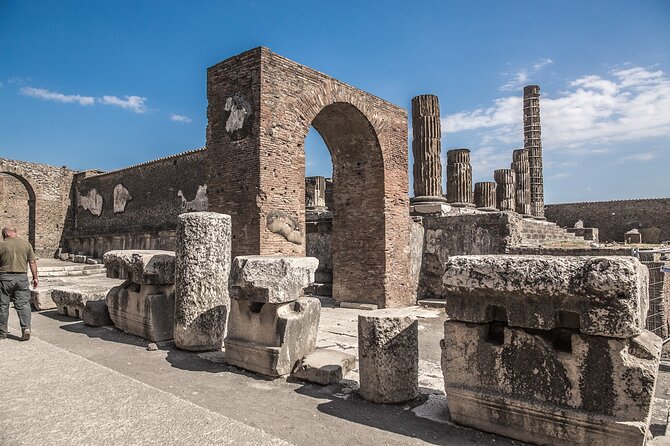
The Stabian Baths date to the second century BC and are among the oldest known Roman baths. Their main entrance from Via dell’Abbondanza leads into a large courtyard.
The layout follows a logical sequence. A pool is on the left, while a colonnade leads toward the men’s bathing rooms. Those rooms include the apodyterium, or dressing room, followed by the frigidarium for cold bathing, the tepidarium for warm water, and the calidarium for hot bathing.
The heating system is the part I find most impressive. Hot air moved through pipes built into the walls and double floors, with heat supplied by furnaces and portable braziers. You do not need to be an engineer to appreciate what this reveals. Pompeii’s public buildings were carefully designed for comfort, routine, and social life.
The stop is listed at about 10 minutes. That is enough for an explanation and a quick look, but not enough to linger over every room. Wear shoes with firm soles, since ancient streets and floors are uneven.
Forum warehouses and objects from Pompeii
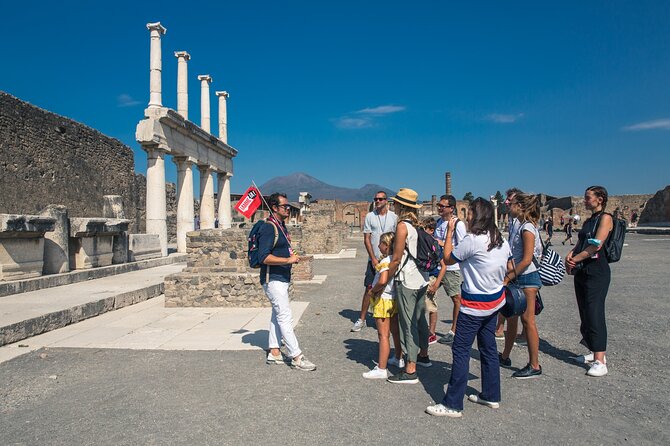
The Forum warehouses, known as the Granai del Foro, line the western side of the Forum. Eight openings are separated by brick pillars, and the area was used for the fruit and vegetable market, or Forum Holitorium.
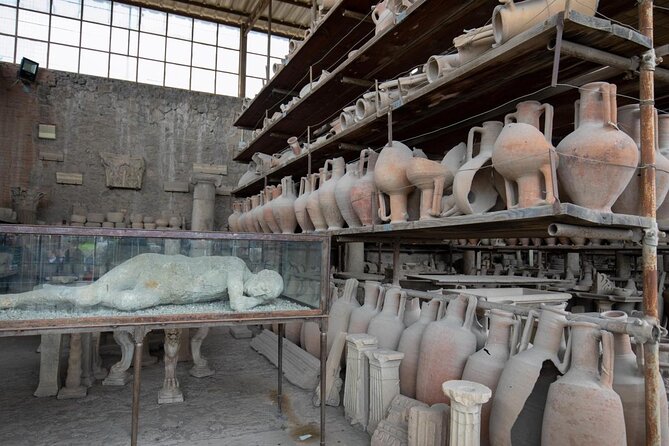
Today the warehouses hold more than 9,000 objects from Pompeii and the surrounding area. They include terracotta pots, pans, jugs, bottles, and amphorae used for oil, wine, and fish sauce. These are modest objects, but they often explain ancient life better than grand monuments do.
A cooking pot shows what people handled every day. An amphora points to trade across the Mediterranean. A bottle or jug makes the city’s kitchens and shops easier to picture. If your interest is mainly in preserved houses, wall paintings, or the famous plaster casts, this route may feel weighted toward public buildings and artifacts instead.
The supplied route does not list a specific private house or plaster-cast display as a guaranteed stop. Ask the guide at the beginning if any additional site can be included that day, but do not count on it. The itinerary can change because of traffic and local conditions.
How long the walking really feels
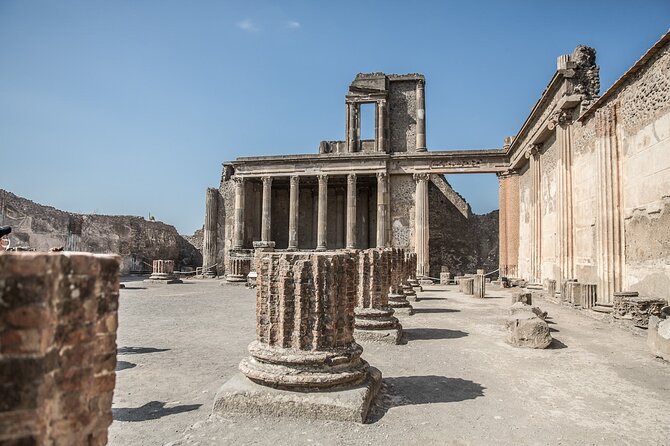
The visit inside Pompeii is generally about two and a half hours of walking. That is a good length for a first visit, especially when you also have bus travel from Sorrento. One account described the walking time as an excellent fit, while another stressed that Pompeii is very busy even outside the peak summer period.
The site’s surfaces are uneven. This tour is not suitable for people with mobility problems, and you should take that warning seriously. Even fit visitors may find the ancient paving tiring, especially in hot weather.
Bring water and plan for sun exposure, since much of the route is outdoors. Meals and drinks are not included. Small purchases such as bottled water or a bathroom visit were available for about $1 in one account, but prices and arrangements can change, so carry some cash as a backup.
The pace aims to keep the group together while covering the main sights. You will have less freedom to stop whenever you like, but you gain a clear route and regular explanations. That is a good exchange for a first visit.
Is $107.17 a fair price?
At $107.17 per person, this is not the cheapest way to reach Pompeii. You are paying for the return bus from Sorrento, pickup coordination, Pompeii admission, an English-speaking guide, onboard commentary, and headsets.
The value depends on what you need. If you can arrange transport yourself and enjoy researching archaeological sites in advance, an independent visit may cost less. You would also control your pace and could spend longer in one neighborhood.
I think the price makes more sense for you if you want the day handled from Sorrento. Pompeii is a large site, the route is not always obvious, and the guide helps turn separate buildings into a story. The included ticket also removes one task from the day.
The strongest part of the value is the guided interpretation, not the ride alone. The tour has a high overall rating of 4.8 from 10 ratings, with all listed ratings recommending it. Praise focuses on punctual pickup, a comfortable bus, clear headsets, good organization, and guides who explain the ruins well. One guide, Carmela, is specifically praised for being friendly and well informed.
There is one fair warning. The quality of commentary can vary by guide. Most comments describe excellent explanations, but one person found the delivery too basic and wanted more detail. If you already have strong knowledge of Pompeii, the presentation may feel introductory.
Who should choose this half-day tour?
I would choose this tour if you are staying in Sorrento and want Pompeii handled in one morning or half day. It suits first-time visitors, couples, families with older children, and anyone who prefers a guided route through a large archaeological site.
It also works well if you want to see the principal public buildings without committing to an entire day. The Forum, theatre, Basilica, market, baths, and warehouses provide a solid first look at civic life and daily routine.
You may prefer another option if you want a private guide, a slower pace, extensive time inside houses, or a visit built around paintings and domestic details. A group capped at 30 is reasonable, but it is not intimate in the way a private tour would be.
The tour is offered in English only. Most people can participate, but the uneven surfaces rule it out for anyone with mobility limitations. Pickup requires advance communication, so it is best suited to someone willing to confirm the details rather than simply waiting outside a hotel.
Booking advice and cancellation terms
This experience is often booked well in advance, with an average booking lead time of about 68 days. That suggests you should reserve early if your Sorrento dates are fixed, especially during a busy season.
You receive confirmation at booking, and free cancellation is available up to 24 hours before the start time. Cancellations or changes made less than 24 hours before departure are not accepted for a refund. The cutoff follows local time.
Before departure, confirm three things with Acampora Travel: your pickup point, your exact pickup time, and the route back to Sorrento. Those simple checks can prevent the most avoidable problem on this excursion.
Should you book the Pompeii tour from Sorrento?
Book it if you want an efficient, guided introduction to Pompeii with transportation included. The Forum-centered route is sensible, the headsets help, and the short format leaves room in your day for Sorrento or another activity.
I would be cautious if you need a fully flexible schedule or have an important connection soon after the return. Traffic and multiple drop-offs can add time, and the archaeological park is not suitable for people with mobility problems.
For most first-time visitors based in Sorrento, this is a practical choice. You will not see every corner of Pompeii, but you will leave with a clearer idea of how its public life, trade, entertainment, bathing, and markets fitted together.
FAQ
How much does the Pompeii tour from Sorrento cost?
The listed price is $107.17 per person. It includes transportation, Pompeii entry, an English-speaking guide, onboard commentary, and headsets during the walking tour.
How long does the experience last?
The tour lasts approximately four to five hours, including transportation. The visit inside Pompeii includes about two hours for the main archaeological park route, with roughly two and a half hours of walking noted for the guided visit.
Is transportation from Sorrento included?
Yes. Transportation is provided by air-conditioned bus, and pickup is offered in Sorrento. The activity ends back at the meeting point.
What sights are included inside Pompeii?
The route includes the Forum, Large Theatre, Civil Forum, Basilica, Macellum, Stabian Baths, and Forum warehouses. The itinerary can change because of traffic and unforeseen local conditions.
Is the tour offered in English?
Yes. The tour is offered in English and includes an English-speaking guide.
How large is the group?
The archaeological-site visit has a maximum of 30 people per guide. The bus may hold more passengers, up to approximately 40 or 50 people.
Is the tour suitable for people with mobility problems?
No. Because Pompeii has uneven surfaces, the tour is not suitable for people with mobility problems. Most other people can participate, according to the supplied tour information.
Newest reviews from Sorrento
- Private Stress-Free Tour from Sorrento: Ischia Island & Tastings★ 5.0 · 4 reviews
- Tour in the ruins of Pozzuoli with an archaeolgist.★ 5.0 · 4 reviews
- Vico Equense: Authentic Cooking Class at a Local’s Home★ 5.0 · 4 reviews
- Lemon Experience with Limoncello demonstration★ 5.0 · 4 reviews
- Path of the Lemons★ 5.0 · 4 reviews
- Private Tour Pompeii and Winery★ 5.0 · 4 reviews
- Positano Private Tour By Night from Sorrento★ 5.0 · 4 reviews
- Walking Secret Food Tours Sorrento with tastings★ 4.5 · 4 reviews
Skip the Line, compared.

Skip-the-Line Entrance Ticket with Audio Guide
Read our review →



Skip-the-Line Entry Ticket with Digital Guide App
Read our review →
Pompeii Ruins Private Tour with Optional Skip-the-Line Entry
Read our review →
Skip-the-Line Pompeii Guided Tour from Sorrento
Read our review →
Skip the Line Guided Tour of Pompeii led by an Archaeologist
Read our review →Browse the lists this tour appears in