Reviewed · GUIDED
Private Tour with Official Guide through the wonders of Pompeii.
Pompeii becomes far more readable when someone points out the small clues: a painted wall, a household layout, a public bath, or the remains of a Roman restaurant. This private tour puts official guide Paolo beside you as you move through the city’s major sights and the details most people would walk past.
I like the private format, since Paolo can adjust the pace, answer your questions, and allow time for photos. I also like the mix of famous monuments and everyday places, from the Forum and temples to the Thermopolium, an ancient restaurant. The main drawback is the price: $102.35 per person is before the Pompeii admission ticket and tip.
In This Review
- Key points to know before you book
- Why a private guide changes Pompeii
- Teatro Grande, Pompeii’s grand stage
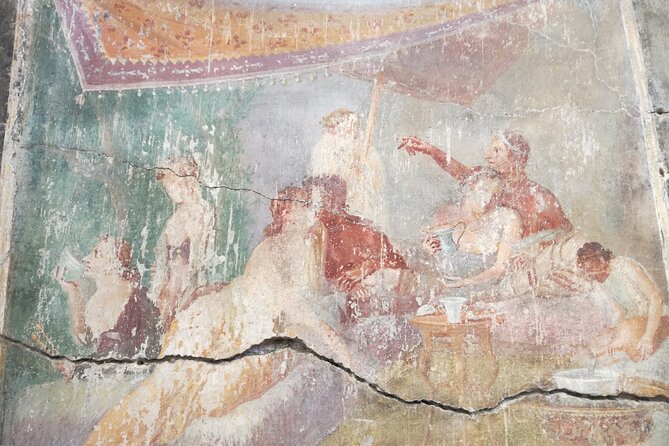
- Villas filled with paintings and mosaics
- Pompeii’s baths and the Roman routine
- Odeon and the sound of public life
- The Forum and two major temples
- Via dell’Abbondanza and the ancient restaurant
- What Paolo adds to the experience
- Price, timing, and practical value
- Who should book this Pompeii tour
- Should you book it?
- FAQ
- How long does the private Pompeii tour last?
- What time does the tour start?
- Where does the tour begin?
- Where does the activity end?
- Is the Pompeii admission ticket included?
- What is included in the tour?
- Is this a private tour in English?
Key points to know before you book
- Paolo brings archaeological field experience: He was part of the team that originally excavated Pompeii, giving the tour a direct connection to ongoing work at the site.
- The route covers both grand and ordinary Pompeii: You see theaters, villas, baths, temples, the Forum, a main street, and an ancient restaurant.
- Private means flexible: Only your group participates, so the guide can respond to your interests and give you time for photographs.
- The tour is built around details: Paolo explains architecture, daily life, word origins, mysteries, and small features you could easily miss alone.
- The advertised duration is 2 to 3 hours: The listed stops range from five to twenty minutes, with a broad survey of the archaeological park.
- Admission is not included: The guide, park map, and bottled water are included, but you must pay separately for the Archaeological Park Pompeii ticket.
Why a private guide changes Pompeii
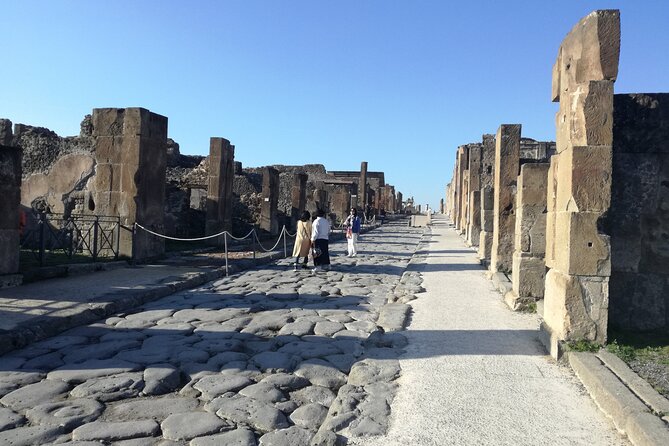
Pompeii is not a single monument. It is a large Roman town made up of streets, houses, shops, theaters, temples, baths, and public spaces. Without help, you can see a lot of walls and still miss how the city worked.
That is where this tour earns its keep. Paolo’s role is not simply to lead you from one famous ruin to the next. He explains what the buildings were for, how people used them, and which small marks reveal something about Roman life.
I especially like that the route does not focus only on grand villas. You also visit a restaurant, a main shopping street, public baths, and theaters. That balance helps you picture Pompeii as a living city rather than an outdoor museum of painted rooms.
Paolo is also described as having worked on the original excavation team at Pompeii. That background matters. You can ask about the site’s archaeology and current excavation efforts, not just repeat a set of dates and names.
Since this is a private activity, you are not tied to the interests of a large group. If you want more time in a villa, more explanation of architecture, or a chance to take photographs, the guide can work around your group. If you are visiting Pompeii and Herculaneum on the same day, that flexibility is especially useful, since the two sites together can feel like a lot.
More Pompeii excavation visits:
- Pompeii: Entry Ticket and Guided Tour with an Archaeologist
★ 4.8 · 19,459 reviews - Pompeii: Entry Ticket with Optional Audio Guide
★ 4.2 · 12,360 reviews - Pompeii: Small Group Tour with an Archaeologist
★ 4.8 · 12,264 reviews
Teatro Grande, Pompeii’s grand stage
The tour begins with Teatro Grande, the large theater used for Greek and Roman tragedies and comedies. The listed stop is about ten minutes, so expect an introduction rather than a long theatrical history lesson.
This is a good opening because it immediately shows Pompeii as a place built for public life. The theater was not a private home or a working shop. It was a shared civic space where people gathered for performance and spectacle.
Ask Paolo about the words and ideas that have passed from the ancient world into modern English. One of the strongest parts of his guiding style is his ability to explain the origins of familiar words while connecting them to what you are seeing.
Villas filled with paintings and mosaics
The private houses are among the tour’s most rewarding stops. At the Casa dei Vettii, you spend about twenty minutes looking at architecture, frescoes, and mosaics.
That time is well used. A house in Pompeii tells you about more than decoration. Its rooms, courtyards, and wall paintings offer clues about status, taste, family life, and the way a Roman home received visitors. Paolo can help you look at the house as a complete setting rather than a series of disconnected pictures.
The Casa del Fauno receives about ten minutes. It is one of Pompeii’s oldest villas and one of the places where the scale of elite domestic life becomes clear. Even a short stop can help you compare it with the Casa dei Vettii and see that Pompeii’s homes were not all alike.
Then comes the Casa degli Amorini Dorati, with about twenty minutes devoted to its architecture and decoration. The villa is known for its beauty, and this is one of the places where a guide’s eye is particularly useful. Paintings, mosaics, and small decorative details can blur together when you are moving through the site alone.
The Casa del Poeta Tragico is a shorter stop of about five minutes. Its famous mosaic gives the house its appeal. The visit is brief, but it adds another example of how Pompeian homes used images and decoration to make an impression.
One useful feature of a private tour is that you can ask Paolo to slow down when a detail catches your attention. You are not forced to keep pace with a large group waiting at the next doorway.
Pompeii’s baths and the Roman routine
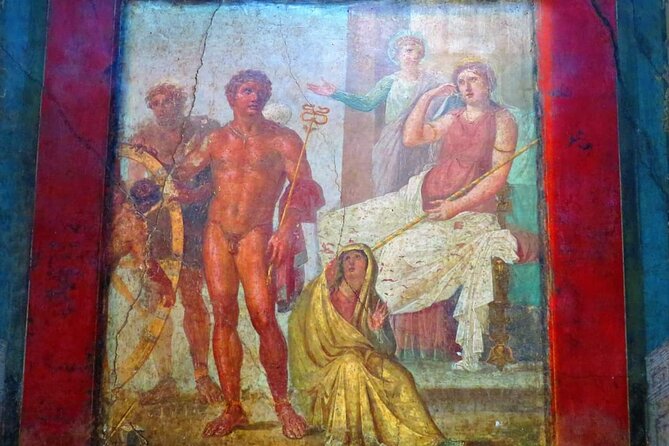
The Suburban Baths offer a different view of Pompeii. Built near the walls, these baths show how leisure and public life extended beyond the central streets. The planned stop is about fifteen minutes.
The Stabian Baths receive about twenty minutes and are described as the largest baths in Pompeii. Together, these two stops help you understand the place of bathing in Roman society. Baths were not simply rooms for washing. They were part of the city’s daily rhythm and a place where people spent time in a shared setting.
The contrast between the two bath complexes is useful. One is notable for its position near the walls, while the other gives you a sense of size and scale. Paolo can connect the buildings to Roman architecture and explain how people might have moved through them.
These spaces may be less immediately dramatic than a villa covered in frescoes, but they are important for understanding ordinary routines. I like having both on the route because they keep the tour from becoming a parade of decorated houses.
More Pompeii Ruins tours worth comparing
- Pompeii Ruins Private Tour with Optional Skip-the-Line Entry
★ 4.9 · 732 reviews - Pompeii private tour with an Official Guide
★ 5.0 · 631 reviews - Pompeii Private Tour with an Archaeologist and Skip The Line – 3 hours
★ 5.0 · 564 reviews - Visit in Pompeii – Pompeii Private Tour with Ada
★ 5.0 · 436 reviews
Odeon and the sound of public life
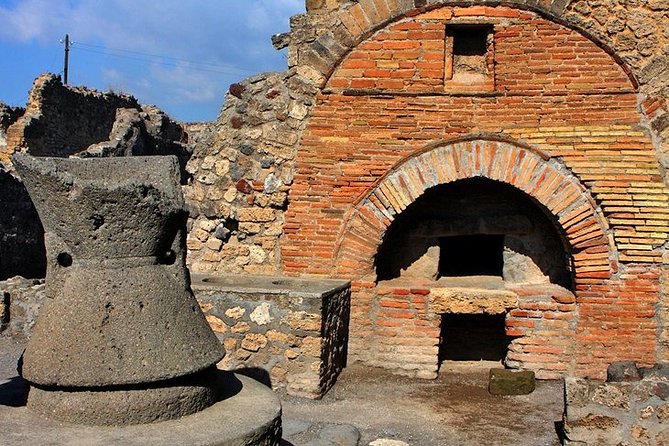
The Odeon, also called the Teatro Piccolo, is a smaller theater associated with singing and musical performance. The planned visit lasts about ten minutes.
Its presence beside Teatro Grande adds variety. You get to compare two performance spaces and think about how different audiences and events might have used them.
The stop also reinforces one of the tour’s wider themes: Pompeii was full of sound and activity. Theaters, streets, shops, baths, and the Forum each played a part in public life. You are not only looking at ruins. You are piecing together how people used the town.
The Forum and two major temples
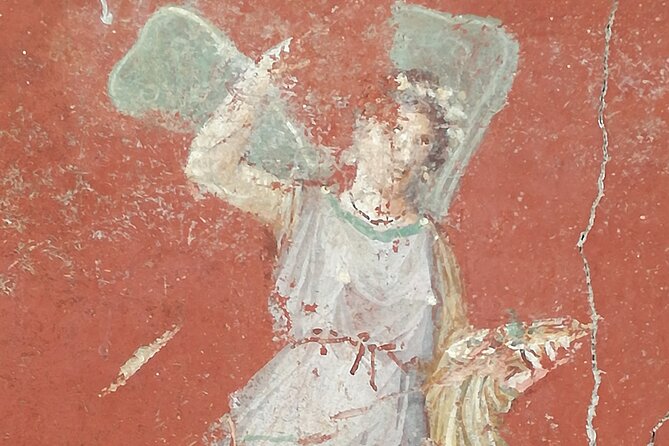
The Foro de Pompeya was the city’s main square, and the tour allows about twenty minutes here. This is one of the places where the whole route begins to make sense.
The Forum was a center of public activity, surrounded by important religious and civic buildings. Take time to look across the open space and imagine it as a place for business, worship, announcements, and social contact. Paolo’s explanations can help you understand the relationship between the Forum and the streets leading into it.
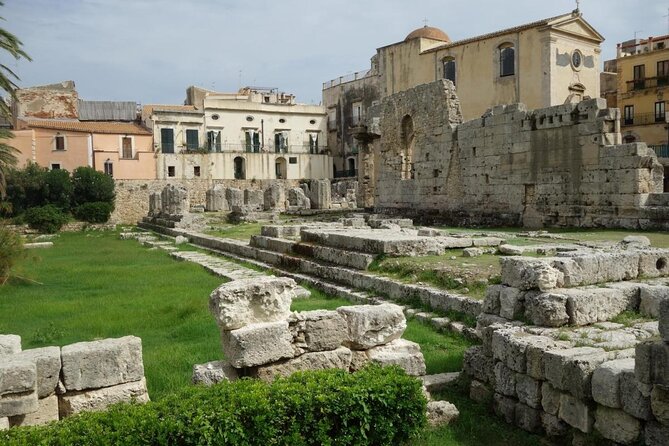
The Tempio di Giove Capitolino, or Temple of Jupiter, receives about ten minutes. It is presented as the Temple of the temples, and its position near the Forum makes it a major part of Pompeii’s public and religious core.
The Temple of Apollo follows, also with about ten minutes. Apollo was associated with the sun and was the son of Zeus in the description provided for the tour. The temple gives Paolo a chance to explain Pompeii’s religious world and how sacred buildings fit into the larger city plan.
You do not need to be an ancient-history specialist to get value from these stops. A good guide gives you a simple frame: what the building was, where it sat, and why it mattered to the people who used it.
Via dell’Abbondanza and the ancient restaurant
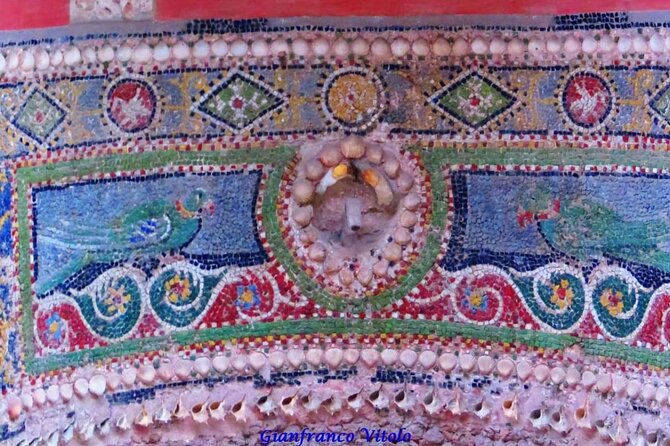
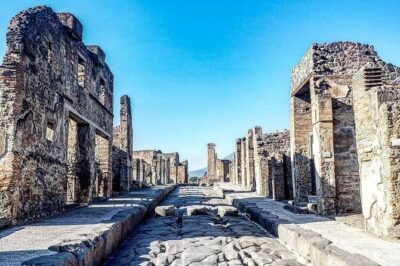
Via dell’Abbondanza is Pompeii’s main street, with about ten minutes planned for the stop. This is where the city feels most like a place of movement and trade.
Look at the street not only as a road but as a link between homes, shops, public buildings, and eating places. The route’s focus on this street makes a useful bridge from grand public monuments to the everyday business of the town.
The final listed stop is the Thermopolium in Regio VI, Insula VIII, 8. The visit lasts about five minutes. A thermopolium was one of the restaurants of the period, and this short stop is one of the most memorable choices on the route because it brings daily food service into view.
You may find the stop especially helpful after seeing the villas and temples. Pompeii was not only a city of wealthy homes and public ceremonies. People also needed places to buy and eat food. A restaurant helps turn the ruins into a town with practical routines.
The short timing means this is likely an introduction rather than a long study of the site. Still, it is exactly the kind of ordinary detail that can make the larger monuments easier to understand.
What Paolo adds to the experience
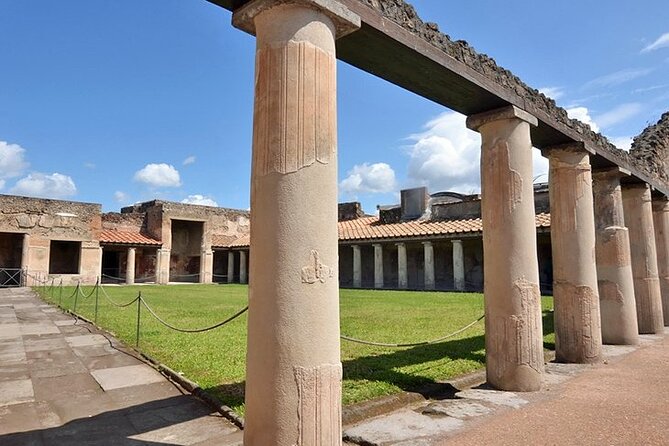
The strongest reason to choose this tour is Paolo’s personal connection to Pompeii and his ability to make details useful. He is described as having archaeological experience from the original excavation team, and he explains current excavation work as well as architecture and daily life.
His approach also appears flexible. He can shape the visit around your interests, answer questions, allow time for photos, and show features that a fixed audio tour might pass by. That is a real advantage at Pompeii, where the most interesting clue may be a small design feature rather than the largest building in sight.
Paolo also brings humor and stories into the explanations. That matters during a two to three hour walk, when a string of dates and building names can become tiring. The best guiding is not a flood of facts. It is knowing which facts help you see the place more clearly.
There is one point to keep in mind. A private guide’s quality depends heavily on the individual guide who leads your booking. The supplied information identifies Paolo, so confirm that he is the assigned guide if his participation is important to your decision.
Price, timing, and practical value
The cost is $102.35 per person. That is a serious price for a two to three hour visit, especially because the Archaeological Park Pompeii ticket is not included and a tip is separate.
Still, the price can make sense for a small group that wants a focused introduction without joining strangers. You are paying for a private English-speaking guide, not just entry to the ruins. The value is strongest if you would otherwise spend hours trying to work out the site map, miss important details, or move through the houses without context.
Group discounts are available, though the exact discount is not provided. For several people traveling together, compare the total cost with a shared group tour and factor in the benefit of having the guide respond only to your party.
The meeting point is Via Villa dei Misteri, 1, 80045 Pompei, with a 12:30 pm start. The activity returns to the same meeting point. A mobile ticket is offered, and confirmation is received at booking.
A Pompeii map and bottled water are included. Those are small but useful additions for a site where orientation and hydration matter. The tour is offered in English, and most people can participate. Service animals are allowed, and the meeting point is near public transportation.
You can cancel for a full refund up to 24 hours before the start time. Changes or cancellations made within 24 hours are not accepted for a refund.
Who should book this Pompeii tour
I would choose this experience if you want Pompeii explained rather than simply photographed. It suits first-time visitors, families or friends traveling together, and anyone who prefers asking questions instead of listening to a recorded track.
It is also a good fit if you care about archaeology, architecture, Roman daily life, or the small stories behind the ruins. Paolo’s reported excavation background gives the tour a useful edge for people who want more than a basic orientation.
The tour may be less suitable if you want a full-day archaeological study, a very slow visit to every major house, or the lowest possible price. The itinerary covers many stops in two to three hours, so it is designed as a broad guided route rather than an exhaustive examination of Pompeii.
If you are combining Pompeii with Herculaneum in one day, the private format can help you manage your priorities. The day may still feel full, but a guide who listens to your requests can help you see the places that matter most to you.
Should you book it?
Book this tour if the guide is the main reason you visit Pompeii. The route covers the essential public spaces, several important villas, baths, theaters, temples, a main street, and an ancient restaurant. Paolo’s archaeological background, humor, and attention to small details add the kind of context that is hard to get from signs alone.
Before paying, remember that the $102.35 price excludes park admission and tip. If that total fits your budget, this is a strong choice for a private, flexible introduction to Pompeii. If price matters more than personal guidance, use the map and explore independently, but expect to miss some of the details this tour is built to reveal.
FAQ
How long does the private Pompeii tour last?
The tour lasts approximately 2 to 3 hours.
What time does the tour start?
The scheduled start time is 12:30 pm.
Where does the tour begin?
It begins at Via Villa dei Misteri, 1, 80045 Pompei, Italy.
Where does the activity end?
The tour ends back at the meeting point.
Is the Pompeii admission ticket included?
No. The Archaeological Park Pompeii ticket is not included in the tour price.
What is included in the tour?
A tourist guide, a map of the Archaeological Park Pompeii, and bottled water are included.
Is this a private tour in English?
Yes. It is a private activity for your group only, and it is offered in English.
Newest reviews from Pompeii Ruins
- Wine Tour + Pompeii★ 5.0 · 4 reviews
- Full-Day Sorrento Positano Pompeii Tour★ 5.0 · 4 reviews
- Pompeii: Skip The Line Entrance Tickets + Audioguides★ 3.2 · 4 reviews
- Pompeii: Entry Ticket & Guided Tour with an Expert Historian★ 5.0 · 4 reviews
- Pompeii ruins★ 5.0 · 4 reviews
- Private Tour Pompeii and Winery★ 5.0 · 4 reviews
- Visit the Pompeii ruins from Salerno with Pizza Lunch★ 5.0 · 4 reviews
- Pompeii Private Tour for Kids and Their Families★ 4.8 · 4 reviews
Guided, compared.

Entry Ticket and Guided Tour with an Archaeologist
Read our review →

Skip-the-Line Entrance Ticket with Audio Guide
Read our review →



Skip-the-Line Entry Ticket with Digital Guide App
Read our review →