
Reviewed · SKIP THE LINE
Private Skip The Line Archeo Tour Of Pompeii
Pompeii is easiest to understand when someone helps you connect the broken walls to ordinary Roman life. This private walk takes you through streets, villas, baths, temples, theatres, shops, and the Forum, while your guide points out details you could easily miss alone.
I like the private format, which lets you set the pace and ask questions without a large group slowing things down. I also like the lively teaching style associated with Viktoria, who uses questions, humor, and practical explanations to make the ruins feel less like scattered stones and more like a working city.
The main drawback is simple: entrance fees and transport are not included. You must reach Piazza Esedra yourself and pay for admission separately, so the advertised group price is the guide fee rather than the complete cost of entering Pompeii.
In This Review
- Key points to know before booking
- Starting at Piazza Esedra in Pompeii
- Walking through a city frozen in 79 AD
- Ancient streets, shops, and restaurants
- The Forum and Temple of Apollo
- Villas, baths, and Roman daily life
- Theatres and Gladiator barracks
- What makes the private format worth the cost
- Who will get the most from this Pompeii walk
- Practical details that affect your day
- Is two hours enough for Pompeii?
- Should you book this private Pompeii tour?
- FAQ
- Where does the Pompeii tour start?
- Where does the activity end?
- How long does the tour last?
- Is the tour private?
- Is transportation included?
- Are Pompeii entrance fees included?
- What language is the tour offered in?
- Can I cancel for a full refund?
Key points to know before booking
- Two focused hours inside Pompeii: The visit covers major areas without trying to inspect every street and building.
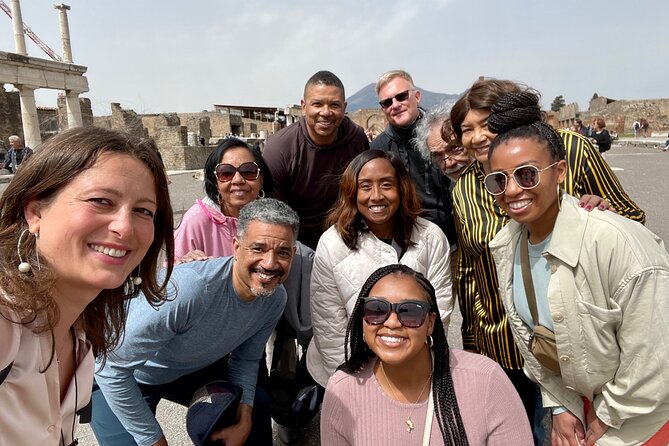
- A genuinely private outing: Only your group joins the guide, with a maximum of 10 people.
- Viktoria keeps the visit interactive: Expect questions, humor, and regular attention to your pace and interests.
- Major Roman sites are included: You’ll see the Forum, Temple of Apollo, baths, theatres, houses, shops, restaurants, and Gladiator barracks.
- Meet at Piazza Esedra: The tour begins and ends at the same meeting point, with no private transport provided.
- Flexible cancellation: You can cancel for a full refund up to 24 hours before the start time.
Starting at Piazza Esedra in Pompeii
Your meeting point is Piazza Esedra, at 80045 Pompei NA, Italy. This is also where the activity ends, so you will not need to arrange a separate pickup or find your way to a second location after the walk.
The tour is offered in English and lasts about two hours. That is a useful length for Pompeii. The archaeological park is huge, and a short private visit cannot cover everything. Instead, you get a guided introduction to the city’s most important areas, with enough time to look closely without turning the outing into an all-day march.
You should treat the meeting point carefully when planning your day. Private transportation is not included, and the tour does not begin from your hotel, train station, or another location. The practical upside is that you remain in control of getting there and can combine the visit with the rest of your Pompeii plans.
The experience is available by mobile ticket, and confirmation is normally provided at booking. If you book within two days of the visit, confirmation can take up to 48 hours and remains subject to availability, so a last-minute booking requires extra attention.
More Pompeii excavation visits:
- Pompeii: Entry Ticket and Guided Tour with an Archaeologist
★ 4.8 · 19,459 reviews - Pompeii: Entry Ticket with Optional Audio Guide
★ 4.2 · 12,360 reviews - Pompeii: Small Group Tour with an Archaeologist
★ 4.8 · 12,264 reviews
Walking through a city frozen in 79 AD
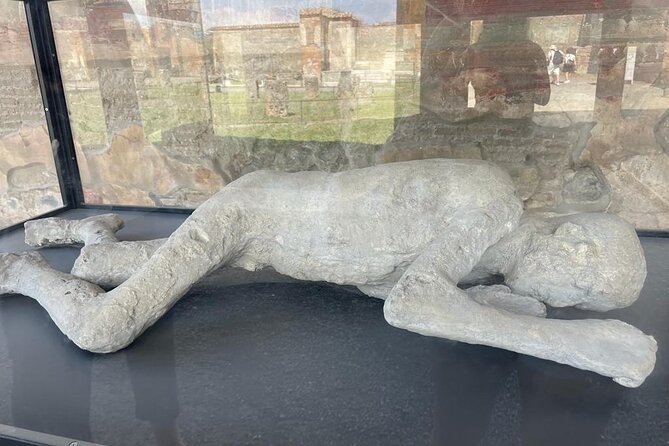
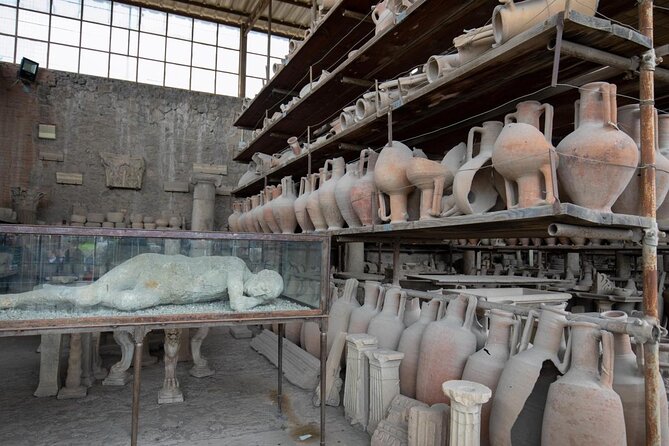
Pompeii was built more than 2,500 years ago and was destroyed by Mount Vesuvius in 79 AD. The remarkable part is not only the disaster itself. It is the way the excavated streets preserve clues about daily routines, public life, religion, entertainment, bathing, shopping, and home design.
A guide gives those remains a useful order. On your own, it is easy to walk past a doorway, painted wall, raised pavement, or shop counter without understanding what you are seeing. With Viktoria, the visit is designed to connect these details to the people who used them.
That teaching style matters. The strongest description of Viktoria’s approach is interactive: she asks questions, encourages you to think, and helps you picture what life was like in Roman Pompeii. You are not simply given dates and names. You are prompted to look at the site and work out what each space may have been used for.
The tour also allows for a personal pace. Viktoria is described as checking regularly that the pace and subject matter suit the group. That is particularly helpful for families, mixed-age groups, or anyone who prefers explanation over a fast procession from one landmark to another.
Ancient streets, shops, and restaurants
The streets are the backbone of the visit. They show how Pompeii functioned as a real town rather than a collection of isolated monuments. You’ll walk along ancient routes and encounter houses, commercial spaces, restaurants, and shops.
These ordinary places may be more revealing than the grand monuments. A temple tells you about worship and public values, but a shop or restaurant helps you think about meals, trade, work, and the rhythm of a normal day. The guide’s role is to explain those connections and point out features that are easy to overlook.
The private setting is useful here because you can stop when something catches your attention. In a large group, a guide must keep moving to stay on schedule. With your own guide, you can ask what a room was for, how a public space worked, or why a particular street feature mattered.
Still, keep expectations realistic. Two hours gives you a strong overview, not an exhaustive examination of Pompeii’s entire street plan. If you want to see every house, read every sign, and explore the site at a slow pace, you will need more time beyond this activity.
The Forum and Temple of Apollo
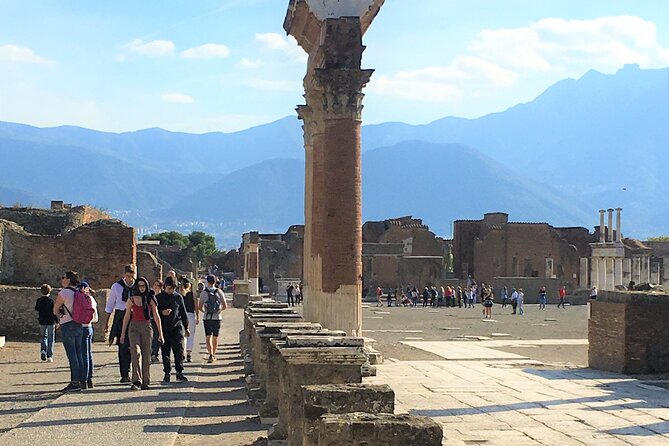
The Forum is among the tour’s central sights. This main square was the civic heart of Pompeii, where public, religious, and commercial life came together. It is the place where the scattered parts of the city make the most sense as a whole.
Your guide can help you read the Forum as a working public space rather than simply admire its columns. Look around and think about the movement of people, the importance of temples, and the role of public buildings in Roman society.
The Temple of Apollo adds a religious dimension to the walk. It is one of the ancient temples included in the route, giving you a chance to consider the beliefs and rituals that shaped public life. The visit also includes the Basilica, another major structure tied to civic activity.
What I like about this selection is its balance. You are not limited to private homes or dramatic ruins. The route moves between religion, government, commerce, entertainment, and domestic life, giving you a broader view of Pompeii in a short period.
More Pompeii Ruins tours worth comparing
- Pompeii: Skip-the-Line Entrance Ticket with Audio Guide
★ 4.0 · 2,509 reviews - Sorrento: Skip-the-Line Pompeii Express Tour by Train
★ 4.8 · 2,038 reviews - Pompeii: Skip-the-line-Ticket and Guided Tour
★ 4.6 · 1,152 reviews - Pompeii: Guided Tour with Skip-the-Line Entry
★ 4.9 · 812 reviews
Villas, baths, and Roman daily life
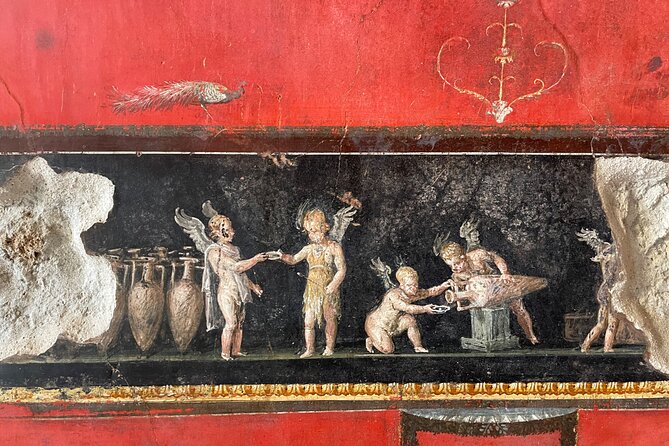
Pompeii’s villas offer a look at home life and social status. As you move through houses, your guide can draw attention to their layout, decoration, and relationship to the street. The value lies in seeing how private life fit into the wider city.
The Roman baths are another important stop. Bathing was not just a practical chore. It was part of public and social life, and the bath buildings show how Romans designed spaces for shared use. A guided explanation helps you understand the purpose of the rooms and the role these facilities played in the town.
The route also includes ancient restaurants and shops, which broaden the picture beyond wealthy homes. Pompeii becomes easier to imagine when you see places connected to food, trade, and everyday errands.
I find this range more useful than a tour focused only on spectacular buildings. You get a sense of how different parts of society used the city. The experience keeps returning to ordinary Roman life, which is where Pompeii has much of its power.
Theatres and Gladiator barracks
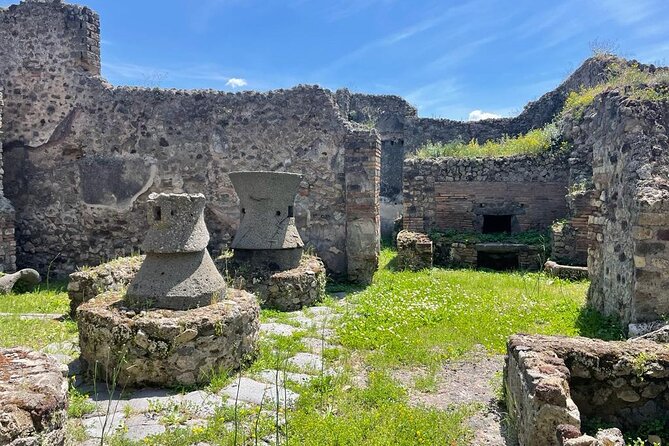
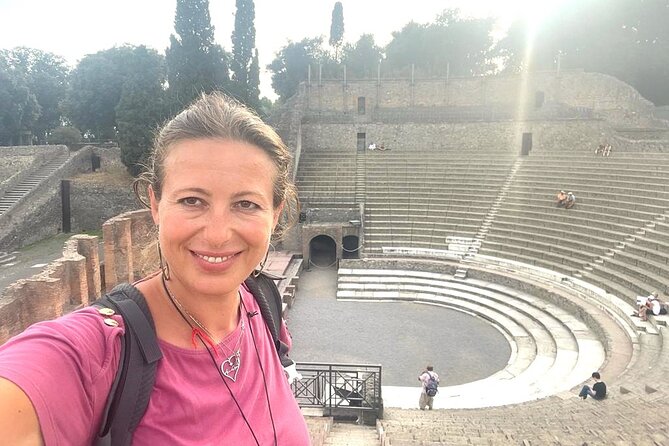
The theatres bring entertainment into the story. Their inclusion shows that the visit is not limited to temples and official buildings. Roman leisure, public gatherings, and performance were also part of Pompeii’s identity.
The Gladiator barracks add another layer. Their presence points to the organization behind public spectacles and the people connected with them. Your guide can place the barracks within the wider world of Roman entertainment, rather than leaving them as a dramatic but isolated ruin.
These sites may appeal most if you enjoy social history. If your main interest is architecture, religion, or household life, they still add useful contrast. Pompeii worked because many parts of civic life operated together, from public worship to bathing and from shopping to entertainment.
Again, two hours means the treatment is selective. You should expect an informed explanation of the main features rather than a long lecture at every stop.
What makes the private format worth the cost
The price is $240.28 per group of up to 10 people. That figure can represent good value if your group is large enough to share the guide fee, since the cost does not rise with each person up to the stated limit.
For two people, the per-person cost is much higher. For a family or group of friends, the calculation becomes more attractive. You are paying for a private English-language guide and a focused route, not for transport or the archaeological park admission.
That distinction is important. You must add entrance fees to your budget, and you must make your own way to Piazza Esedra. If you want a door-to-door service, this is not the right product. If you already have transport plans and want help making sense of Pompeii, the price is easier to justify.
The private format also gives you something a standard group visit cannot promise: control over the conversation. You can ask questions, slow down for a particular building, or move along when a subject does not interest you. Viktoria’s habit of checking the group’s pace adds practical value here.
Her humor and pizza recommendation also suggest a friendly, personal style rather than a strictly formal lecture. That may be exactly what you want after arriving in Pompeii. It is a small detail, but a useful one if you appreciate a guide who can help with the rest of your day as well as the ruins.
Who will get the most from this Pompeii walk
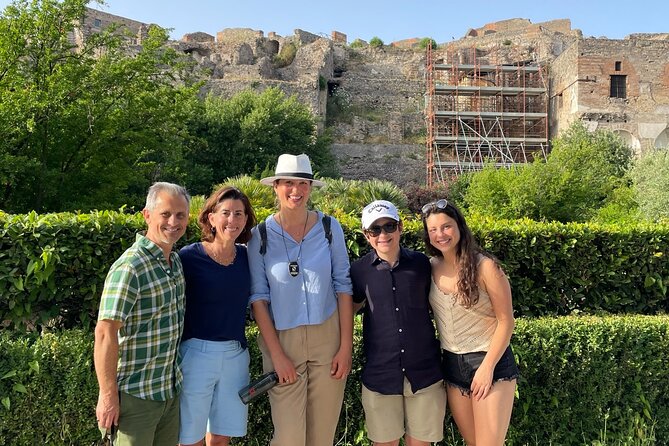
I would consider this tour a good match for several types of visitors:
- First-time Pompeii visitors who want a clear introduction to the site.
- Families and private groups who need a pace suited to their own interests.
- History fans who want context for public buildings, homes, temples, and commercial spaces.
- People with limited time who prefer a two-hour overview to wandering without a plan.
- Visitors who enjoy conversation rather than listening quietly to a long prepared speech.
It may be less suitable if you want a full-day archaeological study or a very slow photographic visit. Two hours is enough to cover key sights, but Pompeii rewards extra time if you want to inspect every lane and building.
It is also not the best fit if you need private transport. The tour does not include a vehicle, hotel pickup, or entrance ticket. You are responsible for reaching the meeting point and paying admission.
Practical details that affect your day
Wear footwear suited to uneven archaeological streets. The provided information says most people can participate, but it does not promise a completely smooth route or describe specific accessibility arrangements. If you have mobility concerns, ask for current details before booking.
Service animals are allowed, and the meeting point is near public transportation. The activity is private, so only your own group participates, with up to 10 people. That makes it easier to keep family members together and to ask questions without disturbing strangers.
The tour is offered in English. If English is not your preferred language, you should confirm language options before reserving, since no other language is listed.
Free cancellation is available until 24 hours before the experience start time. Cancel later than that, or request changes within the final 24 hours, and the amount paid will not be refunded. Cutoff times follow local time in Pompeii.
Is two hours enough for Pompeii?
Two hours is enough for a thoughtful introduction, especially with a guide who keeps the route moving and explains the important stops. You can see the main square, Temple of Apollo, Basilica, baths, theatres, Gladiator barracks, houses, shops, restaurants, and ancient streets in one compact visit.
It is not enough to know every corner of the archaeological park. Pompeii is far too large for that. The sensible way to view this tour is as a guided framework. You learn how the city worked, see major highlights, and gain the background needed to appreciate any extra time you spend exploring afterward.
The private format makes the short duration work better. You are not waiting for a large group to gather or listening to unrelated questions. The guide can focus on your interests, which gives the visit a more personal feel even within a tight schedule.
Should you book this private Pompeii tour?
Book it if you want a clear, personal introduction to Pompeii and you value a guide who explains daily Roman life through questions, humor, and specific details. The tour is especially appealing for groups that can share the $240.28 guide fee, already have their own transport plans, and prefer a focused two-hour visit.
Think twice if you want admission and transportation bundled into one price, or if you plan to spend most of the day exploring at your own slow pace. Those are the main limits, not minor footnotes.
For a first visit, I like the balance of major landmarks and ordinary places: the Forum and temples, then baths, homes, shops, restaurants, theatres, and barracks. With Viktoria leading the walk and adapting the pace, you get more than a list of ruins. You get a usable picture of Pompeii as a lived-in Roman city.
FAQ
Where does the Pompeii tour start?
The tour starts at Piazza Esedra, 80045 Pompei NA, Italy.
Where does the activity end?
The activity ends back at the meeting point at Piazza Esedra.
How long does the tour last?
The guided experience lasts approximately two hours.
Is the tour private?
Yes. Only your group participates, and the group can include up to 10 people.
Is transportation included?
No. Private transportation is not included, so you must make your own way to the meeting point.
Are Pompeii entrance fees included?
No. Entrance fees are not included in the price.
What language is the tour offered in?
The tour is offered in English.
Can I cancel for a full refund?
Yes. You can cancel up to 24 hours before the experience start time for a full refund. Cancellations or changes made less than 24 hours before the start time are not accepted for a refund.
Newest reviews from Pompeii Ruins
- Private Tour Pompeii and Winery★ 5.0 · 4 reviews
- Visit the Pompeii ruins from Salerno with Pizza Lunch★ 5.0 · 4 reviews
- Pompeii Private Tour for Kids and Their Families★ 4.8 · 4 reviews
- From Sorrento: Pompeii & Vesuvius tour small group★ 4.8 · 4 reviews
- Pompeii Sorrento and Positano Tour★ 5.0 · 4 reviews
- From Naples_ Pompeii Tour_Skip the line ticket + audioguide★ 4.3 · 4 reviews
- Pompeii, skip-the-line ticket with smartphone audio guide on App★ 3.0 · 4 reviews
- Pompeii Private Half-Day Tour from: Naples,Sorrento, Amalfi Coast★ 5.0 · 4 reviews
Skip the Line, compared.

Skip-the-Line Entrance Ticket with Audio Guide
Read our review →



Skip-the-Line Entry Ticket with Digital Guide App
Read our review →
Pompeii Ruins Private Tour with Optional Skip-the-Line Entry
Read our review →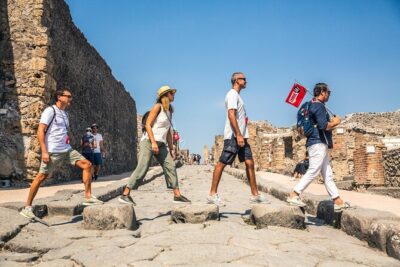
Skip-the-Line Pompeii Guided Tour from Sorrento
Read our review →
Skip the Line Guided Tour of Pompeii led by an Archaeologist
Read our review →Browse the lists this tour appears in