Reviewed · TICKETS
Pompeii Tour_Skip the line ticket + audioguide
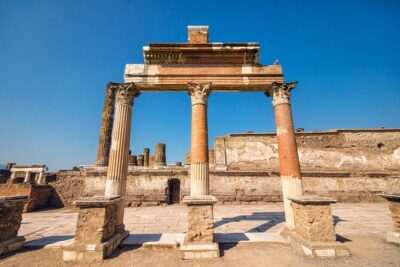
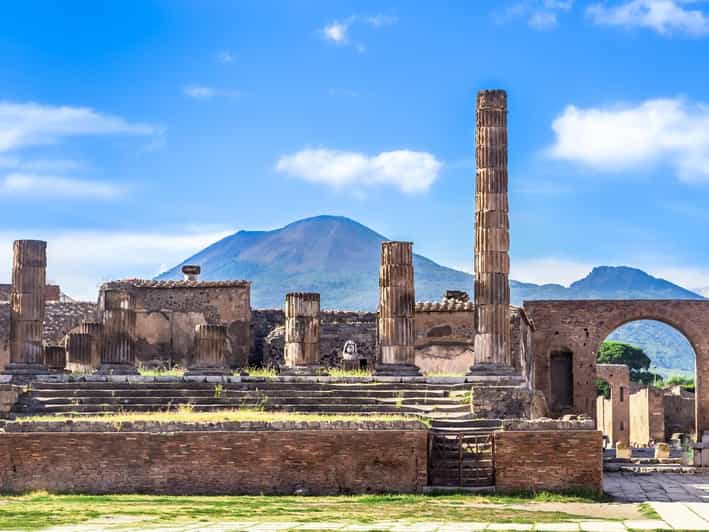
Pompeii is not a quick photo stop. It is a vast Roman city, covering about 66 hectares, where streets, homes, temples, shops, theaters, spas, and an amphitheater still form a readable urban world. This experience helps you get inside without waiting in the ticket line and gives you a map and audio commentary to guide your day.
I like the independent format, since you can set your own pace instead of following a group. I also like the skip-the-line entry, especially at a major site visited by about three million people each year. The main caution is the audioguide. One verified French-language booking rated the experience 2 out of 5 because the commentary felt too brief, so history fans may want extra information.
In This Review
- Key points to know before booking
- Why Pompeii works best with a plan
- Meeting beside Bar De Vivo and entering the ruins
- Following Pompeii’s streets, houses, and shops
- Temples, spas, theaters, and public life
- The thermopolia and brothels reveal everyday Pompeii
- The victim casts and the Roman amphitheater
- What the audioguide does well, and where it may fall short
- Is $44 good value for one day?
- Who should choose this Pompeii experience?
- Should you book it?
- FAQ
- Where is the meeting point?
- What does the ticket include?
- Is transportation included?
- Is there a live guide?
- Which audioguide languages are available?
- What should I bring?
Key points to know before booking
- Meet beside Bar De Vivo, then use your ticket to enter Pompeii without waiting in the ticket line.
- Explore for one full day, with a map and suggested routes to help you manage the large archaeological site.
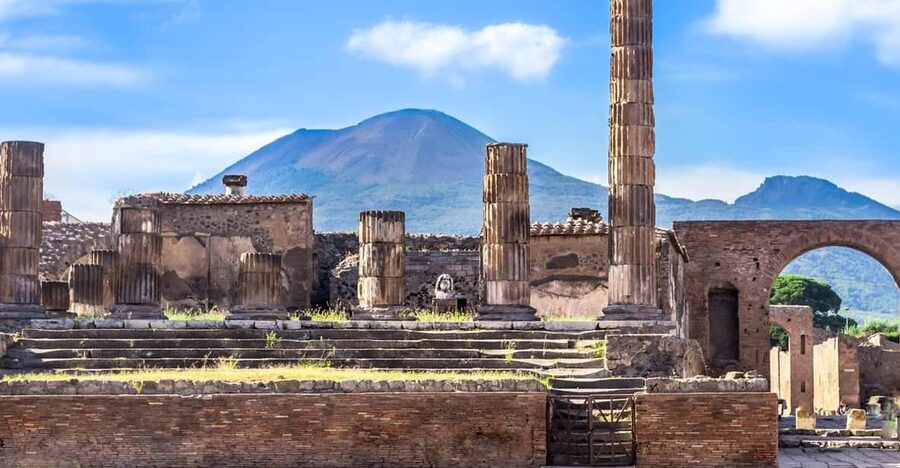
- See Roman houses, temples, spas, shops, theaters, thermopolia, brothels, victim casts, and an amphitheater.
- Listen in nine languages, including English, French, German, Italian, Hebrew, Chinese, Russian, Spanish, and Portuguese.
- Expect a self-guided visit, not a walking tour with a live archaeologist or local guide.
- Bring photo ID, sturdy comfortable shoes, and practical clothing for a long day on ancient streets.
Why Pompeii works best with a plan
Pompeii can look simple on a map, but the site is huge. About 66 hectares of excavations are open across an ancient city frozen by the eruption of Mount Vesuvius in AD 79. Without a plan, you can spend much of your time walking from one area to another and miss buildings that reward a closer look.
That is where this package earns its keep. You receive a map and suggested itineraries, so you can choose a route instead of wandering at random. The audio guide adds basic context as you move between streets and buildings.
I would treat the map as the real key to the day. A printed or updated site plan helps you see where you are and decide what to skip if your legs tire. Pompeii is not a compact monument where every important feature sits within a few minutes of the entrance.
The format also gives you control. You can pause at a painted house, move quickly through a less interesting area, or stop for photographs without holding up a group. If you enjoy reading signs, looking closely at details, and setting your own rhythm, this is a better fit than a tightly timed guided visit.
More Pompeii excavation visits:
- Pompeii: Entry Ticket and Guided Tour with an Archaeologist
★ 4.8 · 19,459 reviews - Pompeii: Small Group Tour with an Archaeologist
★ 4.8 · 12,264 reviews - Pompeii: Skip-the-Line Entrance Ticket with Audio Guide
★ 4.0 · 2,509 reviews
Meeting beside Bar De Vivo and entering the ruins
The meeting point is directly next to Bar De Vivo. That clear landmark matters because the package does not include transportation, and you need to make your own way to the meeting point.
Once there, the host or greeter can assist in English, Italian, Spanish, or French. The ticket gives you entry to the Pompeii ruins and access through the ticket line without the usual wait. The experience is built for a smooth start rather than a long introduction.
You should arrive prepared with your passport or identity card. The instructions specifically call for photo identification, so do not leave it at your hotel. Comfortable shoes and comfortable clothing are also essential. You will be walking on ancient streets, and the day can involve much more ground than first-time visitors expect.
There is no transfer included. There is also no food or drink included, so plan those needs separately. The supplied information does not promise a restaurant service, transport from Naples, or a private vehicle. You are buying access and self-guided support, not a complete day package.
Following Pompeii’s streets, houses, and shops
The best part of Pompeii is the way ordinary city life appears alongside grand public buildings. You will walk along streets that once carried residents, workers, merchants, and visitors through the city.
The domus, or private Roman homes, are among the biggest rewards. Many contain painted walls and decorative details that show how Roman families used architecture to display wealth and taste. The frescoes are not just pretty backgrounds. They help you picture dining rooms, courtyards, reception areas, and private spaces within a working home.
The map and audio guide can help you understand how each building fits into the larger city. Without context, one painted room may blur into another. With a little explanation, you begin to notice the difference between a modest residence, a grand house, and a commercial property.
You will also encounter shops and thermopolia. These were food and drink counters, often compared with a Roman version of a fast-food stop or coffee bar. Their presence gives Pompeii a human scale. This was not only a city of wealthy families and public monuments. People bought meals, ran businesses, worked, and met one another in places that feel surprisingly familiar.
The self-guided pace works well here. You can stop to study a counter, look for wall paintings, or listen to the related audio section without a group moving you along.
Temples, spas, theaters, and public life
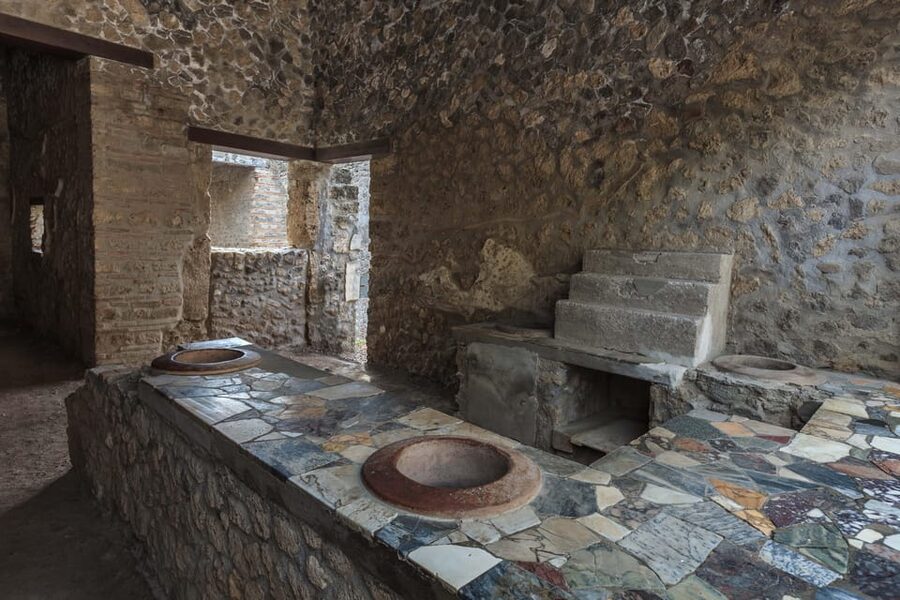
Pompeii’s public buildings show how the city organized religion, leisure, business, and civic life. The temples connect the city to Roman religious practice, while the spas reveal the social role of bathing.
The baths were more than places to wash. They were public spaces where people could spend time, meet others, and follow a daily routine built around different rooms and temperatures. The audio guide should help you read these structures as places in use rather than empty stone walls.
The theaters offer another change of mood. Pompeii had spaces for performances, and their surviving form gives you a sense of how entertainment fit into city life. The theaters are important not only as ruins but as reminders that music, drama, and public gatherings were part of the Roman day.
The guide’s route suggestions matter most in these public areas. Pompeii can tempt you to focus only on dramatic frescoes, but the temples, baths, and theaters explain how the city worked. I would use the map to balance private houses with public buildings rather than spending the whole day in one type of site.
More Pompei Campania tours worth comparing
- Pompeii: Skip-the-line-Ticket and Guided Tour
★ 4.6 · 1,152 reviews - Pompeii: Skip-the-Line Entry Ticket with Digital Guide App
★ 4.1 · 770 reviews - Pompeii: Afternoon to Sunset Guided Tour with Ticket
★ 4.9 · 484 reviews - Pompeii: Skip-the-Line Ticket with Audio Guide and Map
★ 4.0 · 117 reviews
The thermopolia and brothels reveal everyday Pompeii
Some of Pompeii’s most memorable stops are not the grandest. The thermopolia show how people bought ready-to-eat food and drink. The brothels, meanwhile, are part of the city’s less polished but very real social record.
These places help you move beyond the idea of Pompeii as a collection of elite villas. The city had businesses, services, entertainment, and private transactions. Its streets belonged to many kinds of people.
The audio guide can be useful here if it gives enough background on how these buildings functioned. This is also where the main weakness becomes important. A verified French-language booking dated September 3, 2025, gave the experience 2 out of 5 and described the audio commentary as very short and lacking information.
That criticism is worth taking seriously. An audioguide is not the same as a live specialist who can answer questions or explain a detail in depth. If you already know Roman history, you may find the commentary thin. If you mainly need orientation and a basic explanation of what you are seeing, it may be sufficient.
The victim casts and the Roman amphitheater
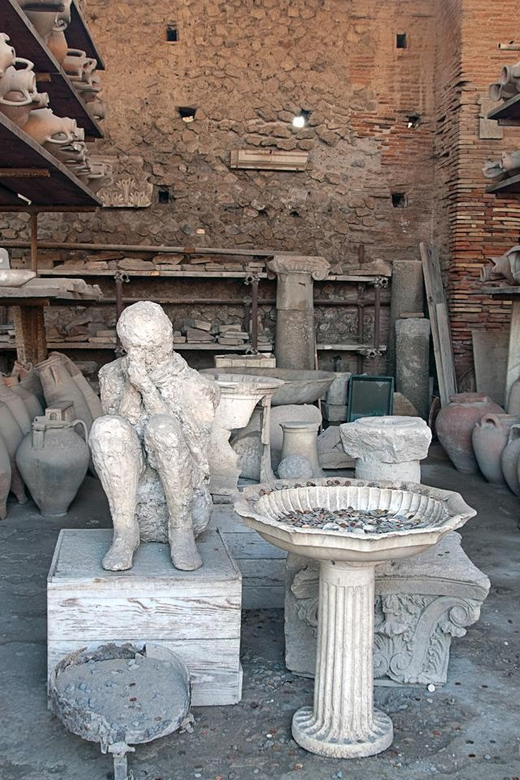
The casts of eruption victims are among Pompeii’s most powerful sights. They bring a personal scale to an event that can otherwise feel distant. You are no longer looking only at walls and roads. You are confronting the human cost of the disaster.
Approach these displays thoughtfully. They are emotionally difficult, and the experience is stronger when you slow down rather than treat them as another quick stop on a checklist. The audio guide may provide useful background, though the supplied information does not promise detailed commentary at every individual display.
The amphitheater is another major highlight. Pompeii has one of the best-preserved Roman amphitheaters, giving you a strong sense of the scale of public entertainment in the ancient city. Its survival helps connect the site to the broader Roman world of spectacles, crowds, and civic pride.
I would make sure the amphitheater is part of your route rather than leaving it to chance. The site is large enough that a visitor without a map can miss or postpone important areas. The suggested itineraries are designed to reduce that risk.
What the audioguide does well, and where it may fall short
The audioguide is available in English, French, German, Italian, Hebrew, Chinese, Russian, Spanish, and Portuguese. That range is a real advantage if you prefer to learn in your first language.
It also lets you choose how much information you want. You can listen while standing outside a building, pause when you need to concentrate on the ruins, and move on when the explanation no longer helps. There is no live guide setting the pace.
Still, you should keep your expectations measured. The experience includes an audioguide, not a full private tour or specialist-led archaeological lecture. The 4.7 rating from 17 reviews is strong, and one verified booking from Qatar on July 1, 2025, simply rated the experience 5 out of 5. But the low French-language rating shows that the audio content may feel too brief for some people.
If Pompeii is a major reason for your Italy trip, consider bringing a guidebook or doing some reading before you arrive. That way, the included audio can serve as an orientation tool rather than your only source of information.
Is $44 good value for one day?
At $44 per person, the value depends on what you want from Pompeii. You are paying for the entrance ticket, skip-the-line access, the map, the audioguide, and help from a host or greeter at the meeting point.
For someone who wants a simple way into the site without arranging separate tickets, that can be a fair price. The time saved at the ticket line has practical value, and the map may prevent a frustrating day of missed buildings and unnecessary backtracking.
The price is less convincing if you expect transportation, lunch, or a live guide. None of those are included. You must reach Bar De Vivo yourself, and you handle food and drinks separately.
I see this as a middle-ground option. It gives you more structure than buying a bare entrance ticket, but less personal explanation than booking a guided tour. It suits independent visitors who want an organized start and the freedom to explore alone.
The reserve-now-and-pay-later option also helps if your plans are still changing. You can cancel up to 24 hours before the activity for a full refund, according to the stated policy. Availability and starting times need to be checked for your chosen date, and the ticket is valid for one day.
Who should choose this Pompeii experience?
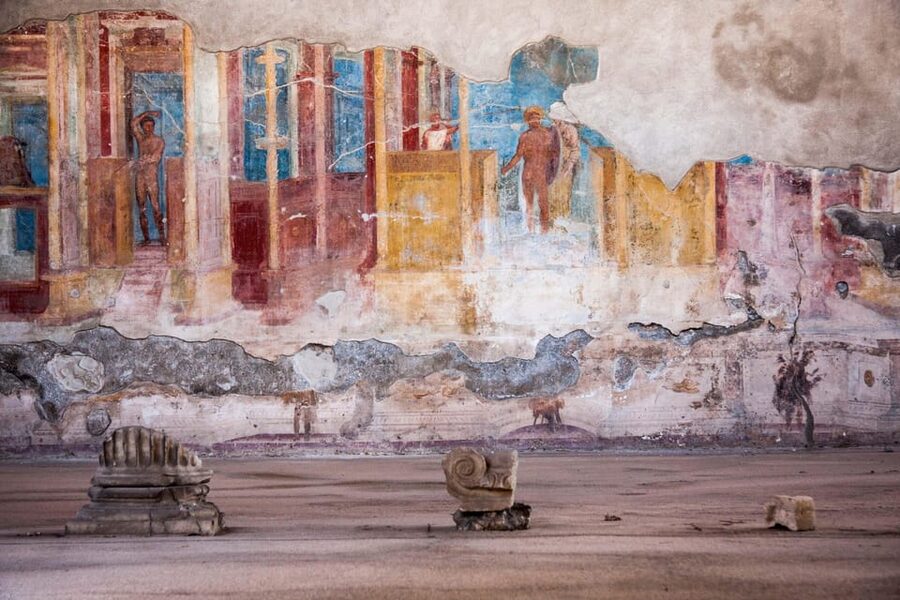
I would recommend it to independent visitors who want to set their own pace. Families, couples, and solo sightseers can all benefit from deciding when to stop, listen, photograph, or move on.
It also suits people who dislike long ticket queues and want a clear meeting point. The skip-the-line feature is especially useful during busy periods, though it does not turn Pompeii into a small or effortless site. You still need time, water planning, and good shoes.
This is less suitable if you want a passionate local guide, detailed answers, or a carefully narrated story from entrance to exit. The audio commentary may not provide enough depth for serious history enthusiasts. It is also not the right choice if you need transport from your hotel, since no transfer is part of the package.
For the best day, arrive with a rough priority list. Put the frescoed houses, baths, theaters, thermopolia, victim casts, and amphitheater on it, then use the map to fit in temples and shops. Leave room to pause. Pompeii rewards attention more than speed.
Should you book it?
Book this Pompeii experience if you want skip-the-line entry, a map, and an audioguide while keeping control of your day. At $44, it offers useful structure without forcing you into a group schedule.
Skip it if you need transportation, meals, or a live expert who can explain every site in depth. The audio guide has received at least one clear complaint about being too brief, so bring your own background reading if Pompeii is high on your list.
For most independent visitors, this is a practical access package rather than a fully guided tour. It gets you into one of the world’s most important archaeological sites efficiently, then leaves the day in your hands.
FAQ
Where is the meeting point?
The meeting point is directly next to Bar De Vivo.
What does the ticket include?
It includes entrance to the Pompeii ruins, an audioguide, and an updated map to help you follow suggested routes.
Is transportation included?
No. Transfers are not included, so you must make your own way to the meeting point.
Is there a live guide?
No live tour guide is included. A host or greeter is available in English, Italian, Spanish, or French, while the main visit is self-guided with audio commentary.
Which audioguide languages are available?
The audioguide is available in English, French, German, Italian, Hebrew, Chinese, Russian, Spanish, and Portuguese.
What should I bring?
Bring your passport or identity card, comfortable shoes, and comfortable clothing. Food and drinks are not included.
Newest reviews from Pompei Campania
- Pompeii: Skip The Line Entrance Tickets + Audioguides★ 3.2 · 4 reviews
- Pompeii: Entry Ticket & Guided Tour with an Expert Historian★ 5.0 · 4 reviews
- Combo Tour_Pompeii&Vesuvius from Castellammare di Stabia★ 4.0 · 4 reviews
- From Sorrento: Pompeii & Vesuvius tour small group★ 4.8 · 4 reviews
- Pompeii Private Tour for Kids and Their Families★ 4.8 · 4 reviews
- From Naples_ Pompeii Tour_Skip the line ticket + audioguide★ 4.3 · 4 reviews
- Pompeii, skip-the-line ticket with smartphone audio guide on App★ 3.0 · 4 reviews
- Pompeii Guided Experience – Tour Service Only★ 4.6 · 4 reviews
Tickets, compared.

Entry Ticket and Guided Tour with an Archaeologist
Read our review →

Skip-the-Line Entrance Ticket with Audio Guide
Read our review →
Archaeological Park Tour with Ticket on request
Read our review →


Skip-the-Line Entry Ticket with Digital Guide App
Read our review →