Reviewed · GUIDED
Pompeii: Guided Small Group Tour Max 6 People with Private Option
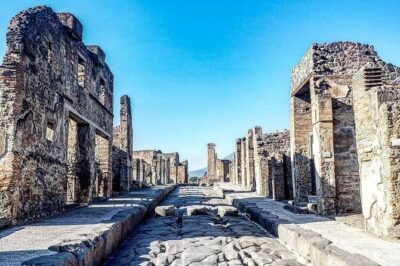
Pompeii is far too large to understand by simply wandering in and hoping the important bits turn up. This 2.5-hour tour with an archaeologist gives you a clear route through the forum, theater, baths, villas, and working-class streets, with the buried city explained as a place where people actually lived.
I like the maximum group size of six, which makes it easier to hear the guide and ask questions. I also like the skip-the-line entry, especially on a hot, crowded day. Guides including Mario, Francesca, Imma, Luigi, Maria, and Mariana have been praised for turning walls and broken paving stones into stories about Roman life.
The main drawback is the fixed length. Pompeii is enormous, and 2.5 hours gives you a strong introduction rather than a full visit. At $168.17 per person, this is also a serious outlay, though the small group and specialist guide make more sense if you want context instead of a quick look around.
In This Review
- Key points to know before booking
- Why a small Pompeii tour helps
- Entering at Via Villa dei Misteri
- The forum puts Pompeii in context
- Pompeii’s theater and public entertainment
- Houses that reveal ordinary Roman life
- Baths, bakeries, and the Temple of Isis
- What the Vesuvius view adds
- How the guide changes the experience
- Is $168.17 good value?
- Timing, heat, and the active excavation site
- Who should book this tour?
- Should you book the Pompeii small-group tour?
- FAQ
- How long does the Pompeii tour last?
- How many people can join the small group?
- What is included in the price?
- Which Pompeii sights are included?
- Where does the tour start and finish?
- Is the tour offered in languages other than English?
- Can I cancel for a full refund?
Key points to know before booking
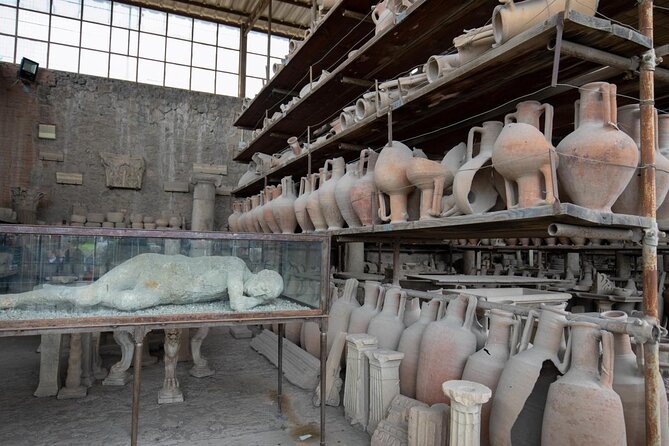
- A real archaeologist leads the visit: You get interpretation from someone trained to explain the site, not just directions from one ruin to the next.
- Six people is the limit: The group may be smaller, and one booking ended up with only two participants.
- The route covers major Pompeii sights: Expect the forum, theater, Roman baths, villas, Temple of Isis, and a view toward Mount Vesuvius.
- Skip-the-line admission is included: You avoid wasting part of a short tour at the entrance.
- Morning or afternoon timing is available: That gives you room to fit Pompeii around other plans.
- A private upgrade is offered: Choose it if you want the guide’s full attention or prefer to set the pace within the tour format.
Why a small Pompeii tour helps
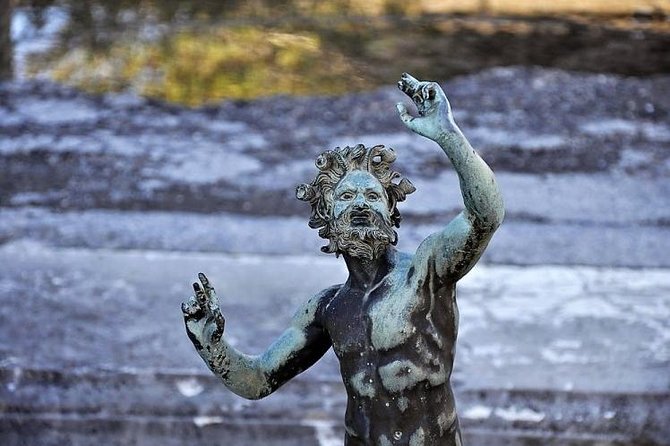
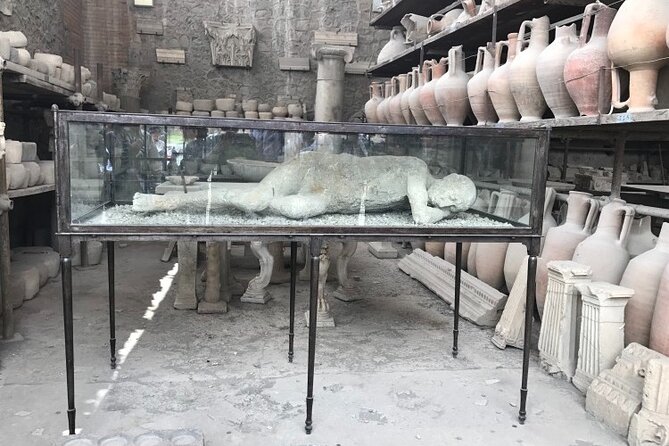
Pompeii is not a single grand monument with one obvious path. It is a large archaeological park made up of streets, homes, public buildings, shops, religious sites, and open areas that can look confusing without a guide.
That is the central value here. Your guide selects the places that best explain daily life and links them together. You are not simply shown a decorated house and told its name. You can learn how Roman homes were arranged, how public bathing worked, where theatergoers gathered, and what the forum meant to the city.
The six-person limit matters more than it may sound. A large group can turn a visit into a chase after a flag or raised umbrella. Here, you should be close enough to hear explanations and stop for questions. Maria also took care to check that participants had water and hats during a very hot visit, and used shade whenever possible.
That small-group format is not guaranteed to mean six people. One booking had only two participants, which is a pleasant possibility during a quieter departure. The private option costs more, but it gives you the most control over attention and pace.
More Pompeii excavation visits:
- Pompeii: Entry Ticket and Guided Tour with an Archaeologist
★ 4.8 · 19,459 reviews - Pompeii: Entry Ticket with Optional Audio Guide
★ 4.2 · 12,360 reviews - Pompeii: Small Group Tour with an Archaeologist
★ 4.8 · 12,264 reviews
Entering at Via Villa dei Misteri
The tour starts at Via Villa dei Misteri in Pompei, near public transportation. It ends back at the same meeting point, so you do not need to work out a separate finish point after the ruins.
Skip-the-line entry is included. That is especially useful here because the tour lasts only about two and a half hours. Every minute spent waiting is a minute you are not spending inside the archaeological park.
You should arrive ready for an outdoor visit. The supplied details do not specify a required clothing list or exact entrance procedure, so follow the booking instructions you receive. The practical lesson from the hot-weather visit is simple: bring water and a hat, and take shade when your guide points it out.
The activity is offered in English, with French, Spanish, Portuguese, and Italian available when requested in the additional notes. English is the listed standard language, so specify another language when booking rather than assuming it will be arranged automatically.
The forum puts Pompeii in context
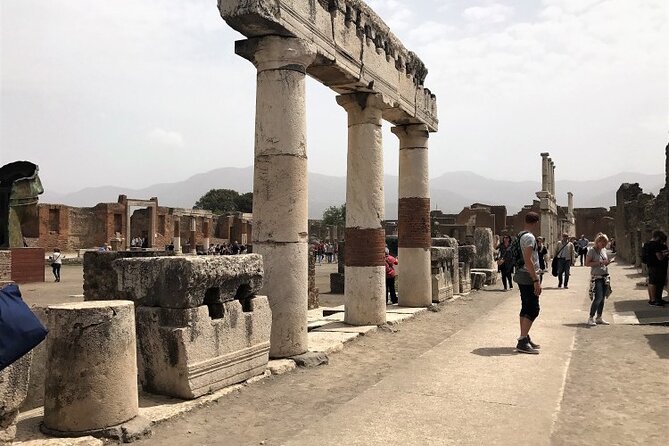
The Forum of Pompeii is one of the essential stops because it shows how public life was organized. This was not merely an attractive open square. It was a place tied to civic business, religion, trade, and public display.
A guide makes the forum easier to read. Without context, columns and foundations can blur into a general scene of ancient stone. With an explanation of what happened in the surrounding buildings and how people used the space, the ruins begin to suggest an operating city.
This is one reason I would not choose to visit Pompeii without some form of guided help if you have only a few hours. The site contains too much information, and the best details are often not the largest structures. Your guide can direct your attention to features you might otherwise pass without noticing.
The forum is also one of the places where the scale of Pompeii becomes clear. You are not looking at one isolated Roman house. You are moving through the center of a city that was suddenly covered by the eruption of Mount Vesuvius in 79 AD.
Pompeii’s theater and public entertainment
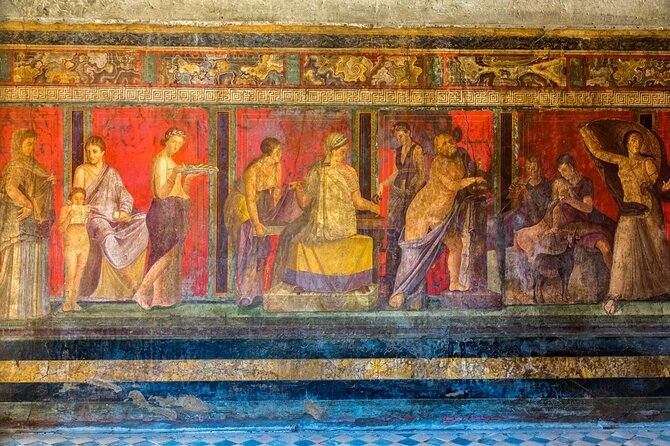
The Pompeii theater is included in the route. It adds a useful public dimension to a visit that might otherwise focus mainly on private houses.
Theater spaces help you picture how residents spent leisure time and how buildings were arranged for a crowd. Your guide can explain the setting and its role in the city, while you take in the structure itself rather than trying to decode it from a sign.
The tour also includes the House of the Gladiators. Its name connects the site with the world of public entertainment, but the guide’s explanation is what gives the stop value. You can ask questions and get a clearer sense of how the building fits into Pompeii’s wider social life.
The limitation is time. A 2.5-hour visit cannot give every public building equal attention. If the theater is your main reason for coming, tell the guide early, though the route may change because Pompeii is an active excavation site and daily archaeological work can affect access.
More Pompeii Ruins tours worth comparing
- Pompeii Ruins Private Tour with Optional Skip-the-Line Entry
★ 4.9 · 732 reviews - Pompeii private tour with an Official Guide
★ 5.0 · 631 reviews - Pompeii Private Tour with an Archaeologist and Skip The Line – 3 hours
★ 5.0 · 564 reviews - Visit in Pompeii – Pompeii Private Tour with Ada
★ 5.0 · 436 reviews
Houses that reveal ordinary Roman life
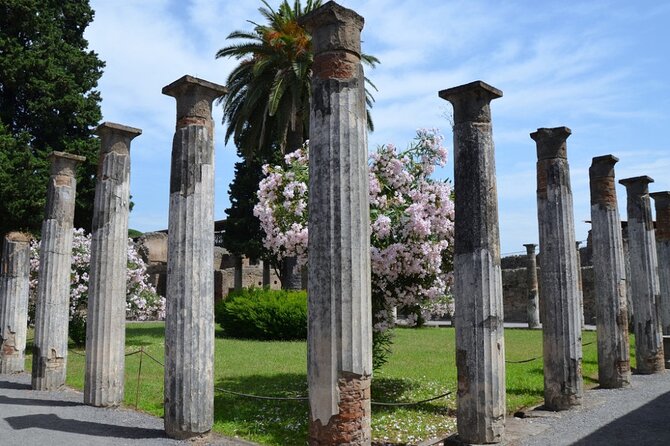
The private homes are where this tour becomes especially useful. The route can include the House of Menander, House of the Gladiators, House of Julia Felix, House of Loreius Tiburtinus, House of Sallust, House of the Tragic Poet, and House of the Vettii.
You will not necessarily spend the same amount of time in every house. The guide chooses a selection of the main villas, and the exact path may shift. Still, this range gives you different ways to think about Pompeii, from domestic design and decoration to wealth, status, and household routine.
The House of Julia Felix and House of Loreius Tiburtinus help show the scale and character of Roman residences. The House of Sallust and House of the Tragic Poet add further examples of how homes were planned and decorated. The House of the Vettii is another important stop for understanding the tastes and social position of Pompeii’s prosperous residents.
You should listen for practical details. Where did people receive visitors? How did rooms connect? What was public and what was private? The guides praised most highly, including Francesca, Imma, and Luigi, were valued for explaining these points in a clear way rather than burying you under dates.
One particularly useful feature of the tour is its attention to everyday life. Mario’s route included baths, theater, bakeries, and homes, with explanations of Roman culture in the first century. That mix gives you a better sense of Pompeii than a visit built only around famous painted rooms.
Baths, bakeries, and the Temple of Isis
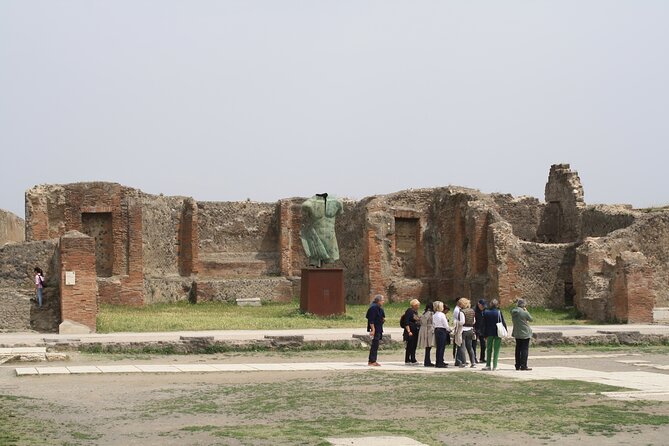
The Roman bath house is included, along with the suburban baths. These places show how much bathing mattered in Roman society and help balance the grander villas with a public service used by ordinary city residents.
The route can also include bakeries, an excellent reminder that Pompeii was a working city, not a frozen museum set. A bakery says something direct about food, labor, and the systems needed to feed a population. It is the kind of detail that can make the ancient world feel practical and familiar.
The Temple of Isis adds a religious layer. Pompeii was not limited to one form of worship, and this site helps explain the range of beliefs present in the city. Again, the guide’s role is central. A temple can be visually impressive, but its meaning is much easier to grasp when someone explains how it fit into civic and private life.
The Lupanar is also listed among the possible highlights. It is a famous and sensitive part of Pompeii, and the guide can place it within the social world of the ancient city. Expect the exact order and access to vary because the park is still being excavated and managed as an active archaeological site.
What the Vesuvius view adds
A view toward Mount Vesuvius gives the whole visit a strong sense of place. The volcano is not an abstract cause mentioned in a history book. It is the physical presence beside the city, and seeing it from Pompeii helps you understand the relationship between the settlement and the eruption that buried it.
The tour description says Pompeii was encapsulated and buried after the eruption in 79 AD. The important point for you is that the site preserves an unusually broad record of urban life: streets, houses, baths, religious buildings, entertainment spaces, and civic areas together.
Do not expect the Vesuvius view to turn this into a volcano tour. It is one element of a Pompeii visit, not a separate climb or excursion. Its value is visual context, especially after you have spent time looking at the city itself.
How the guide changes the experience
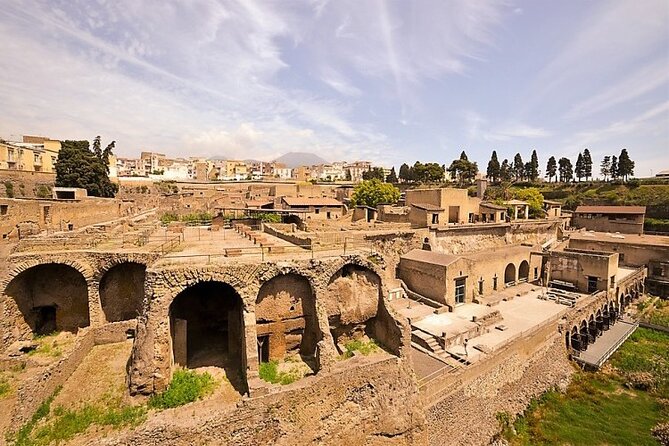
The strongest part of this tour is the guide. Francesca is described as friendly and clear, giving a digestible account of what you are seeing. Imma led a highlights route in very good English, while Luigi was praised for moving the group through the ruins with ease and adding stories about earlier life.
Those details point to the kind of guide you want at Pompeii. You need someone who can choose what matters, speak clearly, and adjust when the heat or crowds make a long stop unpleasant. Maria’s attention to water, hats, and shade is exactly the sort of practical care that makes an outdoor history visit work better.
The guide is identified as a professional expert and an archaeologist. That does not mean every question will lead to a long technical lecture. In fact, the best use of the 2.5 hours is a mix of site facts, human stories, and simple explanations of what you are looking at.
Language is another important factor. The standard offering is English, but French, Spanish, Portuguese, and Italian can be requested. If precise language support matters to you, include your preference when booking.
Is $168.17 good value?
At $168.17 per person, this is not a budget way to enter Pompeii. The price needs to be judged against what is included: admission, skip-the-line access, an archaeologist guide, a group capped at six, and the option of a private format.
For a solo visitor or couple, the cost may feel high compared with entering independently. An unguided visit gives you more time and freedom, but you must make sense of a huge site on your own. If you have already read widely about Pompeii and want to linger at specific buildings, independent entry may suit you better.
I see stronger value for people coming from Rome or making a single visit to Pompeii. One 2.5-hour tour participant considered the trip from Rome worthwhile, and that makes sense if your time is limited. A well-planned route can help you see the major sights without spending the day wandering between closed areas and less important ruins.
The small group also improves the price comparison. You are paying for attention, not just admission. If six people attend, it remains far more personal than a large coach-style tour. If the group is smaller, the experience may feel close to private without the full private-tour price.
Group discounts are available, though the supplied details do not state the amount or conditions. Check the current price for your dates, especially if you are booking for several people.
Timing, heat, and the active excavation site
You can choose a morning or afternoon departure. That flexibility is useful when arranging trains, lunch, or another Pompeii-area activity, but the best choice depends on your wider schedule and the day’s conditions.
Heat deserves attention. Pompeii is an outdoor archaeological park, and the stone streets offer limited shade in places. A guide may help you use shaded areas, as Maria did, but you should still bring water and a hat.
Crowds can also affect the feel of the visit. Skip-the-line access helps at entry, but it cannot make the entire park empty. A small group is valuable inside because you can stay close to the guide and avoid losing explanations in a mass of people.
Pompeii remains an ongoing excavation site. Daily archaeological duties can alter the suggested route, so treat the listed houses and buildings as intended highlights rather than an absolute promise that every door will be open. The guide should adjust the visit while still covering the most important parts of the city.
Who should book this tour?
I would choose this tour if you are visiting Pompeii for the first time, have about three hours, and want the site explained in plain language. It suits history lovers, couples, families, and anyone who would rather ask questions than read every sign alone.
It is also a good fit if you are coming from Rome and want a focused introduction instead of an all-day research project. The small group helps if you value a quieter, more personal format.
You may want something else if you hope to spend a full day inside the park, photograph every house, or explore at your own slow pace. The 2.5-hour schedule is designed around the main highlights, not total coverage.
The private option is worth considering for a special occasion, a family with mixed interests, or anyone who wants the guide’s attention throughout. The standard small group should be enough for most people, particularly since the maximum is only six.
Should you book the Pompeii small-group tour?
Book it if you want a well-shaped first visit, skip-the-line admission, and an archaeologist who can explain how Pompeii worked as a city. The most praised qualities are consistent: clear English, friendly guides, strong historical explanations, and smooth movement through a crowded site.
At $168.17, it is not the cheapest choice. But if you have limited time and see Pompeii as a major part of your Italy trip, the price buys focus and interpretation. I would book the small-group version for value, then choose private only if personal attention matters more than keeping the cost down.
Free cancellation is available up to 24 hours before the start time, which gives you some room if your plans change. Just remember that changes or cancellations inside that 24-hour window are not refundable.
FAQ
How long does the Pompeii tour last?
The tour lasts approximately 2 hours and 30 minutes.
How many people can join the small group?
The small-group tour has a maximum of six participants. The private option is also available.
What is included in the price?
The price includes a professional expert guide, admission to Pompeii, and skip-the-line entry. The tour also includes the listed Pompeii highlights.
Which Pompeii sights are included?
The route includes the Pompeii theater, Forum of Pompeii, Roman bath house, House of Sallust, House of Julia Felix, and a view of Mount Vesuvius. It can also include villas, the Temple of Isis, suburban baths, bakeries, and the Lupanar.
Where does the tour start and finish?
The tour starts at Via Villa dei Misteri, 80045 Pompei NA, Italy, and ends back at the meeting point.
Is the tour offered in languages other than English?
Yes. French, Spanish, Portuguese, and Italian can be requested. English is the listed standard language, so specify another language in the additional notes when booking.
Can I cancel for a full refund?
Yes. You can cancel at least 24 hours before the experience start time for a full refund. Cancellations or changes made less than 24 hours in advance are not accepted for a refund.
Newest reviews from Pompeii Ruins
- Private Tour Pompeii and Winery★ 5.0 · 4 reviews
- Visit the Pompeii ruins from Salerno with Pizza Lunch★ 5.0 · 4 reviews
- Pompeii Private Tour for Kids and Their Families★ 4.8 · 4 reviews
- From Sorrento: Pompeii & Vesuvius tour small group★ 4.8 · 4 reviews
- Pompeii Sorrento and Positano Tour★ 5.0 · 4 reviews
- From Naples_ Pompeii Tour_Skip the line ticket + audioguide★ 4.3 · 4 reviews
- Pompeii, skip-the-line ticket with smartphone audio guide on App★ 3.0 · 4 reviews
- Pompeii Private Half-Day Tour from: Naples,Sorrento, Amalfi Coast★ 5.0 · 4 reviews
Guided, compared.

Entry Ticket and Guided Tour with an Archaeologist
Read our review →

Skip-the-Line Entrance Ticket with Audio Guide
Read our review →



Skip-the-Line Entry Ticket with Digital Guide App
Read our review →