Reviewed · GUIDED
Pompeii and House of Vettii Guided Tour
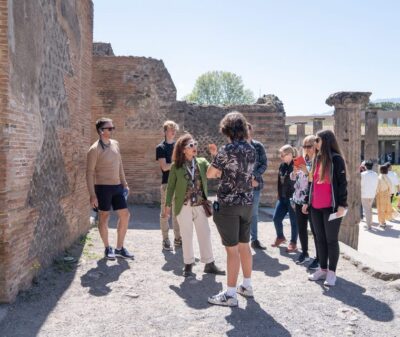
The restored House of Vettii is the star of this Pompeii visit. Reopened after 20 years, it gives you a close look at Roman domestic life, while the surrounding streets, public buildings, and shops explain how the city worked before Vesuvius erupted in AD 79. A guide leads the way in English or Italian, with groups capped at 10 people.
I like the small group size, which should make it easier to hear explanations and ask questions. I also like the separate skip-the-line entrance, especially when Pompeii is busy. The main caution is timing: the tour is described as two hours in one place and three hours in another, so confirm the exact schedule before booking. Arrive early, too. If you miss the group, you may receive your tickets but have to find your own way around.
In This Review
- Key points to know before booking
- Why the House of Vettii changes the way you see Pompeii
- Walking Pompeii’s ancient streets
- The Forum and Basilica: Pompeii’s public center
- Thermal baths and the rhythm of Roman daily life
- The theater, shops, and homes
- What skip-the-line entry is worth at Pompeii
- Is $49 good value for a two-hour visit?
- Two hours or three hours?
- Who will enjoy this Pompeii tour most?
- My recommendation
- FAQ
- How long does the tour last?
- What languages are available?
- Is skip-the-line entry included?
- What is the maximum group size?
- Is the House of Vettii included?
- Do I need identification?
- Can I cancel for a refund?
Key points to know before booking
- The House of Vettii is the main focus: See a restored Roman home reopened after two decades.
- Pompeii’s major sights are included: The route covers the Forum, Basilica, thermal baths, theater, shops, and residential streets.
- Groups are limited to 10 people: This is a better setup for questions than a large walking group.
- Skip-the-line entry saves time: You use a separate entrance instead of waiting in the regular ticket queue.
- The advertised length needs checking: The activity information gives both two hours and three hours.
- Late arrival can cause trouble: You may get your entry tickets but miss the guided portion.
Why the House of Vettii changes the way you see Pompeii
Pompeii can feel overwhelming at first. You enter a huge archaeological site filled with streets, walls, temples, baths, theaters, and houses, yet it is not always clear how the pieces fit together. The House of Vettii gives the visit a human center.
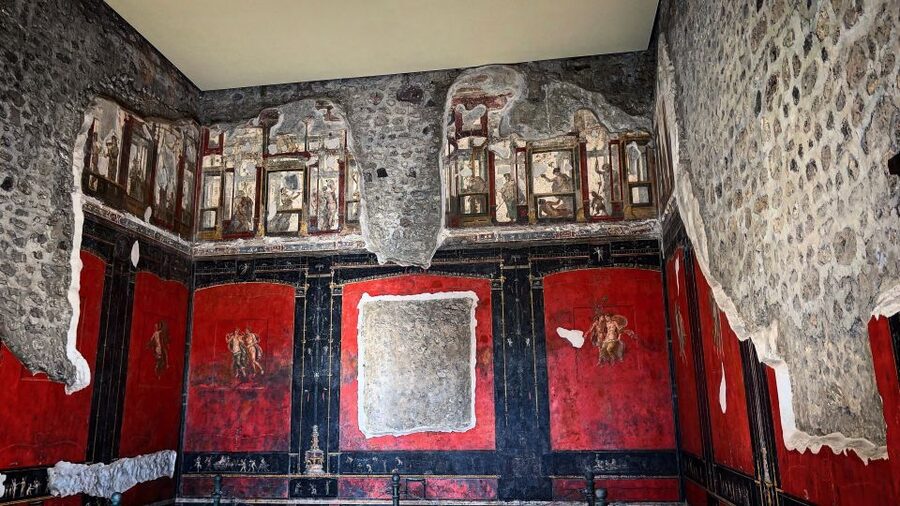
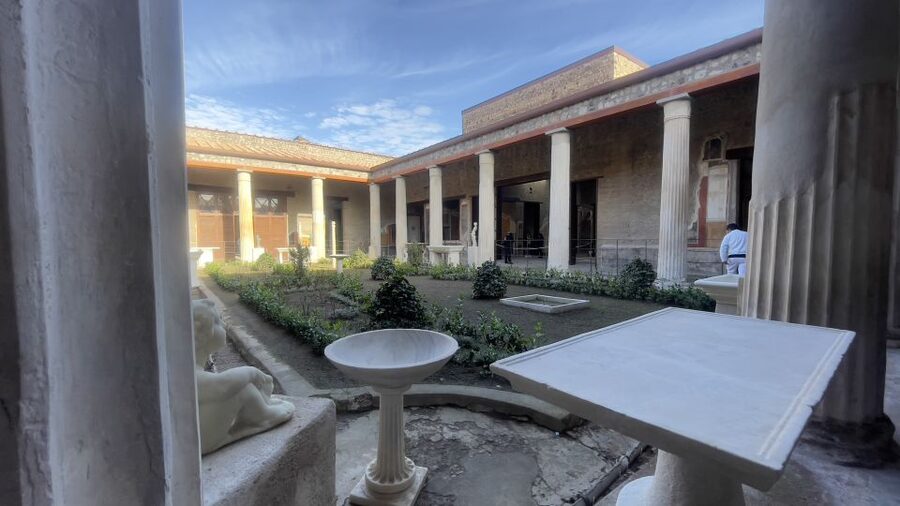
This residence was restored and reopened after 20 years. Its value is not simply that it is attractive. A private house helps you picture Pompeii at street level, where cooking, business, social life, and family routines took place behind painted walls and heavy doorways.
The tour does not treat the house as an isolated stop. You also walk through the wider city, so you can compare private rooms with public spaces. That contrast matters. The Forum shows where civic life took place, the thermal baths reveal the role of shared facilities, and the theater points to entertainment as a regular part of Roman life.
I would pay close attention to the guide’s explanation of how the house relates to the people who lived there. The supplied details do not identify individual guides, but the tour is led in English or Italian. Since the group is limited to 10, you should have a reasonable chance to ask for clarification when a building or room is hard to interpret.
More Pompeii excavation visits:
- Pompeii: Entry Ticket and Guided Tour with an Archaeologist
★ 4.8 · 19,459 reviews - Pompeii: Small Group Tour with an Archaeologist
★ 4.8 · 12,264 reviews - Pompeii: Skip-the-Line Entrance Ticket with Audio Guide
★ 4.0 · 2,509 reviews
Walking Pompeii’s ancient streets
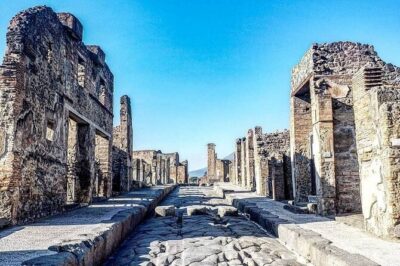
The visit takes you through the preserved streets of Pompeii, where the city’s layout remains the main attraction. These are not museum galleries arranged in neat order. You walk outdoors among original urban spaces, moving from one part of the city to another.
That setting helps you understand Pompeii as a functioning town rather than a collection of ruins. Commercial areas sit beside homes. Civic buildings connect to open public spaces. The route shows how daily errands, public business, bathing, entertainment, and domestic life occupied the same compact city.
A guide is especially useful here because many remains are architectural fragments. A wall or foundation may look plain until someone explains its purpose. The tour promises information about what life was like before the eruption, which is the context you need to make sense of the streets.
Pompeii also demands attention to your footing and stamina. The activity is not suitable for wheelchair users or people with mobility impairments, and it is also not recommended for people with heart problems or pre-existing medical conditions. The supplied information does not give a detailed surface description, so you should be prepared for an outdoor archaeological walk rather than a smooth city stroll.
The Forum and Basilica: Pompeii’s public center
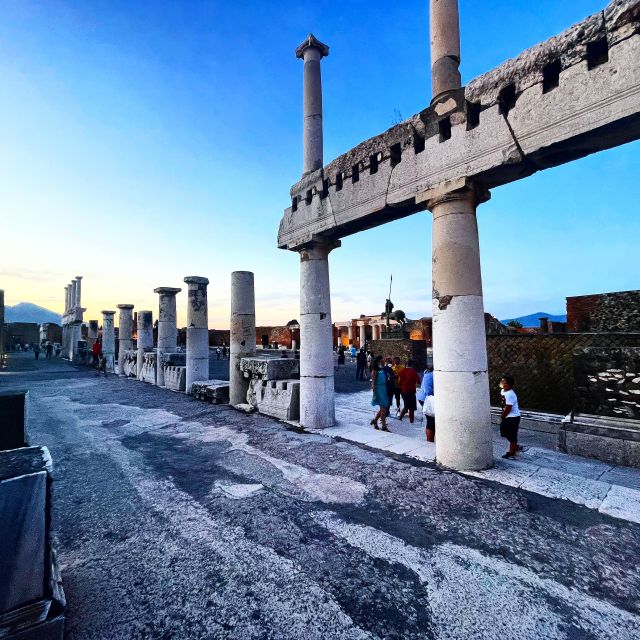
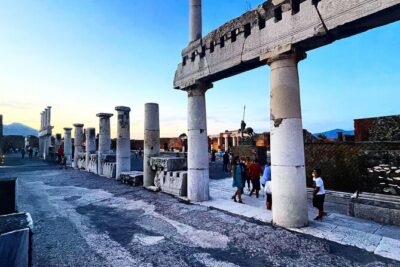
The Forum was the heart of Pompeii’s civic life. It was the place to think about politics, commerce, religion, and public gatherings, rather than a quiet square designed only for sightseeing. Seeing it with the rest of the route helps you understand the city’s scale and organization.
The Basilica is another important stop. In Roman towns, a basilica was tied to public and legal business. Here, the building gives you a sense of how civic matters were handled before modern offices and courthouses existed.
These stops are valuable because they broaden the visit beyond pretty wall paintings and dramatic ruins. Pompeii was a working city. Its public buildings show how people dealt with law, trade, administration, and social life.
I would use this part of the tour to ask practical questions about who used each space and how it connected to the streets around it. The exact route can vary, and the supplied information does not promise a fixed order, but the Forum and Basilica are listed among the principal structures you should expect to see.
Thermal baths and the rhythm of Roman daily life
The thermal baths show how much public facilities mattered in Roman society. They were not simply places to wash. They were part of the normal rhythm of the city, and their inclusion helps explain how people spent time outside their homes.
You can expect the guide to connect the baths with broader ideas about daily life in Pompeii. The tour is designed to explain what the city was like before AD 79, so the baths should be read as evidence of social habits and shared urban services, not just as another set of old rooms.
The details provided do not specify which bathing complex you will enter or how long you will spend there. Keep that in mind if you have a particular bathhouse in mind. This is a compact guided visit, not a full-day archaeological study.
More Pompei Campania tours worth comparing
- Pompeii: Skip-the-line-Ticket and Guided Tour
★ 4.6 · 1,152 reviews - Pompeii: Guided Tour with Skip-the-Line Entry
★ 4.9 · 812 reviews - Pompeii: Skip-the-Line Entry Ticket with Digital Guide App
★ 4.1 · 770 reviews - Pompeii: Afternoon to Sunset Guided Tour with Ticket
★ 4.9 · 484 reviews
The theater, shops, and homes
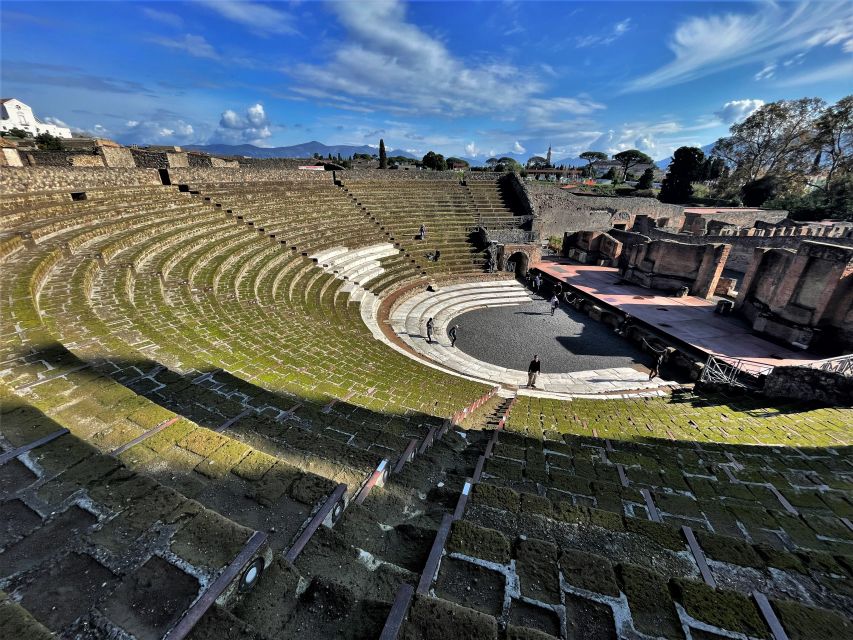
The theater adds another side of Pompeii. It points to public entertainment and gives you a reminder that city life included performances as well as work, worship, and business.
The commercial neighborhoods are equally useful. Shops help you picture the practical side of Pompeii, where people bought goods and services close to their homes. Residential neighborhoods then bring the visit back to ordinary domestic spaces.
This mix is one of the strongest parts of the itinerary. You are not shown only the most famous monument. You get a basic cross-section of the city: civic buildings, public recreation, commercial streets, and private residences.
The tour description does not name individual shops or homes beyond the House of Vettii, so do not book this expecting a guaranteed list of specific buildings. The strength is the overall explanation of how the city functioned.
What skip-the-line entry is worth at Pompeii
The separate entrance can be a real advantage. Pompeii is a major archaeological site, and time spent in a ticket queue is time you could use inside the ruins. Skip-the-line access matters most if you are visiting on a tight schedule or fitting Pompeii between other Campania plans.
It does not mean you can arrive whenever you please. You still need to meet the tour at the correct time and bring a passport or identity card. A copy is accepted according to the activity information.
The late-arrival warning deserves serious attention. A delayed arrival caused by problems collecting a hire car once left a participant with tickets but no guided tour, requiring an independent walk through the site. That is a useful reminder to build in extra time for parking, car collection, traffic, and finding the meeting point.
The first Sunday of each month is another special case. Entrance is free, but tickets cannot be reserved ahead of time, so entry is not guaranteed. If your visit falls on that day, the normal advantage of reserved skip-the-line admission may not apply in the usual way.
Is $49 good value for a two-hour visit?
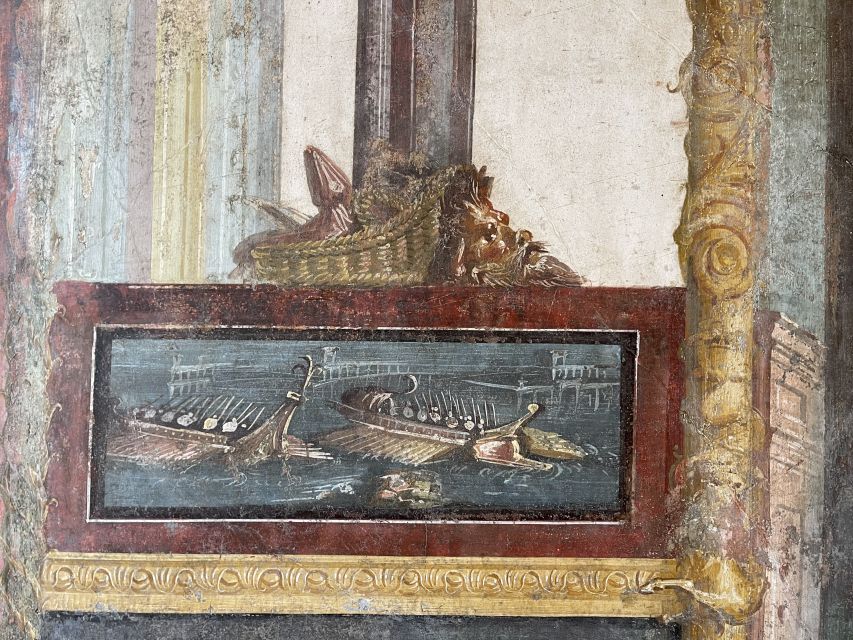
At $49 per person, the price is reasonable if you want a guide and faster entry without committing to a much longer excursion. You are paying for the guided service, admission, and the convenience of having the major parts of Pompeii explained in a short visit.
The value depends on how you like to explore. If you prefer to read signs, wander alone, and set your own pace, you may find the ticket alone more flexible. If Pompeii’s scale feels intimidating, a guide can help you spend two focused hours on the parts that matter most.
The small maximum of 10 improves the value. You are not being moved through the site in a crowd of dozens, and the group should be manageable when the guide stops to explain a building or answer a question. Private options are also available, though the supplied price is stated for the standard experience and does not explain the private-group supplement.
Food, drinks, hotel pickup, and hotel drop-off are not included. Plan to reach Pompeii on your own and handle refreshments separately. The activity is a site visit, not a transport package or a full-day outing.
Two hours or three hours?
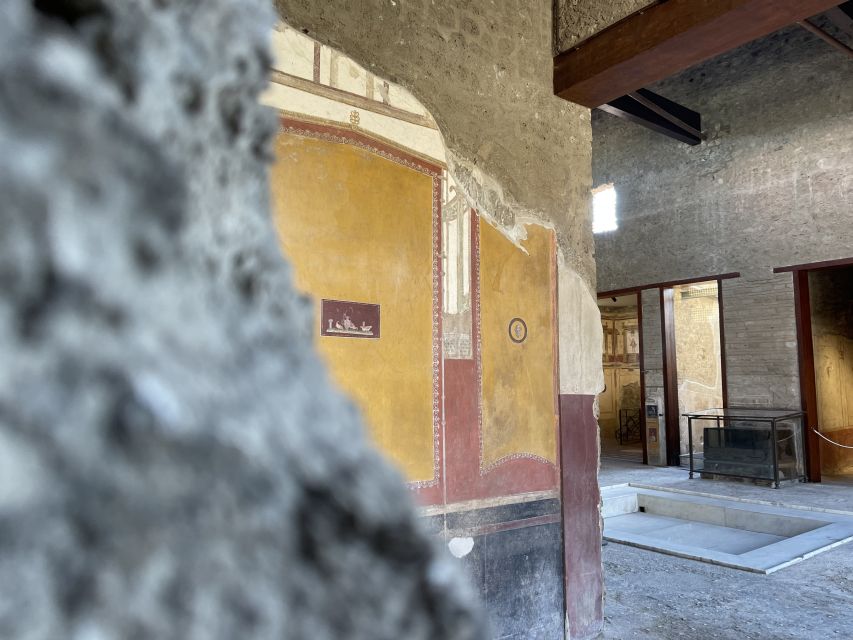
The duration needs clarification before you pay. The main activity information says two hours, while the inclusion section says three hours. That is a meaningful difference at Pompeii, where an extra hour can allow more time for the Forum, baths, theater, or residential streets.
The safest approach is to check the selected starting time and the final duration during booking. If you have a train, car reservation, lunch booking, or another tour afterward, do not assume the longer or shorter figure without confirming it.
Even two hours can work well as an introduction. Pompeii is too large to see fully in one short visit, so this tour makes sense if you want a guided first look centered on the House of Vettii and the city’s main civic areas. For a slower visit, you may want to remain at the site after the guided portion, but no extra touring time is promised as part of the activity.
Who will enjoy this Pompeii tour most?
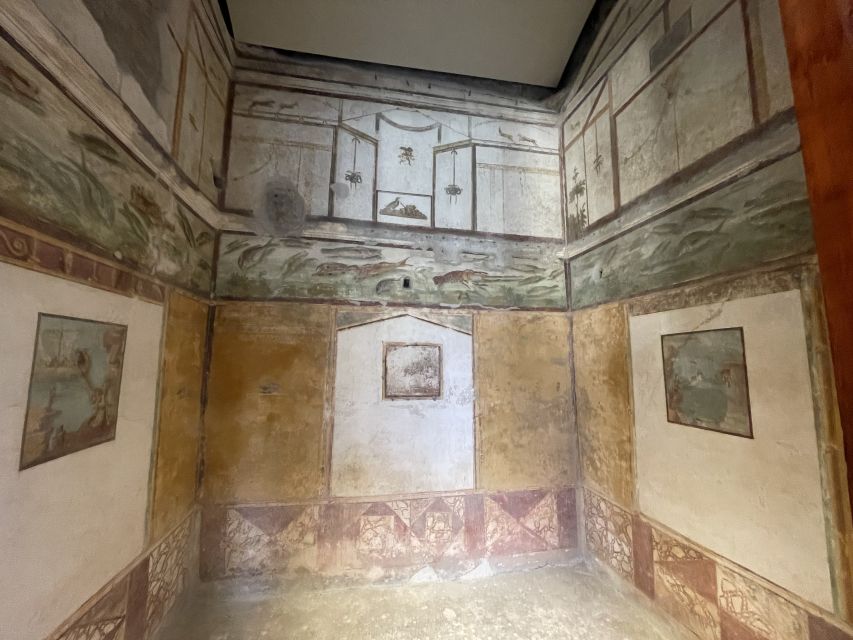
I would choose this experience if you want structure, historical explanation, and a short visit that covers several types of Roman buildings. It suits first-time Pompeii visitors who do not want to spend their opening hour trying to work out a route.
The tour also fits people staying elsewhere in Campania who need a focused Pompeii visit. Since transport and hotel transfers are not included, you need to arrange your own arrival and allow time to locate the meeting point.
It is less suitable if you need step-free access, have limited walking ability, or have one of the listed medical conditions. It also may not suit independent explorers who dislike fixed start times or who want to linger at every house.
The private or small-group choice gives you some flexibility in how personal the visit feels. The standard group is capped at 10, while the activity also lists private tours as available. English and Italian are the guide languages.
My recommendation
Book this tour if the restored House of Vettii is your priority and you want Pompeii’s major public spaces explained in a compact visit. The small group, separate entrance, and mix of homes, streets, civic buildings, baths, and theater make $49 a fair price for a well-organized introduction.
I would not book without checking the duration and meeting instructions first. Arrive early, bring your passport or an accepted copy, and allow extra time if you are collecting a rental car. If you need accessible routes, longer independent exploration, or hotel transport, this is not the right fit.
FAQ
How long does the tour last?
The activity information gives two different durations. The main details state two hours, while the inclusion section says three hours. Check the exact duration for your selected booking before scheduling anything afterward.
What languages are available?
The live guide is available in English and Italian.
Is skip-the-line entry included?
Yes. The tour includes skip-the-line tickets through a separate entrance.
What is the maximum group size?
The small group option has a maximum of 10 people. Private groups are also available.
Is the House of Vettii included?
Yes. The tour visits the restored House of Vettii, which reopened after 20 years.
Do I need identification?
Yes. Bring a passport or identity card. A copy is accepted.
Can I cancel for a refund?
You can cancel up to 24 hours in advance for a full refund. A reserve-now, pay-later option is also available.
Newest reviews from Pompei Campania
- Pompeii and Vesuvius Cellars: Tour with Pick-Up in Positano★ 4.7 · 3 reviews
- Pompeii: AR Glasses Augmented Reality Tour★ 5.0 · 3 reviews
- Pompeii 2H Private Guided Tour with Optional Tickets★ 5.0 · 3 reviews
- Pompeii Tour with Archaeological Expert and Lunch★ 4.6 · 3 reviews
- From Salerno_Pompeii Express_bus+ skip the line ticket★ 4.0 · 4 reviews
- Pompeii: Skip The Line Entrance Tickets + Audioguides★ 3.2 · 4 reviews
- Pompeii: Entry Ticket & Guided Tour with an Expert Historian★ 5.0 · 4 reviews
- Combo Tour_Pompeii&Vesuvius from Castellammare di Stabia★ 4.0 · 4 reviews
Guided, compared.
Entry Ticket and Guided Tour with an Archaeologist
Read our review →

Skip-the-Line Entrance Ticket with Audio Guide
Read our review →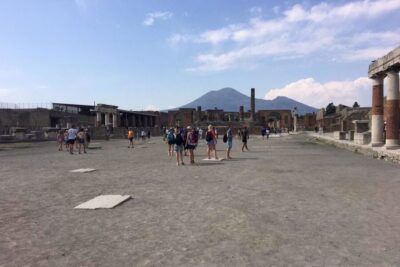

Skip-the-Line Entry Ticket with Digital Guide App
Read our review →