
Reviewed · HERCULANEUM TOURS
Pompeii and Herculaneum small group Excursion from Naples
Pompeii and Herculaneum in one day is a powerful double act. Pompeii gives you broad streets, public buildings, shops, theaters, and famous houses, while Herculaneum feels smaller, sharper, and often better preserved. With an archaeologist guide leading both sites, you get the story behind the stones instead of wandering through a giant puzzle.
I like the skip-the-line entry, since every saved minute matters on a seven-hour schedule. I also like the air-conditioned minibus and professional driver, which spare you the hassle of sorting out transport between Naples and the ruins. The main drawback is simple: two archaeological parks in one day mean plenty of walking, limited time in each place, and a schedule that may feel full for anyone who prefers a slow, unhurried visit.
In This Review
- Key points at a glance
- Why see Pompeii and Herculaneum together?
- Meeting in Naples and riding to the ruins
- Pompeii in two hours: a city laid open
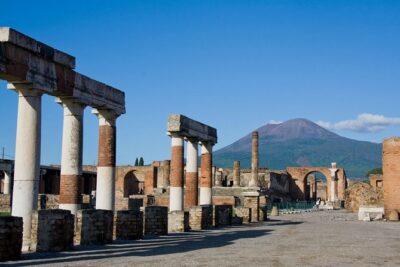
- The Basilica and Forum
- Abbondanza Street and the House of Menander
- Forum granaries and the Stabian Baths
- The Lupanar and Pompeii’s houses
- Pompeii’s small and large theaters
- Herculaneum in two hours: detail at a smaller scale
- The House of the Deer and Nonio Balbo’s Terrace
- The Augustales and the House of the Relief of Telephus
- Wooden Partition, Skeleton, and Central Thermae
- The Black Salon, Samnitic House, and final courtyards
- The guide makes the difference
- Walking, pace, and comfort
- Is $173.27 a fair price?
- Who should book this Pompeii and Herculaneum tour?
- FAQ
- Where does the tour begin?
- How long does the excursion last?
- How much time do you spend at Pompeii?
- How much time do you spend at Herculaneum?
- Are admission tickets included?
- Is transportation included?
- What is the maximum group size?
- Should you book it?
Key points at a glance
- Two famous Roman cities in seven hours: Spend about two hours at Pompeii and two hours at Herculaneum, with transport between them.
- Archaeologist-led walks: Guides such as Rafael, Gennaro, Michele, Vincenzo, Giulia, and Michael have led groups with humor, strong organization, and clear explanations.
- Pompeii’s major sights: See the Forum, Basilica, Abbondanza Street, Stabian Baths, Lupanar, House of Menander, House of the Faun, and both theaters.
- Herculaneum’s preserved homes: Visit the House of the Deer, House of the Skeleton, Samnitic House, House of the Grand Portal, and other residential buildings.
- Small-group format: The minibus tour accepts a maximum of 20 people, offering more personal guidance than a large coach excursion.
- Useful for a port or rail stop: Pickup and transport are offered from the Naples Central Station or train station area, with the meeting point at Starhotels Terminus.
Why see Pompeii and Herculaneum together?
The two sites were both buried by the eruption of Mount Vesuvius in AD 79, but they offer different kinds of ancient-life lessons. Pompeii is the larger place. Its streets and public buildings help you understand how a Roman town worked on a citywide scale.
Herculaneum is more compact. Its preserved houses, decoration, and upper-level details can make daily life feel closer and more immediate. You may spend less time walking between major areas, but the buildings themselves reward careful attention.
I recommend seeing both if you have only one day near Naples. Visiting one site alone gives you a strong experience. Visiting both lets you compare how two Roman communities lived, built, shopped, bathed, worshiped, and entertained themselves before the eruption.
The guide matters here. Pompeii and Herculaneum can be confusing without context, since not every building is open and many ruins look alike at first glance. A trained archaeology guide can explain what you are looking at, point out construction details, and connect a private house to the larger Roman town around it.
More Pompeii excavation visits:
- Pompeii: Entry Ticket and Guided Tour with an Archaeologist
★ 4.8 · 19,459 reviews - Pompeii: Entry Ticket with Optional Audio Guide
★ 4.2 · 12,360 reviews - Pompeii: Small Group Tour with an Archaeologist
★ 4.8 · 12,264 reviews
Meeting in Naples and riding to the ruins
The stated meeting point is Starhotels Terminus, P.za Giuseppe Garibaldi 91, beside Naples Central Station. The tour also describes transport from the Naples Central Station or train station area, making it useful if you are arriving by rail or connecting with a cruise-day transfer.
The included minibus and professional driver remove one of the day’s practical headaches. You do not need to arrange separate transportation to Pompeii, then find another way to Herculaneum, then return toward Naples. The driver handles the road while the guide focuses on the sites.
The tour lasts about seven hours. That includes transport, entry, and the guided visits, so do not read the four hours inside the parks as free time for wandering. The schedule is designed to show you the important sections in a sensible order.
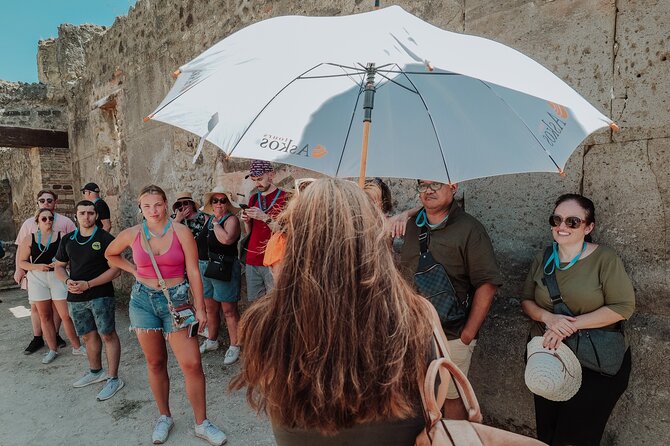
The group maximum is 20 people. That is still large enough that you should stay close to the guide, especially in busy areas, but it is far more manageable than a full-size coach group. The guide can keep the pace moving and still respond to questions.
Pompeii in two hours: a city laid open
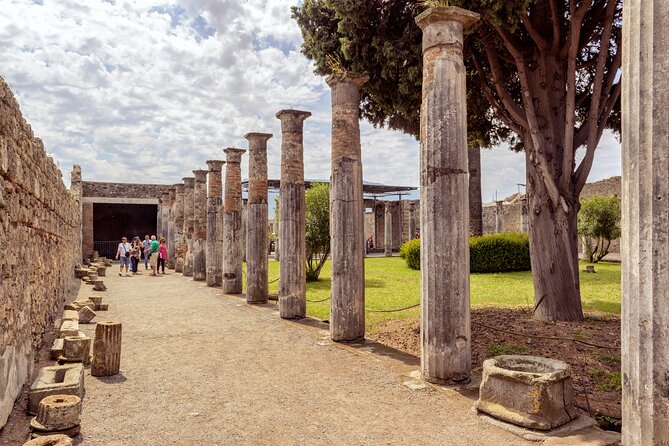
Your first major stop is the Archaeological Park of Pompeii, with about two hours inside. The included Pompeii Express ticket and fast-track arrangement help you get to the ruins instead of spending part of the morning in an entry queue.
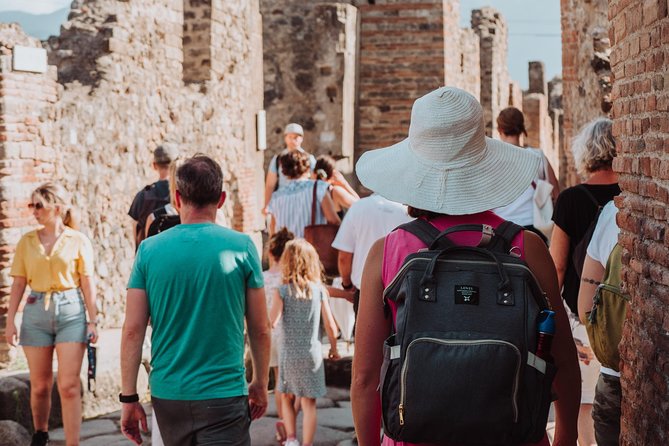
Two hours is enough for a strong introduction, not enough to see every street. Pompeii is enormous, and the route focuses on major public buildings, homes, streets, baths, and theaters. Expect a steady walk over ancient paving stones and open ground.
The Basilica and Forum
The Basilica is one of the first useful stops for understanding Pompeii as a working town. This large civic building was tied to business and legal activity. Your guide can help you picture the building in use, rather than treating it as a roofless shell.
The Forum follows as the center of public life. Allow about ten minutes here, though the explanation may feel more important than the clock suggests. The open square was surrounded by temples, civic buildings, and commercial spaces, giving you a clear sense of how power and public life were arranged.
The Forum also helps orient you. Once you understand this central space, the streets and buildings that follow make more sense.
More Herculaneum excavation visits:
- Pompeii and Herculaneum Small Group Tour with an Archaeologist
★ 5.0 · 1,350 reviews - Pompeii: Small-Group Tour of Pompeii and Herculaneum
★ 4.8 · 867 reviews - Guided Day Tour of Pompeii and Herculaneum with Light Lunch
★ 4.5 · 311 reviews - Private Day Tour to Vesuvius, Herculaneum & Pompeii with Pick Up
★ 5.0 · 279 reviews
Abbondanza Street and the House of Menander
A walk along Via dell’Abbondanza gives you a feel for Pompeii’s ordinary movement. This was not just a path between monuments. It was a street used by residents, shoppers, workers, and visitors.
The House of Menander shifts the focus to private life. Roman houses were not simple modern homes. Their courtyards, reception rooms, wall decoration, and service areas reflected family status and social customs. A guide can explain how the layout worked and why a house might be built around a central open space.
At Pompeii, I find these residential stops especially useful because they balance the grand public buildings. You see both the city that officials presented to the public and the homes where people ate, worked, hosted friends, and managed households.
Forum granaries and the Stabian Baths
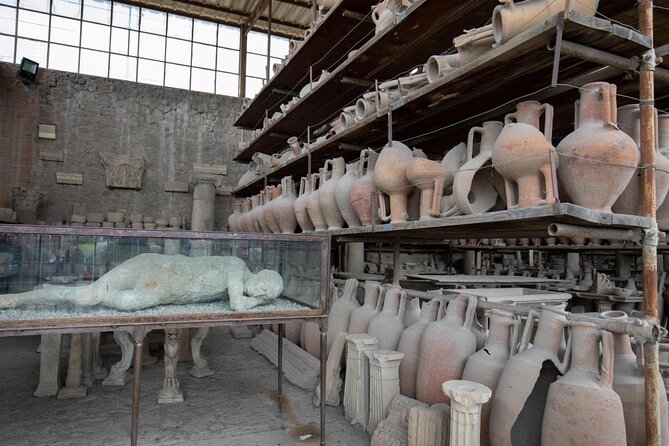
The Forum granaries, sometimes called the barns of the Forum, show the practical side of city life. These spaces were used for storage and now also help preserve objects recovered from Pompeii. The stop is brief, but it adds an important reminder: ancient cities depended on supply systems just as much as they depended on temples and theaters.
The Stabian Baths reveal another daily habit. Roman baths were places for washing, exercise, conversation, and social contact. Look for the design logic of the complex, including its different rooms and systems for heating water and air.
This is where an archaeologist guide can turn a ten-minute stop into a useful lesson in Roman engineering. Without that explanation, the baths may look like a collection of walls. With it, you begin to see how heat, water, changing rooms, and social routines fit together.
The Lupanar and Pompeii’s houses
The Lupanar is one of Pompeii’s most famous stops. It is a small building associated with prostitution, and its rooms and painted imagery offer a direct, if uncomfortable, look at one part of Roman urban life.
Your guide may also take you to the House of the Faun, one of the site’s best-known private residences. The name comes from its famous faun statue, and the building gives you a sense of the wealth and scale possible in a Roman house.
The supplied route lists the House of the Faun as a viewing stop, but one past participant specifically noted not entering it. Access can change, so treat this as an important building to see rather than a guarantee that every room will be open.
Pompeii’s small and large theaters
The Odeon, or Small Theatre, was designed for more intimate performances. Its compact scale contrasts with the Great Theatre, which could hold a much larger audience.
These stops are short, about five minutes each, but they help complete the picture of Pompeii as a city of leisure as well as work. The theater buildings also show how Roman public spaces were planned around crowd movement, viewing angles, and social rank.
The Pompeii visit is busy, but the route is not random. It moves from civic life to streets, homes, baths, entertainment, and commerce. The result is a useful first look at the city without asking you to spend a full day on your feet.
Herculaneum in two hours: detail at a smaller scale
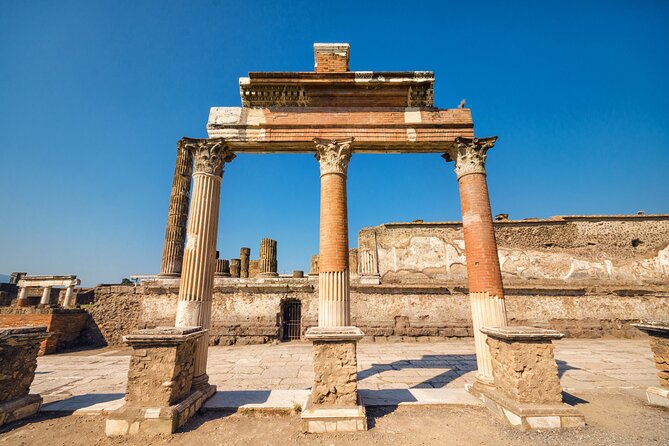
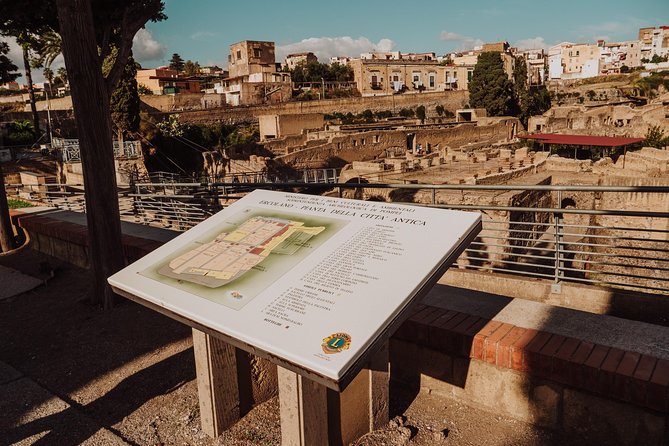
After Pompeii, the tour continues to the Archaeological Park of Herculaneum. Entrance is included, and the visit lasts about two hours.
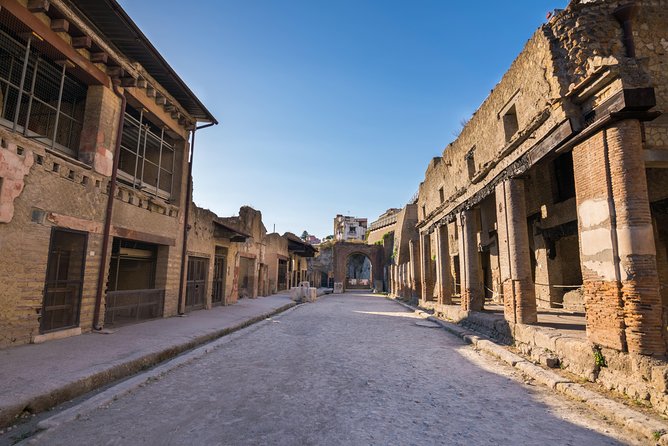
Herculaneum was smaller than Pompeii, which makes the visit feel more concentrated. The route spends much of its time in houses and smaller buildings. Here, details such as courtyards, wall decoration, thresholds, timber features, and domestic layouts receive more attention.
If Pompeii tells you how a Roman town functioned, Herculaneum often shows you how individual households looked and felt.
The House of the Deer and Nonio Balbo’s Terrace
The House of the Deer is one of the major residential stops. Its position and design help show how wealthy residents used outdoor areas and arranged rooms around views and open space.
La Terrazza di M. Nonio Balbo adds a public and commemorative element. The terrace is linked with Marcus Nonius Balbus, a prominent local figure. It is a quick stop, but it helps connect private wealth with civic status.
I like this contrast. Herculaneum is not only a collection of beautiful houses. It also shows the relationships between families, public honors, and the town’s shared spaces.
The Augustales and the House of the Relief of Telephus
The College of the Augustales was associated with the worship of the emperor and with local civic identity. Its name can sound dry, but the building opens a window onto how Roman religion, politics, and community life overlapped.
The House of the Relief of Telephus is another substantial home. Its decorative program points to the taste and resources of its owners. The guide can help you read the building as a social statement, not just as a room-by-room floor plan.
These stops are a good reason to choose a specialist guide. A bare wall does not explain who lived there or what a particular room was for. The interpretation fills in the missing parts without asking you to read every sign on your own.
Wooden Partition, Skeleton, and Central Thermae
The House of the Wooden Partition is notable for its preserved timber feature. Wood rarely survives in ancient sites, so this kind of detail gives Herculaneum a different feel from Pompeii.
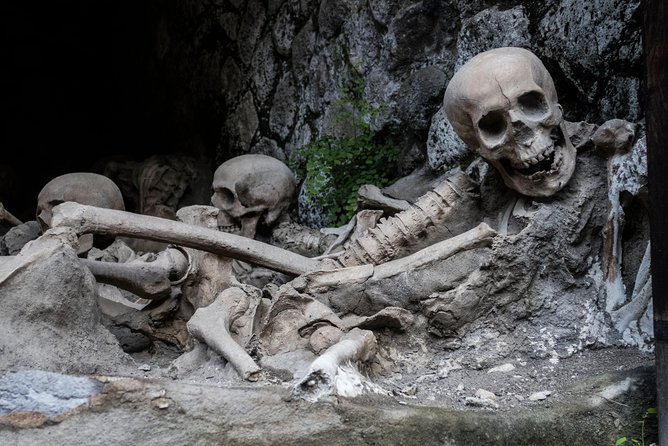
The House of the Skeleton has a more somber name and adds to the emotional weight of the visit. Herculaneum’s destruction was sudden and severe, and the site can feel more intimate than Pompeii because the remains are packed into a smaller area.
The Central Thermae, or central baths, return you to Roman public life. Like the Stabian Baths in Pompeii, they show the importance of bathing and social contact. Seeing both bath complexes lets you compare how similar civic habits appeared in two nearby towns.
The Black Salon, Samnitic House, and final courtyards
The House of the Black Salon is another private residence with a strong decorative identity. Its name points to the character of one of its rooms, and the stop gives you another example of how color and interior design shaped a Roman home.
The Samnitic House preserves an older architectural tradition. It is a useful reminder that Herculaneum was not built all at once. Towns change over generations, and older local styles can remain within later Roman communities.
The House of the Fine Courtyard and the House of the Grand Portal close the Herculaneum route with two more domestic examples. Pay attention to entrances and courtyards. The threshold could tell you about status, movement, privacy, and how a home connected with the street.
The guide makes the difference
The strongest reason to book this outing is the archaeologist-led interpretation. Pompeii and Herculaneum are places where a good guide can change the entire visit.
Several guides associated with this experience have received praise for different strengths. Rafael is described as funny, warm, and full of information. Gennaro is known for maintaining an easy pace while choosing details that fit the group. Michele Lamberti has been particularly effective at making ancient streets and homes feel like places where real people lived.
Vincenzo has been praised for timing and clear explanations, while Giulia is noted for keeping the group engaged and on schedule. Michael has also led an organized, information-filled visit. Your guide will depend on the date, but the service is built around professional archaeology guidance rather than a generic escort.
I especially value the balance between serious material and light humor. The eruption, death, slavery, prostitution, and social inequality are not easy subjects. A guide who can explain them clearly without turning the visit into a lecture helps you stay focused for seven hours.
Walking, pace, and comfort
Prepare to get your steps in. The ruins cover uneven ancient streets, open areas, and stone surfaces. One past visit was described as somewhat strenuous, even though the pace was considered manageable.
Wear practical shoes and bring a mask if the stated health rules are still in effect for your travel date. The provided conditions require masks during the visit, social distancing, and temperature checks at the archaeological sites. Anyone with a temperature of 37.5°C or higher, or obvious symptoms of infection, may be refused entry.
Meals and drinks are not included. The schedule has allowed time for lunch between the two archaeological parks, but you should plan for that expense yourself. Carrying water is sensible, especially since both sites involve outdoor walking and the day is tightly timed.
The group size can reach 20 people. Stay near the guide and listen for meeting instructions before moving between rooms or streets. A small group is helpful, but it does not mean a private tour.
Is $173.27 a fair price?
At $173.27 per person, this is not the cheapest way to reach Pompeii. You are paying for more than admission, though. The price includes Pompeii Express entry, Herculaneum admission, minibus transportation, a professional driver, and an archaeologist guide at both sites.
The value is strongest if you are arriving in Naples for a limited time, visiting from a cruise, or do not want to manage regional transport on your own. Skip-the-line access also matters on a busy day, when a queue can take a real bite out of a seven-hour excursion.
The value is less clear if you are staying near Pompeii, already understand the sites well, or prefer to spend a full day exploring one park independently. In that case, a self-guided visit may give you more freedom and a slower pace.
This tour is also booked an average of 64 days ahead, so advance planning matters. That booking pattern suggests you should not wait until the last minute if your dates are fixed.
Who should book this Pompeii and Herculaneum tour?
I would choose this tour if you want both archaeological parks in one day and value clear explanations over free time. It suits first-time visitors, cruise passengers, rail arrivals, and anyone who wants transport and tickets handled together.
It is a good match for curious adults and older children who can manage several hours of walking. The guides use humor and stories to keep the subject moving, but the day still asks for attention and physical effort.
I would think twice if you dislike fixed schedules, have difficulty walking on uneven surfaces, or want to study a small number of buildings in great detail. Pompeii alone can fill a day, and Herculaneum deserves more than a quick glance if you have extra time in Naples.
Free cancellation is available if you cancel at least 24 hours before the local start time. Changes or cancellations inside that window are not accepted for a refund.
FAQ
Where does the tour begin?
The meeting point is Starhotels Terminus, P.za Giuseppe Garibaldi 91, Naples, beside the central station area.
How long does the excursion last?
The experience lasts about seven hours.
How much time do you spend at Pompeii?
The scheduled visit to the Pompeii Archaeological Park lasts about two hours.
How much time do you spend at Herculaneum?
The scheduled visit to the Herculaneum Archaeological Park lasts about two hours.
Are admission tickets included?
Yes. Pompeii Express entry tickets and Herculaneum entry tickets are included.
Is transportation included?
Yes. The tour includes minibus transportation and assistance from a professional driver.
What is the maximum group size?
The activity accepts a maximum of 20 people.
Should you book it?
Book this excursion if your Naples time is limited and you want a well-organized introduction to both Pompeii and Herculaneum. The combination of transport, fast entry, two guided walks, and an archaeologist’s explanations gives you a lot in one day.
Skip it if you want a slow, independent archaeological study or if the $173.27 price feels high for a half-day of site time. For most first-time visitors with only one available day, though, the two-site plan is practical and the guide-led format is worth serious consideration.
Newest reviews from Pompeii Ruins
- Private Tour Pompeii and Winery★ 5.0 · 4 reviews
- Visit the Pompeii ruins from Salerno with Pizza Lunch★ 5.0 · 4 reviews
- Pompeii Private Tour for Kids and Their Families★ 4.8 · 4 reviews
- From Sorrento: Pompeii & Vesuvius tour small group★ 4.8 · 4 reviews
- Pompeii Sorrento and Positano Tour★ 5.0 · 4 reviews
- From Naples_ Pompeii Tour_Skip the line ticket + audioguide★ 4.3 · 4 reviews
- Pompeii, skip-the-line ticket with smartphone audio guide on App★ 3.0 · 4 reviews
- Pompeii Private Half-Day Tour from: Naples,Sorrento, Amalfi Coast★ 5.0 · 4 reviews
Herculaneum Tours, compared.

Pompeii and Herculaneum Small Group Tour with an Archaeologist
Read our review →
Herculaneum Entry Ticket with Optional Audio Guide
Read our review →
Guided Day Tour of Pompeii and Herculaneum with Light Lunch
Read our review →
Private Day Tour to Vesuvius, Herculaneum & Pompeii with Pick Up
Read our review →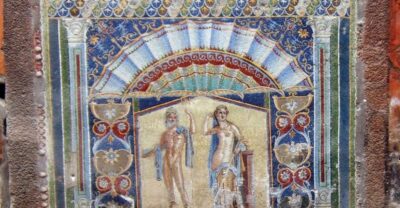
Browse the lists this tour appears in