
Reviewed · LUNCH EXPERIENCES
Guided Tour of Pompeii and Herculaneum with Lunch and Ticket
Pompeii and Herculaneum tell the same disaster in two very different ways. Pompeii gives you broad streets, public buildings, theaters, and the daily rhythm of a Roman city. Herculaneum feels smaller and more intimate, with vivid mosaics, preserved houses, and details that make ancient life feel close at hand. This two-site day trip lets you compare both without arranging separate transport from Sorrento.
I like the way the tour pairs guided visits with a proper break at Sorrentino Winery. I also like the included tickets and air-conditioned minibus or van, especially on a hot summer day. The main concern is the pace: nine hours covers a great deal, and both archaeological parks require plenty of walking. Pompeii can also be crowded, so even reserved admission may not prevent delays.
The best guides bring the ruins to life with practical details, not just dates. Celsestina has been praised for explaining everyday Roman routines at Pompeii, while Diana has a strong feel for Herculaneum and its differences. Rosa Savarese helps coordinate the day, though guide assignments can vary.
In This Review
- Key points to know before booking
- Why seeing Pompeii and Herculaneum together works
- Pompeii begins with streets, temples, and public life
- Via dell’Abbondanza shows Pompeii in motion
- Sorrentino Winery provides a needed pause
- Herculaneum offers finer detail in a smaller setting
- Herculaneum’s homes preserve personal stories
- Guides matter more than the itinerary suggests
- Heat, walking, and crowding shape the day
- Is $192.22 a fair price?
- Who should choose this day trip?
- Should you book it?
- FAQ
- How long does the Pompeii and Herculaneum tour last?
- What is included in the tour price?
- How much time do I spend at each archaeological site?
- What food is served at lunch?
- Which wines are included?
- Is the tour offered in English?
- What happens if bad weather cancels the tour?
Key points to know before booking

- Two famous eruption sites in one day: Visit Pompeii and Herculaneum, each with roughly two hours inside the ruins.
- A local winery lunch: Eat bruschetta, cured meats, cheeses, seasonal vegetables, pasta with Piennolo cherry tomatoes, and homemade dessert.
- Three wine tastings included: Sample Prosecco, red wine, and white wine, including the Vesuvian specialty Lacryma Christi.
- Public and private life in Pompeii: See the Forum, Temple of Jupiter, food market, baths, brothel, and Large Theatre.
- More intimate houses in Herculaneum: Look for elaborate mosaics, painted rooms, sea-view terraces, and preserved domestic details.
- A full but demanding schedule: Expect heat, crowds, uneven ground, and a maximum group size of 100 people.
Why seeing Pompeii and Herculaneum together works
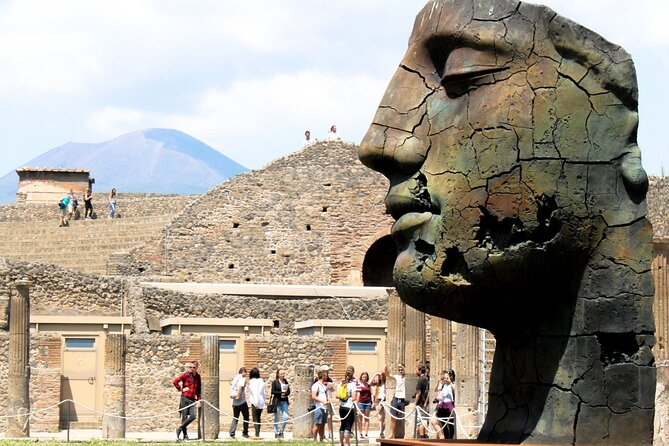
If you have only one day for the Vesuvian ruins, visiting both sites gives you a much clearer picture than choosing one at random. Pompeii was a large city with a broad civic center and long commercial streets. Herculaneum was smaller, but its volcanic burial preserved more wood, household decoration, and upper-level architectural detail.
The contrast is the point. At Pompeii, you walk through an urban system. At Herculaneum, you spend more time looking at individual homes and their owners. One site helps you understand how a Roman city functioned. The other shows how people lived inside it.
The tour lasts about nine hours from Sorrento, with the exact timing subject to road traffic and other local conditions. That makes this a practical choice if you do not want to manage regional trains, taxis, entrance tickets, and separate guides. It is also a long day, so comfortable shoes matter more than stylish ones.
The group may include as many as 100 people. That is a substantial maximum, not a small private outing. On a large departure, the quality of the day depends heavily on meeting instructions and staying close to your guide, especially inside crowded Pompeii.
More Pompeii excavation visits:
- Pompeii: Entry Ticket and Guided Tour with an Archaeologist
★ 4.8 · 19,459 reviews - Pompeii: Entry Ticket with Optional Audio Guide
★ 4.2 · 12,360 reviews - Pompeii: Small Group Tour with an Archaeologist
★ 4.8 · 12,264 reviews
Pompeii begins with streets, temples, and public life
Pompeii takes about two hours on this schedule. That sounds generous until you see the size of the site. The ruins cover a large area, and even a focused route can leave you wishing for more time.
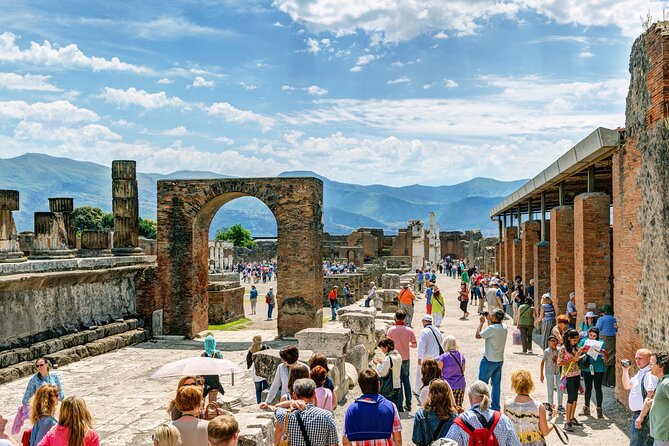
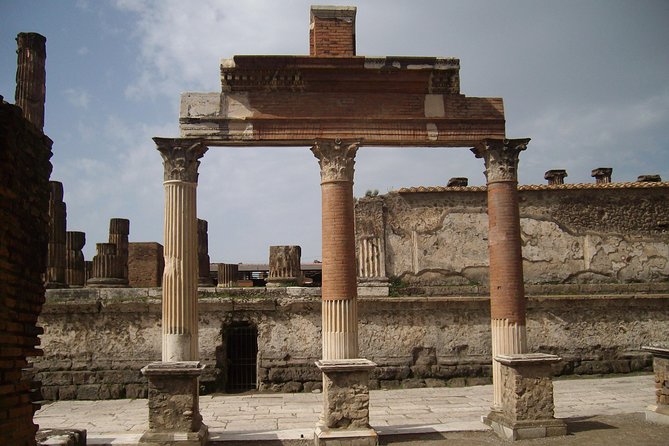
Your visit includes the Archaeological Park and several important areas within it. The route brings you into the Civil Forum, the center of public life. Administration, justice, commerce, markets, and religious buildings all gathered around this open square. It is the place to picture Pompeii as a working city rather than a collection of abandoned walls.
At the north end, the Temple of Jupiter gives the Forum a dramatic backdrop. Mount Vesuvius rises behind the temple, linking the calm view in front of you with the eruption that destroyed the city in 79 AD. After Pompeii became a Roman colony in 80 BC, the temple was rebuilt as a Capitolium dedicated to Jupiter, Juno, and Minerva.
The Macellum, or city food market, adds a more ordinary side of Roman life. Its porticoes and decorated walls once framed the buying and selling of food, including fish and poultry. This is one of the useful features of a guided visit: an expert can help you read the building as a market rather than simply admire its columns.
Via dell’Abbondanza shows Pompeii in motion
Via dell’Abbondanza was one of Pompeii’s main streets, running between the Forum and the Amphitheatre. Walking along it gives you a feel for how people moved through the city. Shops, houses, public buildings, and entertainment venues were connected by streets that still reveal the city’s original plan.
The Stabian Baths offer another glimpse of the social world. The bathing complex had separate men’s and women’s areas, with changing rooms, a cold room, a warm room, and a hot room. Underfloor and wall heating moved hot air from furnaces through the building.
The baths were not only for washing. They were places for talking politics, discussing battles, following legal cases, and meeting friends. A good guide can turn the apodyterium, frigidarium, tepidarium, and calidarium into a sequence of lived experiences instead of a list of Latin terms.
The Lupanar is one of Pompeii’s most famous stops. This small brothel has built-in beds and erotic paintings, with rooms on the lower floor and living quarters above. The subject can be uncomfortable, but it is useful evidence of the city’s commercial and social life. Expect this area to attract crowds, and do not count on lingering if the group is moving on.
The Large Theatre dates from around the middle of the second century BC and was later restored in Roman style. Comedies and tragedies based on Greek and Roman traditions were performed here. Its scale helps you understand that Pompeii had a full public culture, not just private homes and shops.
Sorrentino Winery provides a needed pause
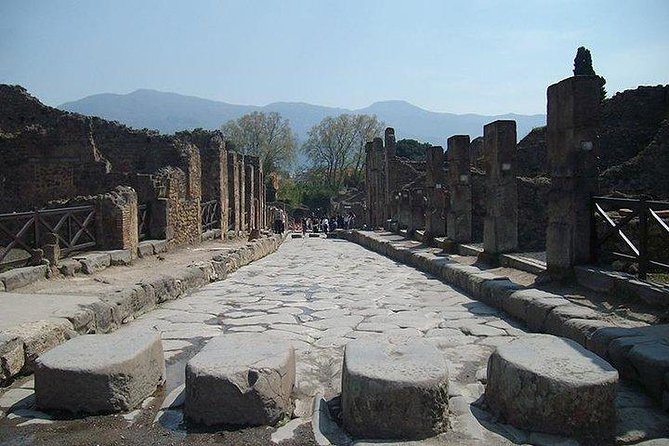
After the Pompeii visit, the tour stops at Sorrentino Winery on the slopes of Vesuvius. The winery has 35 hectares inside Vesuvius National Park and is known for Lacryma Christi, the best-known DOC wine made on Vesuvius.
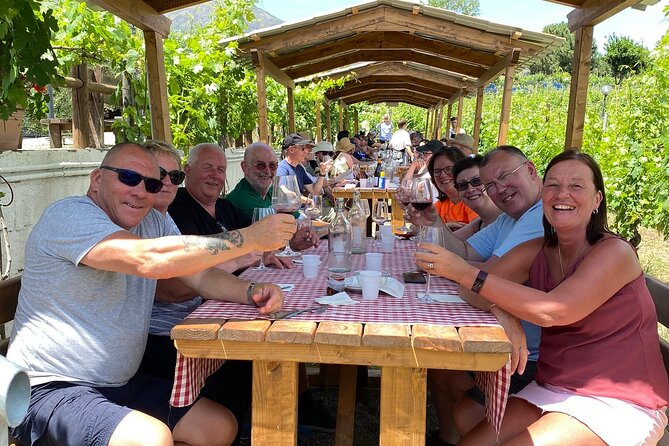
Lunch is substantial enough to reset your energy before the second archaeological park. You can expect bruschetta, cured meats, cheeses, seasonal vegetables, a pasta dish with Piennolo cherry tomatoes, and a traditional homemade dessert. The tasting includes Prosecco, red wine, and white wine.
I see this stop as both a strength and a tradeoff. It gives you a seat, food, shade, and a taste of local agricultural life between two demanding sites. It also uses time that could otherwise go toward Pompeii or Herculaneum. If your priority is seeing every possible building, the lunch may feel long. If you want a more comfortable full-day outing, it is a welcome break.
Piennolo cherry tomatoes are a local Campania specialty, and the meal gives the tour a regional flavor beyond the ruins. The wine tasting is included, but you should still pace yourself. You have another archaeological visit ahead, and the afternoon heat can be tiring.
More Herculaneum excavation visits:
- Pompeii and Herculaneum Small Group Tour with an Archaeologist
★ 5.0 · 1,350 reviews - Pompeii: Small-Group Tour of Pompeii and Herculaneum
★ 4.8 · 867 reviews - Ercolano: Herculaneum Entry Ticket with Optional Audio Guide
★ 4.1 · 581 reviews - Herculaneum: 3D Walking Tour with Skip-the-Line Ticket
★ 4.3 · 313 reviews
Herculaneum offers finer detail in a smaller setting
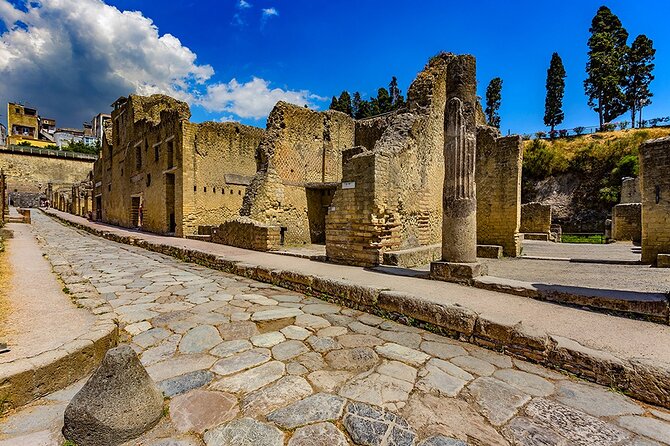
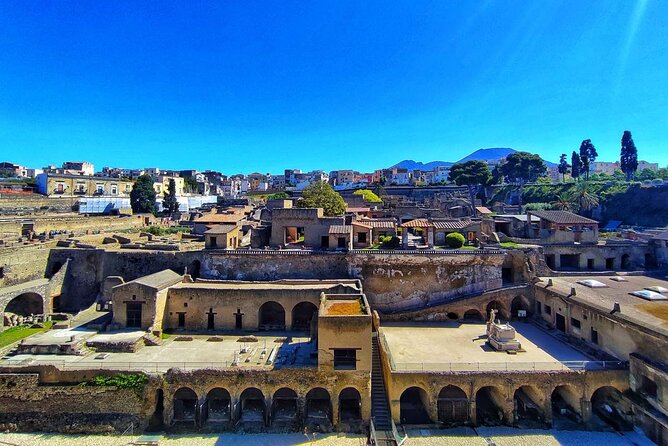
Herculaneum also receives about two hours. The site is smaller than Pompeii, but the preserved details can be more striking. The eruption covered the town in a different way, protecting elements that usually disappear at archaeological sites, including interior decoration and parts of domestic structures.
The House of the Deer is a large luxury home with a sea-view terrace. Its garden contains statues of deer being attacked by dogs, which gives the house its modern name. The property once belonged to Q. Granius Verus, a formerly enslaved person who had gained his freedom shortly before the eruption.
That detail makes the house especially interesting. Herculaneum was not only a town of old aristocratic families. Freed people could build wealth and own impressive homes. The remains offer clues about status, ambition, and the way Roman society changed over time.
The House of Neptune and Amphitrite is one of the visual highlights. Its glass-paste mosaics show floral and hunting scenes, with Neptune and Amphitrite at the center. The expensive materials and careful decoration tell you that the owners wanted visitors to notice both their taste and their money.
Herculaneum’s homes preserve personal stories
The House of the Skeleton takes its name from human remains found in an upper room in 1831. The structure may have been formed by joining three smaller buildings, a reminder that Roman homes changed as families acquired space or altered their needs.
The Sacellum of the Augustales was connected to the worship and civic honors of the emperor Augustus. Its frescoes show Hercules entering Olympus with Jupiter, Juno, and Minerva, along with Hercules fighting Achelous. The skeleton of the caretaker was found in his room, lying on the bed.
That combination of fine public imagery and a single human death gives Herculaneum its particular force. You move from painted gods to the remains of an ordinary worker. The site repeatedly shifts between grand design and private life.
The House of the Hotel is the largest house yet found at Herculaneum, covering about 2,150 square meters. Its position near the edge of the hill and its spa area once led excavators to think it might have been a hotel. The name remains, even though its original use is not certain.
The House of the Black Salon takes its name from a party room painted black with geometric patterns. Waxed tablets found there refer to L. Venidius Ennychus, including information about a slave purchase, the birth of a daughter, and eligibility for the office of Augustale. Such records bring names, family events, and business dealings into a site that can otherwise feel anonymous.
Guides matter more than the itinerary suggests
Archaeological parks can be confusing. You may see a grand wall, a row of rooms, or a painted fragment without knowing what it meant. The strongest part of this tour is the chance to have site guides explain how each place functioned.
Celsestina has been praised for describing daily routines at Pompeii, which is exactly the kind of help the city needs. Diana is familiar with Herculaneum and can point out how its houses and decorations differ from Pompeii. Rosa Savarese has been involved in keeping the day organized.
Guide quality can vary by departure, and the tour may use a multilingual guide. One practical weakness is that a guide can be hard to spot in Pompeii’s crowds. Pay close attention to the meeting point, stay near the group, and do not wander ahead to photograph a room if you are not sure where the group is going next.
One critical account described both sites as rushed and said the bus had little narration between stops. That is worth taking seriously. The guided time is focused on the ruins, not necessarily on continuous commentary during the drive. If you want a lecture from Sorrento to Pompeii, this may not meet your expectations.
Heat, walking, and crowding shape the day
Wear shoes that can handle uneven ancient streets. Add sunglasses and sunscreen in summer. Pompeii has limited shade in many open areas, and even an excellent guide may need to shorten stops or find shade during a hot afternoon.
The tour is open to most people who can manage a full day of walking, but the two-hour site visits are not gentle strolls. You will be on your feet across rough surfaces, and the size of Pompeii means that the route can feel demanding even before lunch.
Pompeii is also one of Italy’s busiest archaeological sites. Reserved admission is helpful, but it does not guarantee instant entry when crowds or site conditions create delays. Herculaneum may feel calmer by comparison, with less waiting and a more compact route.
The air-conditioned vehicle is a real advantage in the Campania heat. Traffic can change the order or length of stops, so keep the day flexible. Do not schedule a tight evening connection immediately after the stated return time.
Is $192.22 a fair price?
At $192.22 per person, this is not a budget excursion. The price includes admission to both archaeological parks, transport from the Sorrento area, guided visits, lunch, and wine tasting. Buying each piece separately could save money if you are comfortable handling regional transport and arranging guides yourself.
The value improves if you want a simple day with no ticket planning. Pompeii and Herculaneum are not places where a quick look at the entrance tells you what you are seeing. The expert explanations, especially at the Forum, baths, and decorated Herculaneum houses, are a major part of what you pay for.
The value is weaker for someone who wants a slow archaeological study. Two hours per site is enough for an intelligent introduction, but not enough to explore every open building. You may leave Pompeii wishing you had seen more, particularly if entrance delays or crowding reduce time inside.
Group discounts may be available, and the mobile ticket is convenient. The experience is offered in English, though a multilingual guide may operate the departure.
Who should choose this day trip?
I would choose this tour if you are based in Sorrento, want to see both eruption sites, and prefer someone else to handle transport and tickets. It suits first-time visitors who want context and structure rather than a self-guided wander.
It also works well for people who enjoy a food stop as part of the day. The winery lunch gives you a taste of Vesuvian produce and wine, not just another roadside pause.
I would hesitate if you have already spent several hours at Pompeii and want a return visit at your own pace. I would also think twice if you dislike large groups, fixed schedules, or long days in the sun. A private guide or separate visits would give you more control, though likely at a higher total cost.
The tour requires good weather. If poor conditions force cancellation, you can receive a full refund or move to another date. Free cancellation is available up to 24 hours before the local start time, but changes made inside that window are not accepted.
Should you book it?
Book it if your main goal is maximum historical range in one day. Pompeii shows the city, streets, markets, baths, theater, and public religion. Herculaneum brings you into decorated homes and more personal stories. The winery meal, wine tasting, included tickets, and air-conditioned transport make the long day easier.
Skip it if you want slow photography, quiet exploration, or a close study of every building. The large possible group and packed schedule can make Pompeii feel hurried. For most first-time visitors with only one free day from Sorrento, though, this is an efficient and rewarding way to understand both towns destroyed by Vesuvius.
FAQ
How long does the Pompeii and Herculaneum tour last?
The experience lasts approximately nine hours. The timing can change because of local traffic or other circumstances.
What is included in the tour price?
The price includes admission tickets for Pompeii and Herculaneum, guided visits, transport, lunch at Sorrentino Winery, and a tasting of three wines.
How much time do I spend at each archaeological site?
The planned visit is about two hours at Pompeii and about two hours at Herculaneum.
What food is served at lunch?
The sample meal includes bruschetta, cured meats, cheeses, seasonal vegetables, pasta with Piennolo cherry tomatoes, and a traditional homemade dessert.
Which wines are included?
The tasting includes Prosecco, red wine, and white wine. Sorrentino Winery is also known for Lacryma Christi, a DOC wine from Vesuvius.
Is the tour offered in English?
Yes. The tour is offered in English, though it may be operated by a multilingual guide.
What happens if bad weather cancels the tour?
Because the experience requires good weather, you can be offered another date or a full refund if poor conditions cause cancellation.
More Lunch Experiences in Sorrento
- Naples: Pompeii and Mt. Vesuvius with Lunch and Wine Tasting
★ 4.5 · 2,454 reviews - Capri Boat Tour from Sorrento: Swim, Grottos & Light Lunch
★ 5.0 · 1,201 reviews - Amalfi Coast Day Tour from Sorrento with Light Lunch and Wine
★ 4.5 · 1,148 reviews - Salerno: Amalfi Coast Cruise with Lunch, Aperitif & Swimming
★ 4.5 · 879 reviews
Newest reviews from Sorrento
- Private Stress-Free Tour from Sorrento: Ischia Island & Tastings★ 5.0 · 4 reviews
- Tour in the ruins of Pozzuoli with an archaeolgist.★ 5.0 · 4 reviews
- Vico Equense: Authentic Cooking Class at a Local’s Home★ 5.0 · 4 reviews
- Lemon Experience with Limoncello demonstration★ 5.0 · 4 reviews
- Path of the Lemons★ 5.0 · 4 reviews
- Private Tour Pompeii and Winery★ 5.0 · 4 reviews
- Positano Private Tour By Night from Sorrento★ 5.0 · 4 reviews
- Walking Secret Food Tours Sorrento with tastings★ 4.5 · 4 reviews
Lunch Experiences, compared.

Pompeii and Mt. Vesuvius with Lunch and Wine Tasting
Read our review →
Capri Boat Tour from Sorrento: Swim, Grottos & Light Lunch
Read our review →
Amalfi Coast Cruise with Lunch, Aperitif & Swimming
Read our review →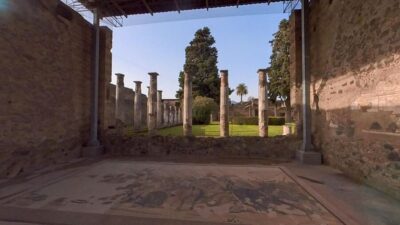

Pompeii Guided Tour & Horse Riding on Vesuvius with Lunch
Read our review →
Positano & Amalfi Boat Tour from Sorrento: Swim & Light Lunch
Read our review →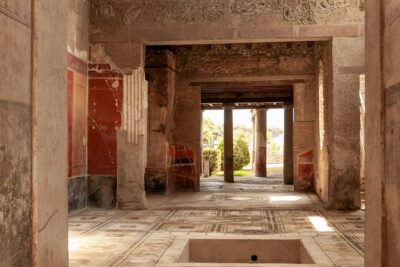
Pompeii Tour & Lunch with Wine Tasting Experience
Read our review →
Pompeii Vineyard Escape: Private Wine Tasting & Lunch
Read our review →Browse the lists this tour appears in