Reviewed · GUIDED
Guided Private Tour in Pompeii
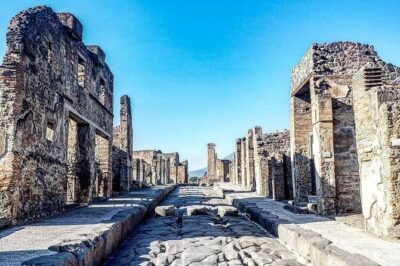
Pompeii comes alive best when you stop seeing it as a field of ruins and start reading it as a Roman town. This private walk does that through its archaeologist guide, who links streets, homes, baths, markets, temples, and theaters to ordinary daily routines.
I like the small private format, since your group of up to five can ask questions and adjust the pace. I also like the route’s range: you see grand public buildings, a luxury house, a fast-food counter, a bath complex, and a brothel in one compact visit. The main drawback is the short 2.5-hour schedule. Pompeii is huge, so this is a focused highlights tour, not a full exploration.
In This Review
- Key points
- What this private Pompeii tour is really designed to do
- Starting near Porta Marina Inferiore
- Theaters, Isis, and Pompeii’s public entertainment
- Roman fast food at the Thermopolium
- The Stabian Baths and Roman washing routines
- The Piccolo Lupanare and Pompeii’s frank side
- The House of the Faun and Roman luxury
- The basilica, temples, and the center of power
- The Macellum and the Roman Forum
- What the guide adds to the ruins
- Is $326.72 good value for up to five people?
- Who should book this Pompeii walk?
- Final call: book it for a guided first look
- FAQ
- How long is the Guided Private Tour in Pompeii?
- How many people can join the private tour?
- Is a Pompeii archaeologist guide included?
- Is the Pompeii entrance ticket included in the price?
- What is the tour price?
- Where does the tour begin?
- Where does the activity end?
- What sights are included?
- Can I cancel for a full refund?
Key points
- Tony’s storytelling: The guide is praised for bringing Pompeii’s people and routines to life with humor, history, and archaeology.
- A true private tour: Only your group participates, with a maximum of five people.
- A broad 13-stop route: The walk covers theaters, temples, baths, homes, food stalls, the market, and the forum.
- Ticket cost is extra: The tour price is $326.72 per group, but Pompeii admission is listed separately at €18 per person.
- A useful entrance point: The meeting point is by Piazza Esedra and Porta Marina Inferiore, near the ancient port area.
- A tight timetable: The tour lasts about 2 hours and 30 minutes, so you see the key sights without trying to cover every street.
What this private Pompeii tour is really designed to do
This is not simply a walk from one famous ruin to another. The plan is to show you how a Roman day unfolded, beginning in the streets and moving through the places where people worked, prayed, bathed, ate, shopped, argued, and watched performances.
The route includes 13 stops, but several are brief. Five-minute visits at temples, theaters, and the basilica are enough for an explanation and a look around, but not enough for a long study of architecture or decoration. The longer stops go to the Stabian Baths, the small brothel, the House of the Faun, the food market, and the forum.
That balance suits you if you want a clear first visit. I would not choose it if your main aim is detailed art study, a slow look at every fresco, or time in the less visited corners of the park.
The guide named in the supplied information is Tony, with Toni also appearing in the tour material. His strongest qualities are said to be preparation, storytelling, passion for archaeology, and the ability to shape a visit around your available time. One account describes an eight-hour custom day that combined Pompeii with part of the Amalfi Coast, while the standard experience here is much shorter.
More Pompeii excavation visits:
- Pompeii: Entry Ticket and Guided Tour with an Archaeologist
★ 4.8 · 19,459 reviews - Pompeii: Entry Ticket with Optional Audio Guide
★ 4.2 · 12,360 reviews - Pompeii: Small Group Tour with an Archaeologist
★ 4.8 · 12,264 reviews
Starting near Porta Marina Inferiore
You meet at Ristorante Suisse, Piazza Esedra 10/13, near the Porta Marina Inferiore entrance. This is a useful starting area because it gives you a view toward the ancient port of Pompeii and can help you avoid the queues associated with other access points.
The information describes this entrance as the best way to avoid waiting. Still, I would check current conditions on the day, since access procedures at major archaeological parks can change. The tour operates from 9:00 a.m. to 3:00 p.m., Monday through Sunday, during the stated operating period from May 28, 2025, through June 16, 2026.
Pompeii is an outdoor archaeological park, so you should expect a lot of walking over old paving stones. The supplied information does not give a precise distance or say how much shade is available. Bring practical walking shoes and plan for sun, especially during the middle of the day.
Admission deserves close attention. The price is $326.72 per group of up to five, but the €18 Pompeii entry ticket is not included, despite the itinerary marking each stop as having admission included. Children under 18 enter free according to the booking details. I would confirm the ticket arrangement before paying, since the separate admission note is the one that affects your actual cost.
Theaters, Isis, and Pompeii’s public entertainment
The first proper stop is the Teatro Grande, or Big Theater. You also get a panoramic view of the Little Theater, though the smaller theater is currently described as not accessible. This area shows Pompeii as a city with organized entertainment, not just a place of houses and temples.
The theater visit lasts about five minutes, so expect a guide’s overview rather than a long architectural lesson. Tony’s approach, based on the supplied descriptions, is to explain how the site fits into Roman life and then keep you moving.
Next comes the Temple of Isis. The route also includes a house directly opposite the temple, described as important to the discovery of Pompeii. This pairing is useful because it puts religion beside domestic life. You are not looking at an isolated shrine; you are seeing a sacred building in the middle of a living neighborhood.
The short time here means the guide’s explanation matters. A strong guide can turn a few columns and walls into a picture of ceremonies, household belief, and the city’s public identity. This is one reason a private archaeologist-led visit can be more useful than walking through with only a map.
Roman fast food at the Thermopolium
The Thermopolium of Vetutius Placidus offers a quick look at food on the street. It is described as a high-end fast-food counter with striking frescoes. The name may be unfamiliar, but the idea is easy to grasp: Romans could buy prepared food instead of cooking every meal at home.
This stop helps correct the common picture of Pompeii as a city made only of grand villas. People ate, worked, shopped, and grabbed food in ordinary commercial spaces. The frescoes add a visual layer, while the counter itself gives you a sense of how practical a Roman business could be.
The tour description also refers to tasting freshly baked bread and Roman-style snacks at a local bakery, along with discussion of ancient ingredients and cooking methods. It then mentions relaxing in a villa garden with a glass of wine. Those food and wine elements are part of the overall experience description, but they are not assigned to a specific stop in the detailed 13-stop schedule. I would confirm exactly what is included before booking if tasting is a major reason for your choice.
More Pompeii Ruins tours worth comparing
- Pompeii Ruins Private Tour with Optional Skip-the-Line Entry
★ 4.9 · 732 reviews - Pompeii private tour with an Official Guide
★ 5.0 · 631 reviews - Pompeii Private Tour with an Archaeologist and Skip The Line – 3 hours
★ 5.0 · 564 reviews - Visit in Pompeii – Pompeii Private Tour with Ada
★ 5.0 · 436 reviews
The Stabian Baths and Roman washing routines
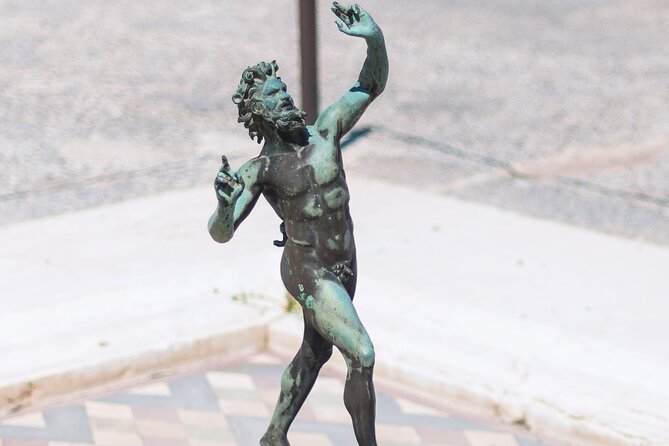
The Stabian Baths receive about 20 minutes, making them one of the more substantial stops. This public spa complex is a good place to understand how bathing worked as a social and practical part of Roman life.
The supplied description presents the baths as a way to see how Romans stayed clean and safe. You should expect an explanation of the bathing sequence and the role of public baths, rather than an actual bathing ritual. The overview uses the language of experiencing a Roman-style bathing routine, but the itinerary does not say that you will bathe.
I like this stop because it puts public architecture to work. A bath complex was not just decoration. It was part of the city’s daily rhythm, and its rooms help you picture how people moved through a shared facility.
The Piccolo Lupanare and Pompeii’s frank side
The Piccolo Lupanare is described as Pompeii’s red-light district, including a visit to the brothel. The stop lasts about 20 minutes, which gives the guide enough time to discuss the building and its purpose without turning the visit into a rushed glimpse.
This is an adult subject, and the tour treats it as part of urban life rather than as a cheap shock. Pompeii’s wall paintings, small rooms, and commercial spaces reveal a society that handled sex, business, religion, and family life in ways both familiar and very different from today.
If you are traveling with children, note that the tour information does not give a specific age restriction for this stop. Children under 18 receive free park admission, but that is not the same as a statement about the suitability of the brothel visit. Families should ask the guide or provider in advance.
The House of the Faun and Roman luxury
The House of the Faun gets about 20 minutes and is presented as one of the finest examples of a luxury home in Pompeii. This is an important change of scale after the baths and food counter.
Here you can compare private wealth with public life. The house allows the guide to explain how status was displayed through space, decoration, and the arrangement of rooms. It also connects with the experience description’s reference to frescoes, villa gardens, domestic life, and wine.
Do not expect the tour to cover every room in detail. Twenty minutes is enough to understand why the house matters and to see its main features, but Pompeii’s large residences can easily take much longer if you stop for every floor plan and decorative fragment.
The basilica, temples, and the center of power
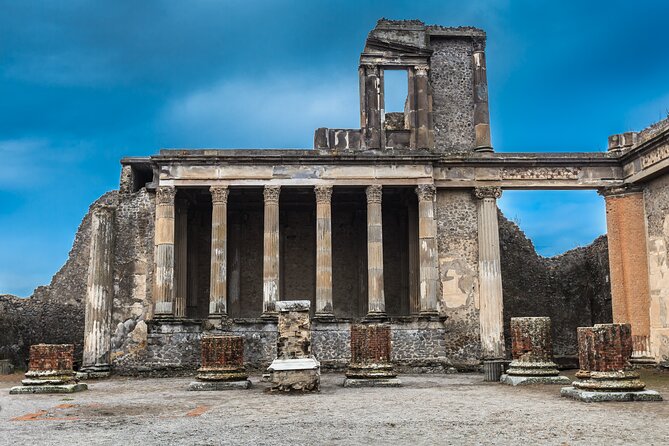
The route then moves through several short but important public sites. Pompeii’s basilica is described as the Roman parliament, with high-style marble decoration. In Roman cities, a basilica was tied to public business and legal affairs, so this stop helps explain how civic life worked.
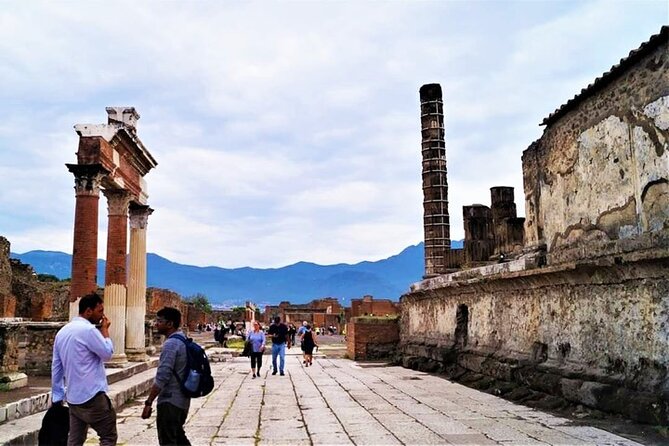
The Temple of Apollo follows. This was Apollo’s sanctuary, one of the city’s religious centers. You then reach the Temple of Venus, presented as a scenic highlight, and the Temple of Jupiter, where public speeches took place in the Roman Forum.
Each temple receives about five minutes. That is not much time, but together they create a useful picture of Pompeii’s civic and religious heart. I like the sequence because it keeps asking the same practical question: what did this building do for the people who used it?
The drawback is that the stop-by-stop timing can feel brisk if you want photographs or architectural detail. A private guide can answer questions as you walk, but the schedule still has limits.
The Macellum and the Roman Forum
The Macellum, or food market, receives about 15 minutes. It is described as a place with impressive frescoes and body casts. This is another strong everyday-life stop, since food markets connect the city’s buildings to its supply, trade, and meals.
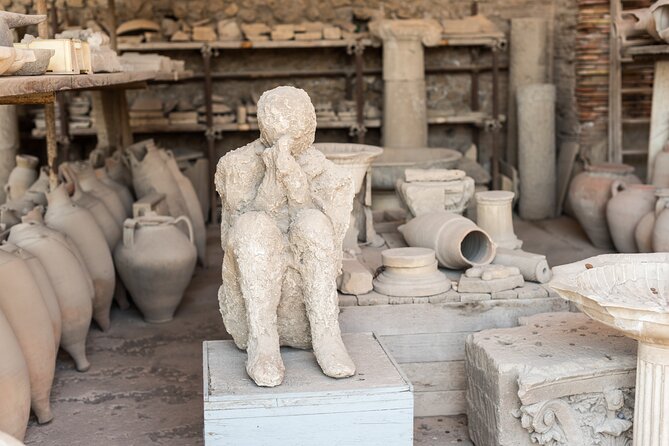
The reference to body casts can be emotionally difficult. They are not just archaeological objects. They bring the eruption and the human cost of the disaster into the visit. The guide’s role here is especially important, since good context keeps the moment respectful and prevents it from becoming a spectacle.
The tour finishes at the Forum, the main square and center of city activity. This is the right place to end a highlights route. By now, you have seen entertainment, worship, commerce, bathing, private wealth, and public business. The Forum brings those threads together in one civic space.
The itinerary says the activity ends back at the meeting point. It does not promise transport to a hotel or railway station, though a longer custom tour with Tony has included a meeting at the train and a return near a hotel. For this standard booking, plan to finish where you started.
What the guide adds to the ruins
The most praised part of this experience is the guide’s way of explaining Pompeii. Tony is described as bringing the people of the city to life, using stories, historical context, humor, and links to the present.
That matters because Pompeii can overwhelm you. The park is large, the walls are broken, and many buildings require explanation before their purpose becomes clear. A guide who can connect a bakery, bath, theater, and forum to one day in Roman life gives you a usable mental map.
The private format also gives you room to shape the visit. The supplied accounts describe Tony adjusting tours to fit limited time and personal interests, and one three-hour visit covered the main points without feeling rushed. You should still tell the guide what matters most at the start. With only 2.5 hours, your priorities will affect how much time remains for homes, temples, or public buildings.
Is $326.72 good value for up to five people?
At $326.72 per group, the price looks high for one person. For five people, it works out to about $65 per person before the separate Pompeii admission fee. For two people, the cost is much steeper per head.
I see the value mainly in the private setting and the specialist guide. You are paying for a focused route, personal questions, and a clear explanation of sites that can be hard to read alone. If you have only a few hours in Pompeii, that structure can prevent wasted time.
The value is weaker if you are a solo visitor or a couple who wants to wander at your own speed. In that case, a less expensive group option may suit you better, though it may not offer the same flexibility.
Remember to add €18 per person for admission, with free entry for children under 18. Tips are not included. Since the ticket wording is inconsistent, confirm whether the guide handles entry or whether you must buy the park tickets separately.
Who should book this Pompeii walk?
I would choose this tour for a first visit, a family group that wants a clear story, or friends who prefer a private pace. It also makes sense if Pompeii is one part of a larger Campania visit and you have a firm time limit.
History and archaeology fans should benefit from Tony’s specialist background, especially if they enjoy asking questions. The route also suits anyone who wants more than temples and grand houses, since the food counter, baths, brothel, market, and domestic spaces show how the city functioned.
I would look elsewhere if you want a full-day archaeological study, quiet photography time, or access to every major building. The Little Theater is currently not accessible, some stops last only five minutes, and the entire visit is designed around highlights.
Free cancellation is available if you cancel at least 24 hours before the start time. Within 24 hours, the payment is not refunded, and changes are not accepted. The cut-off uses local time.
Final call: book it for a guided first look
Book this private Pompeii tour if you value clear storytelling and a compact route more than long, independent wandering. Tony’s ability to explain daily life, adjust the pace, and add humor is the strongest reason to choose it.
The price makes the most sense for three to five people sharing the booking. Confirm the separate ticket fee and the food or wine elements before you commit. If those points suit your plans, this is a smart way to understand Pompeii’s public buildings, private homes, working businesses, and final days in one well-shaped visit.
FAQ
How long is the Guided Private Tour in Pompeii?
The tour lasts approximately 2 hours and 30 minutes.
How many people can join the private tour?
The private activity is for your group only, with up to five people.
Is a Pompeii archaeologist guide included?
Yes. The experience includes an authorized archaeologist guide service for 2.5 hours. The guide is identified as Tony in the supplied tour details, while Toni also appears in some of the information.
Is the Pompeii entrance ticket included in the price?
No. The booking details list the Pompeii Archaeological Park admission fee separately at €18 per person. Entry is free for visitors under 18.
What is the tour price?
The price is $326.72 per group of up to five people, before the separate park admission fee.
Where does the tour begin?
The meeting point is Ristorante Suisse, Piazza Esedra 10/13, 80045 Pompei, Italy, near the Porta Marina Inferiore entrance.
Where does the activity end?
The tour ends back at the meeting point.
What sights are included?
The route includes the Pompeii Archaeological Park entrance area, Teatro Grande, the Temple of Isis, the Thermopolium of Vetutius Placidus, the Stabian Baths, the Piccolo Lupanare, the House of the Faun, Pompeii’s basilica, the Temple of Apollo, the Macellum, the Temple of Venus, the Temple of Jupiter, and the Forum.
Can I cancel for a full refund?
Yes. You can receive a full refund if you cancel at least 24 hours before the experience start time. Cancellations or changes made less than 24 hours before the start time are not accepted for a refund.
Newest reviews from Pompeii Ruins
- Private Tour Pompeii and Winery★ 5.0 · 4 reviews
- Visit the Pompeii ruins from Salerno with Pizza Lunch★ 5.0 · 4 reviews
- From Sorrento: Pompeii & Vesuvius tour small group★ 4.8 · 4 reviews
- Pompeii Private Tour for Kids and Their Families★ 4.8 · 4 reviews
- Pompeii Sorrento and Positano Tour★ 5.0 · 4 reviews
- From Naples_ Pompeii Tour_Skip the line ticket + audioguide★ 4.3 · 4 reviews
- Pompeii, skip-the-line ticket with smartphone audio guide on App★ 3.0 · 4 reviews
- Pompeii Private Half-Day Tour from: Naples,Sorrento, Amalfi Coast★ 5.0 · 4 reviews
Guided, compared.

Entry Ticket and Guided Tour with an Archaeologist
Read our review →

Skip-the-Line Entrance Ticket with Audio Guide
Read our review →



Skip-the-Line Entry Ticket with Digital Guide App
Read our review →