
Reviewed · HERCULANEUM TOURS
From Sorrento: Herculaneum and Pompeii Group Excursion
Pompeii and Herculaneum tell the story of the same volcanic disaster in two very different ways. At Pompeii, you walk broad streets past baths, forums, villas, and painted walls. At Herculaneum, hardened mud preserved wooden doors, furniture, and household objects that rarely survive from the ancient world. Seeing both sites in one day gives you a much fuller picture than visiting either one alone.
I like two things here. First, the Sorrento pickup removes the fuss of arranging regional trains and finding both archaeological entrances. Second, the package includes transport, admission to both sites, a guide, and lunch. Guides such as Ionica and Fabiana have been praised for keeping the group together while adding humor and clear historical detail. The main drawback is the pace: two hours at each site means lots of walking and only a taste of each enormous excavation.
In This Review
- Key points at a glance
- Leaving Sorrento without transport worries
- Pompeii, where an entire Roman town was left in place
- Lunch between the ruins
- Herculaneum and its remarkable household remains
- Why a live guide improves the ancient streets
- What the $175.59 price includes
- Who should book this excursion
- Should you book this Pompeii and Herculaneum tour?
- FAQ
- Where does the tour start?
- Where does the tour end?
- How long is the tour?
- Which archaeological sites are included?
- Is transportation included?
- Is lunch included?
- Is an English-speaking guide provided?
- What should I bring?
- Is the tour suitable for wheelchair users?
Key points at a glance
- Two volcanic towns in one day: Compare Pompeii’s open streets and grand public buildings with Herculaneum’s unusually well-preserved homes and objects.
- Depart from central Sorrento: Meet at Parking Lauro on Via Correale and return to the same point.
- A guide brings order to large ruins: An authorized English-speaking guide explains what you are seeing instead of leaving you to decode walls and foundations alone.
- Lunch is part of the plan: The included meal has pizza, pasta, salad, dessert, bread, water, and a choice of beer, wine, or a soft drink.
- Air-conditioned coach travel: The bus ride is about one hour before the Pompeii visit, a useful break from navigating public transport.
- Plan for a physically active day: Comfortable shoes are essential, and the tour is not suitable for wheelchair users or people with mobility impairments.
Leaving Sorrento without transport worries
The tour begins at Parking Lauro on Via Correale, a practical meeting point in Sorrento. From there, you board an air-conditioned bus with the English-speaking guide. The stated coach journey to the first site is about one hour, so you get a little time to rest before the walking begins.
This arrangement is one of the tour’s strongest practical features. Pompeii and Herculaneum are easy to reach in theory, but a day using public transport adds train schedules, station changes, ticket questions, and the risk of arriving at the wrong entrance. Here, the transport and site admissions are handled together, and the tour includes skip-the-ticket-line access.
You should still arrive prepared. Bring your passport or identity card, as requested, and wear shoes with good support. The ancient streets are uneven, and you will spend several hours walking and standing. This is not a gentle sightseeing ride with short stops at viewpoints. The archaeological sites are the main event, and your feet will know it by the end.
The published duration is shown as 26 hours, but the actual plan is laid out as a full day, with a bus transfer, two guided site visits, lunch, and the return to Sorrento. Check the available starting time when booking, since the exact departure time is not fixed in the information provided.
More Pompeii excavation visits:
- Pompeii: Entry Ticket and Guided Tour with an Archaeologist
★ 4.8 · 19,459 reviews - Pompeii: Entry Ticket with Optional Audio Guide
★ 4.2 · 12,360 reviews - Pompeii: Small Group Tour with an Archaeologist
★ 4.8 · 12,264 reviews
Pompeii, where an entire Roman town was left in place
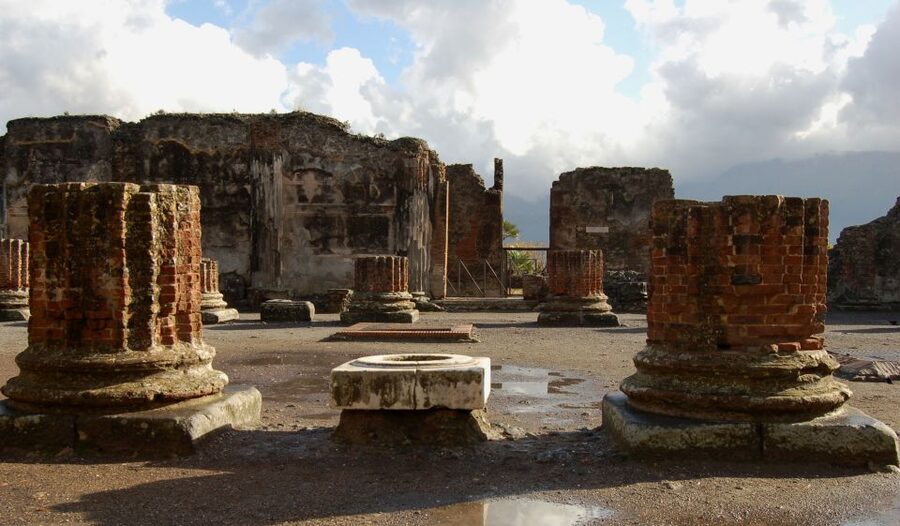
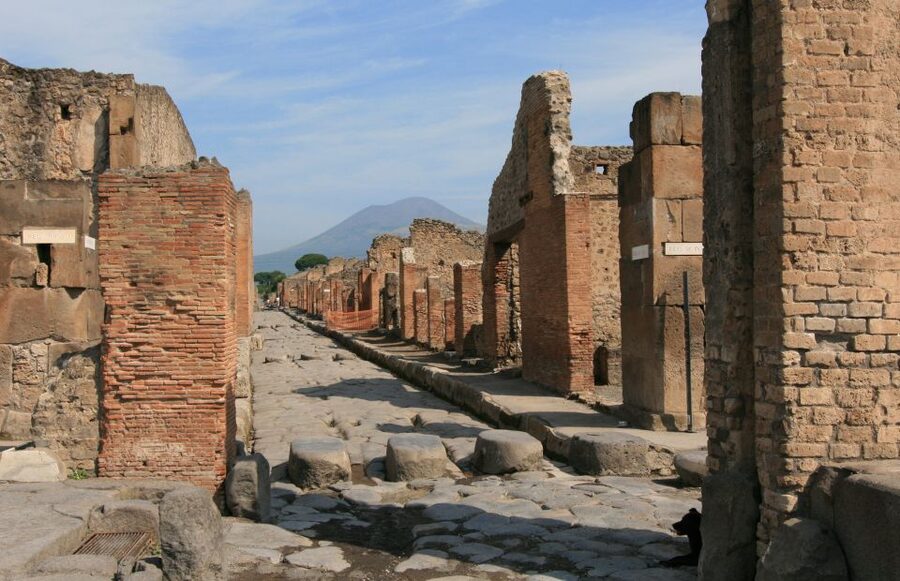
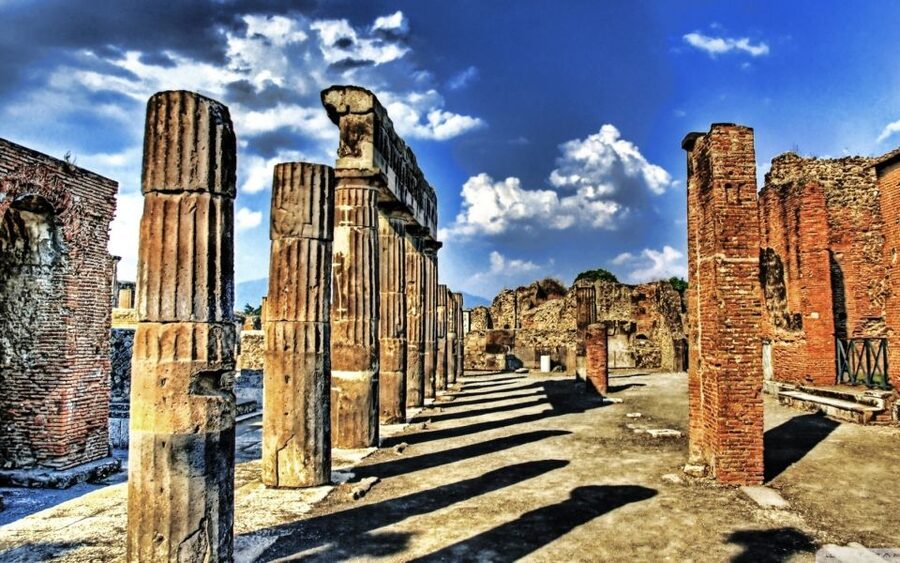
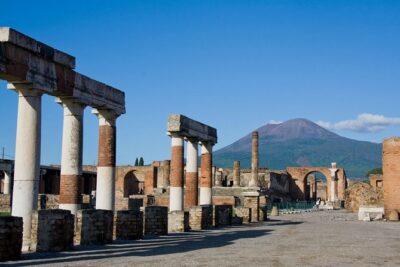
Pompeii is the larger and more famous of the two sites. The eruption of Mount Vesuvius in AD 79 buried the town, leaving streets, public buildings, villas, and wall decoration beneath the volcanic material. Excavation began in the 18th century and continues today, so the site is both an ancient town and an ongoing archaeological project.
The guided visit lasts about two hours. That is long enough to get a useful introduction to Pompeii, but not long enough to see every quarter or wander at your own speed. I would treat the visit as a carefully chosen route through the site, not as a complete survey.
Your guide leads you along ancient streets and points out the parts that make Roman life easier to picture. The itinerary specifically includes baths, forums, and villas. These are not just disconnected ruins. Together, they show how public life, business, bathing, politics, and private homes fitted into one town.
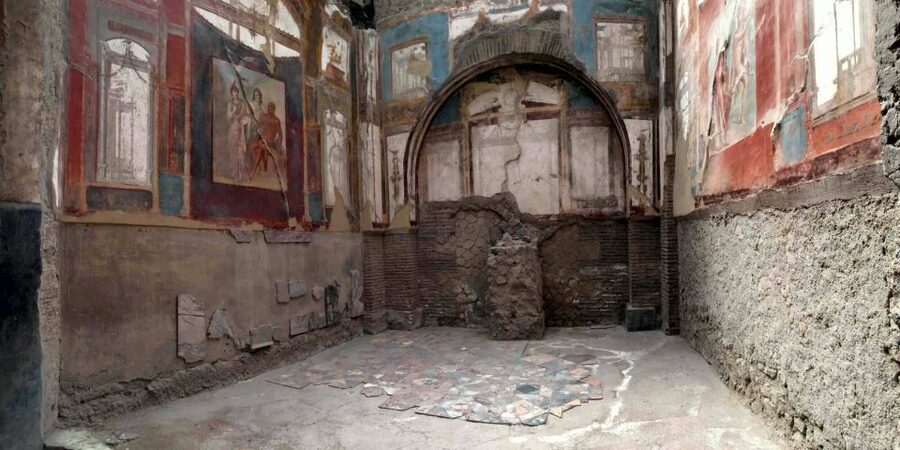
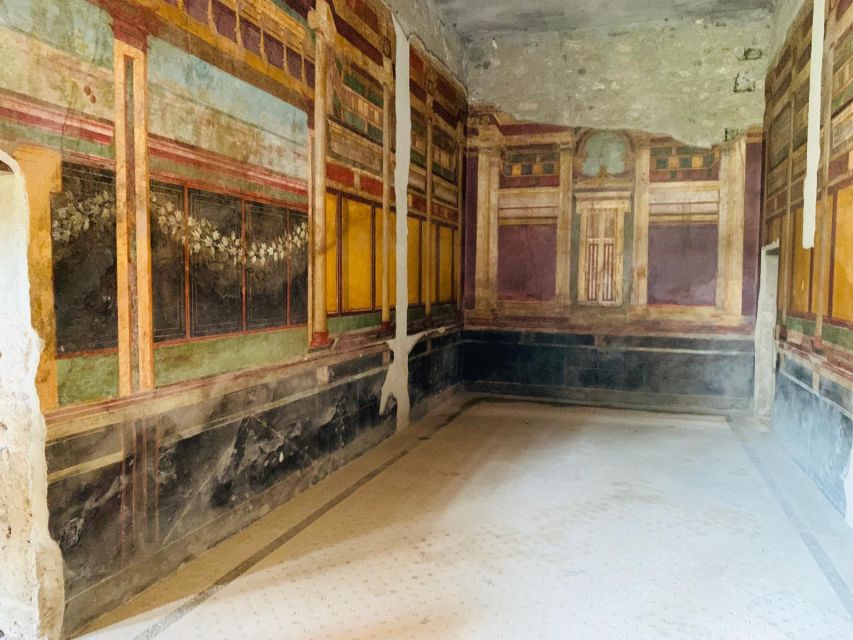
The frescoes are another major reward. Painted walls and decorated floors survive in some villas, giving you more than bare stone foundations. Color and pattern help you imagine the original interiors, even though time and excavation have left many buildings incomplete.
A guide matters at Pompeii because the scale can be confusing. Without context, one weathered wall can look much like another. With an explanation of a building’s purpose and the ancient street layout, the ruins become easier to read. Fabiana, one of the guides associated with this experience, has been praised for combining clear information with humor and evident enthusiasm for both sites. Ionica has also been singled out for being attentive and for making sure the group stayed together.
That group management is not a minor detail. Pompeii is a large, open excavation with plenty of distractions and intersecting paths. A clear meeting rhythm helps you spend less time wondering where to go next and more time looking at the remains.
The limitation is simple: two hours passes quickly. You may see several important areas, but you will not have time to inspect every villa, street, or fresco. If Pompeii is your main reason for coming to Campania, a separate longer visit may suit you better. If you want a strong first look at both towns, the shorter guided route makes good sense.
Lunch between the ruins
After Pompeii, the itinerary allows about 80 minutes for lunch. The meal is included, which makes the middle of the day easier and gives you a proper pause before Herculaneum.
The meal described with the tour includes salad, a choice of main courses such as pizza or pasta, dessert, bread, and water. You also get a choice of beer, a glass of wine, or a soft drink. One meal account included pizza, pasta, cake, and wine, so this is more substantial than a quick snack grabbed between entrances.
Tables are shared, which can be useful if you enjoy meeting people from different places. It also means you should not expect a private table or a long, leisurely restaurant stop. The purpose is to refuel and reset your legs while keeping the day moving.
I see the included lunch as part of the tour’s value, not just a free extra. Buying lunch near major archaeological sites can add cost and decision-making at exactly the point when you are tired and hungry. The 80-minute break gives you time to eat without turning the day into a string of rushed bites.
Herculaneum and its remarkable household remains
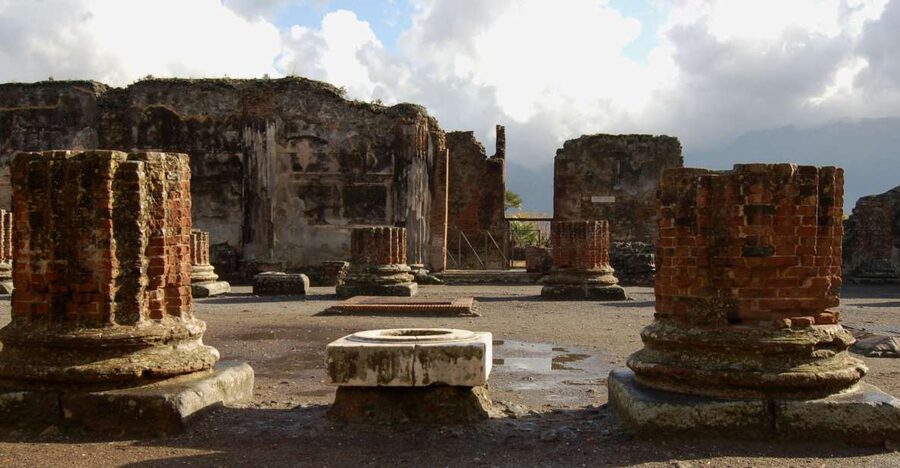
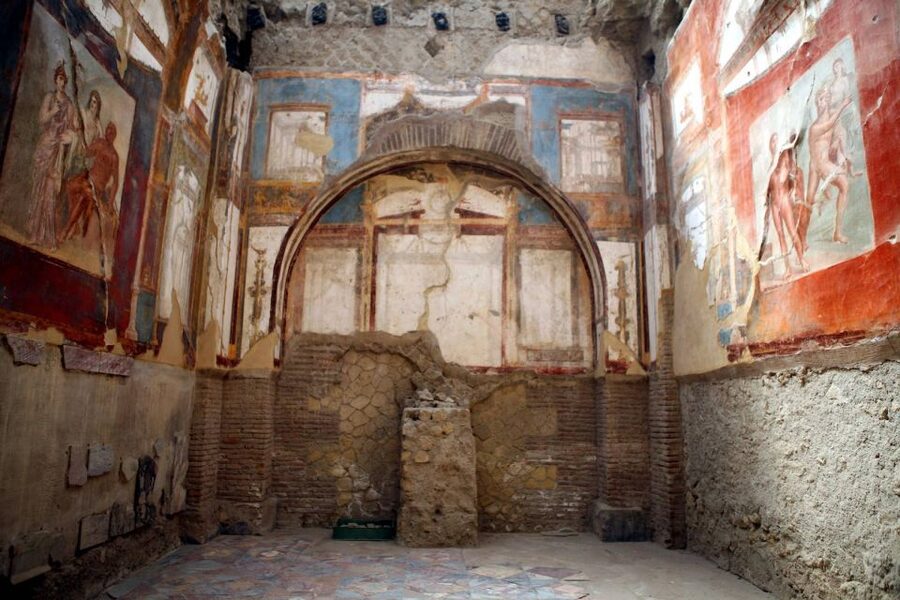
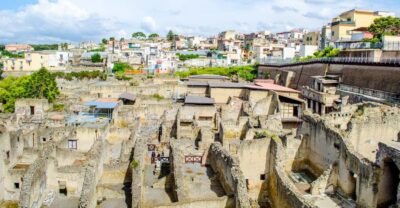
Herculaneum, called Ercolano in the local itinerary, offers a very different experience from Pompeii. The same eruption destroyed both towns, but the material that covered Herculaneum helped preserve more organic objects. A torrent of mud and lava hardened into a soft form of tufa, protecting wooden parts of buildings and household items.
The guided visit lasts about two hours. You can expect to look at homes and objects that make daily Roman life feel unusually close. Pompeii gives you the broad urban picture. Herculaneum often gives you the details inside the home.
That contrast is the reason I would not cut Herculaneum simply because Pompeii is better known. Seeing the two sites together shows how the eruption affected different places and why preservation varies. It also gives the guide a chance to explain the physical force and changing materials involved in the disaster.
Herculaneum is often easier to grasp in a short visit because its preserved domestic details make an immediate impression. You might notice wooden elements, household objects, and interiors that would usually have disappeared. The site is still extensive and requires walking, but its character is more intimate than Pompeii’s broad public streets.
The two-hour limit remains the main compromise. You will get an organized introduction rather than unlimited time in every building. Still, placing Herculaneum after Pompeii works well. You arrive already familiar with the eruption and Roman town life, so the better-preserved objects at Herculaneum add another layer instead of feeling like a second unrelated ruin.
More Herculaneum excavation visits:
- Pompeii and Herculaneum Small Group Tour with an Archaeologist
★ 5.0 · 1,350 reviews - Pompeii: Small-Group Tour of Pompeii and Herculaneum
★ 4.8 · 867 reviews - Ercolano: Herculaneum Entry Ticket with Optional Audio Guide
★ 4.1 · 581 reviews - Herculaneum: 3D Walking Tour with Skip-the-Line Ticket
★ 4.3 · 313 reviews
Why a live guide improves the ancient streets
An audio guide is included in English, and the tour also provides a live authorized English-speaking guide. That combination gives you flexibility. You can follow the live explanation, then use the audio material for extra information or during moments when the group is moving between stops.
The strongest reports about the experience focus on the guides’ manner as much as their facts. Ionica has been described as funny, attentive, and careful about keeping the group together. Fabiana has been praised for being friendly, informative, and passionate about the sites. Those qualities matter in an archaeological park, where a dry list of dates can quickly blur together.
A good guide also helps with scale. Pompeii and Herculaneum are not polished museums with every object labeled in a small room. They are open archaeological areas, and their meaning depends on seeing connections between buildings, streets, public spaces, and homes.
You should not expect a private guide or a custom route. This is a group excursion, so the pace and stops need to work for everyone. The benefit is structure and shared transport. The tradeoff is less freedom to linger over one favorite house or take a long break whenever you wish.
What the $175.59 price includes
At $175.59 per person, this is not the cheapest way to see Pompeii and Herculaneum. The price makes more sense when you count what is bundled: air-conditioned transportation from Sorrento, an authorized English-speaking guide, entry fees for both archaeological sites, skip-the-line access, and lunch.
You are also paying for a simpler day. The bus takes care of the main connection, and the guide helps you enter and understand two major sites without arranging separate tickets. For a first visit to the area, that convenience can be worth more than the difference between this price and a self-guided option.
The value depends on your priorities. If you already know the sites well, enjoy planning rail journeys, and want to spend as long as possible in one excavation, you may prefer independent visits. If you want both sites in one day and would rather not manage transport, meals, and admissions yourself, the package is easier to justify.
The lunch adds real practical value, especially because the day is physically demanding. So does the return to the same Sorrento meeting point. You begin and end at Parking Lauro on Via Correale, rather than solving your way back after a long day in the heat.
Who should book this excursion
This tour suits you if you are staying in Sorrento and want a one-day introduction to two of Campania’s most important archaeological sites. It is also a good fit if you prefer having an English-speaking guide explain the ruins instead of reading every panel or preparing your own route.
Families with older children may appreciate the variety. Pompeii offers streets and public buildings, while Herculaneum adds homes and preserved objects. The lunch break prevents the day from becoming six straight hours of walking, though the overall schedule is still active.
History-minded first-time visitors will get the most from the paired format. You can compare how the eruption affected each town and see both public Roman life and domestic life in one outing.
It is less suitable if you need step-free access, use a wheelchair, or have limited mobility. The experience specifically excludes wheelchair users and people with mobility impairments. It is also not ideal if you dislike fixed schedules or want to photograph and explore at your own pace.
Free cancellation up to 24 hours before the start gives you some planning room, and the reserve-now, pay-later option helps keep your Sorrento schedule flexible. Check the exact starting time and availability before committing, since the departure hour can vary.
Should you book this Pompeii and Herculaneum tour?
I would book it if you want both archaeological sites in one organized day and are staying in Sorrento. The strongest reasons are the included transport, site admissions, lunch, and the chance to compare Pompeii’s broad urban remains with Herculaneum’s preserved domestic details.
I would skip it if you want a slow, independent study of Pompeii or have trouble with uneven ground and long walks. For most first-time visitors who value convenience and clear explanations, the $175.59 cost is reasonable for what is included, especially when guides such as Ionica or Fabiana bring humor and structure to a very large subject.
FAQ
Where does the tour start?
The tour starts at Parking Lauro on Via Correale in Sorrento.
Where does the tour end?
The activity ends back at the same meeting point, Parking Lauro.
How long is the tour?
The published duration is 26 hours, while the planned experience is described as a full day. Check availability for the exact starting time.
Which archaeological sites are included?
The tour includes guided visits to Pompeii and Herculaneum, known locally as Ercolano.
Is transportation included?
Yes. An air-conditioned bus takes you from Sorrento to the archaeological sites and back.
Is lunch included?
Yes. Lunch is included, with options described as salad, pizza, pasta, dessert, bread, water, and a choice of beer, wine, or a soft drink.
Is an English-speaking guide provided?
Yes. The tour includes an authorized live English-speaking guide, and an English audio guide is also included.
What should I bring?
Bring your passport or identity card and comfortable shoes.
Is the tour suitable for wheelchair users?
No. The activity is not suitable for wheelchair users or people with mobility impairments.
Newest reviews from Sorrento
- Private Stress-Free Tour from Sorrento: Ischia Island & Tastings★ 5.0 · 4 reviews
- Tour in the ruins of Pozzuoli with an archaeolgist.★ 5.0 · 4 reviews
- Vico Equense: Authentic Cooking Class at a Local’s Home★ 5.0 · 4 reviews
- Private Tour Pompeii and Winery★ 5.0 · 4 reviews
- Lemon Experience with Limoncello demonstration★ 5.0 · 4 reviews
- Path of the Lemons★ 5.0 · 4 reviews
- Positano Private Tour By Night from Sorrento★ 5.0 · 4 reviews
- Walking Secret Food Tours Sorrento with tastings★ 4.5 · 4 reviews
Herculaneum Tours, compared.

Pompeii and Herculaneum Small Group Tour with an Archaeologist
Read our review →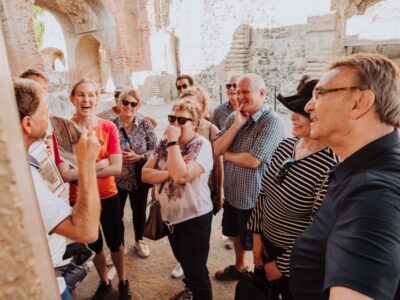
Herculaneum Entry Ticket with Optional Audio Guide
Read our review →
Guided Day Tour of Pompeii and Herculaneum with Light Lunch
Read our review →
Private Day Tour to Vesuvius, Herculaneum & Pompeii with Pick Up
Read our review →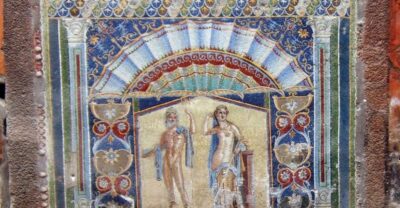
Browse the lists this tour appears in