
Reviewed · WALKING TOURS
Discover Pompeii on this Guided Walking Tour of the Buried City
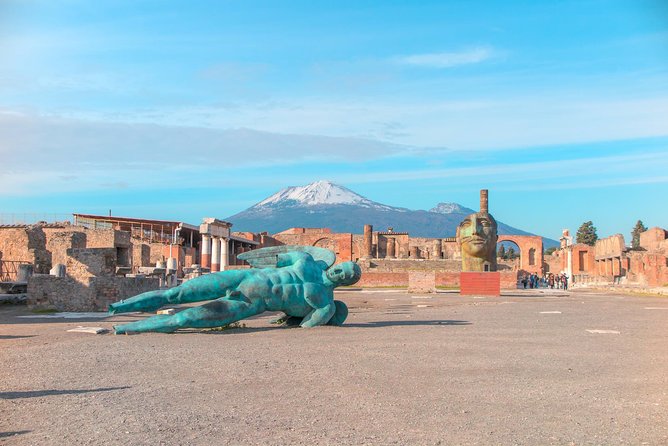
Pompeii is not a museum behind glass. It is a buried Roman city you walk through, with streets, walls, and spaces still arranged much as they were before Vesuvius erupted. This two-hour tour gives you a guide to make sense of what you are seeing instead of leaving you to puzzle over piles of stone.
I like the small maximum group of 15, which should make it easier to hear and ask questions. I also like that admission is included and the tour is designed to bypass the long ticket line, a real help when your time in Campania is tight.
The main caution is language consistency. French and German tours need at least 10 participants, and two German-language accounts describe tours that became mainly English, with only short German explanations. Confirm your language close to departure, and be ready for English if the minimum is not met.
In This Review
- Key Points Before You Book
- Why Pompeii Works Best With a Guide
- Starting at Piazza Esedra
- Walking Through the Archaeological Park
- Vesuvius and the Story of the Eruption
- What the Two-Hour Format Gives You
- Language Choices and the German Tour Warning
- Is $63 a Fair Price?
- Who Will Get the Most From This Tour?
- Practical Details That Matter on the Day
- Should You Book It?
- FAQ
- How long does the Pompeii guided tour last?
- Is admission to Pompeii Archaeological Park included?
- Where does the tour begin and end?
- Which languages are available?
- Is the German or French tour guaranteed?
- What is included in the $63 price?
Key Points Before You Book
- Two hours inside Pompeii: Enough time for a useful introduction, but not enough to cover the whole archaeological park.
- Groups capped at 15: A smaller group should make the guide easier to hear than a large coach tour.
- Four guide languages: English, Spanish, German, and French are offered, with a minimum of 10 people required for French or German.
- Audio support changes by season: Italian, Portuguese, Chinese, Russian, and Japanese audio guides are available from November through March. More language options are listed from April through October.
- Meeting point at Piazza Esedra: You must make your own way there. Pickup, drop-off, food, and drinks are not included.
- Mobile ticket and included admission: Bring the booking confirmation and a valid passport or ID for entry checks.
Why Pompeii Works Best With a Guide
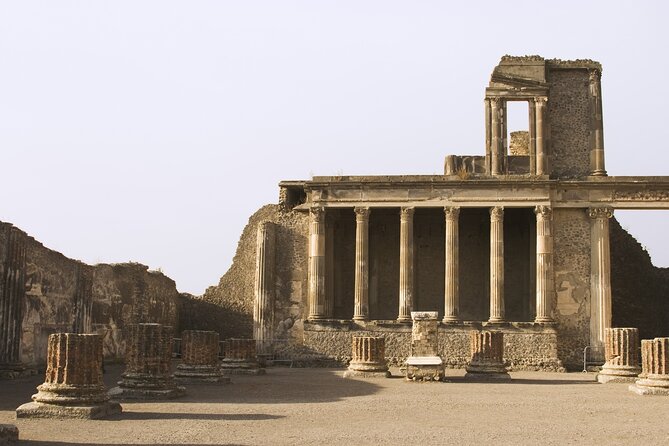
Pompeii can look obvious at first: old walls, broad stone streets, and the looming presence of Vesuvius. The trouble is that the meaning often hides in small details. A guide can explain how rooms were used, why the city grew where it did, and how the eruption changed the record of Roman life.
The city occupied a plateau created by earlier lava flows from Vesuvius. It controlled the valley around the Sarno River, whose delta once supported a busy port. That location helps explain why Pompeii became an active Roman town rather than an isolated settlement.
Its earliest known traces date to the seventh and sixth centuries BC. The first defensive walls used a local volcanic stone called pappamonte, enclosing about 63.5 hectares. Etruscans, Greeks, and other Italic peoples all contributed to the city’s early development, so Pompeii was never simply a Roman copy of another town.
Those facts are useful, but a guide can connect them to what you see underfoot. A short explanation of the walls, street plan, or building materials can turn a half-collapsed structure into a clue about how the town worked.
More Walking Tours in Pompeii
- Pompeii: Guided Walking Tour with Entrance Ticket
★ 4.3 · 1,423 reviews - Discover Pompeii: French Walking Tour of the Buried City
★ 4.8 · 253 reviews - From Salerno: Pompeii Guided Walking Tour
★ 4.5 · 235 reviews
Starting at Piazza Esedra
The meeting point is Piazza Esedra, 2, in Pompei. This tour does not include transportation, so you need to arrange your own route to the square and arrive ready to join the group.
Bring your mobile ticket and a valid passport or other accepted ID. Entry verification is specifically required, and missing documents could create a problem before the walking begins.
The meeting point matters because Pompeii is a large archaeological site, and a two-hour visit goes quickly. Do not assume that finding the entrance is the same as finding the group. Give yourself enough time to locate Piazza Esedra, check the booking details on your phone, and settle in before departure.
The activity returns to the same meeting point. That makes the tour easier to fit around a later train, meal, or visit elsewhere in the area, though you should allow extra time beyond the advertised two hours for meeting and entry procedures.
Walking Through the Archaeological Park
The main stop is Pompeii Archaeological Park, with admission included. The tour lasts about two hours and focuses on walking through the remains rather than transporting you between separate sights.
Expect an introduction to the city’s setting, origins, and Roman way of life. You will move along ancient streets and see the physical layout of a town preserved by volcanic catastrophe. The strongest part of this format is the connection between ordinary life and the eruption. Pompeii is famous because it preserves evidence of homes, streets, and daily routines, not just grand monuments.
A guide-led walk also gives you a basic route through a site that can otherwise feel confusing. The park covers a large area, and the available two hours require choices. You should think of this as a focused first visit, not a complete examination of every open building.
That limit is worth keeping in mind. If you want to spend most of a day studying individual houses, public buildings, inscriptions, and temporary exhibits, this tour may feel short. If you have only a morning or afternoon and want a clear introduction, two hours is a practical amount of time.
The group size helps here. With no more than 15 people, the guide should be able to keep the pace together without the sluggish feel of a very large group. Headsets are included, so you can follow the commentary while walking rather than crowding around the guide to hear.
Vesuvius and the Story of the Eruption

Mount Vesuvius is central to Pompeii’s story, but the tour information does not describe a climb to the volcano. Vesuvius appears as geographic and historical context for the archaeological park.
The volcano sits on the Gulf of Naples, about 9 kilometers east of Naples and close to the coast. It is a somma-stratovolcano, meaning a newer cone rises within the remains of an older volcanic structure. The summit caldera formed when the earlier, higher volcano collapsed.
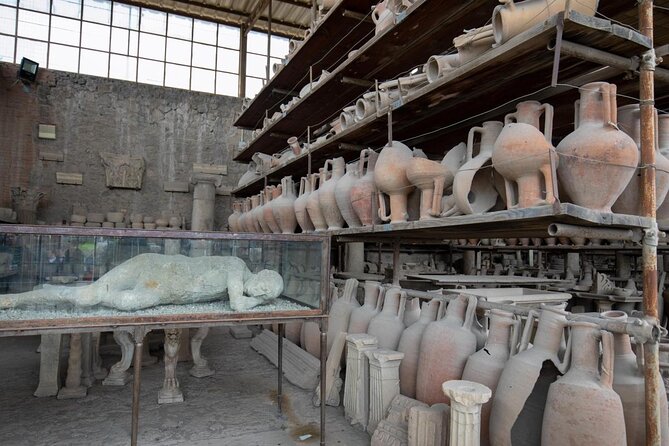
You do not need a geology lesson to appreciate Pompeii, but the volcanic setting explains why the city was preserved in such an unusual way. The eruption buried the town and left an account of Roman life that ordinary decay would have erased.
I find this connection one of the best reasons to visit with a guide. Without context, the eruption can become a dramatic story detached from the streets in front of you. With context, the stones, walls, and city plan become part of a larger explanation of how a working town was suddenly sealed away.
More Pompeii excavation visits:
- Pompeii: Entry Ticket and Guided Tour with an Archaeologist
★ 4.8 · 19,459 reviews - Pompeii: Entry Ticket with Optional Audio Guide
★ 4.2 · 12,360 reviews - Pompeii: Small Group Tour with an Archaeologist
★ 4.8 · 12,264 reviews - Pompeii Small Group Tour with an Archaeologist
★ 5.0 · 6,593 reviews
What the Two-Hour Format Gives You
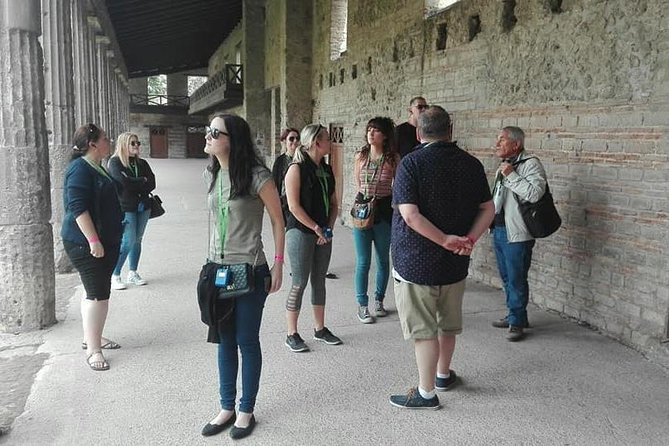
Two hours is long enough to build a mental picture of Pompeii. You can learn where the city stood, how its early communities developed, and how Roman life appeared in its streets and buildings.
It is not long enough to promise every major corner of the park. The experience is best for a first look, a short stop during a Campania trip, or anyone who prefers interpretation to wandering alone.
I would be especially comfortable recommending this length to someone visiting Pompeii for the first time. The guide can help you understand the site’s basic structure before you decide if you want to return for a longer, self-guided visit.
Families may also appreciate the format. Ancient ruins can lose younger visitors when every building looks alike. A guide who explains how people used the city can give children and teenagers specific things to look for. The tour information notes that most people can participate, though this is still a walking visit over an archaeological site.
Language Choices and the German Tour Warning
English, Spanish, German, and French-speaking guides are listed for the tour. Audio guides are also offered in Italian, Portuguese, Chinese, Russian, and Japanese from November through March.
From April through October, the listed audio options expand to Italian, German, French, Portuguese, Chinese, Russian, and Japanese on the stated schedule. Since the language arrangement changes by season and weekday, check the exact option shown for your date before booking.
The German and French options come with an important condition: at least 10 participants are needed to confirm the language. If that number is not reached, the tour will be conducted in English.
I would treat this as a real booking issue, not a footnote. Two German-language accounts describe difficulty following the German commentary. In one case, a tour booked in German became mainly English, with the guide translating only the most important points into German. Another account says the German was hard to understand.
The operator apologized for the problem, but an apology does not change the practical lesson. If you need a German or French tour, contact the reservation team within 24 hours before departure to confirm the language. If you cannot comfortably follow English, consider an audio guide or a different arrangement.
For English and Spanish speakers, this concern is less relevant. Still, all guided visits depend on the particular guide’s clarity and pacing, so use the headsets and stay close enough to follow the group.
Is $63 a Fair Price?
At $63, this is not the cheapest way to enter Pompeii. The value comes from combining admission, a live guide, headsets, and a planned route in a short visit.
For you, the key question is how much structure you want. If you are happy to read signs and explore without help, a guided ticket may cost more than necessary. If you have limited time or want the city explained as you walk, the price can be reasonable because you are paying for orientation as well as entry.
The line-skipping feature also has practical value. Pompeii is a major attraction, and avoiding a long ticket queue protects the part of your day that you actually spend inside the ruins. It does not mean you can ignore the meeting time or entry checks, but it should reduce wasted time at the ticket window.
The small group makes the price easier to justify than a large, impersonal group tour. Fifteen people is still a group, but it is compact enough for questions and a more direct connection with the guide.
Remember that the $63 does not cover pickup, drop-off, drinks, lunch, or gratuities. You need to budget separately for those items and plan your own transport to Piazza Esedra.
Who Will Get the Most From This Tour?
This tour suits a first-time Pompeii visitor who wants the main story without spending an entire day on site. It also works well for people building Pompeii into a wider visit around Naples, the Gulf of Naples, or Campania.
It is a good match if you:
- Prefer a guide to explain ruins as you see them.
- Have about two hours available.
- Want admission included and a mobile ticket.
- Like a group capped at 15 people.
- Need English or Spanish commentary.
- Want a clear starting route through a large archaeological park.
I would be more cautious if you are a serious archaeology enthusiast or have already visited Pompeii. Two hours may feel rushed if your goal is to inspect a long list of specific buildings.
I would also pause before booking a German or French departure unless the language has been confirmed. The minimum group rule is clear, and the reported language problems make that confirmation especially important.
Practical Details That Matter on the Day
The tour ends where it begins, at Piazza Esedra. No hotel pickup is provided, so your transport plan needs to include both the arrival and the return.
Confirmation is issued at booking. Keep it accessible on your phone, since the ticket is mobile. Carry your passport or valid ID because entry verification is required.
Headsets are included with the live guided visit. Audio guides are supplied in several additional languages, but the exact availability depends on the season and listed weekday schedule. Check this before assuming an audio option will be available in your preferred language.
Most people can take part, according to the activity information. Even so, Pompeii is an archaeological walking site, so you should expect time on your feet and an outdoor setting. No meal or beverage is included, so plan those needs outside the tour.
Free cancellation is available if you cancel at least 24 hours before the local start time. Inside that window, the payment is not refunded, and changes are not accepted.
Should You Book It?
Book this Pompeii walk if you want a short, guided introduction with admission included, a mobile ticket, headsets, and a group limited to 15 people. The guide gives the ruins a human scale, linking ancient streets and buildings to the communities that lived beside Vesuvius.
Skip it if you want a full-day archaeological study, dislike fixed group pacing, or need guaranteed French or German commentary without first confirming the minimum group. For most first visits with limited time, it offers a useful balance of structure, context, and convenience, as long as you understand that two hours is an introduction rather than the whole Pompeii experience.
FAQ
How long does the Pompeii guided tour last?
The guided walking tour lasts approximately two hours.
Is admission to Pompeii Archaeological Park included?
Yes. Admission to Pompeii Archaeological Park is included in the tour price.
Where does the tour begin and end?
The tour begins at Piazza Esedra, 2, 80045 Pompei, Italy, and ends back at the same meeting point.
Which languages are available?
Professional guides are listed for English, Spanish, German, and French. Audio guides are available in additional languages, with options varying by season and weekday.
Is the German or French tour guaranteed?
No. French and German tours require at least 10 participants. If the minimum is not met, the tour will be conducted in English. You should contact the reservation team within 24 hours before departure to confirm the language.
What is included in the $63 price?
The price includes admission, a professional guide, headsets, and the mobile ticket arrangement. Pickup and drop-off, beverages, lunch, and optional gratuities are not included.
More Walking Tours in Pompeii Ruins
- Pompeii 3 Hours Walking Tour Led by an Archaeologist
★ 5.0 · 126 reviews - Pompeii: Highlights Guided Walking Tour
★ 4.6 · 105 reviews - Pompeii: 3D Walking Tour with Entry Ticket
★ 4.3 · 102 reviews - Explore Pompeii: 2-Hour Guided Walking Tour with Included Ticket
★ 4.5 · 77 reviews
Newest reviews from Pompeii Ruins
- Private Tour Pompeii and Winery★ 5.0 · 4 reviews
- Visit the Pompeii ruins from Salerno with Pizza Lunch★ 5.0 · 4 reviews
- Pompeii Private Tour for Kids and Their Families★ 4.8 · 4 reviews
- From Sorrento: Pompeii & Vesuvius tour small group★ 4.8 · 4 reviews
- Pompeii Sorrento and Positano Tour★ 5.0 · 4 reviews
- From Naples_ Pompeii Tour_Skip the line ticket + audioguide★ 4.3 · 4 reviews
- Pompeii, skip-the-line ticket with smartphone audio guide on App★ 3.0 · 4 reviews
- Pompeii Private Half-Day Tour from: Naples,Sorrento, Amalfi Coast★ 5.0 · 4 reviews
Walking Tours, compared.

Walking Food Tour in Sorrento w/ Limoncello Factory Lemon Grove
Read our review →

Discover Pompeii: French Walking Tour of the Buried City
Read our review →

Browse the lists this tour appears in