
Reviewed · SKIP THE LINE
Ancient Pompeii Private Tour: Skip the Line & Kid-Friendly Option
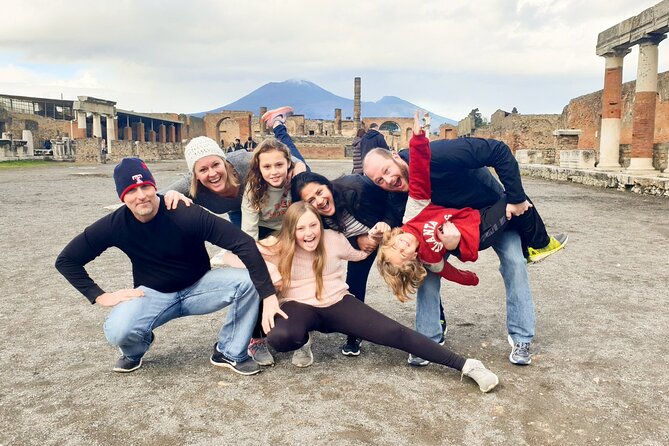
Pompeii is far too large to understand by simply wandering its stone streets. This private walking tour takes you from the Forum and ancient baths to painted homes, theaters, shops, and the haunting plaster casts of eruption victims, with a guide explaining what daily life looked like before Vesuvius buried the city in AD 79.
I like the private format, since your guide can answer questions, adjust the pace, and focus on places your group cares about. I also like the family option, which uses a map, stickers, puzzles, and games to keep children involved rather than asking them to listen to a long history lecture.
The main point to check before booking is the admission wording. The tour description says fast-track access and lists admission as included, but the detailed itinerary says entrance fees are not included and that the guide can buy tickets quickly at the gate. Confirm the current arrangement when you book.
In This Review
- Key points to know before you go
- Why a private Pompeii guide makes a difference
- Starting at Porta Marina and Pompeii’s city walls
- The Forum, Basilica, and Temple of Apollo
- Via dell’Abbondanza and the city’s everyday routines
- The Forum Baths and Roman comfort
- Casa dei Vettii and the private side of Pompeii
- Theater life at Teatro Grande
- The Antiquarium and the plaster casts
- How the kid-friendly option actually works
- Timing, heat, walking, and the admission question
- Who should book this Pompeii experience
- Should you book the private Pompeii tour?
- FAQ
- How long does the Pompeii private tour last?
- Is admission to Pompeii included?
- What is included in the family option?
- Where does the tour begin and end?
- Is transportation provided?
- What should I bring for the tour?
Key points to know before you go
- The Forum gives you the best opening lesson: politics, religion, trade, and public life all come together in Pompeii’s main square.
- The family option is designed for children ages 6 to 11: expect a special map, stickers, activities, clues, and a guide who reshapes the route for younger minds.
- Casa dei Vettii is a major highlight: this lavish house reopened in 2023 after a 20-year restoration.
- The private guide can help with the heat and crowds: guides such as Natalia, Viviana, Francesca, and Nandor have been praised for finding shade or quieter paths.
- You will walk on uneven ancient streets: wear sturdy shoes and arrive ready for sun, dust, and a moderate level of physical effort.
- The advertised visit lasts about two hours: some groups have stayed longer, but do not assume extra time is guaranteed.
Why a private Pompeii guide makes a difference

Pompeii can look simple at first: walls, columns, broad streets, and scattered rooms. Then you notice the stepping-stones across the road, the raised sidewalks, the painted household shrine, or the deep wheel ruts left by carts. A guide helps connect these details to ordinary life.
That matters because Pompeii is not one grand monument. It is a whole city, with homes, businesses, religious buildings, public toilets, baths, theaters, markets, and political offices. Without help, you can easily spend your entire visit admiring walls without understanding who used them or why they were built that way.
Your guide is a Blue Badge professional, and the activity is private for your group only. The guide can tailor the route if you have a particular interest in Roman religion, architecture, family life, food, politics, or the eruption itself.
The best guides also know when to stop talking. The site is physically demanding, especially in summer, and the broad streets offer little shade. Natalia has been singled out for combining modern-history training with a passionate explanation of Pompeii, while Viviana has been praised for finding shade and patiently answering questions.
There is one caution. A private tour is not automatically a slow tour. One account describes a guide moving too quickly for people with mobility problems. If anyone in your group needs more time, say so clearly at the start and ask the guide to keep the pace comfortable.
More Pompeii excavation visits:
- Pompeii: Entry Ticket and Guided Tour with an Archaeologist
★ 4.8 · 19,459 reviews - Pompeii: Entry Ticket with Optional Audio Guide
★ 4.2 · 12,360 reviews - Pompeii: Small Group Tour with an Archaeologist
★ 4.8 · 12,264 reviews
Starting at Porta Marina and Pompeii’s city walls
The meeting point is at Via Villa dei Misteri, 2, near the archaeological park. The tour begins with an orientation to the city walls and Porta Marina, an important entrance once connected with Pompeii’s harbor.
This is a useful place to begin because it shows that Pompeii was not just a quiet inland settlement. It was a working Roman city linked to trade, farming, politics, and movement by sea. The walls also help you picture the city as a defended urban center rather than an open-air collection of ruins.
Your guide introduces the eruption of Vesuvius, which began on August 24 in AD 79 according to the tour’s historical explanation. Ash and volcanic material covered the city, preserving houses, streets, wall paintings, tools, food containers, and even the final shapes of some victims.
The opening section is brief, but it gives you a map in your head. That is valuable at Pompeii, where the scale can otherwise feel confusing.
The Forum, Basilica, and Temple of Apollo
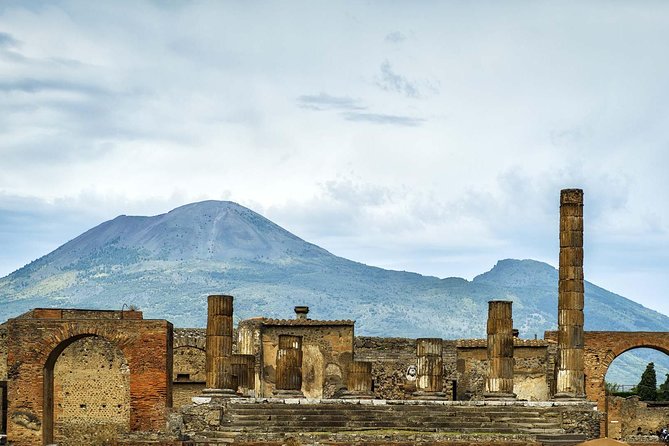
The Forum was Pompeii’s central public square. It served political, religious, and commercial purposes, and it was closed to chariot traffic. At roughly 157 by 38 meters, it is large enough to make the city’s public life feel organized and formal.
I find the Forum most useful when the guide explains its different edges one building at a time. You can begin to see where officials worked, where religious ceremonies took place, and where merchants and citizens gathered.
Nearby, the Basilica is one of Pompeii’s most important public buildings. Built in the second century BC, it was used for business and legal matters. Its scale gives you a sense of how much public administration mattered in Roman society.
The Temple of Apollo is one of Pompeii’s oldest religious sites, with origins reaching back to the sixth century BC. Its raised podium, broad steps, and portico of 48 columns make it an easy landmark near the Forum.
You will also see bronze replicas of Apollo as an archer and his sister Diana. The original Hellenistic bronzes are kept at the National Archaeological Museum in Naples, so this stop can also help you decide if that museum belongs on your broader Pompeii itinerary.
Allow about five to ten minutes at each of these landmarks in the planned route. That is enough for a clear explanation and photographs, but not enough for a slow architectural study.
Via dell’Abbondanza and the city’s everyday routines

Via dell’Abbondanza is Pompeii’s longest and most important street. It ran from the Forum toward the Sarno Gate and functioned as a main commercial and social route.
This is where the city begins to feel personal. You walk past shops, houses, fountains, sidewalks, and road crossings. The basalt paving can be rough, and the ancient street surface demands attention, but it also makes the city feel unusually close.
The stepping-stones are one of the simplest details to remember. They let people cross streets that could flood or carry sewage while keeping their feet above the muck. Gaps between the stones allowed carts to pass. You can read the road as a piece of public engineering, not just a pretty ruin.
The tour also points out an ancient fast-food counter, where large storage jars were built into the counter for serving food. It is a fine reminder that Roman city life included quick meals, busy shops, and practical services much like your own town.
The guide may also show public weighing scales, market buildings, and the Macellum, Pompeii’s food market. These places help you think about supply, trade, and household routines instead of only emperors and volcanoes.
More Pompeii Ruins tours worth comparing
- Pompeii: Skip-the-Line Entrance Ticket with Audio Guide
★ 4.0 · 2,509 reviews - Sorrento: Skip-the-Line Pompeii Express Tour by Train
★ 4.8 · 2,038 reviews - Pompeii: Skip-the-line-Ticket and Guided Tour
★ 4.6 · 1,152 reviews - Pompeii: Guided Tour with Skip-the-Line Entry
★ 4.9 · 812 reviews
The Forum Baths and Roman comfort
The Forum Baths are among Pompeii’s best-preserved public bath complexes. Built around 80 BC, they were still operating when Vesuvius erupted.
The guide can walk you through the traditional bathing sequence:
- The Apodyterium, or changing room
- The Frigidarium, or cold room
- The Tepidarium, or warm room
- The Calidarium, or hot room
The rooms feature barrel-vaulted ceilings, stucco decoration, and terracotta telamones, figures used as architectural supports. Even if you are not an architecture fan, the baths explain how Romans combined plumbing, heating, exercise, social meetings, and personal care in one public institution.
This stop lasts about 15 minutes in the planned route. That is a sensible amount of time for a general introduction, though anyone fascinated by Roman engineering may want to ask for more explanation.
Casa dei Vettii and the private side of Pompeii
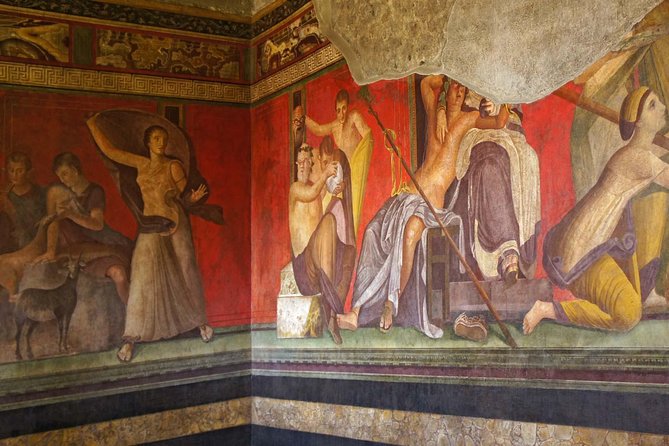
Casa dei Vettii is one of the most exciting stops because it shifts the focus from public life to private ambition. The home belonged to Aulus Vettius Conviva and Aulus Vettius Restitutus, two former slaves who became wealthy wine merchants.
Their house was built to display success. Wall paintings, floor mosaics, courtyards, and decorative details show how wealthy residents used their homes to announce status.
The house is often called Pompeii’s Sistine Chapel because of its important paintings. It reopened in 2023 after a 20-year restoration, so its condition and presentation are a major reason to include it in a guided route.
I especially like this stop for families and older children because it complicates the usual picture of Roman society. Pompeii was not only a city of senators and generals. Freedmen could build wealth, buy a grand home, and make their new position visible.
The planned visit gives Casa dei Vettii about 20 minutes, the longest single stop. That makes sense. It is the kind of place where a guide can point out paintings and household design choices that you would likely miss alone.
Theater life at Teatro Grande
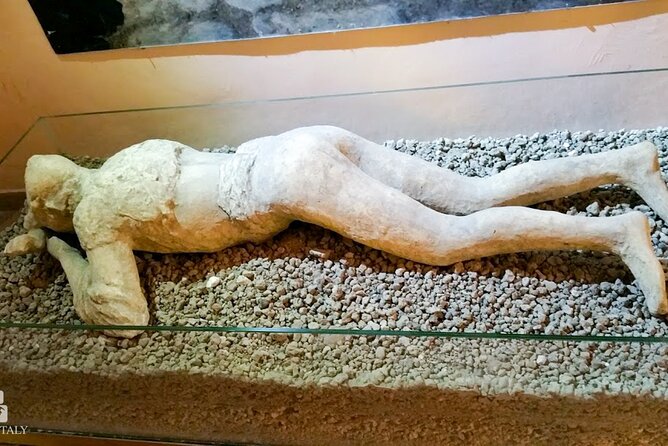
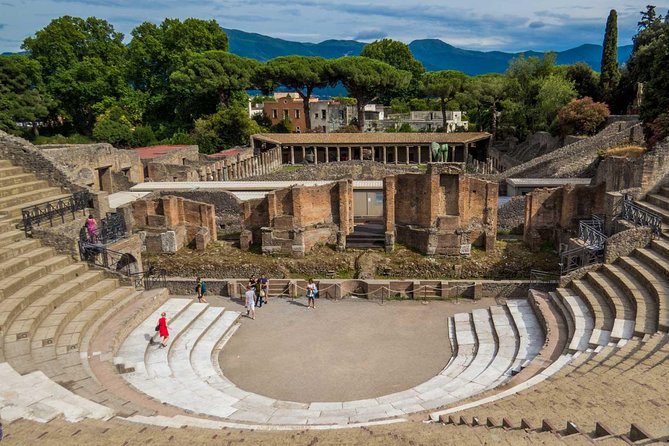
Teatro Grande is one of the world’s oldest surviving masonry theaters. It was built in the second century BC and shaped into a natural lava slope.
The theater illustrates the shift from Greek to Roman architectural ideas. Your guide can explain how the seating, stage, and hillside setting worked together for public performances.
This is a shorter stop, about five minutes, so treat it as an introduction rather than a full theater lesson. Its location also offers a change of pace after the Forum, streets, and houses.
The tour may also include the smaller theater or other performance spaces depending on your guide and the conditions that day, but the listed route specifically highlights Teatro Grande. If theater interests you, ask what can fit within your time.
The Antiquarium and the plaster casts
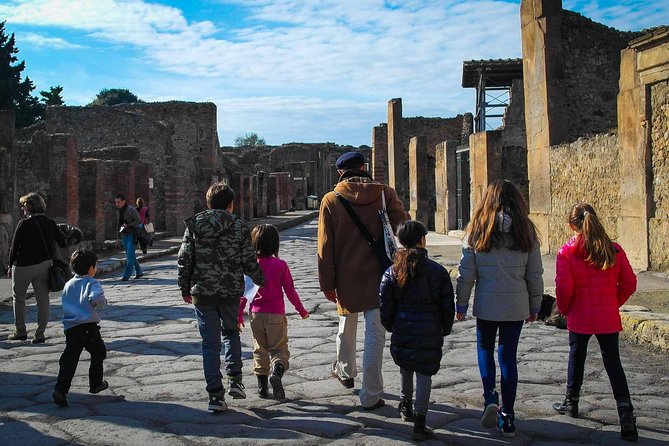
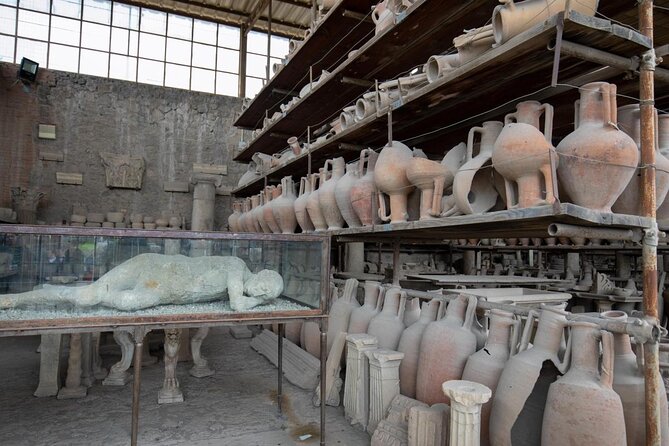
The Antiquarium is Pompeii’s climate-controlled museum and one of the most useful final stops. It holds fragile objects discovered across the site, including artifacts that cannot safely remain outdoors.
The most difficult material here is the plaster casts of eruption victims. These casts preserve the final positions of people caught by the volcanic disaster, including small children. The sight is powerful, and it can be upsetting, especially for younger children.
A good family guide will explain the casts carefully without turning them into a spectacle. The family route is intended for children ages 6 to 11, but parents should still decide if their child is ready for this part of the visit.
The casts also bring the eruption down to a human scale. After seeing public squares, shops, and grand houses, you are reminded that Pompeii was a city of real families and working people.
How the kid-friendly option actually works
The Pompeii for kids option is not simply the adult tour with simpler vocabulary. It includes a kit with a special map, stickers, activities, puzzles, and an activity book.
One useful game asks children to match characters, such as a gladiator, actor, slave, or politician, with the buildings where they might have lived or worked. This gives children a reason to look closely at each stop and remember what the building was for.
Guides including Francesca, Sabrina, Fabrizio, Anna, Natalia, and Viviana have been praised for keeping children involved. The strongest reports describe children ranging from about five to 11 staying interested despite heat and dust. The official recommendation is for children ages 6 to 11, so families with younger children should ask how the activities can be adapted.
The private setting helps here. Your guide can pause for questions, shorten a stop, or move on before children lose focus. The route still covers the major highlights, but it is shaped around younger attention spans.
For teenagers, the regular private tour may work better. One group with three teenagers enjoyed a route tailored to its preferences, while younger children benefited most from the games and map.
Timing, heat, walking, and the admission question
The stated duration is about two hours. That is enough for a brisk introduction to the major sights, but Pompeii is enormous, and you should not expect to see every open building.
Some groups have spent more than three hours with a guide, and one guide continued answering questions after the main route. That extra time is a pleasant possibility, not something I would count on when planning trains, lunch, or a second attraction.
Book an early start if you can. A visit beginning at 11 a.m. can become hot by the end, especially along the exposed streets. Good walking shoes are essential, and you should have a moderate level of physical fitness.
The tour does not include pickup or drop-off. You meet at Via Villa dei Misteri, 2, and finish at the same point. The site is near public transportation, but you are responsible for reaching the meeting point.
The admission details need attention. The top-level description says skip-the-line tickets are included, while the detailed notes say admission fees are not included and that certified guides can buy tickets quickly at the gate using a fast-track line. At $165.05 per person, clarify exactly what the price covers before paying. The value is strongest when your group wants private attention and a well-planned route, not simply the cheapest way inside Pompeii.
Who should book this Pompeii experience
I would choose this tour for a family that wants the children to remember more than a few broken columns. The kid-focused kit and flexible route give young minds something to do while the guide explains the city.
It also suits couples, friends, and history-minded solo visitors who prefer questions and conversation over a large group. The private format is especially useful if you want to focus on houses, baths, religion, food, politics, or the eruption.
It is less suitable if you want a long, relaxed day covering every corner of the archaeological park. Two hours moves quickly, and the site requires walking over uneven basalt streets. People with mobility concerns should request a slower pace at the start.
The English-language guide is another practical point. The activity is offered in English, and the named guides have been praised for clear explanations, warmth, humor, and patience with children.
With a 4.9 rating from 167 ratings and recommendation from 98 percent of participants, the strongest pattern is clear: guide quality makes this experience work. Individual guides named in the feedback include Francesca, Natalia, Fabrizio, Viviana, Sabrina, Anna, Giuseppe, Francesco, Alfredo, Nandor, and Laura. You cannot guarantee a particular guide unless the operator confirms it, but you can request one.
Should you book the private Pompeii tour?
Book it if you want context, personal attention, and a route that makes sense of Pompeii’s huge archaeological park. Families should strongly consider the kid option, especially with children around ages 6 to 11.
The price is not a bargain admission ticket. It buys a private guide, a focused visit, and help avoiding the confusion that often comes with Pompeii’s size. I would book early, aim for a morning start, wear good shoes, and confirm the admission-fee arrangement before finalizing the reservation.
Skip it if you prefer exploring alone, need a very slow pace, or want several hours to roam without a schedule. For most first visits, though, the guide’s stories turn a difficult site into a readable ancient city.
FAQ
How long does the Pompeii private tour last?
The advertised duration is approximately two hours. Some groups have spent longer with their guide, but additional time should not be assumed.
Is admission to Pompeii included?
The tour information is inconsistent. One section lists admission as included, while the detailed itinerary says admission fees are not included and that the guide can purchase tickets quickly through a fast-track line. Confirm the current policy before booking.
What is included in the family option?
The family option includes a Pompeii4kids kit with a map, stickers, activities, puzzles, and an activity book. It is recommended for children ages 6 to 11.
Where does the tour begin and end?
The meeting point is Via Villa dei Misteri, 2, 80045 Pompei, Italy. The tour ends back at the same meeting point.
Is transportation provided?
Pickup and drop-off are not included. The meeting point is near public transportation.
What should I bring for the tour?
Wear good walking shoes and be ready for a moderate level of physical activity. A current valid passport is required on the day of the tour for children under 18.
Newest reviews from Pompeii Ruins
- Private Tour Pompeii and Winery★ 5.0 · 4 reviews
- Visit the Pompeii ruins from Salerno with Pizza Lunch★ 5.0 · 4 reviews
- From Sorrento: Pompeii & Vesuvius tour small group★ 4.8 · 4 reviews
- Pompeii Private Tour for Kids and Their Families★ 4.8 · 4 reviews
- Pompeii Sorrento and Positano Tour★ 5.0 · 4 reviews
- From Naples_ Pompeii Tour_Skip the line ticket + audioguide★ 4.3 · 4 reviews
- Pompeii, skip-the-line ticket with smartphone audio guide on App★ 3.0 · 4 reviews
- Pompeii Private Half-Day Tour from: Naples,Sorrento, Amalfi Coast★ 5.0 · 4 reviews
Skip the Line, compared.

Skip-the-Line Entrance Ticket with Audio Guide
Read our review →



Skip-the-Line Entry Ticket with Digital Guide App
Read our review →
Pompeii Ruins Private Tour with Optional Skip-the-Line Entry
Read our review →
Skip-the-Line Pompeii Guided Tour from Sorrento
Read our review →
Skip the Line Guided Tour of Pompeii led by an Archaeologist
Read our review →Browse the lists this tour appears in