
Reviewed · 3-HOUR EXPERIENCES
Visit Pompeii with an expert professional guide (2/3 hours)
Pompeii is easiest to understand when someone helps you read its streets, shops, election buildings, baths, and plaster casts as parts of one lost Roman town. This private visit gives you about 2.5 to 3 hours with an English-speaking guide, followed by a short stop for limoncello and local crafts. I like the personal format, since your guide can adjust the walk to your interests. I also like that the route covers everyday places such as the pistrinum bakery and thermopolium snack bar, not only the famous forum.
The main catch is important: the archaeological entrance ticket is not included in the $106.65 price. The phrase skip the line means the guide helps you avoid the normal ticket-office queue, especially in high season. It does not mean free admission. The wording has caused confusion, so read the inclusions carefully before paying.
In This Review
- Key points at a glance
- Pompeii in a Private, Human-Scale Walk
- At the Via Villa dei Misteri Meeting Point
- Reading the Forum and Public Buildings
- Baths, Houses, Shops, and Roman Routine
- The Eruption Through Casts and Remains
- A Flexible Route, If You Set Priorities
- Limoncello and Pompeian Craft Displays
- What the $106.65 Price Really Covers
- Language, Pace, and Group Fit
- Who Should Book This Pompeii Tour?
- FAQ
- Are Pompeii entrance tickets included?
- What does skip the line mean?
- How long does the Pompeii visit last?
- Is the tour private?
- Is the tour offered in English?
- What is included after the archaeological visit?
Key points at a glance
- Pompeii’s major public spaces: See the forum, basilica, markets, public baths, and other civic buildings with an expert guide.
- Private group format: Only your own party takes part, allowing the route to be adjusted to your interests.
- Everyday Roman life: The pistrinum, thermopolium, houses, and characteristic shops add useful detail beyond the main ruins.
- Tickets cost extra: Budget separately for admission to the archaeological park.
- A short local tasting stop: The tour ends with limoncello, handmade Pompeian sandals, coral, and cameo displays.
- Timing matters: One account describes a late booking near closing time, which left too little time for a relaxed visit.
Pompeii in a Private, Human-Scale Walk
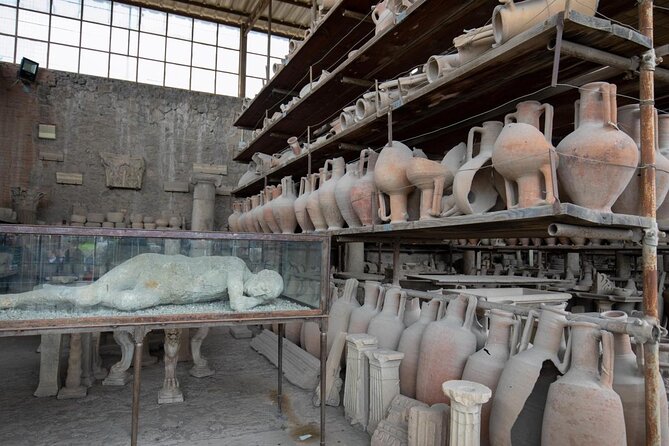
I like Pompeii best when I can slow down long enough to notice how the town worked. A guide can connect a public square with the buildings around it, point out the difference between civic and domestic spaces, and explain why a bakery or food counter mattered to ordinary Roman life.
This tour is private, so you are not sharing the experience with a large mixed group. That matters at Pompeii. The archaeological park is broad, and it is easy to spend too long at the first few buildings. A private guide can ask what your group cares about most and shift the balance toward public life, homes, shops, or the eruption.
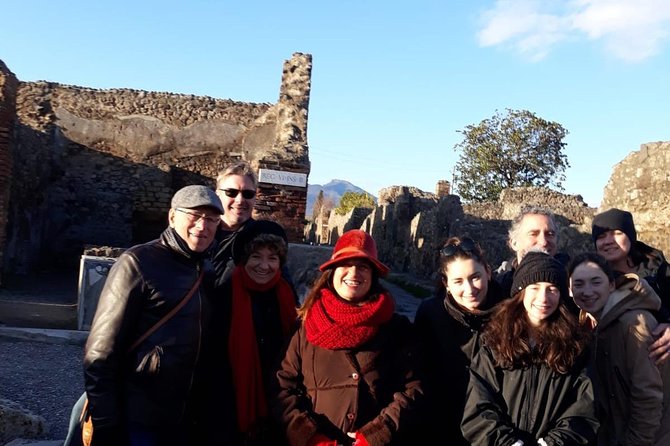
The guide named in one account is Marinella, described as warm, involved, and clear in her explanations. Guides can vary by date, so I would treat her name as a possibility rather than a guarantee. The listed language is English.
The format also suits families better than a fixed lecture for a large crowd, at least in principle. You can ask questions and request a change of pace. Still, the quality of the experience depends on how well the guide manages time. One account describes a guide who spent so long on early details that the group moved slowly and had less time to see the rest of Pompeii. That is a fair concern at a site where you could spend several days and still not see everything.
More Pompeii excavation visits:
- Pompeii: Entry Ticket and Guided Tour with an Archaeologist
★ 4.8 · 19,459 reviews - Pompeii: Entry Ticket with Optional Audio Guide
★ 4.2 · 12,360 reviews - Pompeii: Small Group Tour with an Archaeologist
★ 4.8 · 12,264 reviews
At the Via Villa dei Misteri Meeting Point
The meeting point is on Via Villa dei Misteri in Pompei, near the archaeological park and public transportation. The activity finishes back at the same meeting point.
I would arrive early. The meeting instructions do not describe a hotel pickup, so you should plan to make your own way there. Bring your booking confirmation on your phone, since a mobile ticket is available for the experience itself.
The practical clothing advice is good: wear casual clothes and comfortable closed shoes. Pompeii calls for walking, and the ground can be demanding. Even without inventing details about the surface, a large open archaeological park clearly rewards sturdy footwear more than sandals or dress shoes.
The timing deserves special attention. The information gives a confusing duration of 2 to 30 minutes, while the actual itinerary describes about three hours in total: roughly 2.5 to 3 hours at the ruins and 30 minutes for the tasting and craft stop. I would confirm the start time and expected length with the operator before your visit.
Do not book the archaeological portion too close to closing. One party booked only two hours before entry, arrived 15 minutes late, and reached the site around 3 p.m., when public opening time was nearly over. The guide had to move quickly to get the visit started. Even a good guide cannot create extra daylight or extend the park’s hours.
Reading the Forum and Public Buildings
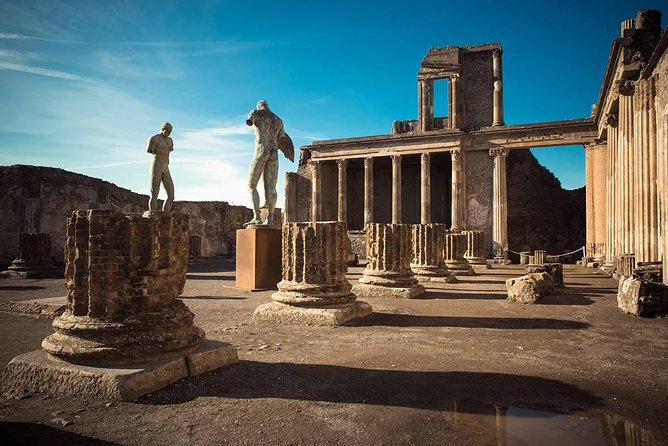
The forum is the natural anchor for the Pompeii visit. Here you see the public heart of the Roman town, with civic buildings, markets, and the basilica. A guide adds value by explaining how these spaces fit together instead of treating each ruin as a disconnected pile of stone.
I would ask your guide to give you a clear orientation early in the walk. The best use of private guiding is not simply hearing more facts. It is learning what you are looking at, how the buildings served the town, and which details deserve your attention.
The basilica is especially useful for understanding the forum as a working civic center. The public buildings around the square show that Pompeii was not just a residential town frozen by the eruption. It had administration, commerce, law, public gathering places, and daily routines.
Markets and shops add a practical human scale. You can picture people buying goods, meeting friends, and carrying on business before Vesuvius erupted in 79 A.D. The guide’s job is to make those functions readable from the surviving walls and layouts.
This is also where the private format can become either a strength or a weakness. If your guide keeps the explanation focused, the forum gives you a solid framework for the rest of the visit. If every stone receives a long lecture, you may lose too much time before reaching the houses, baths, and smaller commercial spaces.
Baths, Houses, Shops, and Roman Routine
The public thermal baths show another side of town life. They were not merely places to wash. They were social and public facilities, and their remains help explain how Romans spent time outside the home.
The houses offer a more intimate view. Pompeii is powerful because public monuments and private rooms survive side by side. As you move from civic buildings to domestic spaces, you get a better sense of how the town was organized and how status, work, and home life overlapped.
The tour also includes characteristic shops. These are easy to pass without context, but they help you see Pompeii as a functioning community rather than a museum of isolated walls. I would ask the guide to point out what was sold or produced in each type of space when that can be established from the remains.
The pistrinum, or bakery, is one of the most appealing stops for anyone interested in ordinary life. It shifts attention from temples and political buildings to food production. The thermopolium does something similar. This was a Roman food counter, a place connected with prepared food and quick meals.
These stops are valuable because they make the town feel practical. People needed bread, food, baths, homes, and shops every day. The eruption story is dramatic, but the strongest Pompeii visit also shows the routine that existed before the disaster.
More Pompeii Ruins tours worth comparing
- Pompeii Private Tour with an Archaeologist and Skip The Line – 3 hours
★ 5.0 · 564 reviews - Pompeii 3 Hours Walking Tour Led by an Archaeologist
★ 5.0 · 126 reviews - Pompei three hours with an expert guide
★ 5.0 · 82 reviews - Pompeii VIP 3h Tour: Skip-the-line with your Archaeologist
★ 4.9 · 13 reviews
The Eruption Through Casts and Remains
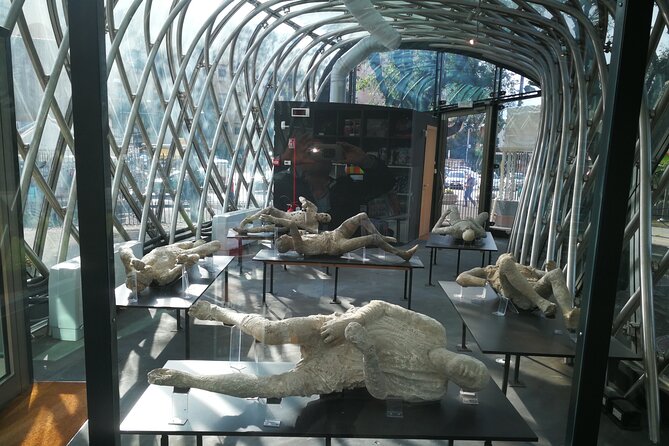
The eruption of Vesuvius in 79 A.D. gives Pompeii its emotional force. The town and its inhabitants were destroyed, and the remains preserve a painful record of that event.
The experience includes casts and other remains connected with the people caught in the disaster. Your guide can provide context so that you are not left looking at them as mere curiosities. This part of the visit can be upsetting, especially for younger children, so families should prepare for a serious subject rather than a light sightseeing stop.
I would encourage you to allow a little quiet time here. Pompeii can tempt you into collecting facts, but the casts are a reminder that this was a human catastrophe. The guide’s tone matters. A calm, respectful explanation is more useful than a rush through dramatic details.
This is also one reason the starting time matters. A late afternoon visit may work well if the site is open long enough, but a booking made close to closing can turn a thoughtful visit into a hurried one. Confirm the exact schedule and leave room for arrival at the meeting point.
A Flexible Route, If You Set Priorities
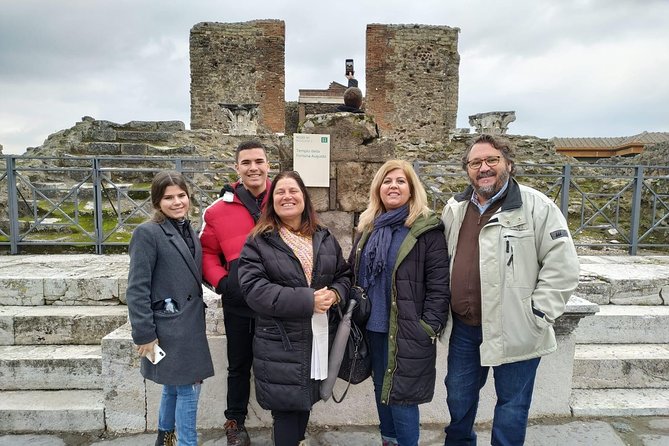
The stated visit is designed to be adjusted to your needs within the scheduled time. That flexibility is useful, but I would not leave all decisions to the guide without giving some direction.
Before you arrive, choose two or three priorities. You might want the forum and public buildings, everyday commercial life, the public baths, houses, or the eruption remains. You can still see other parts of the route, but clear priorities help prevent the first stop from taking the entire tour.
I would also tell the guide your group’s preferred pace. Families with teenagers may want shorter explanations and more movement. A group focused on Roman architecture may prefer longer stops. One account describes a very detailed guide whose slow pace made it hard for teenagers and adults to stay focused. That does not make detailed guiding bad, but it shows why a quick conversation about pace is worthwhile.
A private guide is not a substitute for unlimited time. Pompeii is large, and the guide cannot cover every excavation in a few hours. Think of this as a focused introduction that gives you a usable map of the site, not an attempt to see every street.
The private structure is best for people who value explanation and interaction. If you prefer to wander alone, read signs, and set your own pace, you may find the guided format restrictive. The tradeoff is simple: you give up some independence in exchange for historical context and help with orientation.
Limoncello and Pompeian Craft Displays
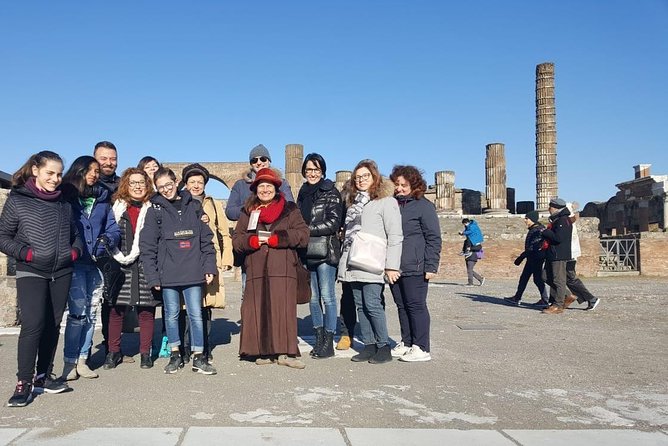
After the archaeological park, the experience includes about 30 minutes for limoncello tasting and displays of handcrafted Pompeian sandals, coral, and cameos. This is a very different mood from the ruins.
The limoncello stop gives you a taste of a familiar Campanian specialty. If you do not drink alcohol, the information provided does not specify an alternative, so ask before booking if that matters to you.
The craft displays can be pleasant for shoppers who want a small regional souvenir. Handmade sandals, coral, and cameos are closely associated with the area’s tourist economy and traditional craft market. I would treat this part as an optional shopping and tasting add-on, not as a second major sightseeing stop.
The 30-minute allocation is short. You will have time to sample and look around, but not necessarily to make a careful purchase decision without feeling pressed. If you are interested in coral or cameos, ask about materials, workmanship, and return arrangements before buying. The tour information confirms that these crafts are shown, but it does not promise that purchases are required or included.
What the $106.65 Price Really Covers
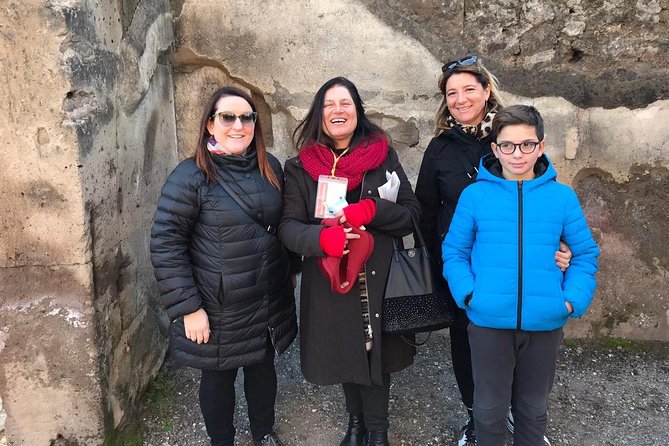
At $106.65 per person, this is not a low-cost way to enter Pompeii. The value comes from the private English-speaking guide, the planned archaeological walk, and assistance at the ticket line. Admission is extra, and you should add that cost to your budget.
For a small group, the price may make sense because the guide fee is connected to a private activity rather than a large shared group. The benefit is the ability to ask questions, request a focus, and avoid being tied to strangers with different interests.
For one or two people, the price needs a closer look. You are paying for personal guiding, not for the archaeological ticket. If your main aim is simply to walk through the ruins independently, buying admission and using your own guidebook may cost less.
The line assistance can be useful in high season, when waiting to buy entry may eat into your visit. At a quiet time, its value may be small. One account arrived during a slow period and found no meaningful queue to skip. That is not a flaw in the guide, but it does limit the practical value of this feature at off-peak times.
Also budget for the compulsory earphone charge of €3.99 per person for groups larger than eight. Tips are not included. Since the tour is private, your final cost can vary depending on group size, entry fees, and any tip you choose to give.
Language, Pace, and Group Fit
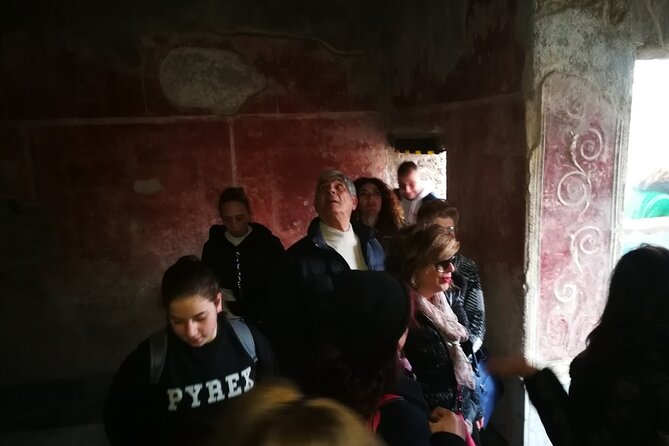
The tour is offered in English, and most people can participate. The guide’s ability to explain clearly is central to the experience. One account found the guide’s accent difficult for a younger child to follow, while another described Marinella’s explanations as engaging and easy to follow.
That difference is a useful warning. If anyone in your group has trouble with spoken English or needs a slower, simpler explanation, contact the operator before booking. A private format gives the guide more room to adapt, but it cannot guarantee that every accent will suit every listener.
The activity is best for adults, families with older children, and anyone who wants context at a major archaeological site. It is less ideal for a group that wants a quick photo stop or a completely unstructured walk.
You should also be comfortable with several hours of walking in casual outdoor clothing. The operator says most people can participate, but no detailed accessibility information is provided. If you have mobility concerns, ask specific questions before you reserve.
Free cancellation is available up to 24 hours before the start time for a full refund. Changes or cancellations made inside that window are not accepted for a refund. The experience also depends on good weather and a minimum number of participants. If the operator cancels for either reason, you are offered another date or experience, or a full refund.
Who Should Book This Pompeii Tour?
I would book this tour if you want Pompeii explained by a private English-speaking guide and you value the forum, baths, houses, shops, bakery, and thermopolium as parts of one connected town. The personal format is especially useful for a family or small group with different interests.
I would also consider it if you are visiting in high season and want help getting through the ticket office. Just remember that skip the line refers to ticket purchasing assistance, not included admission.
I would choose another plan if your budget is tight, you want to explore entirely alone, or you cannot arrive well before closing. The ticket cost is extra, the listed duration is inconsistent, and a slow guide can reduce the ground you cover. Confirm the start time, total length, guide language, and entry arrangements before finalizing the booking.
At its best, this experience gives you a focused way to make sense of Pompeii’s public life and ordinary routines, then adds a brief taste of local products. Its success depends on clear timing and a guide who keeps the pace moving. Book it for interpretation and personal attention, not because the archaeological ticket is included.
FAQ
Are Pompeii entrance tickets included?
No. The ticket cost for entry to the archaeological site is not included in the tour price.
What does skip the line mean?
It means the guide helps your group avoid the usual ticket-office queue, particularly during high season. It does not mean that admission to Pompeii is free.
How long does the Pompeii visit last?
The archaeological portion is described as about 2.5 to 3 hours, followed by a 30-minute limoncello and craft stop. The general duration information is inconsistent, so confirm the exact timing with the operator.
Is the tour private?
Yes. Only your own group participates in the activity.
Is the tour offered in English?
Yes. English is the listed tour language.
What is included after the archaeological visit?
The experience includes limoncello tasting and displays of handcrafted Pompeian sandals, coral, and cameos. The information does not state that purchases are included.
Newest reviews from Pompeii Ruins
- Private Tour Pompeii and Winery★ 5.0 · 4 reviews
- Visit the Pompeii ruins from Salerno with Pizza Lunch★ 5.0 · 4 reviews
- Pompeii Private Tour for Kids and Their Families★ 4.8 · 4 reviews
- From Sorrento: Pompeii & Vesuvius tour small group★ 4.8 · 4 reviews
- Pompeii Sorrento and Positano Tour★ 5.0 · 4 reviews
- From Naples_ Pompeii Tour_Skip the line ticket + audioguide★ 4.3 · 4 reviews
- Pompeii Private Half-Day Tour from: Naples,Sorrento, Amalfi Coast★ 5.0 · 4 reviews
- Pompeii, skip-the-line ticket with smartphone audio guide on App★ 3.0 · 4 reviews
3-Hour Experiences, compared.

Pompeii Private Tour with an Archaeologist and Skip The Line – 3 hours
Read our review →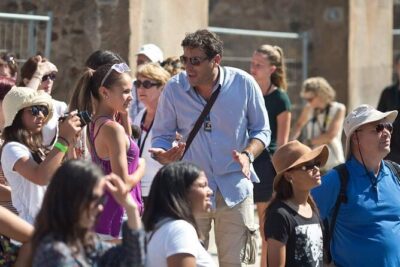
Pompeii 3 Hours Walking Tour Led by an Archaeologist
Read our review →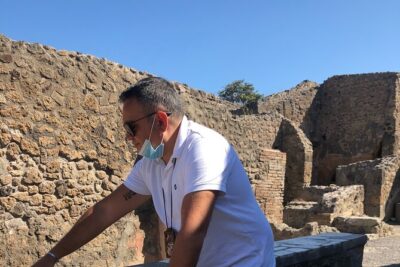

Complete Private Guided Three-Hour Tour on the Capri Coast
Read our review →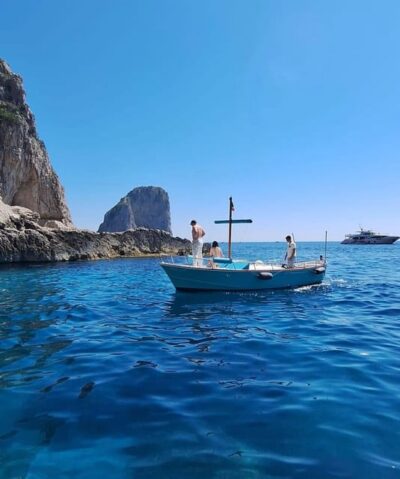


Browse the lists this tour appears in