Reviewed · TICKETS
Pompeii Archaeological Area Entrance Ticket
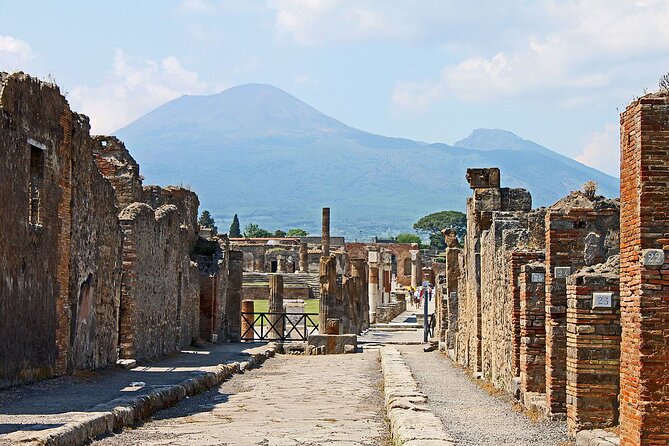
Pompeii is not a small collection of ruins. It is an entire Roman city, with paved streets, houses, baths, theatres, shops, temples, and public offices still laid out beneath the slopes of Mount Vesuvius. The most striking part is how ordinary the place feels: you walk past a bakery, a fountain, or a home garden and can picture daily life before the eruption of 79 AD.
I like the freedom of exploring at your own pace, and I like that you can choose a route based on your interests. The Forum, House of the Faun, theatres, Garden of the Fugitives, and fresco-covered Lupanare all offer something different. The main concern is the ticket process. Some people have had trouble finding the digital ticket or exchanging a voucher, so allow extra time and do not arrive with a tightly packed schedule.
In This Review
- Key points to know before you go
- What the Pompeii ticket actually gives you
- Getting inside without losing your Pompeii time
- Start at the right entrance for your route
- Porta Marina and the center of public Pompeii
- Piazza Esedra and Pompeii’s grand homes
- Theatres, temples, and the southern route
- The Amphitheater, Garden of the Fugitives, and body casts
- The Lupanare and Pompeii’s less polished stories
- How long should you allow?
- Comfort, rules, and mobility
- Is $54.44 good value?
- Should you book this Pompeii entrance ticket?
- FAQ
- Is this a guided tour of Pompeii?
- How long does the Pompeii visit last?
- What is included in the ticket?
- Does the ticket include transportation?
- Are food and drinks included?
- Can I visit the museum with this voucher?
- Is Pompeii suitable for people with limited mobility?
- Can I cancel or change the booking?
Key points to know before you go
- This is a self-guided visit: You receive admission, not a guide or organized walking tour.
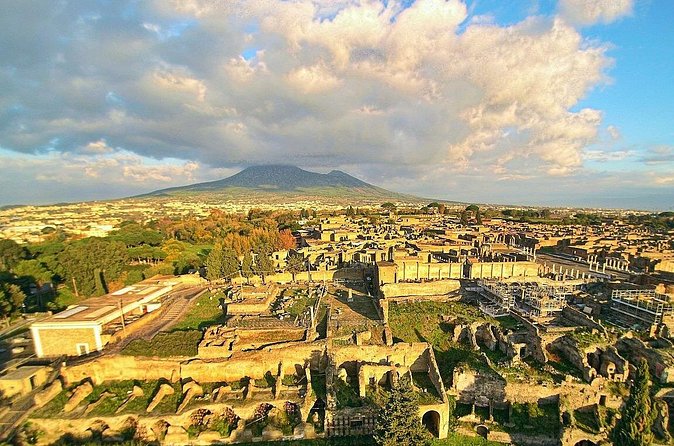
- Pompeii is enormous: The excavated area covers about 66 hectares, so two or three hours only gives you a sample.
- The best sights are spread out: The Forum, Amphitheater, Great Theatre, House of the Faun, and Lupanare are not clustered in one compact zone.
- A free map is available inside: Pick one up at the entrance and use it to build a practical route.
- The skip-the-line promise needs care: Some ticket holders still had to visit a booth or information desk before entering.
- Flat shoes matter: Ancient paving stones are uneven, and you may walk for several hours in heat and direct sun.
What the Pompeii ticket actually gives you
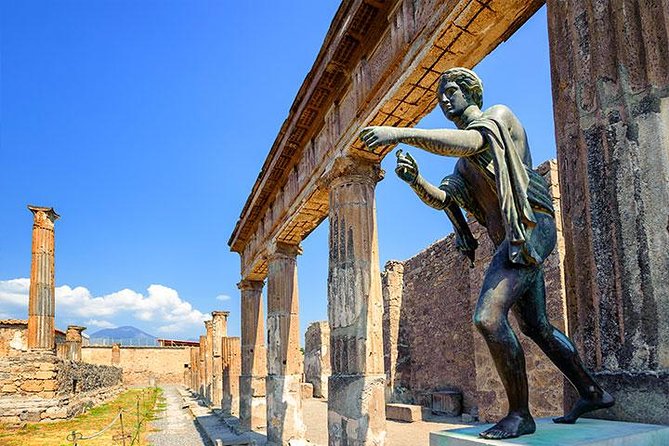
This experience gives you entrance to Pompeii Archaeological Park for a selected time. Once inside, you explore independently. There is no guide, hotel pickup, transport, food, or drink included.
That freedom is useful if you already know what you want to see. You can spend extra time in a painted house, move quickly through the public buildings, or pause whenever a street scene catches your eye. It also means you must handle the route, pace, and interpretation yourself.
The price listed is $54.44 per person. That is a serious cost for an entrance ticket, especially because admission alone does not include a guided explanation. The value improves if you want flexibility and plan to stay several hours, but it is harder to justify if you only have a short visit or expect a personal guide.
The site offers multiple entry times, with the supplied schedule showing entry availability from 9:00 AM to 1:00 PM daily between October 27, 2025, and January 26, 2027. Check your selected time carefully. A timed ticket is most useful when it helps you avoid a long wait, but only if the digital voucher is ready and accepted at the correct entrance.
More Pompeii excavation visits:
- Pompeii: Entry Ticket and Guided Tour with an Archaeologist
★ 4.8 · 19,459 reviews - Pompeii: Entry Ticket with Optional Audio Guide
★ 4.2 · 12,360 reviews - Pompeii: Small Group Tour with an Archaeologist
★ 4.8 · 12,264 reviews
Getting inside without losing your Pompeii time
The booking information says you should make your own way to the archaeological area and show your pre-booked ticket at the entrance. In practice, this is the part that requires the most care.
Pompeii has several entrances, including Porta Marina, Piazza Esedra, and Piazza Anfiteatro. A digital voucher may not work at every ticket point. Some people arrived at one entrance, found that the kiosk did not recognize the voucher, and were sent toward another entrance. Others had to contact the supplier or an information desk before receiving the actual ticket by email.
I would download the ticket before leaving your hotel and keep it easy to find on your phone. Do not rely on a weak signal at the entrance. Also, check the wording of the confirmation so you know whether you have an actual admission ticket or a voucher that must be exchanged.
The promise of skipping long lines is not always the same as walking straight through the gate. At busy times, a pre-booked ticket may still require a check or exchange. If you have only two and a half hours, an hour spent sorting out entry is a major loss.
Start at the right entrance for your route
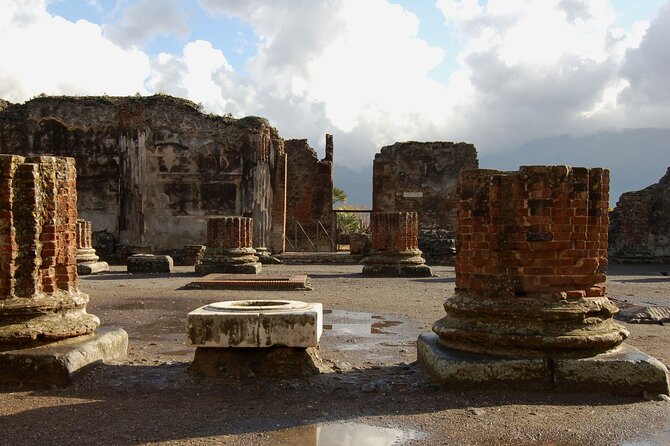
Your choice of entrance shapes the visit. From Porta Marina, you are well placed for the central public buildings. From Piazza Esedra, you can reach several grand houses and food shops. Piazza Anfiteatro is useful for the Amphitheater and is also the recommended entrance for people with limited mobility.
The site is large, and the ancient streets are not always easy to follow. Signage can be sparse or confusing, particularly when you are trying to locate the correct entry line or move between distant districts. Pick up the complimentary site map as soon as you enter.
I would mark three or four must-see areas before walking. Trying to cover every listed building in a short session can turn the visit into a tiring march. A full day allows a slower pace, but a focused half-day can work if you choose your route in advance.
Porta Marina and the center of public Pompeii
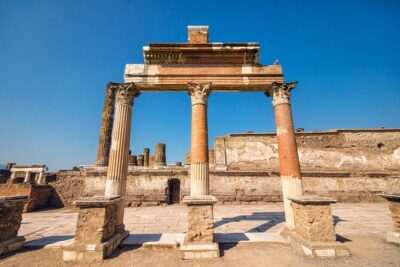
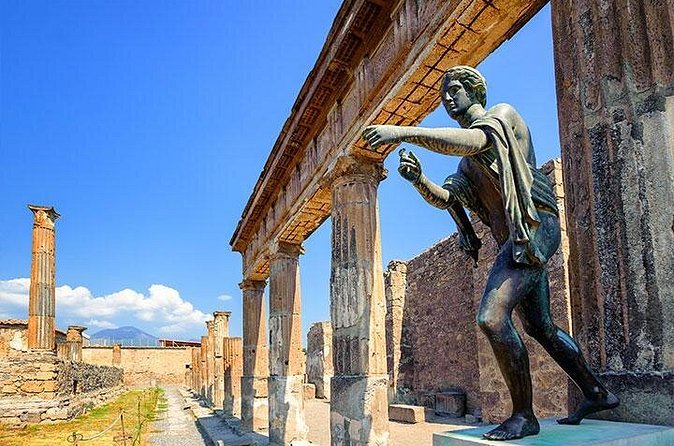
Entering from Porta Marina gives you a strong introduction to the city. You can see the gate and defensive walls before moving toward the Temple of Apollo, one of the site’s major religious buildings.
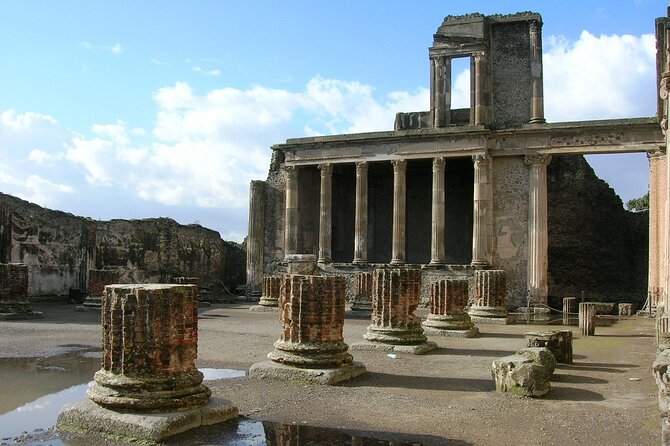
The Basilica follows, along with public administration buildings and the Building of Eumachia. This area helps explain how Pompeii functioned as a civic center. The Forum was not just a pretty square. It was the main public space, surrounded by religious, political, and commercial buildings.
The Forum is one of the places where a map or audio guide makes a real difference. Without help, you may notice columns and walls but miss how the buildings related to one another. Take a few minutes to stand at the edge and look across the full space before moving on.
The Forum Baths show another side of Roman life. Public bathing was part of the daily routine, not a rare luxury. The remains are less grand than some private homes, but they help connect the public monuments to ordinary habits.
More Pompeii Ruins tours worth comparing
- Pompeii: Skip-the-Line Entrance Ticket with Audio Guide
★ 4.0 · 2,509 reviews - Pompeii: Archaeological Park Tour with Ticket on request
★ 4.5 · 2,283 reviews - Pompeii: Guided Walking Tour with Entrance Ticket
★ 4.3 · 1,423 reviews - Pompeii: Skip-the-line-Ticket and Guided Tour
★ 4.6 · 1,152 reviews
Piazza Esedra and Pompeii’s grand homes
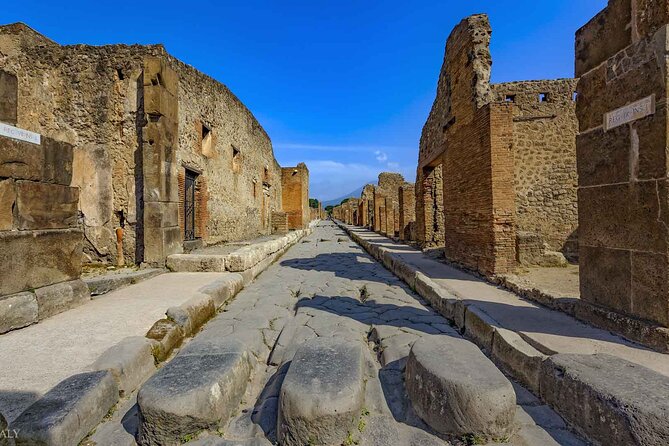
The route around Piazza Esedra brings you to several of the city’s best-known houses. The House of Pansa and House of the Tragic Poet offer glimpses of domestic life, though access to individual buildings can vary.
The House of the Faun is a major highlight. Its size and layout suggest the wealth of Pompeii’s upper class, with open spaces and colonnaded areas that contrast sharply with the compact shops along the streets. You will see why Roman homes are often understood through their gardens, courtyards, wall paintings, and floors rather than through furniture.
The House of Cecilio Giocondo and House of the Citharist add more examples of private architecture. Do not rush through these spaces. Look at how rooms open toward courtyards and how narrow doorways control movement through the house.
The Thermopolium is a particularly memorable stop because it connects the ruins to food and business. This was a place where people could buy hot food. Along with the Fullonica Stephanus, a cloth laundry, it shows Pompeii as a working city rather than a collection of wealthy residences.
The Temple of Fortuna Augusta is another worthwhile stop in this section. It represents the religious side of everyday Roman life, while the houses and shops around it show how closely domestic, commercial, and sacred spaces could sit together.
Theatres, temples, and the southern route
Piazza Anfiteatro opens the way to several important areas. The Amphitheater is one of the clearest places to understand Roman public entertainment. Its broad structure gives you a sense of the scale of events held here, even when the surrounding streets are quiet.
Nearby, the Great Theatre and Small Theatre, also called the Odeion, show that Pompeii offered more than arena spectacles. The Great Theatre was designed for larger performances, while the smaller theater suited a more intimate audience. Their shapes are easier to appreciate if you walk around them rather than viewing them from a single point.
The Temple of Isis is another strong stop. Its survival helps show the range of religious practice in Pompeii and the influence of traditions from beyond the local Roman setting. The nearby Triangular Forum and Doric Temple add older architectural layers to the southern part of the city.
This route contains a lot of open ground. On a hot day, the exposed paving can make the walk tiring. Carry water, wear a hat if you have one, and keep your pace steady. Food and drinks are not included, and you should plan around the site rules and available facilities.
The Amphitheater, Garden of the Fugitives, and body casts
The Necropolis of Porta Nocera and the gate itself move you beyond the central public spaces. A necropolis, or cemetery area, reminds you that Pompeii was a lived-in city with homes, work areas, temples, entertainment, and burial places all within a wider urban zone.
The Garden of the Fugitives is one of the most emotionally powerful areas. Body casts preserve the final positions of people caught in the eruption. They are not decorative objects. Treat this part of the site with quiet respect.
The House of the Garden of Hercules, House of Octavius Quartio, and House of Venus in the Shell offer different views of private life and garden design. The House of Venus in the Shell is especially known for its painted garden scene, while the House of Octavius Quartio helps show how outdoor spaces shaped an elite Roman home.
The combination of casts, houses, and gardens can make this section feel more personal than the formal Forum. If you are choosing between many stops, give yourself time here rather than trying to check every building off a list.
The Lupanare and Pompeii’s less polished stories
The Lupanare, often called the brothel, is a small two-story building with erotic frescoes on the walls. It is one of Pompeii’s most famous stops, partly because the paintings offer a blunt look at commercial sex in the Roman city.
The building is compact, and access can become crowded. Do not expect a long visit, but do expect a memorable one. The frescoes are not separate from the rest of Pompeii. They belong to the same streetscape as homes, shops, temples, and public buildings, which is exactly why the site can feel so revealing.
Pompeii is valuable because it shows more than official monuments. The brothel, laundry, hot-food counter, houses, and public baths fill out the daily picture. You are not only looking at imperial architecture. You are seeing how people worked, ate, worshipped, relaxed, and lived in close quarters.
How long should you allow?
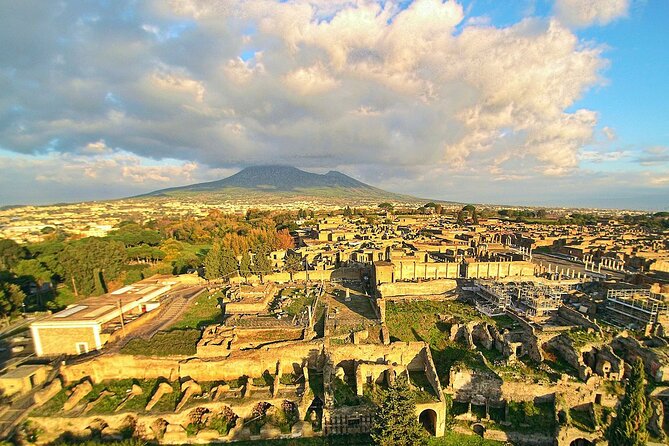
The stated duration is about two to three hours. That is enough for a brisk route through several major highlights, but not enough to see Pompeii thoroughly.
One person used a map and a self-guided app and spent almost five hours in the ruins. Another visit of roughly half a day still left major areas unseen. I would use these time targets:
- Two hours: Choose the Forum, one or two major houses, the Lupanare, and either the theatres or Amphitheater.
- Three hours: Add the House of the Faun, public baths, Thermopolium, and one southern route.
- Four to five hours: Walk at a more sensible pace and include the Garden of the Fugitives, more homes, the theaters, temples, and city gates.
- A full day: Best for anyone who wants to understand the site rather than collect a few famous photographs.
Do not assume that the advertised visit length reflects the size of Pompeii. It reflects the approximate time many people book for the experience. The ruins themselves can easily support a much longer visit.
Comfort, rules, and mobility
You need moderate physical fitness. The ground is uneven, the site is large, and many paths are exposed to sun. Flat-soled shoes are recommended, and I would take that advice seriously.
Leave bulky bags, backpacks, and umbrellas at the wardrobe. Smoking is not allowed. Walk carefully, stay away from excavation edges, and do not climb walls. Photography and filming are allowed for private use, but tripods, flash, artificial light, and commercial filming require permission from the relevant office.
A picnic area is located near Porta Nola. Food and drinks are not part of the ticket, so plan accordingly. The site is near public transportation, but transport to and from the archaeological area is not included.
People with limited mobility are advised to enter from Piazza Anfiteatro and keep their visit near the Amphitheater. The ancient streets and changing access conditions can make a longer route difficult.
There may also be stray dogs inside the excavated area. Keep your distance and use care if you encounter one.
Is $54.44 good value?
The ticket can be worthwhile if you value a fixed entry time, want to explore without a group, and plan to stay long enough to see several sections. Pompeii is a place where independent wandering works well, especially if you bring a map or self-guided audio resource.
The price is less attractive if you only want a quick look or expect a guide. A guided visit may give you more context for the same amount of time, and some people found that arranging a guide on site was cheaper than booking one in advance through a third party.
The ticket’s value also depends on whether the skip-the-line process works as intended. If you must exchange a voucher or wait for help, the premium becomes harder to defend. Confirm the ticket before you go, arrive with spare time, and keep your expectations focused on admission rather than a complete tour service.
Should you book this Pompeii entrance ticket?
Book it if you want independence, can prepare your route, and expect to spend at least three hours inside. It suits people who prefer to pause at their favorite buildings, use a map or app, and avoid being tied to a guide’s pace.
I would choose a different option if you want expert explanations, hotel transportation, or a tightly managed entrance. I would also hesitate if your Naples day allows only two hours and the ticket confirmation is not clear.
For the best experience, download the ticket early, verify the entrance instructions, wear sturdy flat shoes, collect the map, and choose your top sights before entering. Pompeii rewards curiosity, but it punishes rushed planning.
FAQ
Is this a guided tour of Pompeii?
No. This is an entrance ticket for independent exploration. A guided tour is not included.
How long does the Pompeii visit last?
The approximate duration is two to three hours. You can remain longer within the site’s visiting rules, and several hours may be useful because Pompeii covers about 66 hectares.
What is included in the ticket?
Admission to Pompeii Archaeological Park is included. A complimentary route map is available inside the entrance.
Does the ticket include transportation?
No. You must make your own way to Pompeii. Hotel pickup, hotel drop-off, and transportation to or from the attraction are not included.
Are food and drinks included?
No. Food and drinks are not included. A picnic area is available near Porta Nola.
Can I visit the museum with this voucher?
No. The voucher should not be used to gain access to the museum. It is intended for the archaeological area.
Is Pompeii suitable for people with limited mobility?
People with limited mobility are advised to enter from Piazza Anfiteatro and limit their visit to the area around the Amphitheater. The site requires careful walking, and flat-soled shoes are recommended.
Can I cancel or change the booking?
No. This experience is non-refundable and cannot be changed for any reason.
Newest reviews from Pompeii Ruins
- Wine Tour + Pompeii★ 5.0 · 4 reviews
- Full-Day Sorrento Positano Pompeii Tour★ 5.0 · 4 reviews
- Pompeii: Skip The Line Entrance Tickets + Audioguides★ 3.2 · 4 reviews
- Pompeii ruins★ 5.0 · 4 reviews
- Pompeii: Entry Ticket & Guided Tour with an Expert Historian★ 5.0 · 4 reviews
- Private Tour Pompeii and Winery★ 5.0 · 4 reviews
- Visit the Pompeii ruins from Salerno with Pizza Lunch★ 5.0 · 4 reviews
- Pompeii Private Tour for Kids and Their Families★ 4.8 · 4 reviews
Tickets, compared.

Entry Ticket and Guided Tour with an Archaeologist
Read our review →

Skip-the-Line Entrance Ticket with Audio Guide
Read our review →
Archaeological Park Tour with Ticket on request
Read our review →


Skip-the-Line Entry Ticket with Digital Guide App
Read our review →