Reviewed · POMPEII RUINS TOURS
Late Afternoon Best time to visit Pompei on a private tour
Pompeii is at its most atmospheric in the late afternoon, when the harsh sun softens and the ancient streets may feel less crowded. This private walk with Alex covers major sights while bringing the AD 79 eruption into clear human focus, from public squares to the plaster casts of people caught in their final moments.
I like the timing, especially for hot-weather trips, and I like the private format. Alex can adjust the pace for your group, move quickly when needed, and pause when you want more explanation. The main drawback is the short two-hour length: Pompeii is enormous, so this is a strong highlights tour, not a full exploration.
In This Review
- Key points to know
- Why late afternoon works so well at Pompeii
- Starting at Porta Marina and meeting Pompeii’s story
- The Forum and Temple of Apollo reveal public Pompeii
- Stabian Baths show how Romans spent their free time
- The theaters connect Pompeii with performance
- House of Menander brings Pompeii indoors
- Shops, water systems, and a 2,000-year-old bakery
- The plaster casts require time and care
- What the private format adds to a short tour
- Is $249 good value for two hours?
- Practical details before you book
- Who should choose this Pompeii tour?
- Should you book it?
- FAQ
- Where does the tour begin?
- Where does the tour end?
- How long does the tour last?
- Is the Pompeii entrance ticket included?
- Can skip-the-line tickets be arranged?
- Is this a private tour?
- Who is the guide?
- What does the tour visit?
- Is the tour suitable for children?
- What happens if the weather is poor?
Key points to know
- Late-afternoon timing: Cooler air, softer light, and a better chance of avoiding the busiest part of the day.
- Private guide Alex: A personal guide can answer questions, involve children, and adapt the pace to your group.
- Major Pompeii sights: The route includes the forum, Temple of Apollo, Stabian Baths, theaters, House of Menander, bakery, and ancient food counter.
- Admission costs extra: The tour price is $249, while park entry is €18 for adults and free for those under 18.
- Two-hour format: Well suited to first-time visitors who want the main story and key monuments without spending a whole day on site.
- Meeting at Porta Marina: The tour begins at Via Villa dei Misteri 2 and finishes at the same meeting point.
Why late afternoon works so well at Pompeii
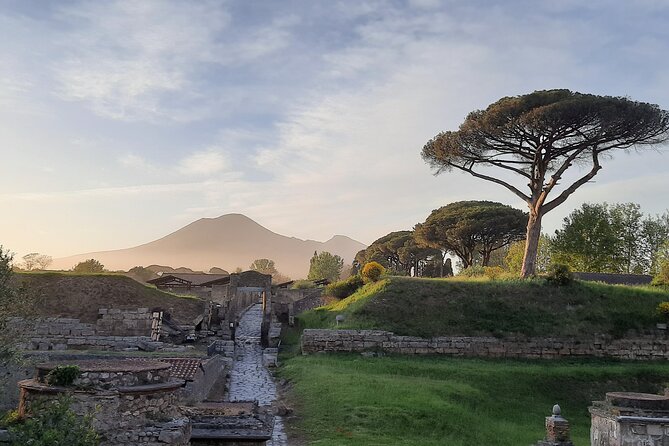
Pompeii can be a demanding place in the middle of the day. The site spreads across ancient streets paved with uneven stones, and much of it is open to the sun. A late-afternoon start gives you a practical advantage: less heat, gentler light, and a more comfortable pace.
The setting also changes as the day fades. White stone, faded frescoes, and worn paving catch the warm light. You may see storm clouds or a glowing sky beyond the ruins, depending on the weather. The sunset effect is not guaranteed, and the tour requires good weather, but the timing gives Pompeii a quieter mood than a morning rush.
I would choose this tour for a summer visit, for anyone who dislikes early starts, or for a family that has already spent the morning sightseeing elsewhere. The two-hour length also works well if you are fitting Pompeii between Naples, Sorrento, or another stop in the region.
More Pompeii excavation visits:
- Pompeii: Entry Ticket and Guided Tour with an Archaeologist
★ 4.8 · 19,459 reviews - Pompeii: Entry Ticket with Optional Audio Guide
★ 4.2 · 12,360 reviews - Pompeii: Small Group Tour with an Archaeologist
★ 4.8 · 12,264 reviews
Starting at Porta Marina and meeting Pompeii’s story
The meeting point is at Via Villa dei Misteri 2, near Porta Marina, the ancient sea gate. This is a useful starting place because it puts you at one of Pompeii’s historic entrances and lets Alex explain the city before the route gets busy with individual details.
You begin with the basic story of the eruption in AD 79. That opening matters. Without it, Pompeii can seem like a collection of broken walls and columns. With the background in place, you can understand why streets, houses, shops, and bodies were preserved so suddenly.
Alex’s role is central here. He is described as an engaging storyteller who can explain complex subjects in a way that works for adults and children. A family with four teenagers found the pace and explanations held their attention even on a very hot day. That is useful evidence for parents deciding if a two-hour archaeology tour will work for younger people.
The Forum and Temple of Apollo reveal public Pompeii
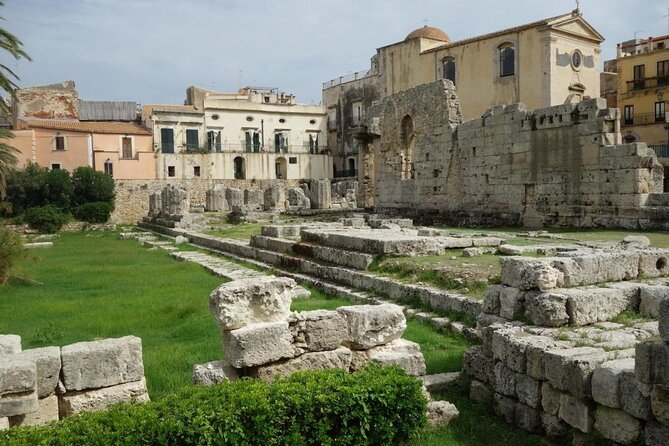
The Forum was the city’s main square and the center of political, economic, religious, and social life. It is one of the essential stops, but a guide helps you read the space rather than simply photograph it.
Look for the broad open area, surrounding structures, and temples that framed public life. Alex explains how the Forum functioned, so you can picture people conducting business, attending ceremonies, and handling civic affairs here two thousand years ago.
Nearby, the Temple of Apollo adds a religious layer. Its columns and surviving details connect Pompeii to the gods and myths that shaped Roman society. This stop is short, but it gives useful context before the tour moves into more intimate spaces.
These first stops also show the range of Pompeii. The Forum is grand and public. The Temple of Apollo is sacred. Later, you move into baths, homes, shops, and food businesses. The appeal of the tour is this steady shift from the city’s official face to ordinary daily life.
Stabian Baths show how Romans spent their free time
The Stabian Baths are among the best places to understand Roman public bathing. This was not simply a place to wash. Baths were social spaces, and the surviving rooms help explain how public leisure worked in Pompeii.
You spend about 15 minutes here. That is enough to grasp the layout and purpose, though not enough for a detailed architectural study. If baths are a major interest for you, you may want a longer Pompeii visit after the guided tour, provided the site is open and you have the energy for more walking.
For most people, this stop is valuable because it breaks up the procession of temples and houses. It shows a practical side of ancient life and gives you a clearer idea of how public buildings served the community.
More Pompeii Ruins tours worth comparing
- Pompeii Ruins Private Tour with Optional Skip-the-Line Entry
★ 4.9 · 732 reviews - Pompeii private tour with an Official Guide
★ 5.0 · 631 reviews - Pompeii Private Tour with an Archaeologist and Skip The Line – 3 hours
★ 5.0 · 564 reviews - Visit in Pompeii – Pompeii Private Tour with Ada
★ 5.0 · 436 reviews
The theaters connect Pompeii with performance
The route includes Teatro Grande, described as the Greek theater, with about 15 minutes devoted to the stop. The theater helps you picture Pompeii as a place of performance, entertainment, and shared public events, not just a city frozen by disaster.
The itinerary also refers to the theater more generally, so the exact order may shift. The guide can adjust the route according to crowds and the opening rotation of different buildings. That flexibility is useful at Pompeii, where access to individual houses and structures can change.
A short visit cannot explain every feature of the theater, but Alex can point out what matters and keep the larger story moving. If you enjoy ancient drama, performance spaces, or Roman public life, this will likely be one of the more memorable stops.
House of Menander brings Pompeii indoors
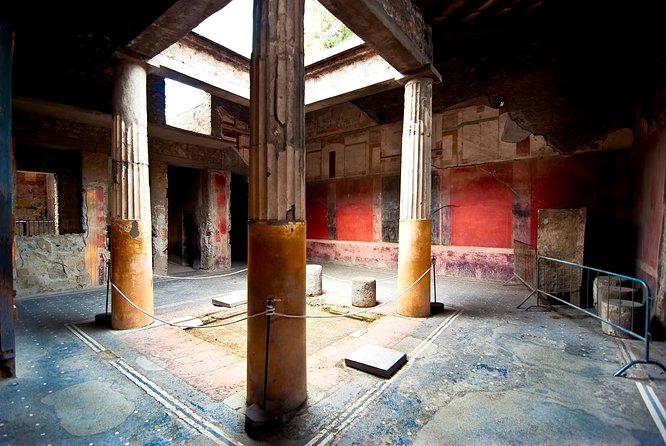
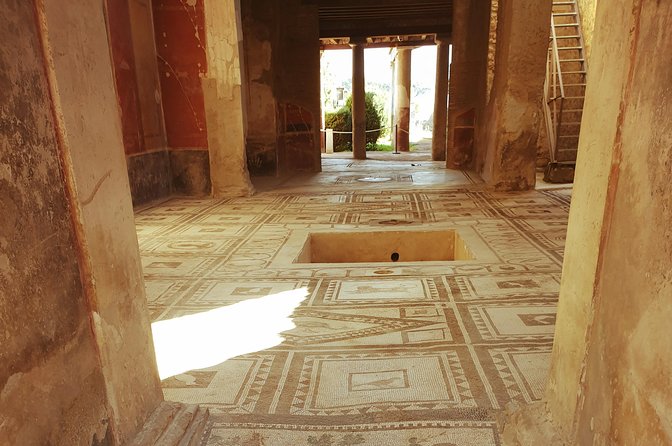
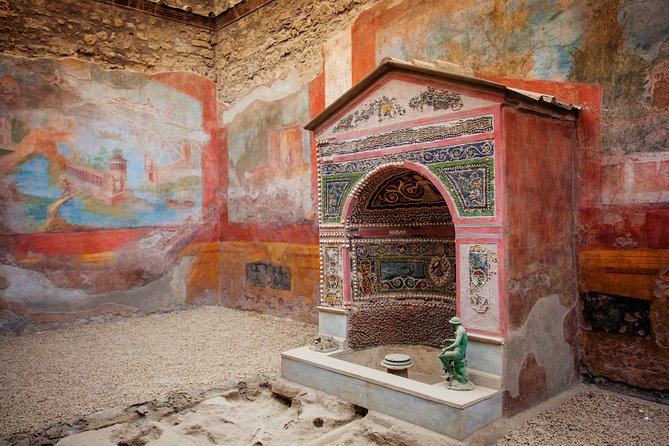
The House of Menander is a well-appointed Roman home known for fresco paintings and mosaics. After seeing public buildings, this stop lets you examine domestic life and the taste of a prosperous Pompeii household.
You spend around 20 minutes here, the longest scheduled stop on the route. That makes sense. A house requires time to understand: rooms, decoration, courtyards, artwork, and the relationship between private space and social status.
The exact house selection can vary based on crowds, opening rotation, or your request. That is a useful feature, not a flaw. It means the tour is not locked into one building if access conditions change. If you have a particular house in mind, ask about it when arranging the tour, but understand that availability may control the final choice.
The House of Menander also gives the eruption a sharper human dimension. A home is easier to imagine than a public monument. Frescoes, mosaics, and rooms make the people of Pompeii feel less distant.
Shops, water systems, and a 2,000-year-old bakery
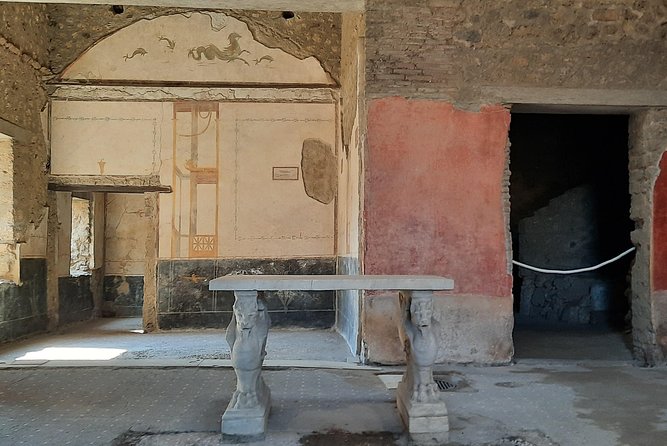
Pompeii becomes especially interesting when the route moves away from grand monuments. You see shops and workshops, along with parts of the ancient water system. These details help you understand how the city worked from day to day.
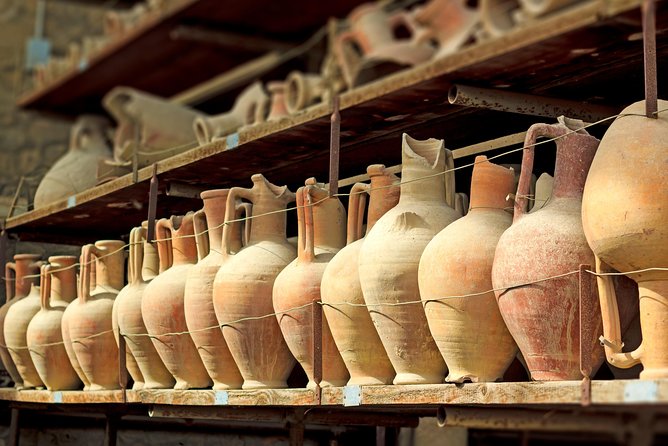
The Panificio di Popidio Prisco is a bakery with an oven and mills. The basic equipment has survived for roughly 2,000 years, offering a direct link to food production in the city. You can picture grain being processed and bread being made for local customers.
This is one of the stops I would especially value with children or teenagers. Mills, ovens, and shops are easy to explain, and they make ancient life concrete. Pompeii is not only about emperors, temples, and tragedy. It is also about work, meals, commerce, and household routines.
The route also includes the Termopolio di Vetuzio Placido, an ancient street-food counter. The brief five-minute stop introduces the way people bought ready-made food. Even a quick look helps you see that Pompeii had busy commercial streets and businesses designed for everyday needs.
The plaster casts require time and care
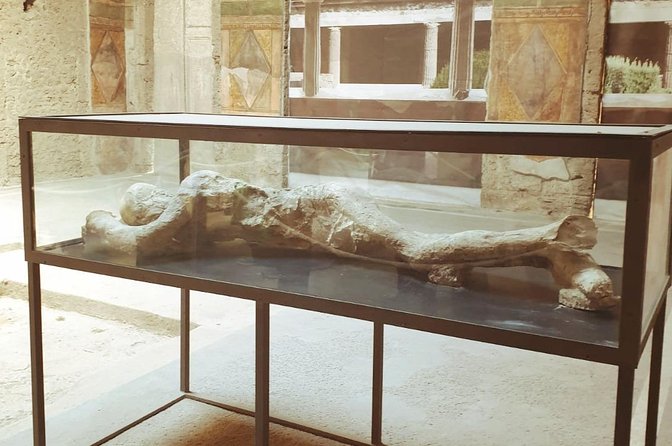
The plaster casts at the Orto dei Fuggiaschi are among Pompeii’s most powerful sights. They preserve the forms of victims caught during the eruption, including the posture and shape of their final moments.
You spend about 15 minutes here. That is enough to see the casts and hear the circumstances behind them, though the subject can be upsetting. I would prepare children honestly rather than treating this as a surprise. The casts are not a sensational add-on. They are the clearest reminder that Pompeii was a real city filled with real people.
Alex’s storytelling style matters at this point. The strongest part of a Pompeii tour is not simply identifying ruins. It is connecting the physical evidence to human lives while keeping the tone respectful. The experience can feel humbling, and this stop gives the entire visit emotional weight.
What the private format adds to a short tour
A private tour means only your group participates. That changes the way a two-hour visit feels. You do not have to follow a large group’s pace, wait for every person to catch up, or hesitate before asking a question.
The available feedback about Alex is unusually consistent. He is praised for explaining Pompeii clearly, keeping people involved, and adjusting for slow walkers. One repeat visitor valued the fact that he could cover a lot of ground while still stopping when questions came up. A professional travel journalist also found that Alex could hold a nine-year-old’s attention.
That does not mean every group will move quickly. Pompeii requires walking on cobblestones, and your pace depends on weather, fitness, questions, and crowd levels. The private setting gives you flexibility, but it cannot make the archaeological park small.
For a group with older adults, children, or mixed interests, the private format is worth more than it would be for a solo visitor who already knows the site. You can ask Alex to focus on houses, engineering, mythology, food, or the eruption, depending on what interests your group.
Is $249 good value for two hours?
The price is $249 for the private guide, with admission separate. Adults pay €18 to enter the park, while those under 18 enter free. Skip-the-line tickets can be purchased by the guide on request, so ask about that option if queues are a concern.
The value depends on group size. For one or two people, $249 is a substantial outlay for about two hours. For a family or small group, the cost is shared, and the private guide can replace several hours of reading signs, finding major buildings, and trying to make sense of the ruins alone.
The main value is not the number of stops. It is the structure. You get the major public buildings, one important house, working places, food, water, and the human cost of the eruption in a compact route.
If you want to see every open corner of Pompeii, this is not enough time. If you want a clear introduction before deciding if you want to explore more on your own, the format makes good sense.
Practical details before you book
The tour lasts approximately two hours and starts at Porta Marina, at Via Villa dei Misteri 2 in Pompeii. It ends at the same meeting point, so plan your onward transport from there rather than assuming you will finish at another gate.
A mobile ticket is provided for the experience. Park admission is not included, so budget for the €18 adult entry fee. The guide can arrange skip-the-line tickets on request, but confirm the details before the tour begins.
The activity is near public transportation, and most people can take part. Service animals are allowed. Since the tour takes place outdoors and requires walking over ancient streets, comfortable shoes are a sensible choice, though the supplied details do not specify a formal accessibility rating.
Weather matters. If poor weather forces cancellation, you can choose another date or receive a full refund. For your own cancellation, you must cancel at least 24 hours before the start time for a full refund. Changes or cancellations within 24 hours are not refunded.
Who should choose this Pompeii tour?
I would choose it for first-time Pompeii visitors who want the main sights without committing to a full day. It also fits families, couples, and small groups that prefer direct conversation with a guide.
The late hour is especially useful in summer, when heat can drain your energy before you reach the most important buildings. It also suits anyone who wants a more atmospheric visit, with the chance of warm evening light across the ruins.
You may want something else if you are a serious archaeology fan, a photographer needing long pauses, or someone determined to see a specific set of houses. Two hours goes quickly, and the route must stay focused.
Should you book it?
Book this private Pompeii tour if you want a well-paced introduction, cooler late-afternoon conditions, and a guide who can make the site accessible to both adults and children. Alex appears to be at his best when explaining the human side of Pompeii and keeping a mixed group involved.
Before paying, add the adult admission fee to your budget and decide if two hours is enough. For a compact first visit, the answer is likely yes. For a complete archaeological study, use this as your orientation, then allow extra time to explore on your own if the park schedule permits.
FAQ
Where does the tour begin?
The tour begins at Porta Marina, the sea gate, at Via Villa dei Misteri 2, 80045 Pompei, Italy.
Where does the tour end?
The activity ends back at the meeting point.
How long does the tour last?
The tour lasts approximately two hours.
Is the Pompeii entrance ticket included?
No. The entrance ticket is separate. Adult admission costs €18, and entry is free for people under 18.
Can skip-the-line tickets be arranged?
Yes. Skip-the-line tickets can be purchased by the guide on request.
Is this a private tour?
Yes. Only your group participates in the activity.
Who is the guide?
The private licensed guide is Alex, from Alex Tour.
What does the tour visit?
The route includes the Forum, Temple of Apollo, Stabian Baths, Teatro Grande, House of Menander, shops and workshops, the ancient water system, Popidio Prisco’s bakery, Vetuzio Placido’s street-food counter, and the plaster casts at the Orto dei Fuggiaschi.
Is the tour suitable for children?
Most people can participate, and the private format allows the guide to adjust the pace. The tour has also been used successfully with teenagers and a nine-year-old child.
What happens if the weather is poor?
The experience requires good weather. If it is canceled because of poor weather, you will be offered a different date or a full refund.
Newest reviews from Pompeii Ruins
- Private Tour Pompeii and Winery★ 5.0 · 4 reviews
- Visit the Pompeii ruins from Salerno with Pizza Lunch★ 5.0 · 4 reviews
- Pompeii Private Tour for Kids and Their Families★ 4.8 · 4 reviews
- From Sorrento: Pompeii & Vesuvius tour small group★ 4.8 · 4 reviews
- Pompeii Sorrento and Positano Tour★ 5.0 · 4 reviews
- From Naples_ Pompeii Tour_Skip the line ticket + audioguide★ 4.3 · 4 reviews
- Pompeii Private Half-Day Tour from: Naples,Sorrento, Amalfi Coast★ 5.0 · 4 reviews
- Pompeii, skip-the-line ticket with smartphone audio guide on App★ 3.0 · 4 reviews
Pompeii Ruins Tours, compared.

Entry Ticket and Guided Tour with an Archaeologist
Read our review →

Pompeii Small Group Tour with an Archaeologist
Read our review →
Skip-the-Line Entrance Ticket with Audio Guide
Read our review →
Pompeii and Mt. Vesuvius with Lunch and Wine Tasting
Read our review →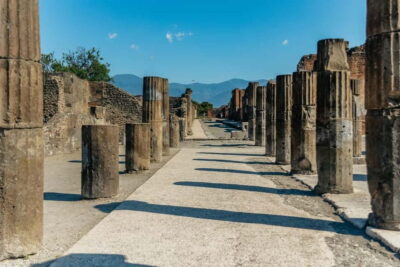
Archaeological Park Tour with Ticket on request
Read our review →