Reviewed · POMPEII RUINS TOURS
Exploring Pompeii
Pompeii gives you a rare look at ordinary Roman life, not just grand monuments. In about two hours, you can see private homes, painted frescoes, mosaics, shops, temples, baths, and the plaster casts that show the human cost of Mount Vesuvius’s eruption in AD 79. The mix of daily life and sudden disaster makes this site especially powerful.
I like the private format, since your group receives the guide’s attention rather than following a large crowd. I also like the focus on both grand spaces and small details, from wealthy residences to Roman shops. The main catch is simple but important: the Pompeii entry ticket is not included in the $36.04 tour price.
In This Review
- Key points to know before booking
- Pompeii in two hours: a sharp look at Roman life
- Roman homes with frescoes and original mosaics
- Shops, temples, and the working town
- Thermal baths and the social side of Roman life
- The plaster casts and the human cost of AD 79
- What the private format means for you
- Is $36.04 a fair price?
- Walking needs and practical comfort
- Booking ahead and protecting your plans
- Who will get the most from this visit?
- Should you book Exploring Pompeii?
- FAQ
- How long does the Exploring Pompeii tour last?
- Where does the tour take place?
- Is the Pompeii admission ticket included?
- What language is the tour offered in?
- Is this a private tour?
- What level of physical fitness is required?
- Are service animals allowed?
- Can I cancel for a full refund?
Key points to know before booking
- Private two-hour visit: Your group participates on its own, which allows for a more personal pace and questions.
- Francesco may guide you: One booking note specifically praises Francesco and his care in contacting the guest before arrival.
- Roman life is the focus: Expect homes, frescoes, mosaics, shops, temples, thermal baths, and other evidence of daily routines.
- The plaster casts are emotionally difficult: They provide a stark reminder that Pompeii was also a human tragedy.
- Admission costs extra: The listed price covers the tour service, not the archaeological park ticket.
- Moderate fitness is needed: Pompeii requires walking through a large archaeological site, and the activity is not designed for completely sedentary visitors.
Pompeii in two hours: a sharp look at Roman life
The great strength of this experience is its subject. Pompeii is not simply a collection of broken walls. It preserves homes, businesses, religious buildings, bathing facilities, and public spaces in a way that lets you picture how a Roman town worked before the eruption.
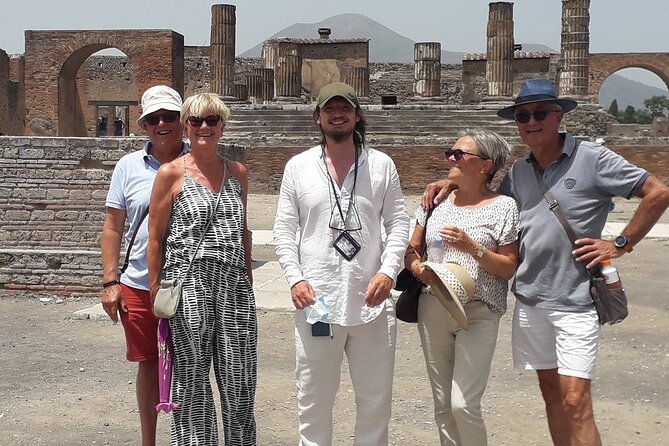
You begin inside the Archaeological Park of Pompeii, where the guide leads your private group through the remains. The exact order of sights can vary, but the visit is built around the habits and customs of a wealthy Roman town.
I find that approach more useful than rushing from one famous ruin to the next. A painted wall tells you about taste and status. A shop tells you how people bought goods. A thermal bath points to the social side of Roman life. Together, these pieces make Pompeii easier to understand.
The two-hour length is both a benefit and a limit. It gives you a focused introduction without taking up most of your day, which is helpful if Pompeii is one stop in a wider visit to the area. At the same time, the park is extensive, so you should not expect to see every street, house, and public building.
More Pompeii excavation visits:
- Pompeii: Entry Ticket and Guided Tour with an Archaeologist
★ 4.8 · 19,459 reviews - Pompeii: Entry Ticket with Optional Audio Guide
★ 4.2 · 12,360 reviews - Pompeii: Small Group Tour with an Archaeologist
★ 4.8 · 12,264 reviews
Roman homes with frescoes and original mosaics
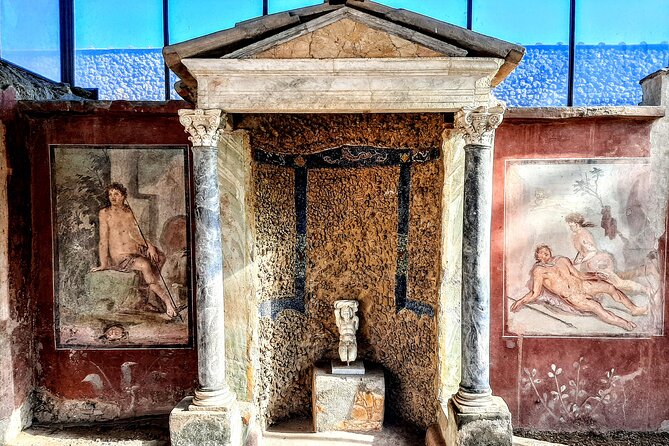
Private residences are among the most rewarding parts of the visit. The homes show how wealthy Romans arranged their living spaces and how strongly decoration mattered to them.
You can expect to see painted frescoes and original mosaics. These are not just pretty details. They offer clues about the owners’ money, taste, beliefs, and desire to impress anyone entering the home.
A guide can help you read the rooms instead of simply admiring the color on the walls. Look for the way decoration was used to shape the visitor’s first impression, and notice how the surviving mosaics connect practical floors with carefully planned design.
The phrase wealthy town matters here. This is not a tour centered only on poor workers or military life. The surviving homes give you a clear look at the upper end of Roman society, including the style and comfort that money could provide.
Still, keep your expectations sensible. The tour lasts approximately two hours, and the description does not promise entry into every private residence or a detailed stop at every famous house. Your guide will need to choose what fits the time.
Shops, temples, and the working town
Pompeii becomes more human when you move beyond private homes. Roman shops show the commercial side of the town, while temples point to the religious beliefs that shaped public life.
These stops help balance the grander residences. You are not seeing an isolated set of villas. You are seeing a community with places to buy goods, worship, meet, and manage everyday needs.
I like tours that connect these building types because the connection is the point. A home tells you how one family lived. A shop shows how the town functioned. A temple reveals the values shared, or at least displayed, in public. The guide’s job is to tie those parts together.
The tour summary specifically includes the most important temples and several Roman shops, but it does not name each one. That is useful to remember when comparing this experience with a longer archaeological tour that may promise a fixed list of individual buildings.
Thermal baths and the social side of Roman life
The thermal baths add another layer. In the Roman world, baths were not merely places to wash. They were part of public life, and the remains help show how much time and care Romans gave to bathing facilities.
You can expect to visit a thermal bath as part of the two-hour route. The guide can place it beside the homes, shops, and temples so you see how leisure fitted into the town’s daily rhythm.
This is one reason a guided visit has value. Stone rooms can look confusing without context. With an explanation of what the spaces were used for, the baths become less like empty ruins and more like a place people once visited as part of normal life.
The information provided does not specify the name of the bath complex or promise that every room will be open. If a particular bath is the main reason you want to visit Pompeii, confirm the route and current access before booking.
A completely different way to spend a day in Pompeii Ruins:
- Pompeii Small Group Tour with an Archaeologist
★ 5.0 · 6,593 reviews - Pompeii: Skip-the-Line Entrance Ticket with Audio Guide
★ 4.0 · 2,509 reviews - Naples: Pompeii and Mt. Vesuvius with Lunch and Wine Tasting
★ 4.5 · 2,454 reviews - Pompeii: Archaeological Park Tour with Ticket on request
★ 4.5 · 2,283 reviews
The plaster casts and the human cost of AD 79
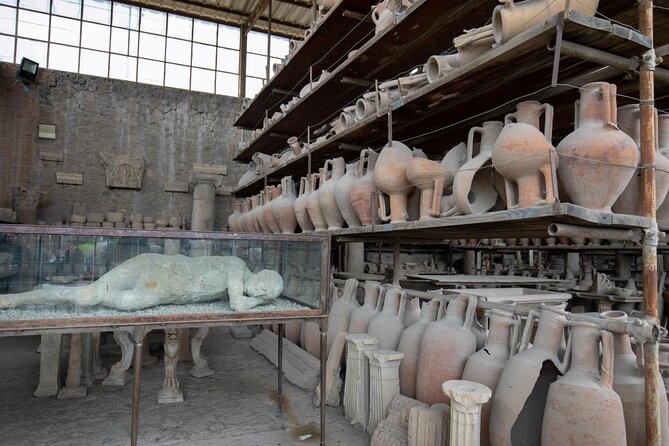
The plaster casts are the most difficult stop. They preserve the shapes of victims caught during the eruption of Mount Vesuvius, offering a brutal reminder that this was not only a story about buildings and art.
I would not treat these casts as a quick photo stop. Give yourself a moment to absorb what they represent. After seeing elegant frescoes, orderly houses, and public facilities, the casts change the tone of the visit.
They also explain why Pompeii has such lasting force. The town’s preserved objects can make the ancient world feel close, but the casts show that the eruption was a sudden disaster for real people.
The tour description places these remains alongside the rest of the archaeological visit rather than offering a separate disaster-focused program. That balance is appropriate for a short tour. You get the full picture of Pompeii, including both its pleasures and its final moments.
What the private format means for you
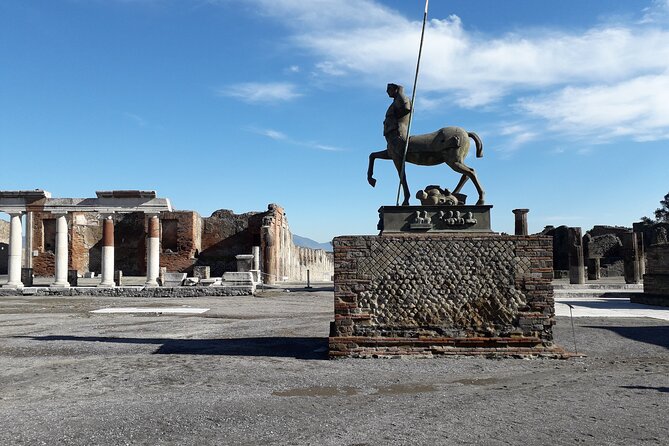
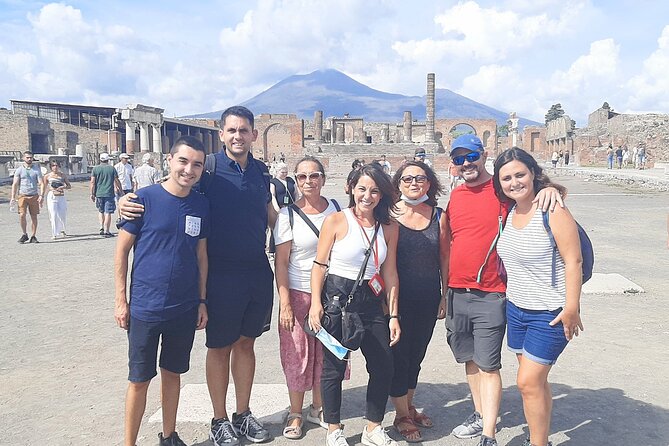
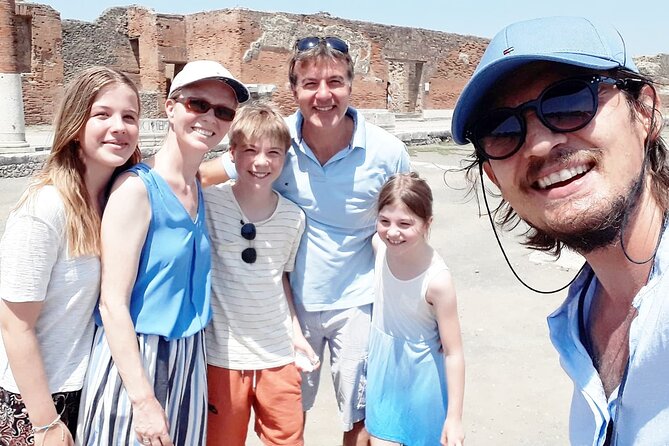
This is a private activity, so only your group participates. That is a meaningful advantage at an archaeological site, where a large group can make it harder to hear, ask questions, or pause when something catches your attention.
You can use the format well by arriving with a few priorities. You might want more time in the painted homes, a clearer explanation of the baths, or context for the plaster casts. A private guide can respond to your interests more easily than a fixed large-group presentation.
One guest specifically praised Francesco and noted that he contacted the group a day before arrival to help make sure everything was in order. That kind of communication can be useful, especially when you are coordinating a visit to a large site.
The experience is offered in English. If you need another language, this activity is not the right choice based on the information available.
The private format does not mean the tour includes transport, meals, or admission. It covers the Exploring Pompeii tour itself, and the separate ticket cost is the point you need to clarify before paying.
Is $36.04 a fair price?
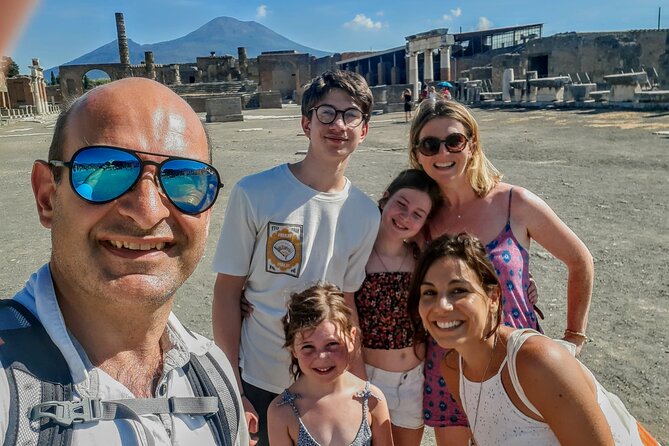
At $36.04 per person, the price can be good value if you want a focused explanation and the personal attention of a private group. Pompeii is much easier to appreciate when someone connects the buildings to Roman habits instead of leaving you to decode every ruin alone.
But the price needs to be read correctly. Admission is extra, and the tour does not include tickets to the archaeological park. Add that cost to your day’s budget before deciding that this is a low-cost Pompeii visit.
Value also depends on your style. If you enjoy reading signs and exploring independently, you may prefer to buy admission and walk at your own pace. If you want the main categories of Pompeii explained in a short visit, the guide service may justify the added expense.
The tour lasts about two hours. That makes it a practical choice for someone who wants a structured introduction rather than a full-day archaeological study. It may feel too brief if you hope to cover a large portion of the park in detail.
Walking needs and practical comfort
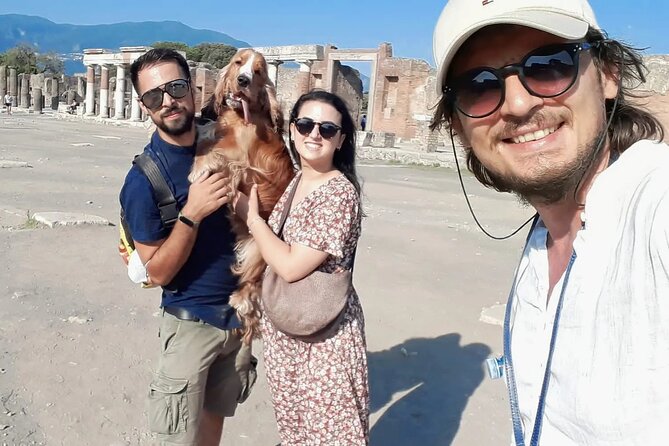
A moderate level of physical fitness is expected. The experience takes place in an archaeological park, so you should be ready for sustained walking through ancient streets and ruins.
The information does not state the exact route surface, distance, or number of rest stops. For that reason, you should not assume the visit will be easy for anyone with serious mobility concerns. Ask the operator for current route details if walking ability is a concern.
The site is near public transportation, which helps if you are arranging the visit without a private vehicle. The activity also allows service animals.
Since the tour is outdoors at an archaeological site, sensible planning matters. Check the meeting instructions at booking and allow enough time to reach the park. A private guide can make the visit more efficient, but cannot remove the basic walking involved in seeing Pompeii.
Booking ahead and protecting your plans
This experience is commonly booked well ahead of the visit, with an average lead time of about 36 days. That suggests you should not leave it until the last minute if the date and private format matter to you.
Confirmation is received at the time of booking. You should read that confirmation carefully, especially for the meeting point, start time, and ticket instructions. The supplied information confirms that admission is not included, so do not arrive assuming your tour payment covers the park entrance.
Free cancellation is available if you cancel at least 24 hours before the start time. If you cancel later, the amount paid is not refunded, and changes made inside that 24-hour window are not accepted.
The activity requires a minimum number of participants. If the operator cancels because that minimum is not met, you receive the choice of another date or experience, or a full refund.
Who will get the most from this visit?
I would choose this tour if you want Pompeii explained by a guide but do not want to spend an entire day on the site. It fits visitors who value private attention, English-language commentary, and a clear route through the major types of Roman remains.
It also suits first-time visitors who want help making sense of the setting. Homes, shops, temples, baths, and plaster casts can feel disconnected when seen without context. The short guided format gives you a framework for further exploring on your own.
Families and small groups may appreciate the private arrangement, since the pace can be more personal. People with strong historical interests should note that two hours will offer an introduction, not a complete study of Pompeii.
I would hesitate if your main concern is the lowest possible total cost. The separate park ticket changes the final price. I would also hesitate if you need a highly specific itinerary, since the available details do not name every building or guarantee a particular house or bath complex.
Should you book Exploring Pompeii?
Book it if you want a private, English-language introduction to Pompeii that covers both grand Roman culture and ordinary town life. The strongest reasons are the personal format, the range of sights, and the chance to hear explanations from a guide such as Francesco.
Go in with two clear expectations: the visit lasts about two hours, and your Pompeii admission ticket costs extra. If you accept those limits, this is a practical way to see the key themes of the ancient town without committing your whole day.
FAQ
How long does the Exploring Pompeii tour last?
The tour lasts approximately two hours.
Where does the tour take place?
The experience takes place at the Archaeological Park of Pompeii in Pompeii, Italy.
Is the Pompeii admission ticket included?
No. The Pompeii admission ticket is not included in the tour price.
What language is the tour offered in?
The tour is offered in English.
Is this a private tour?
Yes. Only your group participates in this private activity.
What level of physical fitness is required?
A moderate level of physical fitness is recommended.
Are service animals allowed?
Yes. Service animals are allowed.
Can I cancel for a full refund?
Yes, if you cancel at least 24 hours before the experience start time. Cancellations made less than 24 hours before the start time are not refunded.
Newest reviews from Pompeii Ruins
- Private Tour Pompeii and Winery★ 5.0 · 4 reviews
- Visit the Pompeii ruins from Salerno with Pizza Lunch★ 5.0 · 4 reviews
- Pompeii Private Tour for Kids and Their Families★ 4.8 · 4 reviews
- From Sorrento: Pompeii & Vesuvius tour small group★ 4.8 · 4 reviews
- Pompeii Sorrento and Positano Tour★ 5.0 · 4 reviews
- From Naples_ Pompeii Tour_Skip the line ticket + audioguide★ 4.3 · 4 reviews
- Pompeii, skip-the-line ticket with smartphone audio guide on App★ 3.0 · 4 reviews
- Pompeii Private Half-Day Tour from: Naples,Sorrento, Amalfi Coast★ 5.0 · 4 reviews
Pompeii Ruins Tours, compared.

Entry Ticket and Guided Tour with an Archaeologist
Read our review →

Pompeii Small Group Tour with an Archaeologist
Read our review →
Skip-the-Line Entrance Ticket with Audio Guide
Read our review →
Pompeii and Mt. Vesuvius with Lunch and Wine Tasting
Read our review →
Archaeological Park Tour with Ticket on request
Read our review →