Reviewed · POMPEII RUINS TOURS
Ancient Pompei in the afternoon
Pompeii can feel like an oven in the morning, with crowds pressing through its narrow ancient streets. This 3:30 pm tour gives you a calmer visit and softer heat, while guide Glauco Messina brings the ruined city to life with stories shaped to suit your group, including younger visitors. I like the cooler timing and the small-group setting. The main catch is that admission tickets are not included, and the published duration is inconsistent, listed as roughly two hours in one place and three hours in the route details.
I also like the focused route. You see major parts of daily Roman life, from the gymnasium and amphitheater to a tavern, thermopolium, public spa, and Forum. You should still allow extra time for buying or arranging entry tickets, and check the group size carefully: the price is quoted for up to eight people, while the maximum group size is listed as ten.
In This Review
- Key points to know before booking
- Why an afternoon visit can work better
- Meeting Glauco at Piazza Immacolata
- Gymnasium and amphitheater: starting with Pompeii’s public life
- Abundance Road and Pompeii’s ordinary streets
- Tavern and thermopolium: food and drink in ancient Pompeii
- Public spa: a window into Roman social habits
- The Forum and the story of Pompeii’s destruction
- What the two to three hours really give you
- Is $254.07 a fair group price?
- Who will enjoy this Pompeii walk most?
- Should you book Ancient Pompeii in the afternoon?
- FAQ
- Where does the Pompeii afternoon tour begin?
- What time does the tour start?
- Where does the tour end?
- How long does the experience last?
- Is admission to Pompeii included?
- What places are included on the route?
- Who provides the tour?
- How many people can join?
- Is cancellation free?
Key points to know before booking
- The 3:30 pm start avoids the worst midday heat and crowds inside Pompeii.
- Guide Glauco Messina leads the experience, with a style that can keep teenagers interested.
- The route covers everyday Roman life, including a tavern, thermopolium, spa, gymnasium, and Forum.
- The tour begins at Piazza Immacolata and ends at Piazza Porta Marina, so you do not return to the starting point.
- Admission is extra, and the tour price is $254.07 per group, up to eight people.
- The advertised timing needs clarification, since one description says two hours and the detailed route says three.
Why an afternoon visit can work better
The timing is the strongest reason to choose this experience. Pompeii is a large archaeological site, and much of the visit takes place outdoors on exposed ancient streets. A 3:30 pm start can mean less direct heat than a late-morning walk, especially during the warmer months.
It can also feel less crowded after the morning rush has eased. That matters in Pompeii because the ruins are not arranged like a single museum gallery. You walk through lanes, doorways, courtyards, public buildings, and open spaces. When too many people gather in one spot, it becomes harder to hear a guide or take in the shape of a room.
I would not expect an empty archaeological park. Pompeii is one of Italy’s major sights, and an afternoon tour is not a private lockout. Still, this timing gives you a better chance of moving at a comfortable pace and listening without constant noise around you.
The late start also helps families. The heat and scale of Pompeii can wear down children and teenagers quickly. A shorter, guided route in the afternoon lets you focus on the parts that tell the clearest story rather than trying to cover every street.
More Pompeii excavation visits:
- Pompeii: Entry Ticket and Guided Tour with an Archaeologist
★ 4.8 · 19,459 reviews - Pompeii: Entry Ticket with Optional Audio Guide
★ 4.2 · 12,360 reviews - Pompeii: Small Group Tour with an Archaeologist
★ 4.8 · 12,264 reviews
Meeting Glauco at Piazza Immacolata
The tour starts at Piazza Immacolata in Pompei, where you redeem your ticket and meet the guide at 3:30 pm. You need to reach this point before the start time, since the experience is built around a scheduled group walk rather than an open-ended visit.
The meeting location is near public transportation, which is useful if you are arriving by train or local transit. The tour ends at Piazza Porta Marina, so plan your onward route from there instead of assuming you will return to Piazza Immacolata.
That end point can be helpful if you want to continue toward the Porta Marina side of the site. It also means you should keep your plans flexible after the tour. Do not schedule a tight connection immediately afterward, especially because the exact length is not clear.
The group limit is another practical point. The experience states a maximum of 10 participants, while the quoted price is $254.07 for a group of up to 8. If you are booking for eight or fewer, the price can be attractive when divided among the group. If you are traveling with nine or ten people, ask the provider how the price works before paying.
Gymnasium and amphitheater: starting with Pompeii’s public life
The route includes the Gymnasium, a useful first look at the city’s public world. This was not simply a place for exercise in the modern sense. In a Roman city, facilities connected to fitness, education, and social life helped shape the daily routine of residents.
A guide matters here because bare walls and open foundations do not always explain themselves. Glauco can help you picture how the space functioned and why a gymnasium belonged in a city of Pompeii’s size.
The amphitheater brings a different kind of energy. It shows the scale of public entertainment and the importance of shared events in Roman society. You can read the building as both an arena and a piece of city planning, with its large seating area and strong connection to the wider urban community.
You will not simply be ticking off famous names. The value of this stop is the contrast between organized public recreation and private homes that appear elsewhere in the ruins. Pompeii becomes easier to understand when you see how public buildings supported the rhythm of city life.
Abundance Road and Pompeii’s ordinary streets
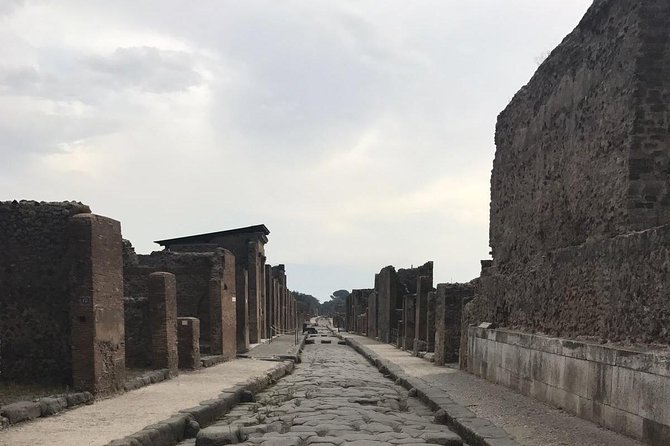
The route continues along Abundance Road, one of the best places to think about Pompeii as a working city rather than a collection of monuments. Streets here connect shops, homes, public buildings, and places to eat.
Walking this road lets you notice the practical details of ancient urban life. You might find raised stepping stones, worn paving, storefront openings, and drainage features, though the precise details visible on the day can vary with access and ongoing site conditions.
This is where a small group earns its keep. Pompeii rewards close attention, but it is easy to miss small features when you are moving in a large crowd. With fewer people around the guide, you have a better chance to ask why a street was built a certain way or how residents used the buildings beside it.
The route is not designed to show every corner of the archaeological park. That is a benefit for a two to three-hour visit. Pompeii is too large for a complete visit in a short time, so a focused path helps you leave with a clear sense of how the city worked.
A completely different way to spend a day in Pompeii Ruins:
- Pompeii Small Group Tour with an Archaeologist
★ 5.0 · 6,593 reviews - Pompeii: Skip-the-Line Entrance Ticket with Audio Guide
★ 4.0 · 2,509 reviews - Naples: Pompeii and Mt. Vesuvius with Lunch and Wine Tasting
★ 4.5 · 2,454 reviews - Pompeii: Archaeological Park Tour with Ticket on request
★ 4.5 · 2,283 reviews
Tavern and thermopolium: food and drink in ancient Pompeii
The tavern and thermopolium give the tour a welcome human scale. Grand buildings can explain government, entertainment, and public status, but food shops reveal the habits of ordinary people.
A thermopolium was a place where prepared food and drink could be served, making it a useful stop for understanding daily commerce. The name may sound formal, but the basic idea is easy to grasp: it was a practical place for people who wanted something ready to eat or drink.
This part of the route helps you picture Pompeii as a lived-in town. People worked, bought food, met friends, and moved through the streets for ordinary reasons. The city was not frozen as a display for future visitors. It was a place where people had errands and routines.
For families, these stops can be easier to connect with than abstract political history. Teenagers in particular may respond better to questions about eating, shopping, and social life than to a long list of dates. The published feedback specifically highlights Glauco’s ability to keep teenagers engaged and adjust explanations to their interests.
Public spa: a window into Roman social habits
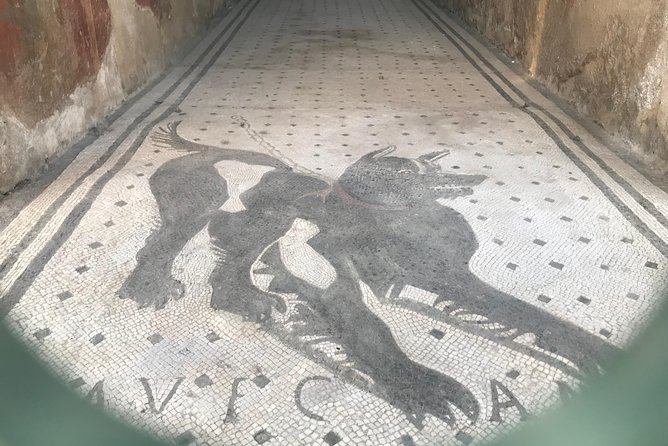
The public spa is another strong stop because it links architecture to routine. Roman baths were not simply places to wash. They were public settings where people could spend time, meet others, and follow a familiar sequence of activities.
The remains may require explanation, especially if you are not used to reading partial walls and foundations. Glauco’s role is to show how the rooms fit together and what happened in them. You can then look beyond the stones and think about the social importance of the building.
This is also a good place to compare public and private life. Pompeii’s streets and shops show movement and business, while the spa shows how leisure and community life could be organized. Each stop adds another piece to the city without requiring you to memorize a long history lesson.
Because the tour is guided, you can ask questions as you go. That is useful if your group has mixed interests. One person may care about engineering, another about social customs, and another about the disaster that buried Pompeii. A flexible guide can connect those interests to the same remains.
The Forum and the story of Pompeii’s destruction
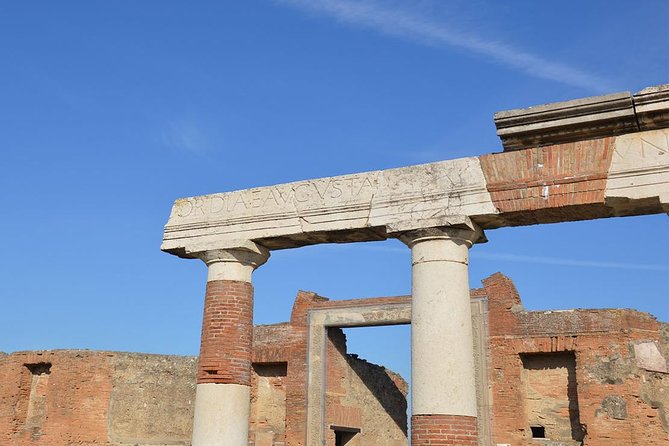
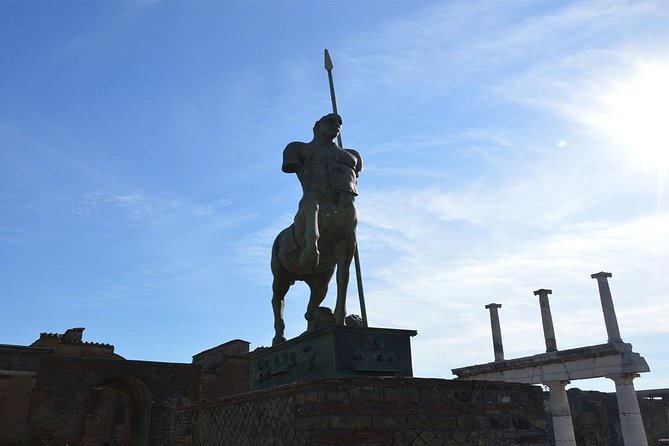
The route includes the Forum, the city’s central public space. This is where the political, religious, and commercial sides of Pompeii come together. The open area and surrounding structures help you see how public decisions, worship, business, and civic identity occupied the same part of town.
The Forum is likely to be the point where the whole walk makes sense. After seeing the gymnasium, amphitheater, shops, baths, and streets, you can place them within a broader city structure.
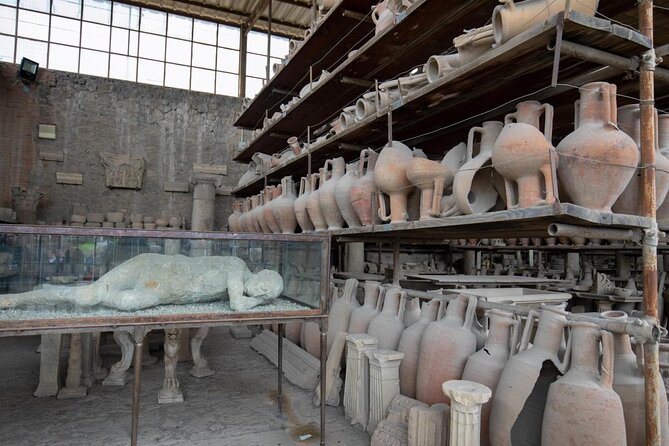
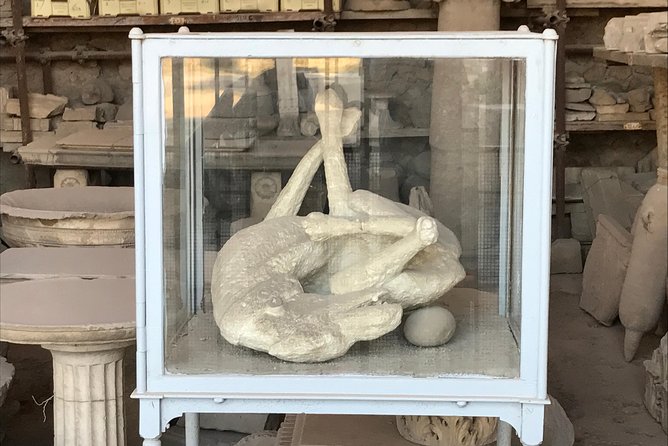
Glauco also explains what happened to Pompeii. That background is important, but the best version of the story does not reduce the city to its destruction. The ruins are moving because they preserve evidence of people’s lives, not only because a volcanic disaster ended them.
A guide can also keep the subject grounded. Pompeii is often presented through dramatic images, but the site deserves more than a disaster story. The public buildings, food shops, roads, and spa show a normal city before the catastrophe. That balance makes the visit more meaningful.
What the two to three hours really give you
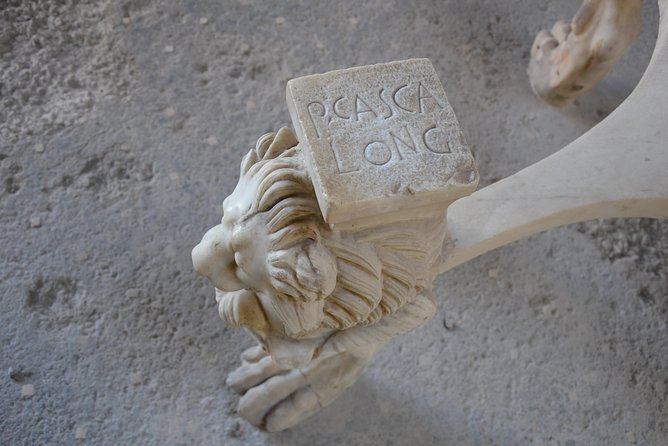
The time is enough for a guided introduction to major highlights, but it is not enough for every building in Pompeii. The detailed route is marked as three hours, while the general tour information says approximately two hours. That discrepancy is worth resolving before booking.
If the walk lasts closer to two hours, you will get a brisk overview of the listed highlights. If it runs closer to three, you should have more time for questions and explanations. Either way, do not expect a full-day archaeological study.
I see this tour as a good first visit for someone who wants a clear framework. You will learn how Pompeii was organized and see several types of buildings without getting lost in the site’s sheer size.
If you already know Pompeii well, the value depends more on the guide and timing. The afternoon setting may still appeal, but you might want a longer independent visit before or after the guided portion. The admission ticket is not included, so you will need to account for that separately.
Is $254.07 a fair group price?
The price is $254.07 per group, with the stated group size of up to eight people. That works out to about $31.76 per person for eight people, before admission. For a couple, the per-person cost is much higher. For a family or group of friends, the math is more favorable.
The value comes from the private-feeling scale and the guide’s attention, not from included entry. You are paying for a guided visit through important parts of Pompeii, with a start time chosen to avoid the busiest and hottest period.
If you are comparing this with an unguided visit, the main question is how much help you want interpreting the ruins. Pompeii can be confusing without context, and the route includes several different types of buildings. A guide can turn separate remains into a connected picture of city life.
I would be more cautious if your group has only one or two people and is mainly seeking the lowest possible cost. In that case, the group price may not offer the best value. If you have several people sharing the fee, it becomes easier to justify.
Who will enjoy this Pompeii walk most?
This experience suits you best if you want a short, focused introduction and prefer a guide to lead the way. It is especially useful for families, since the timing is easier on hot days and Glauco has shown that he can adapt explanations to keep teenagers involved.
It also fits visitors who dislike the morning rush. The 3:30 pm start gives you a practical alternative to arriving early, while still leaving enough daylight for the listed route.
You may want something else if you want complete freedom to stop at every house, linger over inscriptions, or spend most of the day on site. The guided route has a fixed start and finish, and the available information does not promise a private group for every booking.
Most people can participate, and service animals are allowed. The tour is offered in English. Confirmation arrives when you book, and free cancellation is available until 24 hours before the start time. Changes or cancellations made inside that window are not accepted for a refund.
Should you book Ancient Pompeii in the afternoon?
Book it if you want Pompeii explained in plain English, prefer a smaller group, and like the idea of touring after the morning crowds have thinned. The stops cover a useful mix of public buildings, shops, food spaces, baths, streets, and the Forum, so you get more than a quick look at one famous monument.
I would give this tour extra consideration for families with teenagers. Glauco Messina’s ability to adjust the material and keep younger people involved is a real advantage at a site that can otherwise feel like a long walk among broken stones.
Before booking, confirm the tour length, the admission arrangements, and how the group price applies if you have more than eight people. If those points fit your plans, this is a sensible way to meet Pompeii in the cooler part of the day and leave with a clear picture of how its people lived before disaster struck.
FAQ
Where does the Pompeii afternoon tour begin?
The tour begins at Piazza Immacolata, 80045 Pompei NA, Italy. This is also the ticket redemption point.
What time does the tour start?
The stated start time is 3:30 pm.
Where does the tour end?
The tour ends at Piazza Porta Marina, 80045 Pompei NA, Italy.
How long does the experience last?
The general duration is listed as approximately two hours, while the detailed route information gives three hours. Confirm the expected length with the provider before booking.
Is admission to Pompeii included?
No. Admission tickets are not included in the tour price.
What places are included on the route?
The route includes the Gymnasium, Amphitheater, Abundance Road, a tavern, a thermopolium, the public spa, and the Forum.
Who provides the tour?
The experience provider is Glauco Messina, and the guide named in the information is Glauco Messina.
How many people can join?
The activity has a maximum of 10 participants. The price is listed as $254.07 per group for up to 8 people.
Is cancellation free?
Yes. You can cancel at least 24 hours before the local start time for a full refund. Cancellations or changes made less than 24 hours before the start time are not accepted for a refund.
Newest reviews from Pompeii Ruins
- Private Tour Pompeii and Winery★ 5.0 · 4 reviews
- Visit the Pompeii ruins from Salerno with Pizza Lunch★ 5.0 · 4 reviews
- Pompeii Private Tour for Kids and Their Families★ 4.8 · 4 reviews
- From Sorrento: Pompeii & Vesuvius tour small group★ 4.8 · 4 reviews
- Pompeii Sorrento and Positano Tour★ 5.0 · 4 reviews
- From Naples_ Pompeii Tour_Skip the line ticket + audioguide★ 4.3 · 4 reviews
- Pompeii Private Half-Day Tour from: Naples,Sorrento, Amalfi Coast★ 5.0 · 4 reviews
- Pompeii, skip-the-line ticket with smartphone audio guide on App★ 3.0 · 4 reviews
Pompeii Ruins Tours, compared.

Entry Ticket and Guided Tour with an Archaeologist
Read our review →

Pompeii Small Group Tour with an Archaeologist
Read our review →
Skip-the-Line Entrance Ticket with Audio Guide
Read our review →
Pompeii and Mt. Vesuvius with Lunch and Wine Tasting
Read our review →
Archaeological Park Tour with Ticket on request
Read our review →