
Reviewed · SORRENTO
Sorrento through the eyes of a local
Sorrento reveals itself best on foot, and this tour takes you beyond the usual postcard stops. You’ll begin in Piazza Tasso, slip down the very narrow Pity Road, see how Sorrento inlay is made, and visit places many independent visitors could easily miss, including the garden at O Parrucchiano restaurant.
I like the personal local guidance, especially since Camilla is praised for bringing the town’s past and present to life, while Alessandra is also named as a guide. I also like the free taste of local limoncello and sweets, plus the chance to pause for views across the coast. The main consideration is pace: two hours covers many stops, so some visits are brief rather than in-depth.
In This Review
- Key points to know before booking
- Starting beneath Torquato Tasso in Piazza Tasso
- The Pity Road and Sorrento’s inlay craft
- Sorrento Cathedral and an old nativity display
- The garden behind O Parrucchiano
- Villa Fiorentino and Sedil Dominova
- A limoncello pause in the middle of the walk
- Piazza della Vittoria and the coast from above
- The Communal Villa and St Antonino’s crypt
- Ending near the Mills Valley
- Is $30 a fair price?
- Who should book this Sorrento walk?
- Should you book it?
- FAQ
- How much does the Sorrento walking tour cost?
- How long does the tour last?
- Where does the tour meet?
- What language is the tour offered in?
- What is included in the experience?
- Which places are visited?
- Can I cancel for a refund?
- Can I reserve now and pay later?
Key points to know before booking
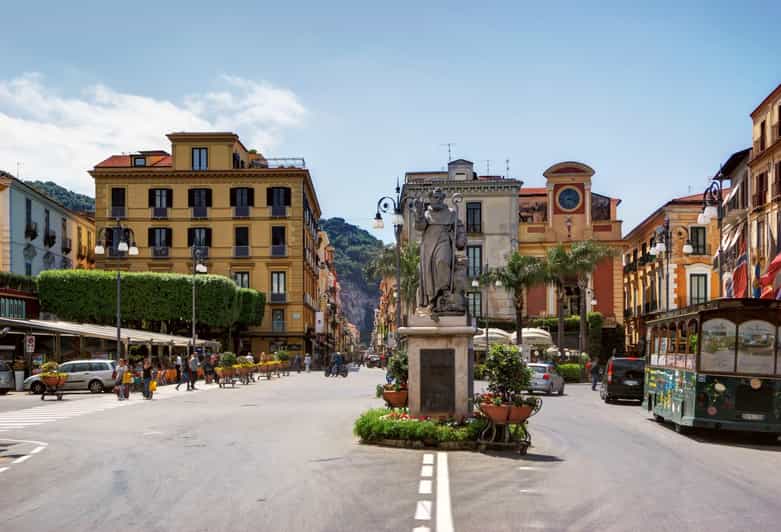
- Meet at Torquato Tasso’s statue: The starting point is easy to find in Piazza Tasso, beside Bar Fauno.
- See Sorrento’s lesser-known corners: The route includes the Pity Road, an old church used for inlay demonstrations, and O Parrucchiano’s garden.
- Expect a local guide’s perspective: Camilla is frequently named, and Alessandra is also listed for one tour.
- Taste local specialties: Limoncello is included, with local sweets also described as part of the experience.
- Finish at Mills Valley: The walk ends near the dramatic valley, after coastal views, churches, and historic meeting places.
- Good value at $30: For a two-hour guided walk with tastings and access to a normally private garden, the price is reasonable.
Starting beneath Torquato Tasso in Piazza Tasso

Your meeting point is the statue of Torquato Tasso in Piazza Tasso, straight ahead and to the right of Bar Fauno. This is the natural center of Sorrento, so it is a practical place to begin, especially if you are arriving from the train station, bus routes, or the main shopping streets.
The guide begins by explaining the square and Tasso himself. That opening matters because Piazza Tasso can feel like a busy traffic junction if you only pass through it. With a local explanation, you get a clearer sense of how the square fits into Sorrento’s public life and why this statue has such a central place in town.
Give yourself a few extra minutes to find the statue. If you are running late, send the guide a message, as requested. There is no need to arrive with a full history lesson in your head. The point is to let the guide connect the visible streets and buildings to the stories behind them.
Camilla is the guide most often named in the available comments, and her style comes across as warm, enthusiastic, and flexible. One person specifically praised the fact that the walk never felt rushed and followed the group’s pace. That is useful to know if you prefer conversation and explanation over a rapid checklist of sights.
Tours people book alongside this one in Sorrento:
- Pompeii: Entry Ticket and Guided Tour with an Archaeologist
★ 4.8 · 19,459 reviews - Pompeii: Entry Ticket with Optional Audio Guide
★ 4.2 · 12,360 reviews - Pompeii: Small Group Tour with an Archaeologist
★ 4.8 · 12,264 reviews
The Pity Road and Sorrento’s inlay craft
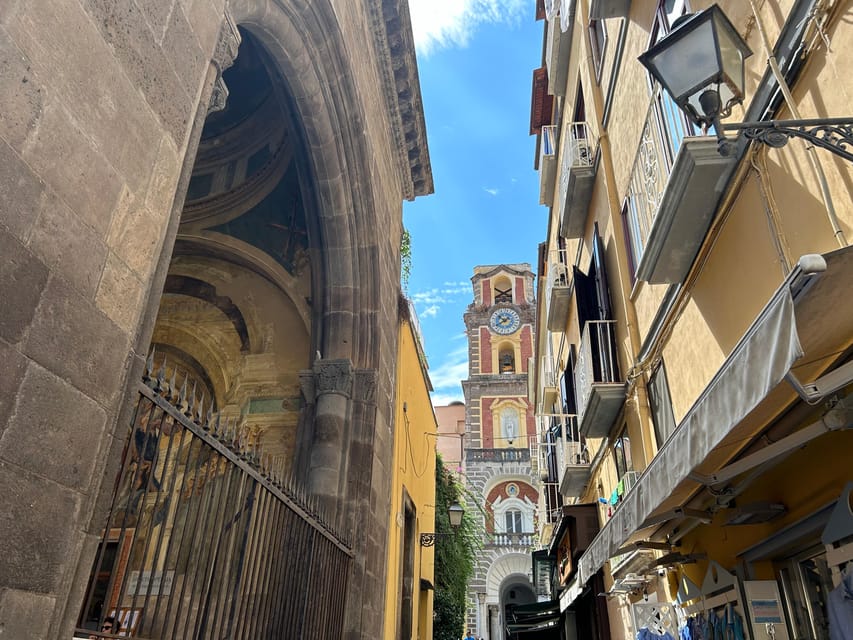
From Piazza Tasso, you head toward the Pity Road, an ancient, extremely narrow lane. In earlier times, carriages used this route, which is hard to picture when you see its tight proportions on foot.
This is one of the most appealing parts of the walk because it gives you a physical sense of old Sorrento. Large squares and churches tell you about a town’s public face. A cramped lane tells you how people actually moved through it. The Pity Road is also the kind of place that is easy to pass without understanding its past.
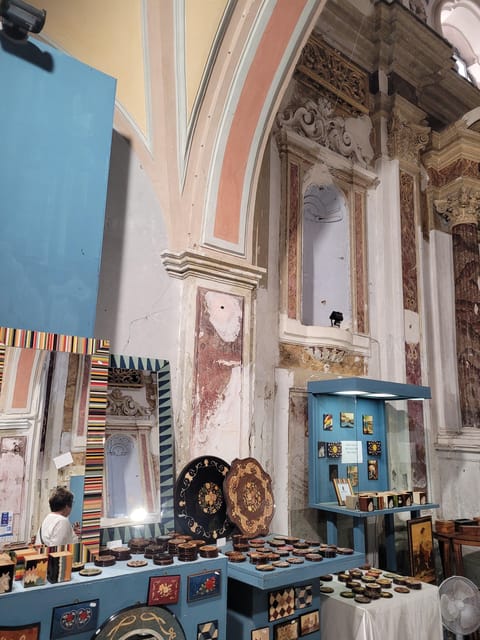
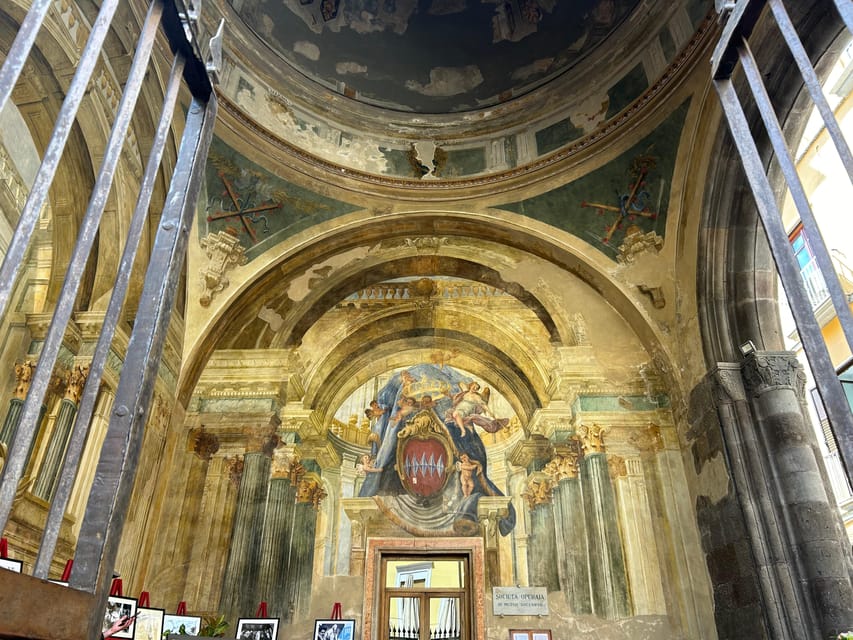
The route then visits a deconsecrated old church where you can see how Sorrento inlay is made. Sorrento is known for detailed wood inlay, and seeing the craft process adds useful context to the polished pieces sold in shops around town.
I like this stop because it connects shopping with skill. Instead of simply being shown souvenirs, you get a better idea of the work behind them. The information provided does not specify how long the demonstration lasts or whether you make anything yourself, so think of it as a look at the craft rather than a hands-on workshop.
The narrow lane may also be less comfortable for anyone who needs plenty of room to move. The activity is marked wheelchair accessible, but the route includes an old, very narrow road. If access is important to you, message the provider before booking and ask how the route is handled on your date.
Sorrento Cathedral and an old nativity display

The walk continues to Sorrento Cathedral, where you will see a nativity from the 1800s inside. This gives the tour a more devotional and artistic side after the street and craft stops.
The cathedral is not treated as a quick exterior photo stop. You go inside and see a specific object with a long local connection. An old nativity can tell you more about everyday religious culture than a broad lecture about church architecture, especially when the guide can explain what you are looking at in plain terms.
Expect this part to be relatively focused. The tour has many stops packed into two hours, so it is not designed as a long architectural study of the cathedral. If you want detailed information about every chapel, artwork, or construction phase, you may need a separate visit.
For most people, though, this balance works well. You get a glimpse inside one of Sorrento’s important churches without spending the whole walk indoors.
The garden behind O Parrucchiano
One of the tour’s most unusual treats is a walk through the garden inside O Parrucchiano restaurant. The garden includes the famous Italian pergola, and the visit is described as a special opportunity that people who are not dining there would otherwise miss.
This is exactly the sort of stop that gives the tour its local character. You are not simply walking from one major monument to another. You are being shown a tucked-away setting that forms part of Sorrento’s visual identity, with greenery, covered walkways, and a restaurant setting that is normally private to diners.
I would bring a camera here, but also listen to the explanation. The appeal is not only the view through the pergola. It is the story of how a restaurant garden fits into the town’s older style and social life.
There is one practical point to keep in mind. Since the garden is part of a restaurant, access depends on the tour arrangement and the conditions on the day. The description promises this special walk, but it does not say how long you stay or whether every section is open at all times.
A completely different way to spend a day in Sorrento:
- Pompeii Small Group Tour with an Archaeologist
★ 5.0 · 6,593 reviews - Capri: Island Boat Trip with Grottos
★ 4.3 · 4,923 reviews - Sorrento: Exclusive Capri Boat Tour and Optional Blue Grotto
★ 4.8 · 3,170 reviews - Sorrento Farm and Food Experience including Olive Oil, Limoncello, Wine tasting
★ 5.0 · 2,524 reviews
Villa Fiorentino and Sedil Dominova
Next comes Villa Fiorentino, seen from the outside. The building often hosts art exhibitions and has displayed works by artists including Dalì and Picasso.
An exterior visit means you should not book this walk expecting entry to a gallery or a current exhibition. The value is in seeing the building and learning about its role as a cultural venue. If an exhibition is running during your visit, you can decide later if you want to return on your own.
After Villa Fiorentino, the route heads to Sedil Dominova. This old meeting place sits in the heart of Sorrento and offers a useful look at how civic life once worked.
I find places like Sedil Dominova more revealing than another grand church façade. A meeting place shows that historic towns were built not just around worship and trade, but also around local discussion and shared decisions. Your guide can make that connection clear without turning the walk into a formal lecture.
The two stops also help vary the route. You get art, civic life, architecture, and local customs rather than a string of similar monuments.
A limoncello pause in the middle of the walk
The tasting stop comes after Sedil Dominova. You will try Sorrento limoncello, and the experience also describes local sweets as part of the free tasting.
This is a small part of the tour, but it makes practical sense. Sorrento is closely associated with lemons, and tasting a local product gives you a direct link to the area’s food culture. It is also a welcome pause during a walking route that moves through narrow streets and several historic sites.
The included details specifically confirm a free try of limoncello. Local sweets are also described among the highlights, but the precise tasting selection is not stated, so do not expect a fixed menu of products.
If you do not drink alcohol, ask about the tasting when you arrive. The supplied information confirms the limoncello, but it does not state whether a nonalcoholic alternative is available. The stop should still be useful for learning about local products, even if you choose not to taste the drink.
Piazza della Vittoria and the coast from above
From the tasting stop, you continue to Piazza della Vittoria. The square is included for its broad panorama, then the walk moves to the Cloister of St Francis.
The views are one of the tour’s strongest changes of mood. After the close lanes and indoor stops, you get room to look outward across the coast. You should plan to pause here for photographs, though the time available will depend on the group’s pace and the guide’s schedule.
The St Francis Cloister adds a quieter architectural setting. Inside, you will also see a modern graffiti artwork by a famous singer. That contrast is part of the fun: Sorrento is not presented as a frozen old town. Traditional religious architecture shares the route with newer forms of public art.
The activity does not name the singer or describe the artwork in detail, so this should be treated as a visual surprise rather than a specific art-history visit. If modern street art interests you, ask the guide for more background during the stop.
The Communal Villa and St Antonino’s crypt

The route then reaches the Communal Villa, where you can look across the whole Sorrento coast. This is another strong viewing point, and it gives you a wider sense of the town’s position beside the water.
The Communal Villa works well after Piazza della Vittoria because the two stops offer different chances to understand Sorrento’s setting. One may give you a framed panorama, while the villa lets you take in the coast at greater length. Exact viewing conditions will depend on the day, but the coastal outlook is a central reason for including this part of the walk.
After that, you visit St Antonino Church and go into its crypt. This takes the tour back indoors and underground, adding another layer to the town’s religious story.
The crypt is a particularly good choice for a short local walk because it gives you something more than another exterior view. You are seeing a place with a different atmosphere and function, and the guide can explain why St Antonino matters to Sorrento.
As with the cathedral, do not expect a full church tour with every feature explained. The route is broad rather than specialist. It gives you enough context to decide which places deserve a longer return visit.
Ending near the Mills Valley

The final stretch leads uphill or onward to the Mills Valley, where the guide says goodbye. This ending brings you close to one of Sorrento’s best-known dramatic features, a deep valley cut into the town.
The finish is worth noting when planning the rest of your day. The tour does not loop back to Piazza Tasso. You should allow time to orient yourself after the farewell, particularly if you have a train, ferry, meal booking, or another timed activity.
Ending at Mills Valley also gives the route a clear shape. You begin in the lively center, move through old lanes and civic spaces, reach coastal viewpoints, then finish at a striking natural and historic feature. It feels more like a walk across Sorrento than a simple circuit of the main square.
The total duration is about two hours. That is long enough to get your bearings and collect a useful set of stories, but short enough to fit into a morning or afternoon. The trade-off is that several places receive only a short visit.
Is $30 a fair price?
At $30 per person, the value is solid if you want a guided introduction rather than a self-guided stroll. The price includes the walking tour and a free limoncello tasting, with local sweets also described as part of the experience.
The strongest value comes from access and interpretation. You could walk past Piazza Tasso, the cathedral, Villa Fiorentino, Sedil Dominova, St Francis, and the Communal Villa on your own. You would be much less likely to enter the O Parrucchiano garden or understand the story behind the Pity Road and the inlay craft without local help.
The tour is also useful early in a Sorrento stay. You can note the places you want to revisit, learn where the main areas connect, and get personal suggestions from the guide. The guide’s local hints are part of what makes this different from following a printed route.
Still, $30 does not buy a private, specialist, all-day tour. The group size is not given, and the walk covers a lot of ground in two hours. If you want long stops for church art, a full exhibition visit, or a detailed craft lesson, you may find the format too quick.
Who should book this Sorrento walk?
I would choose this tour if you want to see Sorrento on foot and prefer local stories to a standard monument checklist. It suits first-time visitors who want orientation, as well as people who have already wandered around and would like more context and lesser-seen places.
It is also a good fit for photographers. The Pity Road, the Italian pergola, the old churches, the cloister, and the coastal viewpoints offer a varied set of subjects. The walk is especially appealing if you enjoy a relaxed pace, since the guide can adjust the experience rather than rushing from stop to stop.
Families and mixed-age groups may appreciate the two-hour length, though the narrow Pity Road and the amount of walking are worth considering. The tour is marked wheelchair accessible, but contact the provider ahead of time if the ancient lane presents a concern for your needs.
The guide may be Camilla, who is praised for her warmth and passion for Sorrento, or Alessandra, who is also named in the experience details. Both names are connected with the tour, but the provider does not guarantee a particular guide, so check when booking if that matters to you.
Free cancellation is available up to 24 hours before the start time, and you can reserve now and pay later. Those terms are helpful if your Sorrento plans depend on weather, ferry times, or a changing port schedule.
Should you book it?
Book this walk if you want a friendly local introduction to Sorrento with a few doors opened for you. The best parts are the Pity Road, the inlay stop, the O Parrucchiano garden, the limoncello tasting, and the views from the town’s public terraces.
Skip it if you prefer to spend two hours inside one museum or church, or if you want a private tour with a fixed specialist guide and long stops at each site. For most visitors, though, $30 is a fair price for a lively first look at Sorrento, especially when you value personal stories, local food, and places you might not find alone.
FAQ
How much does the Sorrento walking tour cost?
The tour costs $30 per person.
How long does the tour last?
The walking tour lasts two hours.
Where does the tour meet?
You meet in front of the statue of Torquato Tasso in Piazza Tasso, near Bar Fauno.
What language is the tour offered in?
The live tour guide speaks English.
What is included in the experience?
A guided walking tour and a free try of Sorrento limoncello are included. Local sweets are also described as part of the tasting highlights.
Which places are visited?
The route includes Piazza Tasso, the Pity Road, an old deconsecrated church showing Sorrento inlay, Sorrento Cathedral, the O Parrucchiano garden, Villa Fiorentino from outside, Sedil Dominova, Piazza della Vittoria, the Cloister of St Francis, the Communal Villa, St Antonino Church and its crypt, and Mills Valley.
Can I cancel for a refund?
Yes. You can cancel up to 24 hours in advance for a full refund.
Can I reserve now and pay later?
Yes. You can reserve your place and pay later, keeping your plans flexible.
Newest reviews from Sorrento
- Private sunset boat tour on the Amalfi Coast and aperitif★ 5.0 · 4 reviews
- 7 Hours Private Boat Experience on Capri from Positano★ 5.0 · 4 reviews
- Wine Tour + Pompeii★ 5.0 · 4 reviews
- Panoramic path of Strada Matrone-Vesuvio★ 5.0 · 4 reviews
- Amalfi coast ’til Sunset: a full day experience★ 5.0 · 4 reviews
- Full-Day Sorrento Positano Pompeii Tour★ 5.0 · 4 reviews
- Herculaneum and Amalfi Coast Private Tour for Families★ 5.0 · 4 reviews
- Private Amalfi Coast Tour in a ROMAR BERMUDA Boat★ 5.0 · 4 reviews