
Reviewed · LIMONCELLO & LEMON GROVE TOURS
Sorrento Lemon Tour
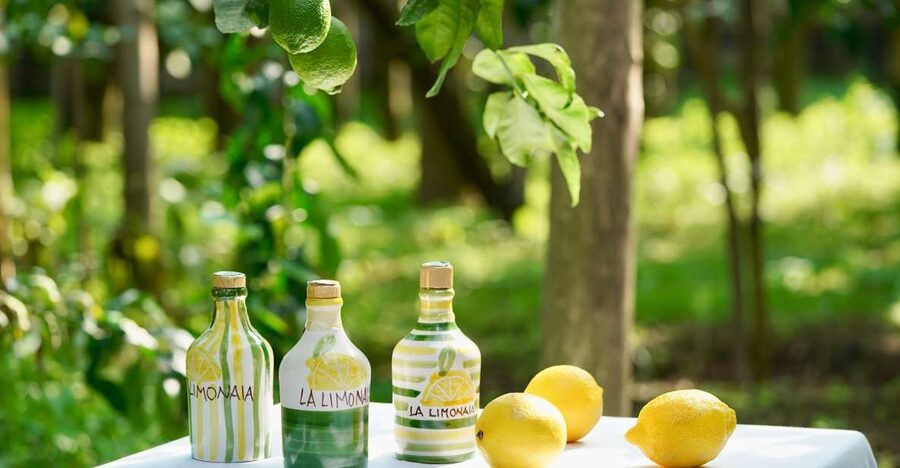
Sorrento’s famous lemon is more than a souvenir-shop logo. At La Limonaia, you see how the oval lemon of Sorrento and Massa Lubrense is grown, protected, harvested, and used in local cooking. The short tour ends with a generous tasting of lemon products, cheese, walnuts, and homemade limoncello.
I like two things right away: the garden is only about five minutes from Sorrento’s train and bus station, and the experience fits neatly into a busy day. I also like the balance between farming, food, and local tradition. The main consideration is its brief length. If you want a full farm visit or a long cooking lesson, this is not that. It is a focused introduction.
In This Review
- Key points at a glance
- Why Sorrento’s lemon deserves a closer look
- Arriving at La Limonaia on Via Bernardino Rota
- Inside the traditional lemon garden
- The tasting: cheese, marmalade, oil, walnuts, and limoncello
- How much time should you set aside?
- The guide and the pace of the visit
- Sun, rain, and what to bring
- Is $53 a fair price?
- Who should book this Sorrento activity?
- Should you book the Sorrento Lemon Tour?
- FAQ
- Where does the Sorrento Lemon Tour meet?
- How long does the lemon garden experience last?
- How far is La Limonaia from Sorrento’s train and bus station?
- Is hotel pickup included?
- What language is the tour conducted in?
- What food and drink are included in the tasting?
- Can I cancel for a full refund?
- Can I reserve now and pay later?
Key points at a glance
- The oval Sorrento lemon: Learn about the local lemon protected by the IGP designation and tied closely to the Sorrentine peninsula.
- A short, useful stop: The visit lasts about 45 minutes to one hour, making it easy to add between sightseeing plans.
- A tasting with local character: Try homemade marmalades with Provolone del Monaco cheese, lemon-flavored oil, Sorrento walnuts, and limoncello.
- A central meeting point: La Limonaia is at Via Bernardino Rota 4, in front of the De La Ville Hotel and close to the station.
- An English-speaking guide: The tour is conducted in English and explains growing, production, history, and kitchen use.
- Good rainy-day flexibility: Umbrellas were provided during one wet visit, though you should still bring a camera and dress for garden conditions.
Why Sorrento’s lemon deserves a closer look
The lemon grown around Sorrento is not simply the same fruit you might find in a supermarket. The tour focuses on the local oval lemon associated with Sorrento and Massa Lubrense, grown on the Sorrentine peninsula and marked with the IGP designation.
That label matters because it links the product to a specific place and set of growing traditions. You get a better sense of why lemons appear on everything in Sorrento, from drinks and sweets to sauces, preserves, oils, and souvenirs.
The garden also gives useful context. Instead of seeing lemon trees only as attractive backdrops, you learn how the fruit is cultivated and produced. The guide explains the growing process, the background of the lemon, and how its role has changed from older local cooking to modern cuisine.
This is a small experience, but the subject is very local. You are not being given a general lesson about citrus farming. The focus stays on the fruit that helps define this part of Campania.
More limoncello and lemon grove visits:
- Sorrento Farm and Food Experience including Olive Oil, Limoncello, Wine tasting
★ 5.0 · 2,524 reviews - Sorrento: Coast and Capri Boat Trip with Limoncello Tasting
★ 4.4 · 2,037 reviews - Sorrento: Pizza Lesson, Wine, and Limoncello at a Local Farm
★ 5.0 · 1,513 reviews
Arriving at La Limonaia on Via Bernardino Rota
You meet at the entrance gate of La Limonaia Garden, at Via Bernardino Rota 4, 80067 Sorrento. The garden is in front of the De La Ville Hotel and roughly five minutes on foot from Sorrento’s train and bus station.
That location is one of the tour’s strongest practical points. If you arrive in Sorrento by train or bus, you can walk over without arranging a taxi. It is also about ten minutes from the main square, according to the timing given by one visitor, so you can fit it around an afternoon coffee, a trip to the station, or a visit to central Sorrento.
Use the exact meeting point when planning your walk. The entrance is at La Limonaia, not at a general meeting spot in the main square. After booking, you receive confirmation by email or WhatsApp, so check your spam folder if the message does not appear quickly.
There is no hotel pickup or transfer. That is not a major problem here, since the garden is central, but it does mean you need to make your own way there. If you are carrying luggage, you should confirm your plans before booking, since the activity is designed as a short local visit rather than a transfer service.
Inside the traditional lemon garden
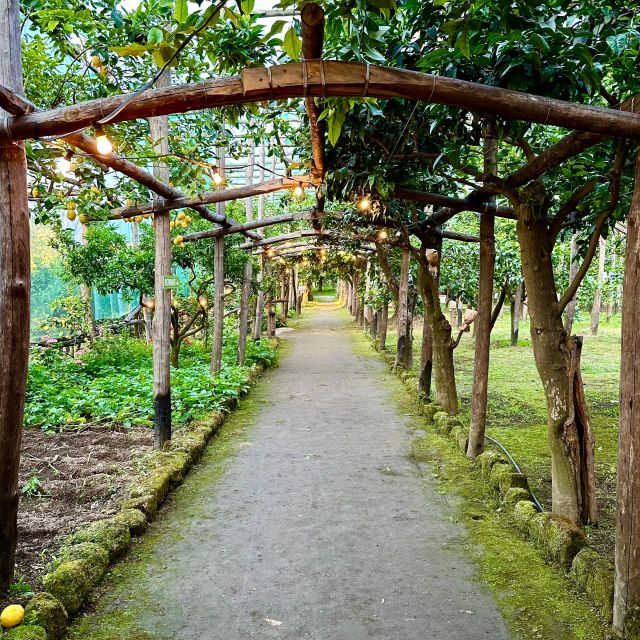
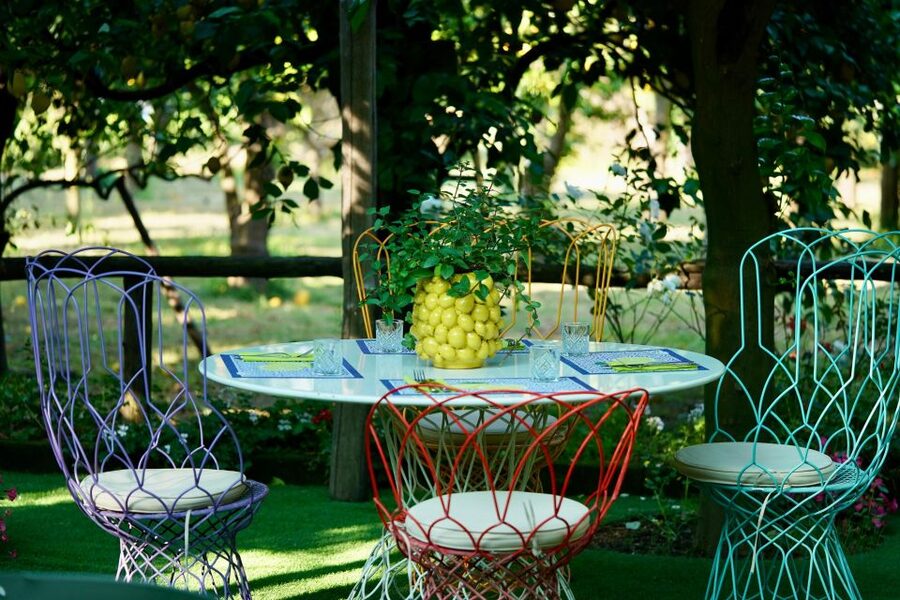
The first part takes place among the lemon trees. The setting is peaceful, with tables under shelter from direct sun, and the garden gives you a pleasant break from Sorrento’s busy streets.
The guide explains the cultivation process and the methods used to grow the lemons. You should expect a narrated walk and demonstration rather than hands-on farm work. The supplied details do not promise that you will plant, pick, or prune a tree, so book this for explanation and tasting, not for a working agricultural session.
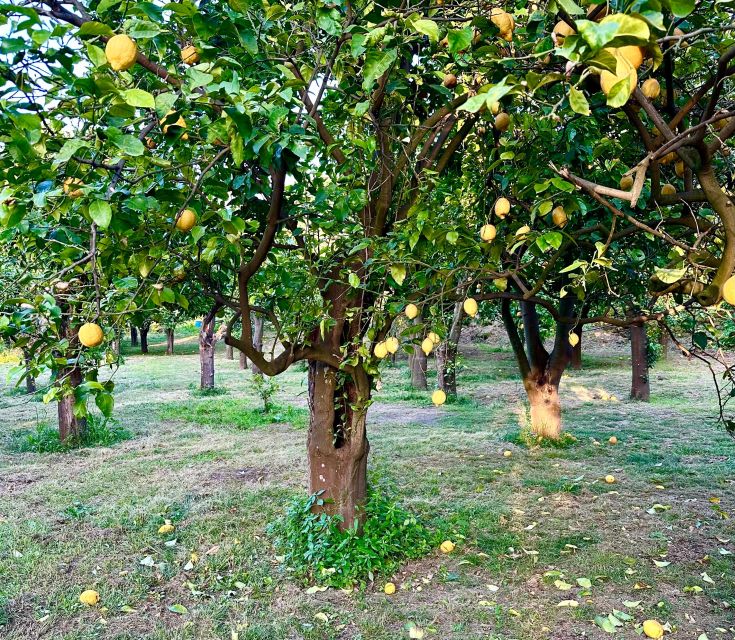
The garden itself is part of the appeal. Lemon groves are closely tied to the identity of the Sorrentine peninsula, and seeing the trees in their growing setting makes the later food tasting easier to understand. You can connect the fruit on the branch with the marmalade, oil, and limoncello on the table.
The guide also covers the lemon’s uses in old and modern cooking. That is useful if you have already noticed lemon in local menus and want to understand how much of the fruit is used. The visit gives the food a local setting instead of presenting the products as isolated items in a shop.
Bring a camera. The garden is one of the most photogenic parts of the experience, though you should remember that this is still a working garden and follow the guide’s instructions about where to walk.
The tasting: cheese, marmalade, oil, walnuts, and limoncello
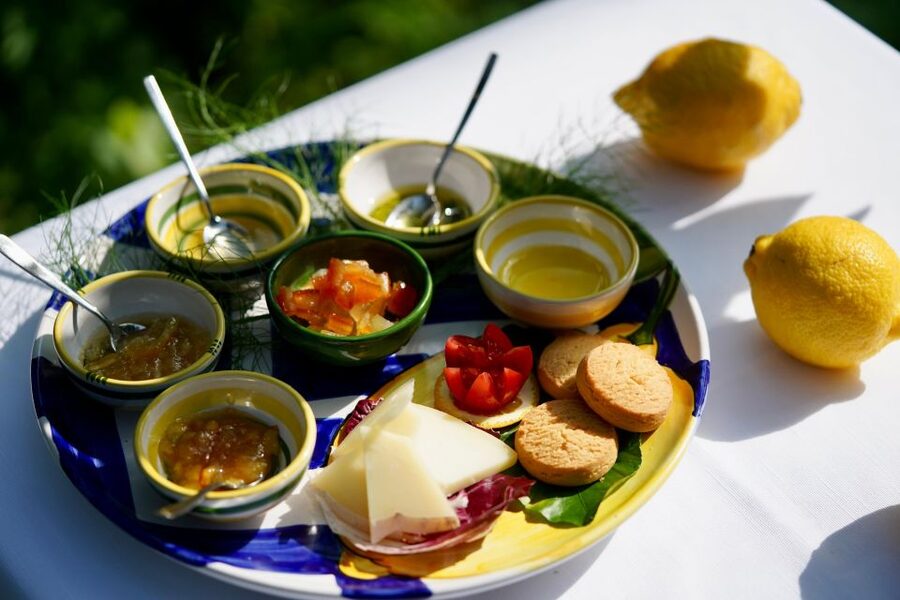
After the garden visit, you sit down for a tasting of local products. This is where the tour earns much of its appeal. The food is not limited to a tiny sip of limoncello and a single sweet. You are offered several products that show different ways the lemon fits into local food.
The tasting includes homemade marmalades served with Provolone del Monaco cheese. This pairing gives you a savory contrast to the lemon preserves. Provolone del Monaco is a Campania specialty, and tasting it with marmalade helps show how local products can work together rather than being sampled one by one.
You also try lemon-flavored oil and Sorrento walnuts. These items broaden the tasting beyond the expected lemon candy and liqueur. The oil points toward cooking, while the walnuts add a different texture and flavor to the plate.
The tasting finishes with a cold glass of homemade limoncello. Limoncello is one of Sorrento’s best-known food products, but tasting it in a lemon garden gives it more context than buying a bottle from a souvenir shop. The tour lets you compare the drink with the fruit and preserves discussed earlier.
Several people found the tasting substantial enough to buy products from the garden’s shop afterward. That can be convenient if you want edible souvenirs, but remember that the included tasting is the main food element. This is not advertised as a full restaurant lunch, even though one visitor described food being served in the garden setting.
If you have food allergies or dietary restrictions, ask before booking or contact the provider. The supplied information does not give an allergy menu or substitutions, so you should not assume every item can be changed.
A completely different way to spend a day in Sorrento:
- Pompeii: Entry Ticket and Guided Tour with an Archaeologist
★ 4.8 · 19,459 reviews - Pompeii: Entry Ticket with Optional Audio Guide
★ 4.2 · 12,360 reviews - Pompeii: Small Group Tour with an Archaeologist
★ 4.8 · 12,264 reviews - Pompeii Small Group Tour with an Archaeologist
★ 5.0 · 6,593 reviews
How much time should you set aside?
The stated duration is 45 minutes to one hour. That makes the activity a good choice for a short gap in your schedule, especially if you are arriving or departing by train or bus.
A visit of this length also keeps the subject from becoming repetitive. You learn the basic growing process, hear about the lemon’s place in local food, and then taste several products. The pace is likely to feel brisk rather than slow and relaxed, particularly if you enjoy asking many questions.
One visitor described it as short and sweet, which is a fair way to frame it. You get a clear introduction without giving up half a day. If you have only one day in Sorrento, that matters. You can still see the old town, shop along the main streets, visit the waterfront, or continue to another Campania destination.
On the other hand, a short visit limits how much detail the guide can cover. Anyone expecting a long agricultural history, a detailed cooking class, or a large working estate should choose a longer food tour instead. This is best treated as a compact cultural stop.
The guide and the pace of the visit
The live guide speaks English and leads both the garden visit and the tasting. The guide explains the lemon’s cultivation, production, background, and kitchen uses, so the experience depends more on clear storytelling than on complex equipment or formal demonstrations.
The supplied comments repeatedly praise the guide’s friendly, clear presentation. One visitor noted that the young woman leading the tour was well rehearsed and pleasant, while others found the explanation easy to follow and enjoyable. No guide names are provided, so I would not book this expecting a particular named host.
If you arrive early, you may be welcomed to sit in the garden café before the tour. One visitor received mint water and was offered a drink while waiting. This is a reported part of the welcome, not a guaranteed feature to rely on, but it suggests that arriving a little early may be comfortable rather than awkward.
The pace should suit most adults and older children who can follow a short explanation. Since the garden path details are not provided, ask the provider directly if you need specific accessibility information. Do not assume that every surface is suitable for wheelchairs or strollers.
Sun, rain, and what to bring
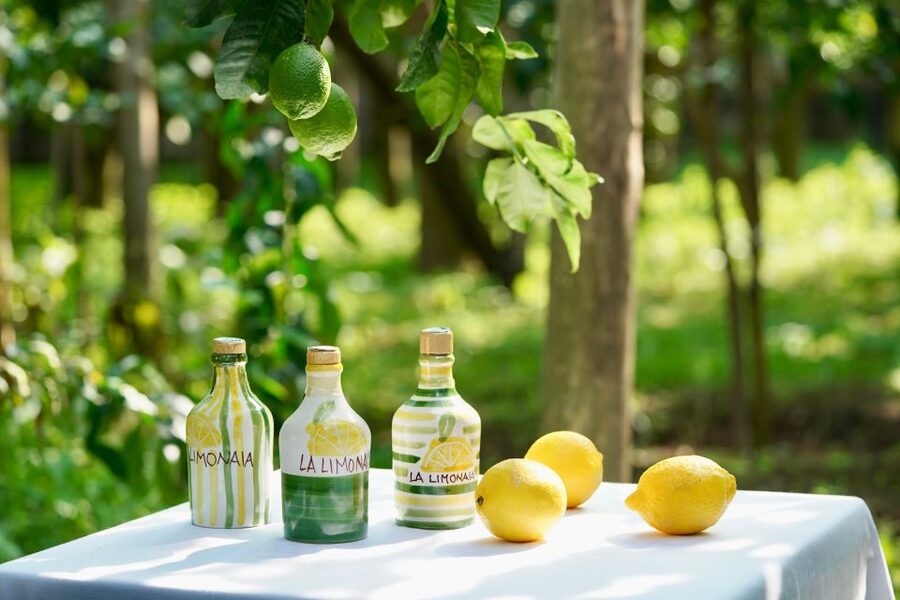
The garden includes tables sheltered from direct sun, which helps during hot afternoons. You may still want a hat, water, and comfortable shoes, though the only item specifically requested is a camera.
Rain does not necessarily end the visit. Umbrellas were provided during one rainy experience, and the garden still made for an enjoyable stop. Even so, weather protection is not listed as a formal inclusion, so bring your own small umbrella or rain jacket if the forecast looks poor.
The short format is helpful in unsettled weather. You are not committed to hours outdoors, and much of the tasting takes place at the garden tables. Still, the exact shelter arrangement and path conditions are not described, so check with the provider if weather is a serious concern.
Is $53 a fair price?
At $53 per person, the tour is not the cheapest way to taste limoncello in Sorrento. You could buy a drink or a jar of marmalade for far less. The price makes more sense when you count the guided explanation, garden access, tasting plate, and the convenience of a central location.
I see the value in the combination. You are paying for a compact local lesson, not just snacks. The guide connects the lemon tree to the food on the table, and you get to sample several products in one sitting.
The value is strongest if you are curious about food traditions or want a gentle activity between larger attractions. It is also useful for a family celebration, as one visitor used it, since the garden setting is calm and the tasting gives everyone something to discuss.
The value is weaker if you do not care about lemon products, avoid cheese or alcohol, or want a long, hands-on activity. Since the tasting includes homemade limoncello, this may not be the right choice for a group seeking only nonalcoholic food. The available information does not specify alternatives.
Free cancellation up to 24 hours before the start and the option to reserve now and pay later reduce the risk of fitting it into a changing schedule. Check the available start times before booking, since the duration and meeting point are fixed but the departure time may vary.
Who should book this Sorrento activity?
I would recommend it to you if you want a short food-and-culture experience close to central Sorrento. It works particularly well for first-time visitors who have seen lemon-themed products everywhere but want to understand the real agricultural tradition behind them.
It is also a good fit for couples, families, and small groups looking for an easy afternoon activity. The tasting adds a social element, and the sheltered garden tables provide a pleasant setting for a birthday or relaxed break.
Train and bus users get extra value from the location. You can walk from the station, complete the visit, and continue your day without arranging transport. The experience also suits people with a tight schedule, since it takes no more than an hour.
I would be more cautious if you want a full meal, a large estate, a cooking lesson, or extensive time among the trees. The tour is concise. Its strength is that it gives you a clear local story and several things to taste without demanding much time.
Should you book the Sorrento Lemon Tour?
Book it if you want to connect Sorrento’s most famous food symbol with the place where it grows. The combination of a traditional garden, an English-speaking guide, and a tasting of marmalade, cheese, lemon oil, walnuts, and limoncello makes the $53 price reasonable for a short cultural stop.
Skip it if you are looking for a long farm visit or a full lunch. For most people with an open hour in Sorrento, though, this is an easy, flavorful way to see a quieter side of the town and take home a better understanding of its lemons.
FAQ
Where does the Sorrento Lemon Tour meet?
The meeting point is by the entrance gate of La Limonaia Garden, Via Bernardino Rota 4, 80067 Sorrento, in front of the De La Ville Hotel.
How long does the lemon garden experience last?
The activity lasts approximately 45 minutes to one hour, including the garden visit and food tasting.
How far is La Limonaia from Sorrento’s train and bus station?
The garden is about a five-minute walk from the train and bus station.
Is hotel pickup included?
No. Hotel pickup and transfers are not included, so you must make your own way to La Limonaia.
What language is the tour conducted in?
The live tour guide speaks English.
What food and drink are included in the tasting?
The tasting includes homemade marmalades, Provolone del Monaco cheese, lemon-flavored oil, Sorrento walnuts, and a cold glass of homemade limoncello.
Can I cancel for a full refund?
Yes. You can cancel up to 24 hours in advance for a full refund.
Can I reserve now and pay later?
Yes. The activity offers a reserve-now, pay-later option, allowing you to book without paying immediately.
Newest reviews from Sorrento
- Private Stress-Free Tour from Sorrento: Ischia Island & Tastings★ 5.0 · 4 reviews
- Tour in the ruins of Pozzuoli with an archaeolgist.★ 5.0 · 4 reviews
- Vico Equense: Authentic Cooking Class at a Local’s Home★ 5.0 · 4 reviews
- Lemon Experience with Limoncello demonstration★ 5.0 · 4 reviews
- Path of the Lemons★ 5.0 · 4 reviews
- Private Tour Pompeii and Winery★ 5.0 · 4 reviews
- Positano Private Tour By Night from Sorrento★ 5.0 · 4 reviews
- Walking Secret Food Tours Sorrento with tastings★ 4.5 · 4 reviews
Limoncello & Lemon Grove Tours, compared.

Sorrento Farm and Food Experience including Olive Oil, Limoncello, Wine tasting
Read our review →
Coast and Capri Boat Trip with Limoncello Tasting
Read our review →
Pizza Lesson, Wine, and Limoncello at a Local Farm
Read our review →
Small Group Capri Island Boat Ride with Swimming and Limoncello
Read our review →
Pizza School with Wine and Limoncello Tasting in a Local Farm
Read our review →
Walking Food Tour in Sorrento w/ Limoncello Factory Lemon Grove
Read our review →
Authentic Farm Tour with Pizza, Cheese, Wine & Limoncello Tasting
Read our review →
Sorrento Farm by Tuk Tuk: Cheese, Limoncello & Hands-On Pizza
Read our review →Browse the lists this tour appears in