
Reviewed · HALF-DAY
From Sorrento: Half-Day Tour of Herculaneum
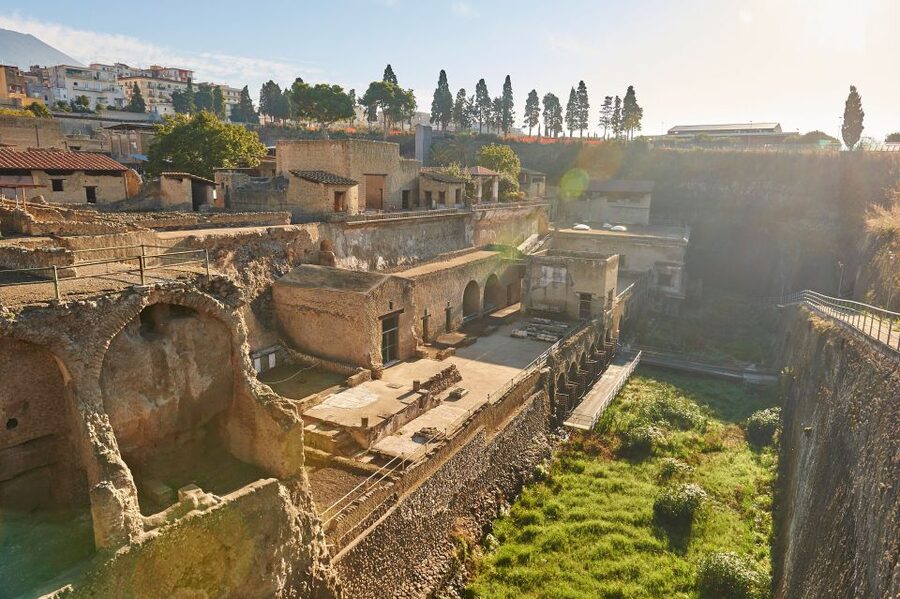
Herculaneum feels less like a pile of ruins and more like a Roman neighborhood interrupted yesterday. Volcanic mud and ash sealed its homes, shops, baths, wooden beams, pots, mosaics, and wall paintings, giving you an unusually clear look at ordinary life in 79 A.D. I especially like the chance to walk along original streets and see the Villa of the Papyri, a wealthy home that hints at the town’s elegant side.
I also like that this four-hour trip removes the hassle of reaching the site from Sorrento, and the English-speaking guides often make the difference. Eugene, Toni, Dana, and Cynthia are among the guides praised for clear explanations and lively storytelling. The main catch is time: the guided visit lasts about an hour, followed by only around 30 minutes to explore alone, and traffic can delay the morning coach.
In This Review
- Key points to know before booking
- Why Herculaneum feels different from Pompeii
- The Sorrento departure and coach journey
- Looking down into an ancient coastal town
- Villa of the Papyri and Herculaneum’s wealthy side
- Frescoes and mosaics in the Central Thermae
- Shops, gymnasium, and ordinary Roman life
- One hour with a guide, then a short independent look
- What the $71 price includes
- Who will get the most from this tour
- My call: book it for an efficient first visit
- FAQ
- Where does the tour meet in Sorrento?
- How long does the experience last?
- Is transportation from Sorrento included?
- Is an English-speaking guide included?
- Is the Herculaneum entrance fee included?
- How much time do I spend inside Herculaneum?
- Is lunch included?
Key points to know before booking
- Original Roman timber still survives: Look for carbonized beams and window frames preserved by the eruption.
- The public baths are a highlight: Frescoes, mosaics, and the layout of the Central Thermae show how Romans spent leisure time.
- The tour starts early: Meet at the Achille Lauro parking area opposite Europa Palace Hotel at 8:10 a.m.
- Transport is part of the value: A coach takes you from Sorrento through Castellammare toward Naples and Herculaneum.
- The site visit is compact: Expect about one hour with the guide and roughly 30 minutes for your own look around.
- Traffic is the main practical risk: The route can run late, especially on busy days.
Why Herculaneum feels different from Pompeii
Most people first hear about Pompeii, but Herculaneum offers a different kind of Roman experience. Pompeii was a larger city with broad streets and an extensive ruin field. Herculaneum was a coastal residential town, and its smaller scale lets you focus on houses, shops, public baths, and the details of home life.
The eruption did not preserve the two towns in exactly the same way. Herculaneum was covered by thick volcanic mud and ash, which hardened around buildings and sealed away organic material. That is why you can still see original wooden beams, window frames, and clay pots in some buildings.
As you walk, look up and around rather than focusing only on the pavement. A mosaic floor is wonderful, but a blackened timber beam or a storage pot left in place can tell you just as much. These small details make the ancient town easier to picture as a functioning community rather than a collection of broken walls.
Skeletons are also present at Herculaneum, although it is believed that many residents escaped before the town was overwhelmed. That adds a sobering note to the visit. The site is not only beautiful and remarkably preserved; it also records a disaster that unfolded with frightening speed.
More Herculaneum excavation visits:
- Pompeii and Herculaneum Small Group Tour with an Archaeologist
★ 5.0 · 1,350 reviews - Pompeii: Small-Group Tour of Pompeii and Herculaneum
★ 4.8 · 867 reviews - Ercolano: Herculaneum Entry Ticket with Optional Audio Guide
★ 4.1 · 581 reviews
The Sorrento departure and coach journey
Your morning begins at 8:10 a.m. at the Achille Lauro parking area, opposite the Europa Palace Hotel in Sorrento. Arrive early. The departure point is specific, and a relaxed Sorrento morning is not the right time to test your sense of direction.
The coach travels toward Castellammare, joins the motorway, and continues toward Naples before reaching Herculaneum. Headsets are handed out during the journey, so you can listen to information from the guide while riding.
The coach is a useful part of the tour, particularly if you want to avoid dealing with the local railway system. You have one organized departure, a guide waiting at the archaeological site, and transport back to Sorrento. For a half-day outing, that simplicity has real value.
The weak point is traffic. The road around Naples and the Bay of Naples can be slow, and a 30-minute delay has occurred on some departures. That matters because the archaeological visit is already tightly timed. If you have an important afternoon reservation or a flight soon after the tour, allow plenty of extra time.
Looking down into an ancient coastal town
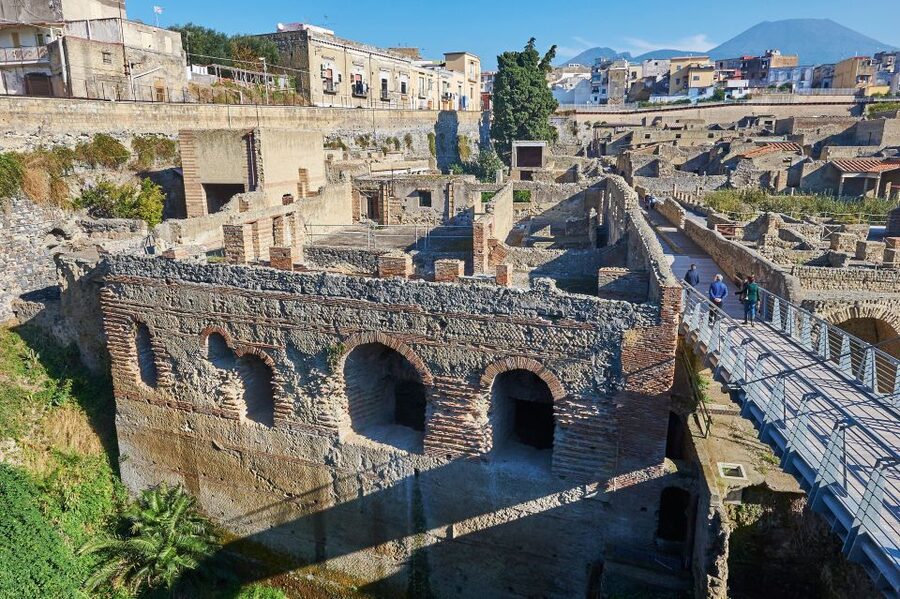
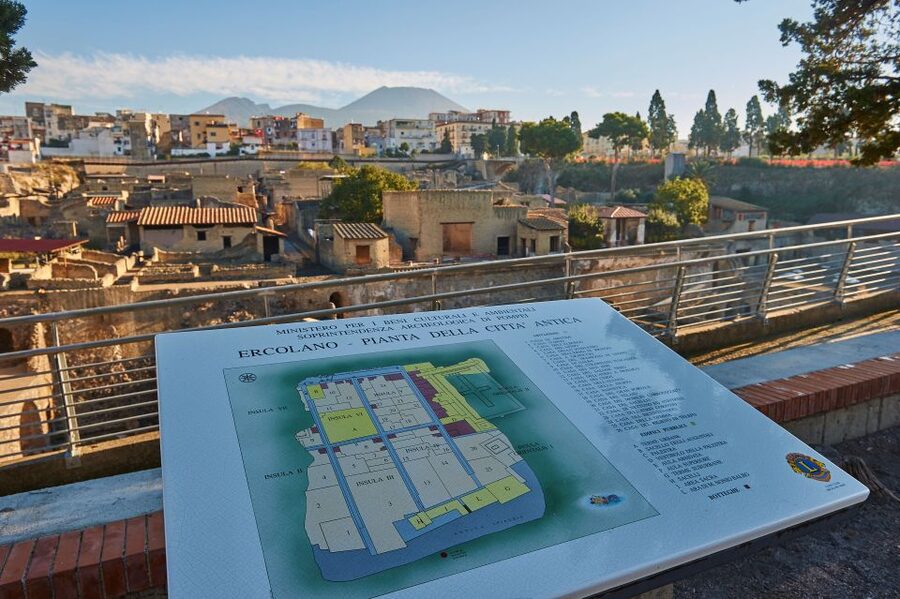
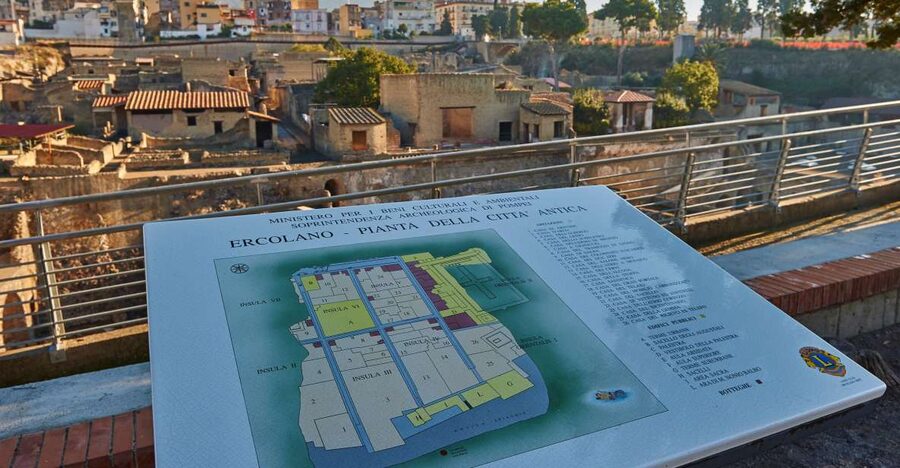
At Herculaneum, you first view the town from above before descending into the archaeological area. That first look helps you understand the site’s layout. From the upper level, the excavated streets and building remains form a compact picture of a town hidden below the modern settlement.
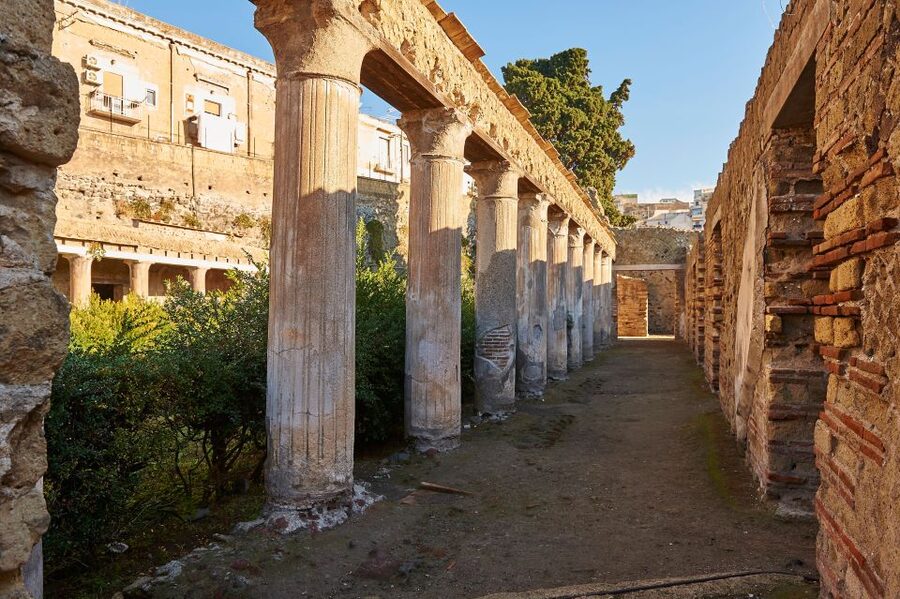
Then the route takes you down into the former streets. The paving stones, walls, doorways, and building plans give the visit a strong sense of place. You are not simply looking at isolated columns. You are moving through the same basic street pattern used by Roman residents more than 2,000 years ago.
The guide leads the main walk for about an hour. That is enough time to cover important sections, but not enough to examine every building at a slow pace. Stay close, keep your headset working, and save questions for natural pauses. The headsets have occasionally lost connection, so tell the guide promptly if you can no longer hear.
The pace is generally steady rather than exhausting, but summer heat can make the exposed streets feel demanding. Bring water, wear comfortable shoes, and use sun protection. The site’s compact size helps, yet the stone surfaces and heat still call for sensible preparation.
Villa of the Papyri and Herculaneum’s wealthy side
The Villa of the Papyri is one of the major stops. This large, luxurious residence shows that Herculaneum was not only a town of modest homes and working shops. Wealthy residents built grand houses with art and carefully designed spaces for private life.
The name points to the papyri discovered there, but the building itself is the attraction you experience on this tour. Its size and decoration help you picture the social gap between an elegant Roman household and the smaller homes nearby.
Do not expect the villa to feel like a complete, furnished house. It remains an archaeological site, with parts open for viewing and other sections still connected to ongoing study. That unfinished quality is part of the experience. Herculaneum continues to be excavated, and what you see is one chapter in a much longer process of research and conservation.
More Sorrento tours worth comparing
- Pompeii Ruins Half-Day Tour from Sorrento with Guide
★ 4.0 · 714 reviews - From Naples: All-Inclusive Mount Vesuvius Half-Day Tour
★ 4.2 · 674 reviews - From Sorrento: Pompeii Half-Day Skip-the-Line Tour
★ 4.6 · 541 reviews - Skip-the-Line Half-Day Private Tour Ancient Pompeii Highlights with Native Guide
★ 5.0 · 146 reviews
Frescoes and mosaics in the Central Thermae
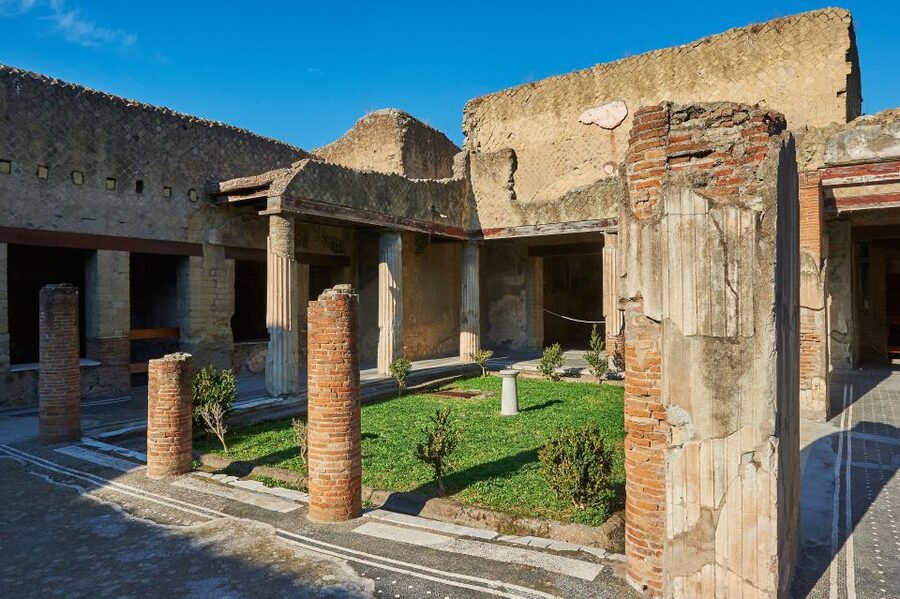
The Central Thermae, or public baths, offer one of the clearest windows into Roman leisure. These were not simply functional washing rooms. The decoration, layout, and surviving surfaces show the care given to public spaces.
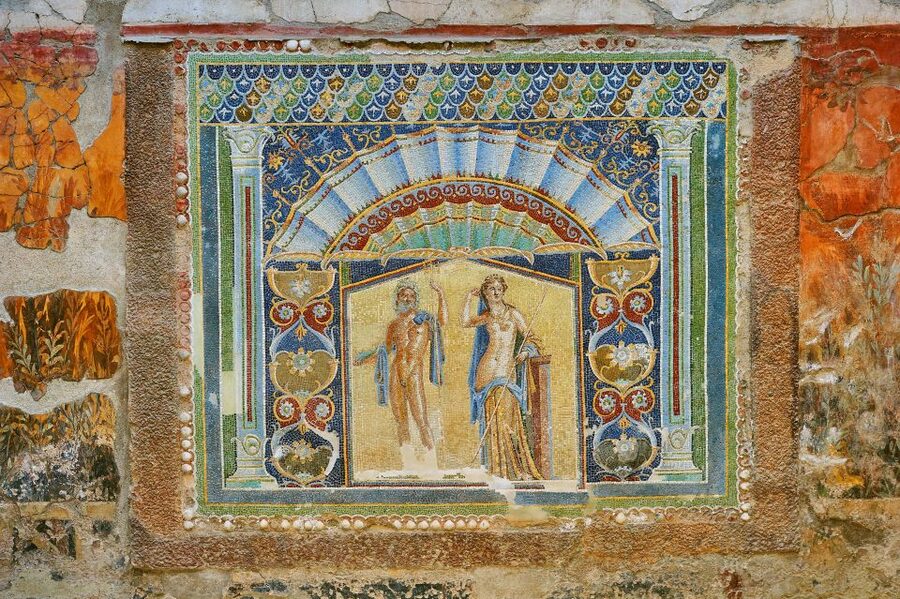
Your guide points out the frescoes lining the walls and the mosaics underfoot. These designs are valuable not only because they are attractive, but because they show how color and pattern shaped Roman interiors. A ruined town can seem plain from a distance. Inside the baths, the painted walls and tiled floors restore some of the visual energy that time has taken away elsewhere.
The baths also help explain daily routine. Public facilities gave residents a place to wash, socialize, and spend time outside their homes. Once you understand that, the building stops being just another ruin and becomes part of the town’s social life.
The Central Thermae can be busy, and the guided schedule may not allow long pauses in each room. If a particular mosaic catches your eye, remember its location and return during your independent time if the route permits.
Shops, gymnasium, and ordinary Roman life
The tour also includes shops, the gymnasium, and other buildings that fill out the picture of Herculaneum. These areas matter because they connect the grand houses and public baths to everyday work and exercise.
Clay pots remain stored much as they were at the time of the eruption. Details like these are easy to overlook if you rush from one major building to the next, so listen when the guide shifts from architecture to household objects. A pot in place can reveal more about routine than a collapsed wall.
The gymnasium gives another glimpse of organized public life. The shops show how commerce fitted into the street plan. Together, these stops make Herculaneum feel lived in. You can imagine people moving between home, work, exercise, and the baths, even though the town itself has been silent for centuries.
This is where a good guide earns the tour fee. Eugene has been praised for friendly storytelling and clear English, while Toni was noted for passion and strong explanations. Dana and Cynthia have also been singled out for making the history easy to follow and for helping guests feel comfortable. Guide quality can vary from departure to departure, but the strongest guides connect each building to a human activity.
One hour with a guide, then a short independent look
The guided portion lasts about an hour. That format works well if you want an organized introduction and prefer not to spend your visit trying to decode a map or identify every building on your own.
You will hear explanations about Roman daily life, the eruption, the preservation process, and the purpose of the buildings. The guided route also keeps the visit moving, which is useful in hot weather and during crowded periods.
The tradeoff is limited free time. Around 30 minutes is generally available at the end for independent exploration. That is enough to revisit a nearby building or take a few additional photographs, but it is not enough for a full second tour of the site.
If you want to study inscriptions, linger over every mosaic, or see areas not included in the main route, this may feel rushed. One practical option is to decide before arrival which kind of independent time matters most to you. You might return to the baths, seek out a particular house, or simply walk one more street at your own pace.
The site is manageable in size, which helps. You are not facing the huge scale of a full-day archaeological park. Still, the short visit means this tour works best as an introduction rather than a complete archaeological study.
What the $71 price includes
At $71 per person, this is not the cheapest way to see Herculaneum. The price includes bus service, an English-speaking guide, and entrance to the archaeological site. It also saves you the time and uncertainty of arranging transport from Sorrento.
The listed site admission is €11 for general entry, with children under 18 and adults over 65 admitted free. The tour information says the entrance fee is included, although it also describes the guide waiting while entrance payments are handled at the site. Confirm the current arrangements when booking, especially if you qualify for free admission.
I think the price is fair if you place a high value on transport and interpretation. Herculaneum is not difficult to visit in principle, but the journey from Sorrento involves regional transport, connections, and the risk of losing time to traffic or confusing stations. Here, the coach and guide turn the visit into a simple half-day plan.
The value is weaker if you already know the site well or want several hours for independent study. In that case, paying for an organized half-day trip may feel restrictive. For a first visit, though, the combination of transport, admission, and context is useful.
The experience offers free cancellation up to 24 hours before departure, and you can reserve now while paying later. Those terms provide some flexibility, but the exact starting time should still be checked before booking.
Who will get the most from this tour
I would choose this tour if you are staying in Sorrento and want to see Herculaneum without spending a full day on the outing. It suits first-time visitors, families with older children, and anyone who prefers a guide to explain what they are seeing.
It is also a good match if you want to avoid the local railway system. The coach takes care of the main journey, while the guide gives you a clear route once you arrive.
You should think twice if your main goal is photography, detailed study, or a slow archaeological visit. The one-hour guided walk and short independent period leave limited room for lingering. A later return visit would suit you better if Herculaneum is one of the main reasons for your trip.
The tour is conducted in English. Because the site can be hot and the streets are paved with ancient stone, comfortable footwear and water are sensible choices. The experience is not presented as a lunch outing, and lunch is not included, so plan your meal around the half-day schedule.
My call: book it for an efficient first visit
Book this Herculaneum tour if you want a well-organized introduction from Sorrento, especially if you value an English-speaking guide and included transport. The preserved timber, decorated baths, clay pots, and Roman street plan make this a powerful visit in only a few hours.
The best reason to go is the site itself. The best reason to choose this format is convenience. Just accept that traffic may delay the coach and that the guided visit will not give you time to see every corner.
For a first look at one of the most complete surviving Roman residential towns, the balance is good. If you already have a strong interest in archaeology, choose a longer visit or return independently later. If your schedule is tight and you want the key sights explained clearly, this half-day trip is a sensible choice.
FAQ
Where does the tour meet in Sorrento?
Meet at 8:10 a.m. at the Achille Lauro parking area, opposite the Europa Palace Hotel.
How long does the experience last?
The total duration is four hours.
Is transportation from Sorrento included?
Yes. Bus service from Sorrento to Herculaneum and back is included.
Is an English-speaking guide included?
Yes. The tour includes a live English-speaking guide, and headsets are provided during the coach journey.
Is the Herculaneum entrance fee included?
The tour information lists the entrance fee as included. It also states that general admission is €11, while children under 18 and adults over 65 are free.
How much time do I spend inside Herculaneum?
The guided tour lasts about one hour, followed by approximately 30 minutes for independent exploration.
Is lunch included?
No. Lunch is not included in the tour price.
Newest reviews from Sorrento
- Vico Equense: Authentic Cooking Class at a Local’s Home★ 5.0 · 4 reviews
- Private Stress-Free Tour from Sorrento: Ischia Island & Tastings★ 5.0 · 4 reviews
- Tour in the ruins of Pozzuoli with an archaeolgist.★ 5.0 · 4 reviews
- Lemon Experience with Limoncello demonstration★ 5.0 · 4 reviews
- Path of the Lemons★ 5.0 · 4 reviews
- Private Tour Pompeii and Winery★ 5.0 · 4 reviews
- Positano Private Tour By Night from Sorrento★ 5.0 · 4 reviews
- Walking Secret Food Tours Sorrento with tastings★ 4.5 · 4 reviews
Half-Day, compared.
Pompeii Ruins Half-Day Tour from Sorrento with Guide
Read our review →
Skip-the-Line Half-Day Private Tour Ancient Pompeii Highlights with Native Guide
Read our review →
Half-Day Small Group Trip to Capri & Blue Grotto from Sorrento
Read our review →
Half-Day Exclusive Private Tour of Pompeii and Herculaneum
Read our review →Browse the lists this tour appears in