
Reviewed · WORKSHOPS
Private Ceramic Workshop in Vietri Sul Mare
Vietri sul Mare is famous for ceramics, and this small workshop lets you get your hands into the same basic material used by local artists. In about three hours, Elvira guides you through hand modeling, the pottery wheel, glazing and painting, with a little background on Vietri’s ceramic tradition along the way.
I like the class’s variety, and I like its small size, with no more than six people. You get to make a small animal, try the Colombino coil method, shape a piece on the wheel and decorate ceramic. The main catch is important: you do not leave with finished pottery that day. Clay needs time to dry and fire, and shipping can take much longer.
In This Review
- Key points at a glance
- Why a ceramic class fits Vietri sul Mare
- Meeting Elvira at Pulcinella Sciòroom
- First hour: shaping clay by hand
- The pottery wheel is harder than it looks
- Glazing and painting bring in Vietri color
- What you take home, and when
- How much value do you get for $82.90?
- Practical tips for a cleaner, easier class
- Who will enjoy this most?
- Should you book the Vietri ceramic workshop?
- FAQ
- Where does the ceramic workshop begin?
- Where does the activity end?
- What time does the workshop start?
- How long does the class last?
- How much does the experience cost?
- Is the workshop offered in English?
- How many people can join?
- Can I take my pottery home at the end?
- Can finished pottery be shipped?
- Can I cancel for a refund?
Key points at a glance
- Four ceramic methods in three hours: Try hand modeling, coils, wheel throwing, glazing and painted decoration.
- Elvira teaches in English and Italian: Her patient, encouraging approach suits complete beginners and families.
- Small groups matter: The workshop accepts a maximum of six people, so you should receive direct help.
- A real Vietri setting: The class takes place at Pulcinella Sciòroom on Corso Umberto I in Vietri sul Mare.
- Your work needs patience: Pieces must dry and be fired after the class. You may need to arrange postage.
- Bring practical clothes: Clay gets under your fingernails, and jewelry is best left behind.
Why a ceramic class fits Vietri sul Mare
Vietri sul Mare is not just a convenient stop on the Amalfi Coast. Ceramics are part of the town’s identity, from painted tiles to decorative plates and brightly colored objects sold in local shops.
A workshop gives you a better sense of how much work sits behind those finished pieces. A painted tile may look simple on a shop wall, but the process involves shaping, drying, firing, glazing and careful decoration. In this class, you get a short introduction to nearly every stage.
I like that the experience is not limited to painting a prepared souvenir. You work with raw clay, test the wheel and handle glaze. That makes the class more useful for someone who wants to understand the craft, not just buy something pretty.
The pace also suits a holiday. Three hours is long enough to try several methods, but short enough to fit into a day in Vietri. The class begins at 10:30 a.m. and returns to the same meeting point, leaving the rest of your day open.
More Vietri, Minori and Maiori trips:
- Private Lesson on the Ceramic Tradition in Vietri sul Mare
★ 5.0 · 66 reviews - Walking Tour Vietri Sul Mare: ceramics town on the Amalfi Coast
★ 5.0 · 23 reviews - Share your Pasta Love: Small group Pasta and Tiramisu class in Vietri sul mare
★ 5.0 · 16 reviews
Meeting Elvira at Pulcinella Sciòroom
The workshop begins at Pulcinella Sciòroom, Corso Umberto I, 102, in Vietri sul Mare. The activity ends back there, so you do not need to arrange a second pickup point.
The class is offered in English, and Elvira also speaks Italian. Her teaching style is especially suited to first-timers. You should expect clear demonstrations, repeated help and encouragement when your clay refuses to behave. That last part is useful because clay has a habit of collapsing just when you think you have it under control.
The group limit is six people. This is one of the strongest practical features of the experience. Pottery takes hands-on correction, especially at the wheel, and a large class would make that harder. With a small group, you have a better chance of getting individual help with pressure, shape and balance.
The format can also work well for families. Children as young as nine have taken part alongside older teenagers, and the teaching approach has been described as patient with mixed ages and ability levels. Still, this is a creative workshop rather than a sightseeing tour, so very young children may need regular adult help.
First hour: shaping clay by hand
The class usually begins with simple hand modeling. You may form a small animal or another basic object, learning how clay feels and how much pressure it can take.
This is the least technical part of the workshop, but it gives you a useful start. You learn to join pieces, smooth surfaces and keep the shape from becoming too thin. The examples used in past classes have included fish, seahorses, giraffes, dinosaurs and dragonflies.
The animal exercise is a good choice for beginners because it does not demand perfect symmetry. You can make something playful and personal without worrying about producing a professional bowl. If your family is taking part, it also gives each person a clear project.
You may also try the Colombino technique, known in English as the coil method. This means building an object from rolled lengths of clay, adding them layer by layer. It is an old, direct way to build pottery, and it helps you see how vessels can be formed without a wheel.
The hand-building section is also where you can test your own ideas. Past participants have made bowls, plates and small figures. Elvira offers suggestions on how to turn a rough idea into something the clay can support.
The pottery wheel is harder than it looks
Next comes the pottery wheel. This is often the most entertaining part of the class, partly because it looks easy when an experienced artist does it.
Elvira can demonstrate how to center the clay and draw it upward into a small vase or vessel. Then you take your turn. You will likely need patience. Too much pressure can flatten the form, while too little control can send it wobbling off center.
That difficulty is part of the value. You are not being sold the idea that three hours will turn you into a potter. Instead, you get a short, honest taste of the skill involved. Even a basic vase requires control, timing and a steady touch.
The wheel also gives the class a good rhythm. You watch a demonstration, try it yourself, receive help and try again. The hands-on format keeps the session active, and the time tends to pass quickly because each stage feels different.
Do not judge the class by the shape of your first attempt. The point is not to produce a flawless vessel. The point is to understand the movement of the clay and appreciate what skilled ceramic artists do every day.
More Salerno tours worth comparing
- Handmade pasta workshop by Cilento Experience
★ 5.0 · 18 reviews - Cooking Class Plus Wine Tasting Experience
★ 5.0 · 15 reviews - Salerno: Private Cooking Class at a Local’s Home
★ 4.9 · 12 reviews - Private Cooking Class at a Cesarina’s Home in Salerno
★ 5.0 · 11 reviews
Glazing and painting bring in Vietri color
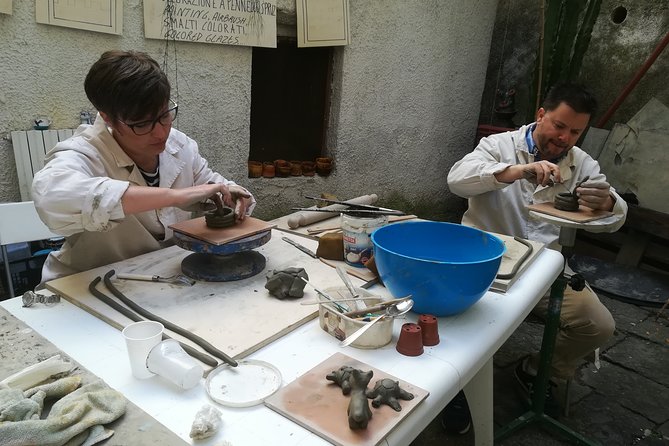
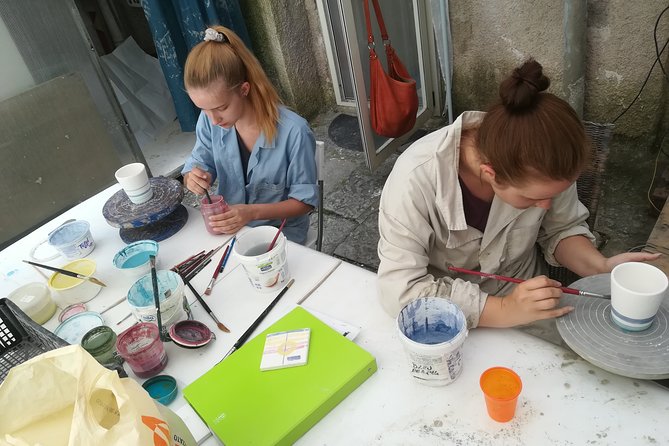
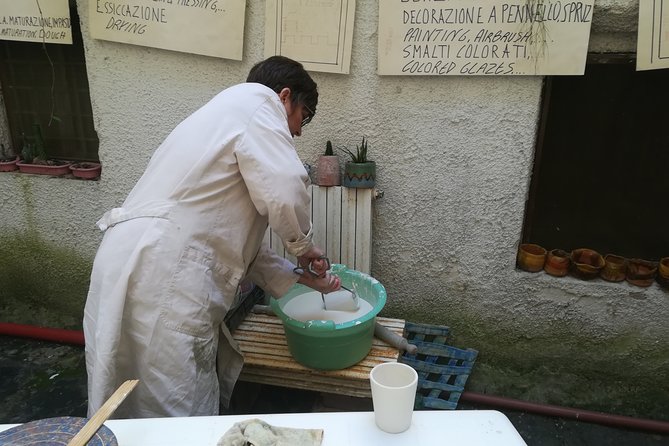
The final part covers glazing and decoration. You may glaze an object using the immersion method, where the piece is dipped into glaze. This is a different skill from painting and gives you a look at how a smooth colored surface is created.
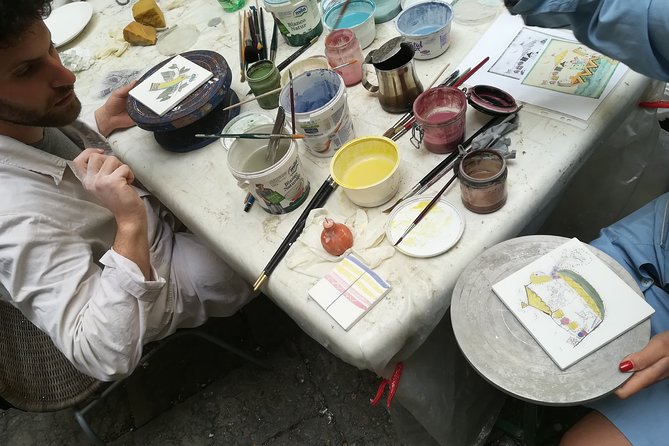
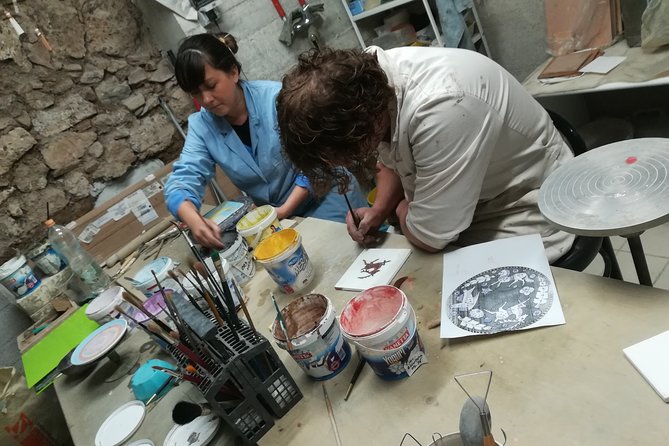
You also decorate a tile. The available choices include geometric, fantasy or naturalistic designs. This gives you more control over the final appearance and connects the activity with the decorative ceramic style associated with Vietri.
The painting stage may involve decorating a finished pot made by another student or working on an item prepared during the class. The exact order can vary, but the purpose is the same: you get to see how raw clay becomes a designed ceramic object.
I like this broad approach because no single technique carries the whole experience. You can discover that you prefer hand building to the wheel, or painting to shaping. If you have always wanted to try pottery but do not know which part interests you, this is a sensible introduction.
Elvira also explains aspects of ceramic production and local pottery tradition during the session. That background helps you look at Vietri’s ceramic shops with a more informed eye later in the day.
What you take home, and when
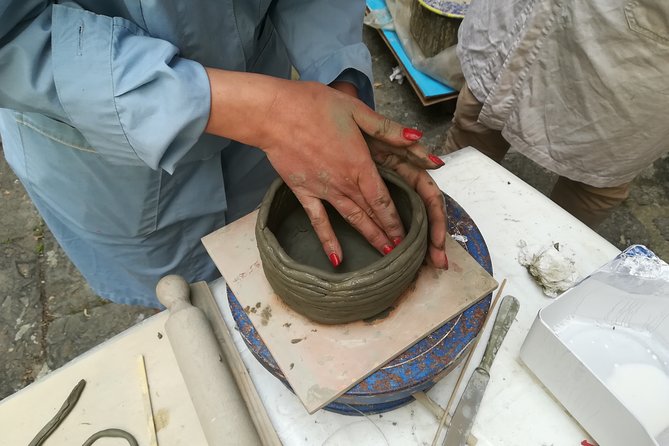
This is the detail you should understand before booking. You cannot take your finished clay pieces with you at the end of the three hours.
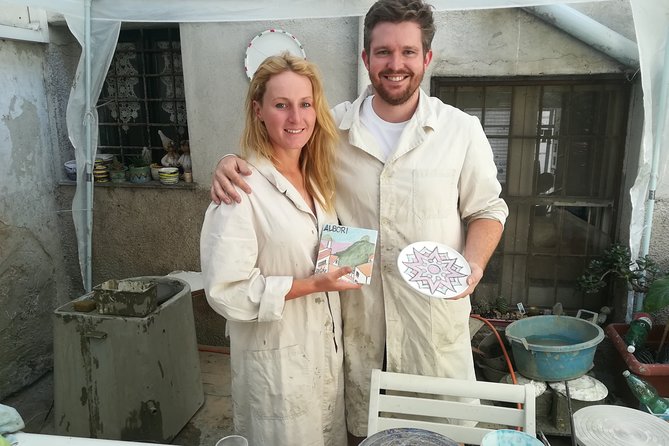
Natural drying takes about two weeks, followed by firing. Some pieces may then need additional finishing. Shipping is possible, but the timing can vary. One arrangement involved postage back to the United Kingdom, while other participants had pieces sent to Ireland or the United States. One particularly important warning is that shipping may take two to three months.
The exact delivery process and cost are not provided here, so ask Elvira about both before you begin if receiving your work matters to you. You may also want to confirm which objects will be fired and which will be painted or glazed.
This is the biggest weakness of the experience. If you want a physical souvenir in your suitcase that evening, book a shop visit instead. If you are comfortable waiting for a handmade piece to arrive later, the delay is part of the ceramic process.
There is also a nice upside to waiting. Your finished object will have gone through more stages than a quick tourist craft. You made it, and then it still needs time and heat before it becomes durable pottery.
How much value do you get for $82.90?
At $82.90 per person, this is not a bargain basement craft lesson. The value depends on how much you want from the class.
You are paying for roughly three hours of instruction, a small group, several techniques and an English-language guide. The class is not just a single wheel demonstration or a short painting stop. It gives you a broad look at clay work, including hand building, coils, wheel throwing, glazing and decoration.
For someone already interested in ceramics, the price is easier to justify because you get time to test several methods. For a family or couple looking for a shared activity in Vietri, the personal instruction and small group may also make the cost worthwhile.
Group discounts are available, which may help if you are booking for several people. Since the maximum group size is six, you should not expect a crowded production line.
The value drops if your main goal is a guaranteed finished souvenir. The work must be dried and fired, and shipping may add cost and delay. Think of this primarily as an art lesson with the possibility of receiving your finished pieces later, not as a same-day souvenir purchase.
Practical tips for a cleaner, easier class
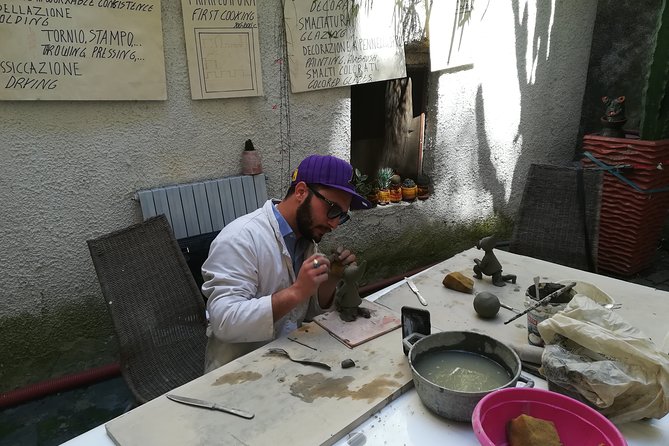
Wear clothes and shoes that can handle clay. Your hands will get messy, and clay can reach places you did not expect. Leave jewelry at your accommodation, especially rings and bracelets. A practical review of the class gave exactly this warning, and it is good advice.
The workshop may take place outdoors or in a small garden area connected with the studio. That can make the setting pleasant, but summer heat matters. One August session was described as very hot, so bring water and dress for the conditions.
Refreshments are a point worth clarifying. Water and coffee may be offered, but this should not be treated as a guaranteed part of the experience. If you are visiting in hot weather, arrive hydrated and bring water if needed.
The workshop is near public transportation, and most people can participate. Service animals are allowed. Confirmation is provided at booking, and the activity is available by mobile ticket.
Cancellation is flexible up to 24 hours before the 10:30 a.m. start time. Cancel at least 24 hours ahead for a full refund. Changes or cancellations made inside that window are not accepted.
Who will enjoy this most?
I would choose this class for first-time potters, couples, families with older children and anyone who wants a more local activity than another coastal viewpoint.
It is especially good for people who enjoy learning by doing. You will not spend three hours watching an artist work. You will handle clay, make mistakes, try again and leave with a better understanding of ceramic production.
Families can benefit from the range of tasks. A child who dislikes detailed painting may prefer forming an animal, while an adult may want more time at the wheel. Teenagers can take the work seriously without the session feeling stiff.
It is also a good option on a hot or less suitable sightseeing day, provided you are prepared for the possibility of an outdoor setting. The class gives you a slower, seated activity and a chance to focus on one place.
I would think twice if you need a polished souvenir immediately, dislike messy work or want a tightly scripted sightseeing program. The class is hands-on and forgiving, but not perfectly predictable. Clay does what it wants.
Should you book the Vietri ceramic workshop?
Book it if you want to understand why Vietri’s ceramics matter and you like the idea of making, rather than simply buying, a souvenir. Elvira’s patient instruction, the six-person limit and the mix of techniques make this a strong introduction for beginners.
Before paying, make sure you are comfortable waiting for your work to dry and fire. Ask about postage, timing and the pieces included in the firing process. Bring water in summer, wear old clothes and skip the jewelry.
At $82.90, the class earns its price through variety and personal guidance. It is not the right pick for a guaranteed object in hand by lunchtime. For a creative three hours in Vietri, though, it offers a memorable way to connect with the town’s ceramic craft.
FAQ
Where does the ceramic workshop begin?
The workshop begins at Pulcinella Sciòroom, Corso Umberto I, 102, 84019 Vietri sul Mare, Salerno, Italy.
Where does the activity end?
The activity ends back at the same meeting point, Pulcinella Sciòroom.
What time does the workshop start?
The start time is 10:30 a.m.
How long does the class last?
The workshop lasts approximately three hours.
How much does the experience cost?
The listed price is $82.90 per person.
Is the workshop offered in English?
Yes. The experience is offered in English, and Elvira also speaks Italian.
How many people can join?
The activity has a maximum of six participants.
Can I take my pottery home at the end?
No. The pieces need time to dry and be fired, so they are not ready to take away at the end of the workshop.
Can finished pottery be shipped?
Shipping can be arranged, but the supplied information does not state a fixed price or delivery time. One arrangement took two to three months, so ask about the details before booking.
Can I cancel for a refund?
Yes. You can cancel at least 24 hours before the local start time for a full refund. Cancellations or changes made less than 24 hours before the start are not refunded or accepted.
Newest reviews from Salerno
- Visit the Pompeii ruins from Salerno with Pizza Lunch★ 5.0 · 4 reviews
- Amalfi coast tour with skipper from Salerno to Positano★ 4.8 · 4 reviews
- Tours on the Amalfi Coast★ 5.0 · 4 reviews
- Capri Boat Tour for Small Groups★ 5.0 · 4 reviews
- Small Group Market tour&Dining Experience at Cesarina’s home in Vietri sul Mare★ 5.0 · 4 reviews
- Tresino Hike – Cilento National Park coast★ 5.0 · 5 reviews
- Private transfer from Salerno to Amalfi★ 4.5 · 5 reviews
- Amalfi Drive from Salerno★ 5.0 · 5 reviews
Workshops, compared.
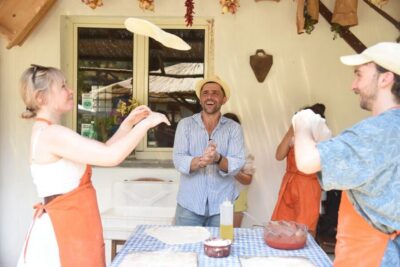
Pizza Lesson, Wine, and Limoncello at a Local Farm
Read our review →
Hands-On Cooking Class & Farmhouse Tour on the Amalfi Coast
Read our review →
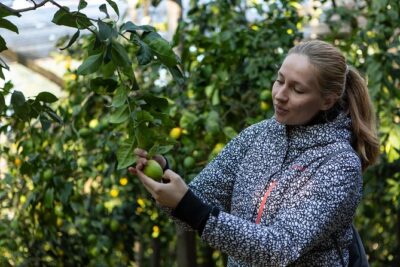
Sorrento Farm by Tuk Tuk: Cheese, Limoncello & Hands-On Pizza
Read our review →
Cooking class with Pasta, mozzarella and Tiramisu with wine
Read our review →
Toss, Bake, Cheers! – Sorrento Pizza Making Class with Wine
Read our review →Browse the lists this tour appears in