
Reviewed · MUSEUMS
Paestum: Private Tour of Greek Temples and Archaeological Museum
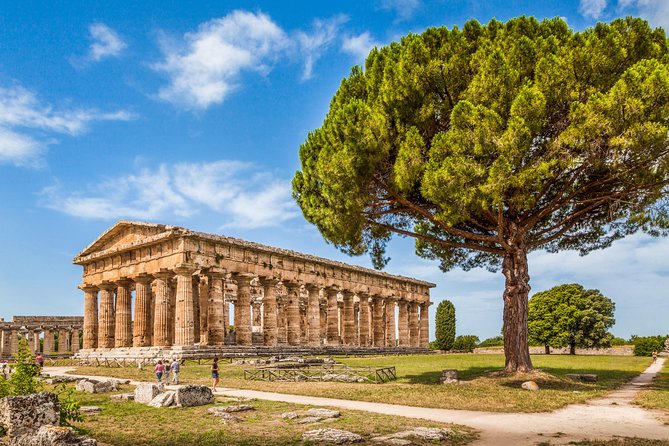
Paestum gives you something rare in Italy: massive Greek temples in an open archaeological park, with enough space to study their columns and proportions without the crush found at better-known ancient sites. This two-hour private tour pairs the ruins with the National Archaeological Museum, where the famous Tomb of the Diver frescoes add a more personal side to the ancient city.
I like the private format, since your guide can adjust the pace and explain details at a level that suits your group. I also like the guides’ clear enthusiasm. Maria, Mario, Ivan, Carmen, Silvia, and Sergio have each been praised for bringing the stones, myths, and Greek and Roman periods to life in plain English.
The main drawback is simple: transportation is not included. You must reach the meeting point on Via Magna Graecia in Santa Venere, near Paestum, and return there afterward. Two hours is enough for an effective introduction, but not for a leisurely archaeological study.
In This Review
- Key points to know before booking
- Why Paestum is worth the trip from Salerno
- Walking the Archaeological Park in about 30 minutes
- Temple of Hera II and the old Poseidon mistake
- Temple of Athena and the nearby Basilica
- The National Archaeological Museum and the Tomb of the Diver
- What the private format really gives you
- Timing, meeting point, and lunch plans
- Who will get the most from this tour
- The guide can change the quality of the visit
- Should you book the Paestum private tour?
- FAQ
- How long does the Paestum private tour last?
- What sites are included?
- Is admission included?
- Is transportation included?
- Where does the tour start and end?
- Is the tour private?
- What language is offered?
- Can I cancel for a full refund?
Key points to know before booking
- See two major Greek temples and the Temple of Athena: The park covers the core sights in a compact walking visit.
- Study the Tomb of the Diver frescoes: The museum adds artwork and funerary objects that the outdoor ruins cannot provide.
- Tour privately with up to 15 people: Your party stays together instead of joining a larger mixed group.
- Choose a start time that fits your day: This helps if Paestum is part of a wider trip from Salerno or the Amalfi Coast.
- Expect moderate walking: Comfortable shoes matter across an archaeological site.
- Arrange your own ride and meal: Admission and guiding are covered, but transport and food are not.
Why Paestum is worth the trip from Salerno
Paestum was founded as the Greek city of Poseidonia and later became a Roman city. That mixture gives the site unusual depth. You are not looking at one isolated ruin, but at a place shaped by Greek building traditions and later Roman use.
The temples are the reason to come. Their broad stone columns and strong outlines make it easy to understand Greek temple design without relying only on a guidebook diagram. The preservation is remarkable, especially considering the age of the buildings. You can inspect the repeated columns, the heavy entablature, and the overall balance of the structures at close range.
I find Paestum especially appealing for people who have already seen Rome or Pompeii and want a different view of the ancient Mediterranean. The site feels less focused on domestic streets and daily household life than Pompeii. Instead, the temples offer a powerful lesson in architecture, religion, and civic identity.
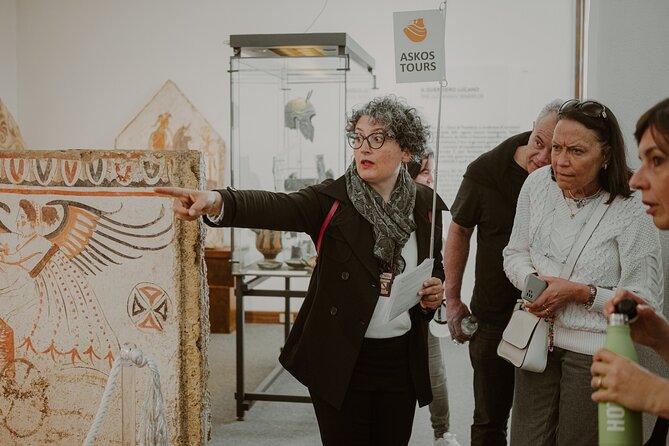
The private guide matters here because bare ruins can blur together. A certified archaeological guide can explain what you are seeing, correct common mistakes about the buildings, and connect the Greek and Roman phases. Past guides named Maria and Mario were praised for patience, clear English, humor, and the ability to adjust the visit to time limits. Ivan was also noted for giving enough context without burying the group in facts.
More Salerno and Paestum trips:
- From Naples/Salerno: Group Tour to Positano, Amalfi, Ravello
★ 4.7 · 2,033 reviews - Full-Day Amalfi Coast Experience from Sorrento, Naples or Salerno
★ 5.0 · 1,275 reviews - Salerno: Amalfi Coast Cruise with Lunch, Aperitif & Swimming
★ 4.5 · 879 reviews
Walking the Archaeological Park in about 30 minutes
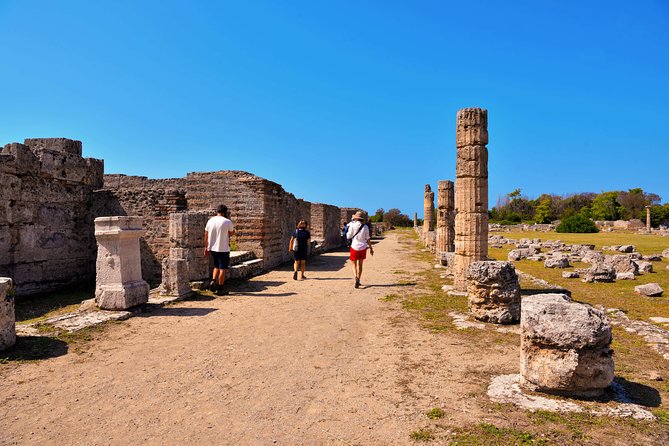
The first part of the visit takes place in the Archaeological Park of Paestum. The stated time is about 30 minutes, although the full tour also includes the two temples and the museum. Think of this first portion as your orientation to the ancient city rather than a complete survey of every ruin.
Your guide leads you through the main archaeological area and explains Paestum as a Graeco-Roman city. The setting allows you to see the temples in relation to the wider site, rather than treating each building as a separate postcard stop.
This is where a private tour earns its keep. You can ask why a temple is identified as Greek, how later Roman changes affected the city, or what features reveal the age and purpose of a building. If your group has children or mixed interests, the guide can also keep the explanation moving instead of delivering a fixed lecture.
The walking level is moderate. You should wear comfortable shoes, since the visit takes place outdoors on archaeological ground. The tour is not designed as a strenuous hike, but it is not a seated museum talk either.
Temple of Hera II and the old Poseidon mistake
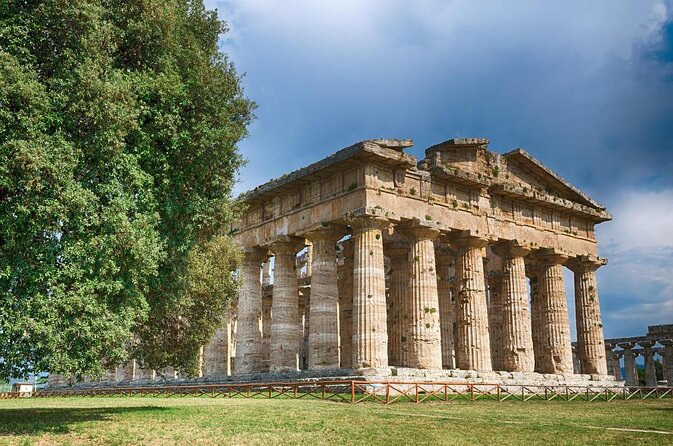
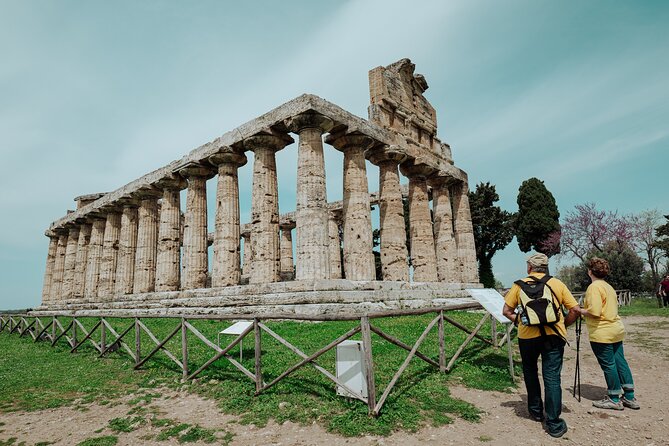
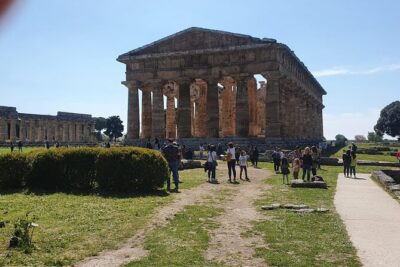
Temple of Hera II is one of Paestum’s most striking buildings. It is the more northern and younger of the two temples dedicated to Hera at Paestum, which was once called Poseidonia.
You may still hear it called the Temple of Poseidon or the Temple of Neptune. Those names came from an earlier misidentification. A guide can explain why the old names remain common even though the temple is now understood as belonging to Hera.
The scheduled stop is about 15 minutes. That is enough to examine the temple’s structure and hear the key explanation, especially with a private guide who can focus on what interests you. It is not enough for a slow architectural study, extensive photography, and a long discussion all at once.
I would pay attention to the temple’s sense of weight and order. Greek temples can look simple from a distance, but the effect comes from careful spacing and proportion. Your guide can help you notice those choices instead of seeing only rows of columns.
Temple of Athena and the nearby Basilica
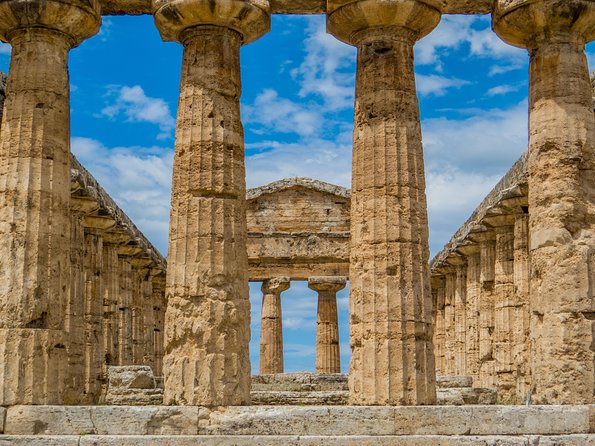
The Temple of Athena, also called the Temple of Ceres, dates to about 500 BC. It was built near the so-called Basilica, which is much larger than it.
The naming can be confusing, and that is another reason a guide helps. Ancient labels often survive even after scholars revise their understanding. Your guide can separate the traditional names from what archaeologists currently believe, giving you a clearer picture without requiring you to memorize every debate.
This stop also lasts about 15 minutes. The shorter time works well as part of a tightly planned introduction. You get the essential story of the temple and its place within Paestum, then move on before the visit becomes repetitive.
If you have a strong interest in ancient architecture, you may wish the outdoor portion were longer. The trade-off is that the tour reserves a full hour for the museum, where you will see objects and images that make the temple visit easier to understand.
More museums and galleries in Salerno & Paestum:
- Tour at the Temples and the National Museum of Paestum
★ 5.0 · 16 reviews - Paestum Private: Temples & Archaeological Museum with Your Local Archaeologist
★ 4.0 · 9 reviews - Amalfi: Vertical Lemon Farm Tour, Tastings, and Rural Museum
★ 4.8 · 196 reviews - Private Guided Multimedia Exhibition on the History of Sorrento
★ 4.5 · 90 reviews
The National Archaeological Museum and the Tomb of the Diver
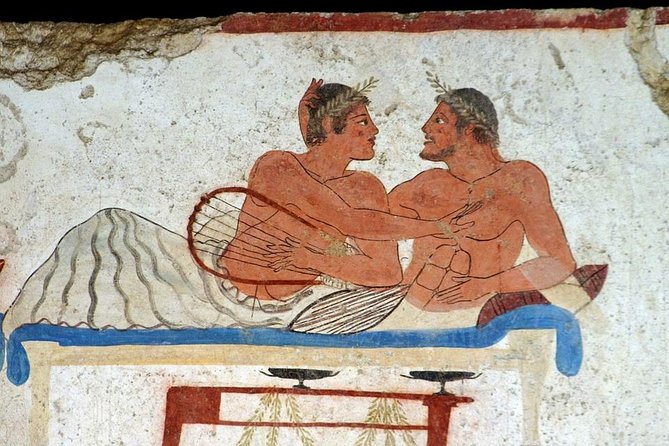
The museum receives about one hour, and this is more than a quick add-on. It holds local Greek artworks dating from the seventh century BC, along with material connected to the area’s later history.
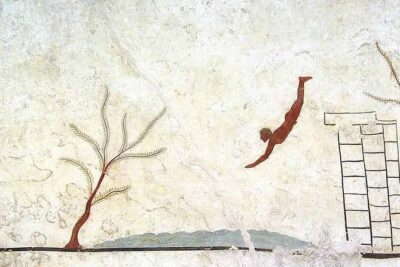
The star attraction is the fresco cycle from the Tomb of the Diver. These paintings are the undisputed highlight of the Paestum collection. The image of a diver plunging into water has invited many interpretations, and seeing it in person gives the ancient site a human scale that the huge temples cannot provide.
The museum also helps you read Paestum as more than a group of monumental buildings. Artworks, tomb objects, and painted scenes show how people represented death, belief, and identity. After the museum, the outdoor temples should feel less abstract.
One hour is a sensible allocation. It gives your guide time to explain the main pieces while leaving enough room for you to look closely. Still, museum lovers may find the pace brisk, particularly if the collection sparks many questions. Tell your guide what you want to examine, since the private setting makes that conversation possible.
The guide’s manner can make a major difference here. Silvia has been praised for sincere assistance and a strong grasp of Paestum’s history. Sergio was noted for explaining both the Greek and Roman periods with enthusiasm and detail. Those qualities are particularly useful in a museum, where a long list of objects can otherwise feel disconnected.
What the private format really gives you
This is a private activity for your own group, with options for parties of up to 15 people. That does not mean you receive a separate vehicle or a private transfer. It means the guiding portion is reserved for your party alone.
For two people or a small family, the price can feel high at $202.14 per person. The fee includes admission and a certified archaeological guide, but not transportation or meals. You are paying for expert attention and a flexible pace, not for a full-day package.
For a larger group, the value improves because the price is spread among more people, subject to the group limit. A party of friends or family can also avoid the awkwardness of joining strangers with different interests and walking speeds.
The strongest practical benefit is flexibility. One group told its guide about time limits and physical restrictions, and Mario adjusted the visit accordingly. That is the kind of service a fixed group tour may not provide.
At the same time, two hours is a short visit to Paestum. You should book this if you want the main temples and museum explained efficiently. If you hope to inspect every section of the park, linger over each artifact, or make a full day of the archaeological site, you may want more independent time before or after the guided portion.
Timing, meeting point, and lunch plans
You meet at Via Magna Graecia 919, 84047 Santa Venere SA, Italy. A map link is supplied for the meeting point, which is useful because the site area includes several roads, entrances, and parking areas.
Build your transportation plan before booking. The tour does not include a car, taxi, train connection, or other transfer. The activity begins and ends at the meeting point, so you need to arrange your own arrival and departure.
This matters if you are coming from Salerno, Naples, or the Amalfi Coast. Allow time for the journey and for finding the exact meeting location. The tour itself lasts about two hours, but your full Paestum outing will take longer once transport and lunch are added.
Food is also separate. Restaurants are located near the edge of the site and parking area. One useful local tip is La Basilica Cafe Paestum, behind the parking lot, where a simple Margherita pizza has been singled out as a good choice. Treat that as a practical suggestion, not part of the tour package.
A taxi driver named Antonio was able to hold bags at the train station and return at an agreed time for one group. That arrangement was independent of the tour, but it shows why a little planning can make a Paestum stop work well within a rail itinerary.
Who will get the most from this tour
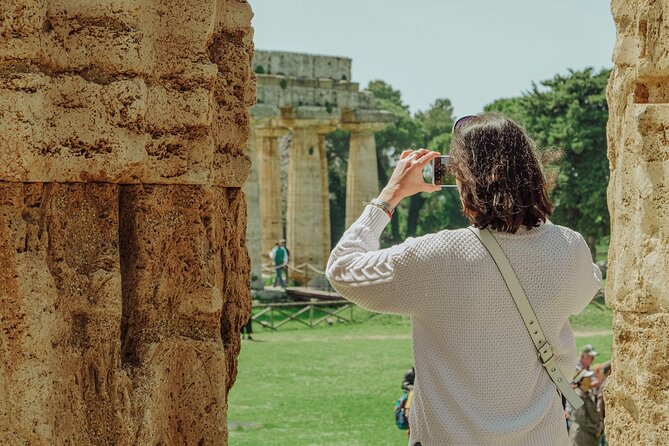
I would recommend this tour to anyone who wants Paestum explained rather than simply photographed. First-time visitors to the site will gain the most, particularly if Greek temple architecture is unfamiliar.
It also suits:
- Couples who want a private guide and a flexible start time
- Families who need a guide to adjust the pace
- Small groups sharing the cost
- History-minded visitors who want both ruins and museum objects
- People making a focused stop in Paestum rather than spending all day there
The tour is less suitable if you need included transportation, want a full-day excursion, or prefer to explore in silence with an audio guide. It is also not the best fit for anyone unable to manage moderate walking or outdoor archaeological surfaces.
English is the offered language. Service animals are allowed. Confirmation arrives at booking, and free cancellation is available up to 24 hours before the start time. Changes or cancellations made later are not refunded, so keep the local cut-off time in mind.
The guide can change the quality of the visit
The most important variable is the guide. The tour promises a certified archaeological guide, and the strongest feedback centers on explanation, patience, humor, and passion rather than on speed.
Maria has been described as patient and effective at bringing the stones to life with stories. Mario is known for clear English and for adapting the tour to time limits and physical needs. Ivan has a gift for giving useful context without overloading the group.
Carmen has led an engaging discussion about the temples, while Silvia and Sergio have been praised for their historical command and sincere approach. Askos Tours has a range of guides, so the exact personality and presentation style may vary.
That is not a flaw, but it is worth understanding. You are booking a guided interpretation of Paestum, not a scripted performance with one permanent host. If you care about certain subjects, tell the guide early. The private setup gives you a better chance of shaping the conversation around architecture, mythology, Roman reuse, or the museum’s funerary art.
Should you book the Paestum private tour?
Book it if you want expert context in a short visit, especially if Paestum is part of a larger Italian itinerary. The combination of Temple of Hera II, Temple of Athena, the archaeological park, and the Tomb of the Diver gives you a strong first look at the site.
The price is easiest to justify for a group of several people, since the private format can make the cost per person more reasonable. It is harder to justify for a solo visitor or a couple who already knows ancient Greek architecture well and can comfortably explore without help.
Before you commit, solve the transport question and accept the two-hour limit. If those details work for you, this is a focused, useful way to understand Paestum, with a guide who can turn impressive ruins into a connected story.
FAQ
How long does the Paestum private tour last?
The experience lasts approximately two hours.
What sites are included?
The tour includes the Archaeological Park of Paestum, Temple of Hera II, Temple of Athena, and the Museo Archeologico Nazionale di Paestum.
Is admission included?
Yes. Admission fees for the included attractions are covered.
Is transportation included?
No. You must arrange your own transportation to and from the meeting point.
Where does the tour start and end?
It starts and ends at Via Magna Graecia 919, 84047 Santa Venere SA, Italy.
Is the tour private?
Yes. Only your group participates, with options for groups of up to 15 people.
What language is offered?
The tour is offered in English.
Can I cancel for a full refund?
Yes, if you cancel at least 24 hours before the experience start time. Cancellations or changes made less than 24 hours before the start time are not refunded.
Newest reviews from Salerno & Paestum
- Visit the Pompeii ruins from Salerno with Pizza Lunch★ 5.0 · 4 reviews
- Amalfi coast tour with skipper from Salerno to Positano★ 4.8 · 4 reviews
- Amalfi Coast: one day tour from Salerno to Positano★ 5.0 · 5 reviews
- Full-Day archaeological site of Paestum★ 5.0 · 5 reviews
- Amalfi Drive from Salerno★ 5.0 · 5 reviews
- Amalfi coast: Rent boats in Salerno without license★ 5.0 · 5 reviews
- Salerno: Amalfi Coast Private Boat Excursion★ 5.0 · 5 reviews
- SALERNO: Amalfi Coast Cruise • Shore Excursion★ 4.4 · 5 reviews
Museums, compared.

Vertical Lemon Farm Tour, Tastings, and Rural Museum
Read our review →
Tour at the Temples and the National Museum of Paestum
Read our review →
Paestum Private: Temples & Archaeological Museum with Your Local Archaeologist
Read our review →
Browse the lists this tour appears in