
Reviewed · WALKING TOURS
Discover Salerno: Walking Tour with an Expert Local Guide
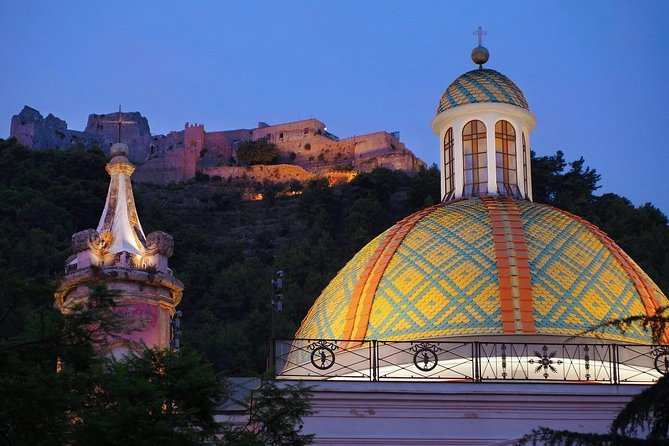
Salerno’s past is not fenced off in one famous monument. It appears in narrow lanes, old Lombard and Norman buildings, painted walls, fountains, and the layers beneath Saint Matthew Cathedral. This 90-minute walk, led by a local guide with archaeological or historical expertise, gives you a useful way to read the city.
I especially like the early-evening timing, which lets you explore before dinner, and the guide’s practical local advice about restaurants, ice cream, and nearby sights. I also like the focus on ordinary streets and lesser-seen details, not just the main cathedral. The main consideration is that the tour moves quickly, and the optional cathedral crypt costs an extra €7.
In This Review
- Key points at a glance
- Salerno’s old town, read by someone who knows it
- Starting at Piazza Matteo Luciani
- Public gardens and Salerno’s central squares
- Lombard and Norman buildings in plain sight
- The Monumental Complex of Saint Peter
- Saint Matthew Cathedral and the optional crypt
- Four optional Salerno additions
- What makes the local guide useful
- Is $42.17 a fair price?
- Who should book this walk?
- Should you book Discover Salerno?
- FAQ
- Where does the walking tour start?
- Where does the tour end?
- What time does the tour begin?
- How long does the experience last?
- What language is offered?
- What is included in the price?
- Is the cathedral crypt included?
- Can the route include other attractions?
- How many people can join the tour?
Key points at a glance
- A local archaeology lesson in 90 minutes: Guides such as Roberto bring professional knowledge and local roots to Salerno’s old town.
- A useful first-day orientation: You cover major squares, gardens, churches, buildings, and street details before deciding what deserves a longer visit.
- Saint Matthew Cathedral and its crypt: The cathedral is part of the walk, while entry to the baroque crypt costs €7.
- A 6 pm start: The schedule works well before dinner and avoids putting the walk in the middle of the day.
- Small-group format: The maximum group size is 15 people, so the guide can usually handle questions without the feel of a large coach tour.
- Optional additions: On request, you can ask about the Gardens of Minerva, the medieval castle, the Diocesan Museum, or the Archaeological Museum.
Salerno’s old town, read by someone who knows it
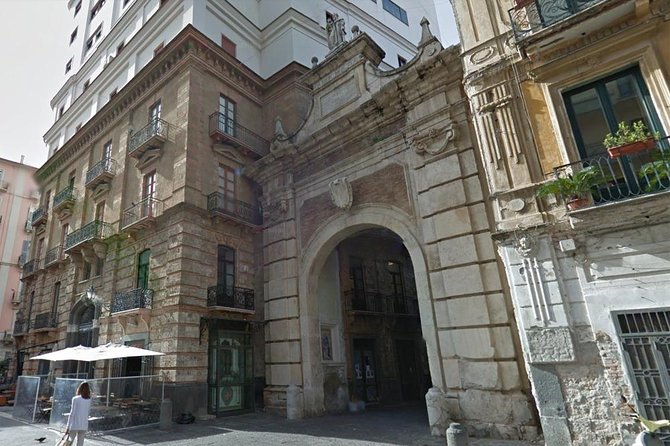
The strongest feature here is the guide. Roberto is described as an archaeologist, a Salerno native, and a history PhD. Alessandra and Giada have also led this walk, so the exact guide may vary, but the experience is built around local interpretation rather than a memorized route.
That matters in Salerno. You can walk past an ancient wall or a grand church and see only another handsome Italian building. A guide can explain what changed, what survived, and why a modest-looking corner matters. The walk connects archaeology, architecture, and present-day life instead of treating the city as a museum frozen in time.
I like that the tour also leaves room for questions. Roberto is described as easy to talk to and willing to adjust the walk to interests and time limits. That is useful if you want more archaeology, more church art, or simply a quick sense of where to eat and what to do next.
The 90-minute length is sensible. It is long enough to introduce the old town without taking over your day, but short enough to fit before dinner or alongside a larger Campania itinerary.
More Walking Tours in Salerno
- From Salerno: Pompeii Guided Walking Tour
★ 4.5 · 235 reviews - Walking Tour “Ancient & modern Salerno”
★ 5.0 · 68 reviews - From Salerno: Pompeii Guided Walking Tour with Ticket
★ 4.5 · 30 reviews
Starting at Piazza Matteo Luciani
The walk begins at Piazza Matteo Luciani, 1, in Salerno’s historic center, at 6 pm. The location is near public transportation, and the end point is Piazza Flavio Gioia, also called Piazza Gioia Flavio in the meeting information.
The start and finish are different, which is worth noting. You should not assume you will return to the exact place where you began. The route ends in a central square, making it easier to continue your evening, but you should pay attention to the final location when planning dinner or your onward journey.
The 6 pm departure gives this tour a practical rhythm. You can spend the day on another excursion, return to Salerno, and then use the walk to make sense of the city before eating. The timing also fits the kind of advice the guides provide, including restaurant and ice cream suggestions.
The group can include up to 15 people. That is not a private tour by default, but it is still a manageable size. You should have a better chance to hear the guide and ask questions than you would on a large city tour.
Public gardens and Salerno’s central squares
The route includes Salerno’s public gardens and several important squares: Piazza Sedile del Campo, Piazza Abate Conforti, and Piazza Flavio Gioia.
These stops give the walk a clear shape. Squares are not just convenient pauses. They help you understand how the old center works, where people gather, and how Salerno’s public life fits around its older streets and buildings.
Piazza Sedile del Campo and Piazza Abate Conforti are part of the historic-center experience, where the scale changes from open public space to narrow lanes and older facades. Piazza Flavio Gioia is the finishing point, so the walk ends in a more open, recognizable setting.
I would pay attention to the details between the squares. The strongest part of this experience may be the small material clues: old masonry, wall inscriptions, paintings, fountains, and buildings that can be easy to overlook when you walk alone. The guide’s job is to point out what your eyes might otherwise pass.
The public gardens add a welcome change of pace. They also show that Salerno is not only about churches and stone streets. You get a sense of how the city uses its public spaces today, alongside its older layers.
Lombard and Norman buildings in plain sight
Salerno’s buildings reflect several periods, and the tour specifically includes Lombard and Norman structures. You do not need a specialist background to appreciate this part. The value is in learning how to notice differences in construction, form, and use.
A guide with archaeological training can explain the evidence without reducing the walk to a list of dates. You may hear how older buildings were reused, how later additions changed the city, and how architectural remains can survive inside a living neighborhood.
This is where the local perspective helps most. A visitor walking alone may photograph a doorway, arch, or wall and move on. The guide can place it in a wider story about Salerno, including parts of the city that are not obvious from the main tourist route.
The walk also includes recent street art and colorful wall paintings. That modern material is a useful counterweight to the medieval and religious sights. Salerno is presented as a hometown, not simply as an archaeological display.
More Salerno and Paestum trips:
- From Naples/Salerno: Group Tour to Positano, Amalfi, Ravello
★ 4.7 · 2,033 reviews - Full-Day Amalfi Coast Experience from Sorrento, Naples or Salerno
★ 5.0 · 1,275 reviews - Salerno: Amalfi Coast Cruise with Lunch, Aperitif & Swimming
★ 4.5 · 879 reviews - From Salerno: Day Trip to Amalfi Coast by Boat with Drinks
★ 4.9 · 374 reviews
The Monumental Complex of Saint Peter
The Monumental Complex of Saint Peter is another major stop. The name signals an important religious and architectural site, but the tour information does not promise a separate paid entry or a long interior visit here.
You should treat this part as an explained stop within the wider walk. The guide can give you context, point out architectural features, and connect Saint Peter to the rest of the old center. If you want detailed time inside every site, 90 minutes will feel limited.
That short format is also part of the appeal. You get a framework rather than an exhaustive examination. After the tour, you can decide if one church, museum, or historic building deserves a slower visit.
Saint Matthew Cathedral and the optional crypt
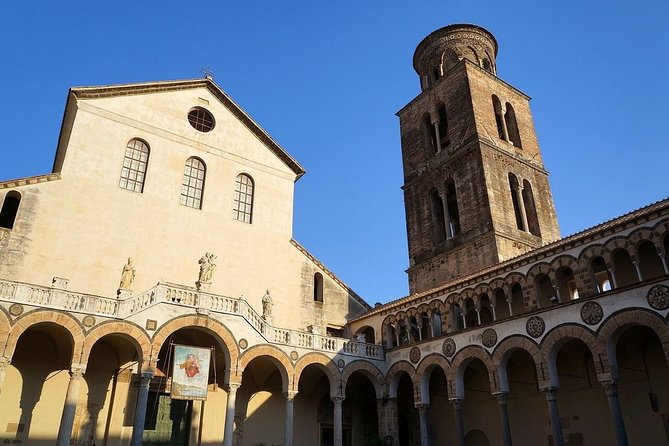
Saint Matthew Cathedral is the central religious sight on the route. The church gives the walk a clear focal point after the squares, public gardens, and older buildings.
The baroque crypt is optional, and entry costs €7. That extra charge is not included in the tour price, so budget for it only if you want to go inside. The cathedral itself is listed as part of the walk, while the crypt requires the separate ticket.
The crypt is likely to appeal most if you enjoy archaeology, church history, and the physical layers beneath a modern city. It also fits the tour’s main idea: Salerno rewards you when you look below the surface.
Still, you should check how much time is available on the day. The advertised duration is approximately 1 hour and 30 minutes, and the crypt visit may affect how quickly the group moves through the rest of the route. If your main aim is a detailed cathedral visit, you may want to confirm the plan with the guide at the start.
Four optional Salerno additions
On request, the guide can include or discuss the Gardens of Minerva, the medieval castle, the Diocesan Museum, and the Archaeological Museum.
These are not automatic promises of the standard route, so you should ask before booking if one is a priority. The phrase on request suggests that the route may need adjusting, and the 90-minute schedule may not allow every addition in one outing.
The Gardens of Minerva would suit you if you want to add a garden setting to the old-town walk. The medieval castle is a natural choice for anyone more interested in defenses and high-level views, though no specific access details are provided. The Diocesan Museum and Archaeological Museum make sense for visitors who want objects and collections to supplement the street-level explanation.
I like having these choices because they make the experience more useful for repeat visitors. One person may want a broad introduction, while another may already know the main center and want archaeology. Just make your interests clear before the walk begins.
What makes the local guide useful
The guide’s value is not just factual information. It is the connection between formal history and daily Salerno.
Roberto is described as offering advice for the wider region, including ideas connected with Paestum and Pompeii. Other guide comments point to restaurant, ice cream, and local activity suggestions. That practical layer can save you from spending your evening guessing where to go next.
The personal connection to Salerno also matters. Roberto and the other guides present the city as a hometown. That can lead to a different kind of walk, one that includes places people use and details locals notice, rather than only the obvious photo stops.
You should also feel free to ask direct questions. The experience is not designed as a silent procession. The guides are described as making time for questions and adapting to interests and time limits, which is especially helpful if you have only a short stay.
Is $42.17 a fair price?
At $42.17 per person, this is not the cheapest way to stroll through Salerno. You can walk the old town without paying anything, and the main public streets and squares are open to everyone.
The price becomes easier to justify if you value interpretation. You are paying for a licensed local guide, a planned route, archaeological and historical context, and practical suggestions for the rest of your stay. A good explanation can turn a pleasant walk into a useful introduction.
The group limit of 15 helps the value. You are not paying for a guaranteed private tour, but you are also not signing up for a huge crowd. If your group is small and the guide adjusts the discussion to your interests, the cost can be reasonable.
The extra €7 for the crypt is the only listed admission charge. Optional visits to the Gardens of Minerva, castle, or museums may need separate arrangements, but no prices are given. Ask about those additions before committing to a changed route.
Who should book this walk?
I would choose this tour early in a Salerno stay. The archaeological and architectural overview can help you decide which places to revisit on your own. It also gives you restaurant and regional sightseeing ideas before you spend your limited evenings.
This is a good fit for you if you enjoy:
- History explained through buildings and streets
- Archaeology without a full-day museum schedule
- Small groups and plenty of questions
- Local advice about food and nearby places
- A short walk before dinner
- Seeing both medieval remains and recent street art
It may be less suitable if you want a long, slow visit inside every church or museum. The route covers a lot in 90 minutes, so expect an introduction, not a detailed study of every stop.
The walk is designed for most people to participate, and service animals are allowed. It is near public transportation, but the historic center includes streets and squares rather than a single indoor venue, so comfortable walking shoes remain a sensible choice.
Confirmation arrives within 48 hours, subject to availability. The experience requires good weather and a minimum number of participants. If the operator cancels for either reason, you can choose another date or experience, or receive a full refund. You can cancel for a full refund up to 24 hours before the 6 pm start time. Inside 24 hours, the payment is not refunded, and changes are not accepted.
Should you book Discover Salerno?
Book it if you want a smart first look at Salerno, especially if Roberto, Alessandra, or Giada is available and you enjoy history told by someone tied to the city. The route covers the right mix: squares, gardens, medieval buildings, Saint Peter, the cathedral, the crypt option, and modern street art.
The best reason to go is not a single landmark. It is learning how to see Salerno’s layers, then using the guide’s local advice to shape the rest of your visit. Skip it if you prefer to wander without explanation or want a private, highly detailed church tour. For most people looking for a compact, useful introduction before dinner, the $42.17 price is defensible.
FAQ
Where does the walking tour start?
The tour starts at Piazza Matteo Luciani, 1, 84121 Salerno, Italy.
Where does the tour end?
The walk ends at Piazza Flavio Gioia in Salerno.
What time does the tour begin?
The stated start time is 6:00 pm.
How long does the experience last?
The walking tour lasts approximately 1 hour and 30 minutes.
What language is offered?
The experience is offered in English.
What is included in the price?
A licensed local guide is included.
Is the cathedral crypt included?
No. The optional visit to the crypt requires a separate €7 admission ticket.
Can the route include other attractions?
On request, you can ask about including the Gardens of Minerva, the medieval castle, the Diocesan Museum, or the Archaeological Museum.
How many people can join the tour?
The maximum group size is 15 people.
More Walking Tours in Salerno & Paestum
- Salerno Walking Tour
★ 5.0 · 29 reviews - SALERNO WALKING TOUR
★ 4.9 · 18 reviews - Salerno : Must-See Attractions Walking Tour
★ 4.7 · 13 reviews - Pompeii: Guided Walking Tour with Entrance Ticket
★ 4.3 · 1,423 reviews
Newest reviews from Salerno & Paestum
- Visit the Pompeii ruins from Salerno with Pizza Lunch★ 5.0 · 4 reviews
- Amalfi coast tour with skipper from Salerno to Positano★ 4.8 · 4 reviews
- Amalfi Coast: one day tour from Salerno to Positano★ 5.0 · 5 reviews
- Full-Day archaeological site of Paestum★ 5.0 · 5 reviews
- Amalfi Drive from Salerno★ 5.0 · 5 reviews
- Amalfi coast: Rent boats in Salerno without license★ 5.0 · 5 reviews
- Salerno: Amalfi Coast Private Boat Excursion★ 5.0 · 5 reviews
- SALERNO: Amalfi Coast Cruise • Shore Excursion★ 4.4 · 5 reviews
Walking Tours, compared.

Walking Food Tour in Sorrento w/ Limoncello Factory Lemon Grove
Read our review →

Discover Pompeii: French Walking Tour of the Buried City
Read our review →

Browse the lists this tour appears in