
Reviewed · WORKSHOPS
Ceramic Class in Positano 2 hours workshop
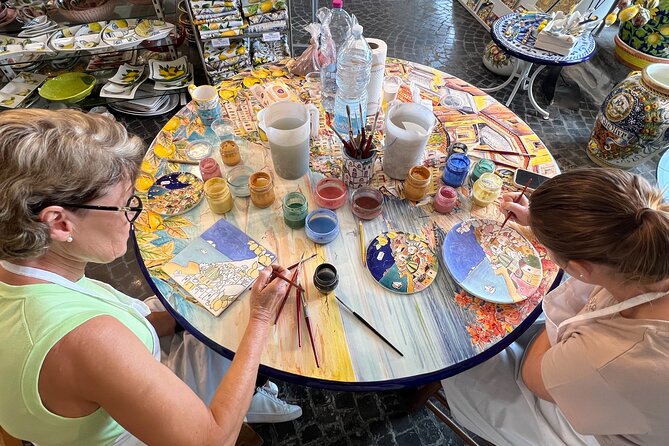
The best part of this two-hour Positano class is that you do not just buy a ceramic souvenir, you help decorate one. At Ceramica Assunta Positano, artist Giovanna Parlato introduces the local majolica tradition, then guides you as you paint an object by hand in a shop on a small road overlooking the sea.
I like the personal, local setting and the fact that your finished piece is fired and shipped to you after the kiln reaches 950°C. I also like the limoncello tasting and souvenir photo, two small touches that make the class feel tied to Positano rather than like a generic craft lesson. The main drawback is the price: at $242.93 per person, this is a costly two-hour activity, especially since the finished item is shipped later instead of taken home that day.
In This Review
- Key points to know before booking
- A hands-on souvenir instead of another shop purchase
- Starting at Viale Pasitea 202
- Giovanna Parlato’s introduction to local pottery
- Painting your own majolica object
- What happens after the two-hour class
- Limoncello and the souvenir photo
- Is $242.93 a fair price?
- Who will enjoy this class most?
- Timing, group size, and simple planning tips
- Should you book the Positano ceramic class?
- FAQ
- Where does the ceramic class meet?
- How long does the workshop last?
- Who leads the ceramic lesson?
- What ceramic technique will I learn?
- Are materials included?
- Can I take the ceramic home at the end of the class?
- Is limoncello included?
- How many people can join the class?
Key points to know before booking
- Giovanna Parlato leads the artistic workshop: You receive guidance from a Positano artist who works with terracotta and hand decoration.
- You decorate with the local majolica technique: The class focuses on painting a ceramic object, with a short introduction to Amalfi Coast traditions first.
- Your piece is fired at 950°C: The ceramic needs kiln time after the class, so it will be shipped to you once cooking is complete.
- The setting is a ceramic store in Positano: The meeting point is at Viale Pasitea 202, along a small road with a sea view.
- Limoncello and a photo are included: These extras add a distinctly local note without extending the two-hour schedule.
- The group is limited to eight people: That should give the workshop a more personal feel than a large class.
A hands-on souvenir instead of another shop purchase
Positano is full of beautiful ceramics, but buying one from a shelf and decorating one yourself are different experiences. This class lets you take part in a local craft tradition, even if you are learning only the basic techniques.
The focus is the majolica technique, a style of ceramic decoration associated with the colorful pottery seen across the Amalfi Coast. You will not simply browse finished plates and tiles. You will work on an object supplied for the class and add your own decoration under guidance.
That distinction matters if you want a souvenir with a story attached to it. The finished piece may not look like the work of a professional ceramic artist, and that is part of its appeal. It records a particular afternoon in Positano and gives you something personal to display later.
The activity is also a good choice if you prefer a calm creative break from sightseeing. Two hours is long enough to make the experience feel substantial, but short enough to fit around other plans in town.
More Positano trips:
- From Sorrento/Nerano: Amalfi and Positano Boat Tour
★ 4.6 · 2,440 reviews - Day Trip to Positano, Amalfi & Ravello from Sorrento
★ 4.5 · 2,371 reviews - From Naples/Salerno: Group Tour to Positano, Amalfi, Ravello
★ 4.7 · 2,033 reviews
Starting at Viale Pasitea 202
The class begins at Viale Pasitea 202, 84017 Positano SA. The activity ends at the same meeting point, so you do not need to arrange a separate return transfer or figure out a second location afterward.
The workshop takes place in one of the provider’s Positano stores. The setting is described as a small road overlooking the sea, which gives the class a strong sense of place. You are not working in an anonymous studio far from the town’s character. You are making pottery in a shop connected to a family business that has produced and sold handcrafted ceramics in Positano since 1948.
The meeting point is near public transportation, but the available information does not specify a particular bus stop or route. Plan to confirm the exact directions when your booking is confirmed. Confirmation is sent within 48 hours, subject to availability.
The address is important because Positano is built on steep streets and scattered levels. Give yourself enough time to locate Viale Pasitea 202 rather than arriving at the last minute. The exact walking effort depends on where you are staying and how you reach the meeting point.
Giovanna Parlato’s introduction to local pottery
The lesson begins with a brief explanation of ceramic tradition on the Amalfi Coast. This opening gives context before you start decorating, helping you understand why majolica is such an important part of local visual culture.
Giovanna Parlato manages the artistic laboratory. She is a Positano artist who creates terracotta objects, models them, and decorates them by hand. Her role is central to the appeal of the experience. You are not just following a printed set of instructions. You are learning basic methods from someone who works in the medium herself.
The information provided does not promise an advanced or highly technical course. It presents the class as an introduction to basic local craftsmanship. That makes it a better fit for curious beginners than for someone seeking professional ceramic training.
You should also keep your expectations clear about the type of work involved. The stated activity centers on decorating an object in the majolica technique. It does not promise that you will throw clay on a wheel, build a vessel from scratch, or learn every stage of ceramic production.
That is not a weakness if you want a manageable activity during a short stay. It simply means you are booking a decorative workshop rather than a full pottery apprenticeship.
Painting your own majolica object
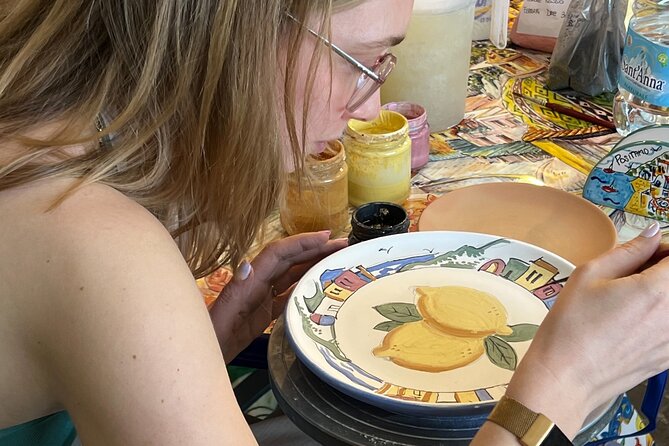
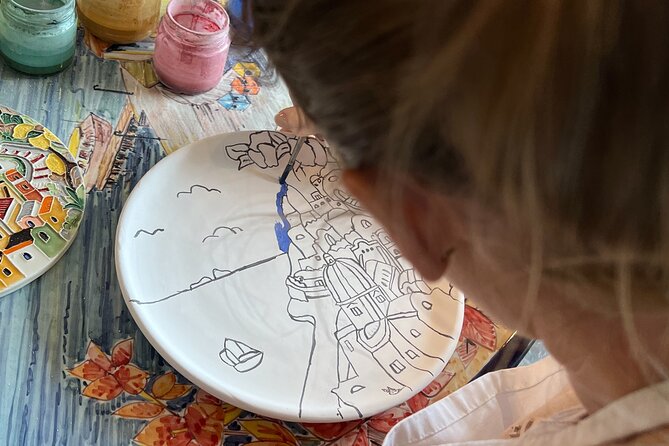
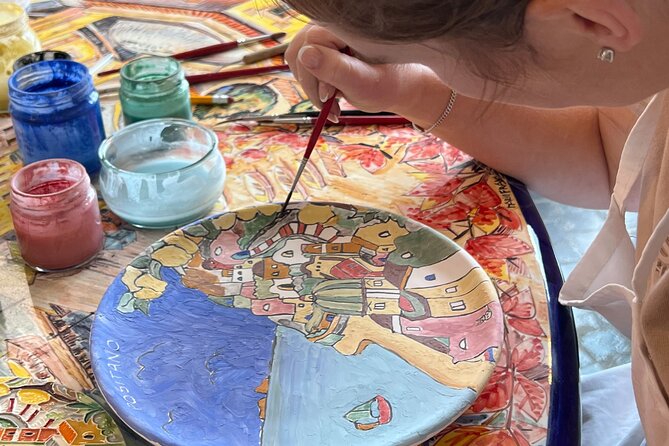
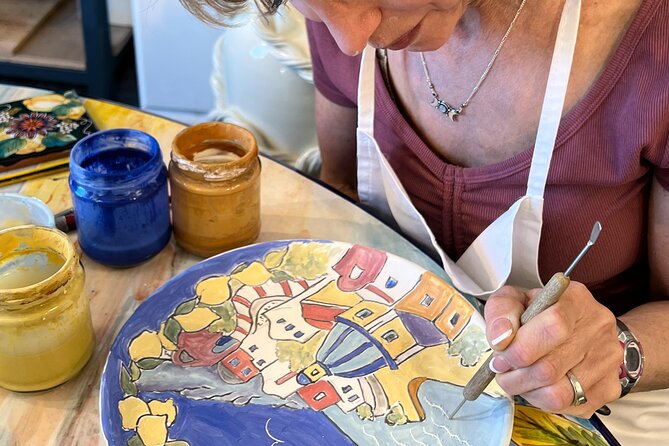
After the introduction, you decorate a ceramic object. The necessary materials are supplied, so you do not need to bring tools, clay, glaze, or protective equipment.
The appeal here is the freedom to make something that feels like yours while still working within a recognizable Positano tradition. The class gives you a physical souvenir, but the creative process is the main event. You can focus on enjoying the work instead of worrying about buying supplies or arranging a separate firing service.
The supplied details do not identify the exact object you will decorate. It could be useful to ask about the shape and approximate size before booking if that affects your expectations or packing plans. The same is true for the range of designs or colors available. The class promises the majolica method, but not a particular pattern.
I would treat this as a relaxed artistic session, not a test of skill. You do not need prior experience, and most people can participate. The workshop has a maximum of eight people, which is a useful limit for a hands-on class. A smaller group generally makes it easier to receive help, though the exact amount of individual instruction can depend on the group and the pace of the session.
More Positano tours worth comparing
- Small-Group Cooking Class in Positano: Gnocchi, Tiramisù & Drinks
★ 5.0 · 191 reviews - Ravioli & Tagliatelle Cooking Class at a Local’s Home in Positano
★ 5.0 · 113 reviews - Hands-On Pasta and Tiramisu Class in Positano with Local Family
★ 4.5 · 88 reviews - Positano: Pasta & Tiramisu Cooking Class at a Local’s Home
★ 4.6 · 45 reviews
What happens after the two-hour class
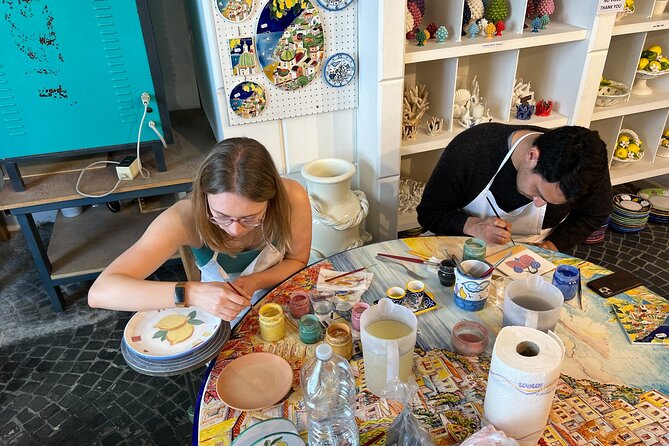
Your ceramic piece does not go home with you immediately. Once you finish decorating it, the object is placed in a special ceramic kiln and slowly brought to 950°C.
That firing stage is more than a technical footnote. It is what turns the decorated work into a finished ceramic piece. It also explains why the workshop includes shipping rather than handing the object back at the end.
The provider takes care of shipment once cooking is complete. This is a real convenience in Positano, where luggage space can be limited and fragile objects are awkward to carry through a multi-stop Italian trip. You leave with your memories and a photo, then wait for the finished souvenir to arrive at home.
The timing of shipment is not stated, so do not expect the piece to arrive on a specific date. You should also make sure the provider has the correct shipping details. The available information says shipment is included, but it does not list delivery countries, estimated delivery time, or a tracking process.
That uncertainty is worth noting when you compare the cost with buying a finished ceramic in town. Shipping saves you from carrying the piece, but you are trusting the post-class process and waiting to see the final result. A previous participant received the ceramic well packaged at home, which is reassuring, but delivery details still deserve a quick check before you pay.
Limoncello and the souvenir photo
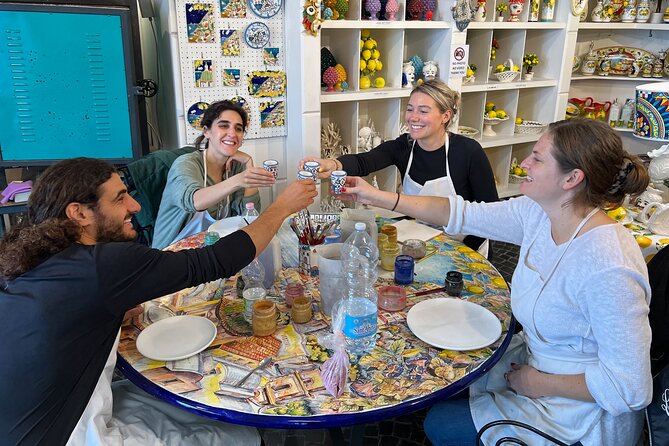
The class includes a taste of local limoncello. It is a small addition, but it fits the place well. The Amalfi Coast is strongly associated with lemons, and a sip during a ceramic lesson gives the workshop a more local rhythm.
The limoncello is not the reason to book the class. Think of it as a pleasant extra while you work. If you do not drink alcohol, the core activity remains the same, though the supplied details do not state whether a nonalcoholic alternative is available.
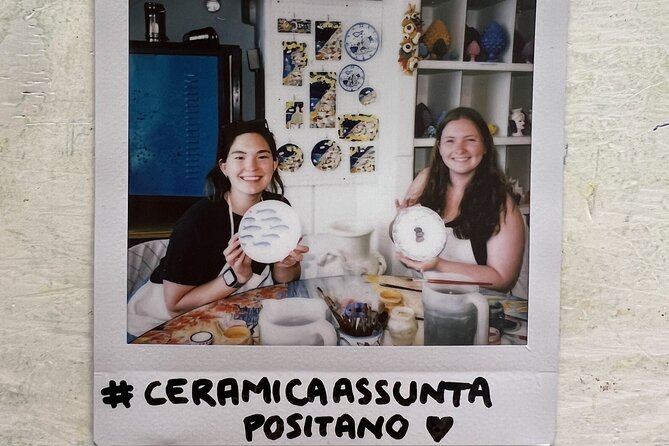
A souvenir photo is also included. This gives you a record of the activity before the finished piece is fired and shipped. Since the ceramic will arrive later, the photo can help connect the object with the day you made it.
The combination works well: you create something, take a photo with the experience, and later receive the completed piece at home. The first-hand value of the class is not only the object itself. It is the link between the workshop, the town, and the memory of making it.
Is $242.93 a fair price?
At $242.93 per person, this is an expensive two-hour activity. You are paying far more than the raw cost of a ceramic object or a casual souvenir-painting session.
The price includes the class, materials, kiln firing, shipment of the finished object, limoncello, and a souvenir photo. It also covers instruction from Giovanna Parlato and access to a business that has made and sold Positano ceramics since 1948. Those elements help explain the cost, especially for someone who values a small-group lesson and a personal connection to local craft.
Still, the value depends on what you want from your time in Positano. If your goal is simply to bring home an attractive ceramic, you may find it cheaper to buy one already made. If you want an activity that produces a personal keepsake and gives you two hours away from standard sightseeing, the price becomes easier to defend.
The class is limited to eight people, but the supplied information does not promise a private lesson. You should think of it as a small shared workshop. The group size is a positive feature, though not enough on its own to make the price a bargain.
I would recommend comparing the price with your full holiday budget. This is a special-occasion activity, not an economical add-on. It makes the most sense for someone who is happy to pay for a creative experience, included shipping, and the chance to make an object connected to Positano.
Who will enjoy this class most?
I think the class suits you best if you want a souvenir with personal meaning rather than another mass-produced item. It also works well for couples, families, and small groups who want an activity they can share without committing to a full day.
It may be a good fit for:
- Beginners who want to try ceramic decoration without bringing any equipment
- People who enjoy art, design, or handmade objects
- Anyone with limited time who can spare two hours
- Visitors who do not want to carry fragile pottery in their luggage
- Families looking for a creative activity, since most people can participate
- People who appreciate local traditions and small businesses
The experience may be less suitable if you want to make a ceramic piece entirely from raw clay. It is also a poor value if you are mainly shopping for the least expensive Positano souvenir.
Service animals are allowed, and the activity is near public transportation. Most people can participate, but the supplied information does not provide detailed accessibility notes for the shop or road. If you have specific mobility needs, ask the provider before booking.
Timing, group size, and simple planning tips
The class lasts about two hours. Since the piece must be fired later, the experience itself ends with the artwork being placed into the kiln, not with you carrying the completed ceramic away.
The maximum group size is eight. That should keep the workshop more focused than a large group event. It is still wise to arrive ready to listen, work at a steady pace, and share the instructor’s attention with other participants.
Book ahead if your Positano dates are fixed. The activity is booked, on average, 65 days in advance, which suggests that it can fill well before a visit. Confirmation arrives within 48 hours, subject to availability.
The cancellation terms are forgiving if your plans change early. You can cancel for a full refund up to 24 hours before the local start time. Cancellations or changes made less than 24 hours before the start are not accepted for a refund.
Should you book the Positano ceramic class?
Book it if you want to make a personal souvenir, enjoy a gentle creative activity, and value having the fired piece shipped home. The local setting, Giovanna Parlato’s instruction, limoncello, photo, and post-class firing give the two hours a clear sense of place.
Skip it if $242.93 feels high for a short activity or if you would rather choose a finished ceramic yourself. The class is not the cheapest way to buy pottery, and the exact object, delivery schedule, and design choices are not specified.
For the right person, this is a thoughtful alternative to ordinary souvenir shopping. You leave Positano with a photo and a story, then wait for a ceramic made partly by your own hand to arrive at home.
FAQ
Where does the ceramic class meet?
The class begins at Viale Pasitea, 202, 84017 Positano SA, Italy. It ends back at the same meeting point.
How long does the workshop last?
The workshop lasts approximately two hours.
Who leads the ceramic lesson?
The artistic laboratory is managed by Giovanna Parlato, a Positano artist who creates and decorates terracotta objects by hand.
What ceramic technique will I learn?
You will decorate an object using the majolica technique, after a brief explanation of ceramic traditions on the Amalfi Coast.
Are materials included?
Yes. The necessary materials are included in the experience price.
Can I take the ceramic home at the end of the class?
No. The object is placed in a ceramic kiln and fired at 950°C after the class. It is then shipped to you once cooking is complete.
Is limoncello included?
Yes. A taste of local limoncello is included in the price.
How many people can join the class?
The activity has a maximum of eight participants.
More 2-Hour Experiences in Positano
- From Positano or Praiano: 2H Private Amalfi Coast speed tour
★ 4.5 · 9 reviews - 2 Hours Sunset Cruise of Positano
★ 5.0 · 5 reviews - Pompeii 2h Small-Group Tour with Expert Archaeologist
★ 5.0 · 385 reviews - 2 hours Pompeii Tour with Local Historian – Ticket Included
★ 5.0 · 335 reviews
Newest reviews from Positano
- Pompeii and Vesuvius Cellars: Tour with Pick-Up in Positano★ 4.7 · 3 reviews
- Boat Tour: AMALFI and POSITANO★ 5.0 · 3 reviews
- Amalfi Coast tour: Positano, Amalfi and Ravello from Naples★ 5.0 · 3 reviews
- Private Sorrento, Positano and Pompei Tour★ 4.5 · 3 reviews
- Positano – Pompeii★ 5.0 · 3 reviews
- Car Tour admiring Capri and visiting Positano★ 5.0 · 3 reviews
- From Sorrento: Positano and Amalfi Coast Private Day Cruise★ 5.0 · 4 reviews
- Luxury Tour from Positano to Pompeii and Naples City★ 5.0 · 4 reviews
Workshops, compared.
Pizza Lesson, Wine, and Limoncello at a Local Farm
Read our review →
Hands-On Cooking Class & Farmhouse Tour on the Amalfi Coast
Read our review →

Sorrento Farm by Tuk Tuk: Cheese, Limoncello & Hands-On Pizza
Read our review →
Cooking class with Pasta, mozzarella and Tiramisu with wine
Read our review →
Toss, Bake, Cheers! – Sorrento Pizza Making Class with Wine
Read our review →Browse the lists this tour appears in