
Reviewed · SORRENTO COOKING CLASSES
Ravioli & Tagliatelle Cooking Class at a Local’s Home in Positano
The best part of this Positano cooking class is not simply learning to roll pasta. It is being welcomed into the family home of Emily, Genny, and their mother in Montepertuso, where grandmother’s recipes, garden produce, stories, and a wide view toward the coast all become part of the meal. You make ravioli, tagliatelle, and tiramisu, then sit down to eat what you prepared.
I like the family setting and the use of ingredients picked from the garden. I also like the practical touches: Emily speaks English, shares recipes afterward, and may help arrange a shared taxi from Positano. The main consideration is location. The meeting point is in Montepertuso rather than by Positano’s beach, so you need to allow time for the uphill journey and confirm transport plans before you go.
In This Review
- Key points to know before booking
- Cooking pasta in a Montepertuso family kitchen
- The welcome: prosecco, local snacks, and a garden
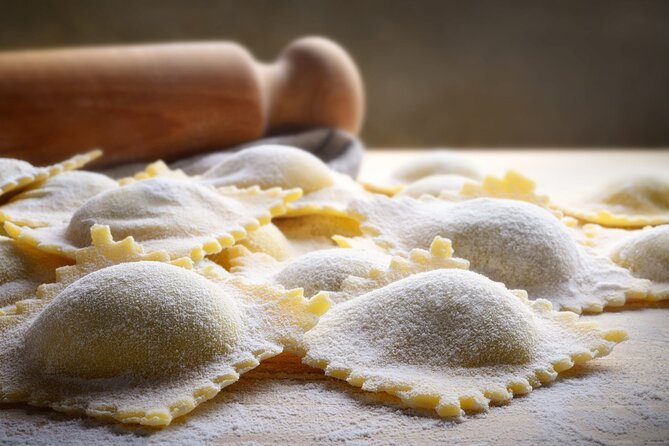
- Making ravioli by hand
- Rolling tagliatelle and learning what makes pasta work
- Tiramisu from a grandmother’s recipe
- A meal with wine, limoncello, and family stories
- Montepertuso views and the practical transport question
- Is $181.41 a fair price?
- Who will enjoy this class most?
- Booking, cancellation, and what to confirm
- Should you book the Positano pasta class?
- FAQ
- Where does the cooking class meet?
- How long does the class last?
- What dishes will I prepare?
- Is the class taught in English?
- How many people can join?
- Is the class suitable for children?
- Can I cancel for a full refund?
Key points to know before booking

- Three classic dishes: Prepare fresh ravioli, hand-cut tagliatelle, and tiramisu during a roughly three-hour class.
- A real family home: Emily, Genny, their mother, and other family members help create a relaxed, social meal.
- Garden-to-table cooking: Tomatoes, rocket, vegetables, and other ingredients may come from the property’s garden.
- A generous welcome: Expect prosecco, local cheese, salami, olives, tarallucci, wine, and homemade limoncello alongside the meal.
- Montepertuso setting: The home offers impressive Positano-area views, but it is away from the main beach and requires planning for transport.
- Small-group feel: The maximum is 14 people, with many sessions described as intimate groups of about 12.
Cooking pasta in a Montepertuso family kitchen
Positano is famous for its steep streets, polished hotels, and restaurants with sea views. This class gives you a different side of the town. You head above the main center to Montepertuso, a mountain village connected with Positano, and spend the afternoon or evening in a local home.
The hosts are Emily and Genny, with their mother and family involved in the class. Emily leads the instruction in English and adds stories about her grandmother, the family kitchen, and the recipes passed down through the generations. That personal thread matters. You are not just copying a recipe from a printed card. You are hearing why these dishes belong to this family and this part of Campania.
The class lasts about three hours, though the meal and conversation give it an unhurried feel. You begin with an aperitif and local snacks, then move into the hands-on cooking. At the end, you eat together, usually with wine and a view from the family villa.
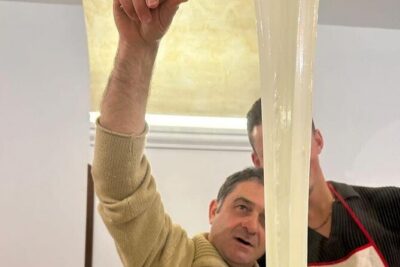
The maximum group size is 14. That is not a private lesson, but it is small enough for a social class rather than a large demonstration. Several people may need to work together when stretching a long sheet of dough, which can be part of the fun. If you want a silent, highly technical workshop, this may feel informal. If you want to cook, talk, laugh, and meet other people, the format fits well.
More Cooking Classes in Positano
- Small-Group Cooking Class in Positano: Gnocchi, Tiramisù & Drinks
★ 5.0 · 191 reviews - Positano: Pasta & Tiramisu Cooking Class at a Local’s Home
★ 4.6 · 45 reviews - Cesarine: Positano Cooking Class – 3 Authentic Recipes
★ 5.0 · 9 reviews
The welcome: prosecco, local snacks, and a garden
The class begins with a welcome aperitif. The listed opening spread includes salami, tarallucci, local cheese, olives, and a glass of prosecco. These are not just filler while you wait for the lesson. They set the tone for an Italian meal built around sharing food before the main courses arrive.
You may also have caprese salad with fresh tomatoes and local mozzarella, rocket, and grilled vegetables. The vegetables are picked from the garden, and the family takes pride in using produce grown on the property. That direct connection between garden and table is one of the most appealing parts of the class.
The menu is substantial. If you are planning to eat a large lunch or dinner afterward, do not. You will have snacks, a fresh appetizer, two pasta courses, dessert, and drinks. The exact filling can vary because you and the hosts may choose among ricotta, vegetables, or meat for the ravioli.
One useful point is that this is not a class where you cook a tiny portion and leave hungry. The meal is meant to be shared at the end, and the food prepared during the lesson forms a proper feast.
Making ravioli by hand
Ravioli is the first major pasta project. You work with fresh dough and prepare the filling together, with options listed as ricotta, vegetables, or meat. The choice of ingredients can depend on the group and what is available, so do not expect one fixed filling every time.
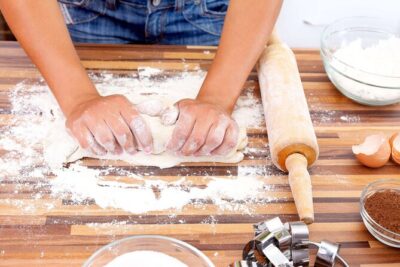
The hands-on nature is important. You are shown how to make the dough, roll it, add the filling, and shape the ravioli. Stretching the dough can take teamwork, especially when a large sheet is being made for the table. That gives the class a playful quality, but it also teaches you something useful about fresh pasta: the process is physical, not just a matter of following measurements.
I like this format because ravioli exposes the small mistakes that a demonstration can hide. You see how thin the pasta needs to be, how much filling is sensible, and how to seal the edges without trapping too much air. Those are the details that help when you try the recipe at home.
The family also serves sauce and pasta prepared with fresh ingredients. Specific sauce details are not fixed in the information provided, so you should think of the lesson as a lesson in traditional family technique rather than a rigid masterclass with a single standardized recipe.
Rolling tagliatelle and learning what makes pasta work
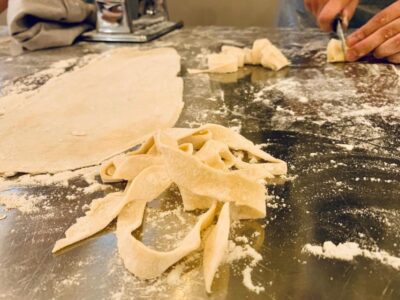
The second pasta course is tagliatelle, described in the menu as fresh handmade noodles. You make the dough, roll it out, and cut it into ribbons. This is a good pairing with ravioli because you learn two different shapes from the same basic skill: filled pasta and long pasta.
The class is especially useful if you want to recreate it at home. One person who attended bought a pasta maker afterward, while another received the recipes as a PDF. Those details suggest that the instruction is practical enough to inspire a return to the kitchen, even if you have never made fresh pasta before.
Do not expect a formal culinary-school lecture. The emphasis is on family methods, shared work, and learning by doing. Emily is described as patient and funny, and the atmosphere can include singing, dancing, and plenty of conversation. That makes the class memorable, though it also means the pace may be relaxed rather than tightly timed.
If you prefer exact weights, strict timing, and technical explanations of flour types, ask questions as you go. If you prefer a warm introduction to everyday Italian cooking, the family approach is likely to suit you better.
More Positano trips:
- From Sorrento/Nerano: Amalfi and Positano Boat Tour
★ 4.6 · 2,440 reviews - Day Trip to Positano, Amalfi & Ravello from Sorrento
★ 4.5 · 2,371 reviews - From Naples/Salerno: Group Tour to Positano, Amalfi, Ravello
★ 4.7 · 2,033 reviews - From Sorrento: Positano and Amalfi Day Cruise
★ 4.0 · 1,500 reviews
Tiramisu from a grandmother’s recipe
Dessert is not an afterthought. You prepare tiramisu using an old family recipe connected with Emily’s grandmother. Several people who normally would not choose tiramisu found this version especially good, which says something about the value of making it yourself and eating it fresh with the group.
The dessert gives the class a nice change of pace. Pasta requires kneading, rolling, cutting, and shaping. Tiramisu is gentler and more collaborative, and it lets the group finish the cooking before sitting down for the full meal.
The supplied details do not specify every ingredient or technique, so do not book this expecting a pastry course. It is a traditional home recipe taught as part of a broader Italian meal. You should receive the recipe materials afterward, making it one of the easier parts of the day to repeat at home.
A meal with wine, limoncello, and family stories
Once the food is ready, you sit down to eat. The meal can include the caprese salad, grilled vegetables, ravioli, tagliatelle, and tiramisu, with local wine throughout. Homemade limoncello is also served, along with the opening prosecco and snacks.
The drinks are part of the social rhythm, not a separate tasting. If you do not drink alcohol, the provided information does not specify alternatives, so it is sensible to ask the provider ahead of time. If you do drink, pace yourself. Three hours of cooking, wine, and a large meal can make the evening longer and heavier than expected.
The family stories are a major part of the appeal. Emily speaks about her grandmother, the land, family cooking, and traditions connected with the property. The cooking becomes a way to understand the household, not just a task between sightseeing stops.
You may also meet people from different countries and share the meal at one table. That is a pleasant bonus for solo visitors and couples, though the group format means you will not have the home entirely to yourself.
Montepertuso views and the practical transport question
The meeting point is Piazza Cappella, 84017 Positano SA, Italy, and the activity ends back there. The home is in Montepertuso, above the main Positano area. The setting is one of the class’s strongest features, with a balcony and villa views across the Positano coast and toward the sea.
The provided route also names Li Galli. Treat that as part of the surrounding Positano setting or a view reference rather than assume you will take a separate boat trip or sightseeing excursion. This is a cooking class, not a full-day coastal tour.
Transport deserves attention. Montepertuso is not beside the beach, and the walk or drive up can be inconvenient with luggage, small children, or limited mobility. The hosts have helped arrange shared taxis for groups meeting near their hotels, which can reduce the cost and remove much of the stress. That arrangement is not described as an included transfer, so confirm the pickup plan and payment details before the class.
Public transportation is nearby, and the activity is described as suitable for children. Still, Positano and Montepertuso are steep, so families should consider how comfortable their children are with uphill roads, stairs, and a long meal.
Is $181.41 a fair price?
At $181.41 per person, this is not a cheap pasta lesson. The price makes more sense when you count what you receive: about three hours of instruction, an aperitif, local snacks, a substantial meal, two kinds of pasta, tiramisu, wine, prosecco, and limoncello.
You are also paying for the setting and the family access. A restaurant-based class can offer cleaner timing and a more professional kitchen, but this class gives you a home meal, garden ingredients, family stories, and a view from a private villa. For many people, that personal setting is the point.
Value depends on your priorities. If you mainly want to learn pasta technique at the lowest possible price, compare shorter group classes in central Positano. If you want food, conversation, drinks, and a local family connection in one afternoon or evening, the cost is easier to justify.
The class is often booked well ahead, with an average booking lead time of about 77 days. That is a useful warning for summer visits and for anyone building a fixed Amalfi Coast schedule. I would reserve early, especially if you need a particular date or are traveling as a family group.
Who will enjoy this class most?
I would choose this experience for couples, families, and solo visitors who like to meet people over a shared meal. It also works well for a birthday or a final-night activity, when you want something social and memorable rather than another restaurant reservation.
It suits you if you:
- Want to make fresh pasta with your own hands
- Like family recipes and personal stories
- Enjoy wine and a long, generous meal
- Appreciate garden-grown ingredients
- Prefer a home setting to a commercial cooking studio
- Want recipes to try again after returning home
It may be less suitable if you need a strictly timed class, dislike group participation, or have mobility concerns around Positano’s steep roads. You should also check food requirements before booking. The menu includes dairy, meat, gluten, and alcohol, and no specific allergy or vegetarian policy is provided.
The hosts are comfortable with children, but a three-hour cooking session and a full meal require patience. Older children who enjoy food preparation may have a great time. Very young children may find the long, social format tiring.
Booking, cancellation, and what to confirm
Confirmation is provided at booking, and the experience is offered in English. You can cancel for a full refund up to 24 hours before the start time. Changes or cancellations inside that 24-hour window are not accepted for a refund.
The activity depends on good weather and a minimum number of participants. If poor weather or low numbers cause cancellation, you are offered another date or experience, or a full refund.
Before the day, I would confirm four simple points: the exact meeting instructions at Piazza Cappella, how to reach Montepertuso, the expected start time, and whether your food preferences can be accommodated. If you want a shared taxi, ask about that early rather than waiting until the morning of the class.
Should you book the Positano pasta class?
Book it if you want Positano through food rather than only through viewpoints and restaurant terraces. Emily, Genny, and their family offer a personal class built around grandmother’s recipes, garden produce, fresh pasta, and a generous meal. The strongest reasons to go are the home setting, the family welcome, the views, and the chance to leave with recipes you can use.
Skip it if your main goal is a low-cost technical workshop in town, or if getting to Montepertuso would be difficult. For everyone else, the combination of ravioli, tagliatelle, tiramisu, wine, family stories, and mountain views gives this class real value. Reserve early, plan the taxi, and arrive ready to share the kitchen.
FAQ
Where does the cooking class meet?
The meeting point is Piazza Cappella, 84017 Positano SA, Italy. The activity ends back at the meeting point.
How long does the class last?
The class lasts approximately three hours.
What dishes will I prepare?
You prepare fresh ravioli, handmade tagliatelle, and tiramisu. You may also help with dishes such as caprese salad and grilled vegetables.
Is the class taught in English?
Yes. The experience is offered in English, and Emily leads the instruction.
How many people can join?
The maximum group size is 14 people. Some sessions have been described as groups of about 12.
Is the class suitable for children?
Yes, the activity is described as suitable for children.
Can I cancel for a full refund?
Yes. You must cancel at least 24 hours before the local start time for a full refund. Cancellations or changes made less than 24 hours before the start time are not refunded.
More Workshops in Positano
- Hands-On Pasta and Tiramisu Class in Positano with Local Family
★ 4.5 · 88 reviews - Rada Rooftop Cooking Class in Positano
★ 5.0 · 8 reviews - Positano: Small-group Cooking Class at a Local’s Home
★ 4.4 · 7 reviews - Pizza e Tiramisù class with local mum in Positano
★ 5.0 · 6 reviews
Newest reviews from Positano
- Positano Private Tour By Night from Sorrento★ 5.0 · 4 reviews
- Amalfi coast tour with skipper from Salerno to Positano★ 4.8 · 4 reviews
- Pompeii Sorrento and Positano Tour★ 5.0 · 4 reviews
- Amalfi Coast Positano & Emerald Grotto Naples Port ShoreExcursion★ 5.0 · 4 reviews
- Amalfi Coast: one day tour from Salerno to Positano★ 5.0 · 5 reviews
- Amalfi Coast Full Day Private Tour from Positano★ 5.0 · 5 reviews
- Positano to Capri Private Boat Tour – Scenic Mediterranean Cruise★ 4.5 · 5 reviews
- From Positano: Pompeii & Vesuvius tour small group★ 5.0 · 5 reviews
Sorrento Cooking Classes, compared.
Hands-On Cooking Class & Farmhouse Tour on the Amalfi Coast
Read our review →
Cooking class with Pasta, mozzarella and Tiramisu with wine
Read our review →
Toss, Bake, Cheers! – Sorrento Pizza Making Class with Wine
Read our review →
Hands-On Italian Cooking Class with Local Sorrento Chef
Read our review →
Browse the lists this tour appears in